


Easy
Red Rili Shrimp
18–28°C · pH 6.5–8 · 20L
£13.99

Buy Amano Shrimp for sale UK for natural algae control and active, peaceful tank life. Ideal for planted aquariums. Order today for fast UK delivery!
Adult size is the maximum length this species reaches at full maturity (scientific sources). The livestock you receive will be younger and smaller — pick a size variant above for the actual shipping size. Photos are AI-enhanced, so the animal may show subtle colour or marking differences.
Caridina japonica
Amano Shrimp are a shoaling species — they need 6+ to feel safe and show their full colour.
Buy Amano Shrimp for sale UK for natural algae control and active, peaceful tank life. Ideal for planted aquariums. Order today for fast UK delivery!
Adult size is the maximum length this species reaches at full maturity (scientific sources). The livestock you receive will be younger and smaller — pick a size variant above for the actual shipping size. Photos are AI-enhanced, so the animal may show subtle colour or marking differences.
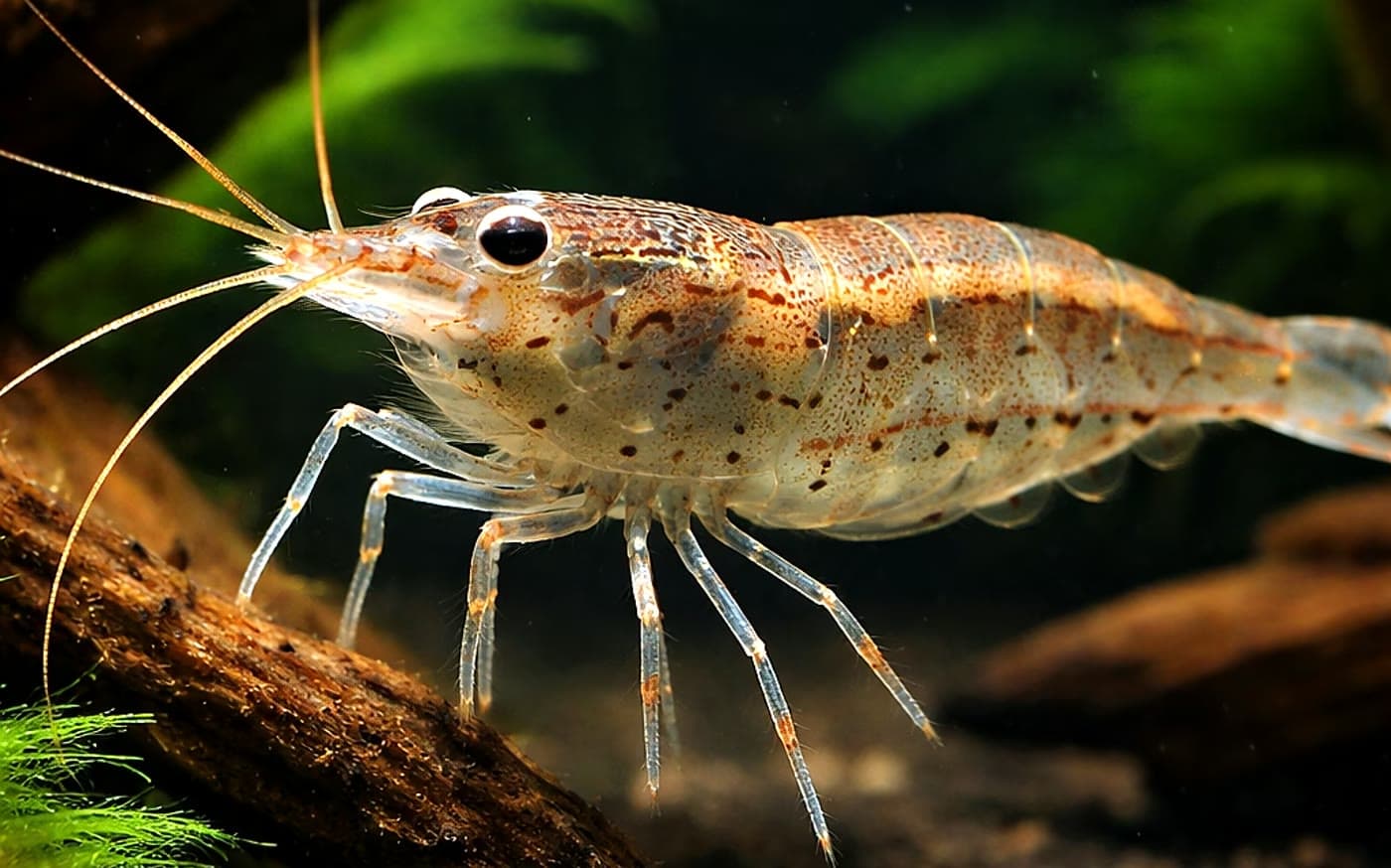
Add the hobby's best algae-eating shrimp to your aquarium with Amano Shrimp. Peaceful, hardy, and larger than cherries — ideal for planted community tanks. Order now for UK delivery.
Maintain these water conditions for optimal health and vibrant colors
Amano Shrimp are one of the most useful and rewarding freshwater invertebrates you can keep. Known scientifically as Caridina multidentata, these Japanese shrimp earned their reputation by doing a job many aquarists struggle with: controlling nuisance algae without disturbing plants or tank mates. If you have ever battled soft green film, thread algae, or stubborn amano shrimp hair algae outbreaks in a planted tank, this species is often the first recommendation for good reason. Larger and tougher than many dwarf shrimp, Amanos are widely considered the best shrimp for community tank setups where peaceful fish and active scavengers need to coexist.
Native to Japan and Taiwan, Amano Shrimp combine practical algae-eating value with engaging behaviour. They usually reach an amano shrimp size of around 4-5 cm, live for roughly 2-3 years with good care, and suit aquarists looking for reliable aquarium shrimp UK options that are hardy, peaceful, and always busy. Their amano shrimp care requirements are moderate rather than difficult, but success depends on getting the basics right: stable amano shrimp water parameters, a sensible amano shrimp aquarium setup, and enough food once visible algae is reduced.
See our detailed photos showing the translucent body, dotted side markings, and larger build that separate Amanos from Cherry Shrimp and other dwarf shrimp. Whether you want a dedicated clean-up crew or a hard-working group for an aquascape, Amano Shrimp for sale remain one of the smartest additions to a freshwater aquarium.
Caridina multidentata was popularised in the aquarium hobby through planted aquascapes, especially after Takashi Amano showcased its algae-grazing value. Older hobby references and some forum posts may still use the former name Caridina japonica, which is one reason many aquarists search for caridina multidentata or even amano shrimp wiki when checking identification. Within the Atyidae family, Amanos sit alongside other freshwater shrimp species, but their larger adult size, stronger algae appetite, and unusual larval development make them stand out in the hobby.
The amano shrimp origin is East Asia, especially Japan and Taiwan. In nature, where are amano shrimp native to is not a mystery: they are found in streams, rivers, and connected freshwater systems where oxygen levels are good and surfaces are rich in algae and biofilm. Understanding the natural amano shrimp habitat helps explain why they do so well in mature aquariums with wood, stone, plants, and stable water quality.
When aquarists ask where do amano shrimp live in the wild, the answer is usually shallow flowing freshwater with plenty of surfaces to graze. Amano shrimp in the wild spend much of their time picking at algae films, decaying plant matter, and microscopic food trapped on rocks and submerged branches. They are not open-water swimmers by nature. Instead, they move constantly across hardscape and leaf surfaces, searching for edible material. This is also why hobbyists often wonder where do amano shrimp hide in the aquarium: they prefer dense plants, moss, driftwood gaps, and shaded areas under stones when settling in or moulting.
One of the most fascinating points about how do amano shrimp breed in the wild is that adults live in freshwater, but larvae need brackish to marine conditions to develop. This amphidromous life cycle is the key reason amano shrimp breeding in aquarium is far more complex than breeding Neocaridina. Females carry eggs in freshwater, larvae hatch, then drift toward saltier water before later returning upstream as juveniles.
Can they live outside? In warm months, some keepers ask about an amano shrimp pond or amano shrimp outdoor pond setup. In the UK, outdoor keeping is only seasonal and risky because temperatures can fall below the amano shrimp minimum temperature. A secure indoor aquarium is the safer long-term option.
Mimicking the natural habitat of Amano Shrimp means focusing on mature surfaces, oxygen-rich water, and steady conditions rather than chasing extreme settings. A tank with driftwood, moss, leaf litter, and gentle flow will usually produce better colour, stronger moults, and more natural grazing behaviour than a bare, overly sterile setup.
A good amano shrimp tank setup is simple in theory but easy to get wrong in practice. These shrimp are often sold as algae eaters, so some keepers drop them into immature tanks with unstable chemistry and too little cover. In reality, the best amano shrimp aquarium setup is a mature freshwater tank with stable parameters, lots of surfaces for grazing, and enough hiding places for moulting. If you are researching amano shrimp tank requirements, think stability first and algae control second.
The accepted amano shrimp minimum tank size is 40 litres, which matches the species data for this listing. That said, a larger aquarium is easier to keep stable and gives a group more room to spread out. For a proper social group, 54-90 litres is ideal. If you are wondering about amano shrimp tank size for a planted community aquarium, aim for at least 60 litres if fish are included.
How many amano shrimp per tank depends on algae availability and tank volume. A small group of 5-6 suits a 40-60 litre setup. In larger planted tanks, 8-15 can work well. If customers ask how many amano shrimp should be kept together, the safest answer is 5 or more. Are amano shrimp social? Yes, in the sense that they are more confident and active in groups, even though they do not school like fish.
Reliable amano shrimp water parameters matter more than chasing an exact number. The ideal amano shrimp temperature sits between 20 and 28°C, with 22-25°C being a very comfortable everyday range for most home aquariums. This amano shrimp temperature range supports activity without pushing metabolism too hard. The recommended amano shrimp water temperature should remain steady, not swing sharply between day and night.
For chemistry, target pH 6.5-7.5 and moderate hardness. If you are checking amano shrimp GH KH requirements, a GH of 3-15 dGH is suitable, with enough minerals to support healthy moulting. Many keepers also search for amano shrimp ph level and amano shrimp water hardness; both matter because unstable or overly soft water often leads to failed moults. Keep ammonia and nitrite at 0, and nitrates low.
Amano Shrimp appreciate clean, oxygen-rich water. Sponge filters, pre-filtered internal filters, and gentle external filters all work well. The important point is shrimp safety: cover filter intakes so newly moulted shrimp cannot be trapped. Moderate flow is useful because it keeps food moving and mirrors stream-like conditions. In heavily planted tanks, combine filtration with regular maintenance rather than relying on plants alone.
Dark sand or fine gravel helps them feel secure and makes their markings easier to see. Their ideal amano shrimp with plants environment includes mosses, wood, stones, and broad-leaved plants where biofilm can grow. Amanos are excellent amano shrimp in planted aquarium residents because they work through algae without uprooting healthy stems. They pair especially well with mosses, Anubias, Java fern, and wood-heavy aquascapes.
If you enjoy mixed shrimp displays, browse our wider freshwater shrimp collection for colourful companions such as Blue Rili Shrimp, Red Pinto Shrimp, and White Spotted Red Shrimp. For a dedicated algae crew, many aquarists also compare this listing with our Amano Shrimp Algea Eater Cleaning Crew.
Always cycle the tank for 4-6 weeks before adding Amano Shrimp. In my experience, newly set up tanks often look clean but lack the biofilm and microbial stability shrimp depend on. Mature tanks consistently produce better survival, stronger moults, and less unexplained stress.
The classic question is simple: what do amano shrimp eat? In a healthy aquarium, the answer includes algae, biofilm, soft detritus, leftover fish food, and specialised shrimp foods. A balanced amano shrimp diet is omnivorous, not purely algae-based. Yes, amano shrimp eat algae, and that is a major reason they are so popular, but they still need proper feeding once visible algae is reduced.
A practical amano shrimp feeding guide starts with natural grazing. They constantly pick at surfaces and will consume soft green algae, diatoms, and organic films. Many hobbyists specifically buy them for amano shrimp hair algae control, and they can be very effective on young or soft filamentous growth. Which algae do amano shrimp eat? Usually soft green algae, film algae, diatoms, and some thread algae. Amano shrimp eat hair algae more readily than many shrimp species, especially when it is short and tender. They may also tackle amano shrimp black beard algae lightly if it is dying back, but healthy black beard algae is rarely their favourite. So while some searches ask whether amano shrimp eat black beard algae, the realistic answer is: sometimes a little, but do not rely on them as the only treatment.
Use quality shrimp pellets, algae wafers, and natural grazing surfaces as the foundation of amano shrimp feeding. In planted aquariums, blanched spinach, courgette, cucumber, and nettle can be offered in small portions. They will also pick at fish food leftovers, but this should not be the main plan.
Protein-rich foods can be offered once or twice weekly in tiny amounts. This is especially useful during moulting and when conditioning adults for amano shrimp breeding diet support. Search terms like when to feed amano shrimp are common; evening is often best because shrimp become bolder once lights dim. Feed only what they can finish within a couple of hours.
Some keepers ask odd but common questions such as amano shrimp eat fish poop, amano shrimp eat eggs, amano shrimp eat snails, or amano shrimp eating plants. They may pick through waste for edible particles, scavenge dead eggs, or investigate weak snail eggs, but they are not snail hunters. Healthy plants are usually safe; reports of plant damage nearly always involve decaying leaves or starvation.
| Time | Food | Amount |
|---|---|---|
| Morning | Natural grazing only | No added food in most mature tanks |
| Evening | Shrimp pellet or algae wafer, plus veg 2-3 times weekly | Very small portion, removed if uneaten |
Overfeeding causes ammonia spikes, bacterial blooms, and poor water quality. Amano Shrimp are active scavengers, so it is easy to assume they are still hungry when they rush food. Feed lightly, observe, and remove leftovers before they foul the tank.
A strong option if your main goal is algae control in a planted aquarium and you want a ready-made clean-up group rather than a single specimen.
Useful if you want to build a mixed invertebrate setup and compare different shrimp species with different feeding styles and colours.
The typical amano shrimp size is larger than many beginners expect. Adults commonly reach 4-5 cm, with females usually becoming bigger and fuller-bodied than males. This larger build is one reason they are often chosen over smaller dwarf shrimp in community tanks. If you have been comparing amano shrimp vs cherry shrimp, size is one of the biggest differences: Amanos are longer, more translucent, and look more understated, while cherry shrimp are smaller and bred for brighter solid colours.
Body colour is usually translucent grey, beige, or olive with rows of reddish-brown dots or dashes along the flanks. A pale dorsal stripe may be visible from head to tail. Females often show longer dash-like markings, while males tend to have more dot-like side patterning. This difference helps when identifying sex for amano shrimp breeding attempts.
Compared with decorative shrimp such as Super Red Sakura Shrimp or Cherry Shrimps Neocaridina Davidi Algae, Amanos are chosen more for function than colour. Their beauty comes from movement, transparency, and the busy way they work across wood and leaves.
Amano shrimp tank mates should be peaceful, non-predatory, and comfortable in similar water conditions. Are amano shrimp aggressive? No. Is amano shrimp aggressive? Also no, at least not in the way fishkeepers usually mean. They can be pushy at feeding time and may grab food from slower shrimp, but they are not hunters. This makes them excellent amano shrimp in community tank residents when matched carefully.
If you are wondering what can amano shrimp live with, think small tetras, rasboras, peaceful Corydoras, Otocinclus, snails, and other non-aggressive shrimp. Amano shrimp safe with fish depends on mouth size and temperament. Tiny fry and shrimplets may be at risk around fish, but adult Amanos are large enough to avoid predation from many peaceful community species.
Good amano shrimp safe tank mates include small schooling fish and calm bottom dwellers. They also mix well with many shrimp species. Keepers often ask about amano shrimp and cherry shrimp together or can amano shrimp live with neocaridina. Yes, they can, provided food is spread out so the larger Amanos do not dominate feeding. If you want colourful companions, consider Cherry Shrimp, Blue Rili Shrimp, or Super Red Sakura Shrimp.
Another common search is can amano shrimp live with ghost shrimp or amano shrimp vs ghost shrimp. In many cases they can share space, but ghost shrimp sold in shops are often mixed species with variable temperament and size. Amanos are usually more reliable for planted tanks and algae work, while ghost shrimp are often cheaper but less consistent in behaviour and identification. Searches like ghost shrimp walmart reflect that ghost shrimp are commonly sold as feeder or utility animals, whereas Amanos are typically chosen more deliberately for aquascapes.
Can amano shrimp live with betta? Sometimes. Amano shrimp live with betta only if the betta is unusually calm and the tank is heavily planted. The same applies to searches for amano shrimp and betta or amano shrimp with betta: it can work, but it is never guaranteed. Bettas vary individually, and some will harass shrimp constantly.
Can amano shrimp live with goldfish? No, this is a poor match. Goldfish are opportunistic feeders, produce heavy waste, and often view shrimp as food. Avoid large cichlids, puffers, crayfish, and aggressive fish for the same reason.
| Species | Compatible? | Notes |
|---|---|---|
| Cherry Shrimp | ✅ Yes | Can mix well if food and cover are plentiful |
| Blue Rili Shrimp | ✅ Yes | Similar peaceful needs; provide dense planting |
| Vampire Shrimp | ⚠️ Caution | Compatible temperament, but feeding style and flow needs differ |
| Betta splendens | ⚠️ Caution | Depends entirely on the betta's temperament |
| Goldfish | ❌ Avoid | Likely to eat shrimp and create unsuitable conditions |
Will amano shrimp breed in a community tank? Females may carry eggs, but successful larval development is extremely unlikely in a normal freshwater community setup. Also, are amano shrimp breeding together in mixed groups? Adults will mate if conditions suit them, but raising larvae is the real challenge, not getting eggs.
Always quarantine new arrivals for 2-4 weeks before adding them to a shrimp tank. Shrimp are sensitive to sudden disease exposure, and fish medications used after an outbreak may be unsafe for invertebrates. Preventing problems is much easier than treating a mixed community later.
Amano shrimp breeding is famous for being difficult. Adults mate in freshwater, but larvae do not develop into miniature shrimp there. This is the main reason hobbyists searching which amano shrimp breeding freshwater or which amano shrimp breeding salinity often end up confused: adult life is freshwater, larval rearing is not. So yes, females can become berried in a home tank, but successful breeding amano shrimp requires a separate larval rearing process.
A proper amano shrimp breeding setup starts with healthy adults in stable freshwater. A 40-litre group tank can produce berried females, but many breeders use a dedicated amano shrimp breeding tank setup to monitor them more closely. Search terms such as amano shrimp breeding 10 gallon, amano shrimp breeding 10 gallon tank, amano shrimp breeding 20 gallon, amano shrimp breeding 20 gallon tank, or even amano shrimp breeding 30 gallon all appear online. In practice, the adult holding tank can be modest, but the real challenge is preparing a separate brackish larval system.
Good amano shrimp breeding conditions include stable temperature, quality food, and mineral support for moulting. The ideal amano shrimp breeding temperature is usually in the mid-20s°C. Strong feeding with a varied amano shrimp breeding diet helps females develop eggs.
After mating, a female becomes what many hobbyists call amano shrimp pregnant, though berried is the more accurate term. She carries many tiny greenish eggs under the swimmerets. If you are asking where do amano shrimp lay their eggs, they do not attach them to decor like many fish; the female carries them until hatching. This is why searches for amano shrimp eggs often show photos of berried females rather than deposited clutches.
Questions like when amano shrimp breeding in aquarium, how often amano shrimp breeding in aquarium, or which amano shrimp breeding season have no single answer indoors. In stable heated aquariums, breeding can occur at various times of year after moulting and mating opportunities. The female may carry eggs for several weeks before release. Search phrases such as amano shrimp breeding 10 days, amano shrimp breeding 2 weeks, amano shrimp breeding 3 weeks, amano shrimp breeding 30 days, or amano shrimp breeding 3 days reflect how variable hobby observations can be.
Amano shrimp baby care is where most attempts fail. Newly hatched larvae need brackish water, microscopic food, excellent cleanliness, and careful salinity management. This is why many keepers ask which amano shrimp breeding is best or which amano shrimp breeding is better; the answer is whichever method gives you precise control over salinity, food density, and water quality. For most home aquarists, keeping Amanos for algae control is far easier than raising offspring.
If you want to attempt Amano Shrimp breeding, move the berried female shortly before hatch into a separate freshwater tank, then transfer larvae to a prepared brackish rearing system immediately after release. Waiting too long usually leads to starvation or losses. Fine green water cultures and clean, stable salinity are more important than tank size alone.
Choosing the right shrimp depends on what matters most in your aquarium: algae control, colour, breeding ease, or community safety. The most common comparison is amano shrimp vs cherry shrimp, because both are popular in planted tanks but serve slightly different roles.
| Feature | Amano Shrimp | Cherry Shrimp |
|---|---|---|
| Max Size | Up to 5 cm | About 2.5-3 cm |
| Care Level | Moderate | Easy |
| Temperature | 20-28°C | 20-26°C |
| Price | £5.81 | Varies by grade |
| Best For | Algae control and community tanks | Colourful breeding colonies |
If your goal is active algae management, Amanos usually win. If you want bright colour and easy colony growth, Cherry Shrimp are often the better choice. This also helps answer searches for amano shrimp or crystal red shrimp and amano shrimp vs blue velvet shrimp: decorative dwarf shrimp often look more dramatic, but Amanos are tougher workers in mixed tanks.
| Feature | Amano Shrimp | Ghost Shrimp |
|---|---|---|
| Identification | Reliable species: Caridina multidentata | Often mixed species in trade |
| Algae Appetite | Very good | Variable |
| Lifespan | About 2-3 years | Often shorter; compare with ghost shrimp lifespan reports carefully |
| Temperament | Peaceful, food-bold | Can vary by species |
| Best For | Planted aquariums and stable communities | Budget utility shrimp |
Some hobbyists also compare Amanos with older names like neocaridina denticulata denticulata, but that term is tied to outdated or confusing hobby usage. For practical fishkeeping, focus on whether you want a true algae specialist, a colourful Neocaridina colony, or a more unusual filter feeder like Vampire Shrimp.
Healthy Amanos are active, alert, and constantly grazing. They should move confidently, show clear eyes, hold themselves upright, and moult successfully. If you are searching for reasons behind amano shrimp dying, the cause is usually environmental rather than infectious. Poor acclimation, copper exposure, unstable hardness, failed moults, and sudden parameter swings are far more common than classic fish diseases.
Reported amano shrimp diseases include bacterial issues, fungal growth on damaged tissue, and parasite-related weakness, but many losses are linked to stress and water chemistry. Failed moults are especially common in tanks with poor mineral balance or abrupt changes in TDS, pH, or temperature. Shrimp may also die after using medications that are harmless to fish but toxic to invertebrates.
The safest response to most shrimp health issues is improved water quality, observation, and isolation. A proper amano shrimp quarantine process helps prevent introducing pathogens or pesticide contamination from plants and livestock. Quarantine also gives you time to monitor feeding response, moulting, and activity before adding shrimp to a display tank.
Keepers often ask which amano shrimp breeding cycle or which amano shrimp breeding season is best when trying to judge female health, but egg carrying alone is not proof of ideal conditions. A berried female can still fail if water quality slips. Stable amano shrimp requirements matter more than chasing breeding signs.
NEVER use copper-based medications with invertebrates. Copper is highly toxic to Amano Shrimp and can kill quickly even at low levels. Always read medication labels before treating a community aquarium that contains shrimp or snails.
Amano Shrimp are active, curious, and almost always busy. They spend the day climbing over wood, stones, leaves, and substrate in search of edible films. In a settled tank, they become surprisingly bold and may gather quickly when food hits the water. This behaviour sometimes makes new keepers wonder again, are amano shrimp aggressive, but it is usually just confident feeding behaviour rather than true aggression.
Where do amano shrimp hide when they disappear? Most often in moss, behind filters, under driftwood, or inside dense plant growth, especially after moulting. Newly introduced shrimp may hide for several days before becoming visible. Once secure, they make excellent display animals because their constant movement adds life to the lower levels of the aquarium.
They are among the best examples of amano shrimp for beginners who want useful invertebrates without the fragility often associated with delicate Caridina lines. Their larger size also helps them stand out in a planted aquascape. If your goal is a practical, peaceful grazer that can amano shrimp live comfortably in a mature community aquarium, this species is hard to beat.
When you are looking for amano shrimp for sale UK, quality matters more than simply finding the lowest headline price. Amano Shrimp are often bought for a job, but they still need to arrive in strong condition, acclimate cleanly, and settle quickly into freshwater. We select healthy, active specimens with good body shape, clear eyes, intact limbs, and strong grazing behaviour so you receive shrimp that are ready to work in planted tanks and community aquariums.
Before dispatch, shrimp are checked for activity and general condition, and we avoid sending weak or freshly stressed stock. This matters because amano shrimp delivery UK success depends on stable packing, temperature management, and careful timing. Orders are packed in insulated boxes, with seasonal heat packs in colder weather, and sent by tracked service to reduce transit stress. That gives you more confidence when you order amano shrimp UK rather than trying to source inconsistent stock locally.
If you are comparing amano shrimp price UK, cheap amano shrimp UK, and where to buy amano shrimp UK, remember that healthy invertebrates save money in the long run through better survival and fewer losses. For aquarists searching buy amano shrimp UK, amano shrimp online UK, amano shrimp shop UK, shrimp for sale UK, or buy shrimp UK, this listing offers a dependable route to adding one of the hobby's most effective algae-eating shrimp.
Order your Amano Shrimp for sale today with confidence and build a cleaner, more balanced freshwater aquarium with one of the most proven invertebrates in the trade.
Build a stronger shrimp setup with a few carefully chosen additions. For colour contrast alongside Amanos, try Cherry Shrimp or browse the wider freshwater shrimp collection for Red Pinto Shrimp and White Spotted Red Shrimp. If you want a more unusual invertebrate for larger, mature aquariums, Vampire Shrimp offer a completely different filter-feeding behaviour. For customers mainly focused on algae control, our Amano Shrimp Algea Eater Cleaning Crew is a practical companion listing to compare before you buy.
18–28°C · pH 6.5–8 · 20L

18–26°C · pH 6.5–8 · 30L
20–25°C · pH 5.5–6.8 · 20L

20–25°C · pH 5.5–6.8 · 20L

20–25°C · pH 5.5–6.8 · 20L

23–27°C · pH 7.4–8.4 · 500L

20–27°C · pH 6–7 · 54L

23–27°C · pH 7.4–8.4 · 150L

24–28°C · pH 6.5–7.8 · 300L

20–24°C · pH 7–8 · 45L

24–28°C · pH 6.5–7.5 · 2000L

24–28°C · pH 7.5–8.5 · 200L

24–28°C · pH 5.5–7 · 60L

18–25°C · pH 6–8 · 100L

24–28°C · pH 7–8 · 120L

18–28°C · pH 6.5–8 · 20L

24–27°C · pH 7.5–8.8 · 150L

22–26°C · pH 6–7.5 · 60L

24–28°C · pH 7.5–8.5 · 40L

24–28°C · pH 7.5–8.5 · 500L