Moderate
Neocaridina davidi mix
17–27°C · pH 6.5–8
£5.99

Orange Rili Shrimp (Neocaridina davidi) are peaceful, social shrimp with orange-and-clear rili patterning. Choose a 1–1.5 cm or 2–2.5 cm dispatch size; one purchase supplies one animal. Plan a mature, filtered aquarium with stable measured water, established grazing surfaces and carefully screened companions.
Neocaridina davidi
Lives in groups: kept together they stay settled, active and show their best colour.
Orange Rili Shrimp (Neocaridina davidi) are peaceful, social shrimp with orange-and-clear rili patterning. Choose a 1–1.5 cm or 2–2.5 cm dispatch size; one purchase supplies one animal. Plan a mature, filtered aquarium with stable measured water, established grazing surfaces and carefully screened companions.
Use a mature, filtered aquarium and measured water—not a shrimp-per-litre rule. Tropical Fish Co uses 20 litres as a cautious starting policy for a small Cherry Shrimp group, above OATA's general 10-litre screen for small shrimp. Provide established grazing surfaces, cover and a protected filter inlet. No fish is guaranteed shrimplet-safe, and breeding should never be promised.
Maintain these water conditions for optimal health and vibrant colors
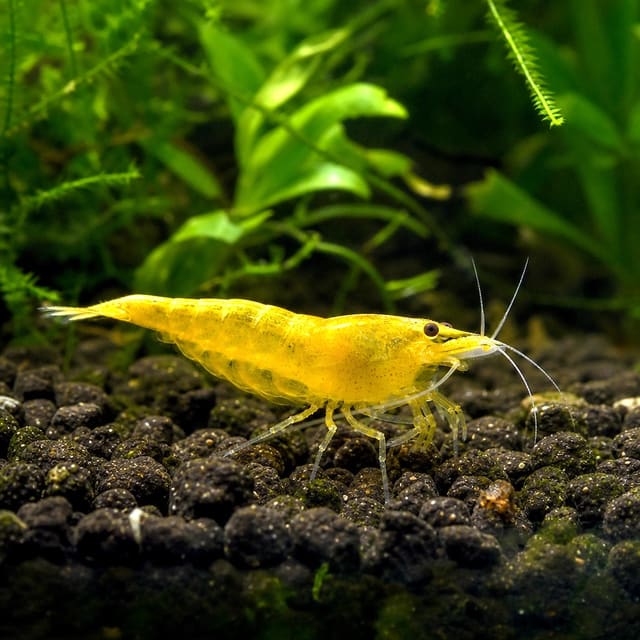
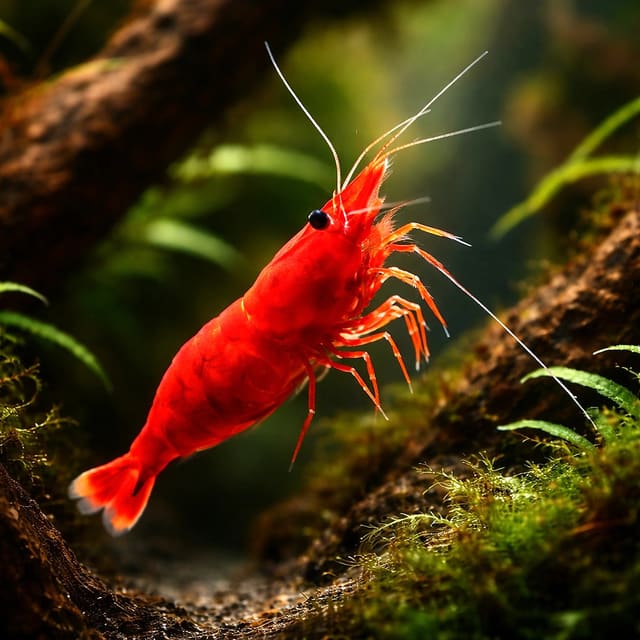
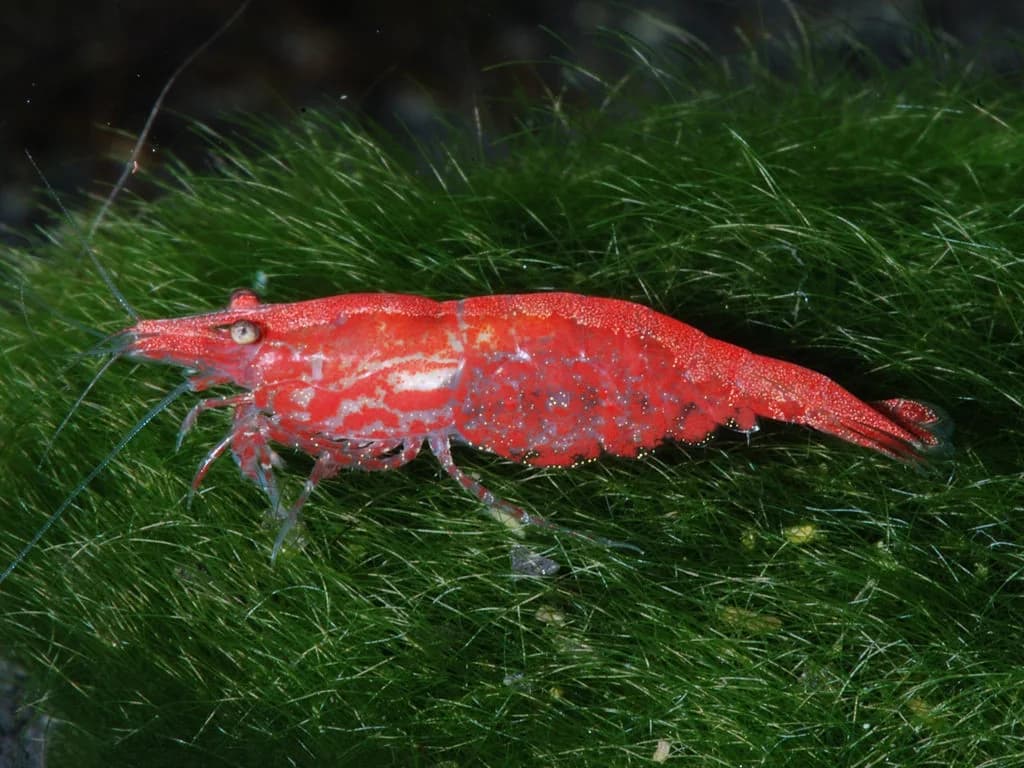
Orange Rili Shrimp are the orange rili colour line of Neocaridina davidi. Orange pigment covers parts of the body while clear sections interrupt the colour to create the characteristic rili contrast. Pattern coverage varies between individuals, so choose this shrimp for the general orange-and-clear appearance rather than expecting every animal to have identical markings. The World Register of Marine Species records Neocaridina davidi as an accepted species in the family Atyidae and order Decapoda.
This is a peaceful, social freshwater shrimp for a keeper who can provide mature biological filtration, measured water, complete food, protected filter intakes and established grazing surfaces. Its retailer care assessment is intermediate: the daily tasks are manageable, but shrimp welfare depends on detecting water changes early and avoiding abrupt adjustments. A new, untested aquarium is not suitable simply because the animal is small.
OATA’s freshwater shrimp and snail guide gives 17–27°C, pH 6.5–8.0, ammonia and nitrite at 0 mg/L, nitrate no more than 20 mg/L above the tap-water level, general hardness of 4–18°dH and carbonate hardness of 3–15°dKH. These values are broad group-level guidance, not a species-specific optimum for Neocaridina davidi. Keep measured conditions stable within a suitable shared range and compare the aquarium with the holding water before transfer.
Read our complete Cherry Shrimp care guide for the wider reasoning behind mature filtration, measured water, group planning and protected grazing areas.
One purchase quantity supplies one Orange Rili Shrimp of the selected option. Choose between the configured 1–1.5 cm and 2–2.5 cm dispatch grades in the live selector. The size you select is the size supplied, not the adult size. Dispatch size helps you choose the supplied grade; the approximate 3 cm figure from OATA’s broad small-shrimp guidance is for long-term planning.
Treat neither dispatch grade as a life-stage or sex label. Do not use dispatch size, colour, body shape or the representative photograph to infer the sex supplied. Sex is guaranteed only when the selected option explicitly states male or female. This Orange Rili Shrimp listing has no sex-guaranteed option.
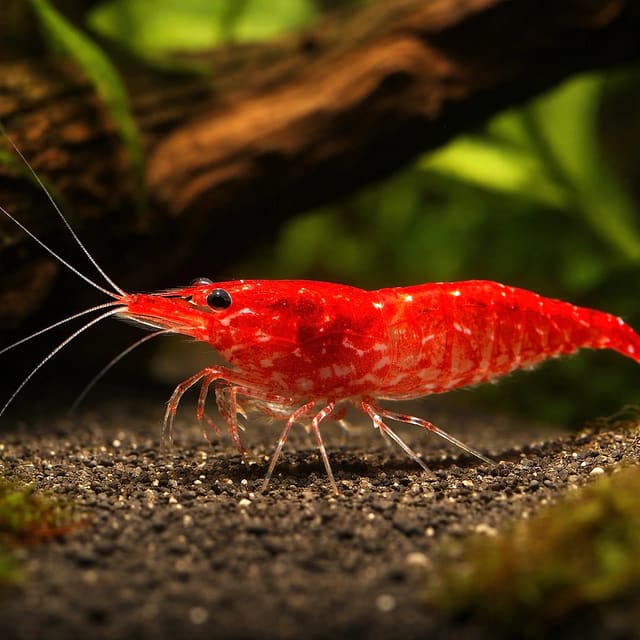
The representative reference image shows one shrimp on dark gravel beneath a moss-covered branch. Orange colouring is interrupted by a clear mid-body patch typical of the rili pattern. It represents the listed animal, while colour placement, intensity and clear areas vary between individuals. Some gallery photos were digitally enhanced to improve image quality, so colours can look slightly different from the live animal.
Choose the size option in relation to the aquarium rather than appearance alone. Check whether existing fish could swallow a shrimp of that supplied size, whether the shrimp can reach food among faster animals and whether the filter inlet is protected. Plan around the animal’s adult needs even when selecting the smaller dispatch grade.
A single purchase is a retail unit, not a solitary-care option. Build an appropriate social group through a suitable stocking plan, increasing livestock slowly so the biological filter can adjust as feeding and waste rise. Choose from the options shown in the live selector.
Before ordering, confirm that the aquarium is mature, the intake is protected, cover and grazing surfaces are established, and measured water can be compared before acclimation. Read the delivery and Live Arrival Guarantee policy for current dispatch arrangements and claim requirements. You can also browse the cherry shrimp collection when comparing colour forms; those alternatives are not automatic tank-mate recommendations.
The scientific name is Neocaridina davidi, within the genus Neocaridina, family Atyidae and order Decapoda. Orange Rili identifies a selectively bred colour line with orange areas separated by clear rili sections. The colour-line name describes the intended appearance, while the accepted scientific name identifies the animal whose long-term care you must plan.
Current catalogue records place Neocaridina davidi in East Asia. Build the aquarium around established grazing surfaces, sheltered structure and stable measured water rather than trying to recreate an assumed wild scene.
Keep this shrimp as an indoor ornamental aquarium animal. Never release shrimp, aquarium water, plants, substrate or equipment contents into the wild or into a drain that could reach natural waterways. If the aquarium must be closed, arrange secure rehoming or suitable disposal without transferring animals or contaminated water into the environment.
The rili pattern does not change the need for mature filtration, complete food and cautious acclimation. Select the colour line only after the aquarium passes those care checks. Suitable water, protected equipment and carefully screened companions take priority over pattern.
Tropical Fish Co uses a mature, filtered 20-litre aquarium as a cautious starting point for a small group. OATA’s broader screen begins at 10 litres for a group of small freshwater shrimp. Neither figure is a biological minimum or a permanent shrimp-per-litre allowance; the more cautious starting volume leaves extra room for equipment, feeding areas and livestock changes.
There is no reliable permanent shrimp-per-litre formula. Assess usable water volume and footprint after substrate, wood and equipment are installed. Then account for filtration capacity, established grazing area, access to prepared food, every adult companion, water stability and the possibility that juveniles may survive. Increase the planned volume when other livestock add waste, compete for food or restrict where shrimp can safely graze.
Begin with a modest social group and retain headroom rather than filling every apparent space. OATA’s broad social-shrimp guidance recommends keeping at least five together. One purchased animal contributes to that group but is not a solitary-care plan. Shrimp may gather around food or productive grazing surfaces, although this grouping differs from fish-like schooling.
A shrimp-only aquarium removes fish predation, but water quality, crowding, equipment and feeding still limit capacity. Plan space around the complete working system.
Aquarium maturity is a demonstrated biological state, not a fixed wait of four, six or any other number of weeks. Confirm through testing that the filter handles the planned load while ammonia and nitrite remain at zero. Allow stable grazing surfaces to establish before adding shrimp. Follow our freshwater shrimp setup guide to prepare the system before livestock arrives.
The RSPCA’s aquarium-environment guidance explains biological waste processing for pet fish generally: beneficial filter bacteria convert toxic ammonia through nitrite to the safer nitrate stage. This broad welfare principle supports mature, maintained filtration for the shrimp aquarium, while shrimp also need protected filter intakes.
Fit a fine guard or suitable sponge to every intake that could draw in small juveniles. Choose dependable waste processing and safe inlet protection rather than filtration power alone. Check that guards remain seated after maintenance and that accumulated debris does not obstruct the filter. Keep enough room around the equipment to inspect and clean it without dismantling the shrimp’s main shelter.
Stock slowly so the established bacterial population can adjust when livestock, feeding and waste increase. Adding too much livestock at once can overwhelm biological filtration even when an aquarium has been running for some time. The OATA freshwater aquarium setup guide provides broad guidance on cycling, water testing and gradual acclimation.
Work within the 17–27°C, pH 6.5–8.0, 4–18°dH and 3–15°dKH group planning screen stated in the overview, with ammonia and nitrite at 0 mg/L. These are broad group-level values rather than a species-specific optimum. Measure the aquarium instead of assuming that clear water, local tap-water reputation or a familiar postcode tells you its chemistry.
Test pH and hardness in both the aquarium and the holding water before transfer. Compare the results and make any necessary transition gradually rather than chasing a target through sudden chemical adjustment. Rock, substrate, top-ups and treatments can alter aquarium chemistry, while an ion-exchange softener changes the mineral composition of incoming water. Test softened supplies rather than treating the word “soft” as evidence of suitability.
Keep temperature stable within the selected shared range. Use a correctly sized, guarded and thermostatically controlled heater only when measured room and aquarium temperatures cannot remain stable without it. A cool room may require heating, while a warm room requires a plan that prevents overheating. Decide from measured conditions rather than season or postcode.
Use our aquarium water chemistry guide to understand which values to test and why. The water matcher can then help compare your measured aquarium values with the stated planning guidance. The comparison is most useful when the readings are recent and taken from the aquarium itself.
When readings differ from the holding water, choose a gradual condition-led acclimation. A universal drip time cannot account for every journey, temperature difference or chemistry gap.
Use live plants, aquarium-safe wood, rock, leaf litter or other suitable structure to create sheltered surfaces for grazing. Keep several routes open so shrimp can reach food and you can inspect the animals, filter and substrate. Cover remains useful only when it is maintained, so check that trimming plants does not leave all shelter concentrated in one inaccessible corner.
Aquarium gravel or sand can provide a suitable base under OATA’s broad group guidance. Choose a cleanable layout that lets you see recurring food waste and reach equipment. Substrate colour and material are not species requirements. Test the aquarium after adding rock or substrate because these materials, together with top-ups and treatments, can change measured water.
Biofilm and soft growth provide useful grazing alongside complete food. Preserve established surfaces while still removing harmful accumulations of waste, and avoid stripping every grazing area clean at the same time.
Protect each filter inlet with a suitable fine guard or sponge and inspect it during maintenance. Small juveniles can enter gaps that pose little risk to larger shrimp. Arrange wood and plants so intake guards can be removed and cleaned without crushing animals or dismantling the entire shelter.
Use a lid or secure cover to help prevent escapes while keeping ventilation, cables and routine equipment access unobstructed. Check openings around pipework and leads, then make sure the cover does not interfere with safe maintenance.
Orange Rili Shrimp graze biofilm and some soft growth, but they need an appropriate complete shrimp food and should not be expected to live on algae alone. Use a complete sinking shrimp food as the nutritional base. Offer suitable variety according to the food manufacturer’s current instructions and the needs of the whole aquarium community.
Set portions through observation rather than a universal daily, alternate-day or three-times-weekly schedule. Watch whether every shrimp can reach the food without being displaced, whether natural grazing remains available and whether prepared food is repeatedly left behind. Account for changes in group size, companion competition and water-test trends before adjusting the next portion.
Remove recurring excess before it decays, then reduce the next portion. Uneaten food breaks down and releases harmful waste. Preserve several feeding and grazing areas when faster companions would otherwise monopolise one location.
Do not impose a separate protein schedule or assume that one ingredient will improve colour, moulting or breeding. A properly formulated complete food provides the nutritional base. Choose supplementary variety that suits the animals and follow manufacturer directions rather than building meals around household-food routines.
Expect grazing on biofilm and soft growth, not reliable control of any particular algae. Manage algae through the aquarium’s light, nutrients, plants and maintenance, and do not withhold complete food to force grazing.
Under OATA’s broad group guidance, change 25% of the aquarium water at least weekly. Siphon solid waste where needed and condition replacement tap water to remove chlorine or chloramine before it enters the aquarium. Match replacement conditions closely enough to avoid an abrupt temperature or chemistry change.
Test ammonia and nitrite at least weekly so a filtration problem is found before behaviour or feeding changes become severe. Review temperature, nitrate, pH and hardness whenever livestock activity, appetite, appearance or moulting changes. Record readings consistently so a trend is easier to recognise than an isolated result.
Check the filter for blockages during maintenance. When filter media needs cleaning, rinse it lightly in water removed from the aquarium rather than under the tap. This reduces exposure to chlorine or chloramine and helps preserve the beneficial bacterial population established in the media. Clean only what needs attention rather than disturbing every part of the system together.
Increase livestock slowly after the aquarium is stable. Every increase in animals and food asks more of the filter bacteria. Watch the water-test trend rather than assuming that past stability guarantees capacity for a larger community.
Watch for departures from each shrimp’s normal activity, feeding, colour and body condition. Increased inactivity, restlessness, unusual movement, more hiding, lesions, swelling, discolouration, lost appendages or exoskeleton damage should trigger measured water tests and equipment checks. Compare the affected animal with the rest of the group because one sign rarely identifies a single cause.
An empty exoskeleton can resemble a dead shrimp, and hiding can accompany moulting. Neither observation diagnoses the animal by itself. When behaviour changes, measure temperature, ammonia and nitrite, review pH and hardness in context, and check filtration, aeration, heating and recent maintenance. Look at new animals, plants, decor, foods and treatments before choosing a response.
Shrimp are highly sensitive to copper. Read the exact current treatment label and every invertebrate warning, identify the problem before treating, and do not add a medicine when compatibility with shrimp is unclear. A product intended for fish is not automatically suitable for an aquarium containing invertebrates.
Recurring uneaten food can become a water-quality problem and should be included in the investigation. Remove the excess and reduce later portions rather than adding treatment for signs caused by deteriorating conditions. Avoid assuming that moulting difficulty proves one mineral deficiency; check the full water, feeding and equipment picture first.
Before dispatch, confirm mature filtration, protected intakes, established grazing surfaces, suitable companions and a separation plan. Obtain the measured holding-water values and current animal-specific arrival instructions, then compare the holding water with your aquarium. Prepare testing equipment and the receiving space before the animal arrives.
Compare temperature, pH and hardness on both sides before transfer. Acclimate gradually, allowing the journey condition and measured chemistry difference to guide the process rather than using one universal drip time. A method suitable after one short journey may be inappropriate after a different temperature or water change.
Where practical, observe new arrivals separately in a mature system and use dedicated wet equipment. Choose the observation period from the animals’ condition, the source history available to you and the biosecurity risk to the established aquarium. Inspect feeding, movement, appearance and moulting throughout that period.
Observe feeding, activity, colour, body condition and exoskeleton after transfer. Use those observations together with measured water rather than treating temporary hiding as a diagnosis. Keep transport water out of the display when the applicable arrival method directs you to do so.
Orange Rili is a selectively bred colour line of Neocaridina davidi. For comparison, OATA’s broad group sheet describes Amano Shrimp at about 5 cm, larger than its small-shrimp category. Neocaridina davidi young hatch as benthic juveniles in freshwater rather than passing through the Amano-style saline planktonic stage. Successful colony growth still depends on the animals and aquarium conditions.
A mature female carries eggs externally on the pleopods beneath her abdomen. This biological feature cannot identify the sex of an animal supplied through an option without a sex guarantee. Keep water stable and limit unnecessary disturbance while eggs are carried.
For a breeding-focused aquarium, provide mature filtration, protected intakes, established grazing surfaces, complete food and dense usable cover. Newly hatched juveniles benefit from food access close to shelter and from inlets they cannot enter. This offer specifies no sex mix, egg count, incubation period, maturity schedule or colony outcome.
If juveniles disappear, review fish predation, cover, feeding access, filter guards and measured water. If moulting or adult condition changes at the same time, investigate the whole system rather than assigning the problem to one mineral or food ingredient.
If preserving the Orange Rili colour line matters, use a single-line aquarium and confirm the lineage description before mixing shrimp. Mixed colour lines may produce different inherited appearances. Keep the project goal separate from basic welfare: colour selection never replaces stable water, complete nutrition or adequate group space.
Orange Rili Shrimp are peaceful. Exclude fish able to swallow them and species known to hunt small invertebrates. For every other proposed companion, assess the adult animal, its normal feeding behaviour and the complete aquarium rather than relying on a general community label.
Choose a shrimp-only aquarium when maximising juvenile survival is the priority. For a mixed display, keep a mature separation space ready before introducing fish.
Mixed Neocaridina colour lines may have overlapping care needs, but combining them can work against preserving the Orange Rili pattern. Keep a single-line aquarium when colour-line continuity matters. Product alternatives shown elsewhere on the page are choices to compare, not endorsed companions.
Observe the community after introduction. Reduced feeding access, persistent hiding, appendage damage or unexplained losses require prompt checks of companions, water and equipment. Move the shrimp or companion to the prepared mature space if predation or sustained exclusion appears.
Orange Rili Shrimp are the orange-and-clear rili colour line of Neocaridina davidi. They are peaceful, social freshwater shrimp that require mature filtration, measured stable water, established grazing surfaces and complete shrimp food.
One purchase quantity supplies one animal of the selected size option. A single retail unit does not mean solitary keeping is suitable, so plan an appropriate social group.
The selector provides 1–1.5 cm and 2–2.5 cm dispatch grades. The selected grade is the size supplied, while approximately 3 cm is the broad adult planning reference.
Use a mature, filtered aquarium with protected intakes, established grazing surfaces, usable cover and clear maintenance access. Our cautious starting policy is 20 litres for a small group, followed by planning for companions and possible juveniles.
Use OATA’s broad social-shrimp guidance of at least five together. They may gather around grazing and feeding areas, but this is social grouping rather than fish-like schooling.
OATA’s broad group screen gives 17–27°C, pH 6.5–8.0 and 4–18°dH, with ammonia and nitrite at zero. These are group-level planning values, not a species-specific optimum; test the aquarium and keep change gradual.
Use an appropriate complete sinking shrimp food as the nutritional base and preserve access to biofilm. Adjust portions from feeding access, recurring leftovers, group changes and water-test trends rather than using a universal schedule.
Compare measured holding-water and aquarium temperature, pH and hardness, then make the transition gradually. Let the journey condition and chemistry difference guide the method rather than applying one universal drip time.
Screen each proposed companion for adult mouth size, hunting and territorial behaviour, feeding competition, shared water needs and usable cover. No fish is guaranteed safe with adults or tiny juveniles.
These references cover taxonomy, broad freshwater-aquarium welfare and the store’s cautious care policy. Group-level figures should be read at the scope stated in the care sections.
No reviews for this item yet. Bought one? Honest reviews only, good or bad.
What customers say about ordering from us
I have a small group of long finned mountain minnows. So was delighted to be able to order ten of this variety to increase the genetics in my tank . The ones I recieved are healthy but it’s to early to give a verdict on wether they are of a long finned type since they are small currently.
Gordon Walker · 23 Sept 2026
100% success travel and "installation". Pleased with quality of purchase. The Siamese fighter a bit "shy" so have not yet seen him at his best yet but looking good. Happy customer. GG
George E Garratt · 21 Sept 2026
Reviews of our shop, collected by Judge.me, an independent third-party review collector. Newest first.