Moderate
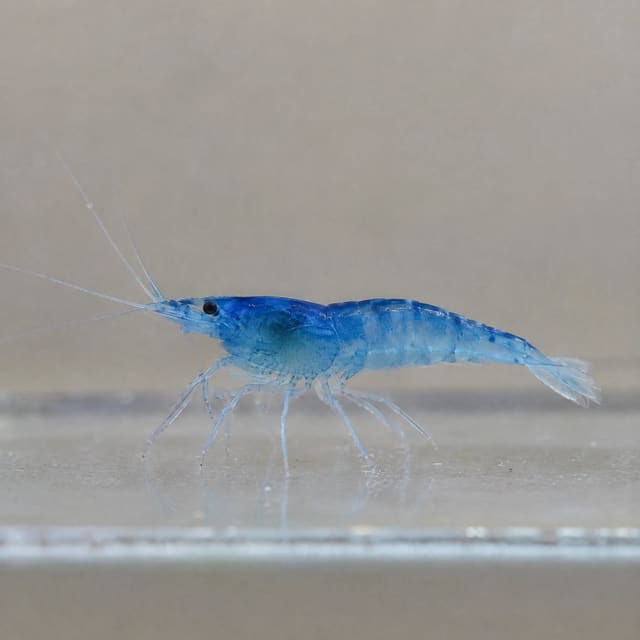
Blue Tar Striped Shrimp (Neocaridina davidi)
17–27°C · pH 6.5–8
£11.99
The Red Back Fire Shrimp is a Fire-grade red line of Neocaridina davidi, the cherry shrimp, with a darker red band along the back. Keep six or more in a mature, planted tank of 20 litres or more at 21–26°C and pH 6.5–8.0, with no copper and no other cherry colours. Sold singly as one live shrimp.
Adult size is the maximum length this species reaches at full maturity (scientific sources). The livestock you receive will be younger and smaller. Product-photo provenance and any image-specific limitations are stated on the listing.
Neocaridina davidi
Choose a quantity for your aquarium. Discount thresholds are pricing offers, not a stocking recommendation.
The Red Back Fire Shrimp is a Fire-grade red line of Neocaridina davidi, the cherry shrimp, with a darker red band along the back. Keep six or more in a mature, planted tank of 20 litres or more at 21–26°C and pH 6.5–8.0, with no copper and no other cherry colours. Sold singly as one live shrimp.
Adult size is the maximum length this species reaches at full maturity (scientific sources). The livestock you receive will be younger and smaller. Product-photo provenance and any image-specific limitations are stated on the listing.
Use a mature, filtered aquarium and measured water—not a shrimp-per-litre rule. Tropical Fish Co uses 20 litres as a cautious starting policy for a small Cherry Shrimp group, above OATA's general 10-litre screen for small shrimp. Provide established grazing surfaces, cover and a protected filter inlet. No fish is guaranteed shrimplet-safe, and breeding should never be promised.
Read the full care guidance when planning conditions for your aquarium.
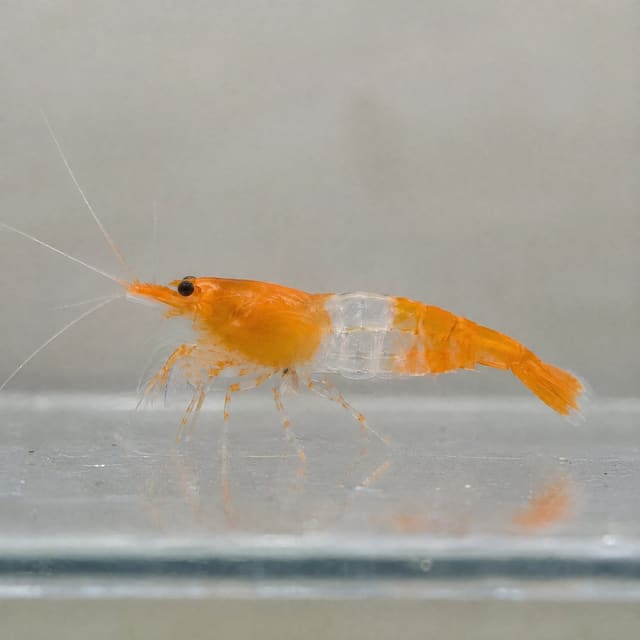
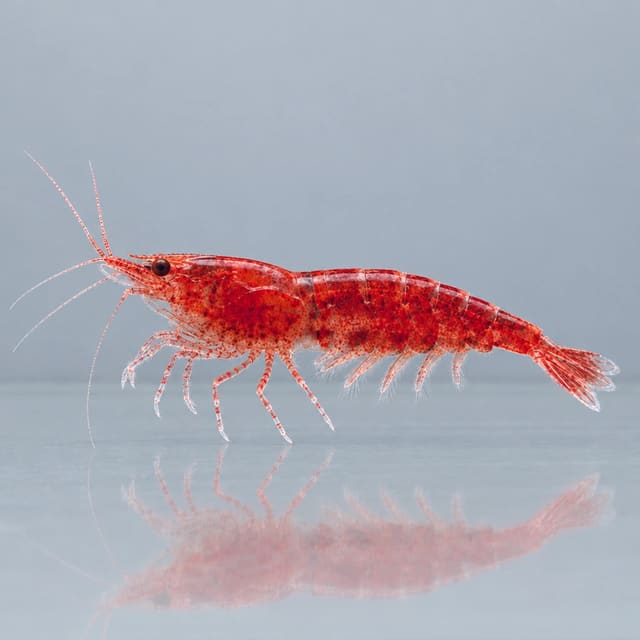
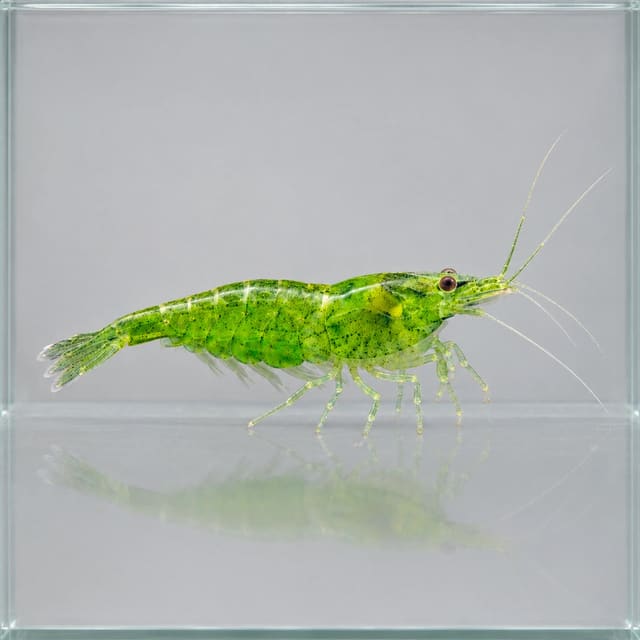
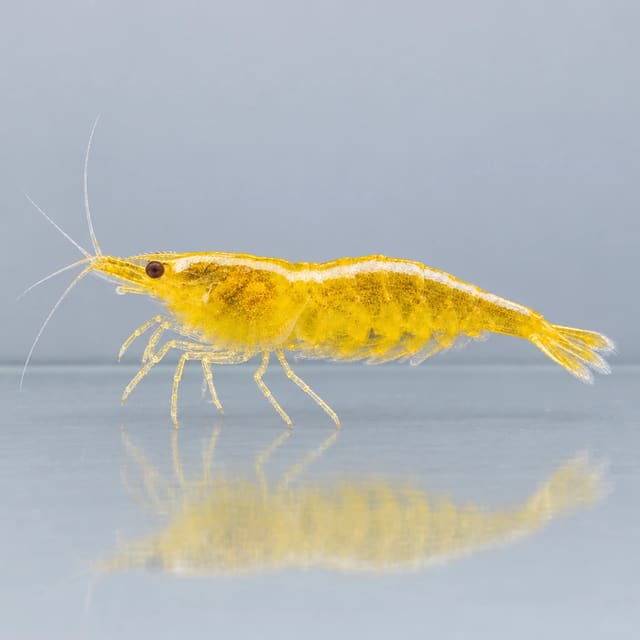
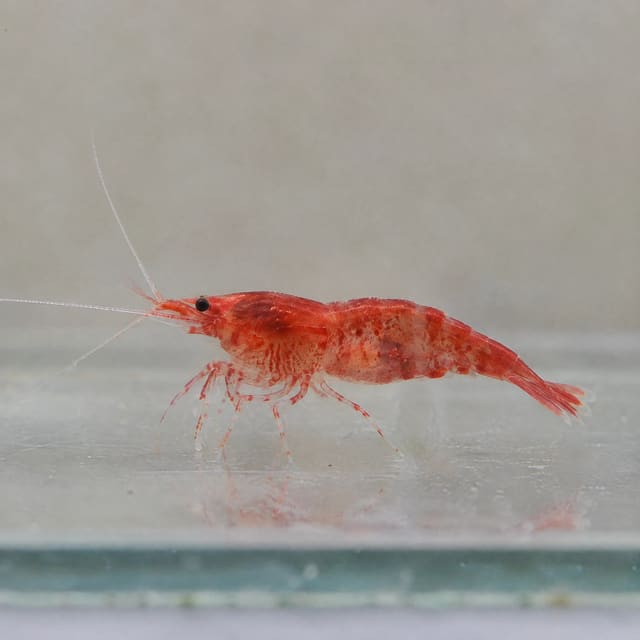
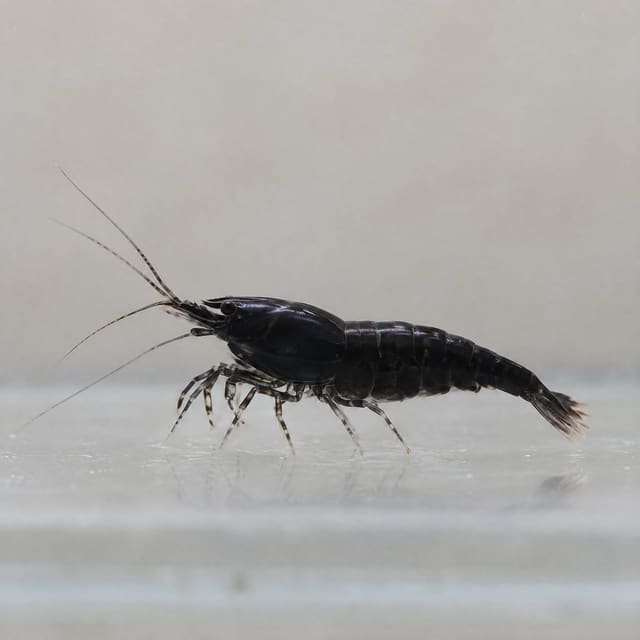
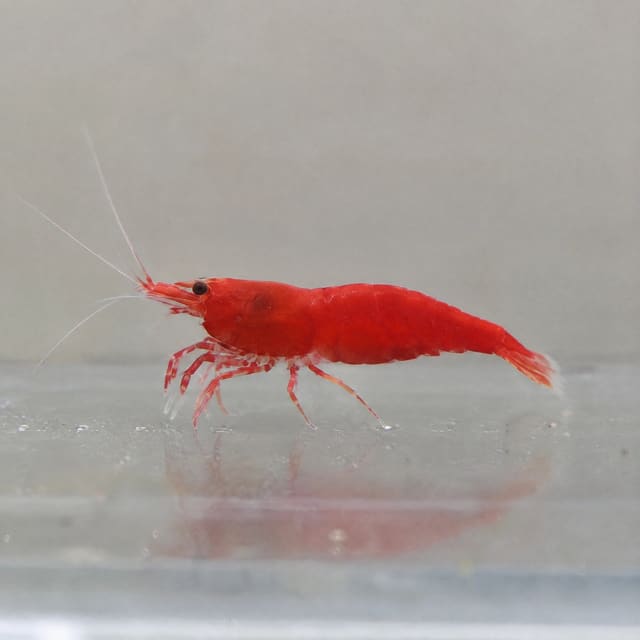
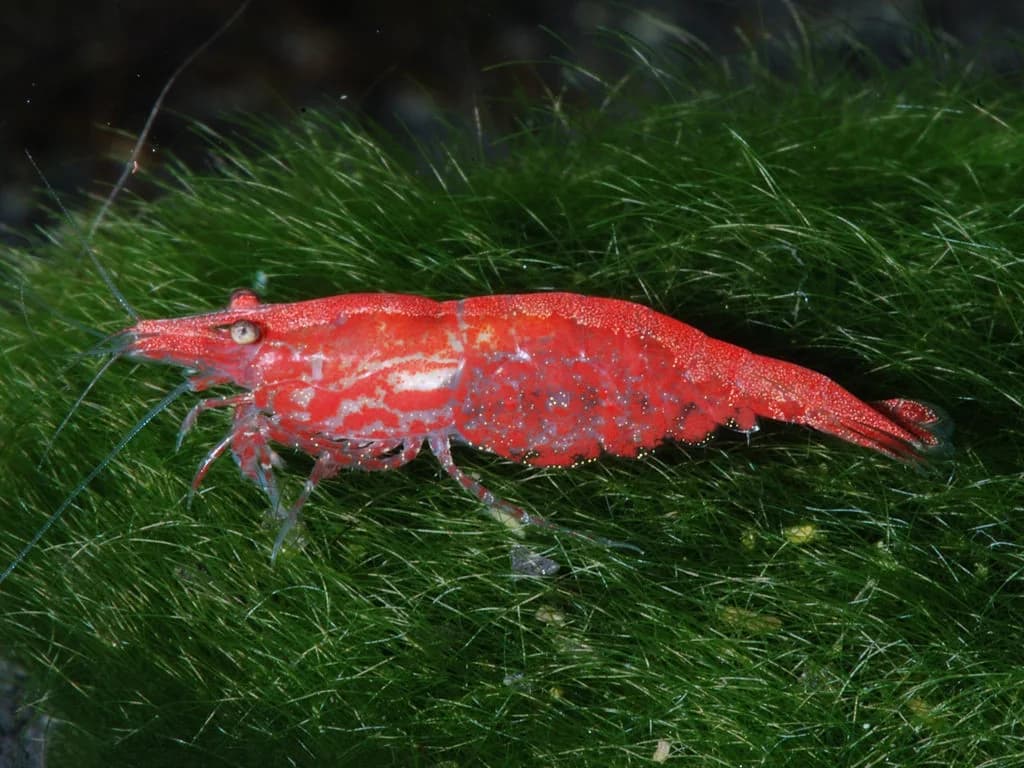
The Red Back Fire Shrimp is a red line of Neocaridina davidi, the freshwater dwarf shrimp sold as the cherry shrimp. It has been bred to the “Fire” grade, so the body is a warm, nearly solid red rather than the patchy, see-through red of a basic cherry shrimp. Along the top of the abdomen the red deepens into a darker band, the “red back” of its name, which sets off the brighter flanks below. The legs are banded red and clear, the tail fan is red edged with pale blue-white, and the eyes are black. Over green moss it is one of the most striking dwarf shrimp you can keep.
It is also one of the easiest. Red Back Fire Shrimp are cherry shrimp in every way that matters for care: they cope with the medium-hard water most UK keepers have, they spend the day picking biofilm and algae from every surface, and a settled group breeds steadily without help. That combination of strong colour and simple care is why red Neocaridina are so often the first shrimp people keep.
| A good match | A poor match |
|---|---|
| A cycled, planted tank of 20 litres or more that has run for some weeks | A brand-new tank with no biofilm |
| Tap water of medium hardness, dechlorinated and kept stable | Water that swings in temperature or hardness |
| A shrimp tank, or a planted tank with otocinclus and snails | Any fish with a mouth large enough to swallow a shrimp |
| A colony of six or more of the same line | A tank already holding another cherry shrimp colour |
| Keepers who check water weekly | Tanks treated with copper-based remedies |
See every cherry shrimp line in our shop, our Neocaridina category and the whole freshwater shrimp category to compare colours.
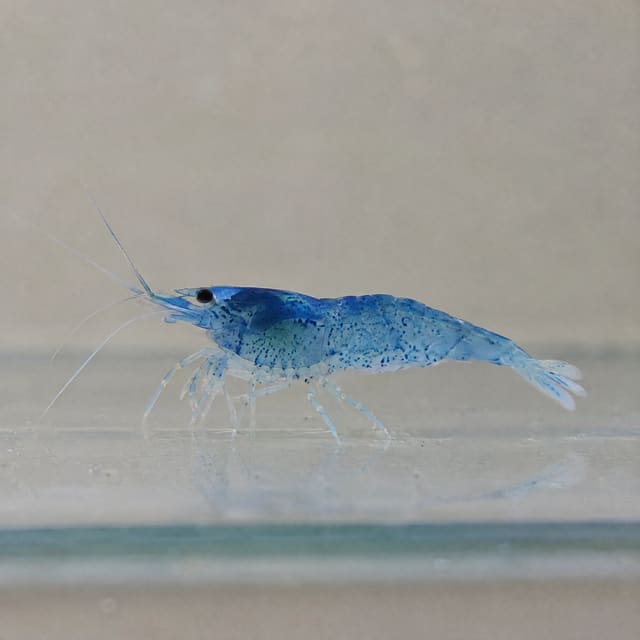
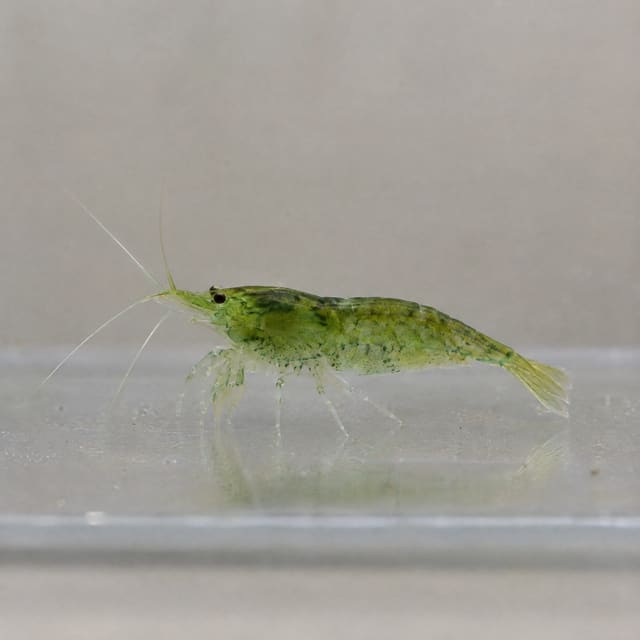
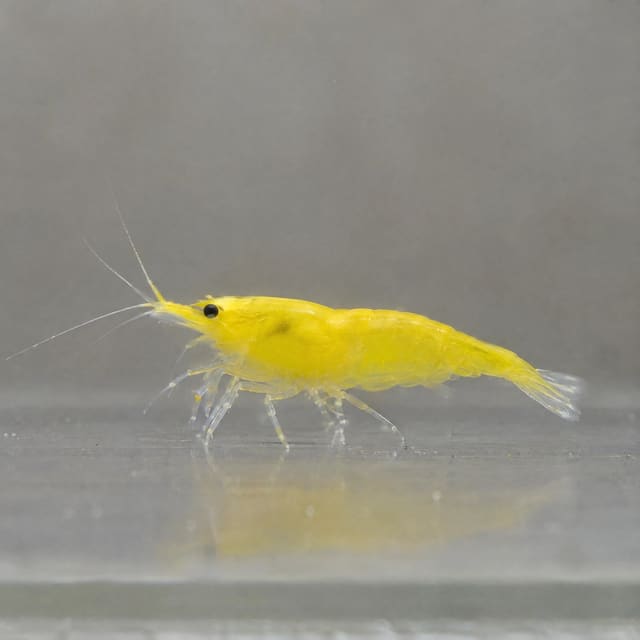
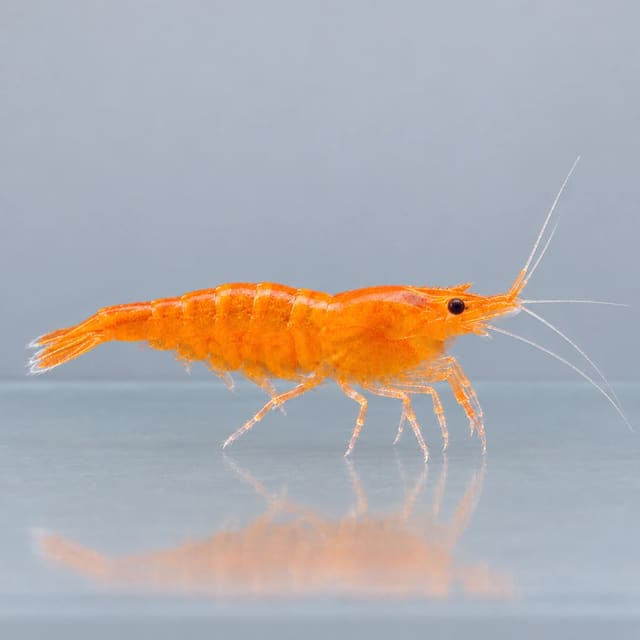
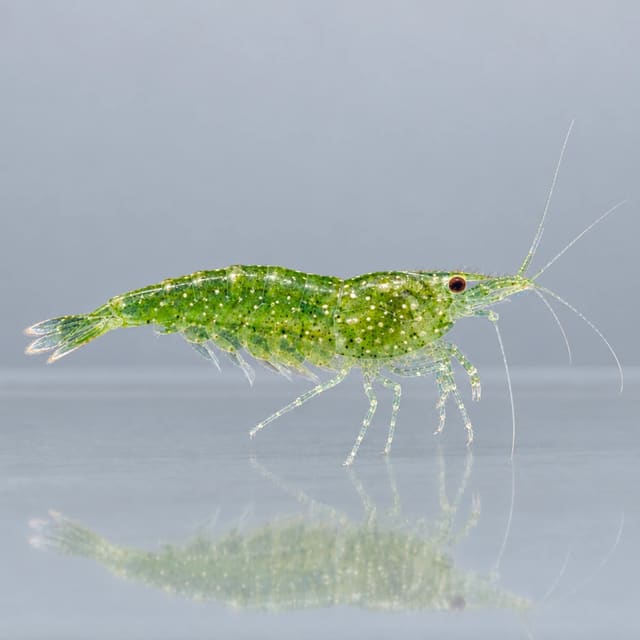
Each purchase quantity is one live Red Back Fire Shrimp. The only option is “Standard”: the line is not sold by size, so shrimp go out at whatever size is available on the day, usually young adults, and sex is not chosen. The photographs show the colour line, not your shrimp. Expect differences in how dark the back band is and how solid the red is, and expect males and young shrimp to look lighter than mature females.
Our delivery page explains how live shrimp are packed and sent. Use the stocking calculator if the shrimp will share space with fish.
Wild cherry shrimp are drab. Wikipedia describes the species, native to Taiwan, eastern China, the Korean Peninsula and Vietnam, as greenish-brown to mottled brown, and lists red as one of many colours fixed in aquariums. Red comes from pigment cells called erythrophores, and what you see is a combination of the colour of the shell and the colour of the flesh beneath. Breeders then grade red shrimp by how much of the body is coloured and how opaque that colour is. The Shrimp Farm’s grading guide sets out the usual ladder:
| Grade | What it looks like |
|---|---|
| Cherry | Mostly translucent with light, pinkish-red spots |
| Sakura | Redder and darker, still blotchy, legs mostly clear |
| High Sakura | More opaque and intense, some blotches on the legs |
| Fire Red | Almost fully opaque, legs evenly coloured, eggs and saddle hard to see |
| Painted Fire Red | Colour so intense it looks painted on, no translucent spots |
| Bloody Mary | The deepest red; even males are vividly coloured |
“Red back” is a trade description added to the Fire grade: it marks shrimp with a noticeably darker red line along the top of the body. It is not a formal standard, so different breeders draw the line in different places. Sex matters too. The Shrimp Farm points out that males are smaller and less bright than females, so a male may sit a grade lower than his sisters from the same batch.
How small can a cherry shrimp tank be? OATA says about 10 litres for a small group, Practical Fishkeeping says 15 litres can work if well planted and filtered, and The Shrimp Farm puts the floor at 19 litres for a colony. We suggest 20 litres or more. Neale Monks reckons on about two dozen cherry shrimp in 20 litres with good filtration, and more water buffers you against the sudden temperature changes Practical Fishkeeping names as a common killer, especially in small tanks.
The tank must be fully cycled before any shrimp arrive. Practical Fishkeeping is blunt: even a trace of ammonia is fatal, and a new tank lacks the micro-organisms that young shrimp need, which is why breeding often fails in fresh set-ups. Our nitrogen cycle guide walks through cycling from scratch.
| Feature | Why it helps |
|---|---|
| Moss, bogwood and stones | Biofilm grazing and cover; Practical Fishkeeping calls biofilm an essential part of the diet |
| Dense, fine plants | Safe places for young shrimp and freshly moulted adults |
| Dark sand, no deeper than about 2 cm | Shows the red well and stays easy to clean |
| A clear patch at the front | Somewhere to feed and to count the colony |
| A cover glass | Stops climbers leaving and slows evaporation |
Practical Fishkeeping’s shrimp introduction suggests sand for Neocaridina and warns that builders’ sand may hold limestone. Red shrimp on dark sand in front of green plants give the strongest contrast.
There is no single agreed set of numbers for cherry shrimp. OATA’s freshwater shrimp sheet gives 17–27°C, pH 6.5–8.0, 4–18 dGH and 3–15 dKH. The Shrimp Farm’s red cherry care page gives 18–29.5°C, pH 6.2–8.0, GH 4–8, KH 3–15 and TDS 150–250. Practical Fishkeeping’s introduction gives 18–26°C, pH 6.5–8, 8–18 dGH and 5–15 dKH, and Neale Monks accepts 5–15 dGH with middling values best for breeding. The ranges overlap comfortably; the bigger risk is change, not the exact figure.
| Reading | Plan for | Sources |
|---|---|---|
| Temperature | 21–26°C | Practical Fishkeeping best range; tolerated 18–28°C; OATA 17–27°C; The Shrimp Farm 18–29.5°C |
| pH | 6.5–8.0 | OATA and Practical Fishkeeping; The Shrimp Farm 6.2–8.0 |
| GH | Middle of the range, stable | The Shrimp Farm 4–8; Neale Monks 5–15; Practical Fishkeeping 8–18; OATA 4–18 |
| KH | 3–15 dKH | OATA and The Shrimp Farm; Practical Fishkeeping 5–15 |
| TDS | 150–250 ppm | The Shrimp Farm |
| Ammonia, nitrite | 0 mg/l | OATA; Practical Fishkeeping |
| Nitrate | Within 20 mg/l of your tap water | OATA |
| Copper | None at all | OATA; Practical Fishkeeping |
Dechlorinated UK tap water suits most cherry shrimp; Practical Fishkeeping says tap water low in nitrate and phosphate can be used for Neocaridina. Because hardness differs so much from one region to the next, test your own and check it against the plan with our water matcher. Very soft water may need a calcium supplement for healthy moults, and hot-tap water should never be used because of the copper risk. The water chemistry guide covers testing.
In a warm room a heater is optional, but it smooths out night-time drops. Practical Fishkeeping adds that higher temperatures speed growth and breeding but shorten life, and that warm water may need extra aeration.
Newborn cherry shrimp are about 1 mm long, so filter intakes are a real hazard. Practical Fishkeeping recommends air-driven sponge filters or Hamburg mat filters and suggests fitting fine foam or a stocking over any power-filter intake; The Shrimp Farm makes the same point about strong filters pulling up young. OATA’s maintenance advice is a 25% water change at least weekly with conditioned water, weekly testing, and rinsing filter media only in removed tank water.
Red Back Fire Shrimp graze constantly. Wikipedia lists biofilm, algae and detritus as the natural diet and notes that cherry shrimp do not eat vascular plants, so a planted tank is safe. Treat prepared food as a supplement. OATA suggests two or three feeds a week left in for at least 30 minutes; The Shrimp Farm uses a good shrimp food as the staple with blanched vegetables, frozen foods and sinking foods for variety. Practical Fishkeeping notes that a shrimp-only tank needs target feeding, because there are no fish scraps.
Wikipedia notes that carotenoids from food are thought to supply pigment; algae and spirulina granules in the rotation help the red stay deep.
Abrupt changes kill shrimp, so take your time on arrival. OATA’s floating-bag routine is the minimum: lights off, float the sealed bag for 10 minutes, then mix in small amounts of tank water over at least 30 minutes and release the shrimp with as little bag water as possible. Practical Fishkeeping’s drip method is gentler still: pour the shrimp and their water into a container and drip tank water in through airline at one to two drops a second for about an hour, until the volume is three or four times what you started with.
| Day | Task |
|---|---|
| Before they arrive | Check ammonia and nitrite are zero and the temperature is steady |
| Arrival day | Lights low, no food |
| Days 2–7 | A tiny meal every other day; note who comes to it |
| Daily | Count visible shrimp and look for any lying on their side |
| Day 7 | Full test and a first small water change |
An empty shell on the substrate is usually good news. OATA reminds keepers that shrimp moult often and the cast skin can look like a body; Practical Fishkeeping adds that a dead shrimp is never see-through and a moult is never coloured, which makes the difference easy to spot with a red line. The Shrimp Farm says young shrimp moult every few days and adults about once a month. Problems with moulting usually point to hardness or mineral shortfalls.
| Sign | Response |
|---|---|
| Shrimp dying during or just after a moult | Test GH; add calcium- and iodine-rich foods; adjust hardness gradually |
| Shrimp gathering at the surface or in the filter outflow | Improve surface movement; cut back injected CO2 |
| Sudden losses after cleaning the filter | Test for ammonia; clean media more gently next time |
| Deaths after adding plants or fertiliser | Suspect copper; change water and remove the source |
| Darker or paler colour, hiding, less feeding | OATA lists these as stress signs: test the water and watch tank mates |
| Spots, lesions or missing legs | Test the water and talk to us before treating |
Do not expect a long life from any single shrimp. Practical Fishkeeping says 12–18 months is typical, Wikipedia one to two years and The Shrimp Farm up to about two years in good conditions; a breeding colony replaces itself.
No special trigger is needed. After a moult the female releases pheromones and the males become very active; mating follows, and the eggs are fertilised as they pass out and are carried under her tail. Wikipedia gives 20–30 eggs per batch and about two to three weeks to hatching, Practical Fishkeeping three weeks to a month. The young hatch fully formed at about 1 mm and feed on biofilm and fine particles. Practical Fishkeeping notes that shrimp can breed monthly in a well-kept tank.
Spotting a pregnant female takes a closer look in this line. The Shrimp Farm notes that Fire-grade shrimp are so opaque that eggs and saddle are hard to see. Instead, look under the tail for a cluster of eggs and watch for the female fanning them. Wikipedia describes females as larger, with wider tails for carrying eggs.
OATA’s guidance is not to keep shrimp with fish that can fit them in their mouth or with predatory species. Practical Fishkeeping names otocinclus as completely shrimp-safe, even with newborns, and smaller Corydoras and small plecs as generally safe. Dwarf gouramis, smaller tetras and rasboras, cherry barbs and kuhli loaches may be kept with them only in densely planted tanks, and young will be lost. The Shrimp Farm suggests keeping higher grades like this one away from fish, and lists nerite snails and Amano shrimp among suitable invertebrate companions.
| Usually suits | Avoid or think twice |
|---|---|
| More Red Back Fire Shrimp | Fire Red, Sakura or other cherry colours in the same tank |
| Otocinclus | Fish big enough to swallow a shrimp |
| Nerite snails and Malaysian trumpet snails | Crayfish, large crabs and bigger predatory shrimp |
| Amano shrimp | Copper in medicines, plant products or hot water |
| Smaller Corydoras species in a planted tank | Tetras, rasboras and gouramis in sparsely planted tanks |
Check any mix with our tank mates tool. Shrimp-safe companions we sell include the Golden Otocinclus, the Batik Nerite Snail and the Amano Shrimp.
Our red Neocaridina run up the grading ladder. The Cherry Shrimp is the classic entry grade, the Sakura Red Shrimp and Super Red Sakura Shrimp sit in the middle, the Fire Red Shrimp is the even, opaque red without the darker back, and the Bloody Mary Shrimp is the deepest red of all. For a patterned look, the Red Rili Shrimp mixes red with clear sections. All interbreed, so keep one line per tank. Our cherry shrimp care guide and guide to buying cherry shrimp in the UK go further.
Cherry shrimp can survive outside aquariums: Wikipedia records populations in thermally polluted waterways in Japan, the United States, Poland and Germany. OATA warns that releasing aquarium animals or plants into the wild is illegal, usually fatal to the animals and a risk to native wildlife. Rehome surplus shrimp through another keeper or a shop, and dispose of water, gravel and plant trimmings via the drain or household waste.
A red colour line of Neocaridina davidi, the cherry shrimp, bred to the near-opaque “Fire” grade, with a band of deeper red running along the top of the body. “Red back” is a trade description rather than a formal standard, so the strength of the darker band varies.
Both are the same species at a similar colour grade. The Red Back Fire Shrimp is chosen for a darker red line along the back that contrasts with the brighter flanks; a plain Fire Red is more even all over. They interbreed freely, so keep one or the other in a tank.
One live shrimp of the Standard option, sex not selected. Buy six or more to start a colony; OATA recommends at least five and Practical Fishkeeping at least six.
Yes. Red Neocaridina are among the easiest shrimp in the hobby. Give them a cycled, mature tank, dechlorinated water of medium hardness, no copper and no fish large enough to eat them.
Males are smaller and less colourful than females, so The Shrimp Farm notes a male can grade lower than a female from the same batch. Colour also fades with stress, a pale substrate or a recent move, and usually returns as the shrimp settle.
Less easily than in paler lines. The Shrimp Farm notes that Fire-grade shrimp are almost fully opaque, so the saddle is hard to see; look instead for eggs under the tail and for the female fanning them with her swimming legs.
Practical Fishkeeping gives 21–26°C for the longest life and best breeding, with 18–28°C tolerated, and pH 6.5–8.0 in medium to hard water. Keep ammonia and nitrite at zero and hardness steady.
Yes, if the water suits both. Neale Monks notes that Neocaridina and Caridina shrimp should not hybridise. Crystal reds want softer water than cherry shrimp, so Amano shrimp are the easier companion.
No reviews for this item yet. Bought one? Honest reviews only, good or bad.
What customers say about ordering from us
Easy website plenty of info on fish your buying great to pick a time slot
TRACEY DURRANT · 7 Oct 2026
Got some lovely fish thank you
Kevin Mackie · 7 Oct 2026
Reviews of our shop, collected by Judge.me, an independent third-party review collector. Newest first.
Moved by UK carriers licensed to handle live animals
Hand-packed with oxygen bags, poly box, heat pack
Email photos the same day; an optional unboxing video helps us review problems faster — claim terms apply
Klarna & PayPal Pay in 3 at checkout