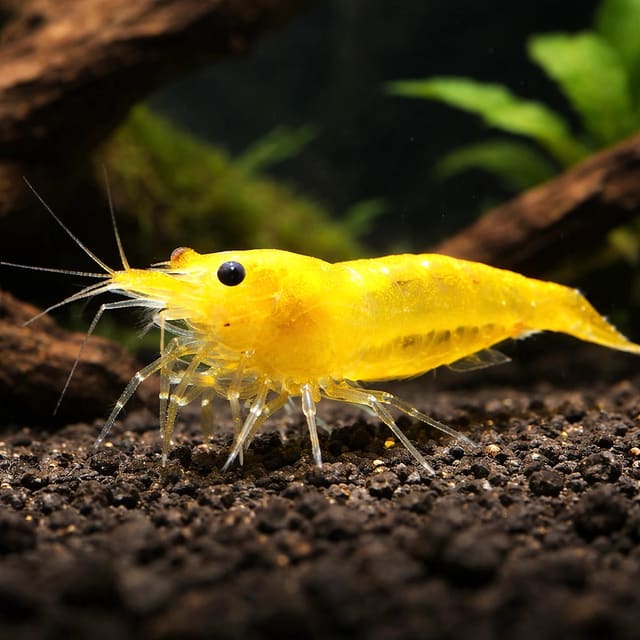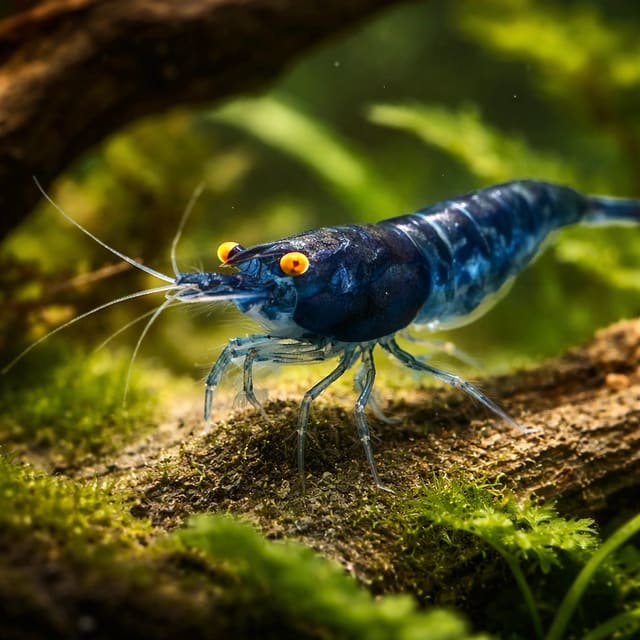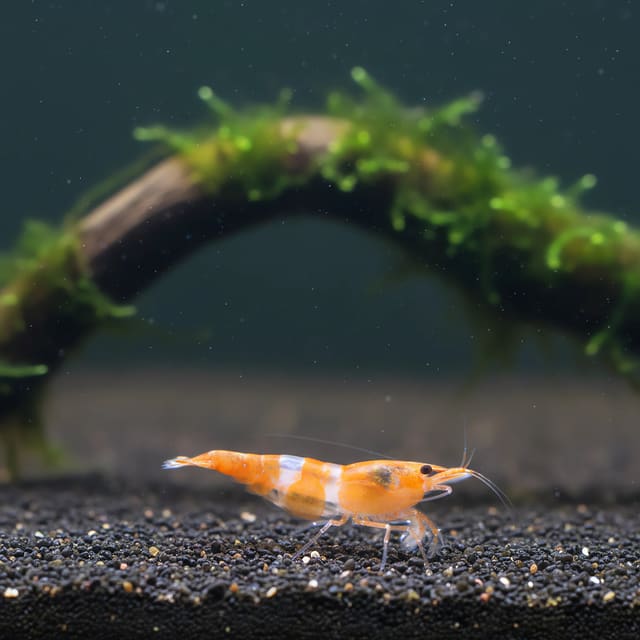
Moderate
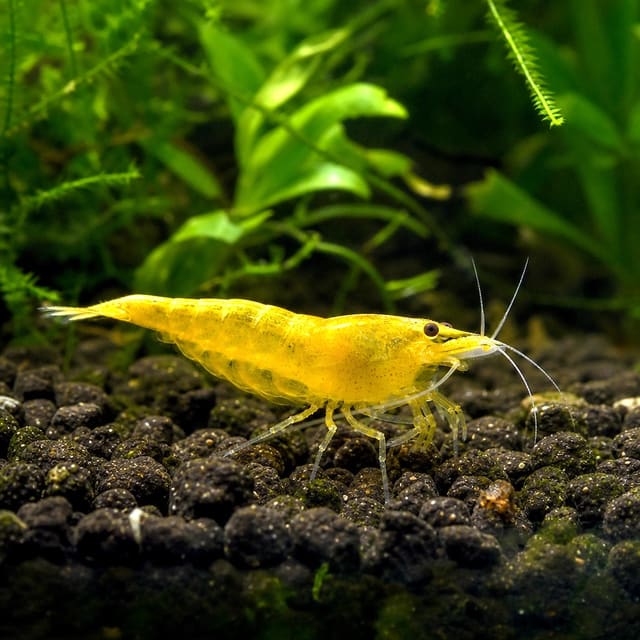
Orange Rili Shrimp (Neocaridina davidi)
17–27°C · pH 6.5–8 · 20L
£12.99

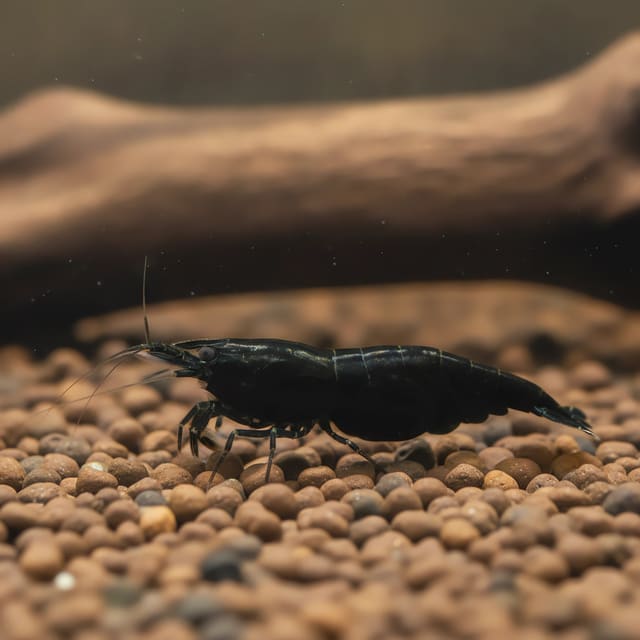
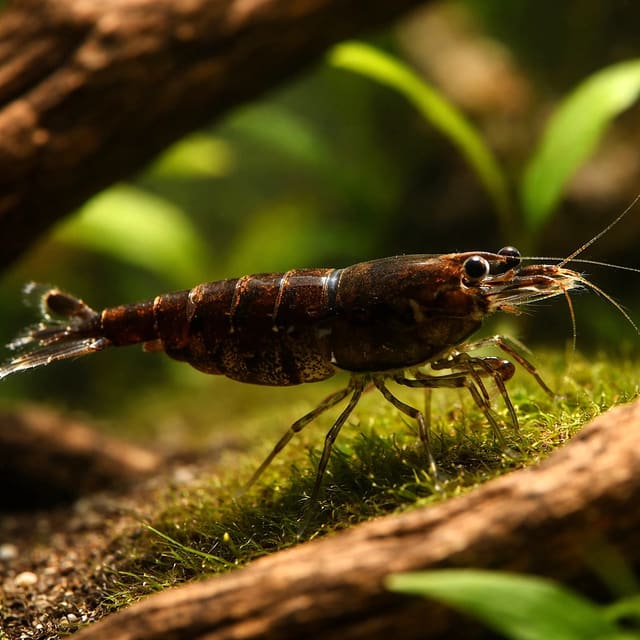
Black Rose Shrimp (Neocaridina davidi) is a peaceful dark freshwater shrimp for a mature planted aquarium. Sold individually at the 1–1.5 cm grade; provide established grazing surfaces, complete shrimp food, protected filter intakes and stable measured water.
Neocaridina davidi
Lives in groups: kept together they stay settled, active and show their best colour.
Black Rose Shrimp (Neocaridina davidi) is a peaceful dark freshwater shrimp for a mature planted aquarium. Sold individually at the 1–1.5 cm grade; provide established grazing surfaces, complete shrimp food, protected filter intakes and stable measured water.
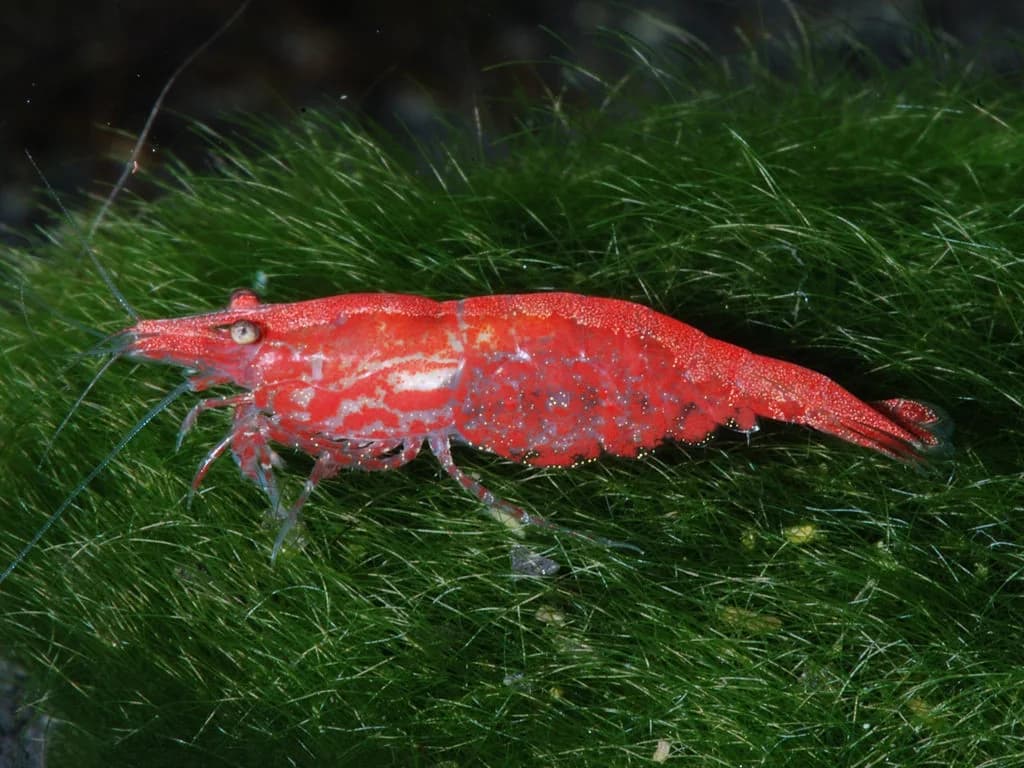
Use a mature, filtered aquarium and measured water—not a shrimp-per-litre rule. Tropical Fish Co uses 20 litres as a cautious starting policy for a small Cherry Shrimp group, above OATA's general 10-litre screen for small shrimp. Provide established grazing surfaces, cover and a protected filter inlet. No fish is guaranteed shrimplet-safe, and breeding should never be promised.
Maintain these water conditions for optimal health and vibrant colors
Black Rose Shrimp (Neocaridina davidi) is a dark-coloured freshwater shrimp for an established aquarium with plants, sheltered surfaces and a steady care routine. Much of the pleasure comes from watching the animal work its way over leaves, wood and substrate, picking at the fine growth on those surfaces. It suits a keeper who enjoys looking closely at small animals and noticing how they use a planted environment.
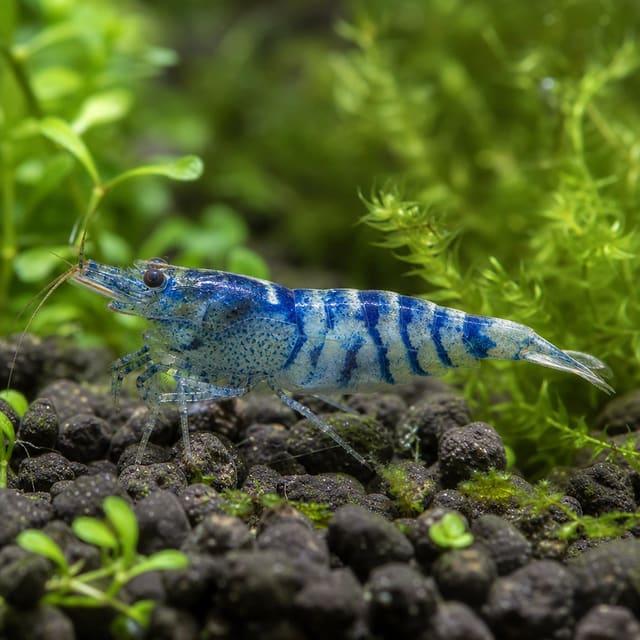
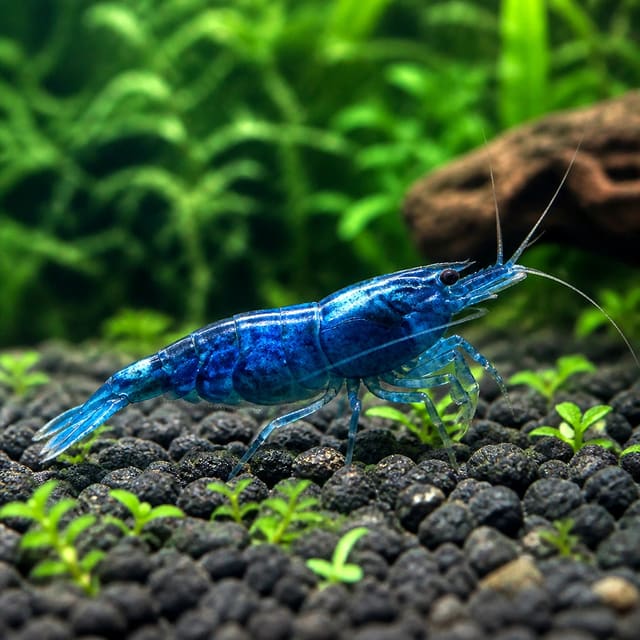
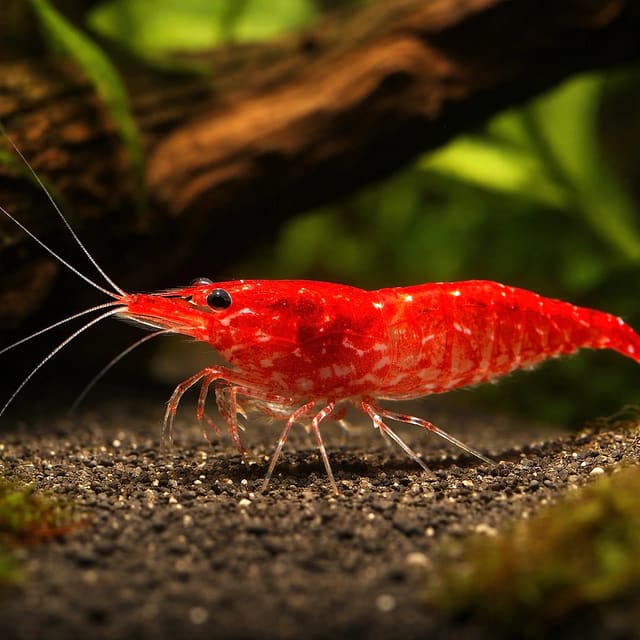
One purchase supplies one live shrimp. The recurring size grade is 1–1.5 cm. This listing has one sold form, so choose the number of shrimp you need for your planned group. A photograph is useful for understanding the Black Rose appearance, but colour and lighting in an aquarium can differ from the image on a screen.
Sex is guaranteed only when the selected option explicitly states male or female. This Black Rose Shrimp listing has no sex-guaranteed option.
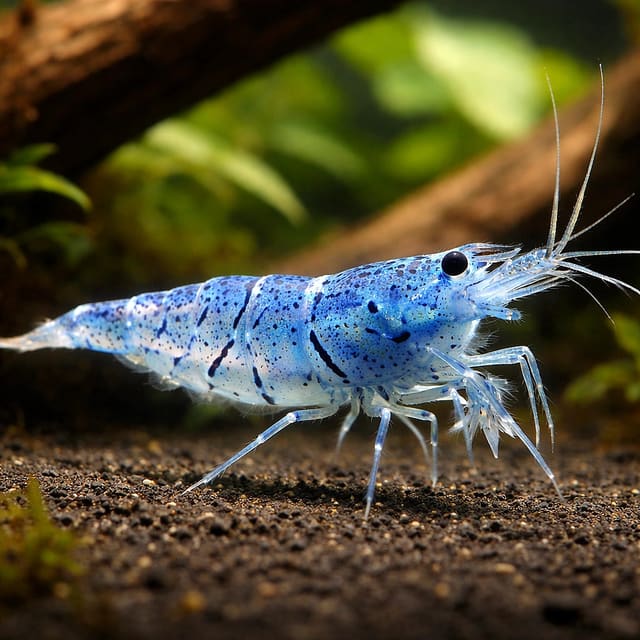
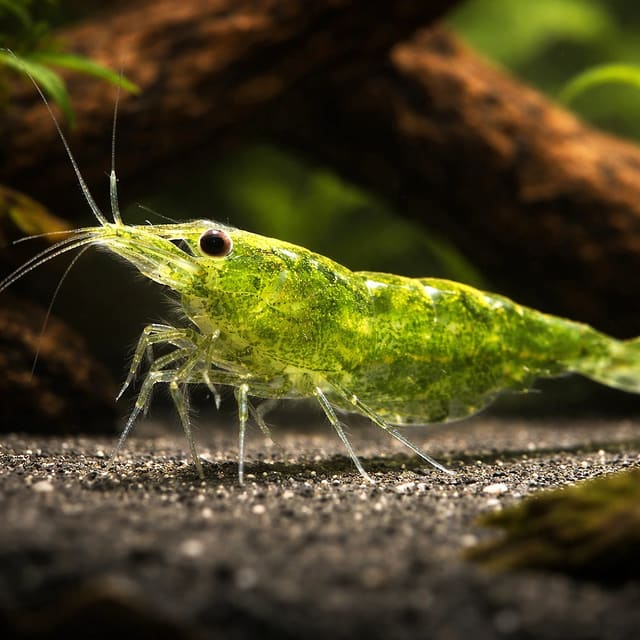
The gallery images are representative of this type of animal rather than photographs of the exact animal supplied, so colours can look slightly different from the live animal.
Think of the aquarium as a small living environment with feeding surfaces, cover and a filter that can process waste. Shrimp use much more of that environment than a patch of clear floor. Plants and suitable aquarium wood provide places to explore, while sheltered areas give the animals somewhere to withdraw. Keep enough access to inspect them and maintain the equipment without dismantling the whole display.
A newly filled tank can look ideal while still being unsuitable for livestock. Clear water does not tell you whether a filter is mature or whether grazing surfaces are established. Before ordering, test the aquarium and confirm that ammonia and nitrite remain at zero. Have an appropriate complete shrimp food ready, because visible algae alone is not a complete feeding plan.
Tropical Fish Co uses a mature, filtered 20-litre aquarium as a cautious starting policy for a small group of this species. Plan larger when other animals share the tank or when you expect a growing population. The useful questions are how stable the water is, how much feeding and grazing area exists, whether the filter intake is protected and whether every animal can reach food. A permanent shrimp-per-litre formula misses those practical limits.
A shrimp-focused display is the most straightforward way to enjoy their everyday behaviour without fish predation. A mixed aquarium needs closer assessment: even a small peaceful fish may investigate shrimp, and tiny young shrimp face greater risks. Decide whether you want to watch an adult group, maintain a particular colour line or give juveniles the best possible chance. Those aims lead to different decisions about companions and cover.
For a different colour of the same species, compare the separate Blue Dream Shrimp listing. Read the offer details for each form rather than assuming that names imply the same grade, sex or size. The cherry shrimp collection is useful for browsing colour choices. If maintaining a named colour is your priority, plan that before mixing lines and ask what is known about their background.
These shrimp can reward patient, consistent keeping. Their small size makes them easy to overlook during cleaning, and their grazing can make them appear self-sufficient, so a deliberate routine is valuable. Take time to watch a feed, check the filter guard and compare new water readings with earlier ones. That attention is more useful than treating a colour change or a few hidden shrimp as a reason to add another aquarium product.
The accepted species name is Neocaridina davidi, in the family Atyidae. Black Rose describes the aquarium colour form; it is not part of the scientific binomial. The WoRMS taxonomic record supports the species identity. It does not tell you the sex, age or eventual appearance of the individual shrimp supplied.
The species is associated with East Asia, while dark and other coloured aquarium lines are selected forms. Natural range and aquarium colour history do not establish the collection or breeding location of this particular stock. Keep the full common and scientific names together when seeking care advice so it is clear which animal and colour form you mean.
For size planning, published general descriptions put mature Neocaridina davidi at approximately 3–4 cm in length, without specifying a measurement convention. OATA's broad small-shrimp guidance uses about 3 cm. Treat these as approximate context, rather than an exact maximum for the Black Rose line. The shrimp supplied at the stated smaller grade still need an environment that can support adults and any juveniles that survive.
Do not judge the capacity of an aquarium by adding the lengths of individual shrimp. A short animal still needs access to food, safe equipment and water that remains stable between maintenance sessions. A group that fits visually into a small container may place very different demands on it once food is being added regularly.
OATA gives at least 10 litres as a broad screen for a small freshwater shrimp group. Tropical Fish Co's more cautious starting policy is 20 litres for a small group of Neocaridina davidi, as described in the Cherry Shrimp Care Guide. Extra water and footprint provide more room for equipment, feeding and ordinary changes. Neither figure is a biological minimum or a promise about how many adults any aquarium can hold.
Begin with the actual aquarium after substrate, wood and equipment have been added. The space on the label is not all usable water, and a heavily decorated tank may offer less accessible grazing area than it first appears. Build a layout you can maintain, with some open routes for inspection and sheltered surfaces where shrimp can feed without constant disturbance.
A mature filter processes the waste generated by animals and their food. Readings must show that ammonia and nitrite stay at zero for the intended load. Maturity is a functioning biological state, not a fixed number of weeks or a particular water colour. Use the freshwater shrimp keeping guide to plan the setup and equipment before choosing livestock.
Fit a fine guard or suitable sponge over any intake that could trap shrimp or their young. Inspect the guard as part of normal maintenance, because a protected inlet still needs enough water passing through it for the filter to work. Keep the outlet arranged for circulation without making the whole aquarium a forceful current. Shrimp should have sheltered places to graze as well as water movement through the system.
Use aquarium-safe plants, wood and other structures that offer accessible surfaces and shelter. Leave space to reach the filter and heater and to remove accumulated waste. Dense planting can be useful, but a layout that hides every animal and catches food where you cannot reach it makes observation harder. A balance of open and sheltered areas lets you enjoy the shrimp while keeping the environment manageable.
A secure cover helps prevent escapes. Check openings around cables and pipes while allowing equipment to operate as intended. Place the aquarium away from direct sunlight, draughts and nearby heat sources so it is easier to maintain a consistent environment. Consider the location in summer as well as in winter; a corner that feels comfortable when the tank is installed may receive direct sun later in the year.
Plan equipment access from the start. You should be able to read the thermometer, check water flow and remove the intake guard without pulling apart the planting. Keep a dedicated bucket and appropriate small cleaning tools nearby. When ordinary jobs are straightforward, it is easier to notice changes and maintain the aquarium consistently.
OATA's broad freshwater shrimp guidance gives 17–27°C, pH 6.5–8.0 and general hardness 4–18 dGH. Its carbonate-hardness range is 3–15 dKH. These are group-level planning figures, not controlled tolerance limits for the Black Rose form. Compare current holding-water measurements with your aquarium and seek advice about substantial differences before purchase. Do not choose the warmest or softest endpoint simply because it appears inside a broad range.
| Check | Practical meaning |
|---|---|
| Temperature | 17–27°C is OATA's broad shrimp guidance; choose stable shared conditions using actual aquarium and holding-water measurements. |
| pH and hardness | Broad OATA guidance: pH 6.5–8, GH 4–18 dGH and KH 3–15 dKH. Keep units with readings and avoid abrupt changes. |
| Ammonia and nitrite | Both should measure zero before adding shrimp and during routine keeping. |
| Nitrate | OATA advises no more than 20 mg/l above the normal tap-water level; compare both source water and the aquarium. |
UK tap water is not one standard chemistry. Its composition varies by supply, and conditions in an aquarium can be affected by substrate, rocks, top-ups and treatments. A result from the water supplier can help you understand the source, but it does not replace testing the aquarium. Keep measurements clear enough that you can discuss them with the fishroom without relying on descriptions such as soft or normal.
General hardness and carbonate hardness are separate measurements, and neither can be inferred from pH alone. The water chemistry guide explains these terms. If you use treated or softened domestic water, identify the process before assuming it suits shrimp. Changes intended for household use do not automatically create appropriate aquarium water.
The water parameter matcher can help organise your readings and compare stated guidance. Use the result alongside your stocking, equipment and maintenance history. A chart cannot tell whether food is decomposing behind an ornament or a filter inlet is becoming blocked, so routine observation remains essential.
Use an independent thermometer to understand how the aquarium changes through the day. Whether a heater is needed depends on those measurements and the conditions chosen for all the inhabitants. A cool room may need a suitable thermostatic heater, while a warm room needs attention to overheating. A UK address or a tropical label alone does not answer that question.
Position equipment according to its instructions, and check that heating and circulation continue to work after maintenance. Avoid repeated temperature adjustments to encourage colour or breeding. The aim is a stable environment that meets the animals' needs, with gradual change when a deliberate adjustment is necessary. Contact the fishroom before arrival if your measured conditions differ substantially from the holding water.
The biological filter and established surfaces are working parts of the aquarium. Ammonia from waste is converted to nitrite and then nitrate by the filter's bacterial community. The RSPCA aquarium environment advice explains that process. A planted aquarium still needs functioning filtration and appropriate maintenance; plants and grazing shrimp do not make waste disappear.
Increase livestock and feeding gradually, and test after changes. A system that has managed a small group may need more attention when extra animals are added or food portions increase. Keep a short record of water tests and recent work so you can see whether a trend started after an identifiable change.
OATA's general shrimp sheet recommends water testing at least weekly and a 25% weekly partial water change. Treat that as broad maintenance guidance and adjust the practical routine to measured conditions, actual stocking and advice for your system. A quarter of 20 litres of actual water is 5 litres; allow for the fact that substrate and equipment reduce the water volume below a tank's stated capacity.
Condition replacement tap water appropriately for chlorine and chloramine, and avoid sudden changes in temperature or chemistry. Take particular care when siphoning around small shrimp. Watch the area you are cleaning and the removed water so an animal is not carried away unnoticed. Work methodically through accessible waste rather than stripping every surface clean at once.
Check the filter guard for accumulated debris. If biological media needs cleaning, OATA advises rinsing it lightly in removed aquarium water rather than chlorinated tap water. Follow the filter manufacturer's instructions for other components. Restore flow while preserving the established biological media, then confirm that the equipment has restarted properly.
Keep aquarium tools separate from household cleaning equipment and rinse soap thoroughly from hands before working in the tank. Consider recent sprays, new decorations, plant additions and treatments when investigating a sudden change. Small aquariums are easier to manage when you know what has entered them and can relate maintenance to the water readings.
Black Rose Shrimp spend time grazing biofilm and soft growth on aquarium surfaces. Biofilm is the thin living layer that develops on submerged materials, and a mature aquarium can offer many feeding opportunities across plants, wood and substrate. Provide an appropriate complete shrimp food as well. An aquarium can have plenty of visible algae without providing a complete or consistent diet for every animal.
Use a suitable sinking food and follow its guidance while watching the group. The store's species care guide recommends adjusting portions through observation rather than imposing one universal feeding schedule. Grazing availability, the size of the group, other animals and the presence of young shrimp all affect what happens to a portion of food.
Place food where you can see whether shrimp reach it. If other animals immediately consume it, a meal has entered the aquarium without necessarily feeding the shrimp. A sheltered feeding spot can help observation, but it should remain accessible for removing surplus food. When competition develops around a single place, consider how to improve access without automatically increasing the total amount offered.
Notice whether food is regularly left to soften and decay. Remove recurring excess and make the next portion smaller. Food hidden in plants is still part of the aquarium's waste load, so an apparently empty feeding spot does not tell the whole story. Look around the neighbouring surfaces and check that the portion was eaten rather than moved elsewhere.
Suitable variety can accompany a complete shrimp diet, with foods selected for aquarium use and the particular product instructions. Avoid making household scraps the foundation of the feeding routine. The goal is predictable nutrition and manageable waste. Adding more kinds of food will not correct an aquarium that lacks mature filtration or a group that cannot safely reach the feeding area.
Changes in colour are not a reliable instruction to add colour food or minerals. Appearance can vary with lighting, background, lineage and condition. If a shrimp becomes less active or stops feeding, look at the water, equipment and recent changes first. A clear observation of feeding and body condition gives better information than repeatedly changing foods in response to a photograph.
Shrimp grow by moulting their exoskeleton. An empty shell can resemble a dead shrimp, so look carefully before deciding what has happened. Hiding may occur around a moult, but hiding alone does not diagnose a problem. Shelter is useful throughout routine keeping, especially when animals need to withdraw from activity in the aquarium.
Observe changes across the group: unusual inactivity, persistent restless swimming, altered feeding, damaged appendages or changes in appearance all deserve attention. Measure temperature, ammonia and nitrite promptly if several shrimp behave differently at once. Review pH, hardness and nitrate in context, and check filter flow, aeration, heating and recent maintenance.
Copper can be toxic to aquatic invertebrates. Read the exact current label and every invertebrate warning before using an aquarium treatment, and seek suitably qualified advice if compatibility is unclear. Do not assume that a product suitable for fish is suitable for shrimp, or that a familiar symptom always has the same cause. This care advice does not provide a universal safe dose or a medication recipe.
Take clear photographs of a concerning change and record the water readings, affected animals and recent additions. That gives the fishroom clear information when you seek help. A white mark, a shell or a hidden shrimp can have different explanations; avoid changing several products and water conditions before establishing what needs attention.
Ask for current holding-water readings and animal-specific arrival advice before delivery. Have the aquarium ready and allow time to receive and inspect the parcel. Acclimation should be gradual and based on the animal's condition, the journey and the difference between source and aquarium water. A fixed drip time is not appropriate for every situation.
Observe new arrivals carefully during the first week, paying particular attention to water quality and feeding access. Use dedicated wet equipment where practical and maintain a suitable isolation plan for new livestock. A separate container is only useful if it provides safe, stable conditions. Avoid moving shrimp repeatedly between unsuitable temporary arrangements.
If juveniles appear, remember that females carry eggs beneath the abdomen and young of this species hatch as bottom-living juveniles. A freshwater colony is biologically possible, but its survival depends on food, shelter, equipment, water and companions. Do not plan the aquarium around a promised growth rate or assume that an unsexed purchase contains a breeding group.
Never release shrimp or aquarium contents into the wild. If your circumstances change, arrange suitable rehoming and handle unwanted water, plants and substrate so aquarium organisms cannot enter natural waterways. The care commitment includes maintaining the environment and managing any population changes over time.
Black Rose Shrimp are peaceful grazers, but their safety depends heavily on what shares the aquarium. OATA warns against fish that can fit shrimp into their mouths and known predators. Small size and a peaceful sales description do not guarantee that a fish will ignore shrimp, especially newly hatched young. Screen adult mouth size, hunting behaviour, territory, feeding competition and shared water conditions before choosing a combination.
Keeping the aquarium focused on shrimp removes fish predation and makes it easier to observe grazing and feeding. You still need adequate space, mature filtration, appropriate food and safe equipment. A growing colony changes the load and feeding demand over time, so continue monitoring rather than treating a successful first few weeks as proof that the aquarium can support unlimited animals.
Plan cover that remains useful after pruning. If all the shelter is removed in one maintenance session, the community has changed even though no animal has been added. Leave accessible retreats and check that shrimp can reach feeding places without crossing an area controlled by another inhabitant.
Other shrimp or snails also need their own care requirements checked, including their adult size, feeding needs and behaviour. Sharing a broad freshwater label does not establish a match. The same applies to different named colour lines: a visual comparison is useful when shopping, but it is separate from a decision about mixing animals in one aquarium.
If you keep fish with the shrimp, watch what happens when food arrives and when a shrimp moves into the open. Repeated investigation, chasing or missing juveniles may change your judgement about the combination. Have a workable separation plan rather than relying on cover to solve every problem. An adult display and a nursery intended to protect tiny young require different levels of caution.
For preserving the Black Rose colour line, consider a dedicated group and ask about lineage before mixing forms. Care conditions do not certify colour inheritance. The related product suggestions offer other animals to research; they are not a universal tankmate list or a promise about the appearance of future offspring.
General species descriptions give approximately 3–4 cm at maturity without a stated measurement convention, while OATA's broad small-shrimp guidance uses about 3 cm. These are approximate planning figures, not an exact maximum for this colour line.
Tropical Fish Co uses a mature, filtered 20-litre aquarium as a cautious starting policy for a small group. Plan larger with other livestock or a growing population; this is not a shrimp-per-litre allowance.
For Black Rose Shrimp, use OATA's broad social-shrimp guidance of at least five as a starting point. Check mature filtration, usable grazing area and feeding access before increasing the group.
The store's species guide assesses this care as intermediate. A beginner needs to understand filter maturation, water testing, gradual change, intake protection and feeding before adding shrimp.
They graze biofilm and soft growth, with an appropriate complete sinking shrimp food as the nutritional base. Observe access and leftovers, and adjust portions so food does not repeatedly decay.
OATA's broad shrimp guidance gives 17–27°C, pH 6.5–8 and GH 4–18 dGH. These are group-level planning values; compare measured holding and aquarium water and avoid abrupt changes.
No fish is guaranteed shrimp-safe, especially for tiny juveniles. Avoid known predators and fish able to swallow shrimp, and assess feeding competition, cover and shared water before any combination.
They are peaceful grazing shrimp. The main community concern is whether companions prey on, harass or outcompete them, so observe the full aquarium rather than relying on a peaceful label.
Tropical Fish Co hand-packs livestock in oxygen-filled bags and insulated boxes, with a heat pack when weather calls for it, and uses a licensed live-animal courier. Be present for the confirmed delivery and inspect that day. A Live Arrival Guarantee claim requires your order number, same-day contact and a continuous unboxing video showing the sealed parcel being opened and the animals still in their sealed bags.
The OATA freshwater shrimp and snail sheet provides broad aquarium advice on water, groups, maintenance and predator risk. The store's species care guide develops these points for Neocaridina davidi while distinguishing aquarium planning policies from biological limits.
Read the current delivery and Live Arrival Guarantee policy before the confirmed arrival date. Prepare to receive the parcel and record it from the sealed box through inspection. The continuous video supports a guarantee claim; acclimation follows the animals' condition and current advice from the fishroom.
No reviews for this item yet. Bought one? Honest reviews only, good or bad.
What customers say about ordering from us
I have a small group of long finned mountain minnows. So was delighted to be able to order ten of this variety to increase the genetics in my tank . The ones I recieved are healthy but it’s to early to give a verdict on wether they are of a long finned type since they are small currently.
Gordon Walker · 23 Sept 2026
100% success travel and "installation". Pleased with quality of purchase. The Siamese fighter a bit "shy" so have not yet seen him at his best yet but looking good. Happy customer. GG
George E Garratt · 21 Sept 2026
Reviews of our shop, collected by Judge.me, an independent third-party review collector. Newest first.