Easy
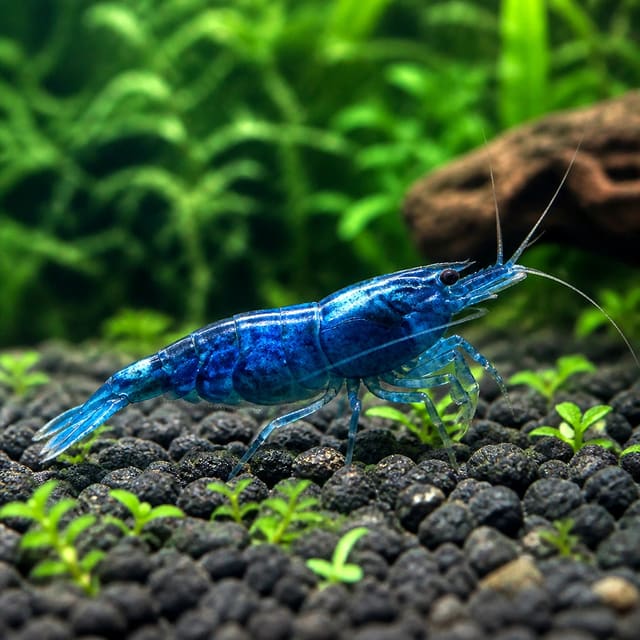
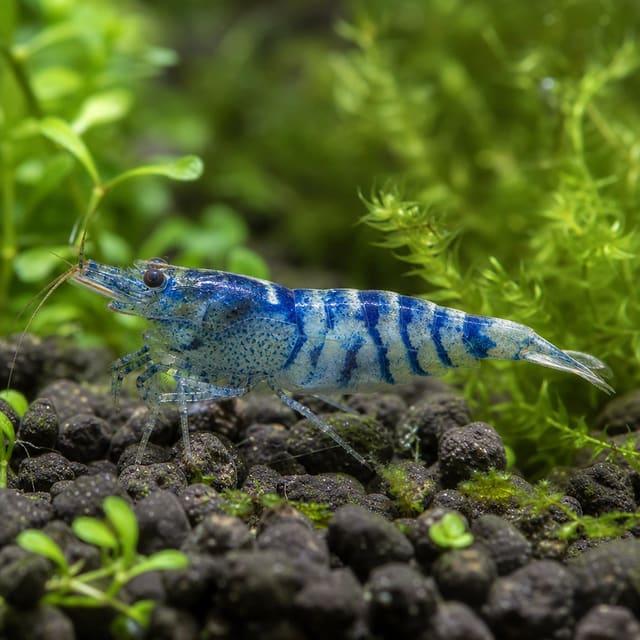
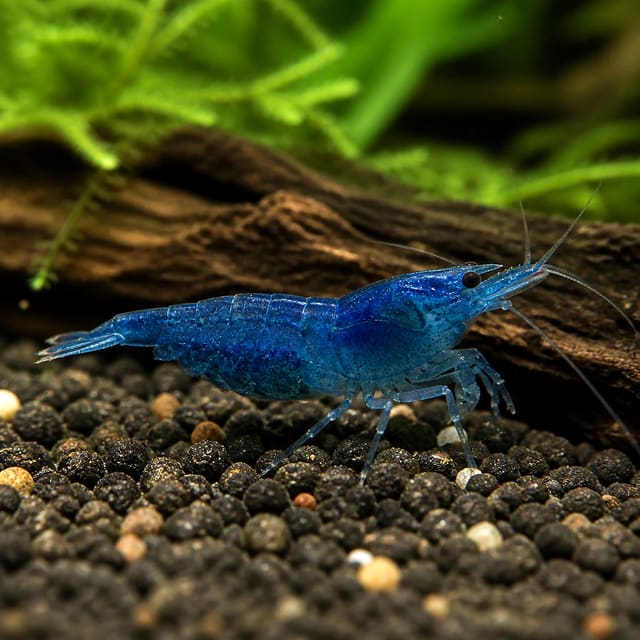
Blue Dream Shrimp (Neocaridina davidi)
18–28°C · pH 6.5–8 · 20L
£16.19

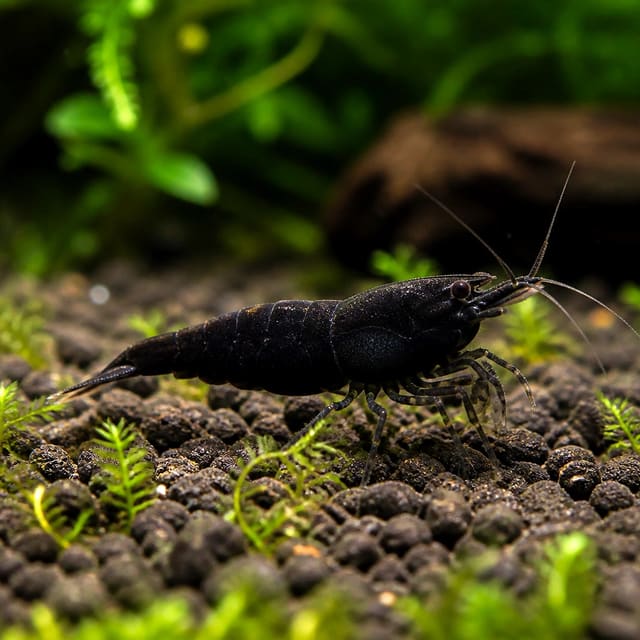
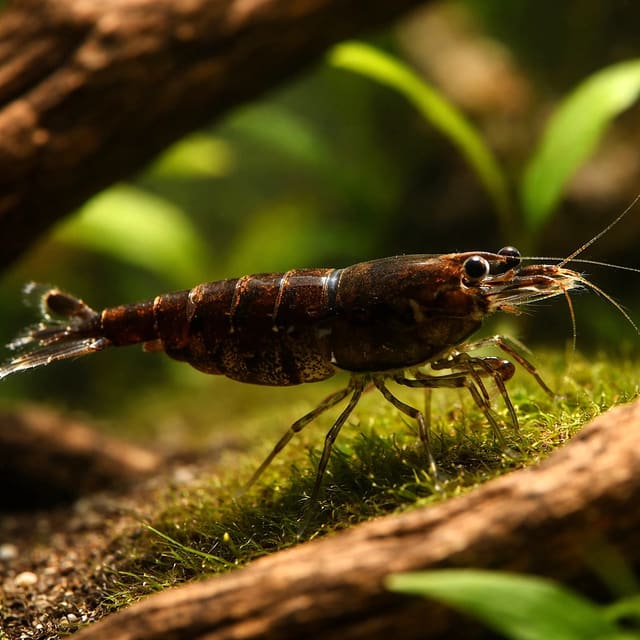
Black Star Shrimp (Neocaridina sp.) is an unidentified Neocaridina trade form for keepers with a mature filtered aquarium, measured water and a low-predation plan. One live shrimp is supplied per purchase at a 1–1.5 cm dispatch grade; this is not an adult-size or sex guarantee.
Neocaridina sp.
Lives in groups: kept together they stay settled, active and show their best colour.
Black Star Shrimp (Neocaridina sp.) is an unidentified Neocaridina trade form for keepers with a mature filtered aquarium, measured water and a low-predation plan. One live shrimp is supplied per purchase at a 1–1.5 cm dispatch grade; this is not an adult-size or sex guarantee.
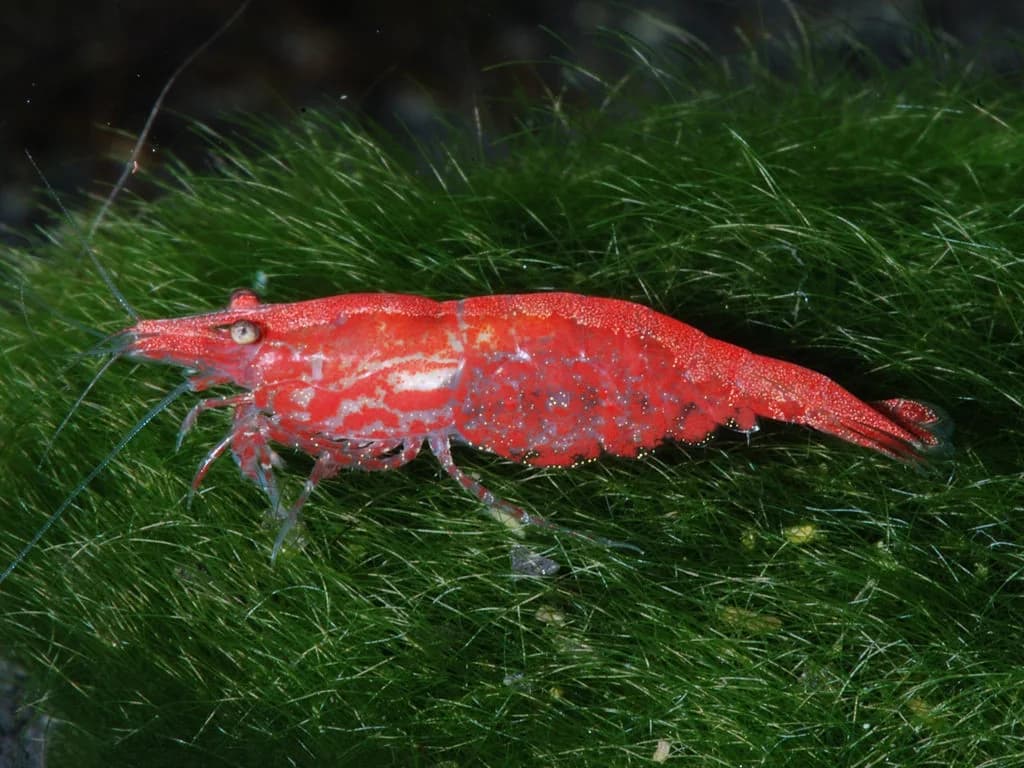
Use a mature, filtered aquarium and measured water—not a shrimp-per-litre rule. Tropical Fish Co uses 20 litres as a cautious starting policy for a small Cherry Shrimp group, above OATA's general 10-litre screen for small shrimp. Provide established grazing surfaces, cover and a protected filter inlet. No fish is guaranteed shrimplet-safe, and breeding should never be promised.
Maintain these water conditions for optimal health and vibrant colors
Black Star Shrimp is the trade-form name for this very dark aquarium shrimp. The scientific label is Neocaridina sp., which deliberately stops at the genus; WoRMS places the accepted genus in Atyidae. The exact species has not been identified, so the care advice here follows the genus Neocaridina and its care group. That boundary matters: colour, a photograph and a trade name cannot prove a species or make every familiar cherry-shrimp number apply automatically.
This is a small live-animal purchase with a surprisingly important first question: does your established aquarium already provide stable, measured conditions? Shrimp react to changes in water chemistry, filtration, oxygen, food and contaminants at their own scale. A clear aquarium can still be immature, short of grazing surfaces or vulnerable to a sudden swing. Start with the aquarium you can measure and maintain, not with a colour label or a stocking formula.
| Trade form | Black Star Shrimp |
|---|---|
| Scientific label | Neocaridina sp.; genus-level identification only |
| Dispatch grade | 1–1.5 cm |
| Sold unit | One live shrimp per purchase |
| Sex selection | No male or female choice is offered |
| Care assessment | Intermediate: suitable for a keeper prepared to measure water, mature filtration, control contaminants and assess predation |
The 1–1.5 cm figure describes the animal when supplied. It is not a verified adult length and should not be used to calculate permanent capacity. One purchase supplies one shrimp, not a colony or a guaranteed breeding group. Sex is guaranteed only when the selected option explicitly states male or female. This Neocaridina black star shrimp listing has no sex-guaranteed option.
Choose it because you want this dark trade form and can offer a mature freshwater invertebrate setup. Do not choose it as a guaranteed cleaner, a shortcut to algae control or a promise of rapid breeding. Shrimp graze, but the aquarium must still be maintained and a complete food supply must still be planned. If colour is the main decision, the current cherry shrimp collection is the useful place to compare available forms before committing to one.
| Suits | A keeper with a genuinely mature filtered aquarium, repeatable water-change routine, measured source and tank water, protected filter intake and enough patience to adjust a small invertebrate gradually. |
|---|---|
| Pause first | A new or recently disrupted aquarium, an unmeasured water source, a community chosen only by peaceful labels, or any setup in which medicines and plant treatments have not been checked for invertebrate use. |
Intermediate does not mean complicated equipment is required. It means the important decisions are made from the aquarium in front of you. A modest system with stable water, established surfaces and careful records can be more suitable than a larger display that changes unpredictably. The keeper should be able to explain the last water change, the latest test results, what every additive does and how food reaches the shrimp.
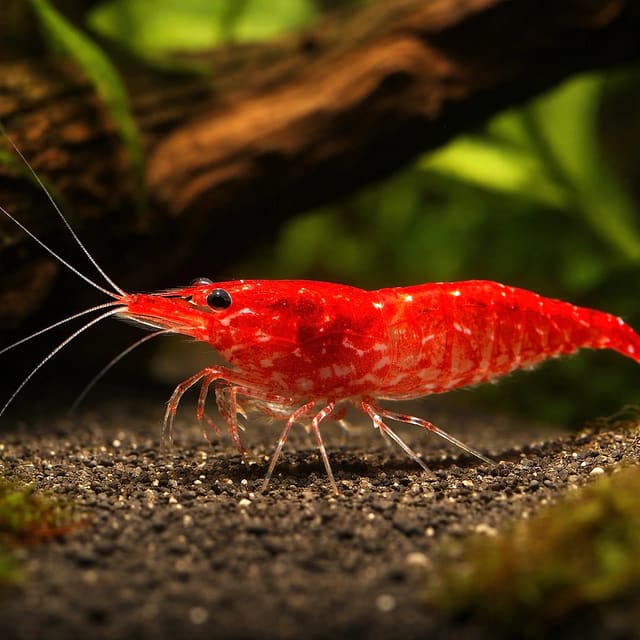
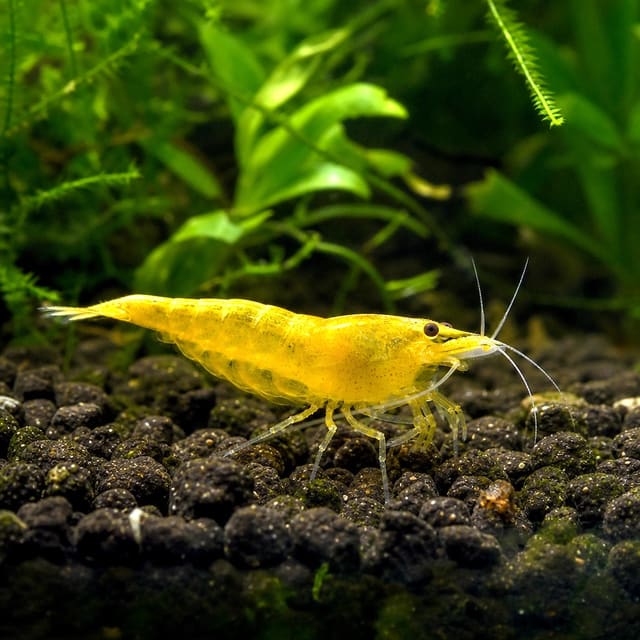
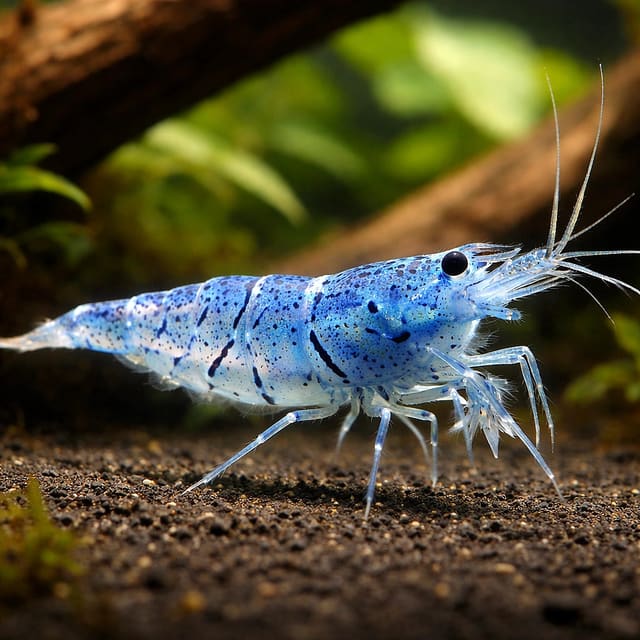
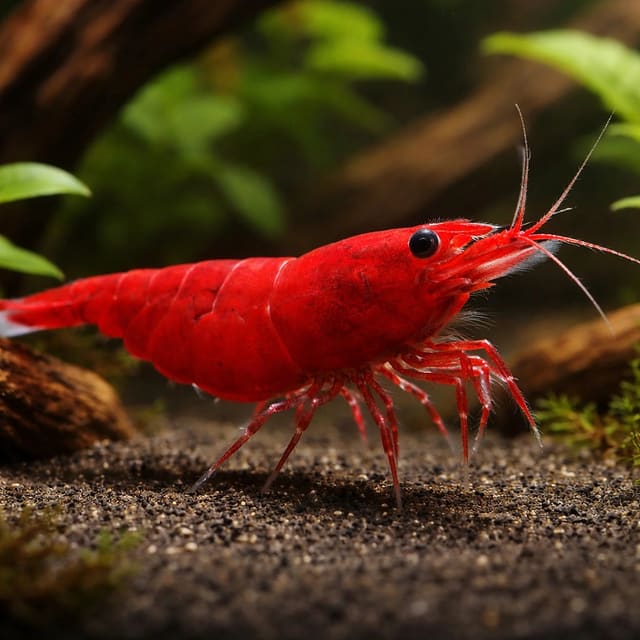
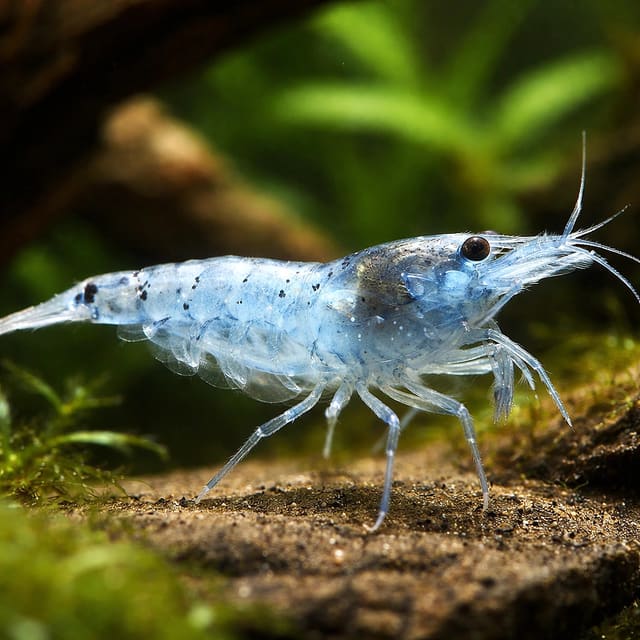
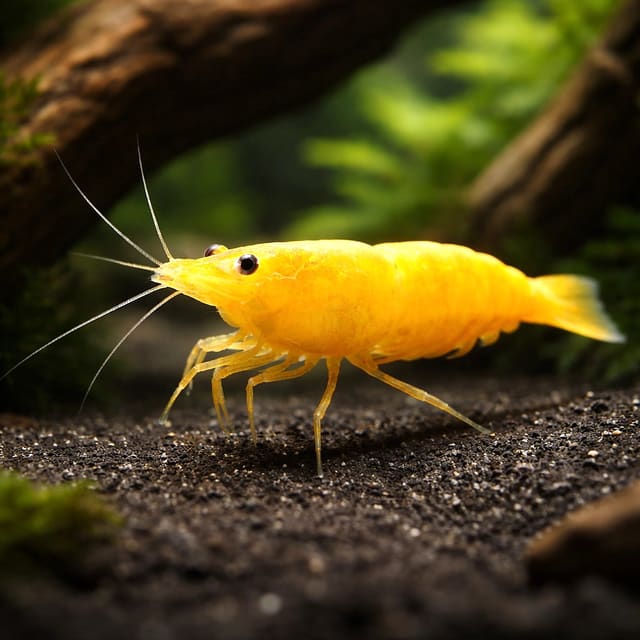
Black Star describes appearance in trade, not a welfare shortcut. The dark animal shown in the gallery cannot establish sex, age, adult length or species. Judge suitability from the documented offer and the receiving aquarium, then expect individual colour and maturity to vary.
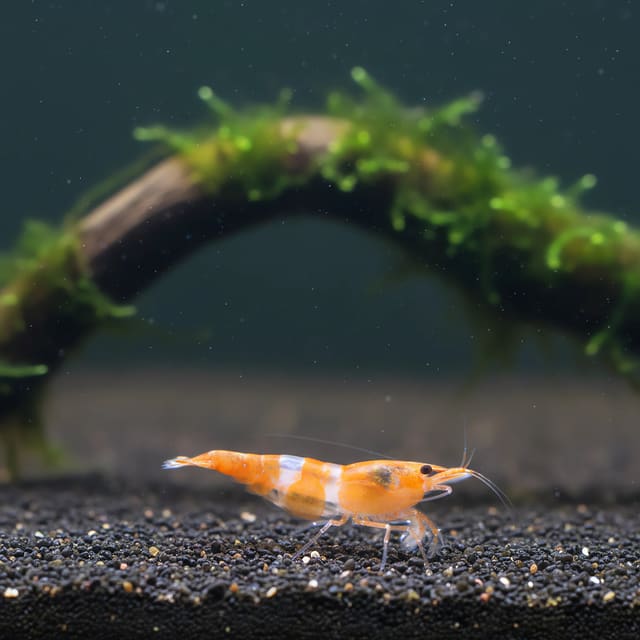
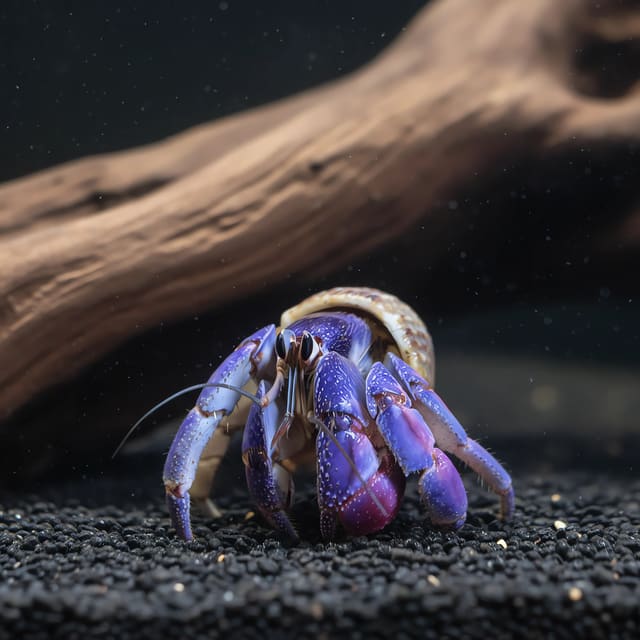
Gallery images have been digitally enhanced to improve image quality. Natural colour, pattern, size and maturity can vary between live animals.
Good shrimp care begins before the parcel arrives. The useful target is a stable system that you understand: a working biological filter, conditioned source water, established surfaces, appropriate gas exchange, safe food and a repeatable maintenance routine. Equipment labels and aquarium age are secondary to what the animals and water results actually show.
The following values come from OATA's general guidance for freshwater shrimp and snails. They are deliberately broad and are not a species-specific optimum for this unidentified Black Star Shrimp. Use them to screen out an obviously unsuitable plan while also asking for current holding-water values and comparing them with your aquarium.
| Measure | Broad group guidance |
|---|---|
| Temperature | 17–27 °C |
| pH | 6.5–8.0 |
| General hardness | 4–18 dGH |
| Carbonate hardness | 3–15 dKH |
| Ammonia | 0 mg/L |
| Nitrite | 0 mg/L |
| Nitrate | No more than 20 mg/L above the normal level in the tap water used |
A number is useful only with its name, unit, method and context. pH does not tell you GH, GH does not tell you KH, and a conductivity or TDS reading does not identify which dissolved substances are present. Measure source water and aquarium water separately. If a household ion-exchange softener is involved, do not assume its output is suitable merely because it reads as soft; use an appropriate untreated or deliberately prepared source and build a repeatable plan.
The aquarium water-parameters guide explains what the common tests do and do not tell you. Once you have real readings, the water-parameter matcher helps organise the comparison. Neither replaces gradual adjustment or turns a genus-level range into an exact species prescription.
RSPCA aquarium guidance explains the role of biological filtration in processing ammonia through nitrite to nitrate. In practice, a mature biological filter processes the aquarium's ordinary waste without a detectable ammonia or nitrite result on the test method in use. A calendar date, clear-looking water or a running pump does not prove this. Beneficial microbial communities need time, oxygen, flow and a suitable surface, and their capacity must keep pace with feeding and animal load. Add livestock gradually rather than assuming a small animal produces no meaningful waste.
Choose a filter that gives dependable biological capacity and gentle, usable flow. Fit a fine sponge or purpose-made guard over an exposed intake so this small shrimp cannot enter it. Check the guard frequently: a blocked sponge can reduce flow and gas exchange. When debris restricts it, rinse it gently in water removed from the aquarium, never run it under the tap, because chlorine or chloramine can damage the established filter community.
Plan for a power cut or stalled filter. Know how quickly the aquarium loses circulation, where you can create surface movement and how you will keep filter media wet and oxygenated. Do not compensate for weak filtration by feeding less than the animal needs, and do not compensate for overfeeding by assuming a larger filter makes decomposing food harmless.
OATA recommends at least 10 litres for a group of small freshwater shrimp and says a larger aquarium is needed when fish are included. Treat that as a broad group planning screen, not a species-specific minimum, permanent capacity or shrimp-per-litre rule. More water can slow sudden temperature and chemistry changes, but volume alone does not supply grazing area, refuge, oxygen or maintenance access.
Footprint matters because shrimp spend much of their time on surfaces. A low, well-planted aquarium can offer more accessible grazing and refuge than a tall container of the same volume. Leave room around wood, stone and plants so detritus can be inspected and removed. Keep equipment accessible; a beautiful layout that must be dismantled every time the intake blocks will not support consistent care.
The broad OATA group guidance also says shrimp are generally social and recommends at least five. That is a sensible group-level starting point, not proof that five Black Star Shrimp are a biological minimum or that a group will breed. Every purchase here supplies one animal, so plan the intended total group, food supply, cover and filtration before choosing a quantity. Increase numbers gradually so the filter and feeding routine can respond.
Use aquarium-safe plants, mosses, wood, rocks, fine gravel or sand to create a mixture of shaded refuge and open feeding area. Mature surfaces support microbial films and fine edible material, but visible film does not guarantee a complete diet. The goal is choice: places to graze, places to shelter during vulnerable periods and clear routes where you can observe the shrimp.
Rinse or quarantine plants and hardscape according to their source. Pesticide or treatment residues are a plausible invertebrate risk, so a plant sold for a garden pond or grown with unknown chemicals should not go directly into the aquarium. Avoid metal clips, decorations or repair materials of uncertain composition. A secure cover is sensible because shrimp can climb or leave the water when conditions or flow routes encourage it.
Keep the aquarium away from direct sunlight, radiators, cold draughts, loud vibration and repeated disturbance. Use lighting on a consistent day-night schedule appropriate to the plants rather than extending the photoperiod to force algae. Algae growth is not the same as safe, complete shrimp food, and excess light can destabilise temperature and plant balance.
The first shrimp-tank guide gives a fuller setup sequence, including filter-intake protection, measured source water, grazing surfaces and predation planning.
OATA's broad guidance describes freshwater shrimp as grazers and recommends supplementing with algae wafers or commercial freshwater-shrimp pellets. Offer a nutritionally suitable food in a place where you can see whether this animal reaches it. Fish and faster invertebrates can remove food before a small shrimp feeds, so watching access is more useful than assuming a pellet placed in the tank was available to everyone.
OATA suggests feeding freshwater shrimp and snails two or three times a week and allowing at least 30 minutes for pellets or wafers. Use that as a starting observation window, not a rigid prescription for every aquarium. The correct portion depends on group size, mature grazing, competition, temperature and the food itself. Remove food that remains and begins to break down, then reduce the next portion. Persistent excess raises the waste burden; an aquarium that looks clean can still accumulate dissolved pollution.
Do not diagnose a single poor moult, colour change or quiet day as a specific mineral or protein deficiency. Review water, temperature, recent additions, food access, filter performance and the animal's condition together. Adding calcium, minerals, salt or a special food without a measured reason can create a second chemistry problem.
Freshwater shrimp are sensitive to copper, and OATA advises checking that treatments are safe for invertebrates. This does not create one universal lethal threshold or mean every product containing a trace element behaves identically. Toxicity depends on the animal, chemical form, concentration, exposure time and water chemistry.
Before adding a medicine, fertiliser, algaecide, water conditioner or plant treatment, read the exact current label and active ingredients. Confirm that the manufacturer expressly addresses aquarium invertebrates and the intended use. Do not copy a dose, treatment duration or clearance period from a fish forum or from another shrimp species. If treatment is uncertain, obtain competent aquatic advice. Moving an animal is useful only when the receiving system is already cycled and closely matched; an improvised container may add temperature, ammonia and chemistry stress.
A single test is a snapshot. Record the date, time, temperature, pH, GH, KH, ammonia, nitrite and nitrate alongside feeding, water changes and livestock additions. Consistent method matters: use the stated sample volume, reagent order, mixing and wait time, and replace expired reagents. When a result looks surprising, repeat it correctly before making a large change.
Look for linked changes. Falling flow, heavier feeding and rising nitrate may point towards accumulating waste or a clogged intake. A pH shift after a top-up may relate to the source water or substrate rather than the shrimp. A quiet shrimp after arrival may reflect transport, but it still deserves a check of temperature, oxygen, ammonia and nitrite. The aim is not to diagnose from one sign; it is to find a measured cause before adding chemicals.
Respond proportionately. Prepare conditioned, temperature-compatible water before an emergency rather than improvising after a poor result. Restore safe circulation and gas exchange when equipment fails. If the animal is collapsing, breathing abnormally or unable to right itself, seek prompt aquatic-experienced advice while documenting the water and recent changes. Avoid replacing one sudden shock with another.
Test ammonia, nitrite, nitrate, pH and hardness regularly, and record results so a drift is visible before it becomes a crisis. OATA recommends weekly testing and a weekly 25% partial water change as broad group guidance. Let the measured aquarium, source water and animal condition determine whether additional action is needed. Prepare replacement water with an appropriate conditioner and match temperature and chemistry closely enough to avoid a sudden swing.
Siphon accessible waste without stripping every mature surface at once. Check the filter guard, flow, heater if used, thermometer, cover and any air line. Prune plants so water can move through the habitat while retaining fine cover. Top-ups replace evaporated water, not removed minerals or dissolved waste, so they do not substitute for water changes.
Watch for a change in activity, persistent hiding, unusual swimming, faster breathing, loss of feeding response, unexpected colour change, damaged appendages, abnormal swelling or exoskeleton damage. These signs do not diagnose one disease. First verify water and equipment, review recent changes and contact an aquatic-experienced professional when the cause or treatment is uncertain. Avoid reflex medication in a shrimp aquarium.
Prepare the receiving aquarium before the courier arrives. Have a clean container, net or transfer tool, thermometer and water tests ready. Before opening the parcel, preserve the sealed condition and the shrimp's condition on arrival so the Live Arrival Guarantee requirements can be met if anything is wrong.
The safe pace depends on the difference between waters and the animal's condition, not on a fashionable drip rate. A long adjustment in a small open bag can introduce its own risks, while temperature-only floating ignores chemistry. Work calmly, keep the process clean and ask for help if the measurements or condition make the next step unclear.
Never release Black Star Shrimp, eggs, plants, substrate or associated aquarium water into a pond, drain, stream, river or canal. If you can no longer keep the animals, contact the seller or arrange responsible rehoming with a prepared keeper, passing on the trade identity and health history. Keep transport water and equipment contained so aquarium organisms do not reach natural waterways.
A shrimp can coexist peacefully and still be eaten. Labels such as community fish, nano fish or peaceful fish describe only part of the risk. OATA's broad rule is direct: do not mix freshwater shrimp with predatory fish or fish that can eat them. For a 1–1.5 cm arrival, assess the animal at its supplied size and any smaller life stage that could appear later.
A shrimp-only aquarium removes fish predation and makes feeding access easier to observe. It does not remove the need for correct water, mature filtration, adequate food or quarantine. Other shrimp and snails can compete for prepared food and grazing surfaces, and mixing unidentified colour forms can complicate lineage. Keep a simple stocking history so you know what entered the aquarium and when.
Mouth size is useful but not sufficient. Hunting behaviour, life stage, hunger, cover and opportunity matter. Do not use one successful adult-shrimp photo as proof that every smaller shrimp will be safe. Repeated hiding, missing appendages, frantic swimming, failure to feed or unexplained disappearances are reasons to reassess the combination.
Another invertebrate may avoid direct predation but still need different temperature, pH, hardness, current or food. An unidentified Neocaridina trade form should not be mixed on the assumption that all Neocaridina, Caridina and named colour lines share one optimum. Compare the exact identity and holding water of each animal, then choose one stable plan that suits all of them.
If colour-line breeding matters, keep lines separate and keep records. This page does not promise a breeding outcome or establish the genetics of Black Star Shrimp. A photograph cannot verify lineage, sex or whether mixing two trade forms will preserve a desired colour.
Choose companions only after checking predation at the shrimp's smallest stage, shared water, feeding access, refuge, filter flow and a separation plan. Avoid predatory fish and any fish able to eat the shrimp. No named animal is guaranteed as a universal tank mate.
An adult length is not stated because this trade form is identified only as Neocaridina sp. The shrimp is supplied at a 1–1.5 cm dispatch grade; that is its size when sent, not a verified adult maximum.
OATA broadly recommends at least 10 litres for a group of small freshwater shrimp and a larger aquarium when fish are included. That is a group planning screen, not a species-specific minimum. Choose enough stable volume, footprint, mature grazing area, cover and filtration for the whole planned community.
OATA's broad shrimp guidance recommends at least five because shrimp are generally social. Treat five as group-level guidance, not a guaranteed breeding group or a fixed rule for this unidentified trade form. One purchase supplies one live shrimp, so plan the full group and add animals gradually.
The store rates it intermediate. It may suit a careful first-time shrimp keeper who can provide a mature filtered aquarium, measured and stable water, gradual chemistry matching, invertebrate-safe products and a low-predation plan; it is not maintenance-free.
Use OATA's broad freshwater-shrimp guidance: allow natural grazing, then supplement with an algae wafer or commercial freshwater-shrimp pellet. Feed conservatively, make sure this shrimp can reach the food and remove persistent excess before it breaks down.
OATA's broad freshwater shrimp and snail range is 17–27 °C, pH 6.5–8.0, 4–18 dGH and 3–15 dKH. These are group-level limits rather than a species-specific optimum. Measure holding, source and aquarium water, then keep a suitable point stable instead of chasing the ends of the range.
No aggression or fin-nipping promise is made from the trade name. The better-established risk runs the other way: freshwater shrimp may be eaten by predatory fish or fish able to swallow them. Observe feeding, hiding, damage and activity in every mixed aquarium.
No universal tank-mate list applies. Avoid predatory fish and any fish able to eat the shrimp. Consider other animals only when their water needs, behaviour, feeding access, smallest life stage and combined waste load are compatible, with cover and a separation plan ready.
Tropical Fish Co packs live animals in oxygen-filled bags inside an insulated box and uses a tracked licensed live-animal courier. Someone must receive the parcel. Follow the current delivery and Live Arrival Guarantee policy; for a claim, record one continuous video from the sealed parcel through opening while the shrimp is still in its sealed bag, then contact the store the same day.
WoRMS supplies the genus and family boundary used for the scientific label. It does not identify the Black Star trade form to species and provides no husbandry values.
OATA's freshwater shrimp and snail guide supplies the broad water table, aquarium, maintenance, feeding, copper, social and compatibility guidance. Its range is general, so the receiving aquarium and current holding water still need to be compared.
RSPCA aquarium guidance supports mature biological filtration, testing and environmental stability as general welfare foundations. Tropical Fish Co's current delivery policy owns the packing, courier and Live Arrival Guarantee wording. The current offer establishes the one-shrimp sold unit and 1–1.5 cm dispatch grade.
No reviews for this item yet. Bought one? Honest reviews only, good or bad.
What customers say about ordering from us
I have a small group of long finned mountain minnows. So was delighted to be able to order ten of this variety to increase the genetics in my tank . The ones I recieved are healthy but it’s to early to give a verdict on wether they are of a long finned type since they are small currently.
Gordon Walker · 23 Sept 2026
100% success travel and "installation". Pleased with quality of purchase. The Siamese fighter a bit "shy" so have not yet seen him at his best yet but looking good. Happy customer. GG
George E Garratt · 21 Sept 2026
Reviews of our shop, collected by Judge.me, an independent third-party review collector. Newest first.