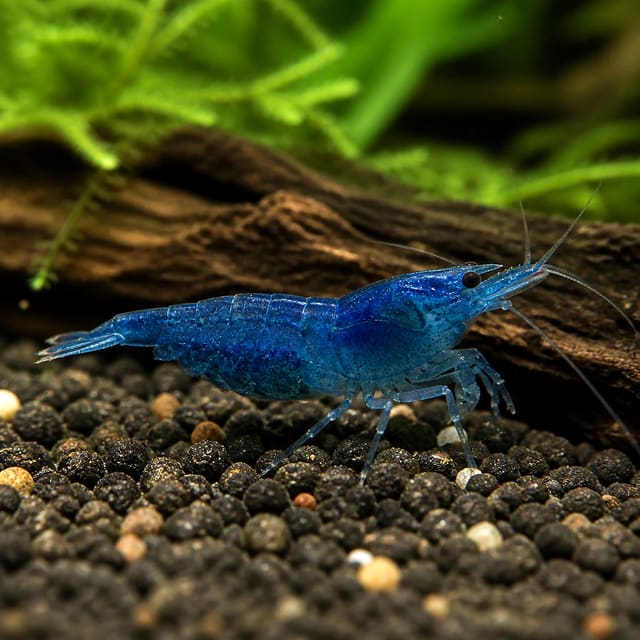
Easy
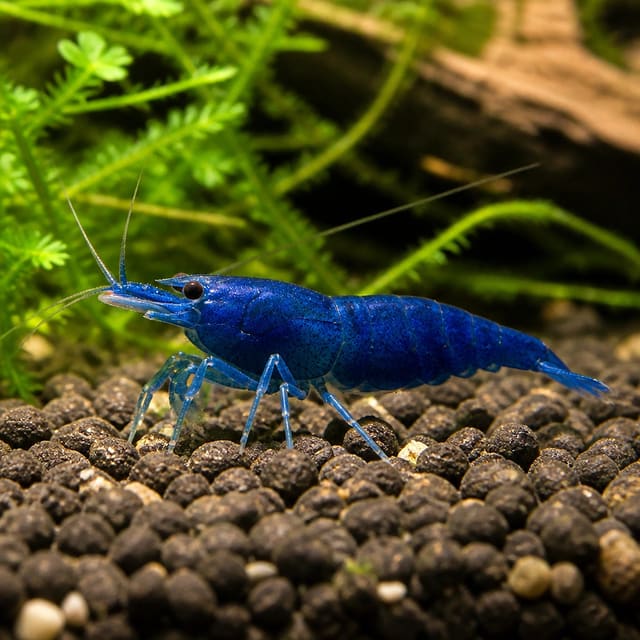
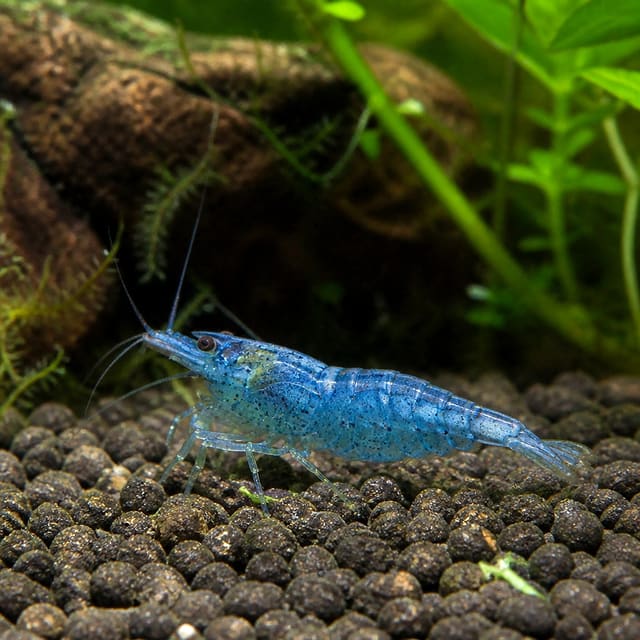
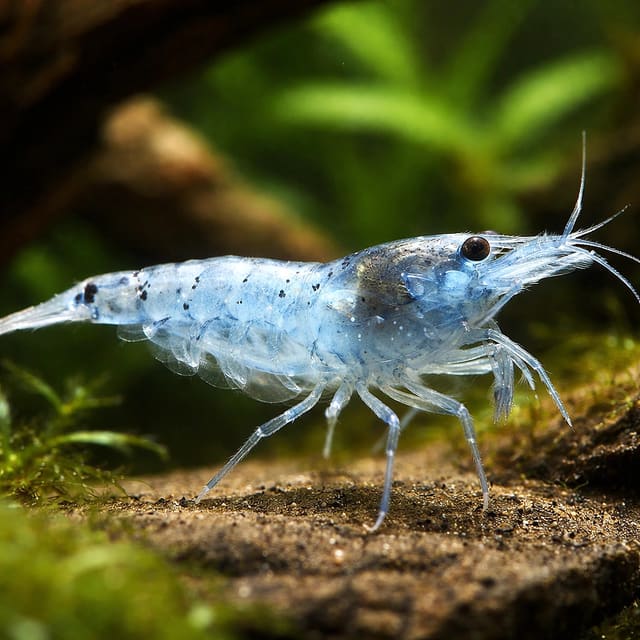
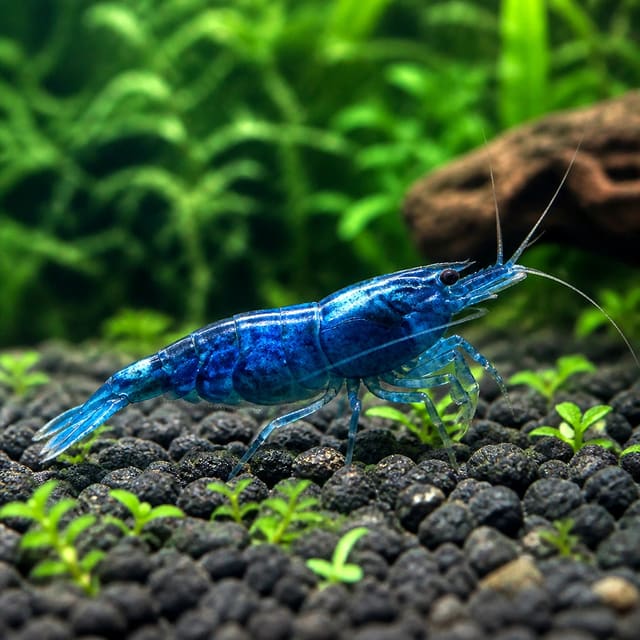
Blue Dream Shrimp (Neocaridina davidi)
18–28°C · pH 6.5–8 · 20L
£16.19

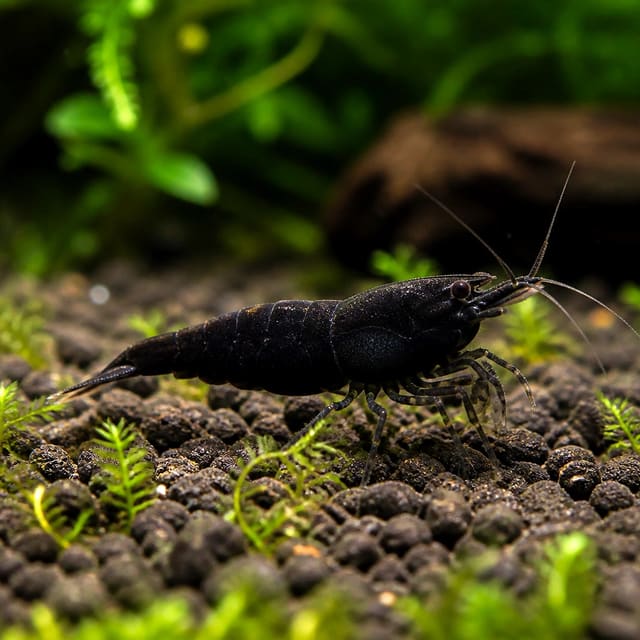
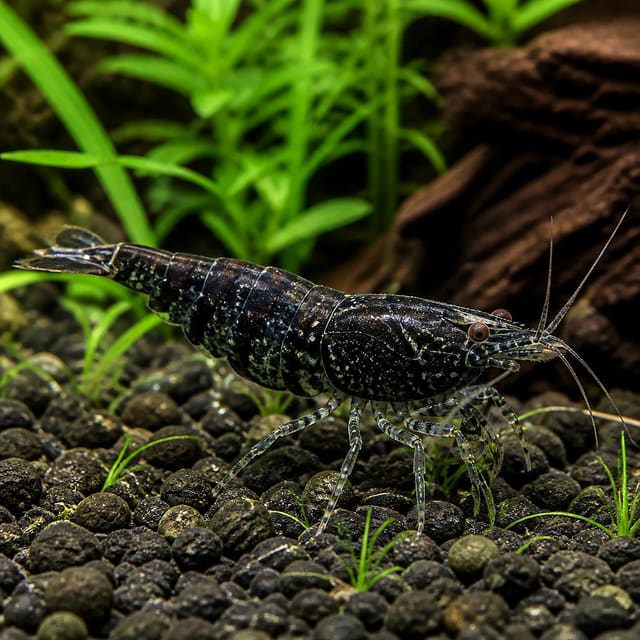
Black Choco Shrimp (Neocaridina sp.) is a dark freshwater atyid shrimp sold as one live animal per purchase. It needs a mature, filtered aquarium, steady water quality and companions that cannot swallow it.
Neocaridina sp.
Lives in groups: kept together they stay settled, active and show their best colour.
Black Choco Shrimp (Neocaridina sp.) is a dark freshwater atyid shrimp sold as one live animal per purchase. It needs a mature, filtered aquarium, steady water quality and companions that cannot swallow it.
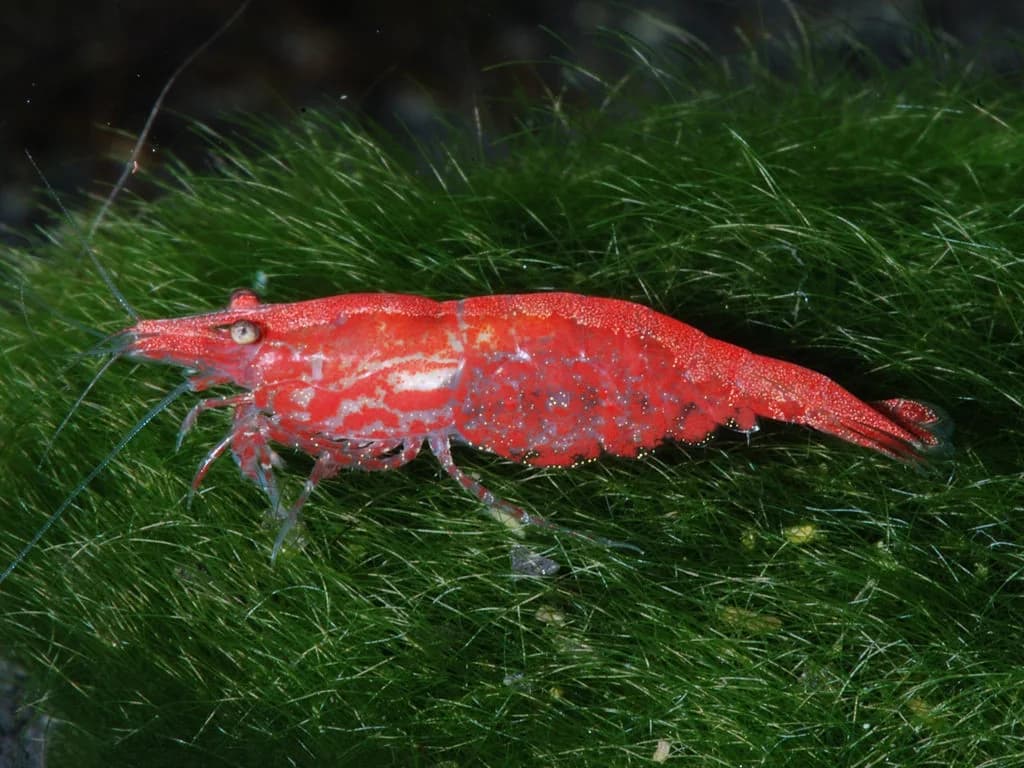
Use a mature, filtered aquarium and measured water—not a shrimp-per-litre rule. Tropical Fish Co uses 20 litres as a cautious starting policy for a small Cherry Shrimp group, above OATA's general 10-litre screen for small shrimp. Provide established grazing surfaces, cover and a protected filter inlet. No fish is guaranteed shrimplet-safe, and breeding should never be promised.
Maintain these water conditions for optimal health and vibrant colors
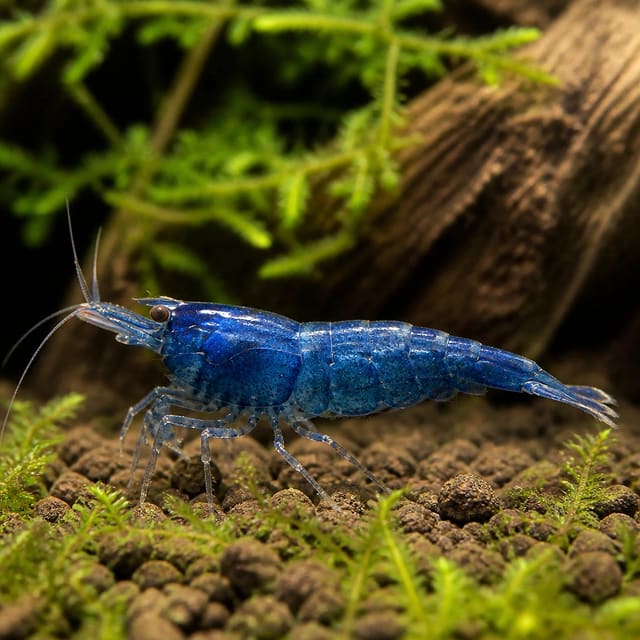
Black Choco Shrimp (Neocaridina sp.) is a compact freshwater atyid shrimp selected for its deep brown-to-black trade colour. One purchase supplies one live shrimp. The dispatch grade is 1.2 cm; that is the size at which this animal is supplied, not a claim about its eventual adult length. The exact species has not been identified, so the care advice here follows the genus Neocaridina and its care group.
This is a thoughtful choice for a mature planted or shrimp-focused aquarium where the keeper values close-up behaviour as much as bold colour. The dark shell stands out against fresh green growth, pale stone and lighter sand, while its small scale rewards a tank designed around detail. It spends much of its time moving over surfaces with its fine feeding appendages, so a well-established environment with plenty of grazing area matters more than an immaculate-looking new setup.
| Identity | Black Choco trade form, identified as Neocaridina sp. |
|---|---|
| Sold unit | One live shrimp per purchase |
| Dispatch grade | 1.2 cm |
| Suits | A mature, filtered freshwater aquarium with stable water and careful companion choice |
| Water context | Broad UK freshwater-shrimp group guidance is used because no species-level care range has been established |
| Sex | No male or female selection is included |
The colour name describes the offer; it does not establish a species. That distinction is important because colour alone cannot justify calling this shrimp Neocaridina davidi, nor can it justify borrowing precise adult-size, breeding or lifespan figures from a named cherry-shrimp variety. The genus placement follows the recorded trade identity and the recognised genus Neocaridina in Atyidae. Care on this page therefore stays deliberately at the genus and broader freshwater-shrimp level.
A dark shrimp is easiest to enjoy when the aquarium gives it contrasting surfaces and nearby cover. Mosses, fine-leaved plants, wood and stone provide places to browse and retreat. The aim is not to keep every surface spotless. A mature aquarium develops thin natural growth on hardscape and plant leaves; that gives small shrimp somewhere to forage between measured supplementary feeds. A new, bright tank may look tidy to us while offering very little established grazing.
You can compare the wider cherry shrimp collection, but this page keeps the Black Choco offer separate from named species and colour lines. Alternatives elsewhere on the site are choices to compare, not promises that different shrimp should be mixed.
Sex is guaranteed only when the selected option explicitly states male or female. This Neocaridna sp. black choco shrimp listing has no sex-guaranteed option.
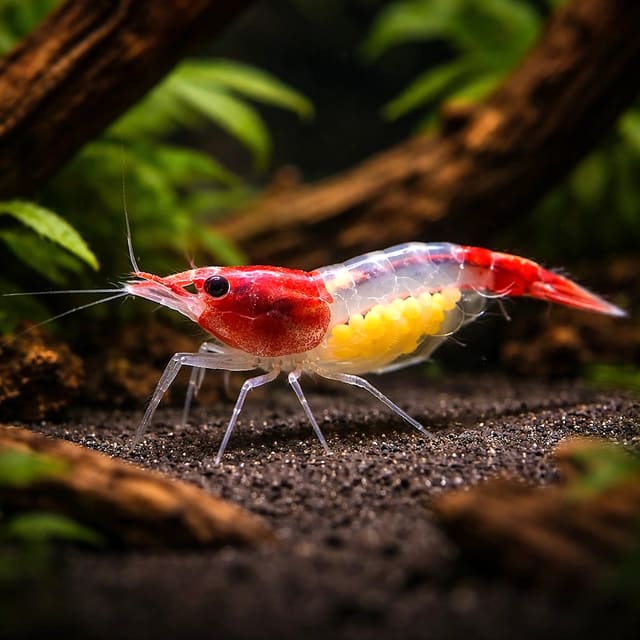
Gallery images have been digitally enhanced to improve image quality. Natural colour, pattern, size and maturity can vary between live animals.
Small shrimp place a light individual load on a filter, but that does not make water stability automatic. Very small volumes can change quickly when a heater sticks, a feed is overestimated, a plant decays or a water change differs from the tank. OATA's broad freshwater shrimp and snail guidance gives 10 litres as a starting minimum for a group of small animals, with more space needed when fish share the aquarium. Treat that as group-level planning guidance rather than a species-specific optimum for this trade form. A larger, well-established aquarium normally offers a wider margin for error and more grazing surface.
Choose a tank that can be filtered gently and maintained consistently. A lid is useful because it slows evaporation and helps keep mineral concentration more stable, although normal gas exchange must remain available. Position the aquarium away from rapid temperature changes and direct sun. Leave accessible areas for siphoning while adding sheltered spaces within plants, beneath wood and around stone. The result should feel structured without becoming impossible to inspect.
If this is your first shrimp aquarium, the practical freshwater shrimp setup guide explains the sequence from equipment and cycling to routine observation. Use it before livestock is due rather than attempting to mature a tank after arrival.
A working biological filter is essential. Waste is converted first to toxic ammonia, then toxic nitrite and finally nitrate by established bacterial communities. The RSPCA aquarium environment guidance explains why a properly set-up and maintained filter is central to aquatic welfare. For shrimp, the intake also deserves attention: fit a fine sponge or another suitable guard where exposed slots could draw in a small animal.
Test ammonia and nitrite before adding livestock and keep both at zero. Do not rely on clear water as proof that the nitrogen cycle is working; dissolved waste can be invisible. Add shrimp gradually so the filter community has time to respond to increased feeding and waste. If either ammonia or nitrite appears, stop increasing livestock, check the filter and feeding routine, and correct water quality promptly with appropriately treated replacement water.
Keep beneficial filter bacteria alive during maintenance. If media needs cleaning, rinse it lightly in water removed from the aquarium rather than running it under the tap. Avoid replacing all biological media at once. Check for blockages and loss of flow, but remember that a filter can look untidy and still contain the bacteria the aquarium depends on.
The available numerical range comes from OATA's freshwater shrimp and snail care sheet. It is broad group guidance: 17–27°C, pH 6.5–8.0, general hardness 4–18°dH and carbonate hardness 3–15°dKH. These figures are not a species-specific optimum for Black Choco Shrimp. Use them to screen out clearly unsuitable conditions, then prioritise consistency within the appropriate part of the range.
| Measure | Broad group guidance |
|---|---|
| Temperature | 17–27°C |
| pH | 6.5–8.0 |
| General hardness | 4–18°dH |
| Carbonate hardness | 3–15°dKH |
| Ammonia | 0 mg/l |
| Nitrite | 0 mg/l |
The most helpful habit is to measure your own aquarium rather than chase a central number. Read the aquarium water-parameter guide if GH, KH and pH are unfamiliar, then use the water matcher to compare measured values with the stated broad guidance. When tap water is already suitable, repeated large chemical adjustments can create more instability than they solve.
Temperature, pH and hardness interact with husbandry. Evaporation leaves dissolved minerals behind, so top up evaporated water thoughtfully and still carry out normal partial water changes. Carbonate hardness influences pH stability, while general hardness represents important dissolved minerals. Sudden changes can make moulting and general adjustment harder even when the new reading sits inside a broad published range.
OATA strongly recommends a partial water change of 25% at least once every week for freshwater shrimp and snails. Treat that as the broad care-sheet routine and adjust only with informed observation of the aquarium, not by allowing waste to accumulate. Prepare replacement water with a conditioner that neutralises chlorine or chloramine before it enters the tank, and bring its temperature reasonably close to the aquarium.
Siphon accessible debris without trying to sterilise every surface. Move slowly around tiny shrimp and check buckets, tubing and removed plants before disposing of water. Stable maintenance is a rhythm: measure, prepare, change and observe. A sudden large correction after weeks of neglect is more disruptive than regular moderate work.
Keep nitrate controlled through feeding discipline, plant care and water changes. OATA's group sheet frames nitrate as not exceeding 20 mg/l above the normal tap-water level. That wording recognises that incoming water differs between homes; test the supply as well as the aquarium so the number has context.
Fine gravel or sand works well when it can be kept clean without trapping large pockets of waste. Choose the substrate for stability, ease of maintenance and the plants you intend to grow; no specialised material is required by the broad care guidance. Avoid decorative materials that alter hardness or pH unexpectedly unless that effect is understood and wanted.
Plants provide shade, structure and feeding area. Moss, fine foliage and compact stems make a small shrimp easier to observe while giving it nearby cover. Wood and inert rock add further surfaces, but arrange them securely and leave enough access to inspect dead spots. New wood may develop a pale biofilm; in a mature, healthy aquarium such surface growth can become part of the wider grazing landscape.
Give freshly moulted shrimp places to withdraw. An animal is soft and vulnerable immediately after shedding its old exoskeleton. Dense low planting and small crevices can reduce exposure without turning the aquarium into an unobservable maze. Do not remove a shed shell merely because it looks untidy; shrimp may graze it, and it is not the same as a dead animal.
Freshwater shrimp browse algae and other material on aquarium surfaces. OATA's group guidance recommends supplementary algae wafers or commercial shrimp pellets. Offer a measured portion that the animals can reach, allow time for slow grazing and remove problematic leftovers before they break down. More food is not automatically more care; excess becomes a water-quality problem.
Broad care guidance supports algae wafers and prepared shrimp food. Use these as simple supplementary options rather than constructing an elaborate variety-specific menu. In a mature planted aquarium, the daily environment supplies many browsing opportunities, while prepared food lets you observe appetite and condition. Rotate only products that are clearly suitable for freshwater invertebrates.
Watch how quickly food disappears and adjust the next portion. A group hidden by plants may feed more slowly than fish, and other residents can take the food first. Place a small feeding dish or clear area where you can see accumulation. If leftovers persist, reduce the amount rather than adding a clean-up animal to compensate.
Freshwater shrimp and snails are highly sensitive to copper, and exposure carries a potentially fatal risk. Read the label of every medicine, fertiliser and water treatment, and use only products confirmed safe for invertebrates at the intended dose. Never assume a treatment is suitable simply because fish tolerate it. If treatment is necessary, obtain advice that takes the shrimp into account before dosing the display aquarium.
Household sprays, soap, hand cream and cleaning residues also have no place in aquarium water. Use dedicated buckets and tools, rinse hands with plain water before work and avoid metal objects whose composition is uncertain. These simple barriers reduce contamination without turning routine maintenance into a chemistry experiment.
OATA advises switching the aquarium lights off before the shrimp is taken from its outer wrapping. Keep them off through introduction so the animal is not moved from a dark parcel into glare; this step sits alongside, rather than replacing, the evidence and acclimation sequence below.
Read the current delivery and Live Arrival Guarantee policy before the parcel is due, and make sure someone is present at the confirmed address. The policy requires same-day inspection and continuous unboxing evidence for a claim. Complete those steps before acclimation:
Do not feed heavily to tempt a newly arrived shrimp into view. It may remain under cover while adjusting. Check that the filter intake is guarded, lighting is not harsh and established tank residents are not crowding the newcomer. Continue to watch water quality and behaviour through the first days rather than judging success by immediate colour.
Learn the normal pattern in your own aquarium: where the shrimp grazes, when it emerges and how it responds at feeding time. A useful weekly check covers activity, colour change, appetite, body condition, damaged appendages and unusual hiding. A single quiet period may coincide with moulting; several animals becoming inactive together points more strongly towards a shared environmental issue.
Test water whenever behaviour changes, not only on the usual maintenance day. Confirm temperature, ammonia and nitrite first, then review recent additions, feeding and treatments. Correct an identified cause steadily. Avoid stacking several speculative remedies into a small aquarium, especially when their invertebrate safety is uncertain.
Once a month, look beyond the water-test numbers. Confirm that the filter still moves water across the aquarium rather than only stirring one corner. Examine the intake guard for trapped leaves, check heater operation against a separate thermometer and inspect cable routes for damage. Wipe the viewing pane where needed, but leave useful grazing areas on hardscape and planted surfaces. This is also a good time to compare recent observations: a slow decline in activity or appetite can be easier to notice in a simple written note than from memory.
Review the stocking plan as plants fill out and livestock grows. Dense planting is useful, yet completely blocked flow can collect debris. Thin vegetation selectively instead of stripping the tank, and inspect cuttings for tiny shrimp before removal. If another animal is being considered, assess its adult mouth size and feeding behaviour before purchase. The aquarium should not be treated as full only when filtration fails; space to forage, hide and observe also matters.
A clear, shrimp-shaped shell is usually an empty exoskeleton rather than a dead animal. Look for movement elsewhere before intervening. Freshly moulted shrimp often stay concealed while the new shell hardens, so leave cover undisturbed and keep the environment quiet. Avoid changing water values to chase a single moult. If repeated difficult moults, losses or widespread inactivity occur, test the aquarium and seek qualified aquatic advice rather than adding minerals or medication by guesswork.
Good Black Choco care is therefore less about a complicated product list and more about repeatable habits: mature filtration, measured feeding, conditioned replacement water, guarded equipment and patient observation. Those foundations remain useful for this Black Choco offer.
The safest compatibility question is practical: can the other animal catch, injure or swallow a 1.2 cm dispatch-size shrimp? OATA advises that freshwater shrimp should not be mixed with fish that can fit them in their mouths or with species known to be predatory. This is more useful than relying on a general label such as peaceful. A fish can be non-aggressive towards other fish and still investigate a small crustacean as food.
A shrimp-only aquarium removes much of that uncertainty and makes the dark animal easier to see. A planted community can also work when every resident has been assessed individually, but no fish community makes survival risk disappear. Cover improves opportunities to retreat; it does not convert a predator into a safe companion.
| Lower-risk direction | Reason |
|---|---|
| Shrimp-focused mature aquarium | No fish predation pressure and feeding can be observed closely |
| Non-predatory animals too small to swallow the shrimp | Matches the broad care-sheet compatibility rule, subject to individual research |
| Well-planted layout with moss and hardscape | Provides nearby cover and multiple grazing routes |
| Gradual stocking | Lets filtration and observation keep pace with the group |
Snails and other shrimp are sometimes considered for the same aquarium, but shared category does not remove the need to compare water requirements, adult size, feeding and health-management needs. Different shrimp lines may also reproduce together when biologically compatible; this page does not establish the species of Black Choco Shrimp or make a breeding claim, so do not use its trade colour as a genetic guarantee.
Community residents can intercept sinking food before a small shrimp reaches it. Observe rather than simply increasing the ration. Place a modest portion where shrimp can browse under cover, then check what remains. Heavy feeding designed to overwhelm quicker fish creates more waste and can harm the water stability the shrimp needs.
At the other extreme, do not assume visible algae will always provide enough. A very clean or newly established tank may offer little surface growth. Supplement using suitable shrimp food, monitor body condition and keep a consistent maintenance routine.
OATA describes shrimp species as generally social. Plan Black Choco Shrimp as a group display, but avoid turning that broad statement into a fixed number for this offer. The practical limit comes from aquarium volume, filtration, available grazing area and the needs of every other resident. Add animals slowly and keep ammonia and nitrite at zero as feeding increases.
Sex is not selected for this offer, so a purchase should not be treated as a planned male-to-female ratio. Colour and body shape in the gallery are not a reliable substitute for an explicit sexed option. Choose the animal for its appearance and care fit, not for an assumed breeding outcome.
Black Choco Shrimp is the trade name for this dark freshwater Neocaridina sp. One purchase supplies one live shrimp at the supplier's 1.2 cm dispatch grade.
It can suit an attentive beginner who prepares a mature, filtered aquarium, tests the water and checks every treatment for invertebrate safety. It is not a good choice for a brand-new uncycled tank or for someone expecting a shrimp to correct neglected water quality.
OATA's broad freshwater shrimp and snail guidance starts at 10 litres for a group of small shrimp, with a larger aquarium needed when fish are included. That is group-level planning guidance, not a Black Choco species minimum; choose more water volume where possible for greater stability.
Plan these shrimp as a group rather than a solitary display, then increase stocking gradually so filtration and feeding remain stable. Use the aquarium's volume, grazing area and other residents to set a responsible group total.
Broad freshwater-shrimp guidance supports natural grazing plus modest supplementary algae wafers or prepared shrimp pellets. Feed a measured amount, allow time for slow browsing and remove troublesome leftovers before they degrade water quality.
Broad OATA group guidance gives 17–27°C and pH 6.5–8.0, with general hardness of 4–18°dH. These are not a Black Choco species optimum: keep measured conditions stable, maintain zero ammonia and nitrite, and avoid sudden adjustments within the broad range.
The main risk comes from fish eating the shrimp, not from the shrimp nipping fish. Avoid any fish that can fit it in its mouth and any known predator. Assess each proposed resident individually, provide dense cover and remember that a community aquarium still carries more predation risk than a shrimp-focused setup.
Tropical Fish Co uses a licensed live-animal courier and sends the confirmed delivery date and tracking by email. Be present; before opening, start one continuous video showing the sealed parcel and outer box, then the shrimp still in its sealed bag. After inspection, float the sealed bag for 20–30 minutes, slowly add small amounts of aquarium water for at least 30 minutes, and transfer the shrimp with as little bag water as possible. Contact the team that day with the order number and video if there is a problem.
World Register of Marine Species: genus placement for Neocaridina in Atyidae. This supports the genus-level scientific label, not a species name or husbandry range.
Ornamental Aquatic Trade Association: broad UK care guidance for freshwater shrimp and snails, including aquarium planning, water ranges, feeding, copper sensitivity, maintenance and the mouth-size compatibility rule. Its numerical values remain group guidance throughout this page.
RSPCA: general aquarium-welfare guidance explaining the role of established biological filtration in processing ammonia and nitrite.
Tropical Fish Co delivery and Live Arrival Guarantee policy: current packing, licensed-courier, attendance, unboxing-video, same-day contact and initial acclimation instructions.
One shrimp per purchase and the 1.2 cm dispatch grade explain the offer only; neither establishes a species identity or a separate set of care values.
No reviews for this item yet. Bought one? Honest reviews only, good or bad.
What customers say about ordering from us
I have a small group of long finned mountain minnows. So was delighted to be able to order ten of this variety to increase the genetics in my tank . The ones I recieved are healthy but it’s to early to give a verdict on wether they are of a long finned type since they are small currently.
Gordon Walker · 23 Sept 2026
100% success travel and "installation". Pleased with quality of purchase. The Siamese fighter a bit "shy" so have not yet seen him at his best yet but looking good. Happy customer. GG
George E Garratt · 21 Sept 2026
Reviews of our shop, collected by Judge.me, an independent third-party review collector. Newest first.