Easy
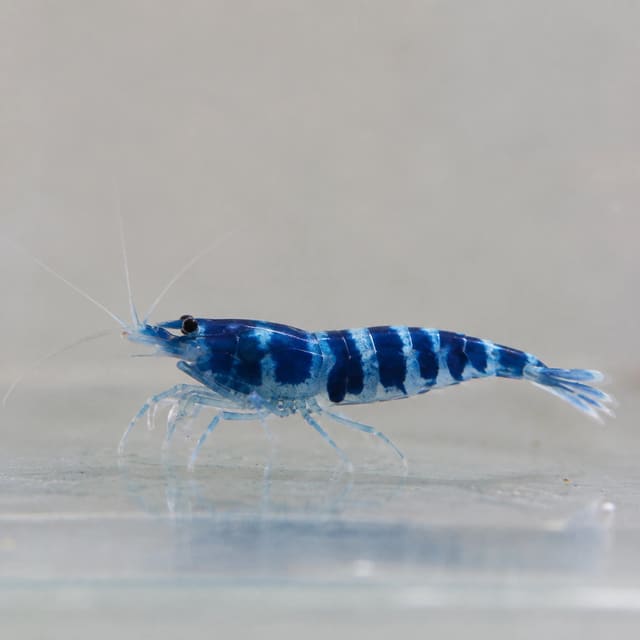
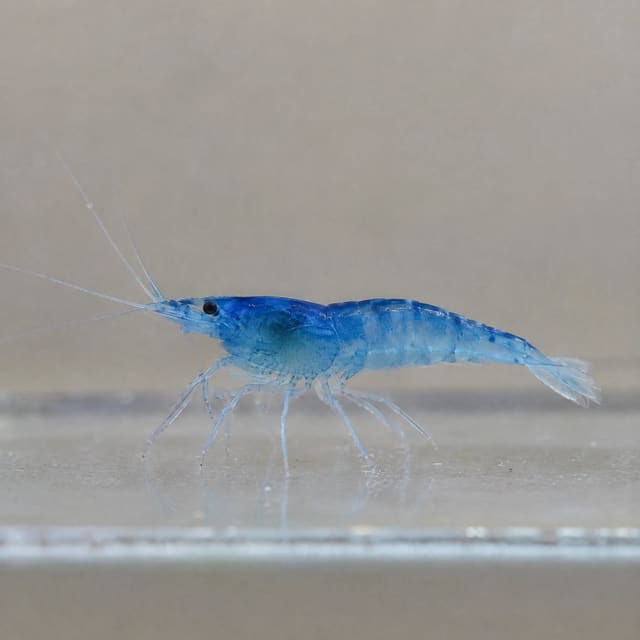
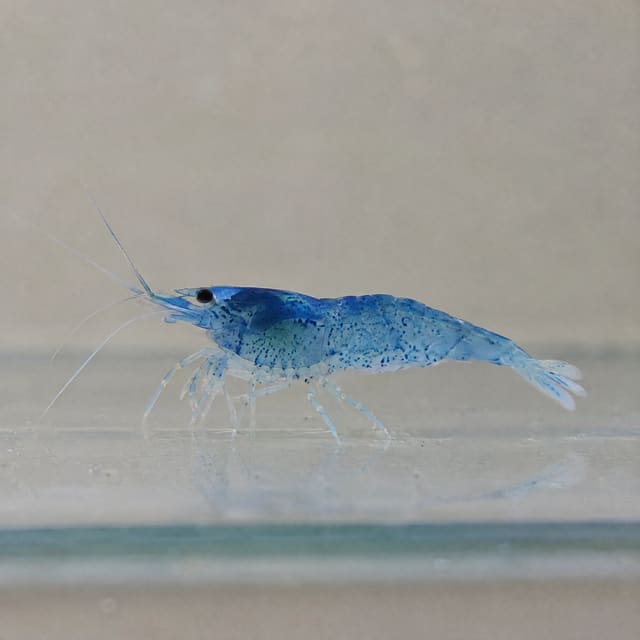
Blue Cherry Shrimp (Neocaridina davidi)
18–28°C · pH 6.5–8 · 20L
£7.19
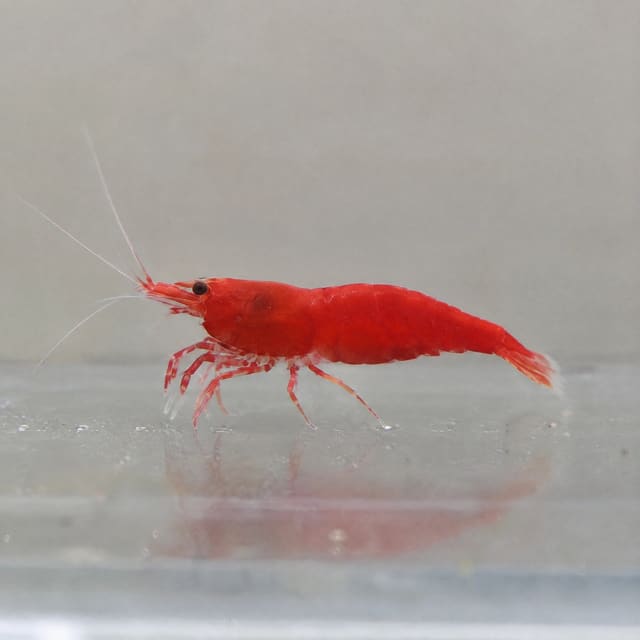
The Orange Fire Shrimp is a solid, bright orange colour line of Neocaridina davidi, the cherry shrimp. Keep six or more in a mature, filtered tank of 20 litres or more at 21–26°C and pH 6.5–7.8, with no copper and no other cherry shrimp colours. Sold singly as one live shrimp.
Adult size is the maximum length this species reaches at full maturity (scientific sources). The livestock you receive will be younger and smaller. Product-photo provenance and any image-specific limitations are stated on the listing.
Neocaridina davidi
Choose a quantity for your aquarium. Discount thresholds are pricing offers, not a stocking recommendation.
The Orange Fire Shrimp is a solid, bright orange colour line of Neocaridina davidi, the cherry shrimp. Keep six or more in a mature, filtered tank of 20 litres or more at 21–26°C and pH 6.5–7.8, with no copper and no other cherry shrimp colours. Sold singly as one live shrimp.
Adult size is the maximum length this species reaches at full maturity (scientific sources). The livestock you receive will be younger and smaller. Product-photo provenance and any image-specific limitations are stated on the listing.
Use a mature, filtered aquarium and measured water—not a shrimp-per-litre rule. Tropical Fish Co uses 20 litres as a cautious starting policy for a small Cherry Shrimp group, above OATA's general 10-litre screen for small shrimp. Provide established grazing surfaces, cover and a protected filter inlet. No fish is guaranteed shrimplet-safe, and breeding should never be promised.
Read the full care guidance when planning conditions for your aquarium.
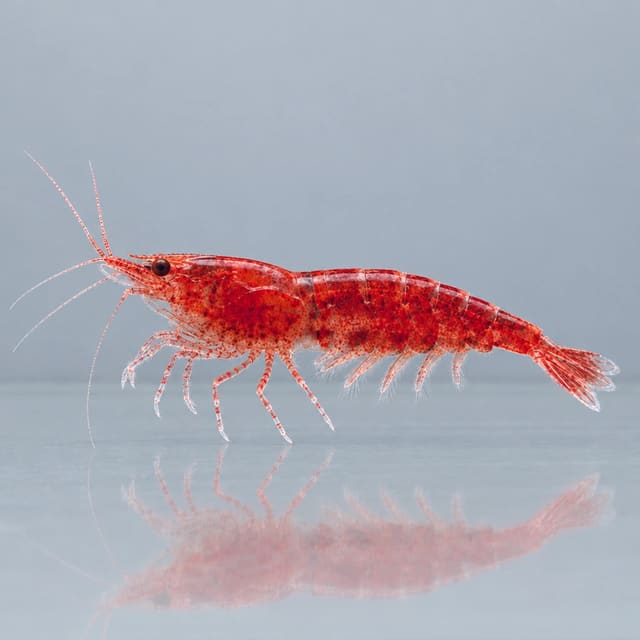
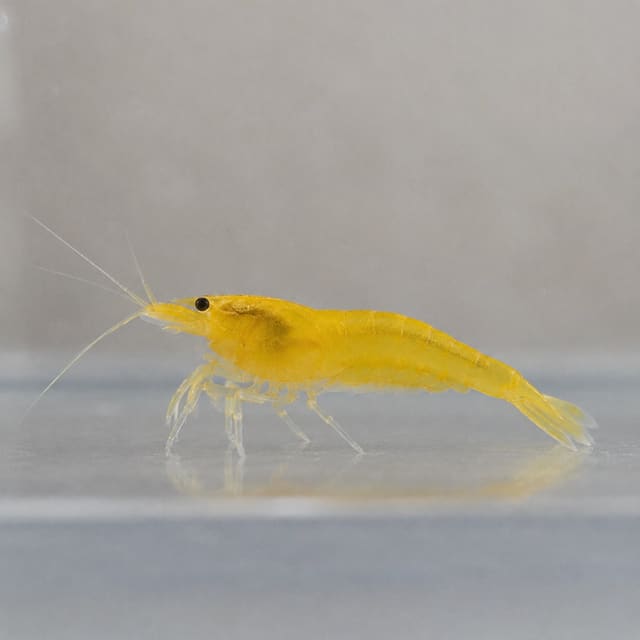
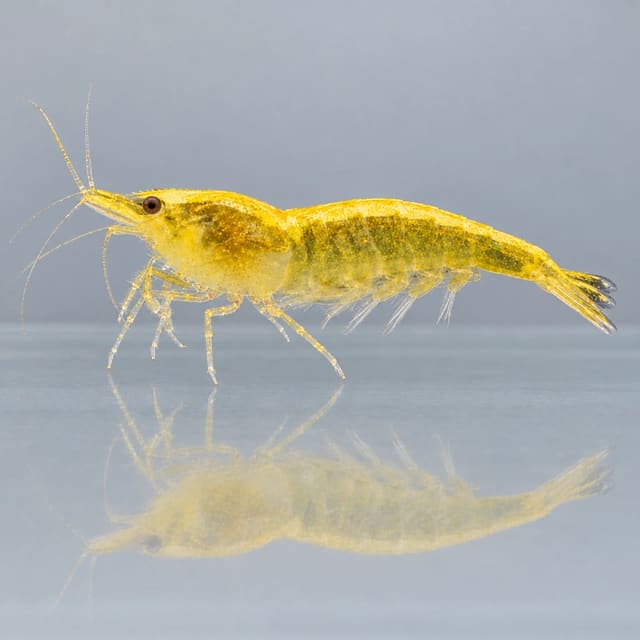
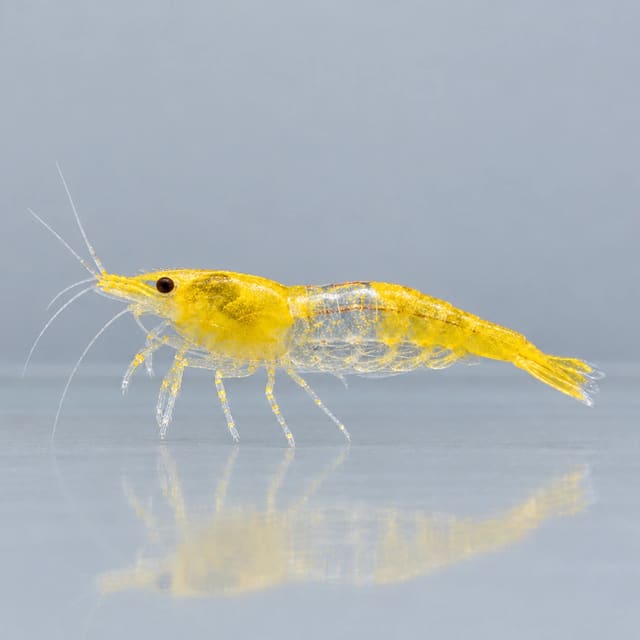
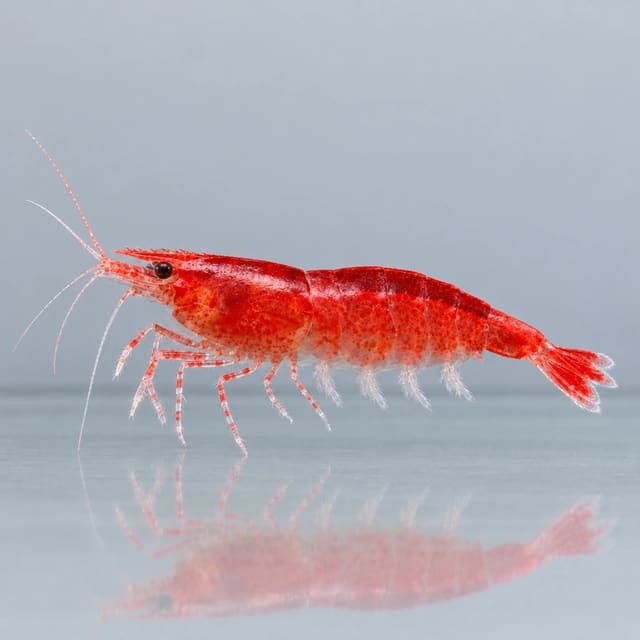
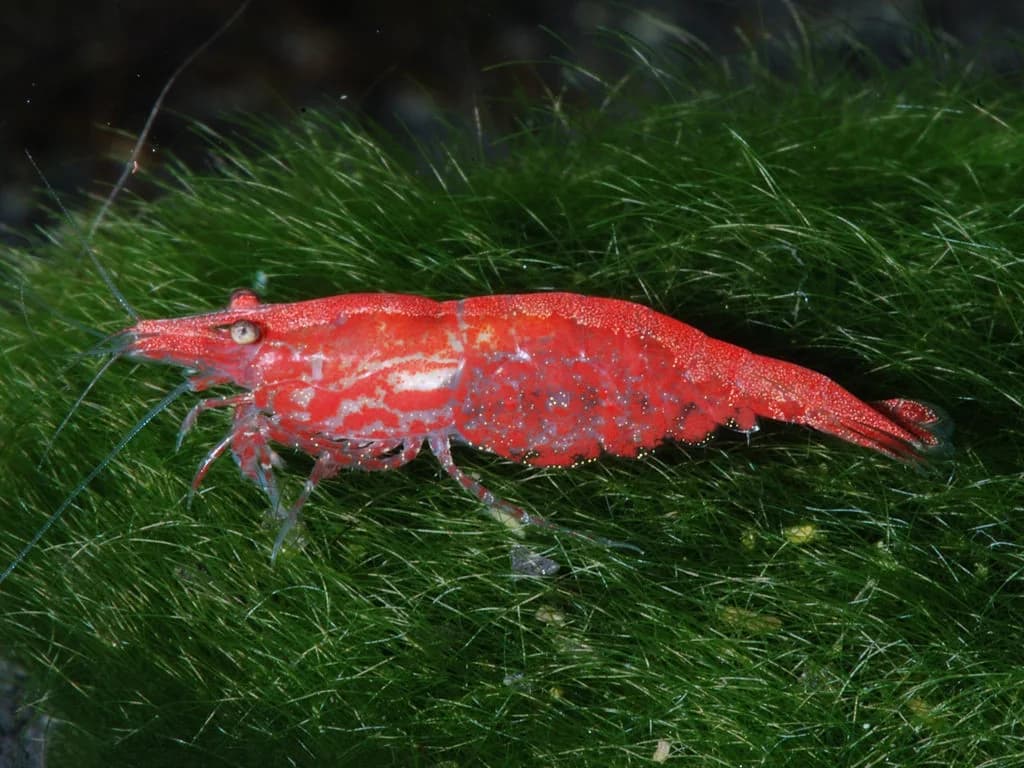
The Orange Fire Shrimp is a bright orange colour line of Neocaridina davidi, the freshwater shrimp the hobby knows as the cherry shrimp. The shrimp in our photographs is a deep, saturated orange from the head to the tail fan, with orange legs, clear tips to the legs and long pale antennae. Against green moss it is one of the most eye-catching shrimp you can keep, and it shares the easy care and steady breeding that made cherry shrimp a staple of planted aquariums.
The wild species looks nothing like it. Wikipedia describes wild Neocaridina davidi from Taiwan, eastern China, the Korean Peninsula and Vietnam as a mottled greenish-brown or brown shrimp, and lists orange among the colours breeders have since fixed. The Shrimp Farm's orange care sheet traces orange lines to Taiwan and records Orange Sakura, Orange Pumpkin and Orange Sunkist as trade names for orange forms of the same species.
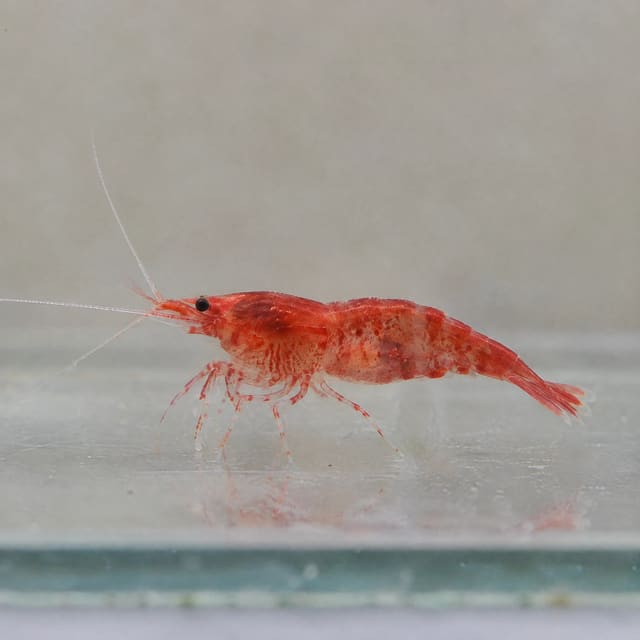
Breeders grade cherry shrimp by how much of the body is coloured and how opaque the colour is. The Shrimp Farm's grading guide sets out the ladder for red shrimp, and sellers borrow the same words for other colours:
| Grade word | What it describes |
|---|---|
| Cherry | Mostly translucent, with patches of colour |
| Sakura | Much more colour, a little darker, still some translucent areas |
| Fire | Almost completely opaque, with evenly coloured legs and no blotchiness |
| Painted | So dense that eggs and the saddle are hidden without a strong backlight |
Grade names are not regulated, and different sellers draw the lines in different places, so we describe the photographs rather than rely on the word. If you already keep our Orange Sakura Shrimp, treat the two as the same species at different colour grades. Our Orange Rili Shrimp is sold as a separate orange form of the same species, and both will cross with Orange Fire.
One purchase quantity supplies one live Orange Fire Shrimp, unsexed. Wikipedia notes that females are larger, more richly coloured and more opaque than males, and the grading guide adds that a male can therefore sit a step lower on the colour ladder than his sisters. A newly arrived shrimp is often paler until it has settled, so the photographs show the colour form, not a guarantee of each individual.
Read how we deliver live shrimp and plan the order for a day when you can be home to unpack it.
Cherry shrimp of every colour share the same needs, and they are among the most forgiving shrimp you can buy. The published values differ mainly on hardness, so the table shows each source in full before our planning range.
| Source | Temperature | pH | General hardness | Carbonate hardness |
|---|---|---|---|---|
| OATA (shrimp and snails, group guidance) | 17–27°C | 6.5–8.0 | 4–18 GH | 3–15 KH |
| Practical Fishkeeping, introduction to shrimp | 18–26°C | 6.5–8 | 8–18 GH | 5–15 KH |
| Practical Fishkeeping, Neocaridina FAQ | 18–28°C tolerated, 21–26°C best | 6.5–8.0 | medium to hard | not given |
| Neale Monks, Practical Fishkeeping answer | heater only in a cold room | not given | 5–15, middle values best for breeding | not given |
| The Shrimp Farm, orange care sheet | 65–85°F (about 18–29°C) | 6.2–7.8 | 4–8 GH | 3–15 KH |
| Our planning range | 21–26°C | 6.5–7.8 | 5–15 GH, aim mid | 3–15 KH |
The planning temperature is Practical Fishkeeping's best range for lifespan and breeding; the pH is where every source overlaps; the hardness follows Neale Monks's advice to aim for middling values. The FAQ adds that warmer water speeds growth and breeding but shortens life, so there is no benefit in pushing to the top of the range.
Practical Fishkeeping's introduction says tap water that is low in nitrate and phosphate can be used once dechlorinated, or mixed with RO water. If your supply is very soft, the FAQ recommends a calcium supplement, because calcium is needed for moulting. One UK habit to drop: never fill a shrimp tank from the hot tap, which the FAQ names as a source of copper poisoning. Our water matcher compares your tap water with the shrimp's needs in a minute.
OATA's minimum is 10 litres for a group of small shrimp, and Practical Fishkeeping's FAQ accepts about 15 litres if the tank is well planted and filtered. We recommend 20 litres or more, because temperature and water quality hold steadier in a larger volume and a successful colony multiplies. Our stocking calculator helps if fish will share the tank.
| Element | Why it matters |
|---|---|
| Dark sand, under 2 cm deep | Practical Fishkeeping's author uses dark sand that resists compaction and shows colour well; keep it shallow |
| A few Malaysian Trumpet Snails | The same author adds them to turn and aerate the sand |
| Moss, fine-leaved plants and wood | Grow the biofilm the shrimp graze and hide moulting adults and young |
| Pesticide-free plants | Practical Fishkeeping warns that plant insecticides can kill shrimp |
| Washed, lime-free stones | Avoid builders' sand, which may contain limestone; test rocks with a drop of vinegar |
| A lid | OATA recommends one to stop shrimp jumping out |
Cycle the tank fully before the shrimp arrive. The FAQ is blunt: even traces of ammonia are fatal and nitrite is not tolerated, so stock only an established aquarium.
Practical Fishkeeping recommends air-driven sponge filters or Hamburg mat filters for shrimp tanks. With a power filter, cover the intake with fine foam or a stocking held on by an elastic band, and turn the flow down so small shrimp are not pulled in. In warm water add extra aeration, because warm water holds less oxygen.
If you inject CO2 for plants, watch the shrimp: the FAQ names too much CO2 or too little oxygen as a cause of deaths, with shrimp gathering at the surface or riding the filter outflow as warning signs. Our shrimp-keeping guide explains filter choice in more detail.
Biofilm and soft algae are the core of a cherry shrimp's diet, and Wikipedia notes that the species eats biofilm, algae and detritus but not vascular plants, so your plants are safe. OATA suggests algae wafers or shrimp pellets two or three times a week, left in for at least 30 minutes. Wikipedia also records that carotenoids in food are thought to supply pigment, and the FAQ says foods containing calcium and iodine, often seaweed-based, help with moulting.
In a shrimp-only tank there are no fish leftovers, so the FAQ advises target feeding. Leave shed skins in the tank: Wikipedia explains that shrimp eat their old shells to recover nutrients.
OATA's floating method suits cherry shrimp: lights off, float the sealed bag for 10 minutes, then add tank water to the bag gradually over at least 30 minutes before netting the shrimp across. Practical Fishkeeping's introduction prefers a slower drip at one to two drops a second for about an hour, which is worth doing if your water differs a lot from ours.
| When | Action |
|---|---|
| The week before | Confirm zero ammonia and nitrite and a steady temperature |
| Arrival | Dim the lights, acclimatise, release, discard the bag water |
| Day one | No food; the shrimp graze while they explore |
| Days two to six | Tiny feeds and a daily head count at feeding time |
| Day seven | Full test and the first 25% water change |
OATA advises close monitoring through the first week. Shrimp hiding for a day or two is normal.
Practical Fishkeeping's FAQ lists the usual causes of unexplained deaths. Working through them in order solves most problems.
| Likely cause | What to check |
|---|---|
| Copper | New fertiliser, newly bought plants, medicines or hot tap water |
| Failed moult | Calcium and iodine in the diet; hardness not too low |
| Ammonia spike | Recent big additions of stock or a heavy filter clean |
| Low oxygen or excess CO2 | Surface agitation; shrimp at the surface or in the outflow |
| Predation | Fish or larger shrimp chasing or picking at them |
| Old age | The FAQ says lifespans rarely exceed 12–18 months |
OATA adds visible signs to watch for: damaged shells, white spots, lesions, colour changes, loss of appetite and unusual swimming. Test the water before reaching for any treatment.
Practical Fishkeeping's introduction to shrimp explains that every Neocaridina colour crossbreeds and that crosses revert to the brownish wild form within a few generations. Even a pure line throws some off-colour young, and the advice is to remove the poorest young to keep the strain strong.
| Shrimp | Crosses with Orange Fire? | Verdict |
|---|---|---|
| Orange Sakura and Orange Rili | Yes, same species | Mixed orange young; acceptable only if you are relaxed about grade |
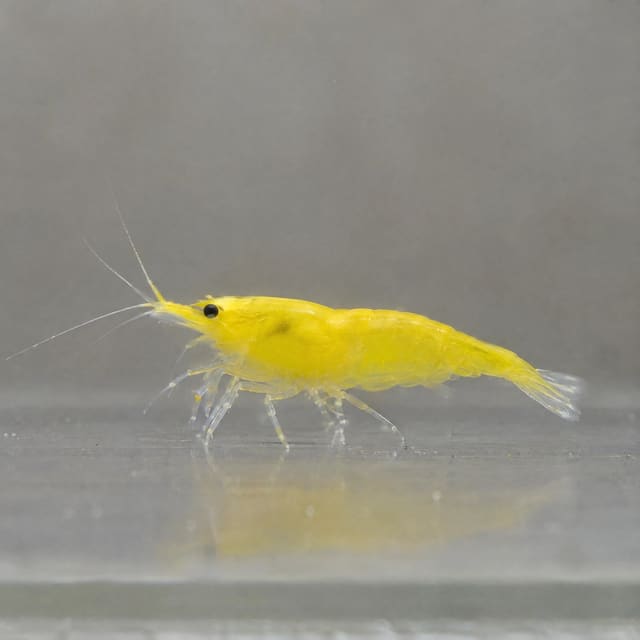
| Fire Red Shrimp, Yellow Fire Shrimp and other colours | Yes, same species | Separate tanks |
| Orange Amano Shrimp | No; a different genus whose larvae need brackish water | A good orange companion |
| Bee and tiger shrimp (Caridina) | No, says Neale Monks | Possible, but they prefer much softer water |
See every colour in our cherry shrimp range and the Neocaridina shrimp category, and plan one colour per aquarium.
OATA's rule is to avoid any fish that can fit a shrimp in its mouth and any predatory species. Practical Fishkeeping's FAQ goes further: fish must be too small to eat shrimp, including the young, and mainly plant- or algae-eaters. It rates Otocinclus as completely safe, even with newborn shrimp; smaller Corydoras and small plecs as possibly safe; and reports keepers succeeding with dwarf gouramis, small tetras, small rasboras, cherry barbs and kuhli loaches in densely planted tanks.
| Suits | Avoid |
|---|---|
| Golden Otocinclus | Any fish large enough to swallow an adult shrimp |
| Snails such as our Batik Nerite Snail | Crayfish, large crabs and predatory fish |
| Kuhli Loach, in a densely planted tank | Other cherry shrimp colours, if you want orange young |
| A shrimp-only tank, for the most young | Copper-based medicines and plant treatments |
Even shrimp-safe fish change the numbers: a community tank raises fewer young than a shrimp-only one. Browse more invertebrate companions in shrimps and crustaceans.
Orange Fire Shrimp need no special conditions to breed, only a healthy group, stable water and food. Females usually spawn shortly after moulting, and Wikipedia notes that a moulting female releases pheromones that set the males searching. The developing eggs show as a "saddle" behind the head, which can be harder to see in a densely coloured shrimp.
| Stage | What the sources say |
|---|---|
| Clutch | 20–30 eggs carried under the tail (Wikipedia); The Shrimp Farm describes yellow-green eggs in orange females |
| Carrying time | About three weeks to a month (Practical Fishkeeping); 2–3 weeks (Wikipedia); 30 days (The Shrimp Farm) |
| Young | About 1 mm, no larval stage, needing only biofilm in a mature tank |
| Maturity | Wikipedia says about two months; Practical Fishkeeping says breeding starts at about six months |
| Lifespan | 1–2 years (Wikipedia); rarely more than 12–18 months (Practical Fishkeeping) |
Never release shrimp or their young outdoors. A peer-reviewed study by Klotz and colleagues in Aquatic Invasions found Neocaridina davidi established in a thermally polluted stream system in western Germany and suggested it may tolerate much colder conditions. Our cherry shrimp care guide and cherry shrimp buying guide cover colony management, and the freshwater shrimp category lists every species we keep.
Both are orange colour lines of Neocaridina davidi. In breeder grading, "Fire" describes a more solid, opaque colour than "Sakura", but sellers use the words loosely. They interbreed freely.
Six or more. OATA asks for at least five shrimp and Practical Fishkeeping suggests six, because small groups become shy. A group that size almost always contains both sexes.
Males are smaller and less colourful than females, and colour also drops with stress, a light substrate or a new move. Settled females usually show the strongest orange.
Only if you accept mixed young. Every cherry shrimp colour is the same species, and crossed colonies drift back towards brown within a few generations.
In a warm room, often not. They tolerate about 18–28°C, but Practical Fishkeeping says they live longest and breed best at 21–26°C, so a small heater helps in a cool room.
Usually, once dechlorinated, if it is medium-hard. Very soft water may need a calcium supplement for moulting. Never use hot tap water, which Practical Fishkeeping links to copper poisoning.
In a mature tank, quickly. Females carry 20–30 eggs for about three weeks to a month, and Practical Fishkeeping notes shrimp can breed monthly in good conditions.
Otocinclus are the safest. Small Corydoras and small plecs may be safe, and some keepers succeed with kuhli loaches and small tetras in dense planting, but young shrimp will be eaten.
No reviews for this item yet. Bought one? Honest reviews only, good or bad.
What customers say about ordering from us
Easy website plenty of info on fish your buying great to pick a time slot
TRACEY DURRANT · 7 Oct 2026
Got some lovely fish thank you
Kevin Mackie · 7 Oct 2026
Reviews of our shop, collected by Judge.me, an independent third-party review collector. Newest first.
Moved by UK carriers licensed to handle live animals
Hand-packed with oxygen bags, poly box, heat pack
Email photos the same day; an optional unboxing video helps us review problems faster — claim terms apply
Klarna & PayPal Pay in 3 at checkout