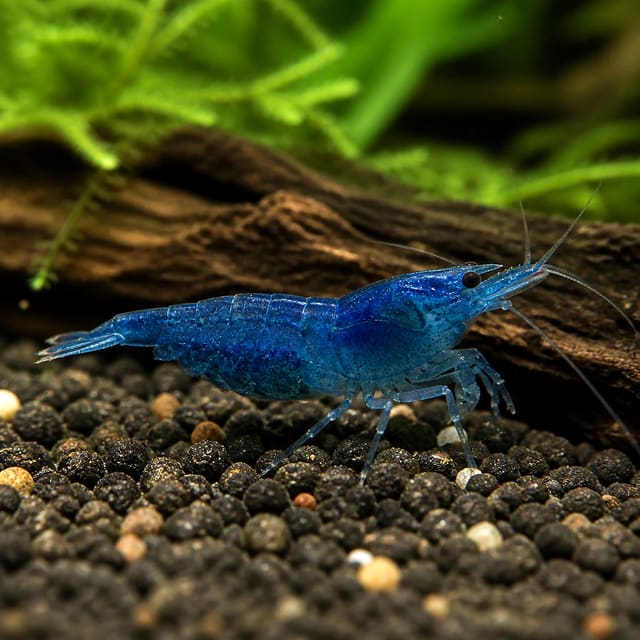
Easy
Blue Dream Shrimp (Neocaridina davidi)
18–28°C · pH 6.5–8 · 20L
£16.19
Neocaridina davidi green (Neocaridina davidi) is an Atyidae freshwater shrimp from Taiwan, east of China, Korea and Vietnam that reaches 4 cm. It suits keepers with a mature, filtered aquarium: OATA’s group guidance gives at least five shrimp, 17–27°C and pH 6.5–8.0, while our cautious starting policy is 20 litres. Sold individually as one live shrimp.
Adult size is the maximum length this species reaches at full maturity (scientific sources). The livestock you receive will be younger and smaller. Product-photo provenance and any image-specific limitations are stated on the listing.
Neocaridina davidi
Choose a quantity for your aquarium. Discount thresholds are pricing offers, not a stocking recommendation.
Neocaridina davidi green (Neocaridina davidi) is an Atyidae freshwater shrimp from Taiwan, east of China, Korea and Vietnam that reaches 4 cm. It suits keepers with a mature, filtered aquarium: OATA’s group guidance gives at least five shrimp, 17–27°C and pH 6.5–8.0, while our cautious starting policy is 20 litres. Sold individually as one live shrimp.
Adult size is the maximum length this species reaches at full maturity (scientific sources). The livestock you receive will be younger and smaller. Product-photo provenance and any image-specific limitations are stated on the listing.
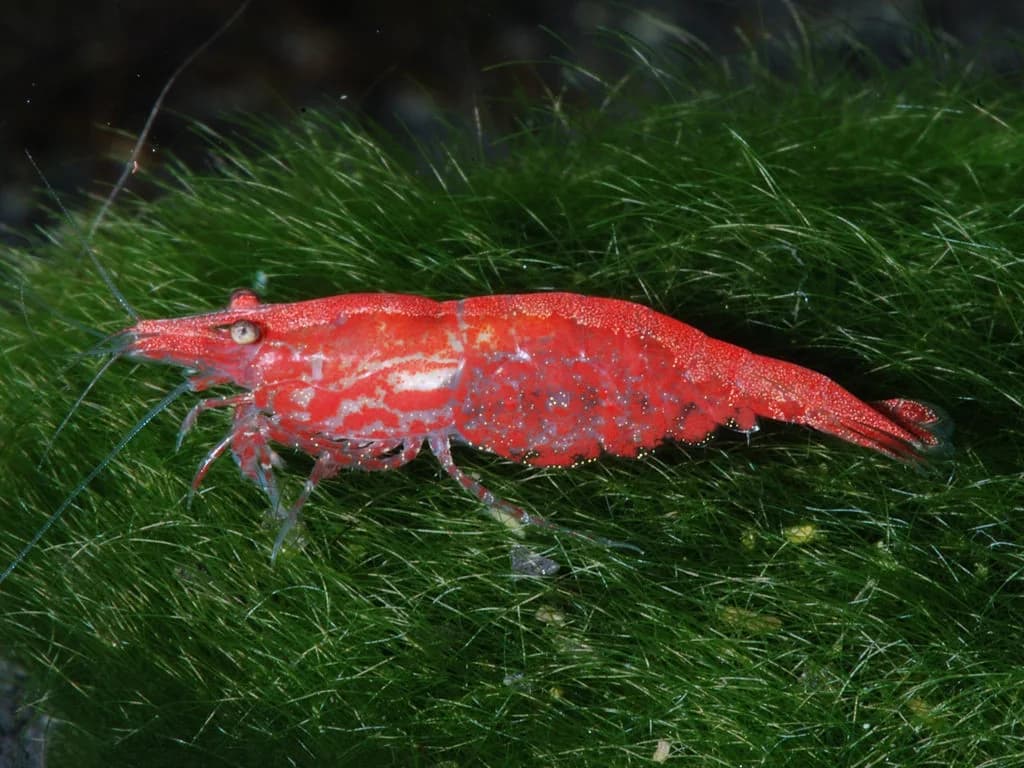
Use a mature, filtered aquarium and measured water—not a shrimp-per-litre rule. Tropical Fish Co uses 20 litres as a cautious starting policy for a small Cherry Shrimp group, above OATA's general 10-litre screen for small shrimp. Provide established grazing surfaces, cover and a protected filter inlet. No fish is guaranteed shrimplet-safe, and breeding should never be promised.
Maintain these water conditions for optimal health and vibrant colors
Neocaridina davidi green is a green aquarium colour form of the freshwater shrimp Neocaridina davidi. The accepted species belongs to the family Atyidae; “green” identifies the colour line rather than forming part of the scientific binomial.
This shrimp suits a keeper prepared to test the water, protect the filter intake and control feeding rather than relying on its reputation as an algae eater. Its small body does not make an immature bowl or unfiltered container suitable. Stability, established grazing surfaces and enough sheltered structure are the foundations of the plan.
In natural-history terms, Neocaridina davidi is native to Taiwan, areas east of China, the Korean Peninsula and Vietnam. It occurs in inland waters including lakes, ponds, rivers and streams. The species is omnivorous in nature, while aquarium strains have been selectively bred into green, red, orange, yellow, blue and other colours. Never release shrimp, aquarium water, plants or equipment contents into the wild.
Adults reach approximately 4 cm long. Use that mature size when assessing filter inlets, potential predators, feeding access and gaps in the cover. A small dispatch animal still needs an aquarium designed for its adult dimensions and for the other members of its planned group.
| Suits | Not suited to |
|---|---|
| Keepers with a mature, filtered aquarium and measured water | Immature or unfiltered containers |
| A small social group with cover and protected filter intakes | Aquariums containing fish able to fit the shrimp in their mouth |
| Peaceful shrimp-focused displays with established grazing surfaces | Communities containing species known to be predatory |
| Keepers prepared for intermediate care and gradual stocking | Plans based on a fixed shrimp-per-litre formula |
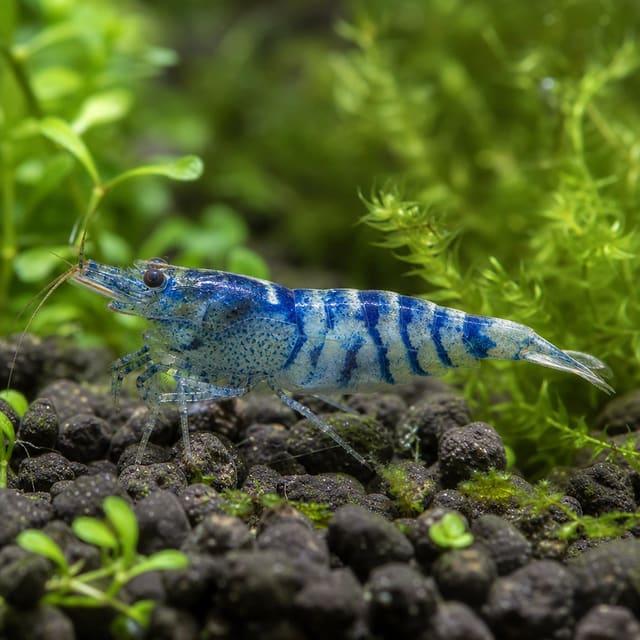
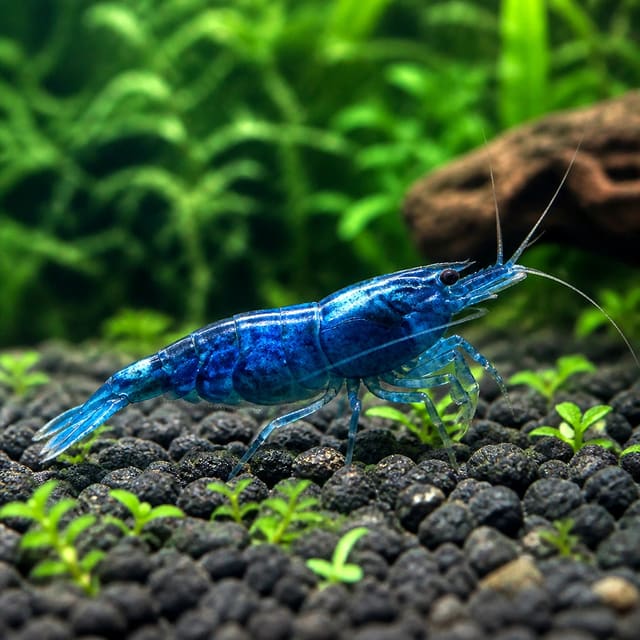
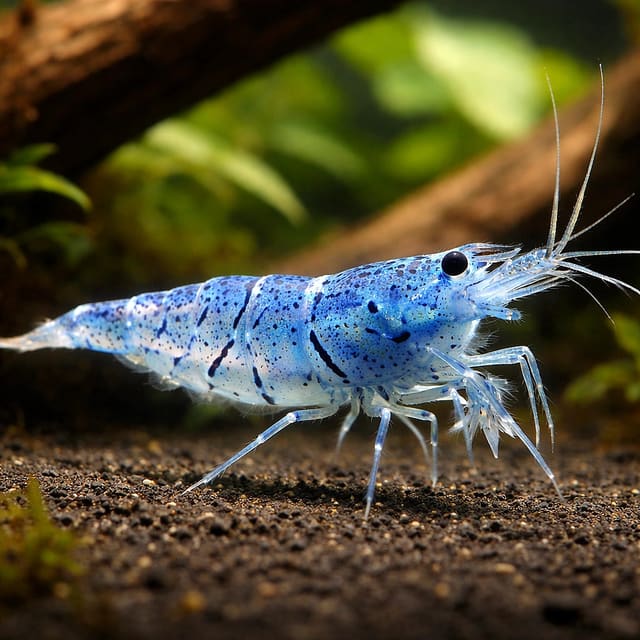
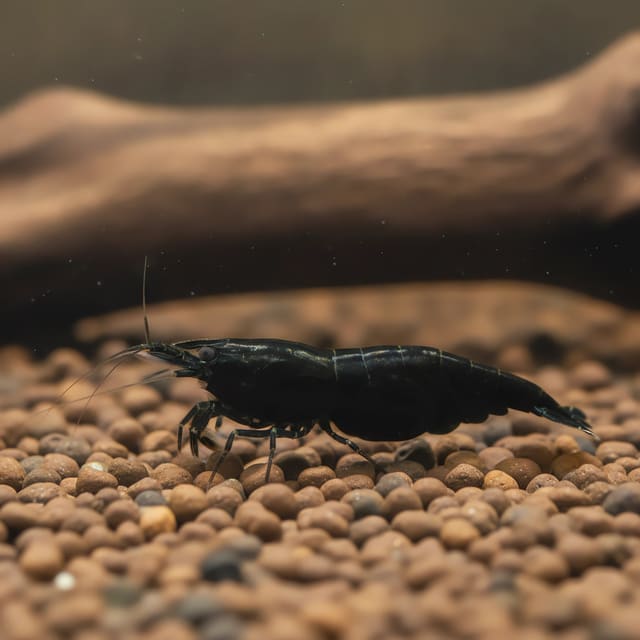
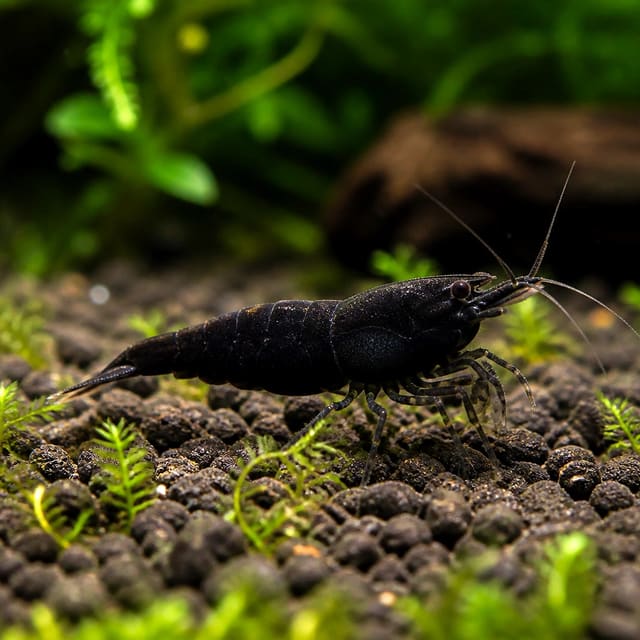
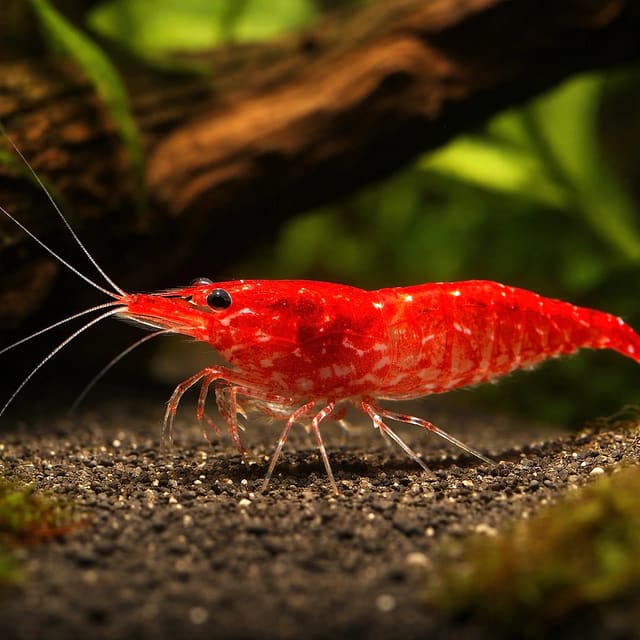
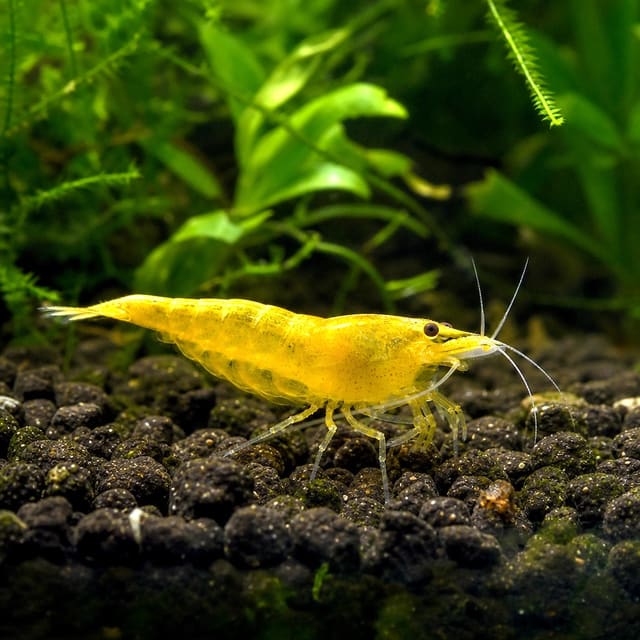
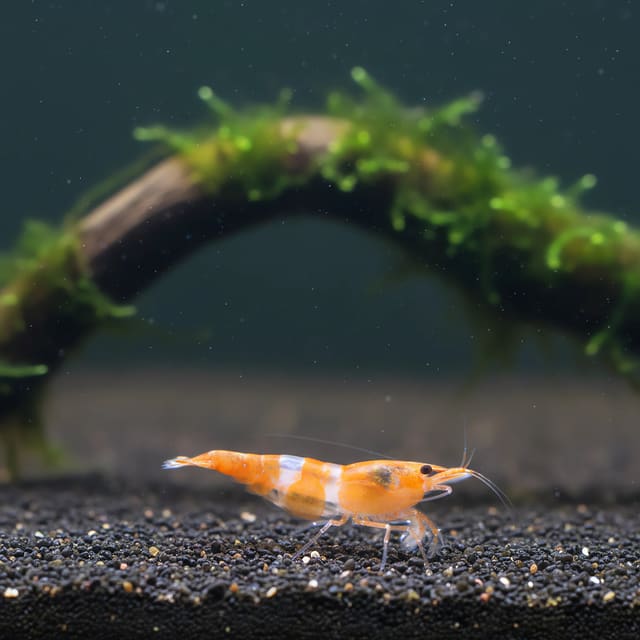
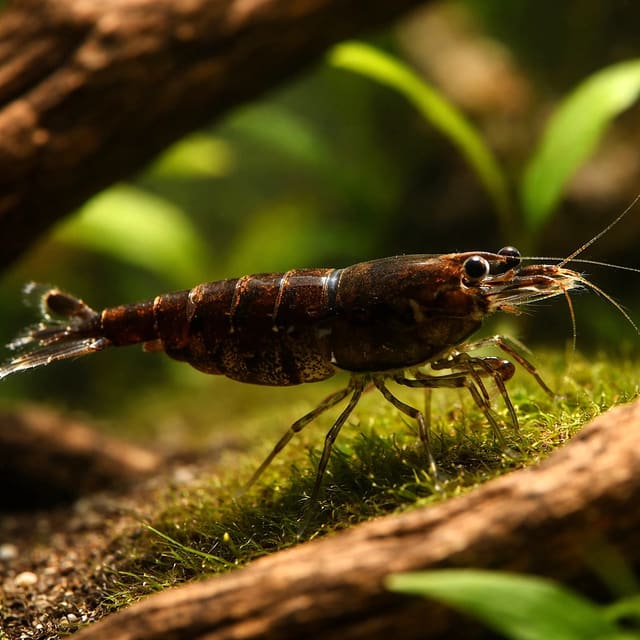
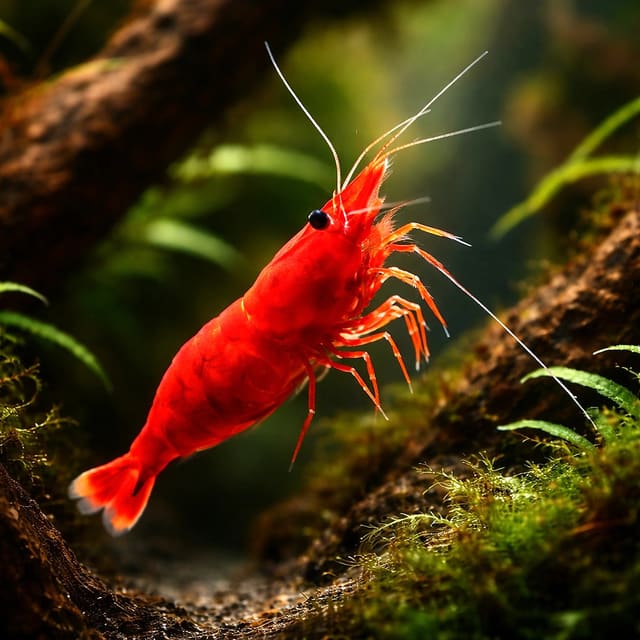
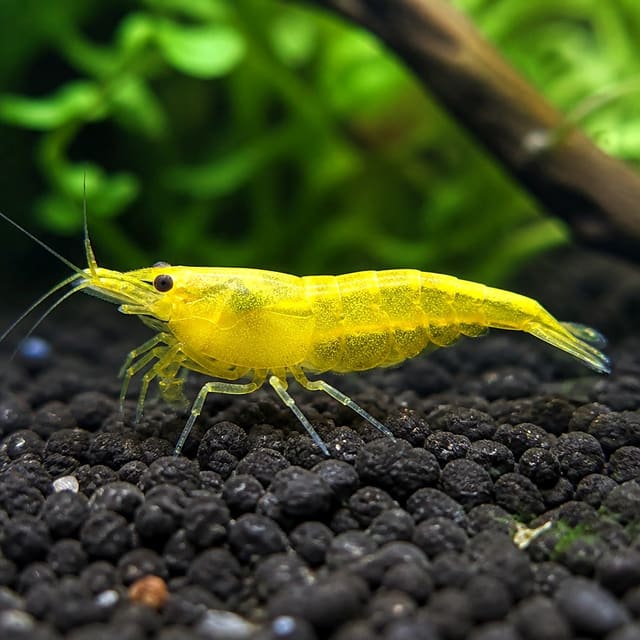
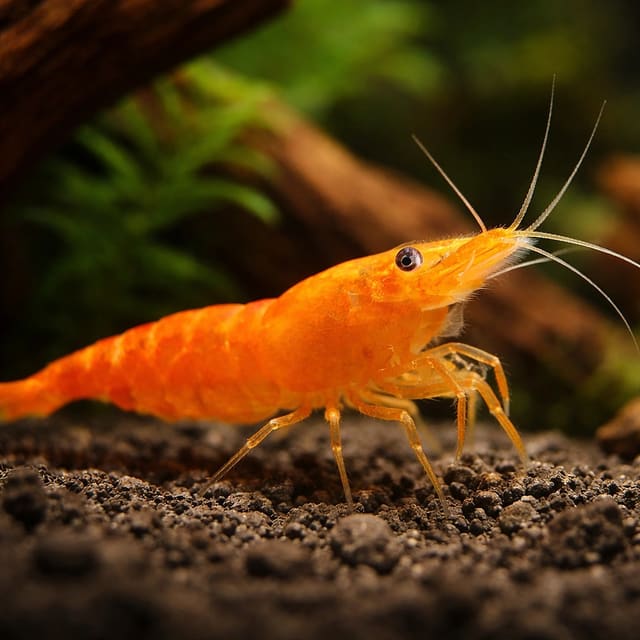
Colour intensity can vary with lineage, lighting, substrate, health and the way a photograph is produced. Choose this animal because the green line and its care requirements fit your aquarium, not because every individual is expected to match one exact shade at every moment.
One purchase supplies one animal.
Sex is guaranteed only when the selected option explicitly states male or female. This Neocaridina davidi green listing has no sex-guaranteed option.
The gallery images are representative of this type of animal rather than photographs of the exact animal supplied, so colours can look slightly different from the live animal.
OATA’s freshwater shrimp and snails guidance gives 17–27°C, pH 6.5–8.0 and 4–18°dH for the broad group rather than a species-specific optimum. It recommends at least 10 litres for small freshwater shrimp and at least five for social shrimp. Our complete Cherry Shrimp Care Guide uses a mature, filtered 20-litre aquarium as a more cautious starting policy for a small group. Neither volume is a permanent shrimp-per-litre formula.
| Check | Starting point |
|---|---|
| Aquarium volume | Start from 20 litres for a small group; plan larger with other livestock |
| Social plan | Build towards a group of at least five |
| Temperature | 17–27°C planning range |
| Water chemistry | pH 6.5–8.0 and 4–18°dH |
| Nitrogen waste | Ammonia 0 mg/l and nitrite 0 mg/l |
Use the current cherry shrimp collection to compare colour-line pages without assuming that different colours have different basic welfare needs. Before placing an order, read the current delivery and Live Arrival Guarantee policy for dispatch days, arrival support and claim instructions.
Start with a biologically mature, filtered aquarium. Maturity is not a fixed number of days: the filter must contain enough beneficial bacteria to process the planned livestock load, while tests show ammonia and nitrite remaining at 0 mg/l. The RSPCA explains how biological filtration converts toxic ammonia through nitrite into safer nitrate.
If this is your first invertebrate aquarium, use our freshwater shrimp keeping guide to prepare and mature the system before livestock arrives. Begin planning from 20 litres for a small group. Calculate the usable volume after substrate, wood, rock and equipment have displaced water, then account for every other animal and the possibility of juvenile survival.
A mature appearance is not enough on its own. Old-looking wood, algae or cloudy biofilm cannot replace measured ammonia and nitrite results. Conversely, a clean-looking aquarium can be biologically mature if the filter is working and the relevant tests remain stable. Judge the system by its function rather than by how long it has stood or how much visible growth is present.
A 20-litre shrimp-only aquarium and a 20-litre mixed aquarium do not present the same demands. Fish add waste, consume food, occupy cover and may hunt shrimp. A heavily decorated tank also holds less free water than its nominal volume. Increase space whenever companions, dense equipment or expected population growth reduce the headroom for stable conditions.
Before introduction, confirm that the filter runs reliably, all intake gaps are protected, sheltered surfaces remain accessible and there is a practical route for weekly maintenance. OATA’s freshwater aquarium guidance supports cycling, regular testing and gradual stocking. These checks prevent the small physical size of the shrimp from hiding larger problems in the system design.
Use 17–27°C, pH 6.5–8.0 and 4–18°dH as the aquarium planning range, then choose a stable point within that range for every animal in the community. General carbonate-hardness guidance is 3–15°dKH. Ammonia and nitrite must each measure 0 mg/l, while nitrate should not exceed 20 mg/l above the normal tap-water level.
Read our aquarium water chemistry guide before changing pH or hardness. UK tap water varies by supply, and the aquarium can differ from the tap because substrate, rock, evaporation, top-ups and treatment alter the result. Test the aquarium itself rather than relying on a postcode, a water-company description or the reading from another keeper’s tank.
A value sitting inside the planning range can still be a poor transfer match when the starting water is very different. For example, moving between two in-range temperatures can still create a sudden change. Compare both sides of the transfer; do not treat a tick beside each separate range as permission to move the animal immediately.
Use a heater when the room and aquarium cannot remain inside the stable range chosen for the whole community. In a cool room, a correctly sized, guarded and thermostatically controlled heater may be needed. A warm room instead needs an overheating plan. Make the decision from measured aquarium temperatures across the day, not from the season alone.
Do not chase pH or hardness with repeated rapid adjustments. Select suitable source water and aquarium materials, measure the result and change course gradually. Stability does not mean ignoring a poor reading; it means correcting the cause without exposing the shrimp to abrupt swings.
Carry out a 25% partial water change at least once a week. Treat replacement tap water with a suitable conditioner to remove chlorine or chloramine before it enters the aquarium, and keep its temperature close enough to avoid a sudden shift. Use a siphon where practical to remove settled solid waste without stripping every grazing surface clean.
When filter media needs cleaning, rinse it lightly in aquarium water removed during the water change. Do not run mature media beneath the tap, because chlorine or chloramine may damage the beneficial bacterial population. Avoid replacing all media at once unless the equipment manufacturer’s safety instructions require a different action.
| If you find | Do this |
|---|---|
| Reduced filter flow | Check the guarded intake and media for a blockage |
| Ammonia or nitrite above 0 mg/l | Treat it as urgent, pause further stocking and inspect filtration and recent changes |
| Rising nitrate trend | Review water changes, feeding and the total livestock load |
| Recurring leftover food | Reduce the next portion rather than leaving waste to decay |
Add animals gradually. Every increase in livestock and feeding asks the biological filter to process more waste, while its bacterial population needs time to respond. Rapid stocking can produce new tank syndrome even when the aquarium looked settled beforehand.
Keep a simple weekly record of test results, water changed and unusual observations. Trends are more useful than memory: a gradual nitrate rise, repeated intake blockage or change after each feed becomes easier to identify when the readings sit together.
Neocaridina davidi is omnivorous in natural-history terms. In the aquarium, shrimp graze biofilm and some soft growth, but visible algae is neither a complete diet nor proof that extra food is unnecessary. Use an appropriate complete sinking shrimp food as the nutritional base, with algae wafers as a suitable supplementary option.
The freshwater shrimp and snail feeding schedule gives two or three feeds per week. Offer a small portion that the group can reach, then leave pellets or wafers for at least 30 minutes so slower shrimp have time to feed. After that window, remove recurring excess before it breaks down and adds waste to the water.
Do not judge feeding success solely by whether food vanishes. Fish or faster companions may take the food, while pellets can disappear beneath decor and decay unseen. Watch the shrimp reach and work over the food, then compare that observation with the next water tests.
Wood, rock and plant surfaces give the shrimp places to browse between scheduled feeds. Clean enough to remove accumulating waste, but avoid polishing every safe surface during one maintenance session. Biofilm supports grazing; it does not replace complete nutrition, filtration or water changes.
Colour is not a reliable portion gauge. A paler or darker appearance can accompany lighting, substrate, stress, health or image differences, so do not respond by automatically adding colour food. When appearance changes, assess behaviour, feeding access and measured water together.
Prepare the aquarium before the journey begins. Confirm temperature, ammonia and nitrite, check the protected filter intake and make sure the intended shelter remains accessible. A rushed equipment change after arrival creates an avoidable extra disturbance.
Compare measured holding-water temperature, pH and hardness with the aquarium before transfer. Keep the transition gradual and avoid combining arrival with unnecessary changes to decor, filtration, heating or water chemistry.
| Checkpoint | What to assess |
|---|---|
| Arrival day | General activity, posture, colour and access to cover |
| Following days | Grazing, response to food and use of the aquarium |
| Equipment | Filter flow, intake protection and stable temperature |
| Water | Ammonia and nitrite remain at 0 mg/l |
Some hiding can accompany settling or moulting, so one hidden shrimp does not establish a diagnosis. Look for a change from the individual’s developing baseline and compare it with the rest of the group. Increased inactivity, restlessness, unusual swimming, darker or paler colour and reduced feeding deserve a prompt check of measured water and equipment.
Increase the population slowly rather than adding a complete mixed community at once. Gradual stocking gives the biological filter time to respond and makes it easier to identify which change preceded a water-quality or behaviour problem.
Freshwater shrimp are generally social, so plan towards a group of at least five. Build that group gradually while keeping ammonia and nitrite at 0 mg/l. The 20-litre starting policy is intended for a small group in a mature aquarium, not as a calculation that assigns a fixed number of shrimp to every litre.
Count more than the animals you initially intend to place. Include the water volume displaced by decor, the feeding area, all adult companions and the possibility that juveniles may survive. A system that is comfortable for a starting group can become crowded when grazing space and sheltered surfaces become contested.
Cherry Shrimp are not livebearers. A mature female carries eggs externally beneath her abdomen, and young hatch as bottom-living juveniles rather than entering the prolonged saline planktonic phase associated with Amano Shrimp. That biology does not promise a breeding colony, a particular sex mix or a schedule for population growth.
Mature filtration, established grazing surfaces, suitable food, protected intakes and cover support both adults and juveniles. Fish predation, feeding competition, water quality and equipment still affect survival. A shrimp-only aquarium removes fish predation but does not remove those other risks.
If preserving a green colour line matters, plan a single-line aquarium rather than mixing colour forms and assuming every offspring will retain the same appearance. Colour alone cannot establish sex, maturity or breeding readiness, and an unsexed purchase should never be used to predict the makeup of a future group.
Review the plan whenever juveniles appear or the adult group changes. Focus on usable space, feeding access, waste processing and the purpose of the aquarium rather than applying a shrimp-per-litre shortcut.
An empty, intact exoskeleton can be the result of moulting rather than a dead shrimp. Hiding may also accompany a moult, but neither a shell nor hiding by itself diagnoses the animal. Check the individual in context and compare its behaviour with the rest of the group.
Warning signs include increased inactivity, restlessness, unusual swimming, a darker or paler appearance, more hiding than normal, changes in breathing effort, white spots, lesions, abnormal growths, exoskeleton damage, lost appendages, abnormal swelling and reduced interest in food. These signs can have different causes, so use them as prompts to investigate rather than as a reason to select a treatment by appearance alone.
Freshwater shrimp are highly sensitive to copper and will die if exposed even to low levels. Read the exact current label and every invertebrate warning before adding any medicine or chemical to the aquarium. Do not infer a safe concentration from another crustacean, an unrelated experiment or a forum dose. Identify the problem first and obtain qualified guidance whenever product compatibility is unclear.
Check non-medicine additions as carefully as treatments. Plant products, decor, aerosols and equipment residues can coincide with a change, while a blocked filter or temperature shift can create similar outward signs. Changing several things at once makes the cause harder to identify and can add further stress.
Keep observations concrete: record the reading, behaviour, affected animals and recent changes. “Less active after maintenance with ammonia above 0 mg/l” guides the next response more effectively than a general impression that the shrimp looks unhappy.
Avoid fish able to fit the shrimp in their mouth and species known to be predatory. Apply that rule using the companion’s adult mouth size and behaviour, not its shop size. A juvenile fish that appears harmless may become a hunting risk as it grows.
No fish pairing guarantees safety, especially for newly hatched shrimplets. A companion may ignore adult shrimp but consume juveniles, disturb a freshly moulted animal or take most of the food. Compatibility therefore depends on the outcome you want as well as whether adult animals appear to coexist.
Peaceful is a useful temperament description for the shrimp, but it does not make the other animal safe. Nor does a large amount of cover turn a known predator into a suitable companion. Cover reduces exposure; it cannot remove hunting, feeding competition or incompatible water requirements.
For a named community, contact us with the aquarium volume, measured temperature, pH and hardness, full adult livestock list and whether juvenile survival matters. That information supports a meaningful stocking assessment, while a common-name-only question can hide major differences in adult size and behaviour.
A shrimp-only aquarium is the clearest way to remove fish predation when colony growth is the priority. It still needs the same filtration, feeding, equipment and population planning as any other shrimp system.
Decide what success means before selecting companions. A mixed display may accept some predation risk, while a colour-line colony or juvenile nursery needs a different standard. Making that decision first prevents the word “compatible” from concealing an outcome you would not accept.
| Goal | Planning response |
|---|---|
| Display adults with fish | Screen every fish and retain a separation plan |
| Maximise juvenile survival | Use a shrimp-only aquarium to remove fish predation |
| Preserve the green line | Keep one colour line and avoid assuming offspring will breed true |
| Mixed invertebrate display | Compare adult behaviour, food access and shared water needs individually |
Introduce livestock gradually and observe access to shelter and food. Repeated stalking, lunging, displacement from feeding areas, unusual hiding or damaged appendages means the practical result differs from the plan. Separate animals when predation or persistent pressure develops rather than trying to solve the problem only by adding more food or decor.
Reassess after growth, plant trimming or a change in layout. A route into dense cover can disappear when plants are cut back, while an adult companion may use the aquarium differently from its juvenile form. Compatibility is a continuing husbandry decision, not a label fixed on introduction day.
Prepare an alternative mature enclosure or another safe separation method before experimenting with a mixed community. Moving an animal during an urgent problem is harder when the only spare container is unfiltered, untested or outside the shared water range.
Do not rely on adding several new animals simultaneously to spread attention. That approach also raises waste production and makes the cause of behavioural or water-quality changes harder to isolate. One controlled change followed by observation gives a clearer result.
Where uncertainty remains, choose the lower-risk arrangement. For a keeper whose priority is a growing group, removing fish from the plan gives a more dependable starting point than searching for a universally shrimplet-safe species.
Neocaridina davidi green reaches approximately 4 cm. Plan the aquarium, protected filter intake and potential companions around that mature length.
Start from a mature, filtered 20-litre aquarium for a small group under Tropical Fish Co’s cautious planning policy, then allow more space for companions, equipment and possible population growth.
OATA’s freshwater-shrimp group guidance uses at least five as the social planning figure. Build the group gradually so the biological filter can adjust to added livestock and feeding.
Neocaridina davidi green has an intermediate store care assessment because it needs mature filtration, measured water, protected filter intakes and controlled feeding rather than an immature or unfiltered container.
Use an appropriate complete sinking shrimp food as the nutritional base, with algae wafers as a supplementary option. OATA’s group schedule is two or three feeds per week; leave pellets or wafers for at least 30 minutes and remove recurring excess.
OATA’s freshwater shrimp group guidance gives 17–27°C, pH 6.5–8.0 and 4–18°dH rather than a species-specific optimum. Keep ammonia and nitrite at 0 mg/l and avoid abrupt changes.
This shrimp is assessed as peaceful. Screen every companion for adult mouth size, hunting and territorial behaviour, feeding competition, shared water requirements and usable cover.
Avoid fish able to fit Neocaridina davidi green in their mouth and species known to be predatory. No fish is guaranteed safe for shrimplets, so use a shrimp-only aquarium when removing fish predation is the priority.
Have someone present to receive it. Start filming every delivery before opening the sealed parcel and continue in one uninterrupted take as it is opened with the shrimp still in the sealed bag; float the bag for 20–30 minutes, then release the shrimp without pouring bag water into the aquarium.
No reviews for this item yet. Bought one? Honest reviews only, good or bad.
What customers say about ordering from us
Easy website plenty of info on fish your buying great to pick a time slot
TRACEY DURRANT · 7 Oct 2026
Got some lovely fish thank you
Kevin Mackie · 7 Oct 2026
Reviews of our shop, collected by Judge.me, an independent third-party review collector. Newest first.