
 By Tropical Fish Co Editorial Team
Neocaridina sp. Fire
17–27°C · pH 6.5–8
£5.99
Shrimps & Crustaceans · Buying Guide
Compare red, blue, yellow and rili Cherry Shrimp types in the UK. Learn what colour names mean, what photos cannot prove and what to check before buying.
10 products in stock today
Live prices and stock. Every fish covered by our Live Arrival Guarantee.
17–27°C · pH 6.5–8
17–27°C · pH 6.5–8

17–27°C · pH 6.5–8

17–27°C · pH 6.5–8
18–28°C · pH 6.5–8 · 20L
17–27°C · pH 6.5–8
17–27°C · pH 6.5–8
17–27°C · pH 6.5–8

17–27°C · pH 6.5–8
Our trained assistant knows this cherry shrimp types page inside out. Ask it anything — water parameters, tank mates, how many to buy — or have it read the guide aloud while you set up your tank.
The most useful Cherry Shrimp colour fact is also the easiest to miss: red, blue, yellow and rili are appearance labels, not separate care species or proof of lineage. The current catalogue name used for the focal aquarium shrimp is Neocaridina davidi, but a colour photograph cannot identify every animal with scientific certainty.
Use this page to compare colour and pattern terminology before shopping. Use the Cherry Shrimp care guide for tank, water, feeding, moulting and breeding decisions, and use the live Cherry Shrimp shop for current prices and availability.
UF/IFAS describes wild-type Neocaridina davidi as generally transparent or greenish-brown and lists selectively bred red, orange, yellow, green, blue and rili aquarium forms[3]. That is a useful map of common names. It is not a promise that every named retail line has one traceable ancestry or that every shop grades it identically.
The current Catalogue of Life treatment exposed through GBIF accepts Neocaridina davidi and records historical synonyms[1]. Taxonomy is not frozen: a 2024 integrative study argued that N. davidi, N. denticulata and N. heteropoda belong to one species complex and proposed retaining the older name N. denticulata[2]. This page therefore uses N. davidi because it remains the current catalogue and familiar aquarium-trade name, while making the active scientific debate visible.
That distinction matters when a listing uses “Cherry Shrimp” loosely. A familiar colour name helps customers search; the scientific name tells you what the seller believes the animal is. Neither should be inferred from a photograph alone.
The table below explains how common labels are used on this page. It deliberately avoids turning trade language into a regulated standard.
| Label family | What the label can describe | What it cannot prove |
|---|---|---|
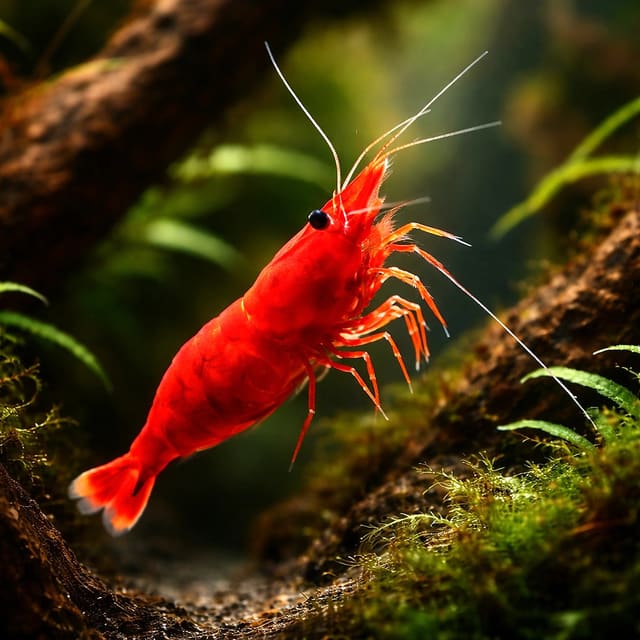
| Red | A red aquarium form; sellers may add Cherry, Sakura, Fire Red or Painted Fire grade language | One universal grade, genetic stability, sex or the exact animal supplied |
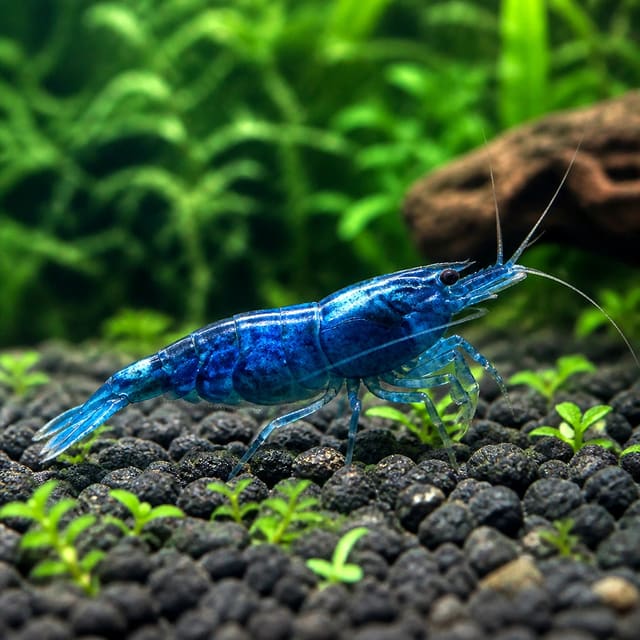
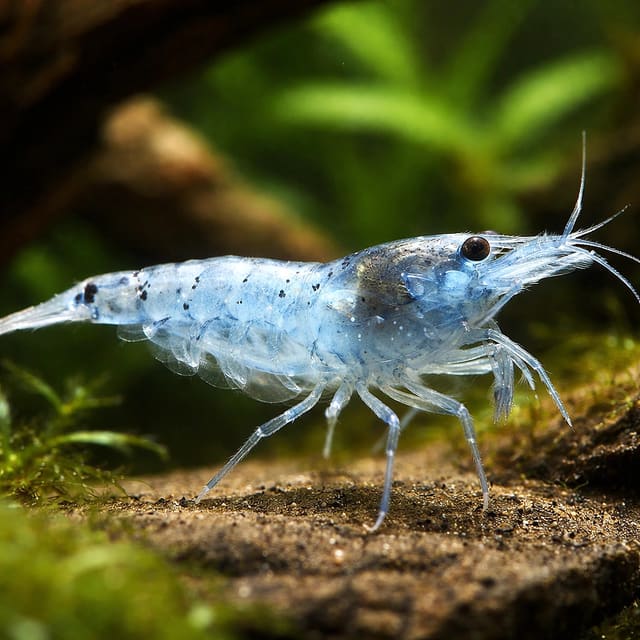
| Blue | A blue form; Blue Dream, Blue Velvet and Blue Jelly are common trade names | That two sellers' blue lines have the same ancestry or shade |
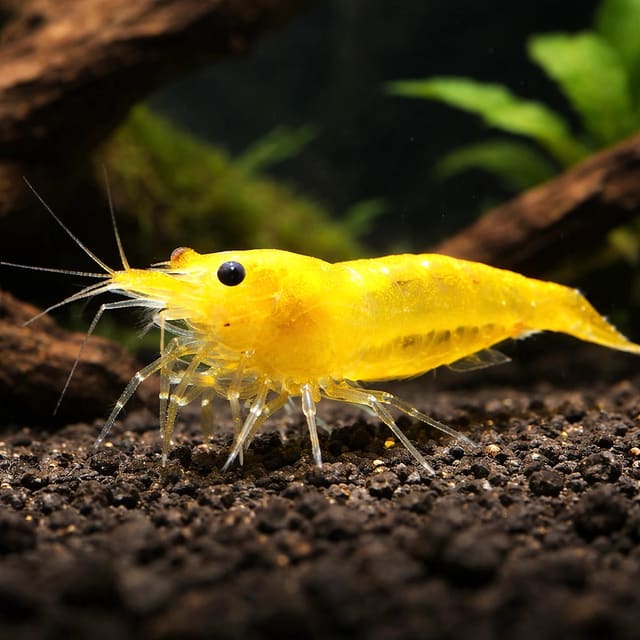
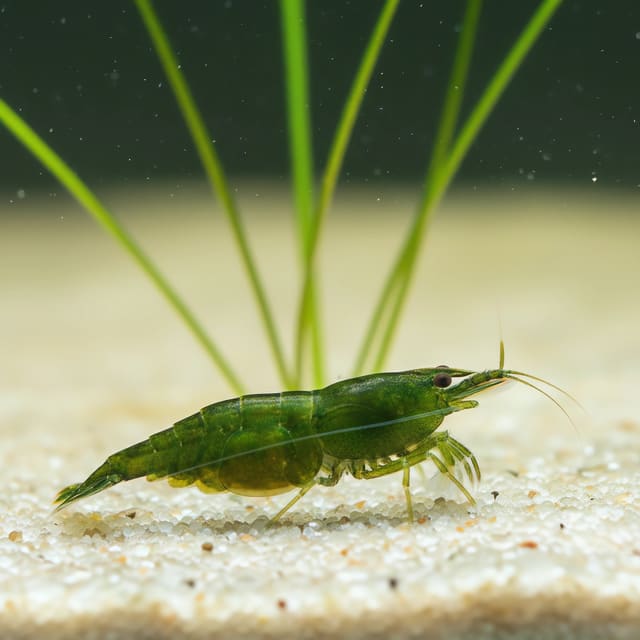
| Yellow, orange or green | The dominant visible colour claimed for that seller's line | Different care solely because the colour changes |
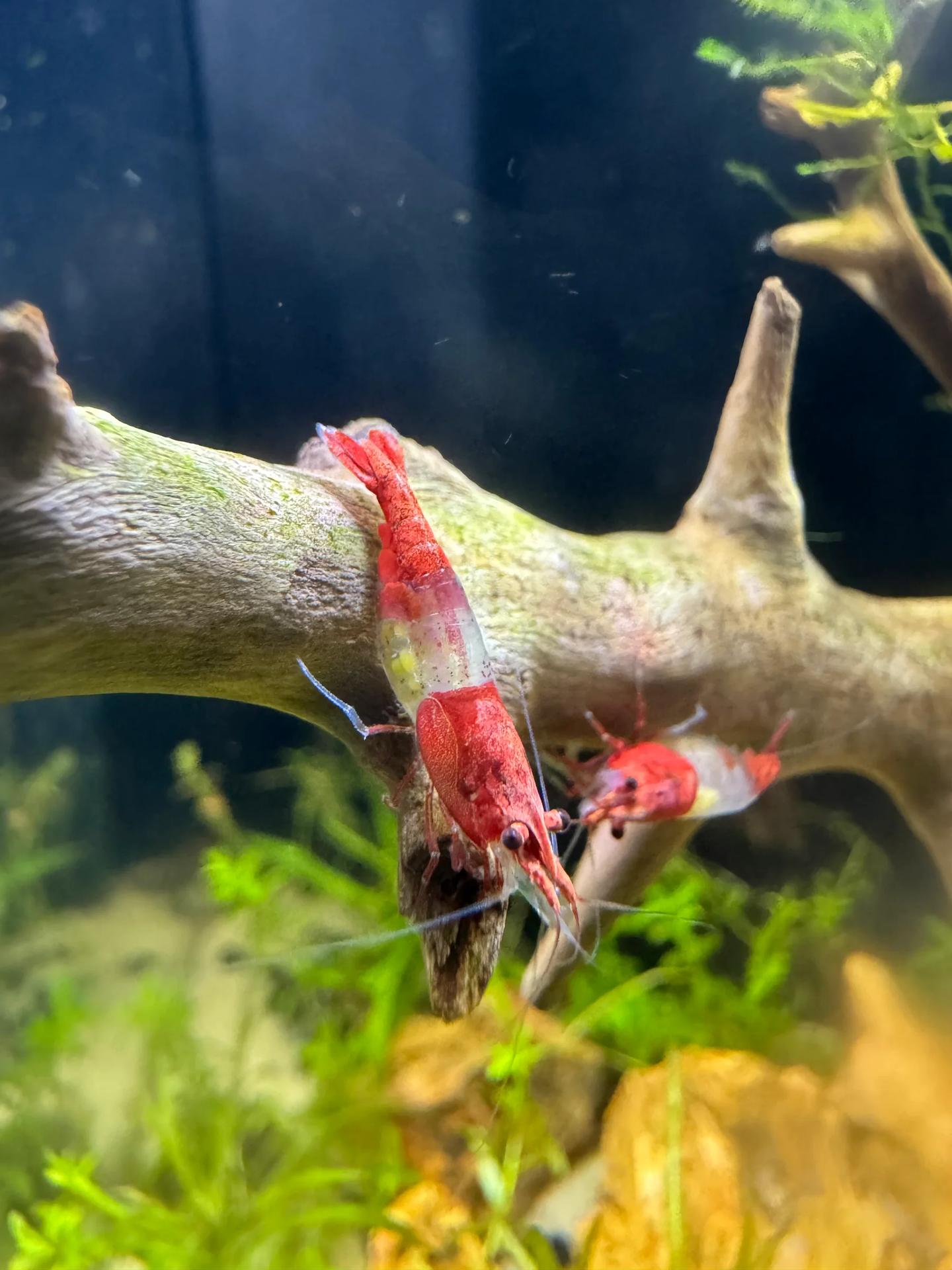
| Rili | A pattern with coloured head/tail areas and a clearer midsection | A separate species or identical pattern coverage in every individual |
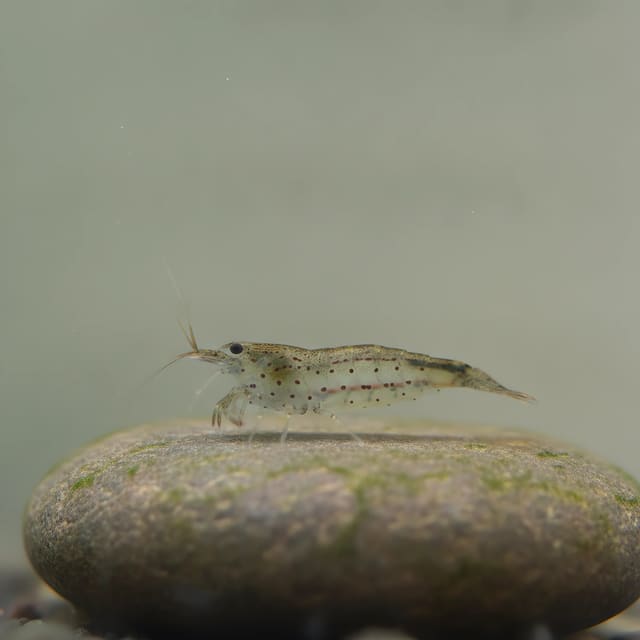
| Brown or wild-style | Less saturated brown, translucent or mixed-looking appearance | Poor health, low value or wild provenance |
Colour is visible; lineage is historical. If the lineage matters, ask for the seller's own description and records rather than treating an image-search result or colour chart as genetic proof.
Cherry, Sakura, Fire Red and Painted Fire are often arranged by sellers as increasing red coverage or opacity. That can be useful within one seller's catalogue. It is not a regulated UK scale, so the same wording may describe visibly different shrimp elsewhere.
Before paying a premium for a grade, check:
A higher grade is an appearance choice, not evidence that the shrimp is healthier or needs a different aquarium. No grade label replaces the welfare checks in the care guide.
Blue Dream, Blue Velvet and Blue Jelly appear frequently in aquarium trade language; UF/IFAS lists all three as blue morph names[3]. The important limitation is that the name alone does not prove how a seller's line was produced or whether another seller uses the term in exactly the same way.
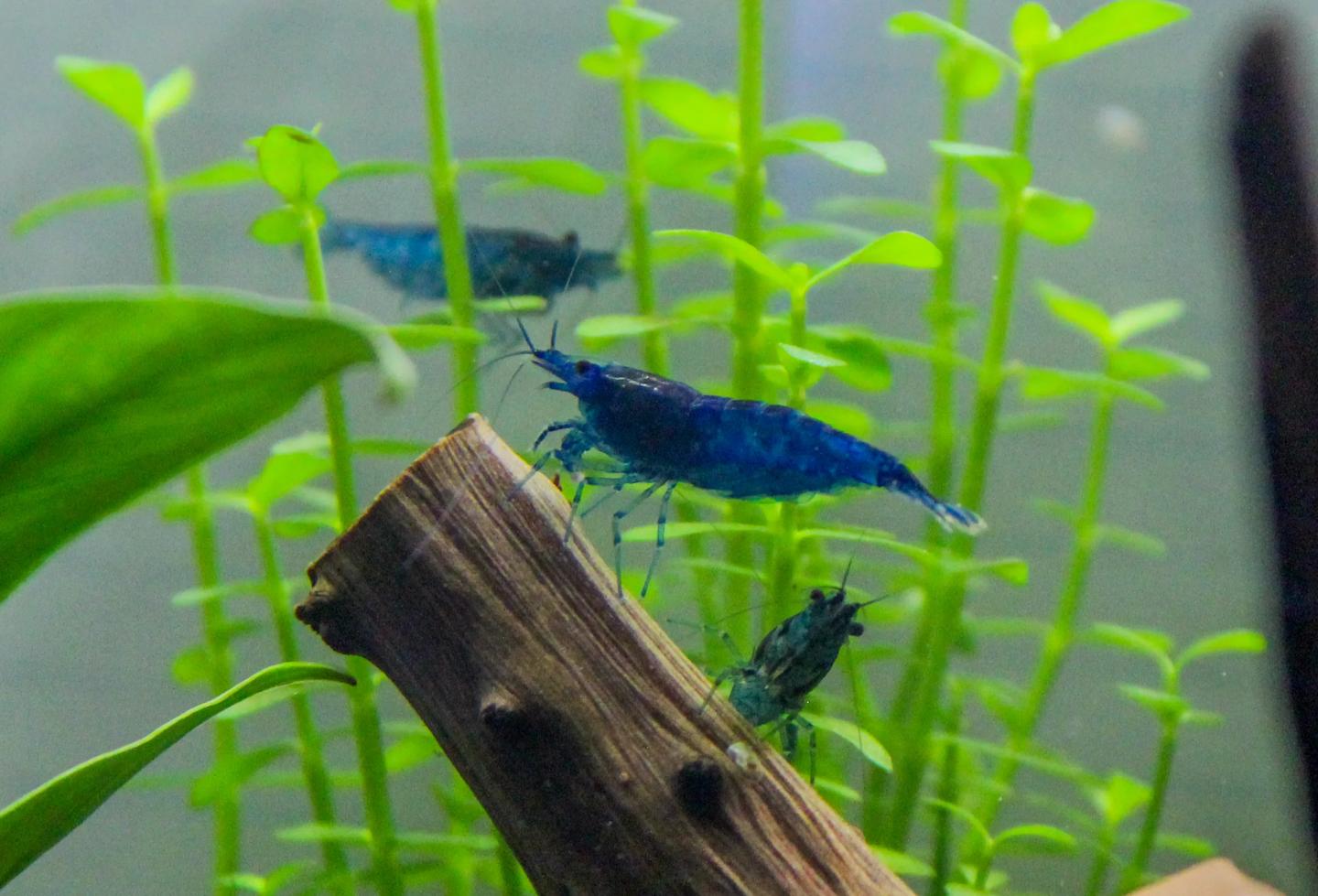
Use the visible shade and pattern as part of the buying decision, but keep the exact listing attached to the decision. A blue shrimp photographed against pale stone can look very different from one on dark wood, and cameras and screens shift saturation. The blue hero on this page shows three source-labelled N. davidi; it does not certify a particular retail grade or current stock.
Rili is best treated as a pattern word. The usual visual idea is a more strongly coloured head and tail separated by a clearer body section. The red-rili photograph in the gallery shows that description clearly, but individual boundaries and coverage differ.
Do not read “rili” as a species name. Pair it with the listing's scientific identification and colour—for example, a seller may describe red rili or another coloured rili line. If the exact balance of clear and coloured areas matters to you, use the seller's own current photographs and grading explanation.
Photography is evidence of appearance, not a calibration instrument. Aquarium light spectrum and intensity, camera processing, white balance, viewing screen, substrate and background can all change how a picture looks to a person. Biology adds another limit: a 90-day controlled study of red Cherry Shrimp found that the highest-carotenoid diet produced higher carotenoid content and brighter measured body colour in that experiment[4]. It did not establish a food recipe that guarantees a retail grade.
Background should not be sold as a permanent colour enhancer either. In short two-hour choice experiments, the studied brown, red and white morphs preferred dark over light backgrounds; the experiment tested where shrimp chose to be, not a promise that dark substrate changes inherited colour[5].
This is why our gallery keeps literal captions. Each image identifies only what its source and visible frame support. It does not claim health, permanent shade, grade, lineage or current availability.
Animals verified as the same species can reproduce across colour labels, but a trade name alone is not enough to predict their descendants. Actual parentage and inherited traits matter. “Every mixed colony turns brown” is too certain; “every colour stays pure” is equally unsafe.
If maintaining a named colour line is important, keep it separately and obtain parentage information from the seller. If variation is welcome, a mixed colony may suit your visual goal, but accept that offspring can differ from the adults you bought. Do not buy a colour mix on the promise of a guaranteed future palette.
A useful listing should let you answer six questions:
UK drinking-water hardness varies with geology and local supply, so postcode stereotypes such as “all London water is ideal” or “Scottish water is too soft” are not reliable. Check your water supplier's local report and test the aquarium itself[8]. For measured, evidence-bounded husbandry, continue to Cherry Shrimp care and the broader shrimp-keeping guide.
The live cards on this page are drawn from Shrimps & Crustaceans, so a related species can appear beside Cherry Shrimp. This is intentional discovery, not a claim that every card is a Neocaridina davidi colour. Open the exact product page before adding it to the basket; that page controls identity, sale unit, size, price and stock.
Do not choose between genera by colour. Amano Shrimp are a different animal with a different lifecycle, even though both may appear in planted-aquarium shopping. Use the Amano Shrimp comparison and the Amano care guide when that is the named product.
The wider Shrimps & Crustaceans shop is useful for browsing, but it is deliberately broader than this page. A product title, scientific name and selectable options must agree before a card is treated as a Cherry Shrimp offer.
Once identity is verified as the same species, do not create a new temperature, pH, group or tank-size rule merely because a shrimp is blue rather than red. OATA publishes broad UK freshwater-shrimp guidance, but its ranges are group-level screens rather than controlled limits for every N. davidi line[7].
The separate care page explains mature filtration, measured ammonia and nitrite, water stability, grazing surfaces, covered filter inlets, companions, feeding, moulting and reproduction. It also explains why there is no dependable permanent shrimp-per-litre formula. This comparison page intentionally does not duplicate those answers.
Ornamental-shrimp research still contains important species and life-stage gaps, and transport, temperature and water chemistry can interact rather than acting as isolated switches[6]. That is why an attractive colour must never outweigh a prepared aquarium and a careful handover.
Retailers should distinguish a current offer from educational photography and give buyers care information appropriate to the animals. English statutory guidance for licensed animal sellers includes aquatic monitoring and buyer-information duties[9]. It does not prove that one photo represents one current shipment, so the exact live listing remains essential.
Never release aquarium shrimp, plants, water or equipment contents into the wild or a drain-connected natural waterway. Government-backed non-native-species guidance asks owners to prevent escape and dispose responsibly[10]. If you can no longer keep a colony, contact the retailer or an appropriate aquarium rehoming route.
Choose the exact species first, then the colour or pattern you genuinely like. Treat grade names as seller-specific, use photographs as bounded visual examples, and verify the current sale unit, size option, price and stock on the live product page.
For the next step, browse the Cherry Shrimp shop. Before ordering, read the Cherry Shrimp care guide and compare your measured aquarium with the seller's current information. That sequence protects both the customer decision and the animal.

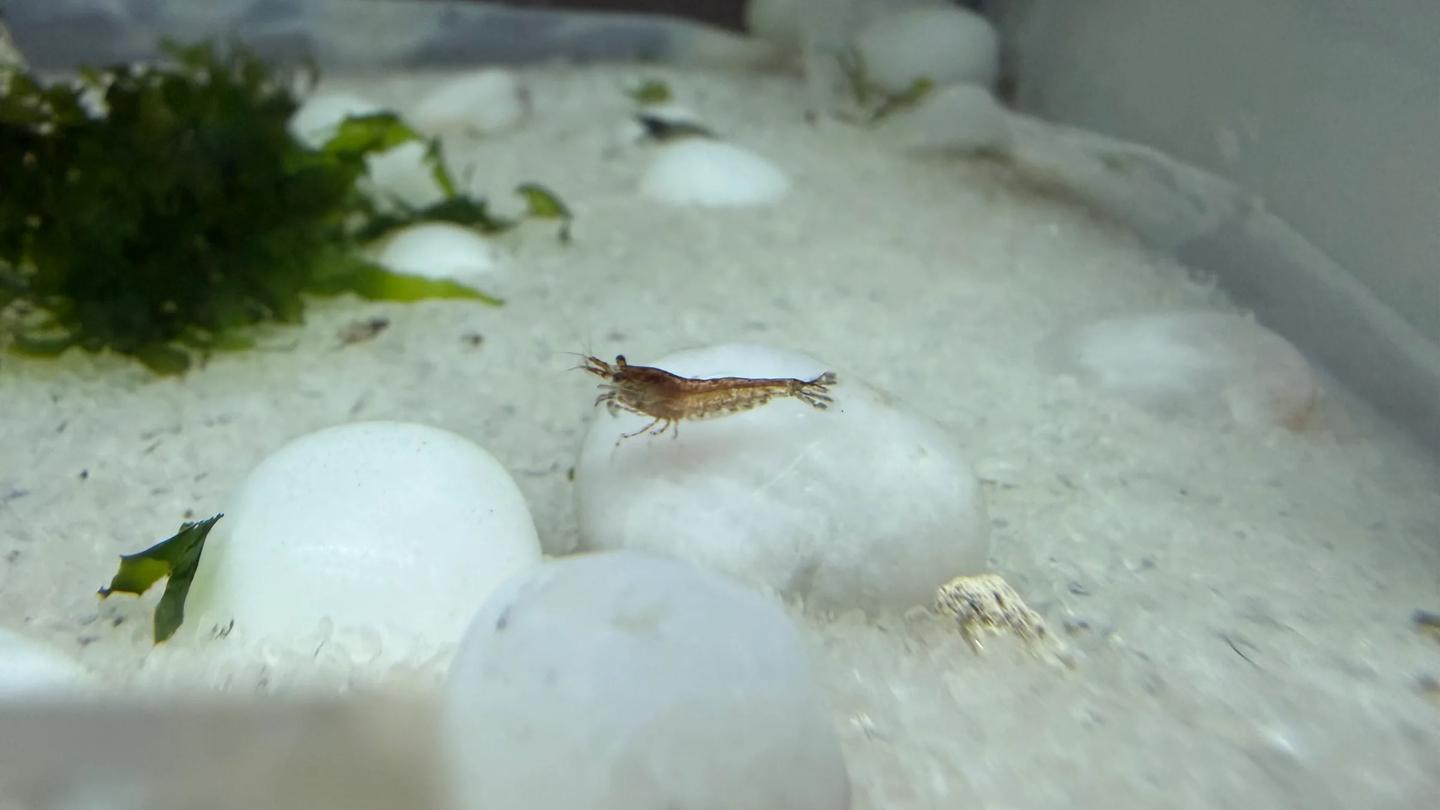
Visual route into the rest of our UK live-fish range.
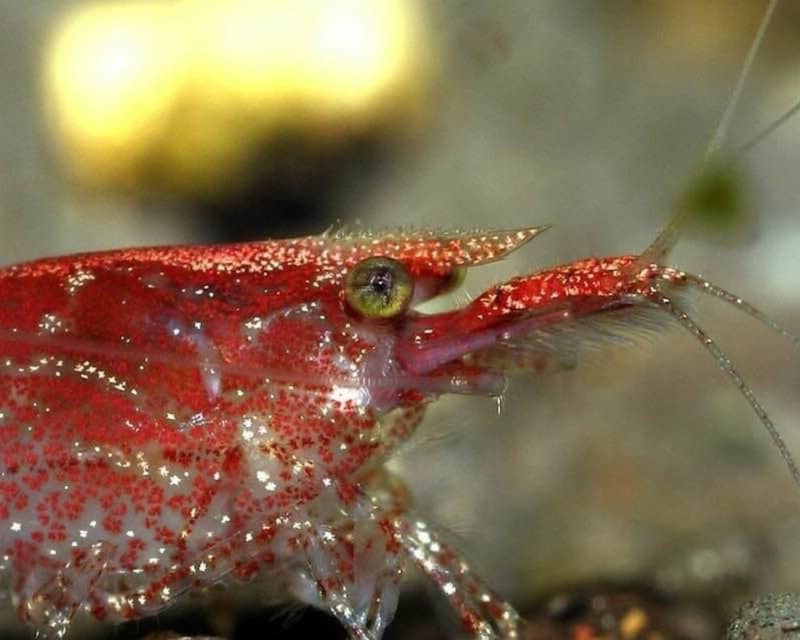
Cherry, Amano, Crystal, Tiger, Bamboo and Caridina shrimp, plus crayfish and crabs. Grade and size stated per listing; shrimp travel well and arrive alive.
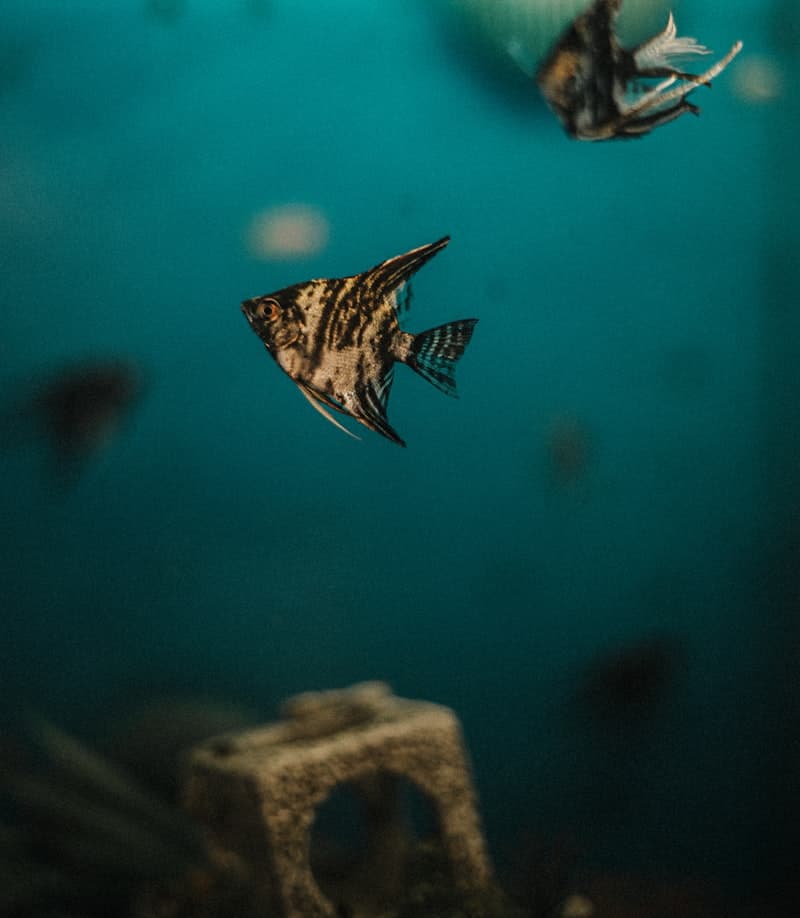
Planted-tank fish for sale UK — peaceful, plant-safe species that showcase aquascaped layouts. Tetras, rasboras, dwarf cichlids, shrimps.
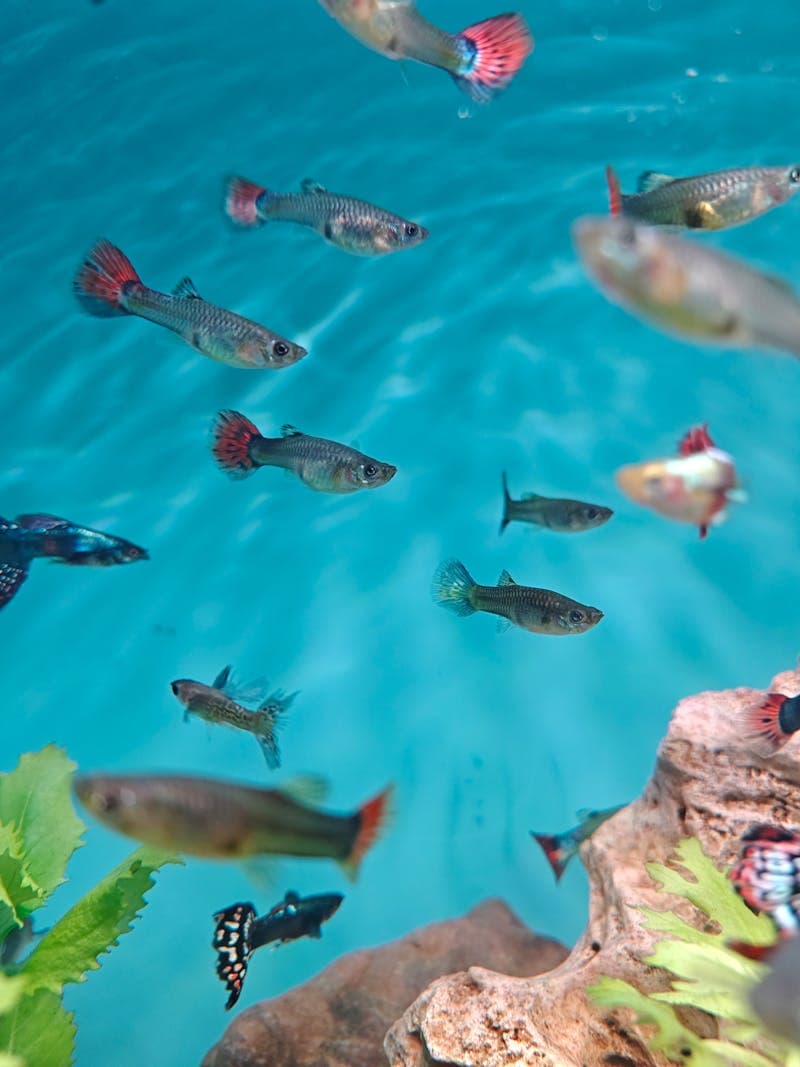
Explore fish and invertebrates for smaller aquarium plans. Compare adult size, group needs, tank dimensions and water conditions before choosing.
Material factual claims cite the sources below; store policy and cautious inference are labelled in the article. Sources are grouped by type so you can judge their weight at a glance.
Proposes synonymy and retention of N. denticulata; this research proposal is distinguished from current catalogue usage.
A 90-day controlled feeding study in a red line; it does not define retail grade or promise colour from one diet.
Two-hour choice experiments with brown, red and white morphs; not evidence that dark substrate permanently improves colour.
Reviews interacting stressors and evidence gaps; not a universal acclimation or water-change recipe.
Current catalogue treatment and synonym history; not proof of any retail animal's identity or colour lineage.
Lists commonly used red, orange, yellow, green, blue and rili morph names and describes selective breeding; not a regulated retail grade standard.
Broad UK trade care guidance; not taxonomy or a species-specific experiment.
Explains why UK source-water hardness varies and points customers to their local supplier; not shrimp husbandry guidance.
English licensed-seller guidance on aquatic monitoring and buyer information; not a guarantee about one shipment.
Government-backed prevention guidance; supports responsible disposal, not colour or care claims.
Fishkeeping moves fast and we want every guide spot-on. If you think something here is wrong, out of date, or could be clearer, tell us — our team reads every message and updates the page.
Suggest an editCherry, Amano, Crystal, Tiger, Bamboo and Caridina shrimp, plus crayfish and crabs. Grade and size stated per listing; shrimp travel well and arrive alive.
Planted-tank fish for sale UK — peaceful, plant-safe species that showcase aquascaped layouts. Tetras, rasboras, dwarf cichlids, shrimps.
Explore fish and invertebrates for smaller aquarium plans. Compare adult size, group needs, tank dimensions and water conditions before choosing.
Cherry shrimp care for UK aquariums: plan a mature 20L-plus tank, test your water, protect shrimplets and understand feeding, moulting and breeding.
Shrimp keeping in the UK: choose an identified freshwater shrimp, test your water, mature the filter, and plan feeding, cover and tank mates safely.
Amano shrimp care for UK aquariums: plan a mature 20L-plus tank, group, stable water, feeding, algae limits, tank mates, moulting and breeding.
Keep cardinal tetras thriving in UK water: check tank size, group size, tank mates, temperature and cardinal vs neon differences before you buy.
Evidence-led aquarium editorial team
The Tropical Fish Co editorial team compiles care guidance from the sources cited on each page, separates published evidence from practical husbandry policy, and checks retail links against the current catalogue. First-hand experience is included only when a named contributor and the observation have been verified.