Easy
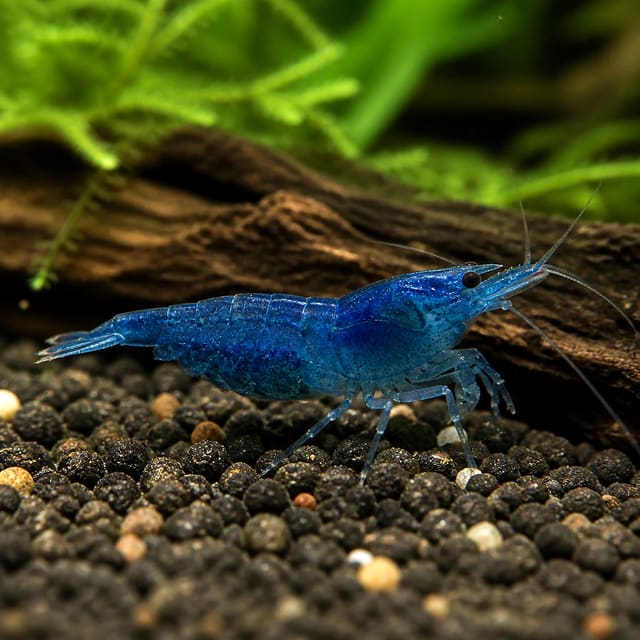
Blue Dream Shrimp (Neocaridina davidi)
18–28°C · pH 6.5–8 · 20L
£16.19

Blue Pearl Shrimp (Neocaridina denticulata) is supplied as one unsexed 1–1.5 cm shrimp per purchase. It suits a mature, filtered aquarium with stable water, a group of at least five and no fish large enough to swallow shrimp. Water figures on this page are broad OATA freshwater-shrimp guidance, not a species-specific optimum.
Neocaridina denticulata
Lives in groups: kept together they stay settled, active and show their best colour.
Blue Pearl Shrimp (Neocaridina denticulata) is supplied as one unsexed 1–1.5 cm shrimp per purchase. It suits a mature, filtered aquarium with stable water, a group of at least five and no fish large enough to swallow shrimp. Water figures on this page are broad OATA freshwater-shrimp guidance, not a species-specific optimum.
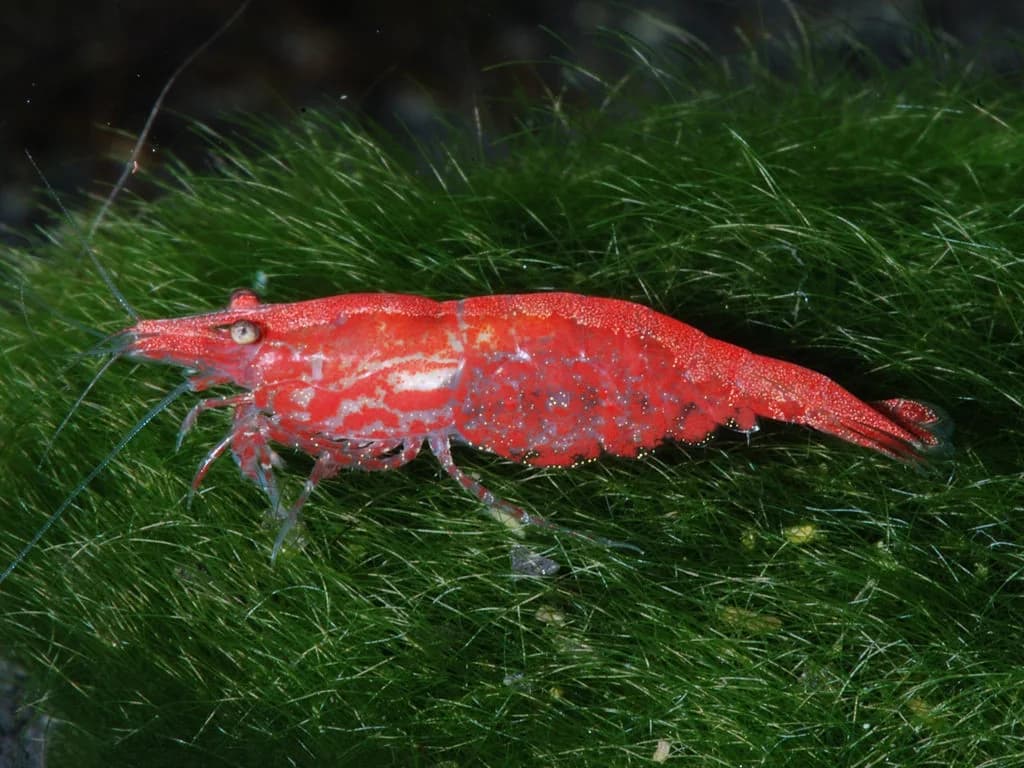
Use a mature, filtered aquarium and measured water—not a shrimp-per-litre rule. Tropical Fish Co uses 20 litres as a cautious starting policy for a small Cherry Shrimp group, above OATA's general 10-litre screen for small shrimp. Provide established grazing surfaces, cover and a protected filter inlet. No fish is guaranteed shrimplet-safe, and breeding should never be promised.
Maintain these water conditions for optimal health and vibrant colors
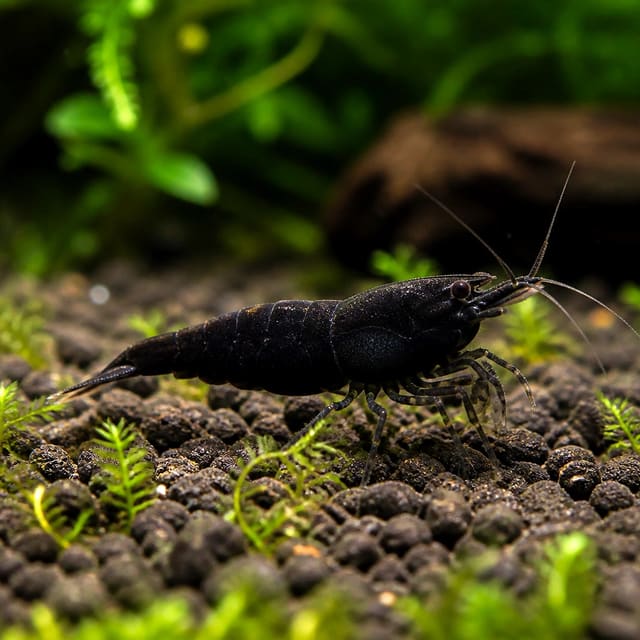
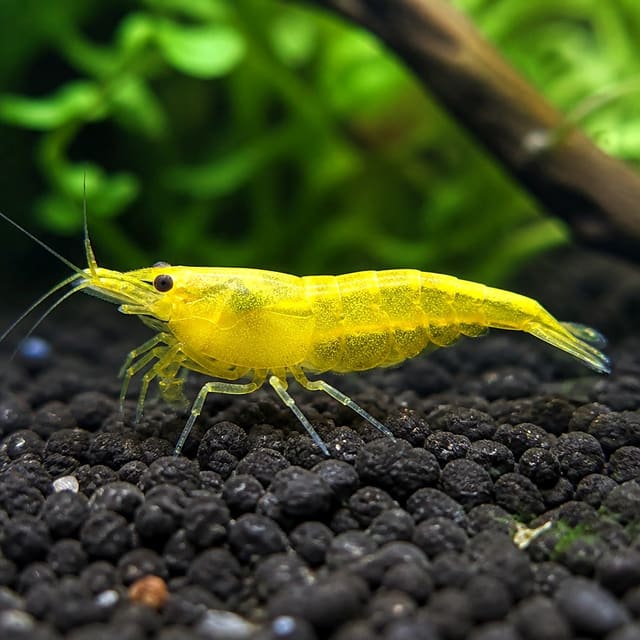
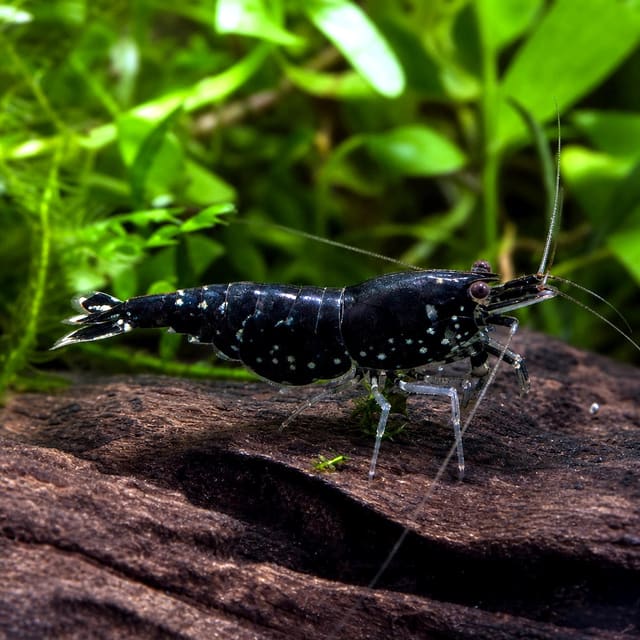
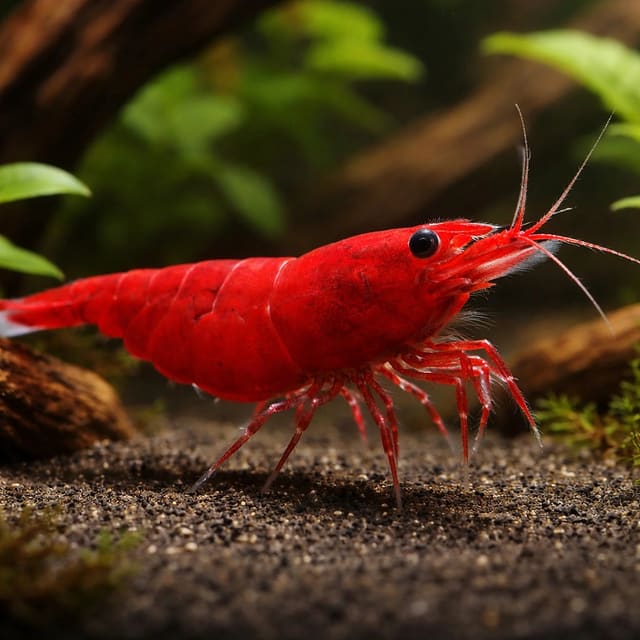
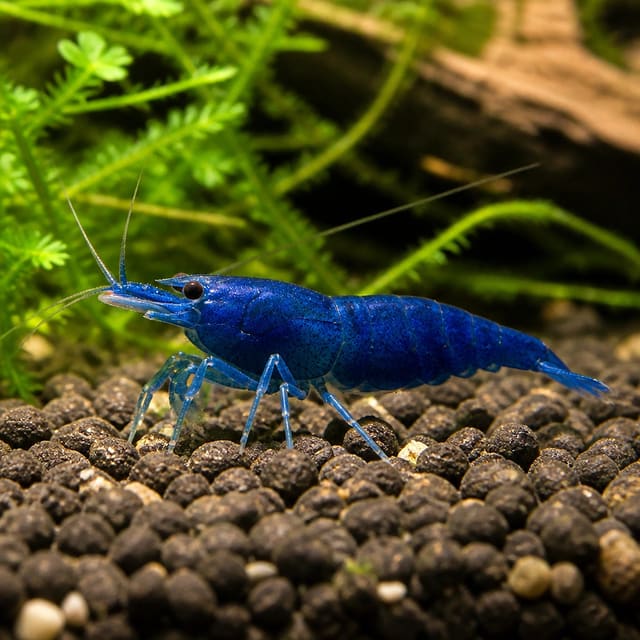
Blue Pearl Shrimp (Neocaridina denticulata) is a pale blue freshwater dwarf shrimp offered as one live animal per purchase. The supplier's recurring dispatch grade is 1–1.5 cm. That is the size at which the shrimp is supplied, not an adult-size guarantee. The most important preparation is a mature, filtered aquarium with stable water and companions that cannot swallow or prey on a shrimp.
The accepted scientific name used for this listing is Neocaridina denticulata; “Blue Pearl” describes the trade colour. Members of the genus Neocaridina are small land-locked freshwater shrimp associated with East Asia, but that genus-level context does not prove a particular domestic strain's breeding history. Colour intensity, transparency and dark speckling can differ naturally between individuals and can look different under different aquarium lighting.
| Suits | Keepers with a mature, filtered freshwater aquarium who can test water and protect small shrimp from predators |
|---|---|
| Supplied | One unsexed shrimp per purchase, dispatched at 1–1.5 cm |
| Social plan | OATA broad guidance recommends a group of at least five freshwater shrimp |
| Aquarium plan | At least 10 litres for a small shrimp group under broad OATA guidance; choose more volume when fish are included |
| Water scope | 17–27°C, pH 6.5–8.0, 4–18°dH and 3–15°dKH are group-level guidance, not a species-specific optimum |
| Main caution | Ammonia and nitrite must be zero; avoid copper exposure, abrupt chemistry changes and predatory companions |
Blue shrimp are easy to admire, but colour is not the first buying decision. Begin with the aquarium's age, filtration and recent test results. A newly filled tank may look clean while lacking the bacterial population that processes toxic waste. A mature aquarium also provides many textured surfaces on which small shrimp can spend their time grazing. If the aquarium is not yet ready, use our shrimp-keeping guide to plan the setup before livestock arrives.
Next decide whether the aquarium is shrimp-only or mixed. Fish introduce predation risk even when they are sold as peaceful, because a small shrimp can still be treated as food. A community aquarium also needs more water volume than the broad 10-litre starting point for a small shrimp group. Check the adult mouth size and feeding behaviour of every proposed companion rather than relying on a general community label.
Finally, plan the group honestly. OATA advises at least five for social freshwater shrimp. Since this listing supplies one animal per purchase, the photograph count does not alter the sold unit. Build the intended group without treating a temporary stock display, a price or the number of shrimp in a gallery scene as husbandry evidence.
A suitable shrimp aquarium is not defined by a single number. It combines an established biological filter, stable tested water, room for a proper social group, shelter, accessible food and freedom from copper exposure. The filter should be running continuously and the keeper should know the aquarium's usual ammonia, nitrite, nitrate, pH and hardness readings before adding livestock.
Plants and textured décor are valuable because they create cover and surfaces to explore, while open access at the front or side makes observation and maintenance easier. A larger water volume usually gives more time to notice and correct a developing problem. That matters with a small invertebrate: small body size reduces the room it occupies, but it does not reduce its dependence on stable water.
A good buyer decision therefore answers four questions in advance: Is the aquarium mature? Can it support at least five social shrimp? Are all proposed companions unable to swallow them? Can the keeper maintain the stated water-quality guidance without abrupt changes? If any answer is uncertain, finish preparing the aquarium before choosing the colour.
Sex is guaranteed only when the selected option explicitly states male or female. This Neocaridina denticulata blue pearl listing has no sex-guaranteed option.
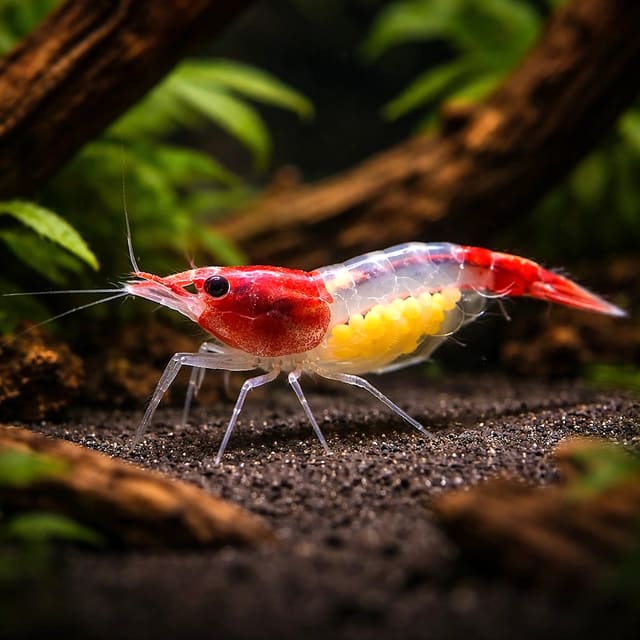
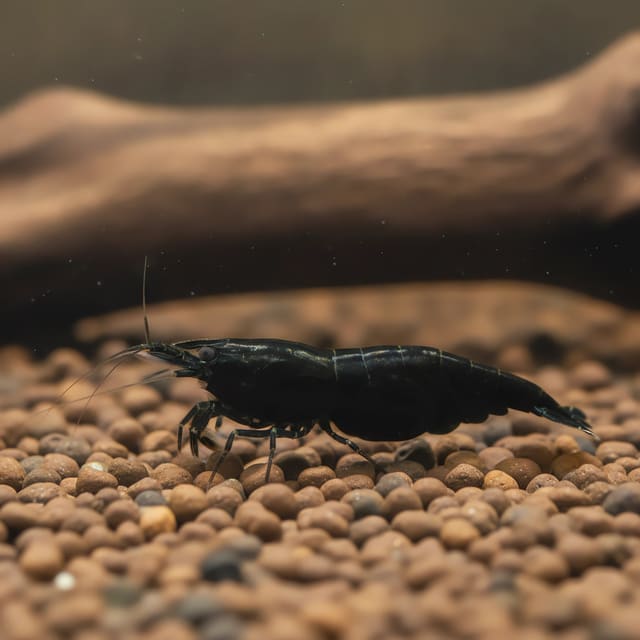
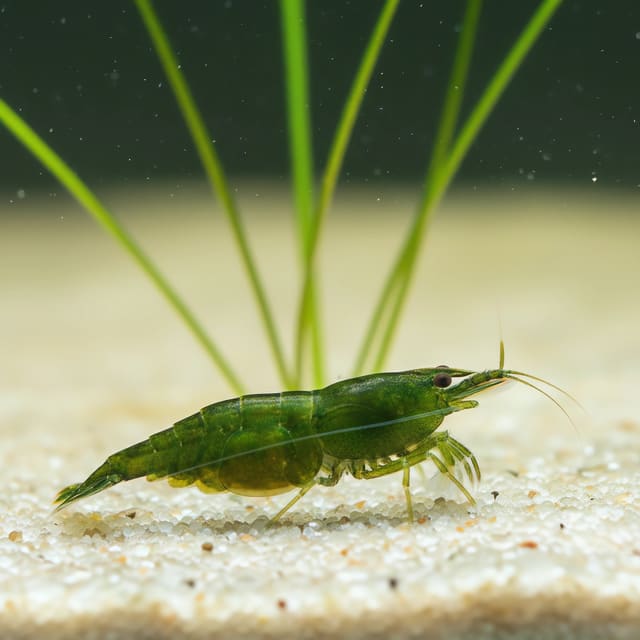
Gallery images have been digitally enhanced to improve image quality. Natural colour, pattern, size and maturity can vary between live animals.
The parameter range on this page comes from OATA's UK trade-body sheet for freshwater shrimp and snails. It is useful broad guidance, but it is not a measured species-specific optimum for this Blue Pearl trade colour. Use it to judge whether your established aquarium is broadly suitable, then favour stability within the range over repeated attempts to force water towards a supposed perfect number.
Browse the current cherry shrimp collection if you are comparing colour choices. Those other products are alternatives to consider, not automatic companions for the same aquarium.
A working biological filter is essential. Shrimp produce waste and uneaten food also breaks down; in a mature filter, beneficial bacteria process ammonia and nitrite. Both must remain at zero mg per litre. The RSPCA aquarium environment guidance explains the same filtration principle. An aquarium can be clear to the eye and still be chemically unsafe, so test results matter more than appearance.
OATA's freshwater invertebrate sheet recommends at least 10 litres for a group of small shrimp. That is a broad group-level starting point. More water is generally easier to keep stable, provides more room for shelter and grazing surfaces, and gives a greater margin when a heater, decorations and plants occupy space. If fish are included, OATA says the aquarium needs to be larger. Do not use the 1–1.5 cm dispatch grade as a shortcut for deciding volume.
Place the aquarium away from direct sunlight, draughts, heat sources, loud noise, vibration and sudden movement. Use aquarium lighting to create a regular day-and-night cycle, particularly when live plants are present. A cover is a sensible precaution because shrimp can leave the water, especially when startled or when conditions are poor.
Fine gravel, aquarium soil or sand can all work when they are suitable for the plants and filtration system. Add live plants where practical, with mosses, roots, smooth ornaments or small caves that form shelter and surfaces to explore. The useful test is not whether the layout looks densely planted from the front; it is whether shrimp can move through it, retreat after disturbance and reach food while the keeper can still remove waste.
Choose a filter rated for the actual aquarium volume and livestock load, install it to maintain water quality, and check it for blockages as part of routine maintenance. If filter media needs cleaning, rinse it lightly in water removed from the aquarium; do not run it under the tap, because chlorine or chloramine can damage the beneficial bacteria.
Keep equipment and décor aquarium-safe. Copper is a critical invertebrate hazard: freshwater shrimp and snails will die if exposed even to low levels. Read the label of any treatment before it enters the tank and confirm that it is safe for invertebrates. Avoid guessing from a product's fish-safe wording, because safety for fish does not establish safety for shrimp.
Water tests are most useful when they show a pattern. Write down results at the same point in the maintenance cycle, such as before the weekly water change, and note any feeding or livestock changes. A slow rise in nitrate, a shift in pH or a change in hardness is easier to understand when several weeks of results are available.
General hardness and carbonate hardness describe different aspects of the water. The care sheet provides a range for each, so do not substitute one reading for the other. If the aquarium and replacement water differ, make changes gradually and consistently. Large sudden corrections can create the very instability that careful testing is meant to prevent.
Temperature also needs context. A heater may be required in a cool room, but the broad 17–27°C range does not mean frequent movement across that span is desirable. Position the aquarium away from heat and draughts, use reliable equipment, and look for day-to-day consistency. Any adjustment should be based on measured conditions and the needs of every inhabitant.
The following figures reproduce the complete applicable parameter table from the OATA freshwater shrimp and snail care sheet. They cover a broad group and should not be read as a species-specific optimum.
| Temperature | 17–27°C |
|---|---|
| pH | 6.5–8.0 |
| Ammonia | Zero mg per litre |
| Nitrite | Zero mg per litre |
| Nitrate | Not more than 20 mg per litre above normal tap-water levels |
| General hardness | 4–18°dH |
| Carbonate hardness | 3–15°dKH |
Temperature matching is only one part of suitability. pH, general hardness and carbonate hardness affect the chemistry experienced by an invertebrate, and sudden changes can cause shock even when two samples have the same temperature. Test the aquarium rather than relying on the local water company's average. Our water-chemistry guide explains the measurements, while the water matcher helps compare your results with the stated broad guidance.
Do not react to every small reading with a large chemical adjustment. Establish repeatable maintenance and investigate the cause of a trend. A stable value inside the broad range is generally more useful than water repeatedly pushed up and down. When source water differs greatly from the aquarium, prepare replacement water before it is added rather than exposing shrimp to an abrupt swing.
OATA strongly recommends a partial water change of 25% at least once every week. The weekly frequency and the 25% amount are separate parts of that guidance. Treat replacement water with a conditioner that removes chlorine and chloramine, and match it sensibly to the aquarium before adding it. Siphon accessible waste while leaving enough mature surfaces undisturbed.
Test ammonia, nitrite, nitrate, pH and hardness at least weekly, and test more closely after adding livestock or changing feeding. Record the readings so a slow drift is visible. Check temperature, filter flow and equipment operation at the same time. A single reassuring test is not a substitute for a pattern of stable results.
A shed exoskeleton can resemble a dead shrimp at first glance. Shrimp moult as they grow, so inspect calmly before removing it. A real change in behaviour or condition should prompt water testing first. If ammonia or nitrite is detectable, address water quality immediately and seek experienced aquatic advice rather than reaching automatically for medication that may contain copper.
Prepare a dedicated bucket, conditioner, siphon and test kit so aquarium work does not depend on household containers that may carry detergent or other residues. Wash and rinse hands carefully before they enter the aquarium, or use suitable long gloves, then wash again afterwards. Never start a siphon by mouth.
Observe before cleaning. Note where the shrimp are grazing, whether they approach food and whether any individual is being kept away by companions. During maintenance, avoid dismantling every sheltered area at once. The goal is to remove accumulated waste and maintain equipment while leaving the aquarium's established biological function intact.
After the water change, check that the filter and heater are operating normally and that no shrimp has been trapped against an intake or moved with discarded water. Compare behaviour over the next few hours with the animal's normal pattern. A repeatable method reduces accidental swings and makes unusual behaviour easier to recognise.
OATA describes freshwater shrimp as grazers of algae and recommends supplementing with algae wafers or commercial shrimp pellets. Its group-level schedule is two or three feeds a week. Leave pellets or wafers for at least 30 minutes so the shrimp can feed, but avoid adding so much that uneaten food accumulates and releases waste.
The correct portion depends on how many shrimp are present, what natural grazing is available and whether other animals reach the food. Start with a small amount that the group can work on, watch who feeds, and adjust gradually. Heavy feeding does not make a new aquarium mature and can destabilise water by increasing waste.
Place food where the shrimp can reach it without being pushed away by faster companions. In a mixed aquarium, observe the feeding period rather than assuming food has reached the shrimp because it disappeared. Do not use mammal foods, household scraps or an unfamiliar supplement simply to intensify colour.
Changes in colour do not automatically mean a dietary deficiency. Lighting, background, stress, age and individual variation can affect appearance. Judge feeding by consistent grazing behaviour, body condition, waste control and stable water rather than by trying to force a particular shade of blue.
Prepare the aquarium before the parcel arrives: check ammonia and nitrite are zero, confirm the filter is running and test temperature, pH and hardness. Keep someone at the delivery address, because live animals cannot be left unattended. The current delivery and Live Arrival Guarantee policy explains the specialist packing, licensed courier and claim requirements.
This sequence follows the invertebrate-specific introduction advice rather than stopping after the bag has floated. Do not rush because the temperatures look similar: invertebrates are prone to shock from sudden changes in water chemistry.
Normal activity varies, especially around moulting, but persistent changes deserve attention. OATA lists increased inactivity, restlessness, unusual movement, colour change, altered breathing effort, time spent in higher-oxygen areas, damage to the exoskeleton, loss of appendages, abnormal swelling, weight change and reduced feeding as observations that can signal a problem.
Begin with measurable conditions: temperature, ammonia, nitrite, nitrate, pH, hardness and filter operation. Compare recent maintenance or additions with the timing of the change. Keepers sometimes focus on colour because this is a blue shrimp, yet a paler appearance alone cannot diagnose a cause. Consider behaviour, feeding and water results together.
Freshwater shrimp are small prey animals. OATA's broad guidance says they should not be mixed with fish that can fit them in their mouth or with species known to be predatory. This rule is more useful than a long list of named “safe” fish, because individual size, adult size, behaviour and opportunity all matter.
A fish described as peaceful may still eat a shrimp. Peaceful usually describes aggression towards other fish; it does not remove normal feeding behaviour. Juvenile shrimp are especially small, and a fish that ignores an adult may still take smaller individuals. Dense cover can reduce exposure but cannot turn a predator into a guaranteed companion.
Compatibility begins with an overlap in temperature, pH and hardness that can be maintained stably. Do not select a companion solely because its temperature range touches 17–27°C. Compare the full water requirements and remember that these figures are broad freshwater-shrimp guidance rather than a species-specific target.
Also compare filtration, flow, feeding and available space. A fish may tolerate the water yet monopolise food, disturb the substrate or keep shrimp hidden. Mixed aquariums need more than the 10-litre broad starting point for a small shrimp group, and the final volume must accommodate every animal at adult size.
OATA advises a group of at least five social freshwater shrimp and warns that singly kept shrimp or groups that are too small often become stressed. Do not let the presence of fish substitute for the shrimp group. Each purchase here supplies one shrimp, so plan the total number deliberately.
| Avoid | Predatory fish and any fish large enough to swallow shrimp |
|---|---|
| Use caution | Every mixed-species aquarium, because even non-aggressive fish may treat small shrimp as food |
| Potentially suitable | A shrimp-focused setup, or carefully chosen companions whose adult mouth size, behaviour and water needs have been checked individually |
Snails and other shrimp should not be labelled universally safe either. Confirm that their water requirements overlap, that the aquarium has enough food and space, and that no treatment used for one inhabitant is hazardous to another. Avoid presenting product alternatives as tank-mate recommendations: a different colour shrimp may simply be another purchasing choice.
The applicable freshwater-shrimp care sheet centres its warning on shrimp being eaten. It does not identify these shrimp as fin nippers or aggressive fish attackers. The practical compatibility questions are therefore whether another animal can prey on the shrimp, whether feeding access is fair, and whether the water and space work for all inhabitants.
That does not mean every observed interaction is harmless. Chasing, repeated displacement from food, persistent hiding or reduced feeding can indicate that the community is unsuitable even if no injury is visible. Respond to the animals in front of you and be prepared to separate incompatible inhabitants.
Compatibility continues after the first day. Faster animals can consume food before shrimp reach it, while persistent disturbance can keep a small shrimp hidden. Offer food where the shrimp can feed without crossing an exposed area and watch long enough to confirm that the group is actually grazing.
Shelter should create choices rather than one crowded refuge. Spread plants and structure across the aquarium so a shrimp displaced from one area can use another. If every shrimp remains concealed whenever a companion is active, reconsider the community rather than assuming that hiding is simply the animal's personality.
Observe companions as they grow. A fish that cannot swallow a shrimp today may develop a larger mouth or stronger hunting behaviour as an adult. Compatibility planning uses adult characteristics, not only the size at purchase.
This listing does not make a precise adult-size promise. The supplied Blue Pearl Shrimp is dispatched at 1–1.5 cm, and that dispatch grade should not be mistaken for a verified maximum adult length. Aquarium planning should therefore be based on the needs of a group, water stability and any companions rather than on a guessed adult-size estimate.
OATA's broad freshwater shrimp guidance recommends at least 10 litres for a group of small shrimp. Treat that as a group-level starting point, not a species-specific optimum. A larger aquarium is easier to keep stable and is needed when fish are included, while plants, shelter and a working filter must still fit without crowding the animals.
OATA advises keeping social freshwater shrimp in groups of at least five because shrimp kept singly or in groups that are too small often become stressed. This is broad group guidance rather than a claim unique to this colour form. Each purchase on this listing supplies one shrimp, so choose the quantity needed for the group you intend to maintain.
It can suit a careful newer keeper who already has a mature, filtered aquarium and is comfortable testing water. We rate the listing intermediate because shrimp are sensitive to ammonia, nitrite, sudden chemistry changes and copper. The animal's small size does not make a newly filled bowl or an uncycled aquarium suitable.
The OATA freshwater shrimp sheet says shrimp graze algae and can be supplemented with algae wafers or commercial shrimp pellets. Its group-level schedule is two or three feeds a week, allowing at least 30 minutes for grazing and avoiding excess food that will decay. Adjust the amount to the group and remove leftovers before they harm water quality.
Use the OATA freshwater shrimp group's broad guidance of 17–27°C, pH 6.5–8.0, general hardness 4–18°dH and carbonate hardness 3–15°dKH. These are not presented as a species-specific optimum. More important than chasing a single number is keeping the chosen values stable, with ammonia and nitrite at zero.
The available freshwater shrimp guidance focuses on the risk of shrimp being eaten, not on shrimp attacking fish or nipping fins. The practical issue is therefore whether a companion can swallow or prey on the shrimp, and whether both animals genuinely share suitable water conditions. Do not treat a peaceful label as a guarantee that every mixed aquarium will work.
Avoid predatory fish and any fish large enough to fit a shrimp in its mouth. OATA advises checking compatibility before mixing freshwater shrimp with fish, and a mixed aquarium needs more space than a shrimp-only group. Choose companions individually by adult mouth size, behaviour and overlapping water needs; no named fish is a universal safe tank mate.
Tropical Fish Co uses specialist insulated packing and a tracked courier licensed to carry live animals. Someone must be present to receive the parcel. Before opening, keep a continuous unboxing video from the sealed outer box through the shrimp still in its sealed bag; if anything is wrong, contact us the same day with the order number and video for the Live Arrival Guarantee process.
The accepted name and family follow the World Register of Marine Species record for Neocaridina denticulata. It is a taxonomy record, not a husbandry profile.
Genus-level natural-history context comes from the Neocaridina genus overview. It supports an East Asian freshwater-genus context but does not establish the lineage of this domestic blue trade colour.
Water, group size, aquarium, feeding, copper, maintenance, compatibility and invertebrate introduction guidance follow the OATA freshwater shrimp and snail care sheet. All numerical husbandry values from that page are labelled here as broad group guidance.
General filtration context is consistent with the RSPCA aquarium environment guidance. Delivery, specialist packing, receipt and claim instructions come from Tropical Fish Co's current policy linked in the care section.
No reviews for this item yet. Bought one? Honest reviews only, good or bad.
What customers say about ordering from us
I have a small group of long finned mountain minnows. So was delighted to be able to order ten of this variety to increase the genetics in my tank . The ones I recieved are healthy but it’s to early to give a verdict on wether they are of a long finned type since they are small currently.
Gordon Walker · 23 Sept 2026
100% success travel and "installation". Pleased with quality of purchase. The Siamese fighter a bit "shy" so have not yet seen him at his best yet but looking good. Happy customer. GG
George E Garratt · 21 Sept 2026
Reviews of our shop, collected by Judge.me, an independent third-party review collector. Newest first.