Easy
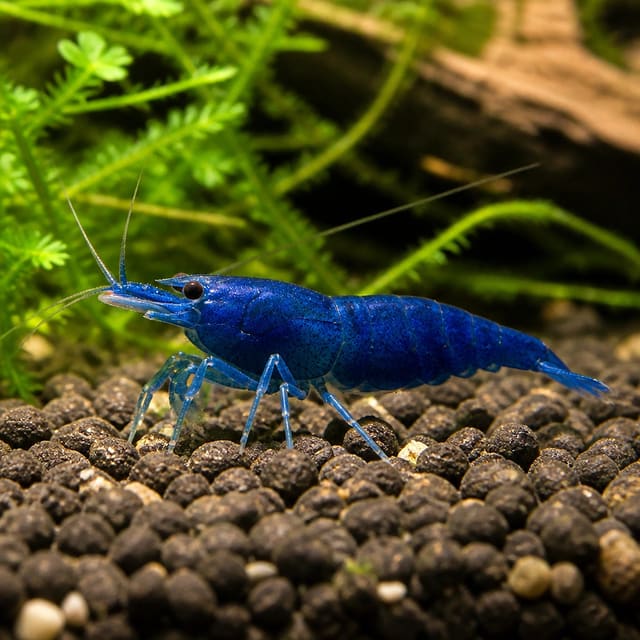
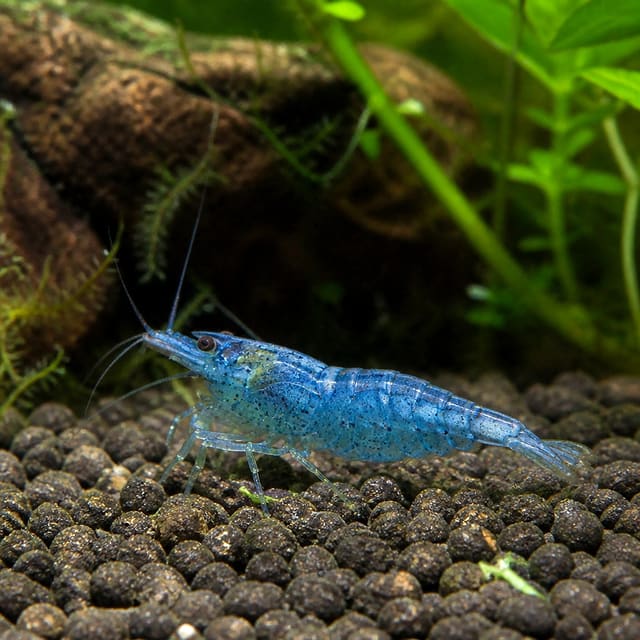
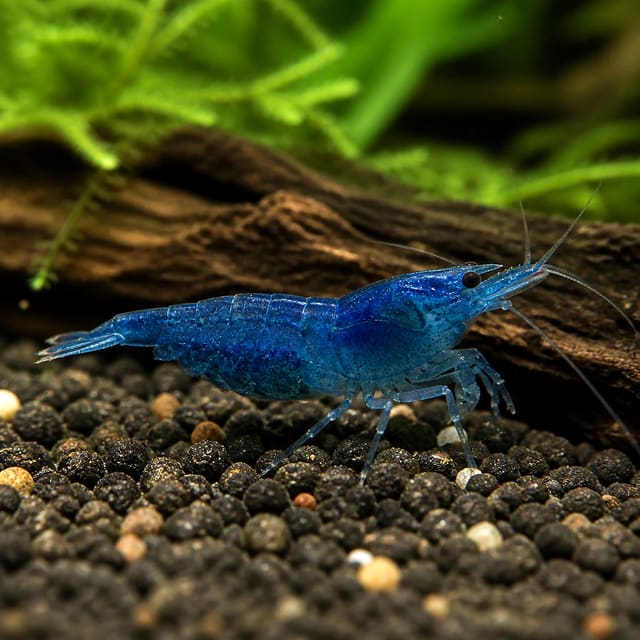
Blue Dream Shrimp (Neocaridina davidi)
18–28°C · pH 6.5–8 · 20L
£16.19
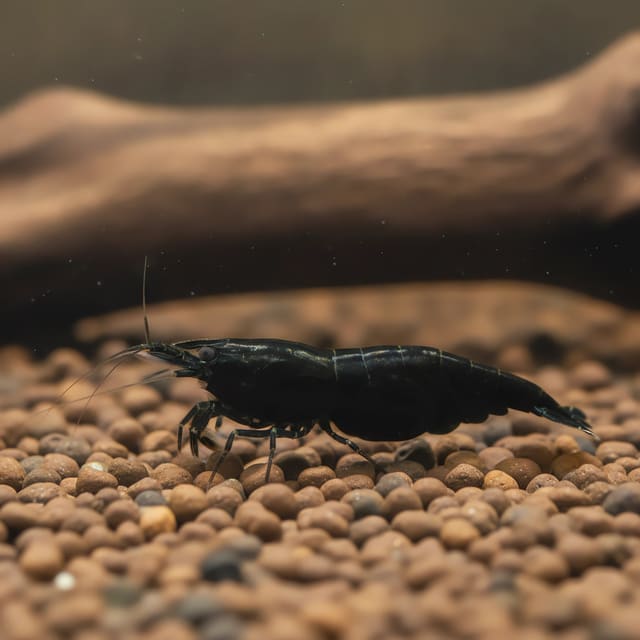
Neocaridina heteropoda sp. full black rilli shrimp (Neocaridina heteropoda) is an atyid freshwater shrimp from Taiwan, eastern China, the Korean Peninsula and Vietnam that reaches approximately 4 cm. It suits a mature, filtered group setup; OATA’s group guidance is 17–27°C, pH 6.5–8.0 and 4–18°dH, with at least 10 litres for small shrimp. Sold individually as one live shrimp per purchase.
Adult size is the maximum length this species reaches at full maturity (scientific sources). The livestock you receive will be younger and smaller. Product-photo provenance and any image-specific limitations are stated on the listing.
Neocaridina heteropoda
Lives in groups: kept together they stay settled, active and show their best colour.
Neocaridina heteropoda sp. full black rilli shrimp (Neocaridina heteropoda) is an atyid freshwater shrimp from Taiwan, eastern China, the Korean Peninsula and Vietnam that reaches approximately 4 cm. It suits a mature, filtered group setup; OATA’s group guidance is 17–27°C, pH 6.5–8.0 and 4–18°dH, with at least 10 litres for small shrimp. Sold individually as one live shrimp per purchase.
Adult size is the maximum length this species reaches at full maturity (scientific sources). The livestock you receive will be younger and smaller. Product-photo provenance and any image-specific limitations are stated on the listing.
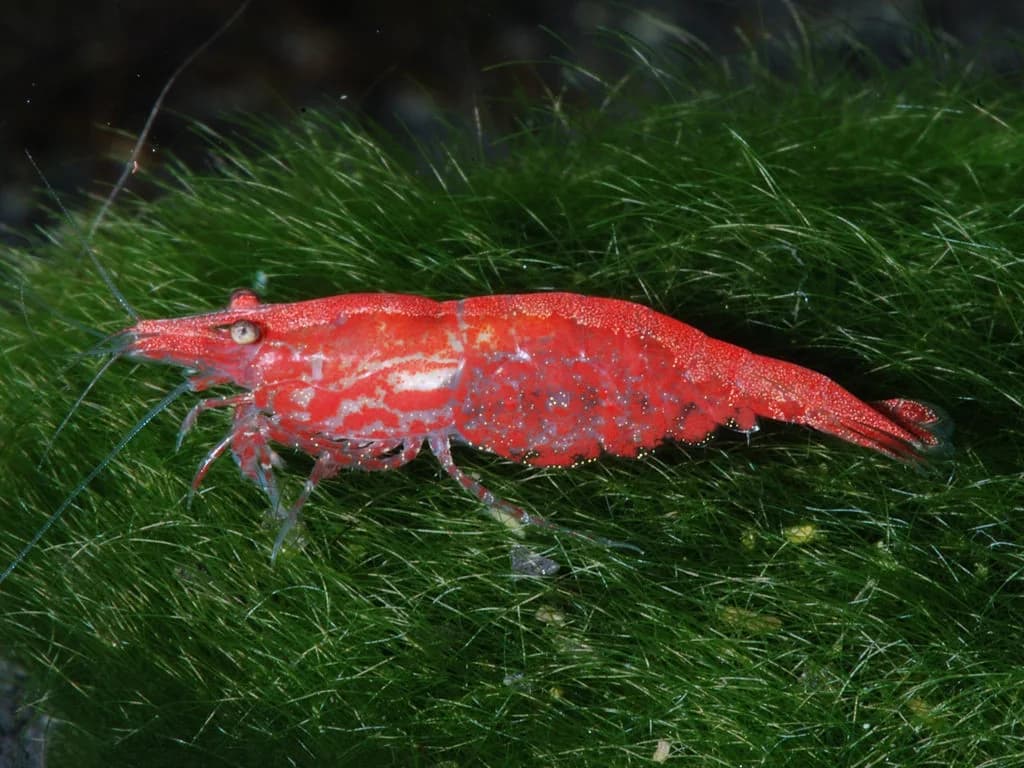
Use a mature, filtered aquarium and measured water—not a shrimp-per-litre rule. Tropical Fish Co uses 20 litres as a cautious starting policy for a small Cherry Shrimp group, above OATA's general 10-litre screen for small shrimp. Provide established grazing surfaces, cover and a protected filter inlet. No fish is guaranteed shrimplet-safe, and breeding should never be promised.
Maintain these water conditions for optimal health and vibrant colors
The full black rilli shrimp (Neocaridina heteropoda) is a freshwater member of the Atyidae family from Taiwan, eastern China, the Korean Peninsula and Vietnam. It reaches approximately 4 cm and suits keepers who can provide a mature biological filter, measurable water quality, shelter and carefully screened companions. Its trade identity describes a predominantly black colour form of the small Neocaridina shrimp kept in planted and invertebrate aquariums. Successful care depends on stable conditions and protection from fish that may eat a shrimp.
The scientific naming has changed over time. WoRMS now lists it as Neocaridina davidi and treats Neocaridina heteropoda as a junior subjective synonym. These names refer to the same identified animal rather than two different shrimp.
Wikipedia describes Neocaridina davidi as an omnivorous freshwater shrimp associated with lakes, ponds, rivers and streams. The wild type is mottled brown, while selective breeding has produced many aquarium colour forms.
| Suits | Not suited to |
|---|---|
| A mature, filtered aquarium | A newly filled or biologically immature aquarium |
| A group setup with plants or other shelter | An aquarium without cover |
| Weekly testing and maintenance | Water with detectable ammonia or nitrite |
| Carefully screened companions | Fish able to swallow the shrimp or species known to be predatory |
Invertebrate-safe treatment choices are essential because freshwater shrimp are highly sensitive to copper. Keep a written note of the aquarium’s normal readings and appearance so that a change in activity, colour, feeding or posture is easier to recognise.
One purchase supplies one live shrimp. Plan the purchase quantity around a mature aquarium, the capacity of its filter and the effect that additional animals and feeding will have on water quality.
Sex is guaranteed only when the selected option explicitly states male or female. This Neocaridina heteropoda sp. full black rilli shrimp listing has no sex-guaranteed option.
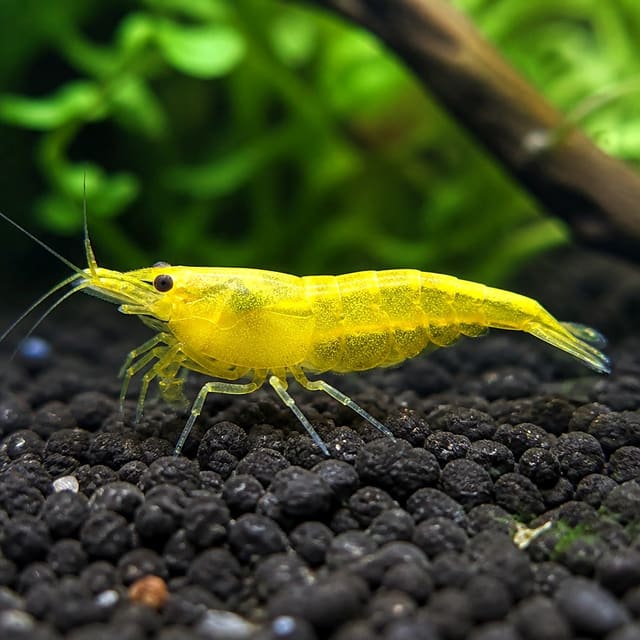
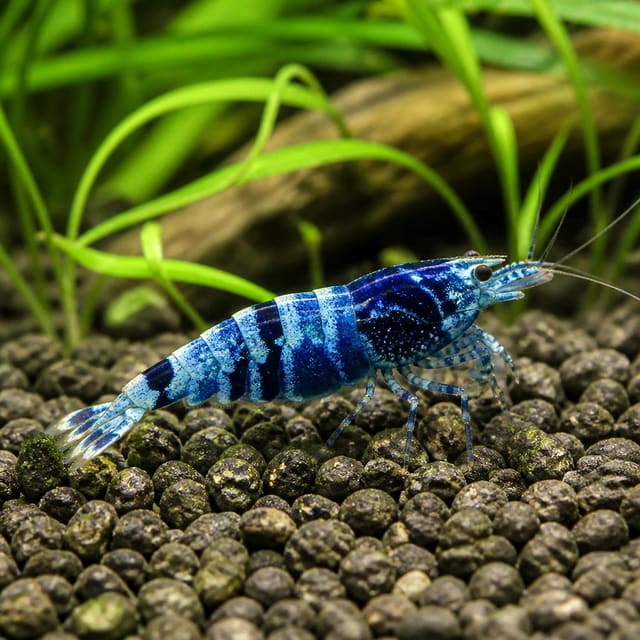
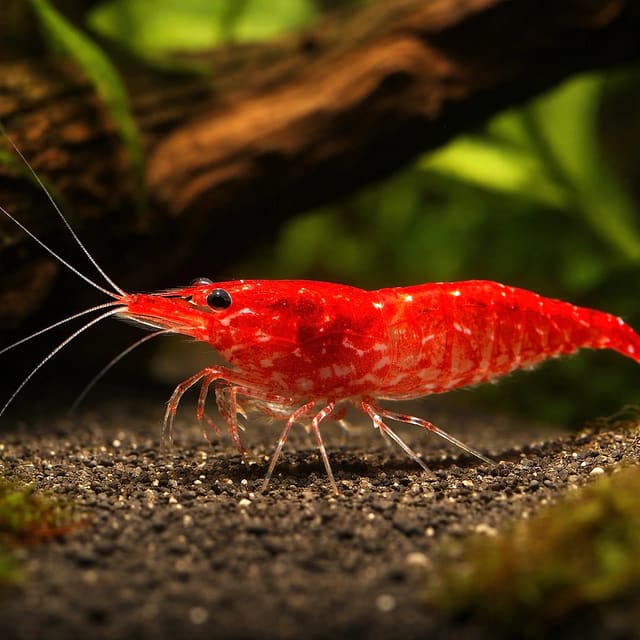
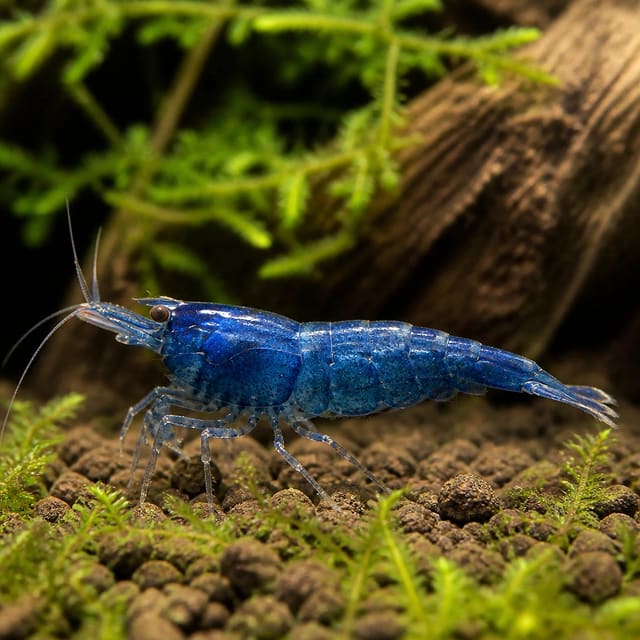
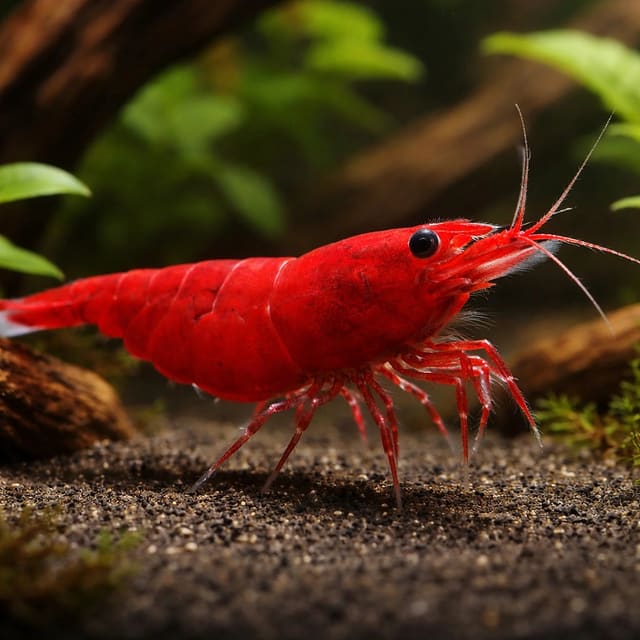
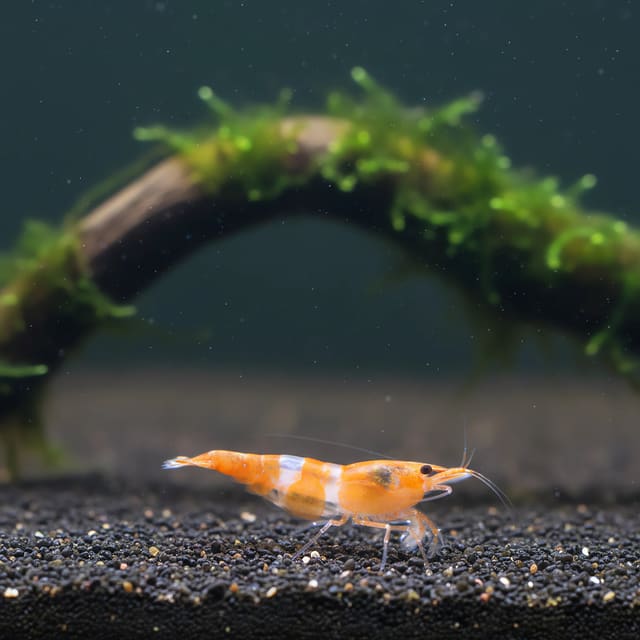
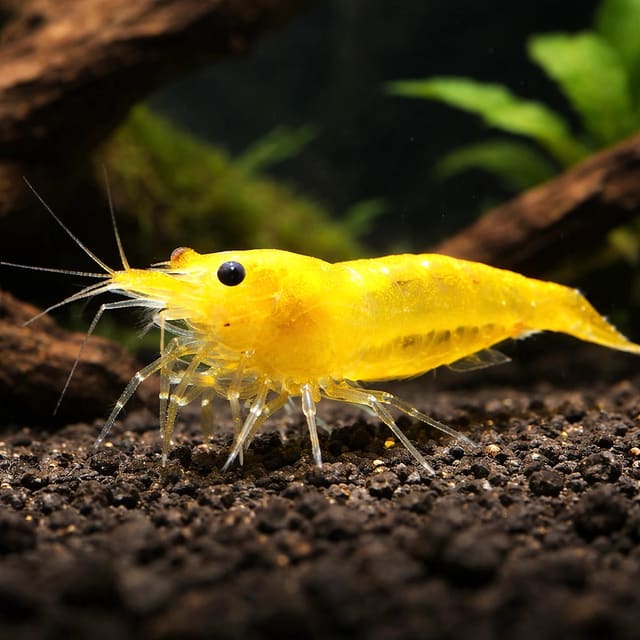
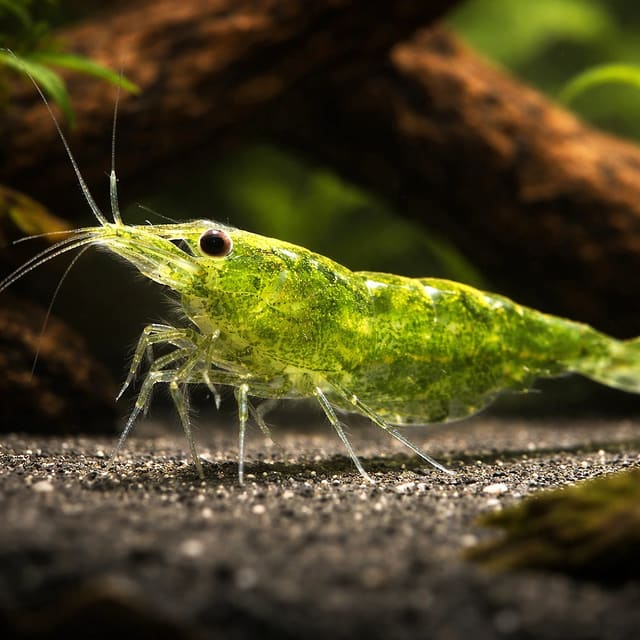
The gallery images are representative of this type of animal rather than photographs of the exact animal supplied, so colours can look slightly different from the live animal.
For the main care decision, use approximately 4 cm as the adult length. OATA’s freshwater-shrimp group guidance uses 17–27°C, pH 6.5–8.0 and 4–18°dH, with at least 10 litres as the starting volume for a group of small freshwater shrimp. A larger aquarium is needed when fish share the setup.
Shrimp are normally treated as social animals, so plan for a group rather than designing a solitary display. Increase numbers slowly because beneficial bacteria must adjust as livestock and feeding increase. The aquarium’s capacity, water quality and resident animals should set the practical group size.
If you are comparing patterns before deciding, browse the cherry shrimp collection. Colour alone should not decide the purchase: first confirm that the aquarium is mature, filtered and protected from unsuitable fish.
OATA’s freshwater shrimp and snail guidance uses 17–27°C, pH 6.5–8.0 and 4–18°dH as group guidance, not a species-specific optimum. It also gives carbonate hardness of 3–15°dKH, ammonia and nitrite at zero milligrams per litre, and nitrate at no more than 20 milligrams per litre above the normal tap-water level.
| Decision | Planning figure |
|---|---|
| Adult length | Approximately 4 cm |
| Temperature | 17–27°C |
| pH | 6.5–8.0 |
| General hardness | 4–18°dH |
| Carbonate hardness | 3–15°dKH |
| Ammonia and nitrite | Zero mg/l |
| Nitrate | Up to 20 mg/l above normal tap water |
| Starting volume | At least 10 litres for a group of small freshwater shrimp |
Use at least 10 litres only as the starting point for a small-shrimp group. Choose a larger aquarium when fish share the setup, when the planned population creates more waste, or when greater environmental stability is needed. Larger water volumes generally change more slowly than very small ones, giving the filter and keeper more room to maintain steady conditions.
These figures work together. A temperature inside range does not compensate for detectable ammonia, and a suitable pH does not make a predatory fish safe. The aquarium must pass all three checks: stable physical conditions, zero ammonia and nitrite, and compatible inhabitants.
A working filter is essential in every aquarium size. Beneficial bacteria in biological filter media process toxic ammonia into nitrite and then nitrate. The RSPCA’s aquarium filtration guidance explains this biological process and why a well-set-up, maintained filter is central to aquarium welfare.
Prepare and mature the filter before introducing the shrimp. A tank being clear to the eye is not enough: test results must show zero ammonia and zero nitrite. Use our shrimp-keeping guide to organise the setup and maturation work before livestock arrives.
Use aquarium sand or gravel as the substrate. Live plants are ideal because they provide cover, while artificial plants and suitable ornaments such as model caves or plant pots can provide shelter when live plants are not used. Arrange the interior so that the shrimp can move among several sheltered areas without being forced into an exposed position.
Start with at least 10 litres for a group of small freshwater shrimp and increase that volume for a mixed aquarium. Greater volume helps environmental conditions such as temperature and water quality remain more stable. It also gives more flexibility when gradual stocking increases the amount of waste that the filter must process.
| Before adding shrimp | Required result |
|---|---|
| Filter | Running, mature and free from blockages |
| Ammonia | Zero mg/l |
| Nitrite | Zero mg/l |
| Shelter | Plants or suitable ornaments present |
| Substrate | Aquarium sand or gravel |
| Fish assessment | No fish able to swallow the shrimp and no known predators |
Do not try to solve an immature filter by adding livestock slowly from day one. Maturation comes first; gradual stocking follows. Once the biological filter is established, each later increase in livestock and feeding still needs time because the beneficial bacterial population must grow to handle the extra waste.
Maintain 17–27°C, pH 6.5–8.0, general hardness of 4–18°dH and carbonate hardness of 3–15°dKH. Test ammonia and nitrite for zero milligrams per litre and keep nitrate from rising more than 20 milligrams per litre above the normal tap-water level.
Begin with measured tap-water and aquarium values rather than assumptions. Our water chemistry guide explains what the main readings mean, while the water matcher helps compare the measured aquarium values with the working ranges on this page.
| Reading | Decision |
|---|---|
| Ammonia above zero | Do not add the shrimp; restore water quality first |
| Nitrite above zero | Do not add the shrimp; check filtration and stocking |
| Temperature outside 17–27°C | Bring the aquarium into range before introduction |
| pH outside 6.5–8.0 | Plan a suitable setup rather than introducing the shrimp |
| General hardness outside 4–18°dH | Resolve the mismatch before purchase |
| All readings in range | Continue routine testing and maintenance |
For example, an established aquarium reading 23°C, pH 7.4 and 12°dH sits within the working ranges, but it still fails the readiness check if ammonia or nitrite is detectable. Conversely, zero ammonia and nitrite do not make an aquarium suitable when its temperature, pH or hardness falls outside the guidance.
Record results at least weekly. A written sequence is more useful than a single isolated test because it shows whether the aquarium is remaining within range as feeding, livestock and maintenance change. Test again before adding more shrimp or other animals rather than relying on the result from an earlier stocking level.
Treat replacement tap water with a conditioner that removes chlorine or chloramine before adding it to the aquarium. Do not run established filter media under the tap because chlorine or chloramine may kill the beneficial bacterial population.
In nature, Neocaridina davidi is omnivorous. Aquarium guidance for freshwater shrimp centres on grazing algae and supplementing that food with algae wafers or commercial pellets made for freshwater shrimp. Use those prepared foods to ensure grazing alone is not assumed to meet the whole feeding requirement.
Feed two or three times a week. Leave a wafer or pellet for at least 30 minutes so the shrimp has time to feed, then remove uneaten food rather than allowing it to break down. Excess food adds waste and can contribute to unhealthy water conditions.
This routine makes feeding observable. The useful question is not whether food entered the aquarium, but whether the shrimp showed interest and whether excess remained to decay. Note reduced intake or a loss of interest in food because feeding changes can be an early sign that the animal or aquarium needs attention.
Do not increase food automatically after adding livestock. Increase the number of shrimp slowly and watch how much of each offering is consumed, because both extra animals and extra feeding increase the load on the biological filter. Continue weekly ammonia and nitrite tests while the aquarium adjusts.
| What you see | What to do |
|---|---|
| Shrimp grazing and little food left | Keep the same measured routine |
| Food remains after feeding | Remove it and reduce the next offering |
| Repeated lack of interest | Test the water and check for other health changes |
| Ammonia or nitrite detected | Stop further stocking and restore water quality |
Algae growth may contribute to grazing, but it is not a reason to skip the planned supplementary diet. Equally, adding more food to encourage faster grazing is counterproductive when the excess can break down into toxic waste.
Carry out a 25% partial water change at least once a week. A siphon is useful for removing solid waste from the substrate during the change. Treat all replacement tap water with conditioner before it enters the aquarium so chlorine or chloramine does not reach the animals or filter bacteria.
Test the water at least weekly for ammonia and nitrite, with both readings remaining at zero. Include nitrate, temperature, pH and hardness in the routine so the aquarium can be compared with the full working range rather than judged by appearance alone.
| Weekly step | Purpose |
|---|---|
| Test before maintenance | Shows the conditions the shrimp experienced during the week |
| Change 25% of the water | Supports water quality and removes accumulated waste |
| Siphon visible solid waste | Prevents debris remaining in the substrate |
| Condition replacement water | Removes harmful chlorine or chloramine |
| Check the filter | Finds blockages that may reduce its performance |
| Record the new readings | Creates a baseline for the next comparison |
Check the filter for blockages, but do not run established media under the tap. If cleaning is needed, rinse it lightly in aquarium water removed during the partial change. This reduces the amount of beneficial bacteria lost from the media.
Avoid turning maintenance into a complete reset. The goal is to preserve the mature biological filter while removing waste and restoring water quality. Keep enough removed aquarium water aside for any filter-media rinse, finish the partial change, and then confirm that the equipment is running normally.
After increasing the shrimp population or adding another animal, keep the same minimum weekly schedule and watch the readings closely. More livestock and feeding require more nitrifying bacteria. If ammonia or nitrite appears, do not make another stocking increase; deal with the water-quality problem first.
Arrange for someone to receive the parcel because live animals must not be left unattended. Before it arrives, confirm that the destination aquarium is mature, the filter is operating and ammonia and nitrite are both zero.
Follow the Tropical Fish Co delivery and Live Arrival Guarantee policy. Film every delivery continuously from the sealed parcel onward, float the bag for 20–30 minutes, acclimatise slowly and never pour the bag water into the aquarium.
Do not use arrival day to make other major stocking changes. Freshwater shrimp and snails should be added gradually because each increase in livestock and feeding requires the established beneficial bacteria to adjust. A rapid population increase can leave too few nitrifying bacteria to process the extra waste, allowing ammonia and nitrite to rise.
Keep the first observations factual: note whether the shrimp is active or unusually inactive, whether it hides more than expected, whether its breathing effort changes and whether there is visible damage. Pair those observations with water tests rather than interpreting appearance in isolation.
Build familiarity with the shrimp’s normal activity, colour, posture and feeding. Individual animals can vary, so a change from that animal’s usual pattern is more useful than a comparison with a gallery image. Check the aquarium and water whenever a meaningful change appears.
If a change appears, test ammonia and nitrite immediately and compare temperature, pH and hardness with the normal aquarium record. Check the filter for blockages and review whether feeding or livestock recently increased. These checks identify urgent environmental problems that must be addressed before another animal is added.
Freshwater shrimp are very sensitive to copper and will die if exposed even to low levels. Before adding any medicine or other treatment, confirm that it is safe for invertebrates. Do not assume that a product suitable for a fish-only aquarium is suitable for shrimp.
| Observation | Immediate response |
|---|---|
| Ammonia or nitrite detected | Stop stocking and restore safe water quality |
| Filter flow restricted by a blockage | Check the filter and preserve its biological media |
| Uneaten food accumulating | Remove it and reduce the next offering |
| Treatment being considered | Confirm it is explicitly safe for invertebrates |
| Persistent or serious health change | Contact us with the observations and water readings |
Continue ordinary weekly maintenance after the immediate checks. Avoid adding more livestock while the cause of a water-quality or health change is being addressed, because extra waste and feeding increase the demand on the filter.
Freshwater shrimp may be eaten by common aquarium fish. Avoid any fish that can fit the shrimp in its mouth and avoid species known to be predatory.
Do not rely on a general temperament label to make this decision. The useful questions are whether the fish hunts invertebrates, whether its mouth is large enough to take the shrimp, and whether the aquarium gives the shrimp suitable cover. Water compatibility must also be checked, but matching temperature or pH cannot make a predator safe.
| Candidate tank mate | Decision |
|---|---|
| Can fit the shrimp in its mouth | Avoid the combination |
| Known to be predatory | Avoid the combination |
| Mouth size or feeding behaviour is unclear | Pause and assess before mixing |
| Cannot swallow the shrimp and is not known to be predatory | Continue with water, space and stocking checks |
| Needs water outside the shrimp range | Choose a different combination |
Passing the mouth-size screen is not a universal guarantee of compatibility. Individual behaviour and the details of a mixed aquarium still matter. Watch carefully after any introduction and be prepared to separate animals if hunting or injury occurs.
For a stocking and compatibility assessment, contact us with the aquarium volume, measured temperature, pH and hardness, the full resident species list and the approximate sizes of the fish. Those details allow the mouth-size and predatory-behaviour rules to be applied to the planned community rather than to a vague category such as “peaceful fish”.
Cover supports the shrimp, but it should not be used to justify keeping it with a known predator. Plants, caves and other suitable ornaments provide shelter; they do not remove the underlying predation risk.
Treat this as a social shrimp and plan a group rather than a solitary display. Use at least 10 litres as the starting point for a group of small freshwater shrimp, then increase the aquarium size when fish are present or when greater stability is needed.
A fixed group number is less useful than a capacity check. The aquarium must hold the planned animals while keeping ammonia and nitrite at zero, nitrate controlled, the filter working and feeding modest. Each additional shrimp adds some waste and may increase the amount of food entering the aquarium.
This gradual approach helps the nitrifying bacteria increase as the waste load rises. Stocking too quickly can produce new tank syndrome, in which the bacterial population cannot process the waste and ammonia or nitrite reaches unhealthy levels.
A candidate community must pass all three. Water values alone do not settle predation, while a fish that appears safe by mouth size still cannot share an aquarium requiring incompatible chemistry. Once a combination passes the planning checks, continue observing activity, hiding, body condition and feeding after introduction.
The full black rilli shrimp (Neocaridina heteropoda) reaches approximately 4 cm. Plan the aquarium and compatibility checks around that adult length.
OATA’s freshwater-shrimp group guidance starts a group of small freshwater shrimp in at least 10 litres, with a larger aquarium needed when fish are included. Use a mature biological filter, aquarium sand or gravel, and plants or suitable ornaments for shelter.
Plan a social group rather than a solitary display, but set the number by the mature filter’s capacity and the aquarium’s water quality. Add shrimp gradually and keep ammonia and nitrite at zero mg/l as livestock and feeding increase.
It suits a keeper who can mature the filter before introduction, test the water every week, complete a 25% partial water change at least once a week and avoid copper exposure. A newly filled or untested aquarium is not an appropriate starting point.
The full black rilli shrimp is omnivorous and grazes aquarium algae. Supplement this with algae wafers or commercial freshwater-shrimp pellets two or three times a week, leave the food for at least 30 minutes and remove uneaten material.
OATA’s group guidance for freshwater shrimp and snails is 17–27°C, pH 6.5–8.0 and 4–18°dH, with carbonate hardness of 3–15°dKH. Keep ammonia and nitrite at zero mg/l and nitrate no more than 20 mg/l above the normal tap-water level.
Screen companions for predation risk: avoid fish that can fit the shrimp in their mouth and species known to be predatory. Check every other candidate’s feeding behaviour, water requirements and aquarium capacity before mixing.
Avoid fish that can fit the shrimp in their mouth and species known to be predatory. For every other candidate, check mouth size, feeding behaviour, water requirements and aquarium capacity before mixing; passing one check does not settle the others.
Be present to receive the parcel and start filming every delivery before opening it, with the parcel still sealed and the outer box visible. Open it in one continuous take, show the shrimp still inside the sealed bag, float the bag for 20–30 minutes, acclimatise slowly and never pour the bag water into the aquarium.
No reviews for this item yet. Bought one? Honest reviews only, good or bad.
What customers say about ordering from us
Easy website plenty of info on fish your buying great to pick a time slot
TRACEY DURRANT · 7 Oct 2026
Got some lovely fish thank you
Kevin Mackie · 7 Oct 2026
Reviews of our shop, collected by Judge.me, an independent third-party review collector. Newest first.