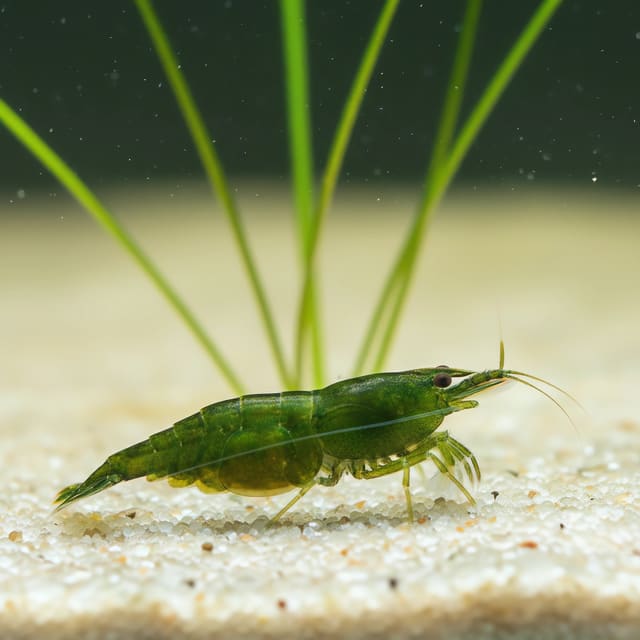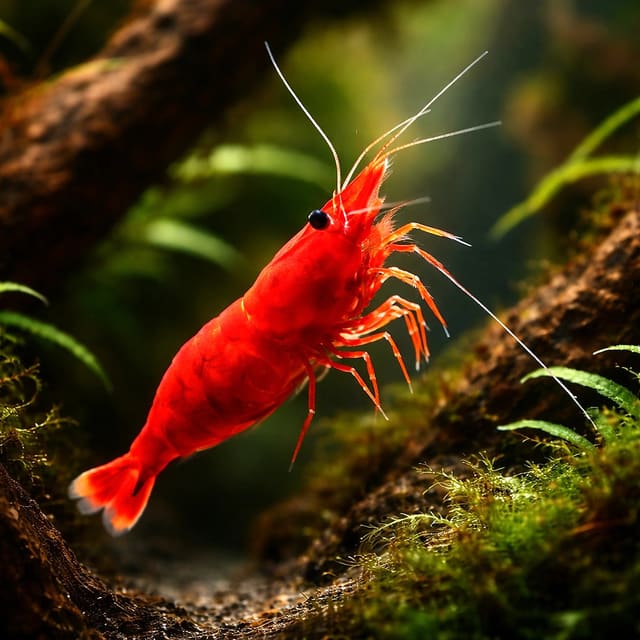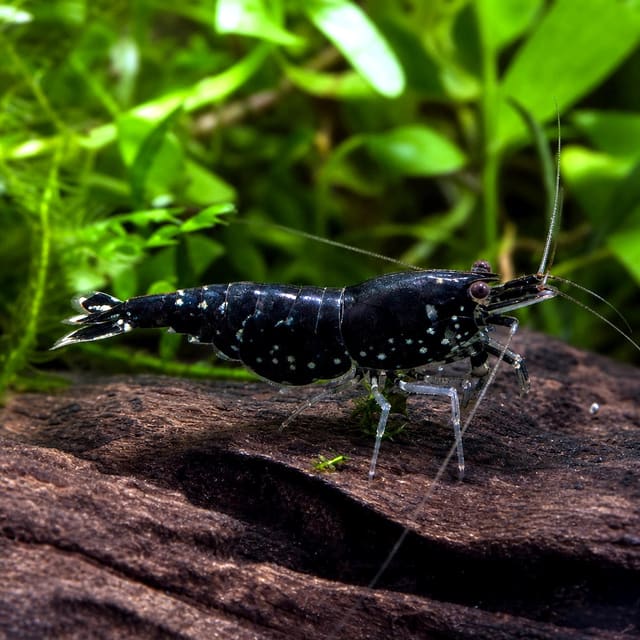
Easy
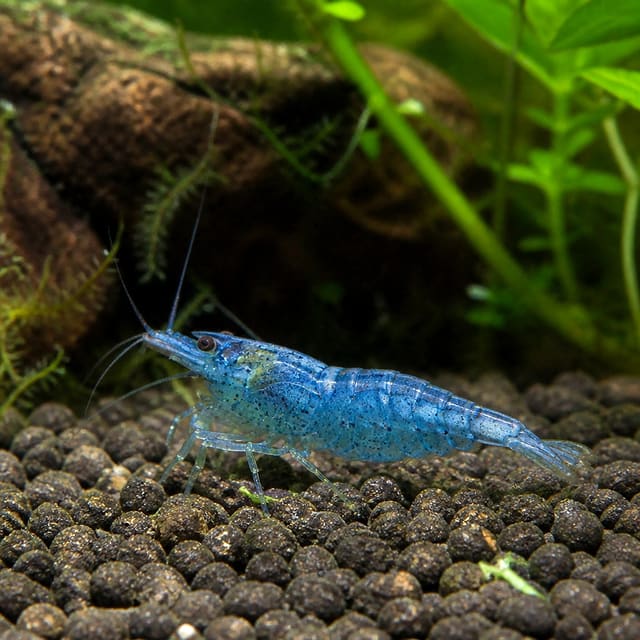
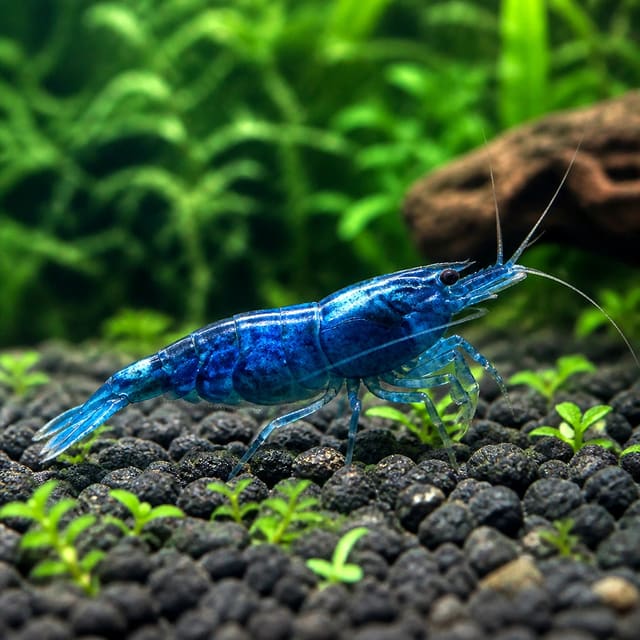
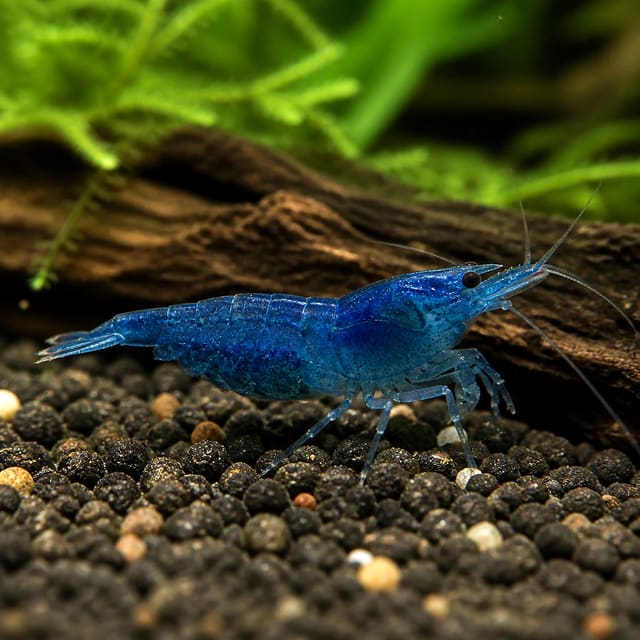
Blue Dream Shrimp (Neocaridina davidi)
18–28°C · pH 6.5–8 · 20L
£16.19

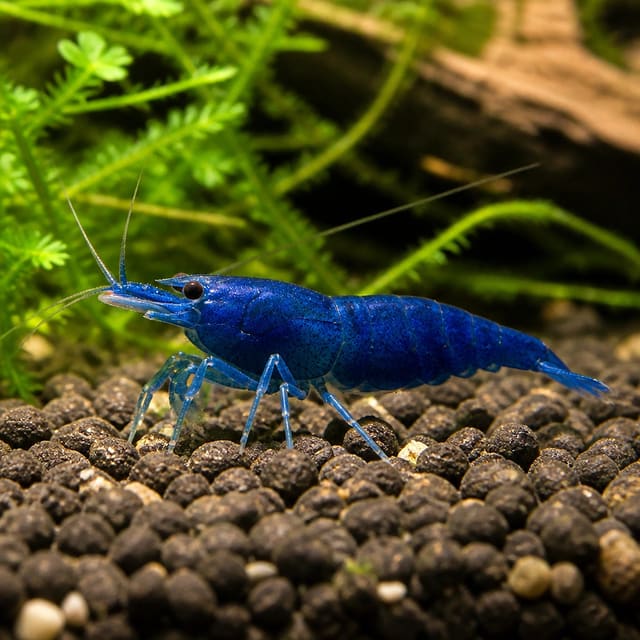
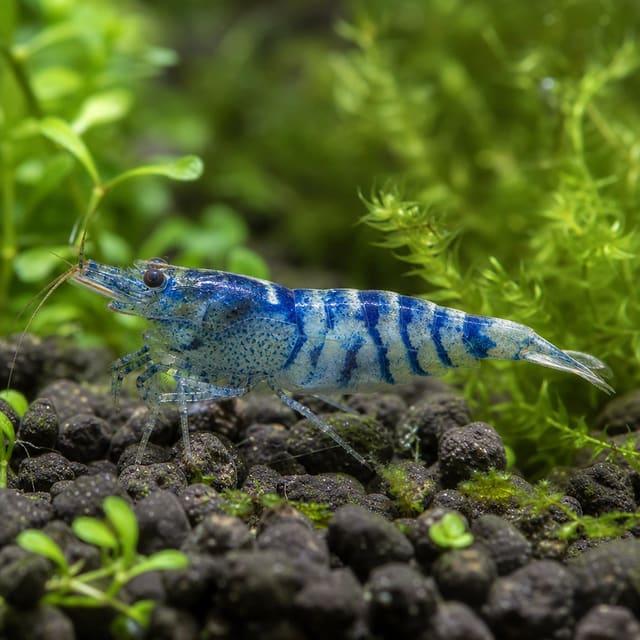
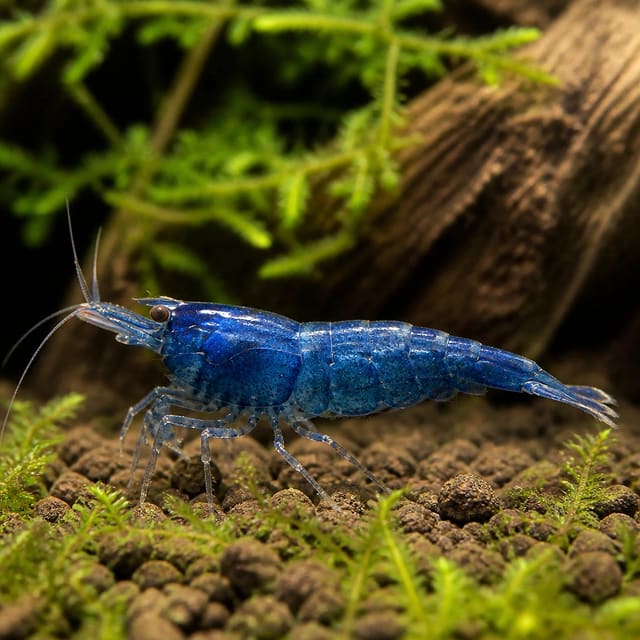
Blue Star Striped Shrimp (Neocaridina sp.) is a blue patterned freshwater atyid shrimp sold as one live animal per purchase. It is best displayed in a mature aquarium with gentle filtration, stable water and safe cover.
Neocaridina sp.
Lives in groups: kept together they stay settled, active and show their best colour.
Blue Star Striped Shrimp (Neocaridina sp.) is a blue patterned freshwater atyid shrimp sold as one live animal per purchase. It is best displayed in a mature aquarium with gentle filtration, stable water and safe cover.
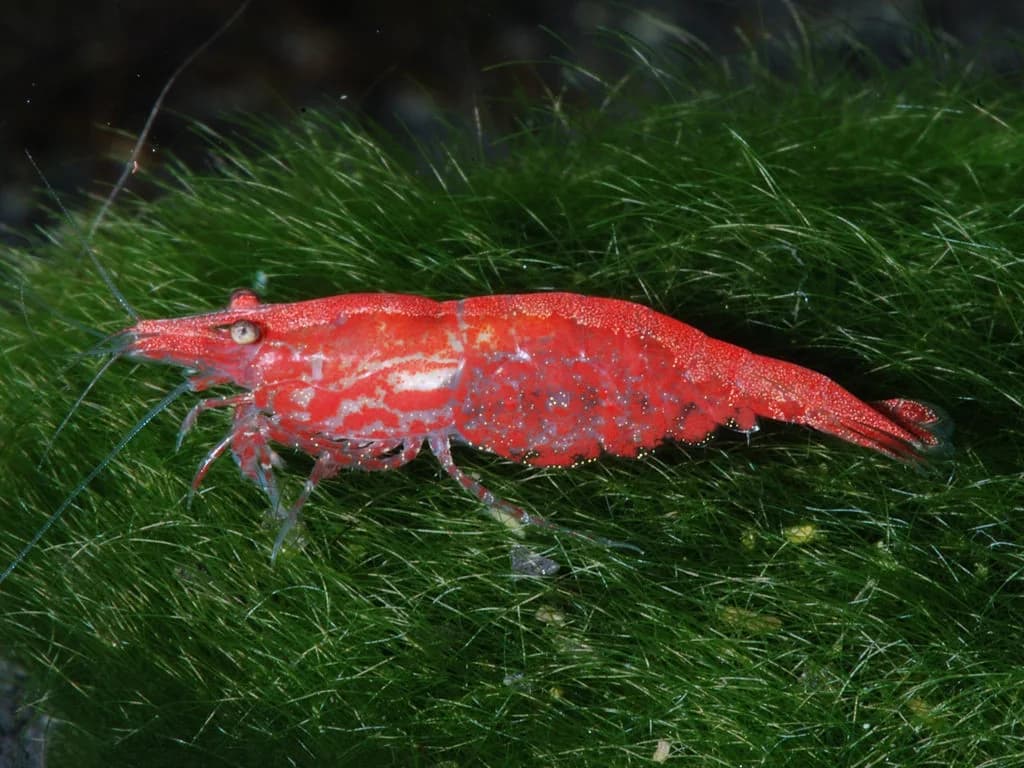
Use a mature, filtered aquarium and measured water—not a shrimp-per-litre rule. Tropical Fish Co uses 20 litres as a cautious starting policy for a small Cherry Shrimp group, above OATA's general 10-litre screen for small shrimp. Provide established grazing surfaces, cover and a protected filter inlet. No fish is guaranteed shrimplet-safe, and breeding should never be promised.
Maintain these water conditions for optimal health and vibrant colors
Blue Star Striped Shrimp (Neocaridina sp.) is offered for the contrast created by blue body colour and lighter striped markings. One purchase supplies one live shrimp at a 1 cm dispatch grade. That measurement describes the animal supplied; it is not an adult-size figure. The exact species has not been identified, so the care advice here follows the genus Neocaridina and its care group.
This shrimp works best as the focus of a considered small-scale display rather than as an afterthought in a busy fish tank. Rounded dark substrate makes the lighter bands easier to follow, while green planting provides cover and a natural backdrop. A close viewing area near the front lets you watch feeding and condition without removing the shelter a small shrimp needs.
| Identity | Blue Star Striped trade form; scientific label Neocaridina sp. |
|---|---|
| What one purchase supplies | One live freshwater shrimp |
| Dispatch grade | 1 cm |
| Best starting point | An established, filtered aquarium with measurable stable water quality |
| Main community risk | Fish large enough to swallow a small shrimp, even if described as peaceful |
| Care-number scope | Broad freshwater-shrimp group guidance, not a species profile |
| Suits | A patient keeper with a mature aquarium who wants to watch a small grazing shrimp closely |
Choose this offer when the attraction is a small blue shrimp moving through low planting and grazing in view. It suits an aquarium planned around invertebrate safety: mature filtration, protected intakes, measured water, modest feeding and companions selected by mouth size rather than a broad temperament label. It is a poor fit for a newly filled tank, an unguarded powerful intake or a community where the shrimp would spend every feeding period avoiding fish. The one-centimetre dispatch grade also means the layout needs close cover without becoming impossible to inspect. A clear patch near the front, connected to plant or wood shelter, gives the animal a route to food and gives the keeper a practical place to assess movement and appetite.
The safe scientific label matters. WoRMS recognises Neocaridina as a genus in the family Atyidae, but the words Blue Star Striped do not identify a species. The genus is described as a group of small land-locked freshwater shrimp native to East Asia. Those genus facts provide useful context; they do not turn colour into proof of Neocaridina davidi or establish a precise maximum size for this offer.
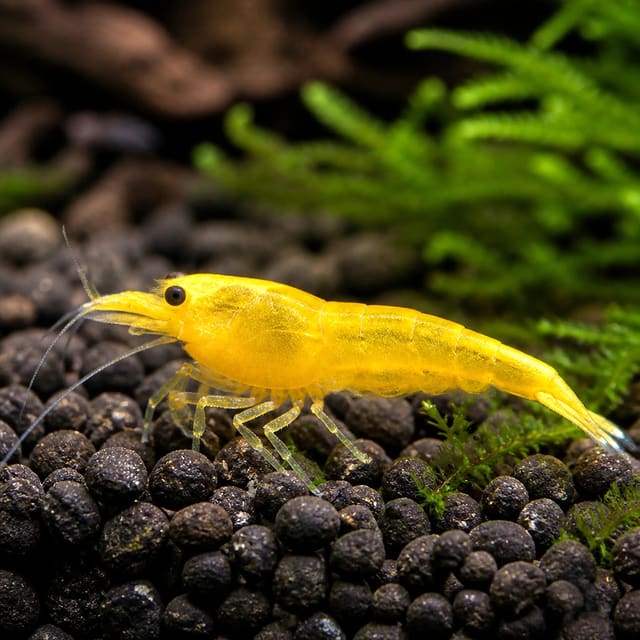
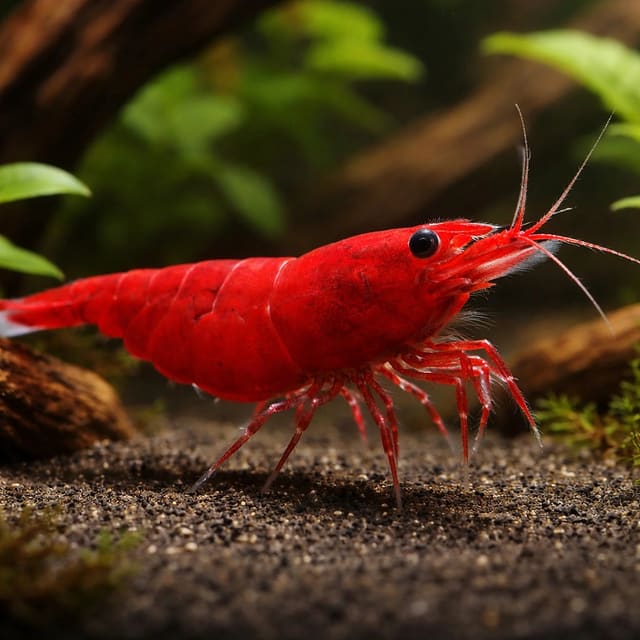
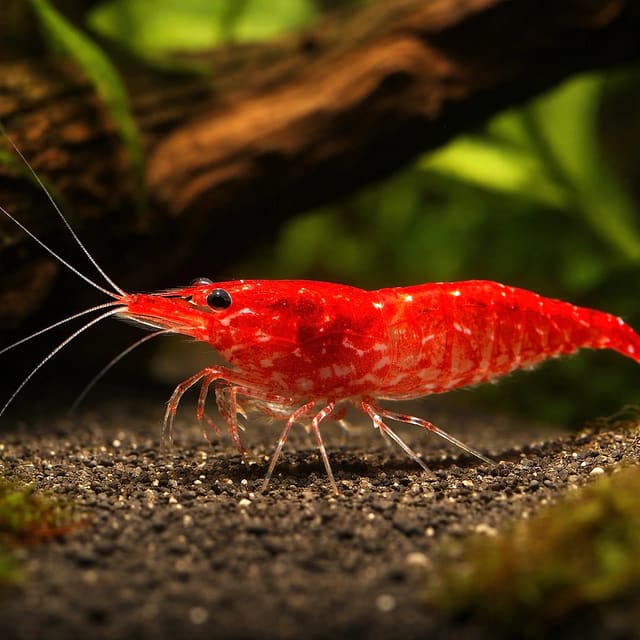
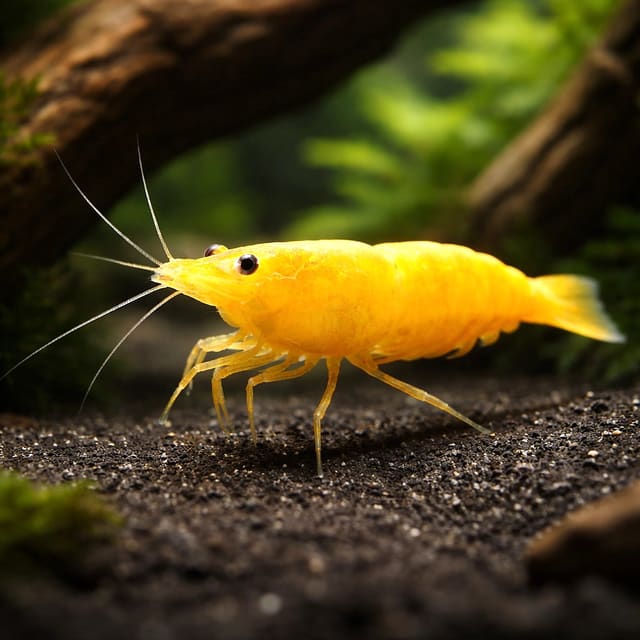
Blue colour can appear stronger or softer under different lighting, background tones and stages of maturity. Plan the aquascape to reveal the shrimp, but buy it as a living animal whose pattern and shade can vary. The wider cherry shrimp collection is useful when comparing colour directions; another listing is an alternative to consider, not an automatic companion for the same tank.
Sex is guaranteed only when the selected option explicitly states male or female. This Blue Star Striped Shrimp listing has no sex-guaranteed option.
Gallery images have been digitally enhanced to improve image quality. Natural colour, pattern, size and maturity can vary between live animals.
A shrimp is small, yet it still depends on the whole aquarium system. Begin with filtration and the nitrogen cycle. The RSPCA's aquarium environment advice explains that established filter bacteria convert toxic ammonia to nitrite and then to the safer end product nitrate. Clear water cannot show whether those bacteria are present, so use liquid tests and wait for repeatable zero readings for ammonia and nitrite.
Do not hurry this stage because the livestock looks delicate or has a low individual waste output. Small aquariums have less water to dilute a mistake. An extra pinch of food, decaying leaf or interrupted filter can affect them quickly. Add livestock in measured stages and continue testing after each change in feeding or stocking.
For a first shrimp setup, work through the freshwater shrimp care guide before planning an arrival date. It covers the order in which equipment, cycling, planting and observation fit together. The aquarium is ready when its function has been demonstrated, not simply when a certain number of days has passed.
OATA gives at least 10 litres as a broad starting point for a group of small freshwater shrimp or snails and says that more space is needed when fish are included. For Blue Star Striped Shrimp this is group-level guidance, not a species-specific minimum. Use it as a floor for planning, then prefer additional volume where space allows because temperature and chemistry generally change less abruptly.
Shape matters as well as litres. A useful footprint gives the shrimp more substrate, leaves and hardscape to explore. Leave open access for siphoning and viewing, then break up exposed areas with plants, wood or secure stone. Avoid unstable ornaments and narrow traps that cannot be inspected.
A lid can reduce evaporation and sudden concentration of dissolved minerals. It should not seal the aquarium without gas exchange. Place the tank away from radiators, draughts and direct sun, where daily temperature changes are easier to control.
The available care range is from OATA's freshwater shrimp and snail sheet. It gives 17–27°C, pH 6.5–8.0, general hardness 4–18°dH and carbonate hardness 3–15°dKH. These are broad group values rather than the optimum for an identified Blue Star Striped species.
| Test | Broad group range or target |
|---|---|
| Temperature | 17–27°C |
| pH | 6.5–8.0 |
| GH | 4–18°dH |
| KH | 3–15°dKH |
| Ammonia | 0 mg/l |
| Nitrite | 0 mg/l |
Read the water chemistry guide to understand what each measurement tells you, then compare actual results with the broad guidance using the water parameter matcher. The useful question is not whether a single number looks perfect on paper; it is whether your water sits in an appropriate area and remains steady through normal maintenance.
GH represents dissolved calcium and magnesium among other minerals, while KH contributes to buffering. Neither should be adjusted blindly. If tap water already falls inside the broad range, repeated dosing to hit a fashionable target may create avoidable swings. Record the tank and tap readings so a later change has a reference point.
Gentle circulation should carry waste towards the filter without pinning a small shrimp against an intake. A fine pre-filter sponge or another suitable guard adds grazing area as well as physical protection. Check it often enough to prevent a serious loss of flow, but clean it carefully so the aquarium does not lose too much established biology at once.
When filter media requires cleaning, swish it lightly in aquarium water removed during maintenance. OATA advises against running it under the tap because chlorine or chloramine can kill beneficial bacteria. Restore the filter promptly and make sure water is moving normally before leaving the aquarium.
Surface movement supports oxygen exchange. Plants contribute to the habitat, but they do not replace filtration or circulation. Watch for quiet pockets collecting uneaten food, then adjust hardscape or flow gently rather than turning the tank into a high-current environment.
The most useful decor has more than one purpose. Fine-leaved plants give visual contrast, shelter and surface area. Wood, inert stone and a manageable substrate add further places for natural films and algae to develop. Aim for a mixture of shaded retreat and visible feeding routes rather than filling every centimetre.
Do not sterilise established hardscape during ordinary maintenance. Remove excess waste, but retain healthy surfaces where shrimp browse. New tanks can look pristine while providing very little grazing; allowing the aquarium to mature before stocking is one of the most practical forms of feeding preparation.
A pale shed exoskeleton is not automatically a dead shrimp. After moulting, the animal may hide while its new shell hardens. Leave secure cover available, avoid sudden chemistry changes and observe before removing a clear shell. If several shrimp show trouble around moulting, test the water and review recent maintenance rather than adding minerals without a measured reason.
OATA describes freshwater shrimp as algae grazers and recommends supplementary algae wafers or commercial shrimp pellets. Offer small measured portions, allow enough time for slow feeding and remove excessive remains. Broad care guidance supports algae wafers and prepared shrimp pellets, so use those as simple supplements rather than constructing a trade-form recipe.
Observe who actually reaches the food. In a community, fish may take sinking items before shrimp emerge; in a densely planted setup, food may disappear from view while still remaining in the tank. Use a clear feeding patch or dish if that helps you judge leftovers. Increasing the portion until some reaches the shrimp can overload the aquarium, so companion choice and feeding placement matter.
Visible algae is not a licence to stop monitoring condition. A newly cleaned tank may have little useful growth, while heavy algae can signal excess light or nutrients. Balance natural browsing with modest supplementary food and adjust from direct observation.
OATA strongly recommends a partial water change of 25% at least once every week. Match new water reasonably for temperature, treat it for chlorine or chloramine before use and move carefully around small livestock. Siphon open areas, inspect removed plant material and check buckets before discarding water.
The OATA sheet also advises regular testing and frames nitrate as not exceeding 20 mg/l above the normal tap-water level. Test the source water so this comparison has meaning. A log of date, temperature, ammonia, nitrite, nitrate, pH and any unusual observation makes gradual changes easier to recognise.
Equipment deserves a quick weekly look: intake guard clear, heater behaving, flow present and electrical parts undamaged. Trim plants selectively when they block circulation, but inspect every cutting for clinging shrimp. Use dedicated aquarium tools and keep soap, sprays and hand-care products away from the water.
Freshwater shrimp and snails are highly sensitive to copper, and exposure is potentially fatal. Check medicines, fertilisers and every other additive before they enter the aquarium. A product tolerated by fish is not automatically safe for shrimp, so use only treatments confirmed safe for freshwater invertebrates at the intended dose. Seek appropriate advice when treatment is needed rather than dosing several remedies in succession.
Prevention is simpler than rescue. Store aquarium tools separately, avoid uncertain metal objects, measure products accurately and review what changed before a problem began. If activity, appetite or colour changes across several animals, test water immediately and consider contamination alongside filtration and feeding.
Switch the aquarium lights off before taking the shrimp from its outer wrapping, as OATA advises, and keep them off during introduction. Moving from a dark parcel into subdued surroundings reduces an avoidable source of stress while the animal adjusts.
Prepare a clear surface beside the aquarium and check the lid, intake guard and nearby tools before handling the bag. Keep movements unhurried, avoid tapping on the glass and leave the planted cover undisturbed. A calm, organised work area makes it easier to observe the shrimp and carry out each stage carefully.
Read the current delivery and Live Arrival Guarantee details and arrange for someone to be present. Tracking and the confirmed date are sent by email. The evidence sequence comes before acclimation:
A newly introduced shrimp may not show its best blue immediately. Do not use heavy feeding or repeated disturbance to draw it out. Confirm that the intake is protected, lights are reasonable and no resident is pursuing it. Watch the aquarium over the next several days, with water tests ready if behaviour changes.
Blue and pale bands can look different as the animal moves between shade and open light. Substrate colour, plant cover, camera processing and maturity all affect perception. Judge health from a combination of behaviour, appetite, posture, body condition and water results rather than from one photograph or a single moment of paler colour.
Keep notes on where the shrimp feeds and how often it is seen. A predictable hiding place after moulting can be normal; widespread inactivity, restless movement or reduced feeding across the group warrants a water and equipment check. Consistent observation is more valuable than an elaborate list of additives.
Write down the aquarium's normal readings while it is running without the new shrimp. Include temperature, pH, GH, KH, ammonia and nitrite, together with the date of the most recent water change and any conditioner used. The point is not to create paperwork for its own sake. A baseline lets you distinguish an established pattern from a sudden change after livestock, food or maintenance is added.
Test the tap or prepared source water as well as the aquarium. A tank reading only becomes useful when you know what enters during a water change. If the source and aquarium differ markedly, investigate why before the delivery day instead of making a large correction with a live animal waiting in a bag. Use the broad OATA range as a suitability boundary and favour steady conditions within it; there is no reason to force every measurement towards the middle.
Rehearse the practical route from front door to aquarium. Make sure the outer parcel can be filmed before opening and a safe support is ready for the sealed bag while temperature equalises. Keep the phone, order number, clean aquarium tools and a way to measure time within reach. This prevents the claim-evidence sequence and gradual chemistry acclimation from competing for attention.
If a test gives an unexpected result, repeat it carefully before reaching for several products. Confirm the test is in date, then check filter flow, power, intake blockage, recent feeding, dead plant matter and anything newly added to the water. A clear sequence makes the likely cause easier to find and avoids turning one uncertain reading into several simultaneous chemical changes.
Ammonia and nitrite should remain at zero. A detectable result means the aquarium is not ready for further stocking and needs prompt attention to water quality and filtration. Use appropriately conditioned replacement water where a partial water change is required, keep the biological filter operating and reduce the source of avoidable waste. If the reason remains unclear or livestock is distressed, obtain qualified aquatic advice instead of experimenting with medicines.
Do not diagnose every change as a mineral shortage. GH and KH are measurements that help describe the water; they are not instructions to add a product. Compare the present result with the established baseline and recent maintenance. This is especially important around moulting, when a hidden shrimp or an empty exoskeleton can tempt an unnecessary intervention.
The dispatch grade makes physical checks part of husbandry. Before siphoning, find the shrimp or work slowly in small visible areas. Inspect the hose, bucket and removed plant clumps before water is discarded. A light-coloured dedicated container can make a small dark or blue animal easier to spot than a deep household bucket.
Guard the filter intake, then include the guard in every flow check. A sponge clogged with fine debris may protect the shrimp while also reducing circulation, so rinse it carefully in removed aquarium water when needed. Do not replace all established media because it looks brown; that mature material supports the biological process the shrimp depends on.
Keep hands and tools free from soap, spray residue and hand cream. Use aquarium-only buckets and avoid uncertain metal decorations. When pruning dense plants, lift small portions over the aquarium first and inspect both sides. These habits are modest, but they address risks that a water test cannot reveal.
Place a measured supplement where it can be seen and watch how the shrimp approaches it. Note whether it walks normally, uses the front limbs to graze and has time to feed before another resident takes the food. This short observation can reveal competition or a change in activity earlier than a distant glance through planted cover.
Remove excessive remains and adjust the next portion rather than feeding on a fixed assumption. If the shrimp repeatedly cannot reach food, change placement or reconsider the community. Adding more until some is left behind increases waste and can undermine the stable water that the feeding routine is meant to support.
A shrimp-only or invertebrate-centred aquarium gives Blue Star Striped Shrimp the best chance to forage in view without fish predation pressure. It also makes feeding easier to judge and avoids a busy community hiding early signs of stress. This is the clearest option when the shrimp's colour and behaviour are the purpose of the display.
OATA's broad rule is to avoid fish that can fit freshwater shrimp in their mouths and species known to be predatory. If fish are being considered, assess their adult size, normal feeding zone and interest in crustaceans. A peaceful label is not enough for that assessment. A fish can ignore its own species and still eat a 1 cm shrimp.
Dense planting, moss and narrow refuge may lower exposure, but cover cannot guarantee safety. A small shrimp must leave shelter to feed, and moulting makes it more vulnerable. Treat every mixed aquarium as a considered compromise rather than describing any fish as universally safe.
Another invertebrate is not automatically compatible. Compare water range, adult size, feeding and any health-treatment implications. Blue Star Striped is a genus-level trade form, so its colour must not be turned into a breeding or genetic compatibility claim. If preserving a colour line matters, obtain specialist advice before mixing closely related forms.
Use the related-product area to compare offers, not to build a tank-mate list. A different Neocaridina page may have a named species or separate evidence, but that does not answer whether it belongs in this aquarium.
Watch a full feeding rather than assuming food distribution is fair. Quick fish can remove pellets immediately, while a small shrimp feeds slowly. Place a limited portion near cover and inspect what remains later. If shrimp cannot feed without adding excessive food, reconsider the community instead of compensating with waste.
Shrimp are treated as social at the broad care-group level, so plan a group rather than a lone ornamental dot. No species-specific minimum number is established for this offer. Aquarium volume, mature grazing area, filter capacity and the presence of fish should set the stocking plan. Build the group gradually and confirm zero ammonia and nitrite after changes.
The offer is not sexed. Pattern intensity or body shape in a photograph does not give a customer a male, a female or a planned breeding ratio. Enjoy the blue striped appearance while keeping sex and reproductive outcome outside the promise.
No. Blue Star Striped is the trade name, while the supported scientific label is Neocaridina sp. The exact species has not been established, so blue colour or striping must not be used to rename it Neocaridina davidi.
It can suit a careful keeper who prepares a mature, filtered aquarium, protects the intake, tests water and uses only invertebrate-safe treatments. Stability and observation matter more than an easy-care label.
OATA's broad guidance starts at 10 litres for a group of small freshwater shrimp and advises more space when fish are included. That is a group planning figure, not a species-specific minimum; a larger mature aquarium normally gives more stable water and grazing area.
Plan a group and increase it gradually. No supported species-specific minimum number is available for this offer, so match the total to aquarium volume, filter capacity, established browsing surfaces and every other resident.
Broad OATA group guidance gives 17–27°C, pH 6.5–8.0 and general hardness 4–18°dH. These values are not a Blue Star species optimum. Keep ammonia and nitrite at zero and favour steady measured conditions over repeated adjustments.
OATA's freshwater-shrimp guidance supports algae grazing with supplementary algae wafers or prepared shrimp pellets. Offer small measured portions, allow time for slow feeding and prevent leftovers from accumulating.
The practical compatibility concern is fish eating the shrimp, not this small shrimp fin-nipping. Avoid fish that can swallow it and known predators, and assess every proposed companion individually rather than relying on a universal safe list.
Tropical Fish Co sends tracking and the confirmed delivery date for its licensed live-animal courier. Be present and make the continuous unboxing video before acclimation, then float the sealed bag for 20–30 minutes for temperature. After that, slowly add small amounts of aquarium water for at least 30 minutes, transfer the shrimp with as little bag water as possible and leave it in quiet cover. Contact the team promptly with the order number and video if anything is wrong.
WoRMS supplies the accepted genus and family placement. The Neocaridina genus summary supplies East Asian genus context. Neither establishes a species, adult maximum or Blue Star-specific care range.
OATA supplies broad freshwater shrimp and snail guidance for water, aquarium planning, feeding, copper safety, maintenance and compatibility. Its values remain explicitly group-scoped.
RSPCA guidance supports the general role of established biological filtration. Tropical Fish Co's current delivery policy supports the courier, attendance, unboxing evidence, same-day contact and 20–30 minute sealed temperature float. The live OATA introduction section supports gradual aquarium-water additions for at least 30 minutes after the temperature stage and transfer with minimal bag water.
The 1 cm measurement is a dispatch grade and one purchase supplies one shrimp. Those offer facts do not establish adult biology.
No reviews for this item yet. Bought one? Honest reviews only, good or bad.
What customers say about ordering from us
I have a small group of long finned mountain minnows. So was delighted to be able to order ten of this variety to increase the genetics in my tank . The ones I recieved are healthy but it’s to early to give a verdict on wether they are of a long finned type since they are small currently.
Gordon Walker · 23 Sept 2026
100% success travel and "installation". Pleased with quality of purchase. The Siamese fighter a bit "shy" so have not yet seen him at his best yet but looking good. Happy customer. GG
George E Garratt · 21 Sept 2026
Reviews of our shop, collected by Judge.me, an independent third-party review collector. Newest first.