Moderate
Green Jade Shrimp (Neocaridina davidi)
17–27°C · pH 6.5–8
£5.99
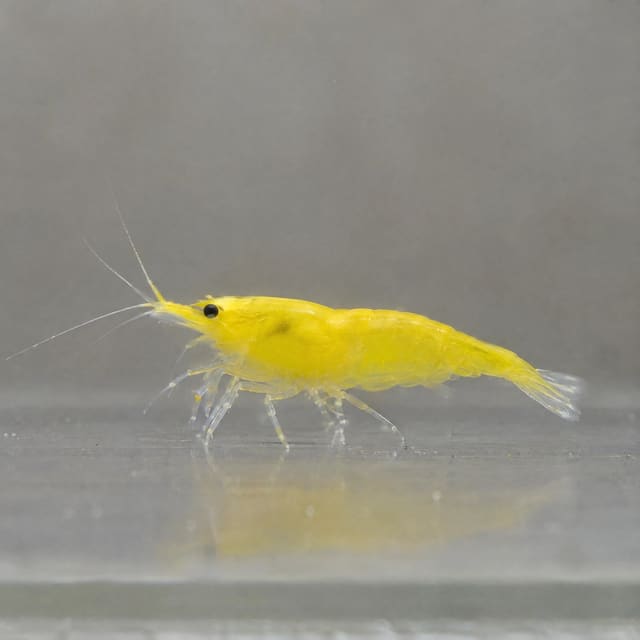
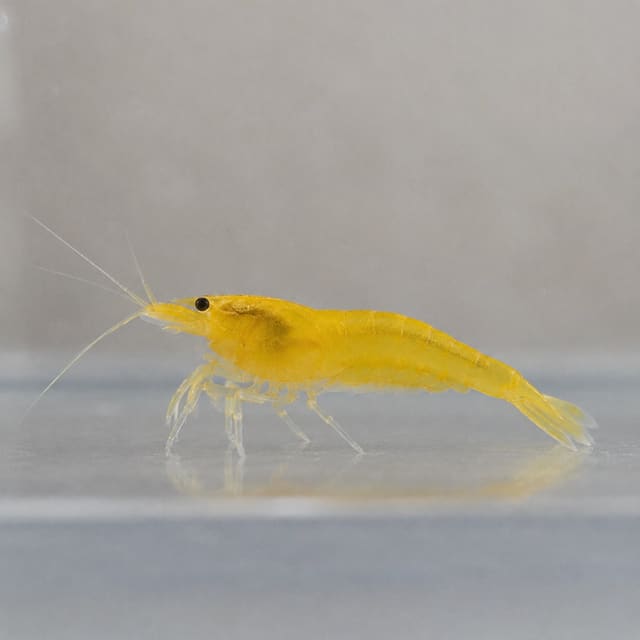
The Yellow Rili Shrimp is a rili-pattern colour form of Neocaridina davidi, the cherry shrimp species: a bright yellow head and tail with a clear, glassy middle. Keep at least five in a mature, filtered aquarium at 17–27°C, pH 6.5–8.0 and 4–18 dGH, with no copper. Sold individually as one live shrimp.
Adult size is the maximum length this species reaches at full maturity (scientific sources). The livestock you receive will be younger and smaller. Product-photo provenance and any image-specific limitations are stated on the listing.
Neocaridina davidi
Choose a quantity for your aquarium. Discount thresholds are pricing offers, not a stocking recommendation.
The Yellow Rili Shrimp is a rili-pattern colour form of Neocaridina davidi, the cherry shrimp species: a bright yellow head and tail with a clear, glassy middle. Keep at least five in a mature, filtered aquarium at 17–27°C, pH 6.5–8.0 and 4–18 dGH, with no copper. Sold individually as one live shrimp.
Adult size is the maximum length this species reaches at full maturity (scientific sources). The livestock you receive will be younger and smaller. Product-photo provenance and any image-specific limitations are stated on the listing.
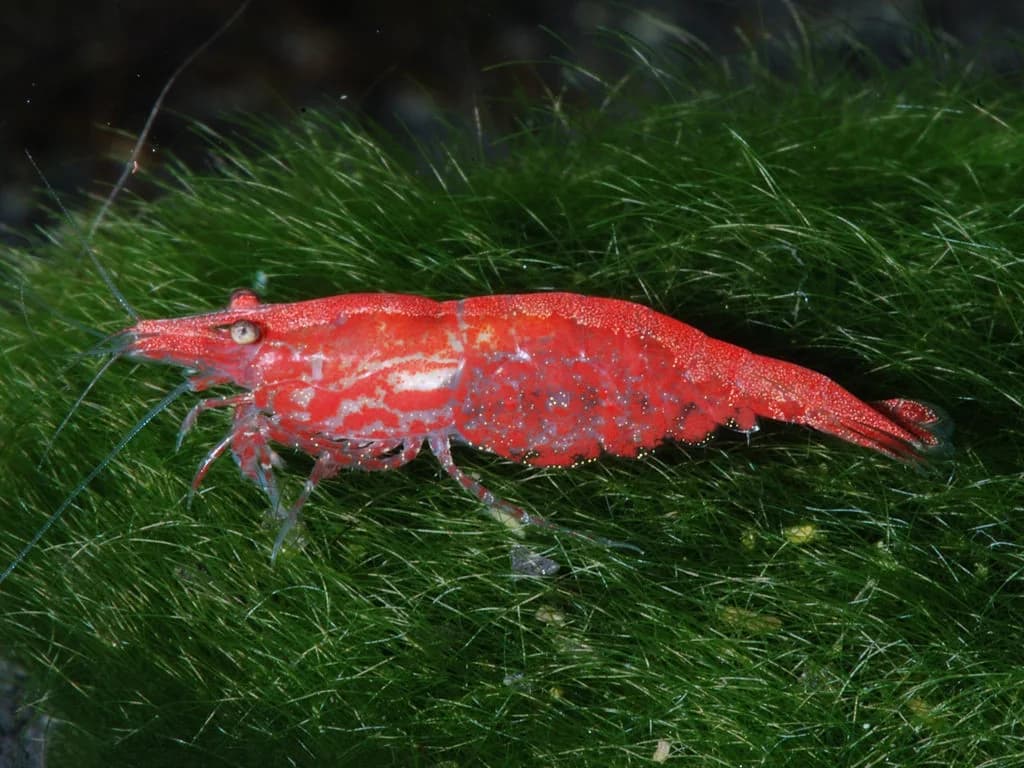
Use a mature, filtered aquarium and measured water—not a shrimp-per-litre rule. Tropical Fish Co uses 20 litres as a cautious starting policy for a small Cherry Shrimp group, above OATA's general 10-litre screen for small shrimp. Provide established grazing surfaces, cover and a protected filter inlet. No fish is guaranteed shrimplet-safe, and breeding should never be promised.
Read the full care guidance when planning conditions for your aquarium.
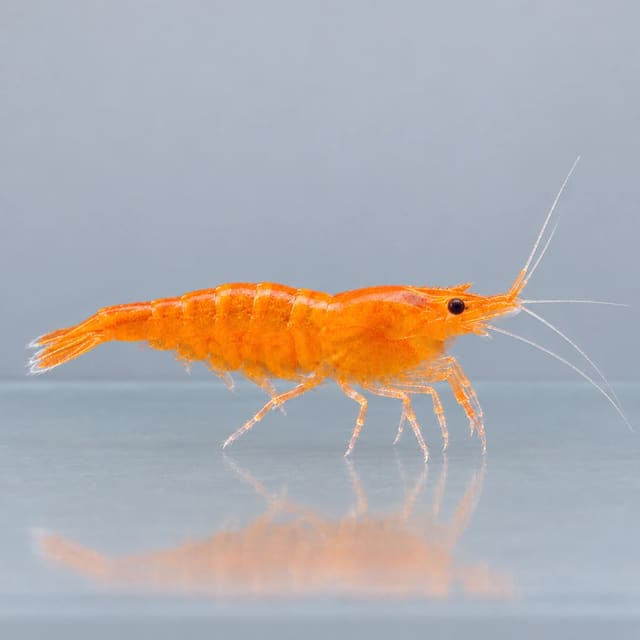
The Yellow Rili Shrimp is a selectively bred colour form of Neocaridina davidi, the dwarf freshwater shrimp best known in its red form as the cherry shrimp. “Rili” is the trade name for a colour-blocked pattern: the head and the tail carry colour while the middle of the body stays clear and glassy. In this form the coloured parts are a bright lemon to sunflower yellow, so a group shows as small yellow-and-glass shrimp working steadily over moss, wood and leaves.
Neocaridina davidi belongs to the family Atyidae. Older books and shop labels may call it Neocaridina heteropoda or Neocaridina denticulata sinensis; Wikipedia lists both as synonyms of the same species. The wild shrimp is a mottled brown animal from lakes, ponds, rivers and streams in Taiwan, eastern China, the Korean Peninsula and Vietnam. Every yellow, red, blue or rili shrimp in the hobby is a bred form of that one species, which matters when you plan breeding later on this page.
Adults are small. OATA’s UK care sheet gives about 3 cm for cherry-type shrimp, Wikipedia gives 3–4 cm, and females grow larger and more strongly coloured than males. Plan for a group of small, busy grazers rather than a single display animal.
| Suits | Not suited to |
|---|---|
| A mature, filtered aquarium of 10 litres or more; 20 litres is easier to keep stable | A newly set-up tank that has not finished cycling |
| A group of at least five shrimp | One shrimp kept on its own |
| Water held steady within 17–27°C, pH 6.5–8.0 and 4–18 dGH | Large or sudden swings in temperature or chemistry |
| A shrimp-only tank, or one with very small, peaceful fish | Fish big enough to swallow a shrimp |
| Keepers who check every medicine and fertiliser is invertebrate-safe | Tanks treated with copper-based products |
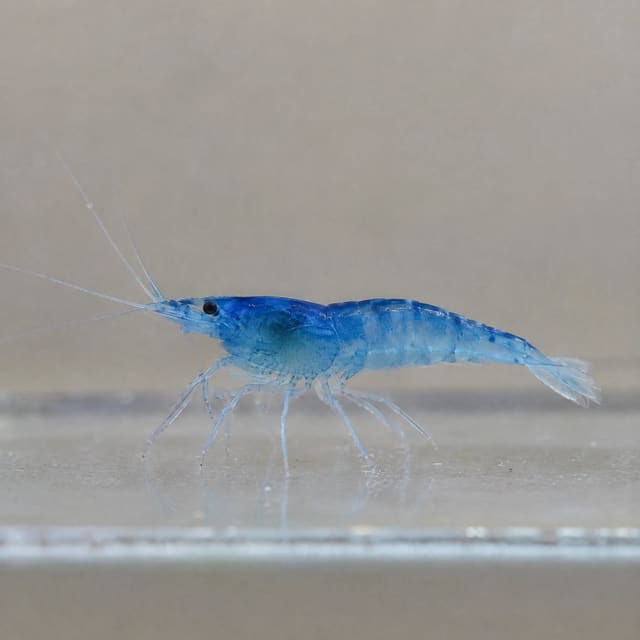
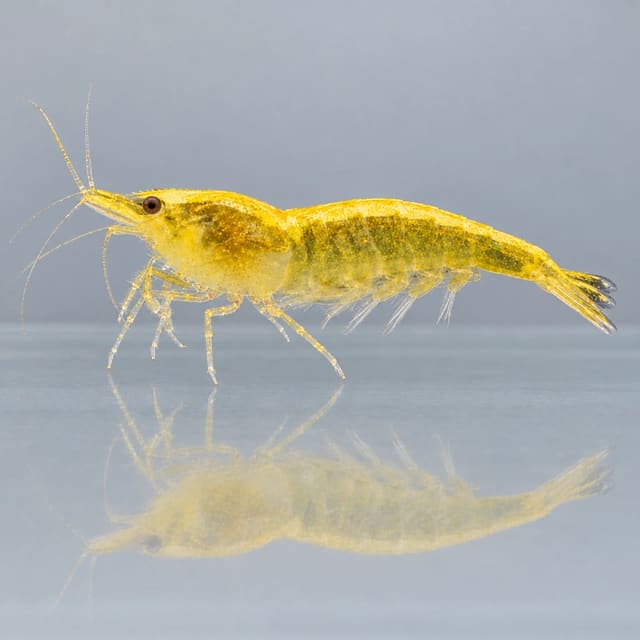
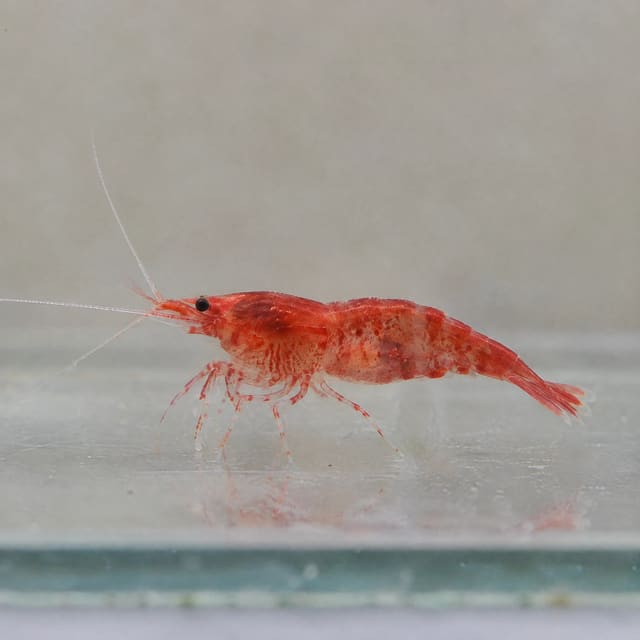
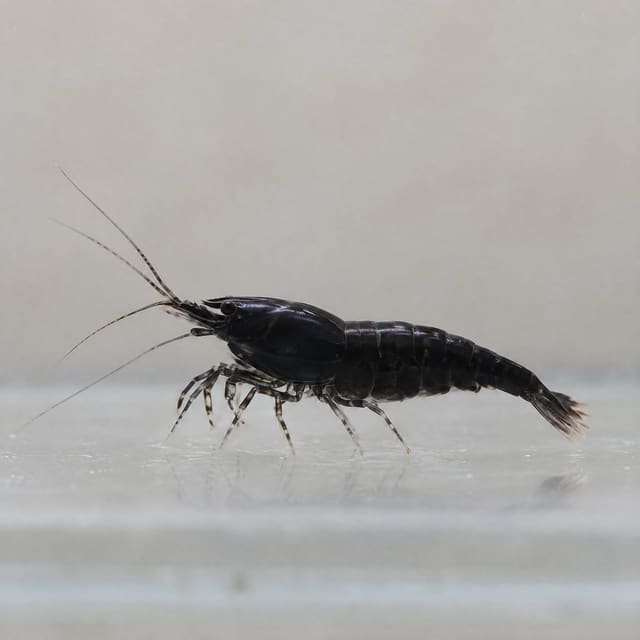
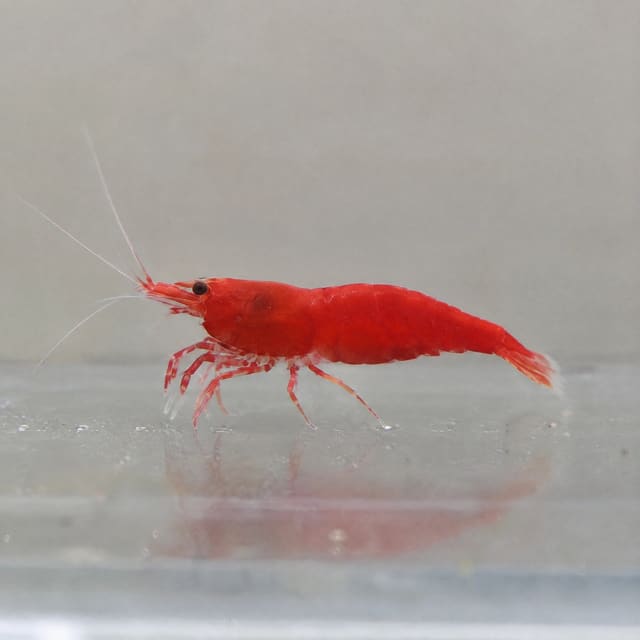
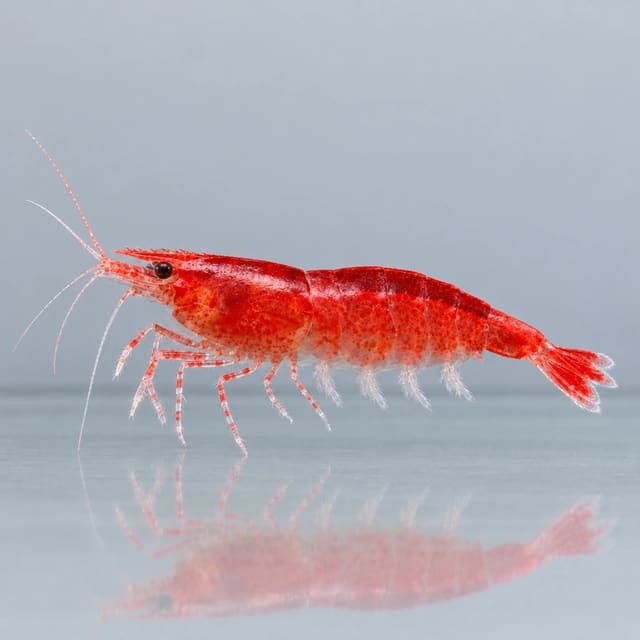
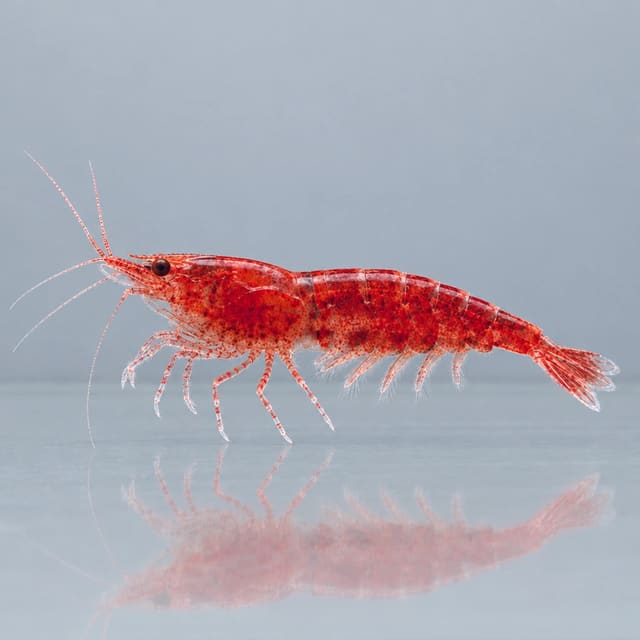
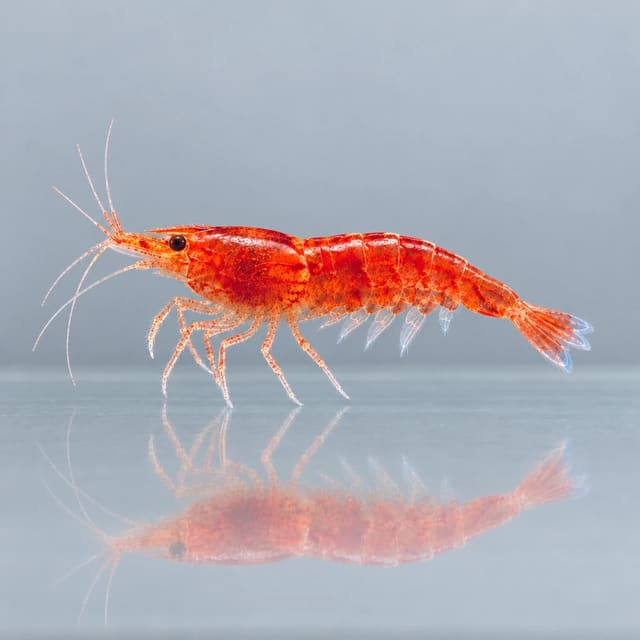
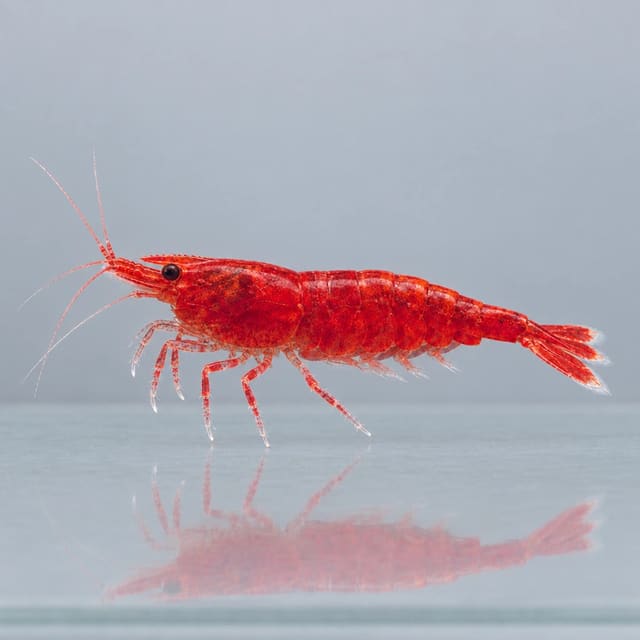
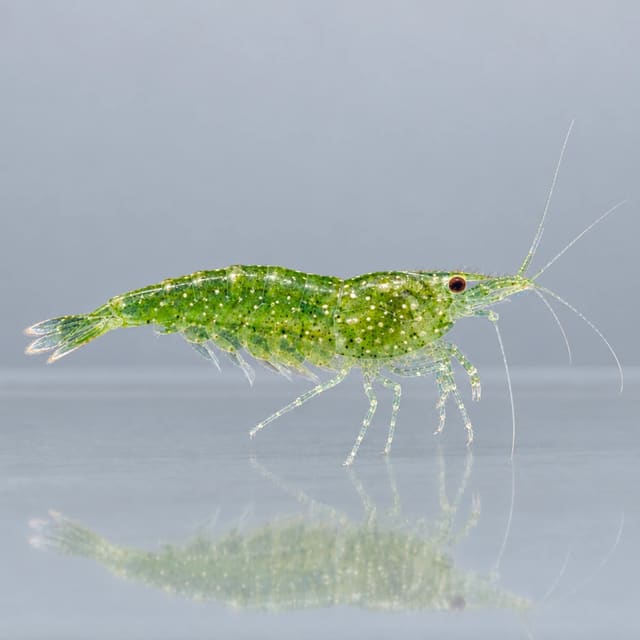
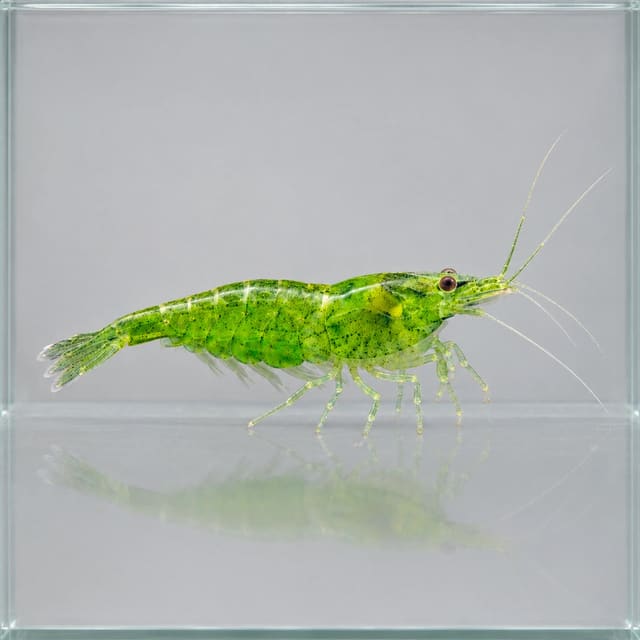
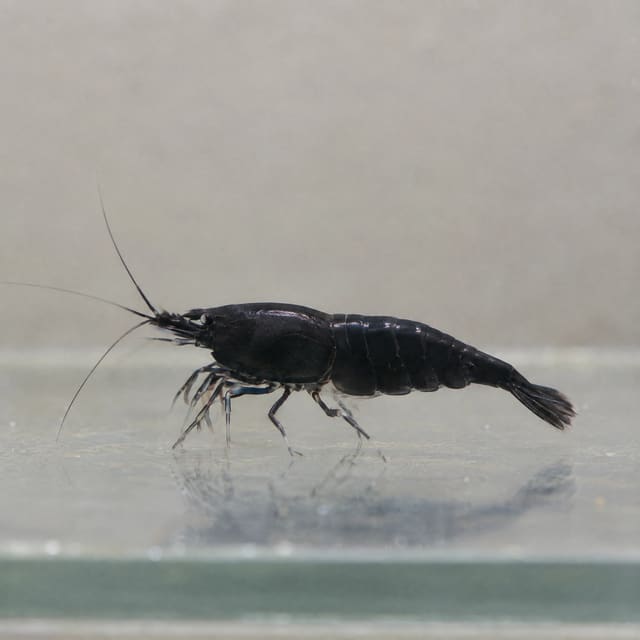
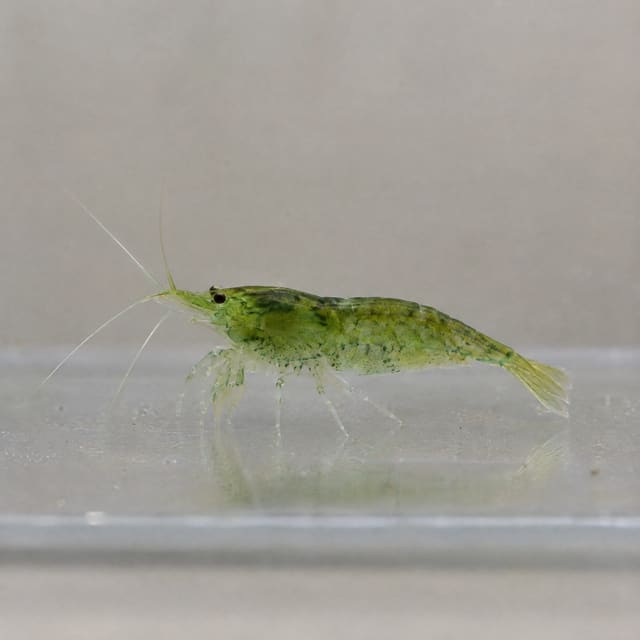
Yellow Rili Shrimp sit in the same care group as our other cherry shrimp. Browse the wider freshwater shrimp category or the Neocaridina shrimp range to compare colours. The photographs show the colour form, not the individual shrimp you will receive.
One purchase quantity supplies one live Yellow Rili Shrimp. The only option is “Standard”: this colour form is not graded into sizes, so shrimp are sent at the size available on the day, which may be young adults or slightly smaller juveniles. Sex is not specified. A mixed group is likely when you order several, but it is not guaranteed.
The rili pattern varies from shrimp to shrimp. The clear band can be wide or narrow, the yellow can be pale or deep, and young shrimp usually colour up as they grow. Expect a group with some natural variation rather than identical animals; a shrimp that looks pale on arrival often shows stronger colour once it has settled.
Before you order, read our delivery and live arrival information and have the aquarium ready, tested and stable. Shrimp should go into a tank whose filter is already processing waste, never into a tank filled the same week.
OATA sets 10 litres as the minimum for a small group of shrimp and recommends a larger tank when shrimp share it with fish. Our cherry shrimp care guide uses 20 litres as a cautious starting point, because a bigger volume of water changes temperature and chemistry more slowly. Neither figure is a per-shrimp formula: what matters most is a cycled filter and steady water.
A filter is always essential. Shrimp produce little waste, but the biological filter must already be turning ammonia and nitrite into nitrate before they arrive. Our guide to the aquarium nitrogen cycle explains how a tank matures. Many shrimp keepers fit a fine sponge over the filter intake so newly hatched shrimp are not drawn in; the sponge also becomes another surface for the group to graze.
Use gravel or sand as the substrate, because shrimp walk over it and pick through it for food. Add cover with live or artificial plants, pots or caves, and fit a lid: OATA notes that shrimp can jump out. A heater keeps the temperature steady through the year if your room warms and cools, and lighting on a timer gives a regular day and night.
| Zone | What it gives the shrimp |
|---|---|
| Moss, fine-leaved plants or a moss-covered branch | Biofilm to graze and hiding places, which matter most just after a moult |
| Open substrate at the front | A clear feeding spot where you can count the group and lift out leftovers |
| Wood, stones or leaf litter | Extra grazing surfaces and broken sight lines |
| A sponge-covered filter intake | Keeps the smallest shrimp out of the filter |
Yellow shows best against dark substrate and green plants. A planted tank also keeps up a steady supply of biofilm, which is what the shrimp spend most of the day eating. Wikipedia notes that Neocaridina davidi does not eat vascular plants, so healthy aquarium plants are safe with them.
Keep Yellow Rili Shrimp within OATA’s planning ranges for freshwater shrimp: 17–27°C, pH 6.5–8.0, general hardness 4–18 dGH and carbonate hardness 3–15 dKH. These are broad group values, not exact targets for this colour form, so pick a point inside them that your tap water can hold and keep it there. Shrimp cope with a wide range far better than with sudden change.
Tap water in the UK ranges from soft to very hard depending on where you live. Test your own tap water for pH and hardness before you buy, and use our water matcher to compare your readings with the shrimp’s range. Our water chemistry guide explains what pH, general hardness and carbonate hardness mean.
| Reading | Keep it at |
|---|---|
| Temperature | 17–27°C, steady from day to day |
| pH | 6.5–8.0 |
| General hardness | 4–18 dGH |
| Carbonate hardness | 3–15 dKH |
| Ammonia | Zero mg/l |
| Nitrite | Zero mg/l |
| Nitrate | No more than 20 mg/l above your tap water |
| Copper | None: never use copper-based treatments |
Temperature also sets the pace of breeding. In a controlled study of red cherry shrimp, published under the older name Neocaridina heteropoda heteropoda, Tropea and colleagues found that eggs took about 21 days to hatch at 24°C, about 15 days at 28°C and about 12 days at 32°C. Every female that matured and mated at 32°C lost her eggs, and the authors described about 28°C as the best temperature for culture under their laboratory conditions. For a home aquarium that is a reason not to run the tank hot, not a number to chase: OATA’s range stops at 27°C, and a steady mid-range temperature is the safer plan.
OATA warns that invertebrates are very sensitive to copper and can die even at low levels. Read the label of every medicine, plant fertiliser and water treatment before it goes into a shrimp tank, and if a label does not say it is safe for invertebrates, do not use it.
Shrimp are easily stressed by bright light, temperature extremes, noise and movement, so take the bag straight to the aquarium when it arrives. OATA’s floating-bag method suits Yellow Rili Shrimp well:
If your tank water is very different in hardness from the water in the bag, take longer over the mixing step. Slower is not harmful; rushing it is.
| When | What to do |
|---|---|
| Before arrival | Test ammonia, nitrite, nitrate, pH and hardness; confirm the temperature is steady |
| Day one | Keep the light low and add no extra food; a mature tank has biofilm to graze |
| Days two to seven | Offer a very small portion of shrimp food and check it is found and eaten |
| Every day | Count the shrimp you can see and note any lying still on their side |
| End of the week | Retest the water and do the first routine water change |
New shrimp often hide for a few days and may moult soon after arrival. A shed skin that looks like a dead shrimp is normal, OATA notes, and Wikipedia records that the shrimp eat their own moults. Count shrimp, not skins.
Yellow Rili Shrimp are omnivorous grazers. Wikipedia describes Neocaridina davidi feeding on biofilm, algae and detritus, and OATA calls freshwater shrimp mainly herbivores that graze algae. In a mature planted aquarium they find much of their food on leaves, wood and glass, so the food you add is a supplement rather than the whole diet.
OATA suggests feeding shrimp two or three times a week with algae wafers or a shrimp-specific pellet, leaving the food for at least 30 minutes and then removing whatever is left. Our own cherry shrimp guide prefers a complete sinking shrimp food as the base and adjusts the amount by watching the group rather than following a fixed timetable. Both agree on the main point: uneaten food spoils the water, and poor water harms shrimp far faster than a light diet.
If food sits untouched day after day, feed less often. If the group strips every scrap at once and the tank has little algae or biofilm, increase the portion a little. Shrimp that ignore food altogether are a reason to test the water, not to add more food.
Shrimp tanks reward a calm routine. OATA recommends testing ammonia, nitrite, nitrate, pH and hardness once a week, and more often while the tank is new or after adding livestock, with a partial water change of 25% at least once a week. Treat every bucket of replacement tap water with a conditioner that removes chlorine or chloramine, and match its temperature to the tank.
Slow refilling and matched temperature matter more for shrimp than for most fish, because shrimp respond badly to sudden change. Trim moss and plants gently, and look for shrimp in every clump you lift out before it goes in the bin.
Learn what normal looks like during the first month: shrimp spread across plants and wood, grazing almost constantly, with a few hidden at any time while they moult. OATA lists the changes that point to a problem in shrimp and snails, and each one has a practical first response.
| If you see | Do this |
|---|---|
| Shrimp suddenly inactive, or restless and swimming hard around the tank | Test ammonia, nitrite and temperature at once and think about anything new added to the water |
| Colour much paler or darker than normal | Compare with last week’s readings and any recent change |
| More hiding than usual, or shrimp gathering where the water is most oxygenated | Check filter flow and surface movement, then test the water |
| White spots, lesions, damaged shell or lost legs | Test the water and ask us before using any treatment |
| Reduced feeding | Check portion size and leftovers, then test the water |
| A female dropping her eggs | Look for stress: water quality, temperature, chasing by fish |
Wikipedia notes that females may abandon their eggs when stressed or carrying for the first time, so one lost clutch is not unusual; a run of losses is worth investigating. When you contact us, share your tank size, temperature, pH, hardness, ammonia, nitrite and nitrate readings and what changed recently. That information is far more useful than a photograph alone.
Yellow Rili Shrimp breed readily in a mature tank with plenty of cover and food. Females carry their eggs under the tail, which makes mature females easy to sex, and a female’s developing ovaries often show as a “saddle” on her back before she mates. Wikipedia gives 20–30 eggs per clutch, hatching after two to three weeks, and the Tropea study recorded about 24 young per female at each of the three temperatures it tested.
There is no larval stage. The young hatch as complete miniature shrimp about 1 mm long and start grazing straight away, which is why Neocaridina breed in ordinary fresh water while Amano shrimp, whose larvae need brackish water, do not breed in a home aquarium. Wikipedia gives sexual maturity at about two months in its breeding section (and 30 days elsewhere in the same article), and a lifespan of one to two years.
OATA’s rule is simple: avoid fish that can fit a shrimp in their mouth, and avoid predatory species. Our cherry shrimp guide adds that no fish is guaranteed safe for newly hatched shrimp, so a shrimp-only tank raises the most young. If you keep fish with Yellow Rili Shrimp, choose very small, peaceful species, give the shrimp dense cover and accept that some young will be eaten.
| Usually suits | Avoid or use caution |
|---|---|
| Snails such as nerite snails | Any fish with a mouth big enough to swallow an adult shrimp |
| Amano shrimp, a different genus that cannot interbreed with Neocaridina | Predatory fish, crayfish and large crabs |
| Very small, peaceful nano fish, accepting the loss of some young | Other Neocaridina colours, if you want to keep the yellow rili pattern |
| A shrimp-only planted tank | Pufferfish and loaches, which OATA lists as snail-eaters |
Add companions after the shrimp have settled, and watch at feeding time. A fish that hunts along the plants or picks at moss after the food is gone is likely to be taking young shrimp.
The rili pattern comes in several colours, all the same species. Compare the Red Rili Shrimp, the Orange Rili Shrimp, the Blue Rili Shrimp and the dark Carbon Rili Shrimp. If you prefer solid colour, the Yellow Cherry Shrimp is yellow from head to tail. Keep only one of these colours per tank if you want the young to breed true.
For more on keeping dwarf shrimp, read our shrimp-keeping guide and the cherry shrimp UK guide, or browse all our shrimps and crustaceans.
OATA reminds keepers that releasing aquarium animals or plants into the wild is illegal and harmful. Neocaridina davidi shows why: Wikipedia records populations established from released aquarium shrimp in thermally polluted waters in Japan, the United States, Poland and Germany. In Germany, Klotz and colleagues reported the species in the Erft river system in North Rhine-Westphalia in 2013 and noted that it tolerates colder water and could spread further. Pass unwanted shrimp to another keeper or a shop, and pour old tank water down a household drain, not into a pond or watercourse.
It is a selectively bred colour form of Neocaridina davidi, the cherry shrimp species, with a bright yellow head and tail and a clear, glassy middle. Adults reach about 3 cm according to OATA; Wikipedia gives 3–4 cm.
One live shrimp of the Standard option, sex not specified. Order at least five to start a group, as OATA recommends.
At least five. OATA notes that single shrimp or very small groups often become stressed; ten or more makes a fuller display and a better chance of breeding.
A mature, filtered aquarium kept steady within 17–27°C, pH 6.5–8.0, 4–18 dGH and 3–15 dKH, with zero ammonia and nitrite and no copper. These are OATA’s planning values for freshwater shrimp.
They graze biofilm and algae all day. Add shrimp pellets or algae wafers about two or three times a week and remove anything still uneaten after a few hours.
They will interbreed, and the young lose the clean yellow rili pattern. Keep one Neocaridina colour per aquarium if you want the young to breed true.
Usually, yes. A female carries 20–30 eggs under her tail for two to three weeks, and the young hatch as tiny copies of the adults. Moss and fine plants protect the young, and a shrimp-only tank raises the most.
Snails, Amano shrimp and very small, peaceful fish. Avoid any fish that can fit a shrimp in its mouth, predatory fish, crayfish and large crabs.
No reviews for this item yet. Bought one? Honest reviews only, good or bad.
What customers say about ordering from us
Easy website plenty of info on fish your buying great to pick a time slot
TRACEY DURRANT · 7 Oct 2026
Got some lovely fish thank you
Kevin Mackie · 7 Oct 2026
Reviews of our shop, collected by Judge.me, an independent third-party review collector. Newest first.
Moved by UK carriers licensed to handle live animals
Hand-packed with oxygen bags, poly box, heat pack
Email photos the same day; an optional unboxing video helps us review problems faster — claim terms apply
Klarna & PayPal Pay in 3 at checkout