Moderate
Zebra Horned Nerite Snail (Clithon sp.)
19–26°C
£3.99

A small, peaceful algae-grazing nerite snail that helps keep aquariums clean — one of the longest-lived freshwater snails. Easy care, peaceful. 18-26C, pH 7.0-8.5.
Adult size is the maximum length this species reaches at full maturity (scientific sources). The livestock you receive will be younger and smaller. Product-photo provenance and any image-specific limitations are stated on the listing.
Clithon retropictus
Lives in groups: kept together they stay settled, active and show their best colour.
Confirm your email, then we’ll send an availability message for this exact item if it returns within 180 days.
This request is only for this product—no newsletter or other promotions. A mail-provider retry may very rarely duplicate the same availability message. Unconfirmed addresses are removed after 48 hours. See our privacy policy.
A small, peaceful algae-grazing nerite snail that helps keep aquariums clean — one of the longest-lived freshwater snails. Easy care, peaceful. 18-26C, pH 7.0-8.5.
Adult size is the maximum length this species reaches at full maturity (scientific sources). The livestock you receive will be younger and smaller. Product-photo provenance and any image-specific limitations are stated on the listing.
Nerite snail is a trade umbrella, not one species. Confirm the supplied taxon and holding water, use a mature covered aquarium with established grazing surfaces, stock from food availability rather than a litre formula, and treat egg capsules, medicines and tank mates as species-specific decisions.
Maintain these water conditions for optimal health and vibrant colors
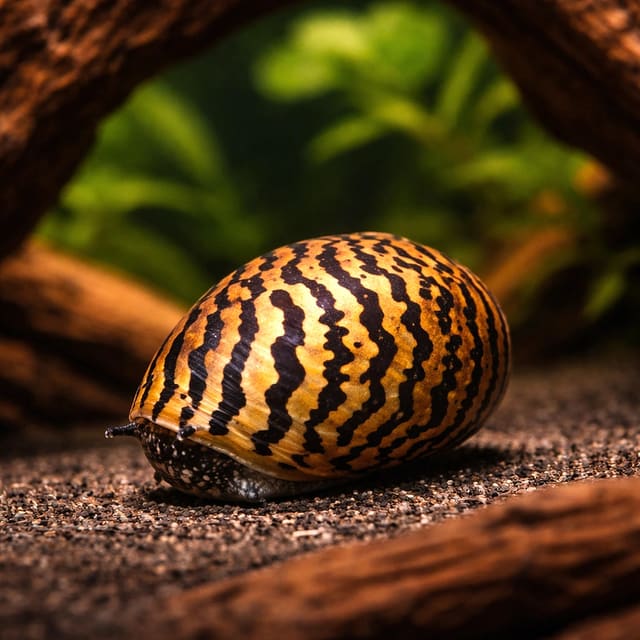
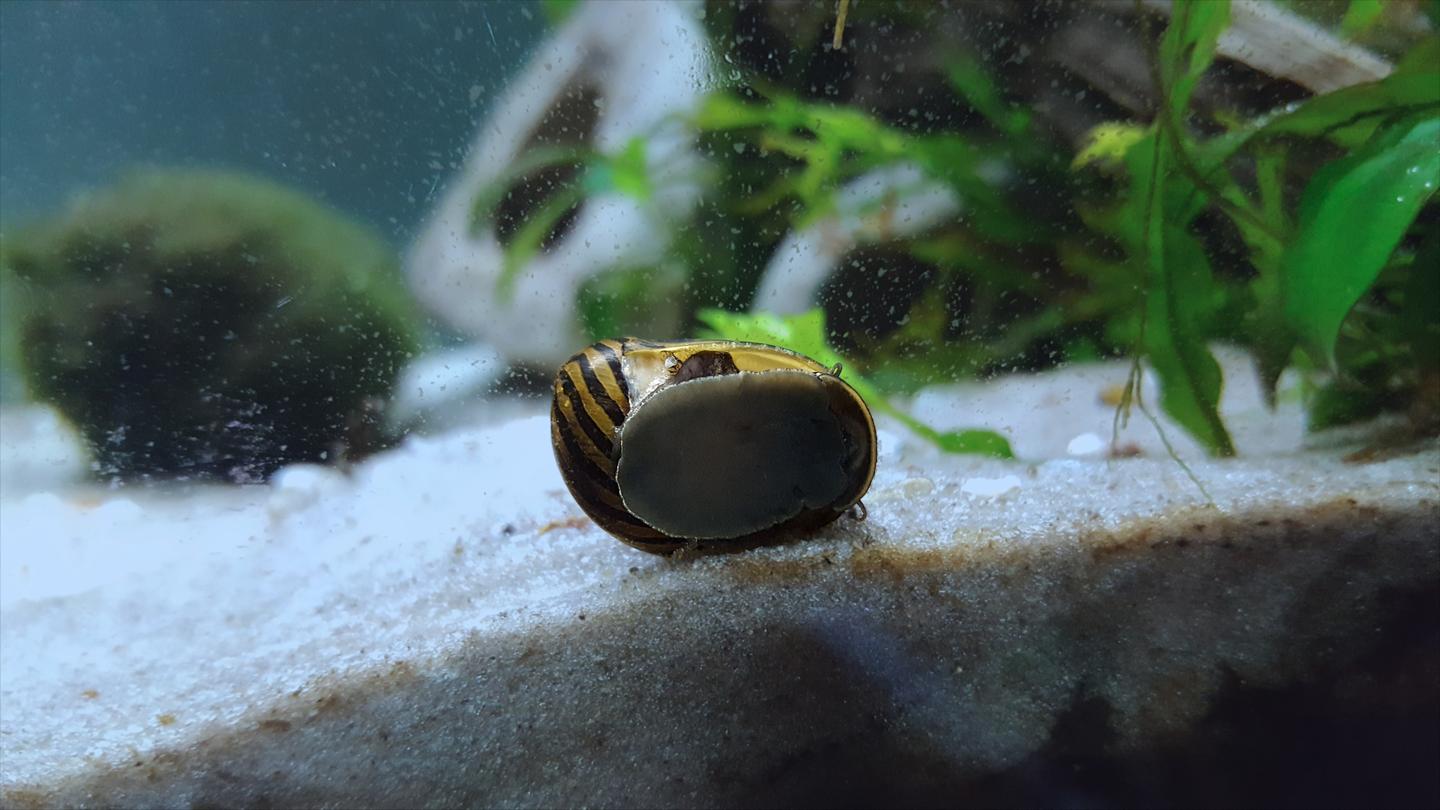
Clithon retropictus is a small, peaceful algae-grazing nerite snail from the streams of East Asia that provides steady, natural algae control while adding a neatly patterned shell to the aquarium. Each quantity is one snail at approximately 2 cm — this species is close to fully grown at that size — and shell patterning varies between individuals — the product photo is a representative image rather than a photo of the exact snail you will receive. Hardy, easy to keep and completely plant-safe, it suits nano aquariums from 10 litres upward as well as larger community setups, and it is remarkable for another reason: long-term field research suggests it is one of the longest-lived freshwater snails known, with wild individuals living for well over a decade.
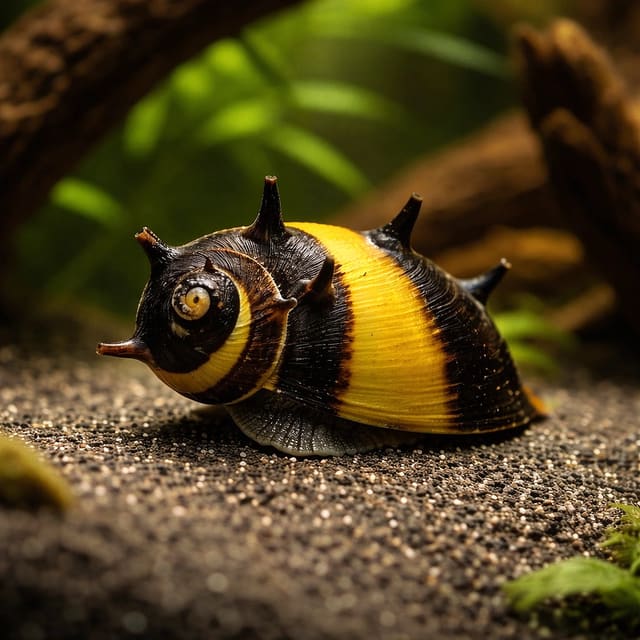
This snail belongs to the nerite family (Neritidae). The name most aquarium shops and suppliers use is Clithon retropictus, while taxonomists currently list the accepted spelling as Clithon retropictum (E. von Martens, 1878) — the same species under both spellings. It was first described in 1878 by the German zoologist Eduard von Martens, originally under the name Neritina retropicta. It is worth knowing that the "Horned Nerite Snail" sold in UK shops is usually the related Clithon corona, a different species with spiky shell projections. Clithon retropictus has a smooth, rounded shell without horns, decorated with fine zigzag and dashed markings. In the wild it is recorded from Japan (Honshu, Kyushu and Shikoku), South Korea including Jeju Island, and Taiwan.
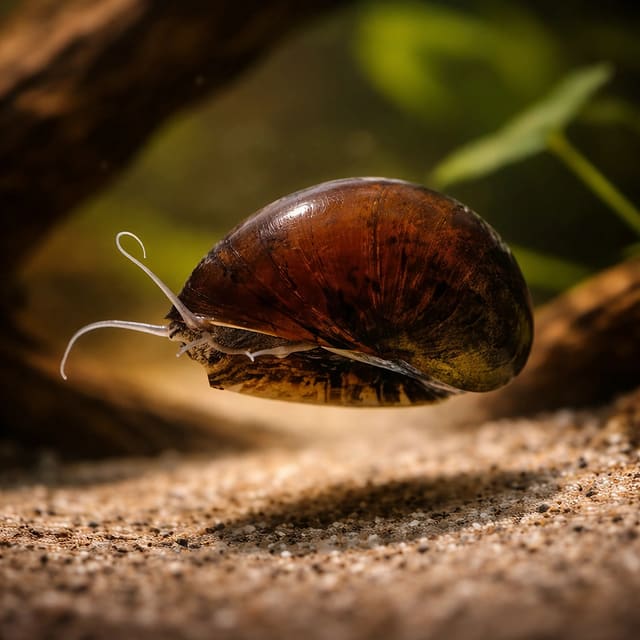
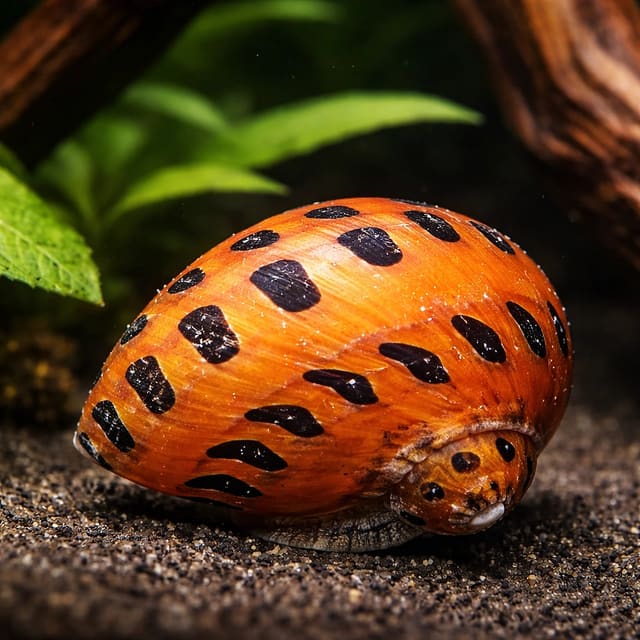
Clithon retropictus displays a compact globular shell reaching around 2cm diameter with the characteristic rounded nerite structure. The shell surface shows variable patterning depending on the individual—typically fine rows of dashes, spots, stripes or zigzag lines in combinations of black, brown, olive, orange, and cream colours. The operculum (door) allows complete retraction into the shell for protection. The muscular foot is typically grey to olive-green, well-adapted for strong adhesion to surfaces during grazing. Two sensory tentacles extend from the head region for navigation and detecting food sources.
This nerite snail inhabits freshwater rivers, streams, and brackish coastal habitats in East Asia — Japan, South Korea and Taiwan. These environments feature rocks, submerged wood, and various hard surfaces supporting algae and biofilm growth. Water ranges from purely freshwater inland systems to slightly brackish estuarine zones where freshwater meets tidal influence. Temperatures fluctuate seasonally more than tropical systems, experiencing cool periods during winter whilst warming substantially in summer — one reason this species tolerates cooler aquarium temperatures than many tropical species. The snails graze continuously on aufwuchs coating surfaces, moving slowly across substrate using the muscular foot. Natural habitats typically have neutral to alkaline pH with moderate to high mineral content supporting shell growth and maintenance.
Clithon retropictus adapts to aquariums from 10 litres upward, making it suitable for nano tanks through large displays. Provide smooth hard surfaces (glass, rocks, driftwood, decorations) that develop natural algae growth for grazing. Substrate type is flexible as these snails spend time primarily on vertical and horizontal surfaces rather than burrowing. Lighting can be moderate to bright to support algae growth providing a natural food source. Filtration should maintain good water quality and oxygenation. These snails tolerate various setups from heavily planted tanks to minimalist aquascapes, though natural algae presence or supplementary feeding is essential. Ensure the aquarium has a tight-fitting lid as nerite snails occasionally climb above the waterline and may escape if gaps exist.
Maintain temperatures between 18-26°C—notably tolerant of cooler conditions than many tropical species. The critical parameter is pH: it must be neutral to alkaline, 7.0-8.5, with 7.5-8.0 being ideal. Acidic water below 7.0 gradually dissolves calcium carbonate shells causing erosion and pitting. Hardness should be moderate to high (ideally 8-15 dGH or higher; around 6 dGH is the practical minimum) providing dissolved minerals for shell maintenance and growth. Ammonia and nitrite must remain at zero, whilst nitrates should be kept below 20ppm through regular water changes. These hardy snails tolerate varying water conditions better than many aquatic invertebrates, but shell health depends absolutely on adequate mineral content and alkaline pH. Avoid copper-based medications which are lethal to all invertebrates.
Most aquarium care sheets quote one to three years for nerite snails, but this species is a documented exception: in a long-term field study of wild populations (Shigemiya & Kato 2001, Population Ecology), shell growth-line counts indicated maximum ages of around 20 years, and the species is widely summarised as living over a decade — ranking it among the longest-lived freshwater snails ever studied. In the aquarium, lifespan depends heavily on water chemistry — stable alkaline pH, mineral-rich hard water and a steady algae or supplemented diet give your snail the best chance of a genuinely long life. A snail that survives its first month (the typical acclimation risk window for nerites) will often go on to live for years.
Clithon retropictus is primarily an algae and biofilm grazer that provides valuable algae control in established aquariums. The snails rasp algae from glass, rocks, wood, and decorations using the radula (a ribbon of microscopic teeth), leaving clean trails behind them. In mature tanks with natural algae growth, supplementary feeding may be unnecessary. In pristine algae-free tanks, supplement with blanched vegetables (courgette, cucumber, spinach), quality algae wafers, or spirulina-based foods placed near the snails 2-3 times weekly. Calcium-rich foods support shell health—cuttlebone or specialised snail foods containing added minerals are beneficial. These efficient grazers work tirelessly but should not be relied upon solely as a cleanup crew—provide dedicated feeding to ensure adequate nutrition for long-term health.
Most nerite snail losses trace back to a handful of avoidable errors. Soft, acidic water is the biggest: below pH 7.0 the shell dissolves faster than the snail can repair it, showing as pitting and white erosion patches. Starvation in spotless tanks is the second — a brand-new or aggressively cleaned aquarium simply has no algae or biofilm to graze, so supplement feeding from day one. Copper-based medications are lethal to snails even at doses safe for fish; always check labels before treating a tank. Missing lids lead to walkabouts — nerites climb above the waterline, and a snail that dries out on the carpet cannot be saved. Finally, expecting one snail to clear a severe algae problem sets everyone up to fail: nerites are superb maintenance grazers, not a cure for an underlying nutrient or lighting imbalance.
Nerite snails are constantly active grazers showing no strict diurnal or nocturnal pattern—they feed continuously whenever hungry. Movement is characteristically slow and methodical as they rasp surfaces systematically. The muscular foot adheres powerfully to surfaces allowing navigation of vertical glass, inverted positions under décor, and movement through gentle current. They occasionally rest motionless for extended periods (hours to a day) which is normal behaviour—only snails remaining withdrawn for multiple days with a foul odour require removal. Unlike some snails, Clithon species cannot reproduce in purely freshwater aquariums (larvae require brackish/marine conditions), preventing the population explosions that plague some snail species. This makes them ideal cleanup crew members without risk of overpopulation.
These peaceful snails coexist harmoniously with most community fish and peaceful invertebrates. Suitable tankmates include small peaceful community fish (tetras, rasboras, livebearers), peaceful shrimp species, and other peaceful snails such as our Sun Nerite Snail. The hard operculum-protected shell provides defence against casual harassment, though dedicated snail predators pose a risk. Exclude loaches (especially Botia and Chromobotia species that specialise in snail predation), pufferfish (which consume snails as a primary diet), aggressive predatory cichlids, crayfish (which may catch and consume snails), and large predatory fish. Snail-eating assassin snails should obviously also be avoided. Most peaceful community fish ignore nerite snails entirely. You can browse more compatible species in our invertebrates collection.
Whilst Clithon retropictus adults thrive in freshwater, successful reproduction requires brackish to marine conditions for larval development. Adults may lay distinctive white sesame seed-like egg capsules on aquarium glass, rocks, and decorations—these are extremely adhesive and difficult to remove but will not hatch in freshwater. The eggs are harmless but some aquarists find them aesthetically displeasing. Larvae require brackish/marine salinity to develop through planktonic stages before metamorphosing into juvenile snails capable of freshwater life. Captive breeding in home aquaria is therefore uncommon and requires specialised brackish rearing systems. This reproductive limitation means nerite snails cannot overpopulate tanks unlike many other snail species.
Tropical Fish Co supplies healthy, active Clithon retropictus specimens with intact shells and normal grazing behaviour. Our team can advise on maintaining appropriate water chemistry for shell health and on compatible tankmate selection — our nerite snail care guide is a good place to start. With specialist packaging and delivery by licensed live-animal courier, your new snails arrive in the best possible condition, covered by our Live Arrival Guarantee. We work only with responsible suppliers who prioritise invertebrate welfare.
No reviews for this item yet. Bought one? Honest reviews only, good or bad.
What customers say about ordering from us
I have a small group of long finned mountain minnows. So was delighted to be able to order ten of this variety to increase the genetics in my tank . The ones I recieved are healthy but it’s to early to give a verdict on wether they are of a long finned type since they are small currently.
Gordon Walker · 23 Sept 2026
100% success travel and "installation". Pleased with quality of purchase. The Siamese fighter a bit "shy" so have not yet seen him at his best yet but looking good. Happy customer. GG
George E Garratt · 21 Sept 2026
Reviews of our shop, collected by Judge.me, an independent third-party review collector. Newest first.