
Neocaridina davidi
Blue Jelly Shrimp (Neocaridina heteropoda) - UK
Striking Blue Jelly Shrimp add vivid colour to planted aquariums and peaceful shrimp colonies. Ideal for freshwater setups. Order now with UK delivery.
Care at a Glance
Premium Quality
Healthy, vibrant fish from trusted suppliers
Expert Care
Detailed care guides and support
Live Arrival Guarantee
Your fish arrives healthy or we'll replace it
Acclimated
Properly quarantined and ready for your tank
Quick Care Guide
Water Parameters
Maintain these water conditions for optimal health and vibrant colors
Why Choose This Fish?
Striking Blue Jelly Shrimp add vivid colour to planted aquariums and peaceful shrimp colonies. Ideal for freshwater setups. Order now with UK delivery.
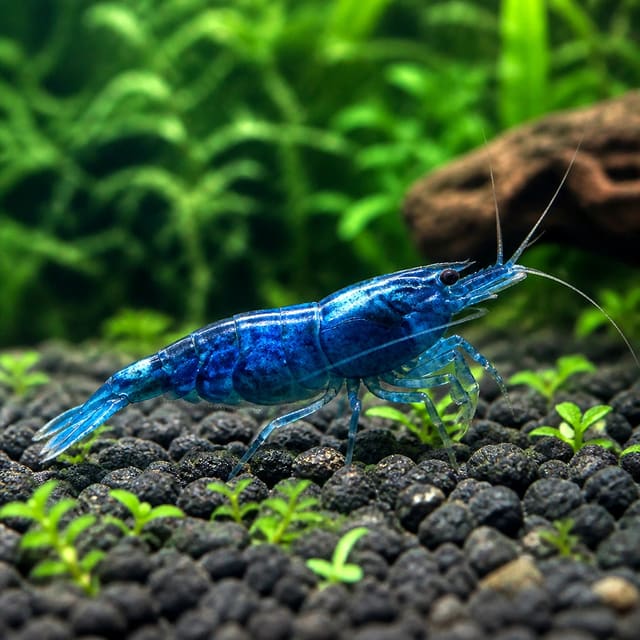
Blue Jelly Shrimp are one of the most eye-catching Neocaridina colour forms in the hobby: soft, translucent sky-blue bodies that seem to glow against dark plants and wood. This peaceful freshwater dwarf shrimp is a selectively bred form of Neocaridina davidi, a hardy species loved by beginners and experienced keepers alike. If you are looking for an easy Blue Jelly shrimp care guide, these shrimp are ideal because they stay small at around 2.5-3 cm, live for roughly 1-2 years, and adapt well when their blue jelly shrimp water parameters are kept stable. Their calm nature, constant grazing, and willingness to breed make them a favourite among keepers searching for aquarium shrimp UK, freshwater aquarium shrimp uk, and a colourful shrimp colony for planted nano tanks.
In the right blue jelly shrimp aquarium setup, these shrimp spend all day picking at biofilm, algae, and tiny food particles from moss, leaves, and hardscape. They are especially attractive blue jelly shrimp in planted aquarium layouts, where their pastel blue colour contrasts beautifully with green mosses and dark substrate. See our detailed photos showing the clean blue tone, body transparency, and size of healthy adults in a mature shrimp tank. For aquarists wondering how to care for blue jelly shrimp, the key is simple: a cycled tank, gentle filtration, mineral balance, and careful feeding. Get those basics right and Blue Jelly shrimp reward you with visible activity, regular moults, and often successful blue jelly shrimp breeding.
🔹 Quick Facts
- Scientific Name: Neocaridina davidi
- Care Level: Easy
- Min Tank Size: 20 litres (about 5.3 gallons)
- Temperature: 18-28°C (64-82°F)
- pH Range: 6.5-8.0
- Lifespan: Up to 2 years
- Temperament: Peaceful
- Diet: Omnivore
Classification
- Order: Decapoda
- Family: Atyidae
- Genus: Neocaridina
Blue Jelly Shrimp belong to the same group as cherry shrimp and other popular dwarf freshwater shrimp. In the aquarium hobby, they are best understood as a selectively bred blue morph of Neocaridina davidi. Their popularity comes from a useful mix of traits: strong colour, beginner-friendly care, peaceful behaviour, and reliable reproduction in stable home aquariums.
Where Do Blue Jelly Shrimp Come From? Natural Habitat Explained
Although Blue Jelly shrimp are a captive-bred colour line, the species behind them, Neocaridina davidi, originates from East Asia, especially Taiwan. In nature, relatives of these shrimp are found in slow-moving or still freshwater habitats such as ponds, irrigation channels, streams, lakes, and river margins. This matters because the best blue jelly shrimp ideal conditions in captivity copy those calm, food-rich environments: stable water, lots of surfaces for grazing, and shelter among roots, leaf litter, and plants.
Wild-type Neocaridina are not naturally bright blue. The blue colour seen in this strain has been developed through selective breeding over generations. That is why Blue Jelly shrimp sold as freshwater shrimp UK stock are usually captive-bred rather than collected from the wild. This is a major advantage for home aquarists because captive-bred shrimp tend to adapt better to aquarium life, prepared foods, and typical domestic water conditions.
People sometimes search terms like freshwater shrimp uk rivers, native freshwater shrimp uk, wild freshwater shrimp uk, river shrimp for sale uk, or live river shrimp for sale uk when trying to understand where aquarium shrimp come from. Blue Jelly shrimp are not a native British species, and they are not the same as local river or pond shrimp. They are ornamental dwarf shrimp bred for aquariums. Likewise, searches such as freshwater shrimp in pond uk, freshwater shrimp uk pond, and cherry shrimp uk pond come up often, but these shrimp are best kept indoors in controlled aquariums where temperature and predators can be managed.
In the wild, Neocaridina graze on algae films, decomposing plant matter, microorganisms, and tiny particles trapped on surfaces. That natural feeding style explains why mature tanks outperform newly set-up ones. A fresh aquarium may look clean to us, but to shrimp it can be almost empty of edible biofilm. For anyone browsing shrimp for sale UK, aquarium shrimp for sale uk, or live aquarium shrimp for sale uk, this is one of the most important points to understand before buying.
💡 Expert Tip
Mimicking the natural habitat of Neocaridina means prioritising stability over chasing exact numbers. A mature tank with algae film, moss, leaf litter, and gentle flow will usually produce healthier shrimp than a spotless but biologically immature setup.
How to Set Up the Perfect Tank for Blue Jelly Shrimp
The best blue jelly shrimp tank setup is simple, mature, and plant-heavy. While these shrimp are hardy, they do not handle sudden swings in water chemistry as well as fish. A stable nano aquarium can work brilliantly, but it must be fully cycled before shrimp are added. If you are planning a blue jelly shrimp aquarium setup from scratch, allow at least 4-6 weeks for biological filtration to establish.
Tank Size Requirements
The blue jelly shrimp minimum tank size is 20 litres, which matches their small body size and low waste output. That said, larger tanks are usually easier to keep stable. For a starter colony of 8-12 shrimp, 20-30 litres is a sensible minimum. In a 40-60 litre planted tank, water quality tends to fluctuate less, breeding is more consistent, and there is more surface area for grazing. If you are asking how many blue jelly shrimp per tank, a lightly stocked shrimp-only aquarium can support a surprising number over time because colonies expand gradually through breeding.
Water Parameters
Reliable blue jelly shrimp water parameters are more important than chasing extremes. Aim for a blue jelly shrimp temperature of 20-24°C for everyday keeping, although the accepted blue jelly shrimp water temperature range is 18-28°C. Lower-mid temperatures often support longer lifespan and steadier oxygen levels. The preferred blue jelly shrimp ph level is around 6.8-7.6, though they tolerate 6.5-8.0 if changes are gradual.
For mineral content, the usual blue jelly shrimp water hardness target is 4-15 dGH. The most practical blue jelly shrimp GH KH requirements for routine care are roughly GH 6-8 and KH 2-6, which supports moulting and shell formation without pushing the water too hard. These are sensible freshwater shrimp requirements for Neocaridina in most UK homes. If your tap water is very soft, remineralising may be needed. If it is very hard, stability still matters more than trying to force dramatic changes.
Filtration
A sponge filter or shrimp-safe hang-on-back filter with a pre-filter sponge is ideal. Blue Jelly shrimp are small, and newborn shrimplets can be drawn into unprotected intakes. Gentle flow is best because it keeps oxygen levels healthy without blasting shrimp off feeding surfaces. In shrimp tanks, filtration is less about strong current and more about biological stability. If you are building a dedicated colony, pair your setup with a shrimp-safe sponge filter and avoid over-cleaning media.
Substrate
Dark sand or fine gravel makes the pale blue colour stand out. Active shrimp substrates can be useful in soft-water systems, but standard inert substrate works very well for Neocaridina when your source water already sits in the right range. A depth of 2-4 cm is enough for rooted plants and easy maintenance. Many keepers find that Blue Jelly shrimp show better colour over black or dark brown substrate than over white gravel.
Plants & Decor
Blue jelly shrimp with plants is the combination most keepers want, and for good reason. Mosses, fine-leaved stems, floating plants, and botanicals provide food, shelter, and nursery cover for shrimplets. A blue jelly shrimp in planted aquarium layout with moss balls, Java moss, Subwassertang, Anubias, and floating Salvinia creates constant grazing surfaces. Add cholla wood, small pieces of bogwood, almond leaves, and ceramic shrimp tubes to increase surface area and security.
For colour variety in a Neocaridina collection, many hobbyists keep separate tanks for lines such as Yellow Fire Shrimp, Super Red Sakura Shrimp, Full Black Rili Shrimp, and Chocolate Cherry Shrimp. Keeping colour lines separate helps preserve more consistent offspring.
Lighting Requirements
Moderate lighting for 6-8 hours daily is enough for most shrimp tanks. The goal is not intense light for the shrimp themselves, but healthy plant growth and a controlled amount of algae and biofilm. Too much light without plant balance can lead to nuisance algae; too little can reduce plant growth and grazing surfaces.
Quick Setup Checklist
- Cycle the tank fully before adding shrimp
- Use a shrimp-safe filter intake
- Provide moss, wood, and leaf litter for grazing
- Keep temperature stable rather than constantly changing
- Test pH, GH, KH, ammonia, nitrite, and nitrate
- Avoid sudden large water changes
💡 Pro Tip
Always cycle a shrimp tank for 4-6 weeks before adding stock. A mature filter and visible biofilm make a huge difference to survival, especially for newly hatched shrimplets.
What Do Blue Jelly Shrimp Eat? Complete Feeding Guide
The natural blue jelly shrimp diet is omnivorous and based on constant grazing. In a healthy aquarium they eat biofilm, soft algae, decaying leaves, and tiny organic particles throughout the day. In captivity, the best approach is to treat prepared food as a supplement to natural grazing rather than the only food source. If you are wondering how often should you feed freshwater shrimp or how often to feed freshwater shrimp, the answer depends on tank maturity, colony size, and how much natural food is already available.
Staple Foods
A good staple for Neocaridina is a quality shrimp pellet, algae wafer, or specialised invertebrate granule offered in very small amounts. In mature planted tanks, feeding 4-6 times per week is often enough. In newer tanks with less biofilm, daily micro-portions may be needed. A practical blue jelly shrimp feeding guide is to offer only what the colony can finish within 2-3 hours.
Supplemental Foods
Supplement with blanched spinach, courgette, nettle, kale, or mulberry leaves. Indian almond leaves and leaf litter are excellent because they break down slowly and support microorganisms. Protein-rich foods can be given once or twice weekly, especially when females are carrying eggs. Shrimp will also consume their moulted shells, which helps recycle minerals and should not be removed unless they begin to foul.
Treats & Special Foods
Special treats such as pollen, shrimp lollies, or high-quality colour-support foods can be used sparingly. Some people search unusual terms like blue jelly food, blue eating jelly, can you add food coloring to jello, or how to make blue jelly because the name sounds like a dessert rather than a shrimp. For clarity, Blue Jelly shrimp are ornamental freshwater invertebrates, not edible jelly products, and aquarium foods should never include household gelatine desserts, food colouring, or sweetened human foods.
Likewise, searches such as can you eat freshwater shrimp, is shrimp for sale uk safe to eat, feeder shrimp for sale uk, frozen mantis shrimp for sale uk, and brine shrimp eggs for sale uk refer to very different products. Blue Jelly shrimp are kept as display and breeding shrimp, not as food animals or feeder stock.
Feeding Frequency & Portion Control
For most colonies, feed a tiny amount once per day or every other day depending on how much algae and biofilm the tank produces. In heavily planted, mature tanks, less is often better. The most common beginner mistake is overfeeding. Shrimp have tiny stomachs, and uneaten food quickly harms water quality.
| Time | Food | Amount |
|---|---|---|
| Morning | Natural grazing on biofilm and algae | Continuous |
| Evening | Shrimp pellet or blanched veg | Very small portion, removed if uneaten |
Ideal if you want to build a mixed Neocaridina display with similar feeding habits and easy omnivorous care.
A useful companion line for algae-focused shrimp tanks where biofilm and plant cover are central to feeding behaviour.
⚠️ Feeding Warning
Overfeeding causes ammonia spikes, bacterial blooms, and oxygen drops. If food is still sitting in the tank after a few hours, the portion was too large. Shrimp do better with tiny, regular meals than big feeds.
What Does Blue Jelly Shrimp Look Like? Colors, Patterns & Varieties
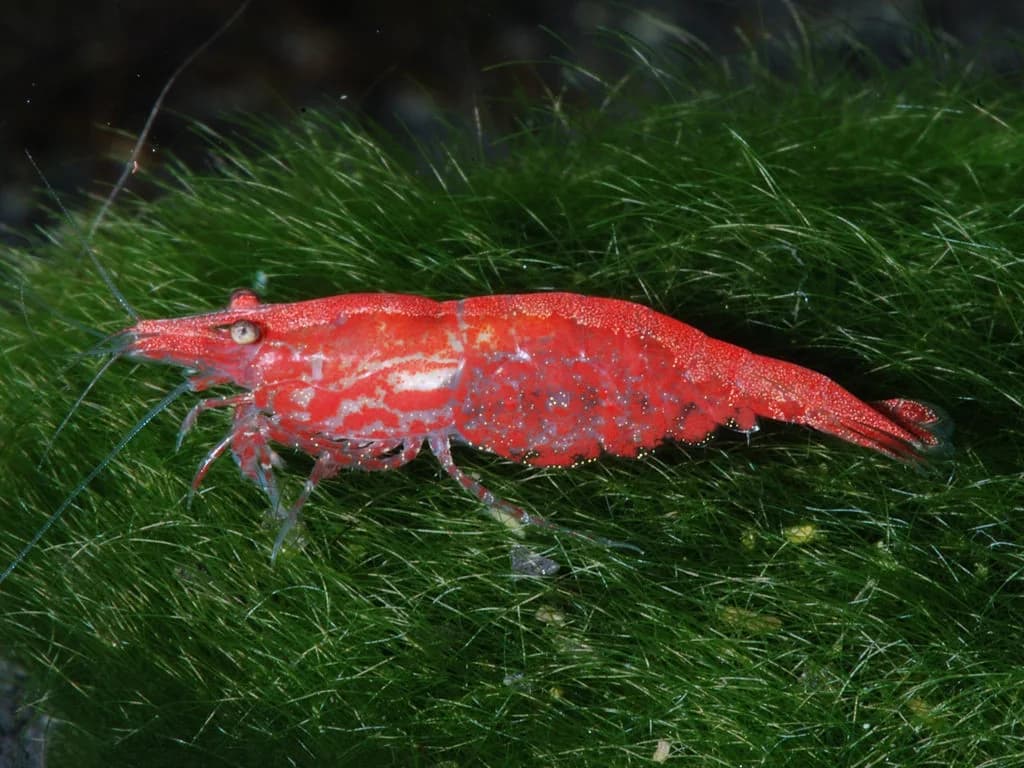
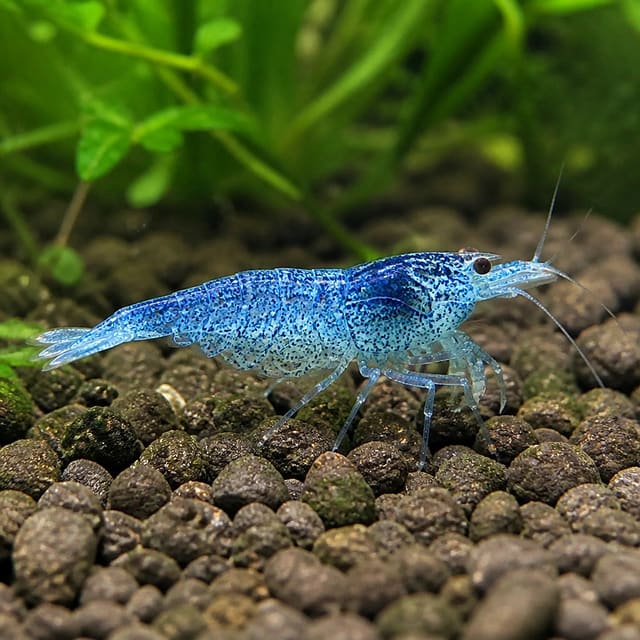
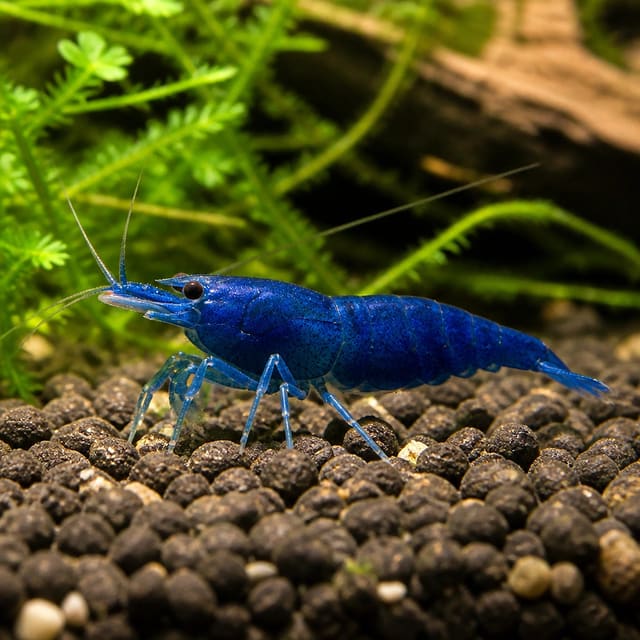
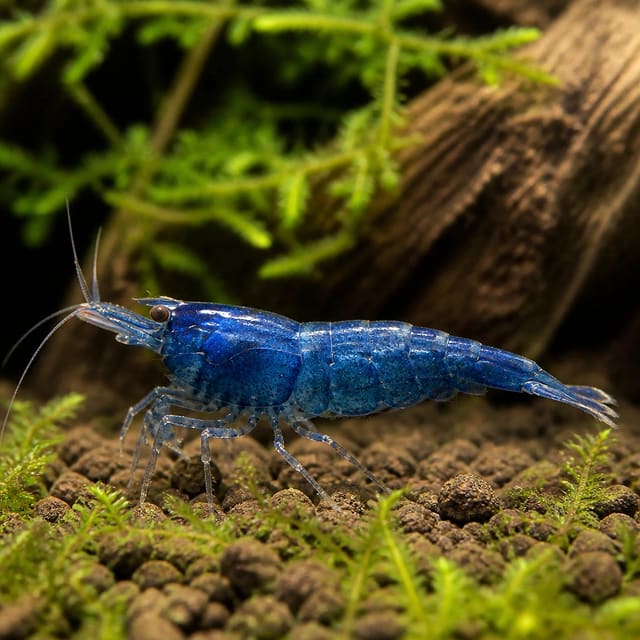
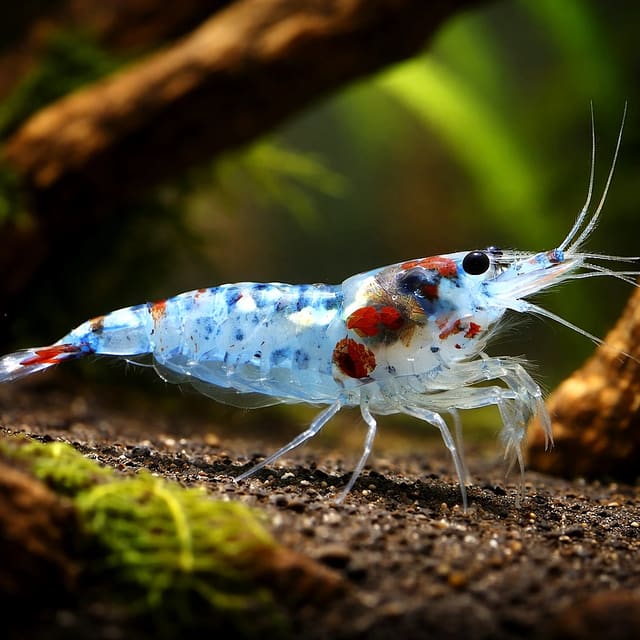
The appeal of Blue Jelly Shrimp lies in their delicate, translucent blue tone. Unlike the deeper navy of some blue strains, Blue Jelly shrimp often show a lighter sky-blue or icy blue body with varying transparency through the shell. Adults reach about 2.5-3 cm, with females generally larger, rounder, and more strongly coloured than males. Males are slimmer and can appear more transparent.
Colour quality varies from shrimp to shrimp. Higher-grade individuals show more even blue coverage across the body, while lower-grade shrimp may have patchy transparency or lighter sections. This is why hobbyists often ask about blue jelly shrimp grading, blue jelly shrimp for sale UK, buy blue jelly shrimp UK, live blue jelly shrimp UK, and blue jelly shrimp price UK. Grade affects appearance more than hardiness. Even lighter shrimp are still healthy pets if kept in the right conditions.
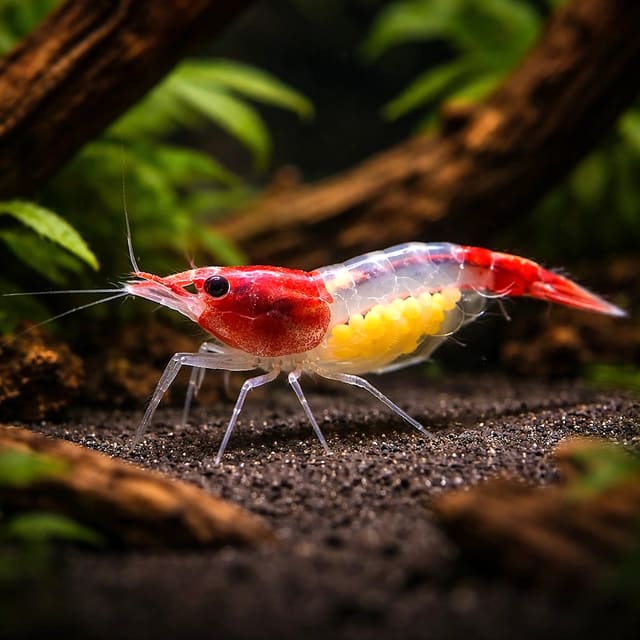
Females may develop a visible saddle behind the head when mature, showing developing eggs in the ovaries. Once berried, they carry eggs beneath the abdomen. For aquarists searching where to buy blue jelly shrimp UK, blue jelly shrimp online UK, order blue jelly shrimp UK, blue jelly shrimp delivery UK, or blue jelly shrimp shop UK, it helps to look for active shrimp with full antennae, intact legs, clear eyes, and a strong feeding response rather than choosing by colour alone.
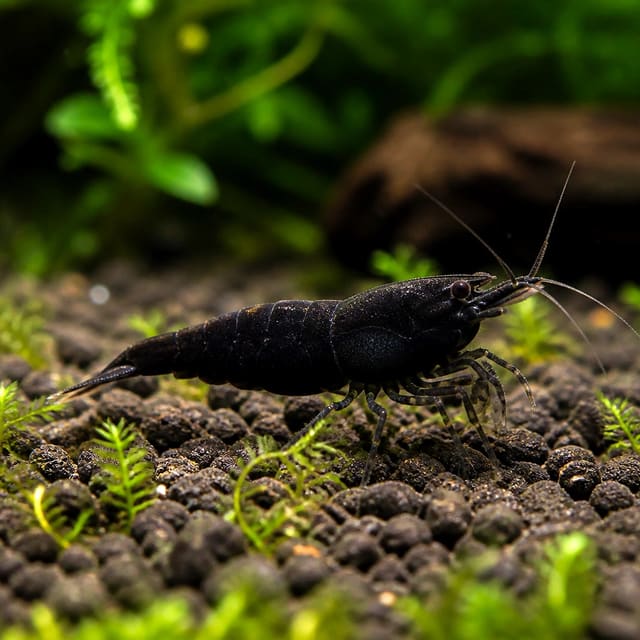
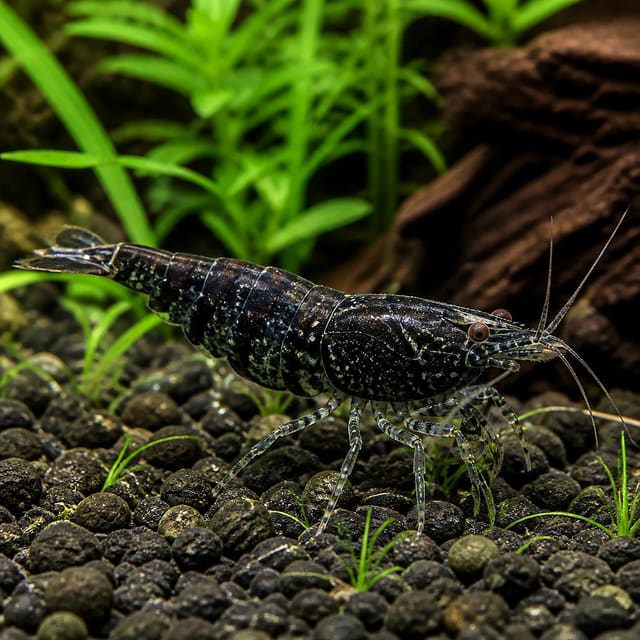
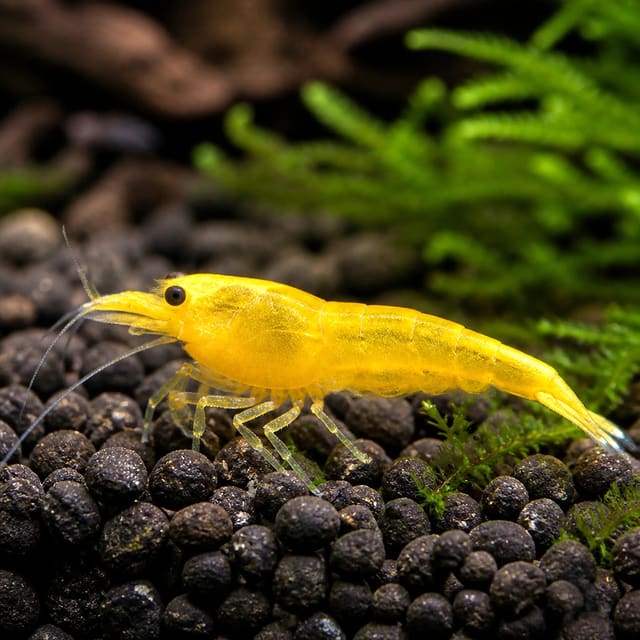
Our photos show the soft blue translucency that gives this strain its name, especially striking against dark substrate and green moss. In a well-run shrimp tank, good diet, stable minerals, and low stress all help maintain better colour.
What Fish Can Live With Blue Jelly Shrimp? Compatibility Guide
If you are asking what can live with freshwater shrimp, the safest answer is: very small, peaceful tank mates and lots of plant cover. Blue Jelly shrimp are among the best shrimp for community tank setups when the community is genuinely gentle. Adult shrimp are peaceful scavengers, and shrimplets are tiny enough to be seen as food by many fish. So while blue jelly shrimp tank mates do exist, not every “peaceful” fish is truly shrimp-safe.
Ideal Tank Mates
The best blue jelly shrimp safe tank mates include snails, other Neocaridina kept for display in separate colour lines, and very gentle nano fish such as Otocinclus or tiny rasboras in larger planted aquariums. Even then, some shrimplet losses can happen. For shrimp-focused displays, species-only tanks are best if your goal is maximum survival and colony growth.
Related shrimp options often considered alongside Blue Jelly include Yellow Fire Shrimp, Bloody Mary Cherry Shrimp, Chocolate Cherry Shrimp, Full Black Rili Shrimp, and Red Pinto Shrimp. Many keepers also compare them with amano shrimp, which are larger algae eaters but not a direct colour-line equivalent.
Species to Avoid
Avoid cichlids, puffers, loaches, goldfish, large barbs, crayfish, and most predatory or curious fish. Even fish marketed as nano species may pick off shrimplets. If you want a breeding colony rather than just a display group, shrimp-only is the safest route. Searches like blue jelly shrimp safe with fish should always be interpreted carefully: adults may coexist with some fish, but babies are rarely fully safe.
Some search terms such as blue jellyfish, what is blue jellyfish, what is the jelly in jellyfish, what are the blue jellyfish on the beach, and what are the blue jelly things on the beach are unrelated to aquarium shrimp. Blue Jelly shrimp are freshwater crustaceans, not marine jellyfish or a blue jelly like sea creature. The name refers only to their colour and translucent look.
Community Tank Stocking Examples
In a 20-litre shrimp-only setup, start with 8-12 Blue Jelly shrimp and a few snails. In a 45-litre planted community, a colony can coexist with a small group of Otocinclus if the tank is mature and heavily planted. In a 60-litre aquascape, Blue Jelly shrimp can work with micro-rasboras, but expect lower shrimplet survival unless moss cover is extensive.
Compatibility with Other Invertebrates
Snails are excellent companions because they share similar feeding zones and do not hunt shrimp. Other Neocaridina can live with Blue Jelly shrimp, but mixed colour morphs may crossbreed and produce less predictable offspring. If colour purity matters, keep separate tanks for Blue Jelly, Super Red Sakura Shrimp, Yellow Fire Shrimp, or Bloody Mary Cherry Shrimp.
| Species | Compatible? | Notes |
|---|---|---|
| Bloody Mary Cherry Shrimp | ⚠️ Caution | Can coexist, but may crossbreed and reduce colour-line consistency. |
| Otocinclus | ✅ Yes | One of the safer fish options in mature planted tanks. |
| Puffers | ❌ Avoid | Will hunt and eat shrimp. |
💡 Compatibility Tip
Always quarantine new arrivals for 2-4 weeks before adding them to a shrimp tank. This reduces the risk of introducing parasites, hydra, planaria, or fish medications that may harm invertebrates.
How to Breed Blue Jelly Shrimp: Complete Breeding Guide
Blue jelly shrimp breeding is one of the main reasons this strain is so popular. Under stable conditions, they breed readily and can form a productive blue jelly shrimp colony. Females mature at around 2 months, become larger than males, and develop a saddle before carrying eggs. If you are wondering how often do freshwater shrimp breed, healthy Neocaridina can breed regularly once mature, especially in warm, stable, food-rich tanks.
Breeding Setup
A dedicated 20-30 litre shrimp tank with moss, leaf litter, gentle filtration, and stable minerals is enough. Keep the colony well fed but not overfed, and avoid fish if you want shrimplets to survive in high numbers. The best results usually come from a mature planted tank with low stress and consistent water changes.
Spawning Behaviour
After moulting, a receptive female releases pheromones into the water. Males become noticeably more active, swimming rapidly around the tank in search of her. Once fertilised, the female transfers eggs beneath her abdomen and fans them constantly. This is normal and a good sign of healthy maternal behaviour.
Egg Care & Hatching
Females usually carry 20-30 eggs for around 2-3 weeks. During this time, avoid major disturbances. Sudden changes in temperature, pH, or hardness can cause stress and may lead to dropped eggs. Unlike some shrimp species, Neocaridina do not have a larval stage. The babies hatch as tiny versions of the adults and immediately begin grazing.
Fry Care & Growth
Newly hatched shrimplets need microscopic food sources such as biofilm, algae film, powdered shrimp foods, and decaying botanicals. This is why mature tanks are so important. If the tank looks too clean, babies may starve. Fine mosses and leaf litter act as both shelter and feeding ground.
Common Breeding Challenges
A frequent question is do blue jelly shrimp breed true. The answer is: reasonably well compared with some mixed lines, but not perfectly. Selective breeding helps maintain the blue appearance, yet occasional lighter, clearer, or off-colour offspring can still appear. If your goal is a stronger line, remove lower-colour individuals from the breeding tank over time. Blue Jelly shrimp are not among the freshwater shrimp that don't breed; in fact, they are one of the easier ornamental shrimp to reproduce.
Searches like what is blue jelly, what flavour is blue jelly, what is the blue jelly bean, and what is the blue jelly belly are common because of the name, but in aquatics the term refers to this attractive Neocaridina colour morph, not confectionery.
Advanced Breeding Tip
To improve colour consistency, breed from the deepest blue females and the clearest blue males in a species-only tank. Heavy moss cover and dark substrate help you assess colour more accurately as juveniles grow.
Blue Jelly Shrimp vs Similar Species: Which Should You Choose?
Comparing shrimp strains matters because many look similar online but behave differently in mixed tanks or breeding projects. Blue Jelly shrimp are excellent for aquarists who want a gentle pastel blue colony that is easy to keep and easy to breed. They are often compared with Blue Dream, Bloody Mary, and classic cherry shrimp lines.
| Feature | Blue Jelly Shrimp | Blue Dream Shrimp |
|---|---|---|
| Max Size | About 3 cm | About 3 cm |
| Care Level | Easy | Easy |
| Temperature | 18-28°C | 18-28°C |
| Price | £8.71 | Varies |
| Best For | Pastel blue planted shrimp colonies | Deeper opaque blue displays |
| Feature | Blue Jelly Shrimp | Bloody Mary Cherry Shrimp |
|---|---|---|
| Colour Style | Translucent sky blue | Deep translucent red |
| Breeding Ease | Easy | Easy |
| Community Use | Good with care | Good with care |
| Visual Impact | Cool-toned, subtle | Warm-toned, bold |
| Best For | Green aquascapes, dark substrate | High-contrast red shrimp tanks |
Choose Blue Jelly if you want a softer, more unusual blue than the denser look of blue dream shrimp for sale uk listings. Choose Bloody Mary Cherry Shrimp if you prefer rich red tones, or Full Black Rili Shrimp if you want dramatic contrast. If you are building a broad Neocaridina collection, Yellow Fire Shrimp and Chocolate Cherry Shrimp add completely different colour temperatures.
Many shoppers also compare Blue Jelly with cherry shrimp for sale and amano shrimp for sale uk. Cherry shrimp are the classic beginner choice and breed similarly, while Amano shrimp are larger algae specialists that do not breed easily in freshwater home tanks. For most hobbyists wanting colour plus easy colony growth, Blue Jelly is one of the most rewarding options.
Common Health Problems in Blue Jelly Shrimp & How to Prevent Them
Healthy Blue Jelly shrimp are active grazers with good balance, intact antennae, strong feeding response, and regular moulting. The typical blue jelly shrimp lifespan is around 1-2 years, but lifespan depends heavily on stable water, mineral balance, and avoiding toxins. Most losses are linked to stress, poor acclimation, copper exposure, or sudden parameter swings rather than infectious disease.
Signs of a Healthy Shrimp
Look for steady movement, normal grazing, clean shell appearance, and good colour for the grade. Females may show a saddle or carry eggs. Newly moulted shrimp often hide briefly, which is normal. Strong blue jelly shrimp behaviour includes active foraging across glass, plants, and hardscape.
Common Problems & Symptoms
The main issue in Neocaridina tanks is failed moulting. Blue jelly shrimp moulting problems are often linked to unstable GH, poor diet, or sudden stress. A shrimp stuck in its shell or dying shortly after a moult suggests mineral imbalance or shock. Other problems include bacterial infections, parasitic worms, and unexplained deaths after adding untreated tap water or plant fertilisers containing copper.
Beginners also lose shrimp by adding them to immature tanks. A tank can read “safe” on a basic strip test yet still lack the microfauna and stability shrimp need. This is why proper acclimation and a mature setup matter so much more than bargain hunting for cheap blue jelly shrimp UK.
Treatment Options
Start with water quality: test ammonia, nitrite, nitrate, pH, GH, KH, and temperature. Small, regular water changes are safer than one large change. Remove uneaten food. If disease is suspected, isolate affected shrimp where possible. Avoid most general fish medications unless you have confirmed they are shrimp-safe.
Prevention Tips
Maintain stable minerals, feed a varied diet, avoid overstocking, and never rush acclimation. Drip acclimation over 1-2 hours is usually safer than quick float-and-release methods. Quarantine all new livestock and plants where possible. If you are comparing which shrimp for sale uk online, which shrimp for sale uk 2024, or which shrimp for sale uk 2023, stock quality and handling matter as much as colour.
⚠️ Critical Health Warning
NEVER use copper-based medications with invertebrates. Copper is highly toxic to shrimp and can wipe out an entire colony very quickly, even at doses considered safe for many fish.
Quarantine Protocol
- Use a separate tank for 2-4 weeks
- Observe feeding, moulting, and activity daily
- Check for parasites, unusual deaths, or failed moults
- Use shrimp-safe equipment only
- Acclimate slowly before moving to the display tank
Understanding Blue Jelly Shrimp Behavior in the Aquarium
Blue jelly shrimp behaviour is one of their biggest charms. They are peaceful, social in loose groups, and constantly active when settled. Rather than schooling like fish, they spread out across the tank and graze individually, often gathering where food lands. In a secure tank with moss and cover, they are visible throughout the day.
New shrimp may hide for the first few days, especially after transport or a moult. Once comfortable, they climb plants, pick through leaf litter, and comb biofilm from hard surfaces with tiny front appendages. Males often swim more actively when searching for a recently moulted female. Berried females are usually calmer and spend more time fanning eggs.
To encourage natural behaviour, keep them in groups of at least 6, provide dense cover, and avoid boisterous fish. A calm shrimp-only or shrimp-led planted aquarium will show the best range of feeding, moulting, and breeding behaviour.
Why Buy from Tropical Fish Co?
Our Blue Jelly shrimp are selected for active behaviour, sound body condition, and attractive blue colour rather than being rushed out as freshly imported stock. Because Neocaridina respond badly to sudden changes, careful holding and observation are especially important with this species. We assess feeding response, mobility, shell condition, and general vitality before shrimp are offered for sale.
For customers looking to buy shrimp UK, buy blue jelly shrimp UK, or compare blue jelly shrimp online UK options, proper packing makes a real difference. These shrimp are packed for transit in insulated boxes, with seasonal heat packs in winter and secure professional bagging to reduce stress. Tracked delivery helps minimise time in transit, and a clear acclimation process is provided so your new shrimp can settle safely into UK home aquariums.
We also know buyers often compare species before ordering, including ghost shrimp for sale uk, amano shrimp for sale uk, wood shrimp for sale, sulawesi shrimp for sale uk, and even questions like are shrimp for sale uk legal or are shrimp for sale uk safe. Blue Jelly shrimp are a practical choice because they combine colour, peaceful temperament, and easy care. For many hobbyists, they are a better first ornamental shrimp than more demanding specialist species.
Order your Blue Jelly Shrimp today with confidence if you want a peaceful, colourful Neocaridina that works beautifully in planted nano tanks and dedicated shrimp colonies.
Why Choose Tropical Fish Co for Blue Jelly Shrimp
- Selected from captive-bred Neocaridina lines suited to home freshwater aquariums
- Held and assessed for activity, feeding response, and overall condition before dispatch
- Packed with insulation and seasonal heat protection to support safe UK delivery
You Might Also Like
Complete your shrimp setup with compatible and contrasting Neocaridina lines. Add warm colour with Bloody Mary Cherry Shrimp, bright contrast with Yellow Fire Shrimp, or a darker look with Full Black Rili Shrimp. If you enjoy unusual tones, Chocolate Cherry Shrimp make an excellent companion species in a separate display tank. For a broader collection of freshwater shrimp UK options, browse our shrimp range to compare colours and colony styles. Many keepers also pair Blue Jelly shrimp tanks with moss-heavy planted layouts and gentle shrimp-safe filtration to maximise grazing area and shrimplet survival.
You Might Also Like


Aulonocara sp. 'Firefish' - Tropical Fish for Sale UK

Best Food for Tropical Fish - White Worms (90 ML) | UK

Orange Venezuelan Cory (Corydoras venezuelanus var. 'Orange') - UK

Yellow Lepturus Cichlid - UK

Apistogramma agassizii “Super Red” - UK

X Neon Green Rasbora - UK

Rasbora Heteromorpha (Trigonostigma heteromorpha) - UK
Popular Right Now

Endler Gold Guppy Breeding (Poecilia wingei) - UK

Chindongo saulosi 'Coral Red' - UK
10x Assorted Swordtails – Xiphophorus Hellerii

Glass Catfish (Kryptopterus vitreolus) - UK

Blood Red Dwarf Gourami - UK

Striped Kribensis Dehane - Tropical Fish for Sale UK