Easy
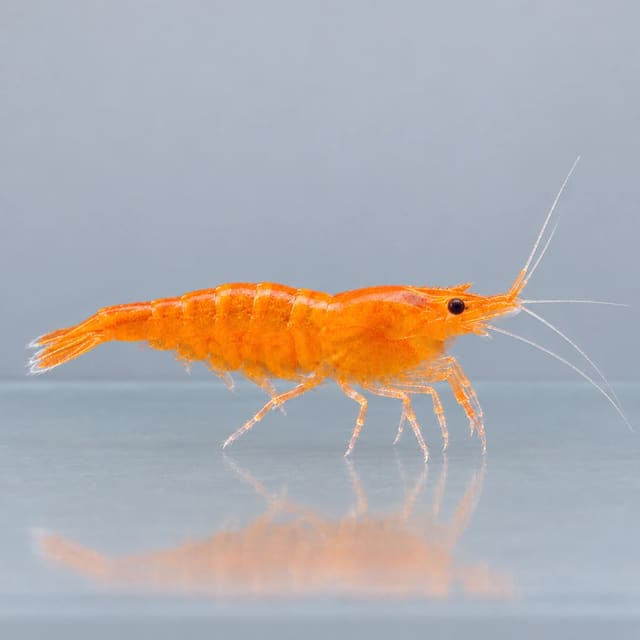
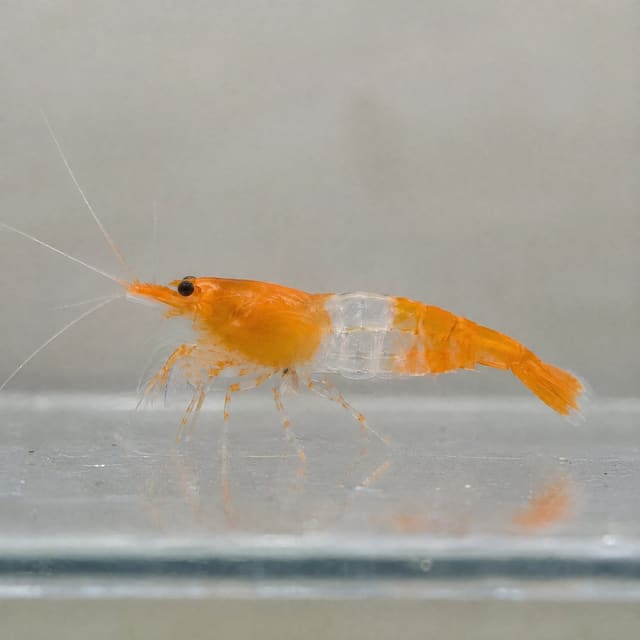
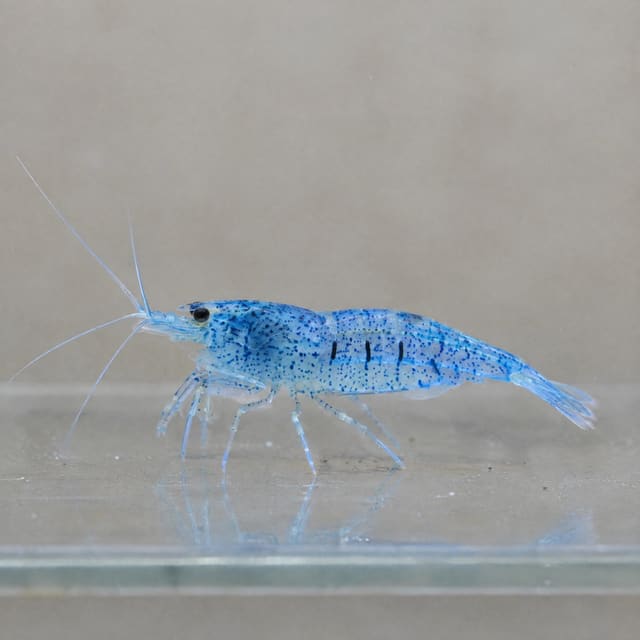
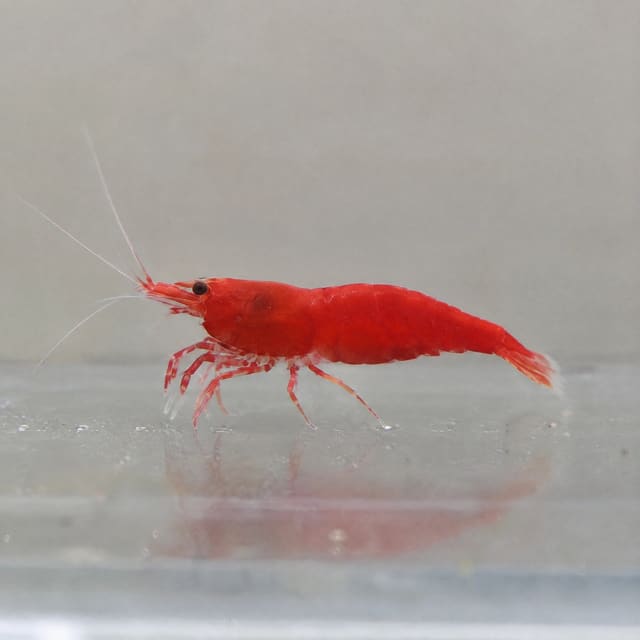
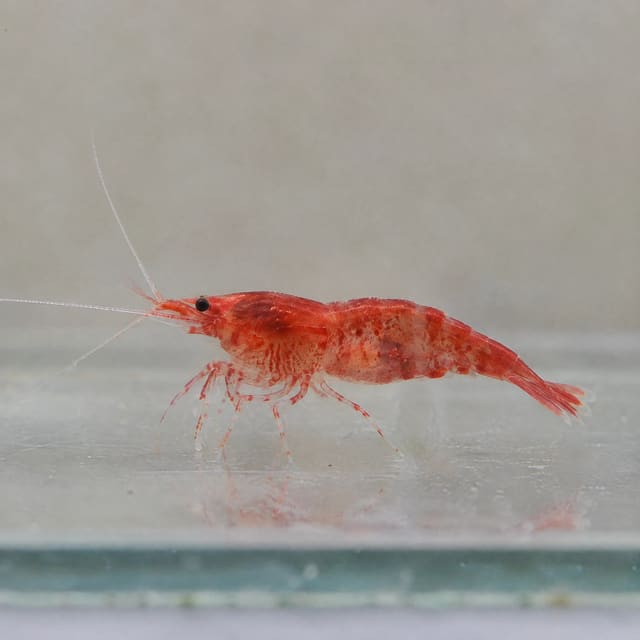
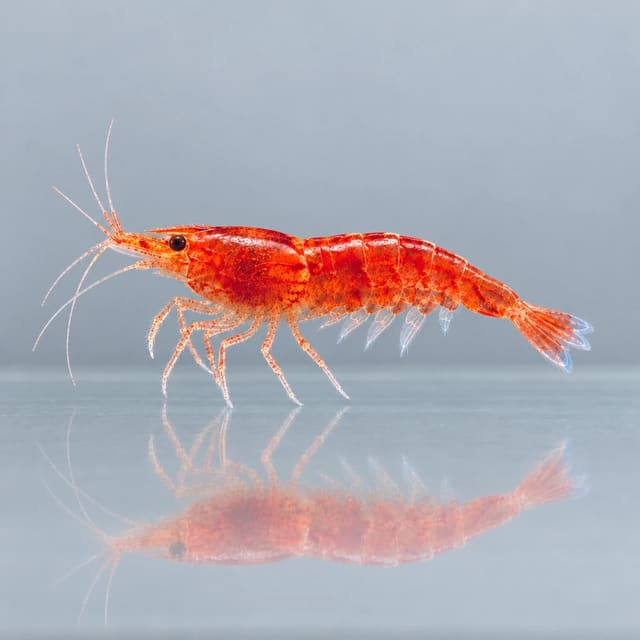
Blood Orange Shrimp (Neocaridina davidi)
21–26°C · pH 6.5–8
£8.29
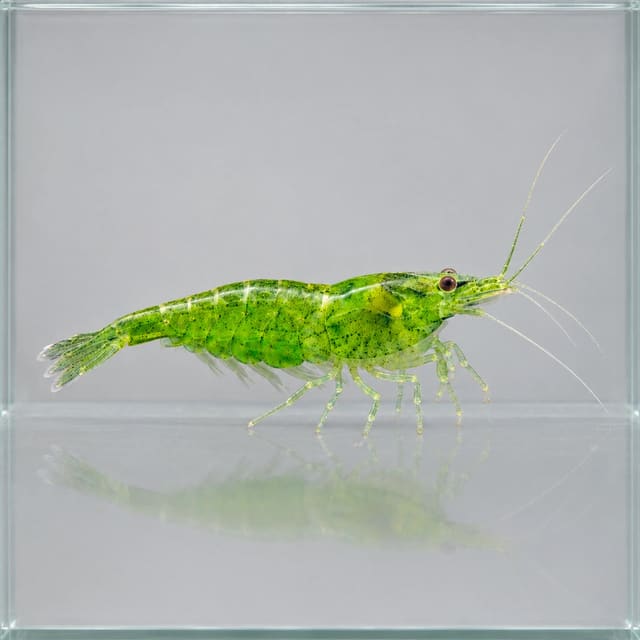
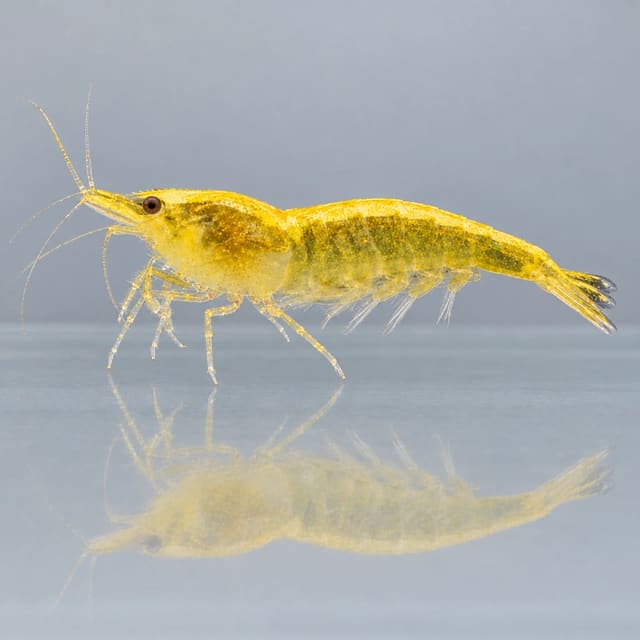
The Green Pearl Shrimp is a soft green, semi-translucent colour line of Neocaridina davidi, the cherry shrimp, flecked with tiny pale dots. Keep six or more in a mature, planted tank of 20 litres or more at 21–26°C, pH 6.5–8.0, with no copper and no other cherry shrimp colours. Sold singly as one live shrimp.
Adult size is the maximum length this species reaches at full maturity (scientific sources). The livestock you receive will be younger and smaller. Product-photo provenance and any image-specific limitations are stated on the listing.
Neocaridina davidi
Choose a quantity for your aquarium. Discount thresholds are pricing offers, not a stocking recommendation.
The Green Pearl Shrimp is a soft green, semi-translucent colour line of Neocaridina davidi, the cherry shrimp, flecked with tiny pale dots. Keep six or more in a mature, planted tank of 20 litres or more at 21–26°C, pH 6.5–8.0, with no copper and no other cherry shrimp colours. Sold singly as one live shrimp.
Adult size is the maximum length this species reaches at full maturity (scientific sources). The livestock you receive will be younger and smaller. Product-photo provenance and any image-specific limitations are stated on the listing.
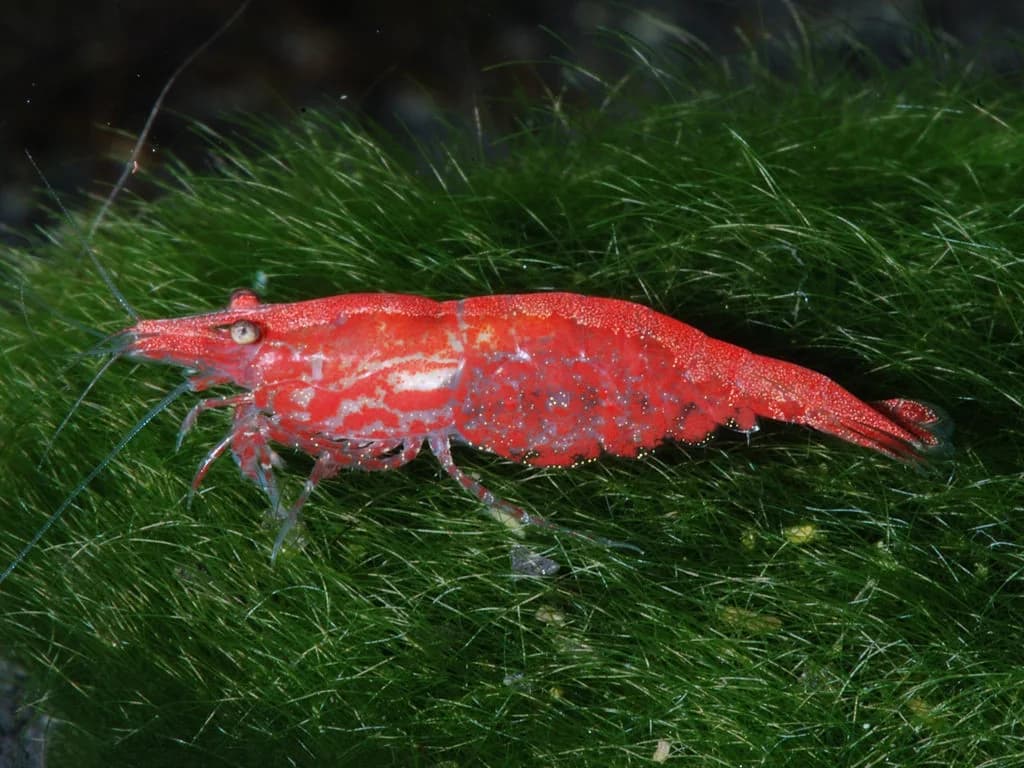
Use a mature, filtered aquarium and measured water—not a shrimp-per-litre rule. Tropical Fish Co uses 20 litres as a cautious starting policy for a small Cherry Shrimp group, above OATA's general 10-litre screen for small shrimp. Provide established grazing surfaces, cover and a protected filter inlet. No fish is guaranteed shrimplet-safe, and breeding should never be promised.
Read the full care guidance when planning conditions for your aquarium.
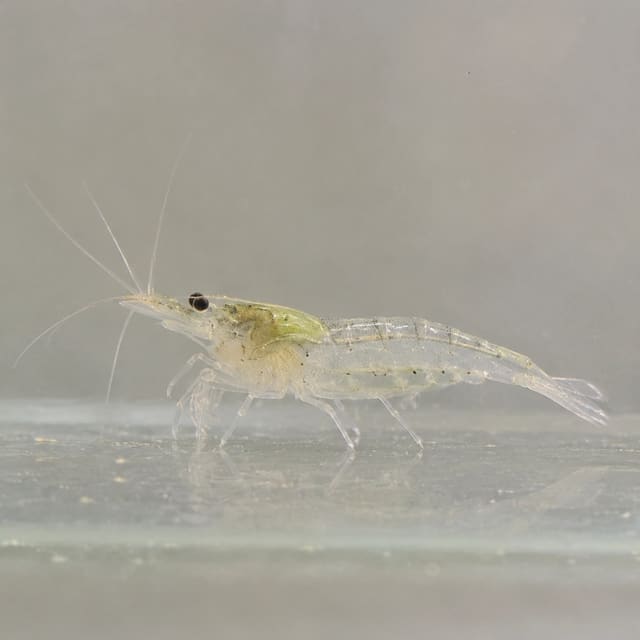
The Green Pearl Shrimp is a green colour line of Neocaridina davidi, the small freshwater shrimp sold in many colours as the cherry shrimp. Rather than a solid, painted green, the shrimp in our photographs has a semi-translucent leaf-green body flecked with tiny pale, pearly dots and finer dark speckles, with clear, lightly speckled legs and long fine antennae. It suits a natural planted tank, where it looks like part of the moss and wood rather than a splash of colour.
Wikipedia's account of the species describes wild Neocaridina davidi, from Taiwan, eastern China, the Korean Peninsula and Vietnam, as a mottled, greenish-brown or brown shrimp. Its colour sits in pigment cells in the flesh and shell, and Wikipedia explains that green shrimp get their colour from a mix of blue-reflecting iridophores and yellow xanthophores. Wikipedia also notes that little has been published on how these colour traits are inherited, which is why every colour line throws some off-colour young.
| Name | What it usually means |
|---|---|
| Green Pearl | This line: a lighter, translucent green N. davidi with pale flecks |
| Green Jade | Another green N. davidi line, with shades that overlap between sellers; we stock it as Green Jade Shrimp and as a single-size Green Jade Shrimp |
| Green Fire | Another trade name for a bright green line; the names overlap between sellers |
| Blue Pearl, Snowball | Shrimp that Practical Fishkeeping lists as Neocaridina cf. zhangjiajiensis, a separate species; see our Blue Pearl Shrimp |
Because green trade names are used loosely, we describe exactly what the photographs show. Whatever the label, a green N. davidi is cared for like every cherry shrimp.
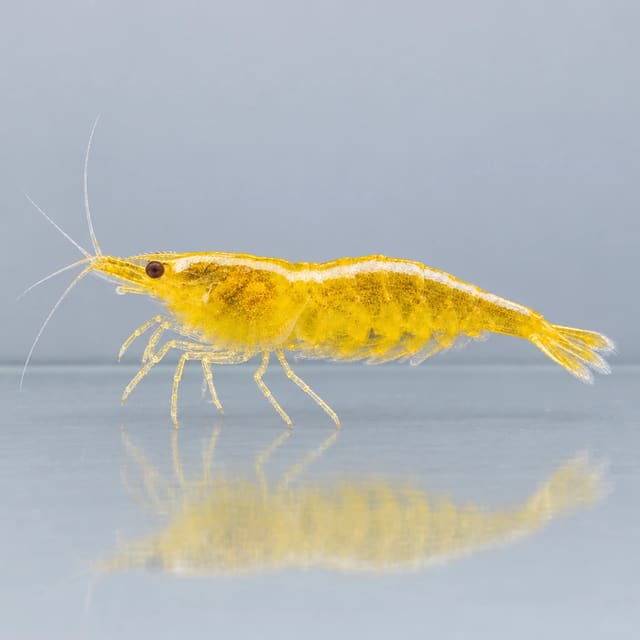
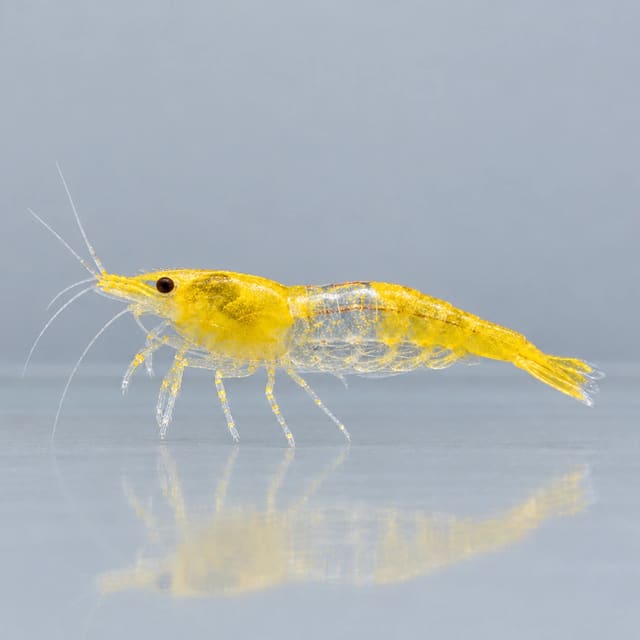
One purchase quantity supplies one live Green Pearl Shrimp, unsexed at sale size. The photographs show the colour form; each shrimp differs a little in shade and in how many pale flecks it carries, and newly moved shrimp are often paler until they settle.
Check our delivery details for live animals before ordering, and have the tank fully cycled first.
Green Pearl Shrimp suit small aquariums, but small is not the same as tiny. OATA's minimum is 10 litres for a group of small shrimp, and the Practical Fishkeeping FAQ says about 15 litres can work if the tank is well planted and filtered. We recommend 20 litres or more, because larger volumes stay stable for longer. Work out your real volume with our tank volume calculator.
| Zone | What to use | Why it helps |
|---|---|---|
| Floor | Fine sand or small gravel, kept shallow | OATA notes foragers need sand or fine gravel; Practical Fishkeeping prefers sand for Neocaridina |
| Wood and stones | Driftwood and smooth, lime-free stones | The Practical Fishkeeping FAQ says plants, moss, wood and stones carry the biofilm and algae shrimp need |
| Moss | A carpet or ball of fine moss | Grazing all day and cover for young shrimp |
| Plants | Fine-leaved, pesticide-free plants | Practical Fishkeeping warns that plant insecticides kill shrimp |
| Top | A close-fitting lid | OATA recommends one to stop shrimp jumping out |
A dark background and substrate make a translucent green shrimp stand out far better than pale sand.
Like every cherry shrimp, the Green Pearl wants clean, stable, medium-hard water more than any particular number. The two UK sources agree closely; the table sets them out parameter by parameter.
| Parameter | OATA (shrimp and snails) | Practical Fishkeeping | Our target |
|---|---|---|---|
| Temperature | 17–27°C | 18–26°C; 21–26°C best for life and breeding | 21–26°C |
| pH | 6.5–8.0 | 6.5–8.0 | 6.5–8.0 |
| General hardness | 4–18 GH | 8–18 GH; 5–15 with middle values best for breeding (Neale Monks) | 8–15 GH |
| Carbonate hardness | 3–15 KH | 5–15 KH | 5–15 KH |
| Ammonia and nitrite | Zero | Even traces of ammonia are fatal; nitrite not tolerated | Zero |
| Nitrate | No more than 20 mg/L above tap water | Not given | As low as you can keep it |
Most medium-hard tap water suits Green Pearl Shrimp once it has been treated with a conditioner that removes chlorine or chloramine, as OATA advises. If your water is very soft, the FAQ recommends a calcium supplement so moults form properly. The FAQ also notes that warmer water speeds growth and breeding but shortens life, so aim for the middle of the range rather than the top.
The Practical Fishkeeping FAQ suggests air-driven sponge filters or Hamburg mat filters for shrimp. With a power filter, cover the intake with fine foam or a stocking held with an elastic band, or pack it with filter wool, so young shrimp stay out.
| Task | How often | Why |
|---|---|---|
| Test ammonia and nitrite | Weekly | OATA's routine; shrimp tolerate neither |
| Change about 25% of the water | Weekly | OATA's routine; keeps nitrate low |
| Siphon debris from the substrate | With each change | Removes the waste that becomes ammonia |
| Match new water's temperature and treat it | Every change | Avoids sudden swings in temperature and chemistry |
| Rinse sponges in old tank water | When flow slows | Protects the filter bacteria |
Our shrimp-keeping guide walks through every step for a first shrimp tank.
Watch a Green Pearl for a minute and you will see it picking at every surface. Wikipedia explains that the species feeds on biofilm, algae and detritus, grabbing food with the small claws on its first two pairs of legs, and does not eat vascular plants. OATA suggests algae wafers or shrimp pellets two or three times a week, left in for at least 30 minutes, and warns against overfeeding.
Cherry shrimp cope with transport well if they are introduced slowly. OATA's method: switch the lights off, float the sealed bag for 10 minutes, add tank water to the bag gradually over at least 30 minutes, then net the shrimp out and leave the bag water behind. Practical Fishkeeping's introduction offers a slower drip at one to two drops a second for about an hour if your water is very different.
| Day | What to look for |
|---|---|
| Arrival | Shrimp walking and grazing within a few hours; some hiding is normal |
| Day one | No food yet; the tank's biofilm is enough |
| Days two to five | Small feeds; every shrimp should come to food |
| Day seven | Water test and first 25% change; a first moult may appear |
Shrimp moult often, and juveniles more often than adults, as Wikipedia notes. Practical Fishkeeping's introduction has a reliable rule for nervous new keepers: a moult is never coloured and a dead shrimp is never transparent. In a translucent green line, check closely: a moult is an empty, hollow shell with no green flesh inside.
| Sign | Likely meaning | First action |
|---|---|---|
| Shrimp stuck part-way out of a moult | Minerals out of balance | Test GH and KH; add calcium in soft water |
| Shrimp at the surface or in the outflow | Low oxygen or too much CO2 (FAQ) | Increase surface movement |
| Deaths after new plants or fertiliser | Copper or pesticide | Water change; remove the new item |
| Deaths after a big filter clean | Ammonia spike (FAQ) | Test and change water |
| White spots, lesions or shell damage | OATA's warning signs | Test the water first, then seek advice |
OATA describes shrimp as very sensitive to copper, which can kill them at low levels; check every medicine and fertiliser label before use.
Green Pearl Shrimp can live with fish, but Practical Fishkeeping's introduction notes that shrimp breed better in a dedicated shrimp tank. OATA's rule is to avoid fish that can fit a shrimp in their mouth and any predatory species. The FAQ rates Otocinclus as completely shrimp-safe, even with newborns, and smaller Corydoras and small plecs as possibly safe.
| Suits | Avoid |
|---|---|
| Golden Otocinclus | Any fish big enough to swallow a shrimp |
| Small Corydoras such as our Mini Cory | Crayfish, large crabs and predatory fish |
| Snails such as our Zebra Horned Nerite Snail | Other cherry shrimp colours, if you want green young |
| Larger shrimp such as the Amano Shrimp, whose larvae need brackish water (OATA) | Copper-based medicines and fertilisers |
Check any other fish with our tank mates tool before adding it, and see more invertebrates in shrimps and crustaceans.
Every cherry shrimp colour is one species, and Practical Fishkeeping is clear that the colour forms all crossbreed and that crossed colonies revert to the brownish wild type within a few generations. With a green line that drift can be hard to spot at first, because the wild type is itself greenish-brown.
Browse every colour in our cherry shrimp range and the Neocaridina category.
A translucent shrimp makes breeding easy to follow. Wikipedia notes that in transparent forms the female's developing ovary shows as a "saddle" on her back when she is ready to mate. Every egg-carrying female has mated, because the eggs are fertilised as they leave her body. The eggs are green or yellow, depending on the colour of the saddle, and darken as they develop.
| Stage | What the sources say |
|---|---|
| Clutch | 20–30 eggs carried under the tail (Wikipedia) |
| Carrying time | 2–3 weeks (Wikipedia); about three weeks to a month (Practical Fishkeeping) |
| Young | About 1 mm, no larval stage, no parental care |
| Nursery | A mature tank, because the FAQ says newer tanks lack the micro-organisms young shrimp need; moss for cover |
| Lifespan | 1–2 years (Wikipedia); rarely beyond 12–18 months (Practical Fishkeeping) |
First-time or stressed females sometimes drop their eggs, Wikipedia adds, so keep conditions steady. Never release surplus shrimp outdoors: a peer-reviewed study in Aquatic Invasions found Neocaridina davidi established in a warmed stream system in Germany and suggested it may tolerate much colder conditions. Our cherry shrimp care guide covers colony management, our freshwater shrimp guide compares the main groups, and all freshwater shrimp are listed in one place.
Both are green lines of Neocaridina davidi and they interbreed. The Green Pearl in our photographs is light and translucent with pale flecks; compare it with the Green Jade photographs, because green trade names overlap.
Only by name. Practical Fishkeeping lists Blue Pearl and Snowball as Neocaridina cf. zhangjiajiensis. Our Green Pearl is sold as Neocaridina davidi and is cared for exactly like any cherry shrimp.
Six or more. OATA asks for at least five shrimp and Practical Fishkeeping suggests six, because small groups become shy and a larger group widens the gene pool.
No. Wikipedia notes that the species feeds on biofilm, algae and detritus and does not eat vascular plants. It will clean the leaves rather than damage them.
Yes, once adult. Females are larger, with a wider tail for carrying eggs, and are more richly coloured. In this translucent line you can often see the female's egg saddle behind the head.
Not in a warm room. They tolerate about 18–28°C, but Practical Fishkeeping says they live longest and breed best at 21–26°C, so heat a tank that sits in a cool room.
Yes, with small, peaceful fish such as Otocinclus and small Corydoras. Practical Fishkeeping notes shrimp breed better in a dedicated tank, because even small fish take the young.
Colour often fades after a move or under stress and returns as the shrimp settle. A darker substrate and a varied diet help the green show.
No reviews for this item yet. Bought one? Honest reviews only, good or bad.
What customers say about ordering from us
Easy website plenty of info on fish your buying great to pick a time slot
TRACEY DURRANT · 7 Oct 2026
Got some lovely fish thank you
Kevin Mackie · 7 Oct 2026
Reviews of our shop, collected by Judge.me, an independent third-party review collector. Newest first.
Moved by UK carriers licensed to handle live animals
Hand-packed with oxygen bags, poly box, heat pack
Email photos the same day; an optional unboxing video helps us review problems faster — claim terms apply
Klarna & PayPal Pay in 3 at checkout