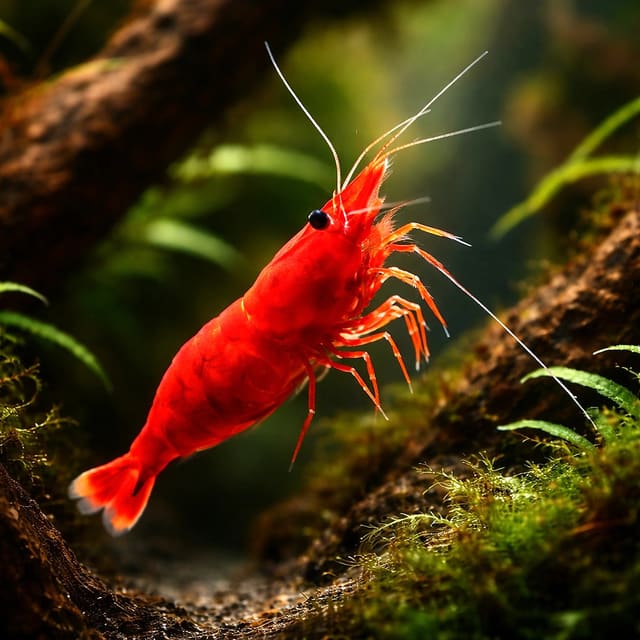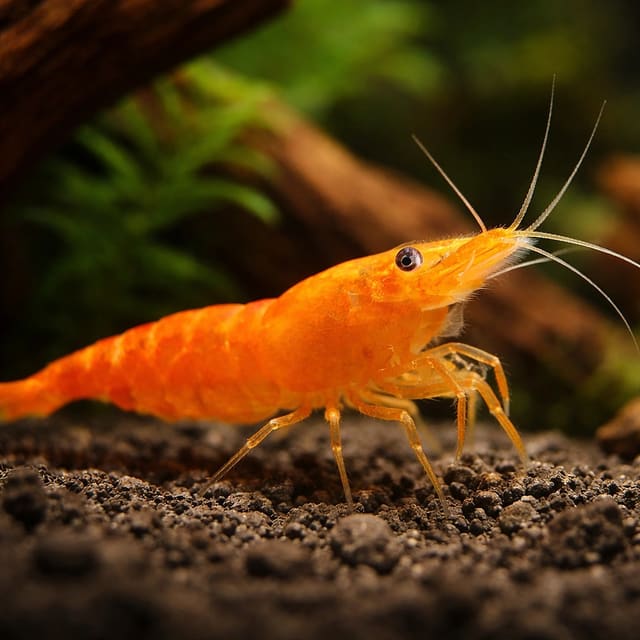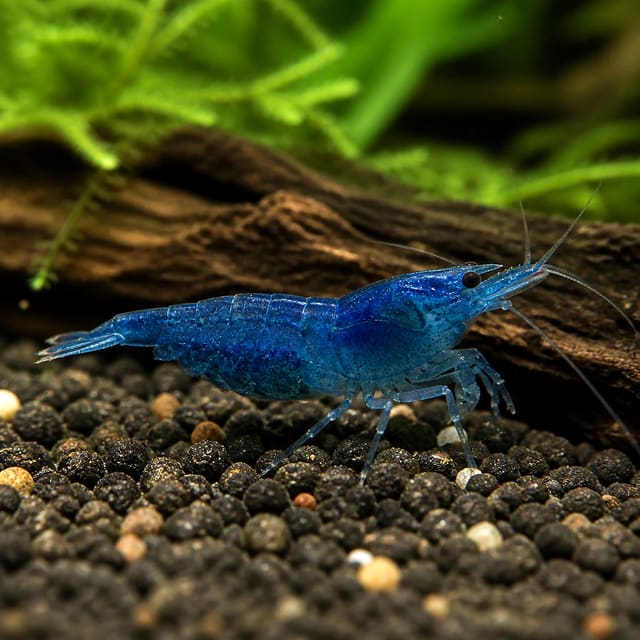
Easy
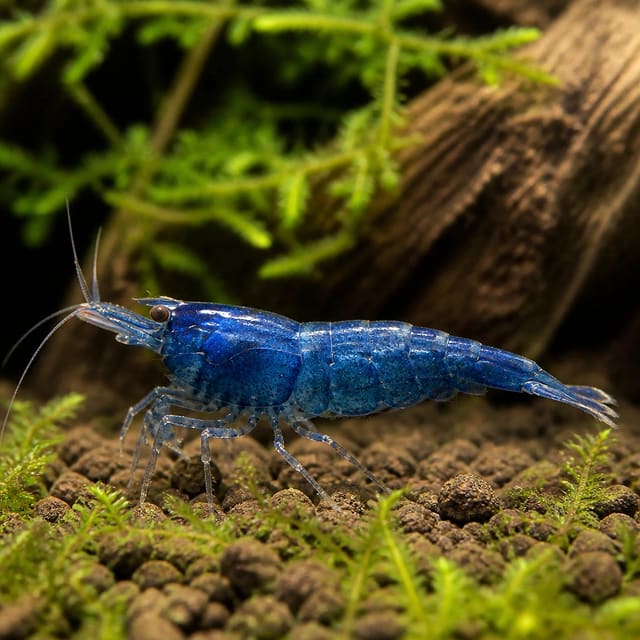
Blue Dream Shrimp (Neocaridina davidi)
18–28°C · pH 6.5–8 · 20L
£16.19

Green Jade Shrimp (Neocaridina davidi) is a selectively bred green freshwater shrimp for mature, filtered aquariums with established grazing surfaces and protected filter intakes. One purchase supplies one unsexed shrimp in a 1–1.5 cm or 2–2.5 cm size band; plan a group rather than keeping this social invertebrate alone.
Neocaridina davidi
Lives in groups: kept together they stay settled, active and show their best colour.
Green Jade Shrimp (Neocaridina davidi) is a selectively bred green freshwater shrimp for mature, filtered aquariums with established grazing surfaces and protected filter intakes. One purchase supplies one unsexed shrimp in a 1–1.5 cm or 2–2.5 cm size band; plan a group rather than keeping this social invertebrate alone.
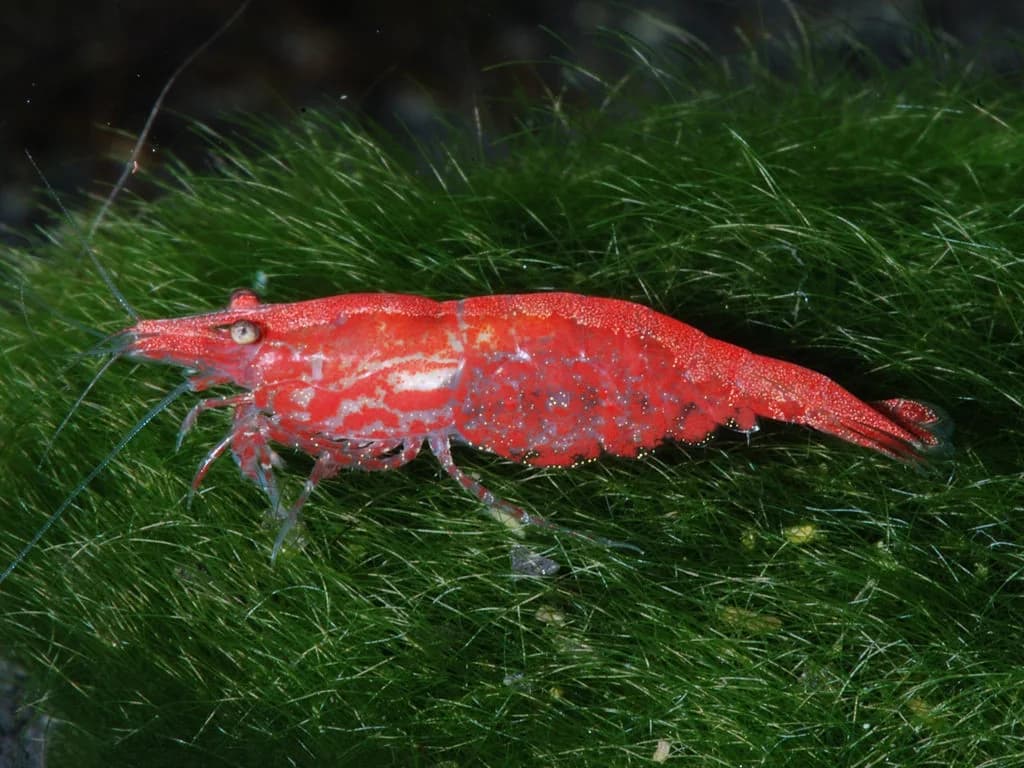
Use a mature, filtered aquarium and measured water—not a shrimp-per-litre rule. Tropical Fish Co uses 20 litres as a cautious starting policy for a small Cherry Shrimp group, above OATA's general 10-litre screen for small shrimp. Provide established grazing surfaces, cover and a protected filter inlet. No fish is guaranteed shrimplet-safe, and breeding should never be promised.
Maintain these water conditions for optimal health and vibrant colors
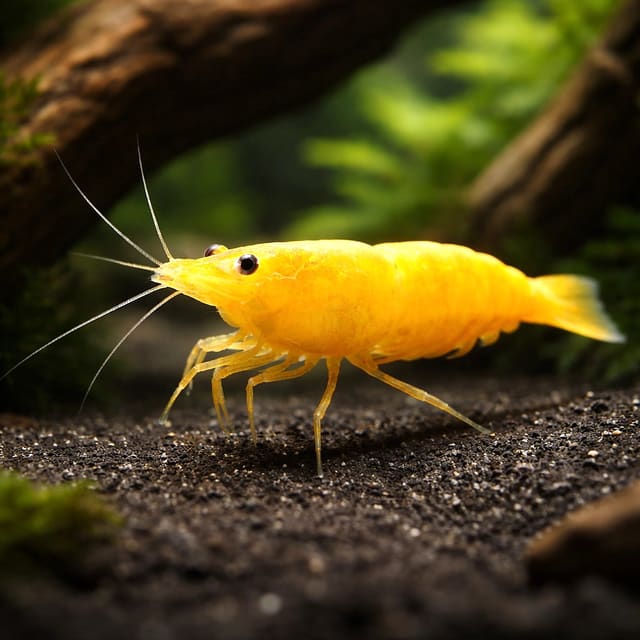
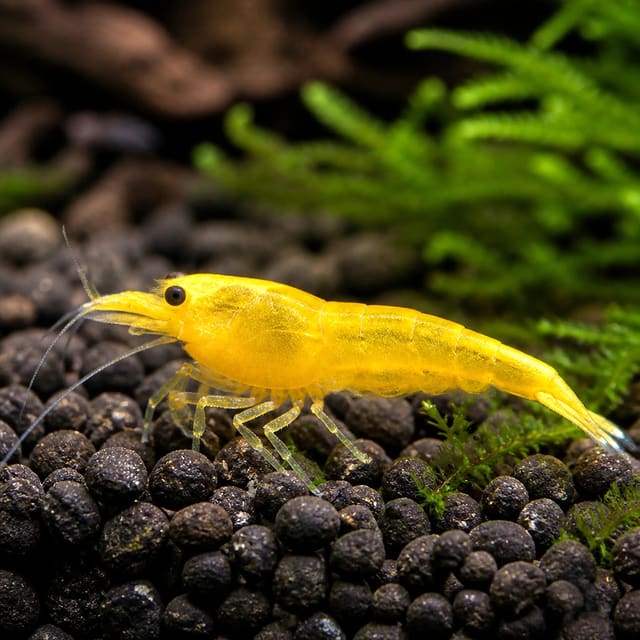
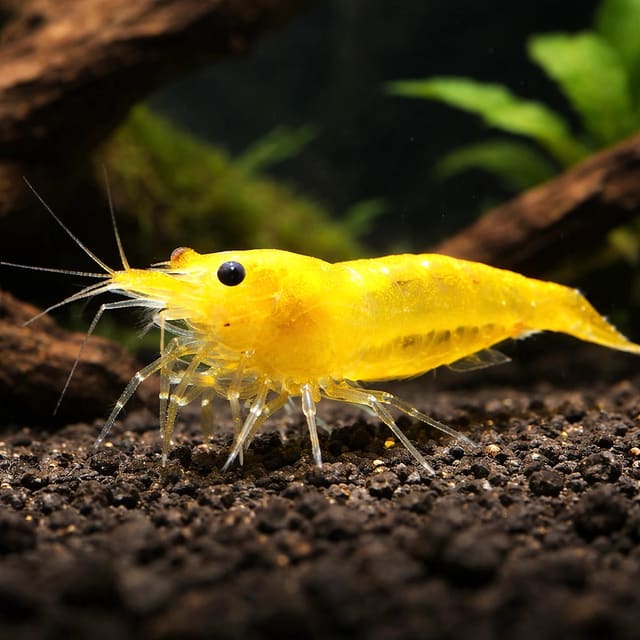
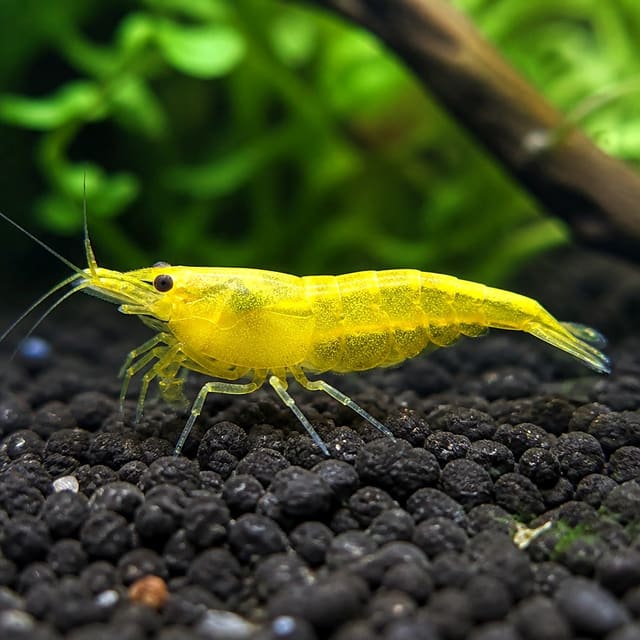
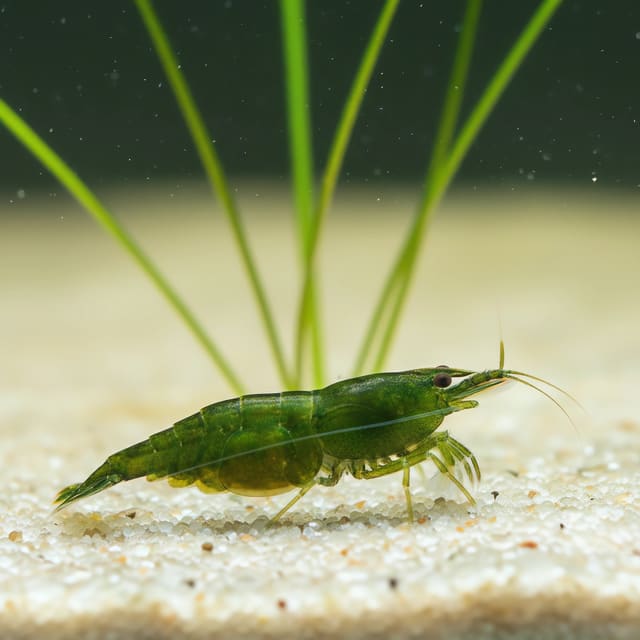
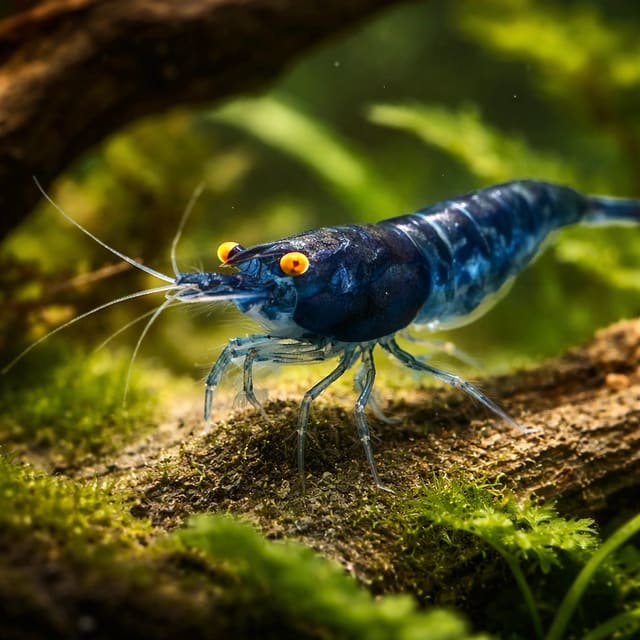
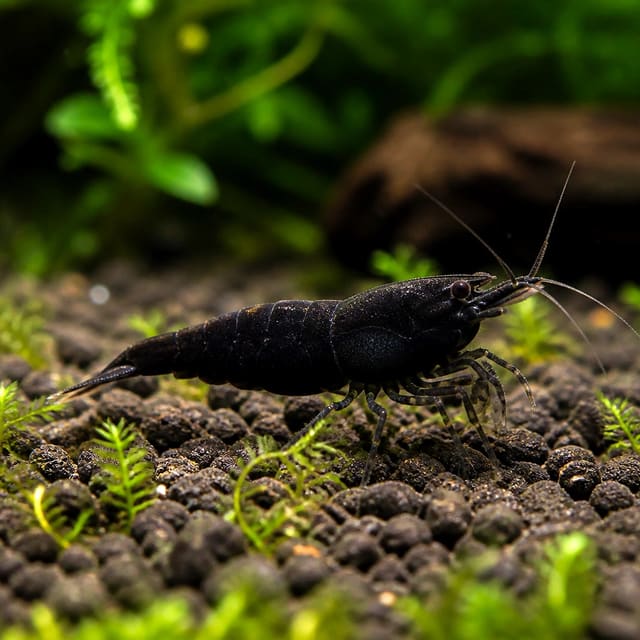
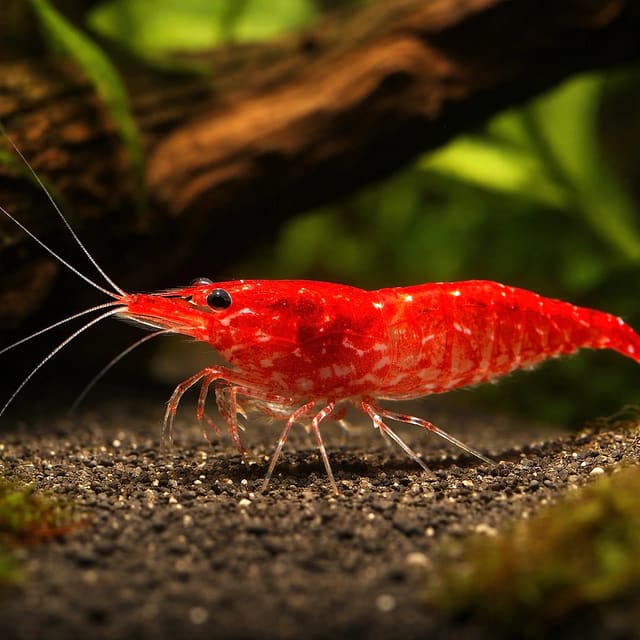
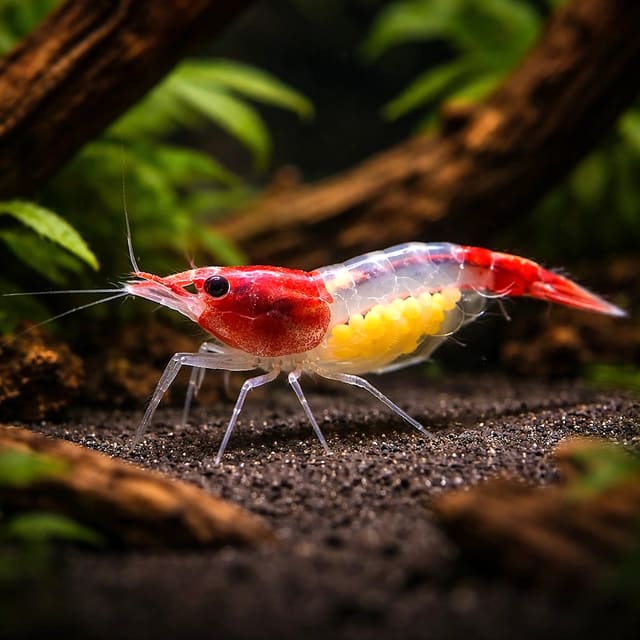
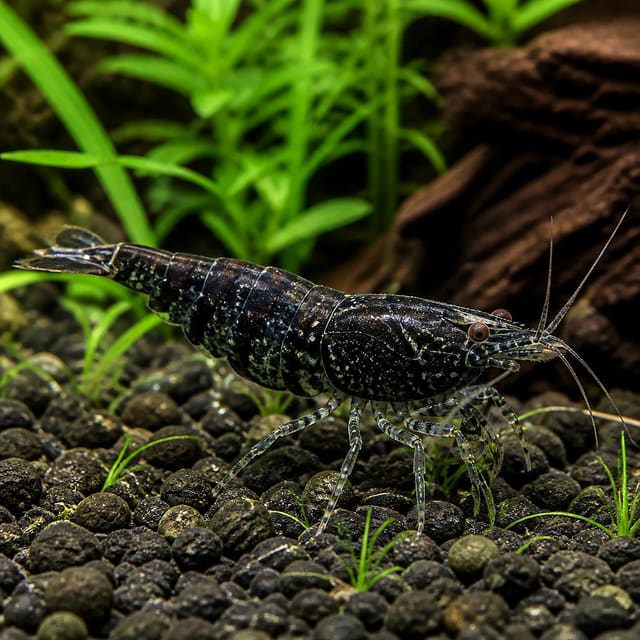
Green Jade Shrimp is a green aquarium colour form of Neocaridina davidi, an accepted freshwater shrimp species in the family Atyidae. The green mottling can range from bright yellow-green to deeper olive, and translucent areas may remain visible. It is a small, peaceful grazer that works best in a mature aquarium where biofilm, shelter and stable water are already present.
One purchase supplies one live shrimp in the size band chosen at checkout: 1–1.5 cm or 2–2.5 cm. These are dispatch sizes. The size you select is the size supplied, not the adult size. A general species summary describes mature N. davidi at roughly 3–4 cm, while OATA's broader small-shrimp guidance uses about 3 cm. Those records have different scopes, so this listing does not turn either into a sex- or lineage-specific maximum.
Sex is guaranteed only when the selected option explicitly states male or female. This Green Jade Shrimp listing has no sex-guaranteed option. Body shape or colour in the gallery does not guarantee the sex of the shrimp supplied. One quantity means one shrimp, not a pair or colony. Because OATA describes small freshwater shrimp as social and recommends a group of at least five, plan the total starting group before ordering individual quantities.
| Suits | Keepers with a mature, filtered shrimp aquarium and time to measure water, feed lightly and protect tiny animals from equipment and predators |
|---|---|
| Scientific identity | Neocaridina davidi, family Atyidae; Green Jade is the trade colour form |
| Sold unit | One live, unsexed shrimp per purchase |
| Dispatch sizes | 1–1.5 cm or 2–2.5 cm |
| Adult records | About 3–4 cm in a general species summary; about 3 cm in broad small-shrimp guidance |
| Starting group | At least five under OATA's broad social-shrimp guidance |
| Store planning policy | A mature 20-litre aquarium as a cautious starting point for a small group, adjusted for every companion and possible juveniles |
| Care assessment | Intermediate: small size does not remove the need for mature filtration, stable water, careful feeding and predator screening |
The supplier identity is Neocaridina davidi with the trade description Green Jade. WoRMS accepts Neocaridina davidi in Atyidae. Green Jade describes the selected colour line; it is not a separate species name and does not justify adding a third Latin word to the binomial.
The general species summary for N. davidi places the species in East Asia and describes many selectively bred aquarium colours, including green. Natural colour, aquarium lighting, background, food, age, stress and camera processing can all influence what a shrimp looks like at a particular moment. Buy for the named line and welfare needs without expecting every individual to match one shade chip.
If colour-line purity matters, keep one confirmed line in its own aquarium. Mixing different Neocaridina davidi colours may produce offspring with less predictable appearance over generations. That is a breeding-project decision, not a reason to compromise water quality or group welfare.
A small body does not make a newly filled bowl safe. Shrimp graze continuously over surfaces, and their food and waste still enter the nitrogen cycle. A mature system offers established biological filtration, stable test results and developed surfaces for grazing. It also gives the keeper time to find intake hazards, temperature swings and maintenance problems before delicate livestock is present.
The complete Cherry Shrimp care guide explains the store's cautious 20-litre starting policy, broad group values and the difference between a home aquarium and a controlled culture experiment. Use it to plan the system, then return to this listing for the exact Green Jade offer.
Browse the Cherry Shrimp collection when comparing colour forms. Similar colour names do not prove identical lineage, grade or adult appearance, and another product is an alternative rather than an automatic tank-mate recommendation.
OATA gives 10 litres as a general screen for a group of small freshwater shrimp. Tropical Fish Co uses a mature 20-litre aquarium as a more cautious starting policy because extra water volume and floor area provide more headroom for filtration, feeding, equipment and change. Neither figure is a permanent shrimp-per-litre formula or a promise that every 20-litre aquarium is ready.
Use the true water volume after substrate, wood, rocks and equipment, then account for all other animals and the possibility of juveniles. A long, planted footprint usually offers more useful grazing and cover than a narrow decorative vessel of the same nominal capacity. If fish are present, or if the group may grow, plan larger.
The freshwater shrimp setup guide walks through cycling, intake protection, plants, feeding areas and early maintenance. Set up the aquarium first and allow biological processes and grazing surfaces to develop. Maturity is demonstrated by stable measurements and filter performance, not by a fixed number of days.
Use aquarium-safe wood, rock, mosses and other plants to create a mix of shaded surfaces, fine cover and open viewing areas. Leaf litter can add grazing surface when it is a known aquarium-safe species and used in a controlled amount. Keep enough open space to remove waste and inspect the animals without dismantling the tank.
Cover matters most during and after moulting, when shrimp may remain hidden and the new exoskeleton hardens. Dense plant growth and small crevices can give refuge, but avoid unstable piles or holes that trap debris. Keep the foreground accessible for feeding and observation so a missing shrimp does not require constant disturbance.
A lid reduces escape risk and limits household contamination, but it must allow cables and air lines to run safely. Keep aerosols, cleaning sprays, paint fumes and hand creams away from the aquarium. Rinse hands thoroughly in plain water before contact and use dedicated buckets, nets and siphons.
Shrimp and especially juveniles can enter slots that look harmless. Fit a fine pre-filter sponge or purpose-made guard over intakes, then inspect it often enough that flow is not choked. Check internal-filter vents, surface skimmers, overflow teeth and gaps around removable cartridges as well as the obvious main intake.
Gentle circulation should carry oxygen and nutrients without tumbling the shrimp or stripping all fine food from grazing areas. Watch how animals move and feed across the tank. If they are continually pushed from exposed areas, redirect the outlet or add sheltered zones without creating stagnant pockets.
The RSPCA explains the role of aquarium filtration: toxic ammonia is converted by beneficial bacteria through nitrite towards nitrate. Green Jade Shrimp should enter only after tests show ammonia and nitrite at zero and the filter has been proven under the expected load.
OATA's freshwater aquarium setup guidance also emphasises cycling, water testing and gradual stocking. Add the planned group thoughtfully rather than increasing livestock faster than the filter can adjust. Test again after arrival, heavier feeding, filter maintenance, plant die-back or any power interruption.
Preserve established biological media. Do not run biological filter media under the tap, because chlorine or chloramine can kill beneficial bacteria. Rinse it gently in removed aquarium water when necessary, and avoid changing every piece of mature material together. Mechanical sponges can be cleaned more frequently if flow falls, but leave enough mature material undisturbed to support the nitrogen cycle.
OATA's broad freshwater shrimp and snail guidance gives 17–27°C, pH 6.5–8.0 and general hardness of 4–18 dGH. These are group-level planning values, not controlled species limits for every Neocaridina davidi line. The range is wide because the guide covers more than one kind of invertebrate.
Use the water-chemistry guide to understand the tests, then compare your measured values with the seller's current holding water using the water matcher. Stability and a gradual transition are more useful than chasing a fashionable target with repeated chemical corrections.
| Temperature | 17–27°C in OATA's broad shrimp-and-snail guidance; not a species-specific tolerance claim |
|---|---|
| pH | 6.5–8.0 in the same broad guidance |
| General hardness | 4–18 dGH in the same broad guidance |
| Ammonia | Zero measured |
| Nitrite | Zero measured |
| Decision method | Compare measured holding and aquarium water, then avoid abrupt changes |
UK tap water varies by supply and can also change after passing through household equipment. Test the aquarium itself, because substrate, stone, top-ups and water changes can alter chemistry. A reading from months ago or from a postcode tool cannot replace a fresh aquarium test.
Use a guarded, thermostatically controlled heater only when the room and aquarium cannot remain stable without one. In a warm room, overheating may be the greater risk. Confirm temperature with a separate reliable thermometer and leave safe airflow around electrical equipment.
Green Jade Shrimp will graze biofilm, soft growth and fine organic material from surfaces, but grazing does not guarantee complete nutrition and the shrimp is not a maintenance tool. Use an appropriate complete sinking shrimp food as the base, then offer suitable variety in small portions. Follow the product label and adjust from observation.
Choose a feeding spot where every shrimp can reach food and leftovers can be removed. Watch whether food is gone promptly, repeatedly remains, or attracts only fish and snails. Reduce the next portion when excess remains. If the group grows or juveniles appear, reassess access rather than simply doubling the amount.
Blanched vegetables can be an occasional addition when prepared safely and removed before they deteriorate, but they are not a complete diet. Leaves and algae also vary in nutritional value. Avoid using colour-enhancing food as a substitute for stable care; lineage, background, lighting, age and health all affect appearance.
Overfeeding can raise waste, fuel bacterial growth and reduce oxygen. Underfeeding can leave newly arrived or subordinate shrimp without reliable access. A simple feeding log with food, amount, removal time and water-test trends makes adjustment more accurate than a universal meals-per-week rule.
Shrimp grow by shedding the exoskeleton. An empty shell may look like a dead animal, so inspect carefully before removing it. A moult can be left briefly for the shrimp to graze when water quality is good; remove it if it is fouling the aquarium or if disease is suspected.
Do not add calcium, mineral powders or hardness salts automatically. Measure hardness, identify what the product changes and calculate the dose for actual water volume. Sudden chemistry changes can be more harmful than a value that was already stable. If moulting problems occur, test water and review diet, temperature, recent maintenance and contamination before reaching for an additive.
Check temperature, filter flow, intake guards and animal behaviour daily. Test ammonia and nitrite regularly and track nitrate, pH and hardness in context. Use partial water changes sized to the aquarium's measured trend rather than changing a dramatic amount on an arbitrary calendar.
Prepare replacement water before disturbing the tank. Treat it for chlorine or chloramine according to the conditioner label, match temperature and chemistry closely, and add it steadily. Avoid exposing shrimp to sudden flow or leaving them stranded on decor as the water level falls.
Siphon open areas carefully and inspect the bucket before disposal because tiny juveniles are easy to miss. Clean one area at a time, retain mature surfaces and trim plants gradually. A spotless aquarium is not the goal; stable water, functioning equipment and accessible mature grazing areas are.
Neocaridina davidi has direct or abbreviated development: females carry eggs beneath the abdomen and young hatch as benthic juveniles rather than needing the prolonged saline larval phase associated with Amano Shrimp. That biology makes home reproduction possible, but it does not guarantee a colony from any purchase.
This listing is unsexed, so no sex ratio is promised. Age, sex, temperature, food, lineage, predation and cover all affect what happens. Protect intakes, maintain mature grazing surfaces and dense fine cover, then allow the animals to settle without repeated rearrangement. If maximising juvenile survival is the aim, a shrimp-only aquarium removes fish predation but not water-quality or feeding risks.
Keep a single colour line if predictable Green Jade offspring matter. Mixing colour forms may produce variable offspring over generations. Never release unwanted shrimp, plants or aquarium water into natural waterways; rehome livestock responsibly and dispose of water where it cannot reach the wild.
Read every label before use. OATA states that freshwater shrimp are very sensitive to copper and will die if exposed even to low levels. Do not infer that a medicine, plant fertiliser or algaecide is shrimp-safe because it was safe for fish or because a tiny amount sounds harmless.
If illness or abnormal behaviour appears, test water and equipment first. Photograph the animal, note recent additions and seek suitably qualified aquatic or veterinary advice. Avoid treating an unknown problem with several products, and use a separate hospital container only when it can provide stable, shrimp-appropriate conditions.
Keep a simple record of temperature, ammonia, nitrite, nitrate where used, pH, hardness, water changes, feeding and filter work. Add what the shrimp were doing: visible grazing, hiding, moulting, crowding at the surface, unusual inactivity or repeated attempts to leave the water. A single hidden shrimp is not automatically a crisis, but a shared change in behaviour across the group deserves an immediate equipment and water check.
Make one measured correction at a time whenever conditions allow. Simultaneously changing food, minerals, temperature and a large amount of water can hide the cause and create new instability. If a test result is unexpected, repeat it according to the kit instructions, check expiry dates and compare with a known sample before dosing anything. Record the amount of conditioner or other product used for the aquarium's actual water volume.
Plan for short disruptions. Keep spare intake sponge, a clean shrimp-safe container, water conditioner, a thermometer and battery air support where appropriate. During a power cut, preserve oxygen and temperature while avoiding unnecessary disturbance. After flow returns, confirm that the filter restarts properly and test the water rather than assuming normal appearance means normal chemistry.
Count the group from a calm distance at feeding time instead of repeatedly lifting wood or plants. Check females carrying eggs and newly seen juveniles without promising a breeding result. As the colony changes, reassess feeding access, waste, intake protection and the 20-litre starting plan. The useful question is whether the whole aquarium remains stable for its present population, not whether it once met a minimum on setup day.
Green Jade Shrimp are peaceful towards aquarium companions, but their lack of aggression does not make fish harmless to them. OATA advises against mixing freshwater shrimp with fish that can fit them in the mouth or species known to be predatory. Newly hatched juveniles are much smaller than adults, so a fish that ignores a large shrimp may still reduce juvenile survival.
A shrimp-only aquarium gives the clearest route to observing natural grazing, moulting and breeding without fish predation. It does not remove every risk: food competition, crowding, unstable water, unsafe intakes and disease still need management. Decide whether the goal is attractive coexistence with some losses or the strongest chance of colony growth.
| Best for colony growth | A mature shrimp-focused aquarium with protected intakes and dense fine cover |
|---|---|
| Avoid | Predatory fish and any animal able to swallow the shrimp |
| Use caution | Every fish, including small peaceful species, because shrimplets may be eaten |
| Usually compatible in behaviour | Peaceful snails with overlapping water needs, after species-specific checks |
| Colour-line goal | Keep one confirmed N. davidi colour line if predictable appearance matters |
Do not use a list of named peaceful fish as a guarantee. Individual behaviour, hunger, group size and layout all matter. Even when adult shrimp remain visible, missing juveniles can show that the aquarium is not a nursery-safe system.
Peaceful snails can often share a mature aquarium when their temperature, hardness, diet and adult size overlap, but they add waste and compete for food. Check the exact snail rather than relying on the word snail. Avoid crayfish and other predatory or territorial crustaceans that can seize shrimp, especially during moulting.
Mixing other Neocaridina davidi colour forms is a welfare-compatible choice when the water and care match, but it may change the appearance of future generations. Keep separate lines if the Green Jade colour is a breeding priority. Species from a different genus may need different water or temperature even when they look similar.
Have the aquarium stable and the intake protection fitted before the parcel is opened. Dim lighting and quiet surroundings can reduce disturbance. Follow the current animal-specific arrival instructions and compare the transport and aquarium water before transfer.
After introduction, confirm the shrimp can walk normally, use cover and reach food. Do not repeatedly move decor to make a hiding animal visible. Test water if several shrimp become unusually inactive, climb towards the surface or attempt to leave the water.
Start with at least five under the broad social-shrimp guidance and size the aquarium around filtration, feeding area, every companion and possible juveniles. There is no reliable permanent shrimp-per-litre shortcut. If fish predation or food competition cannot be managed, use a separate shrimp aquarium rather than trying to solve the problem with more cover alone.
A general Neocaridina davidi summary describes adults at about 3–4 cm, while OATA's broad small-shrimp guidance uses about 3 cm. These different records are not interchangeable with the 1–1.5 cm and 2–2.5 cm dispatch sizes, and neither is a sex- or lineage-specific maximum.
OATA gives 10 litres as a general screen for a small-shrimp group. Tropical Fish Co uses a mature 20-litre aquarium as a more cautious starting policy, then increases the plan for fish, other livestock and possible juveniles. Neither number is a permanent shrimp-per-litre rule.
Plan at least five under OATA's broad guidance for social shrimp. This listing supplies one unsexed shrimp per purchase, so choose the required quantity deliberately and do not assume any particular sex ratio.
This store treats it as intermediate care. The shrimp is peaceful and adaptable, but it still needs mature filtration, stable measured water, protected intakes, controlled feeding and careful screening of fish and medicines.
It grazes biofilm and soft growth, but use an appropriate complete sinking shrimp food as the nutritional base. Offer small controlled portions, make sure every shrimp can reach food and remove recurring excess before it fouls the water.
OATA's broad freshwater shrimp and snail guidance gives 17–27°C, pH 6.5–8.0 and 4–18 dGH. These are group-level planning values rather than controlled limits for every Green Jade line. Compare measured holding and aquarium water and avoid abrupt changes.
It is peaceful, but no fish is automatically safe with adults or tiny juveniles. Avoid predators and any animal able to swallow the shrimp. A shrimp-only aquarium gives the strongest chance of colony growth; peaceful snails still need their own water and diet checks.
Neocaridina davidi females carry eggs beneath the abdomen and young hatch as benthic juveniles without an Amano-style saline larval stage. This makes freshwater reproduction possible, but an unsexed purchase, water conditions, food and predation mean a colony cannot be promised.
Tropical Fish Co hand-packs livestock in an insulated box and uses a licensed live-animal courier. Read the current delivery and Live Arrival Guarantee terms before arrival. If a claim is needed, contact the store the same day with the order number and a continuous unboxing video that begins with the sealed parcel and shows the shrimp still in its bag.
Supplier identity is preserved as Neocaridina davidi with the Green Jade trade colour and 1–1.5 cm or 2–2.5 cm dispatch grades. Supplier care parameters were not used.
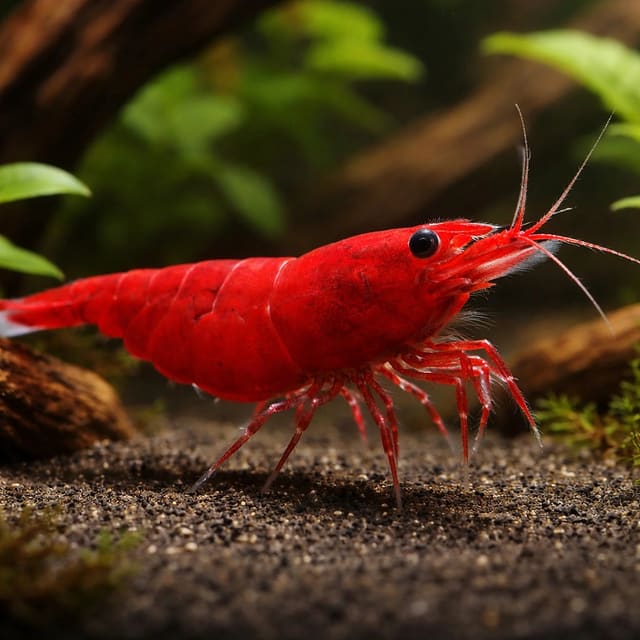
Gallery images have been digitally enhanced to improve image quality. Natural colour, pattern, size and maturity can vary between live animals.
No reviews for this item yet. Bought one? Honest reviews only, good or bad.
What customers say about ordering from us
I have a small group of long finned mountain minnows. So was delighted to be able to order ten of this variety to increase the genetics in my tank . The ones I recieved are healthy but it’s to early to give a verdict on wether they are of a long finned type since they are small currently.
Gordon Walker · 23 Sept 2026
100% success travel and "installation". Pleased with quality of purchase. The Siamese fighter a bit "shy" so have not yet seen him at his best yet but looking good. Happy customer. GG
George E Garratt · 21 Sept 2026
Reviews of our shop, collected by Judge.me, an independent third-party review collector. Newest first.