Easy
Blue Dream Shrimp (Neocaridina davidi)
18–28°C · pH 6.5–8 · 20L
£16.19
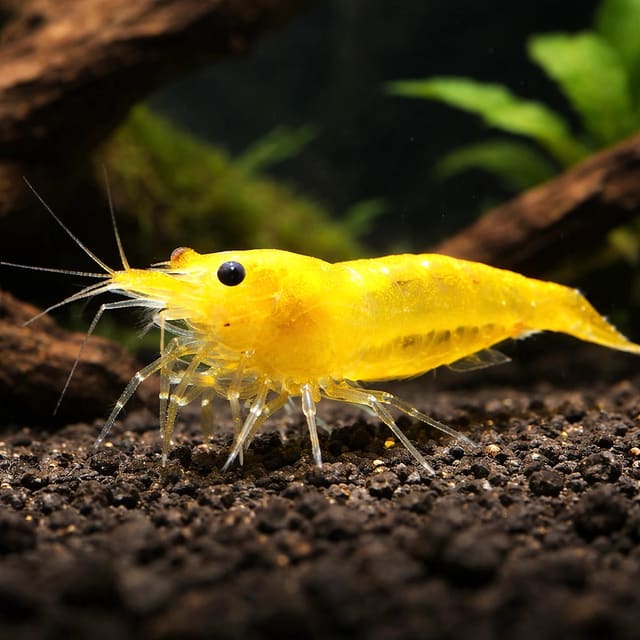
Neocaridina davidi yellow is a selectively bred yellow form of the cherry shrimp species, sold as one live shrimp per purchase at 1–1.5 cm or 2–2.5 cm. Adults reach about 3–4 cm, and the species needs a mature, filtered aquarium, stable water and no fish large enough to eat it.
Adult size is the maximum length this species reaches at full maturity (scientific sources). The livestock you receive will be younger and smaller — pick a size above for the actual shipping size. Product-photo provenance and any image-specific limitations are stated on the listing.
Neocaridina davidi
Lives in groups: kept together they stay settled, active and show their best colour.
Neocaridina davidi yellow is a selectively bred yellow form of the cherry shrimp species, sold as one live shrimp per purchase at 1–1.5 cm or 2–2.5 cm. Adults reach about 3–4 cm, and the species needs a mature, filtered aquarium, stable water and no fish large enough to eat it.
Adult size is the maximum length this species reaches at full maturity (scientific sources). The livestock you receive will be younger and smaller — pick a size above for the actual shipping size. Product-photo provenance and any image-specific limitations are stated on the listing.
Use a mature, filtered aquarium and measured water—not a shrimp-per-litre rule. Tropical Fish Co uses 20 litres as a cautious starting policy for a small Cherry Shrimp group, above OATA's general 10-litre screen for small shrimp. Provide established grazing surfaces, cover and a protected filter inlet. No fish is guaranteed shrimplet-safe, and breeding should never be promised.
Maintain these water conditions for optimal health and vibrant colors
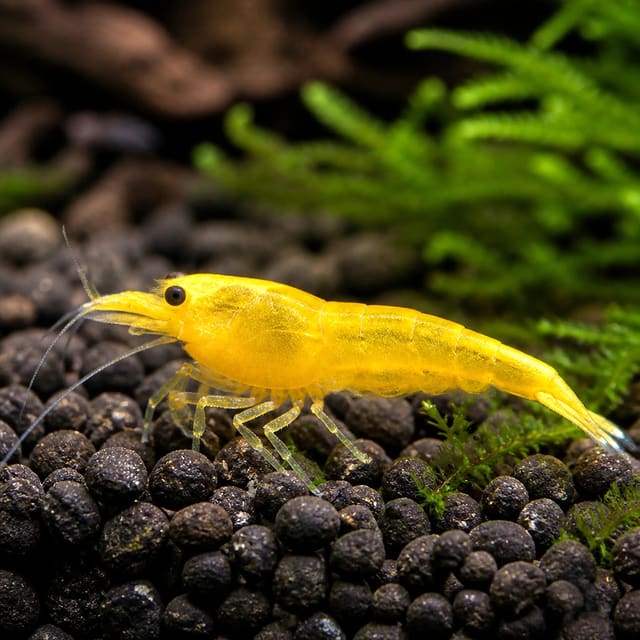
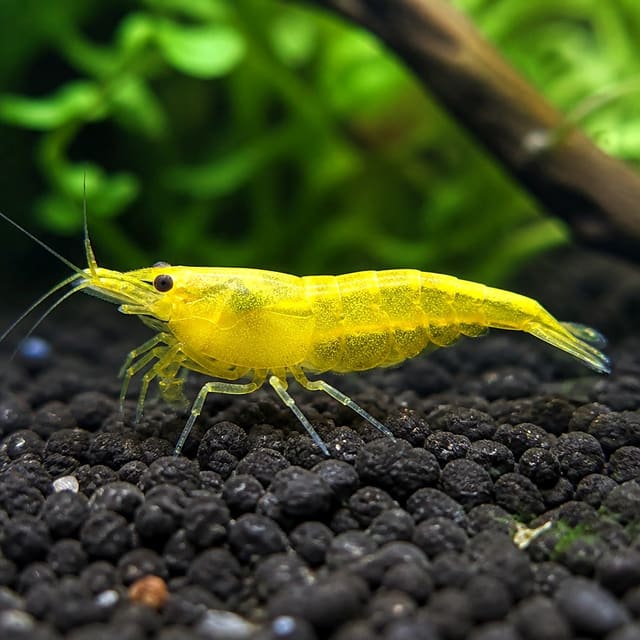
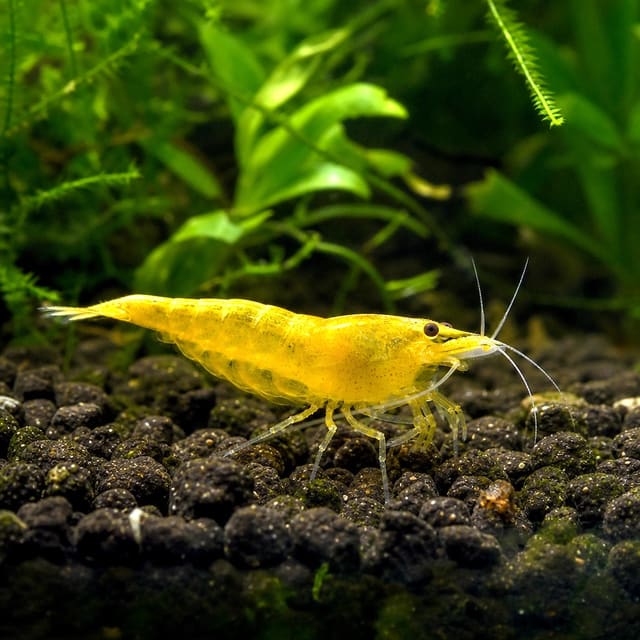
Neocaridina davidi yellow is a bright yellow aquarium colour form of Neocaridina davidi, the small freshwater shrimp also known as the cherry shrimp. It is sold here as one live shrimp per purchase, at 1–1.5 cm or 2–2.5 cm. Before anything else, check the home it is going to: a mature, filtered aquarium with measured zero ammonia and nitrite, and no fish large enough to fit a shrimp in its mouth.
The accepted scientific name is Neocaridina davidi (Bouvier, 1904), a species in the shrimp family Atyidae, as shown in its World Register of Marine Species (WoRMS) record. Wild shrimp come from Taiwan, eastern China, the Korean Peninsula and Vietnam, where they live in lakes, ponds, rivers and streams. The wild type is a mottled brown. Yellow, red, blue and the other hobby colours were produced by selective breeding, as the Wikipedia summary for the species explains, so this yellow shrimp shares its basic care with every other colour of the same species.
| Suits | A mature, filtered aquarium kept by someone who tests the water and keeps shrimp-eating fish out |
|---|---|
| Sold as | One live shrimp per purchase |
| Sizes supplied | 1–1.5 cm or 2–2.5 cm |
| Adult length | About 3–4 cm at maturity |
| Water planning range | 17–27°C, pH 6.5–8.0 and 4–18 °dH, from OATA's guidance for freshwater shrimp as a group |
| Diet | Omnivorous grazer: biofilm and soft algae, backed up by a complete shrimp food |
| Temperament | Peaceful; the risk runs from fish to shrimp, not the other way round |
| Group | OATA advises keeping social shrimp in groups of at least five |
The size you select is the size supplied, not the adult size. A 1–1.5 cm shrimp has most of its growing still ahead of it, while a 2–2.5 cm shrimp is closer to the 3–4 cm length the species reaches at maturity. Both sizes need the same water, the same food and the same safe company, so the right choice depends on your plans for the group rather than on the aquarium itself.
Every purchase is for one live shrimp, and the quantity you add to your basket is the number of shrimp you receive. Buying several together suits a species that lives in groups. If you are still choosing a colour, our cherry shrimp collection shows the other colour forms of the species side by side.
Because OATA advises keeping social shrimp in groups of at least five, plan to order several shrimp rather than a single one, and let the capacity of your filter, rather than the size of the basket, decide how quickly the group grows after that.
Sex is guaranteed only when the selected option explicitly states male or female. This Neocaridina davidi yellow listing has no sex-guaranteed option. Because the shrimp are not sexed, a group bought together does not come with a set mix of males and females, and young shrimp are a possibility rather than part of the purchase.
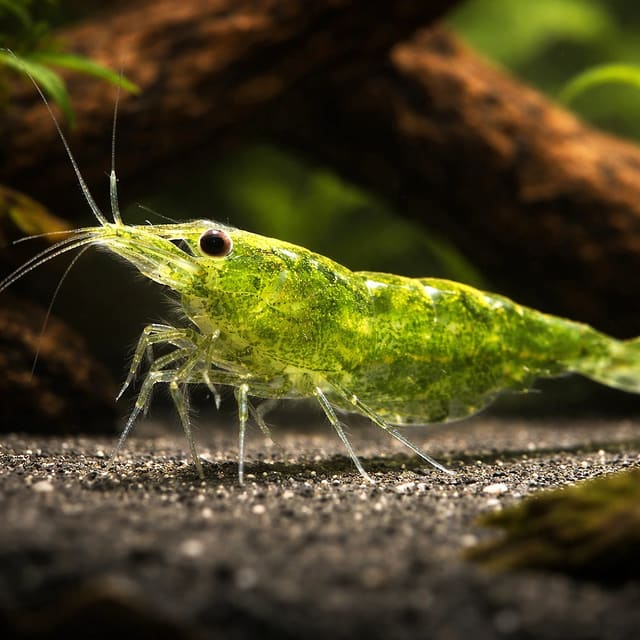
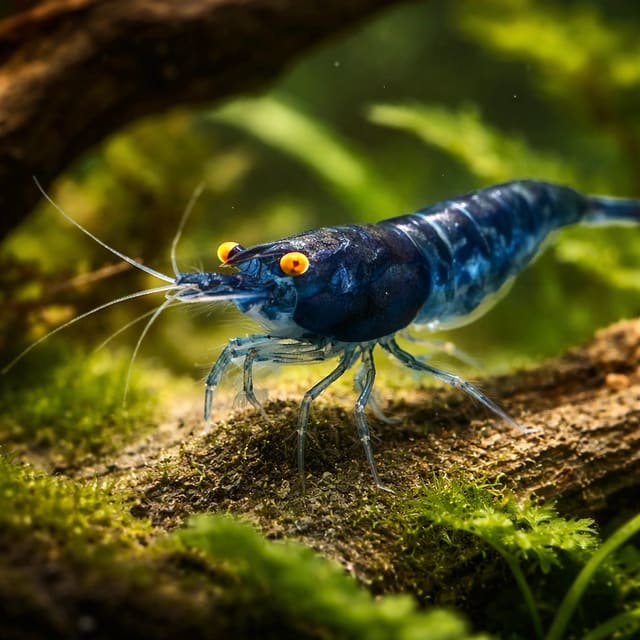
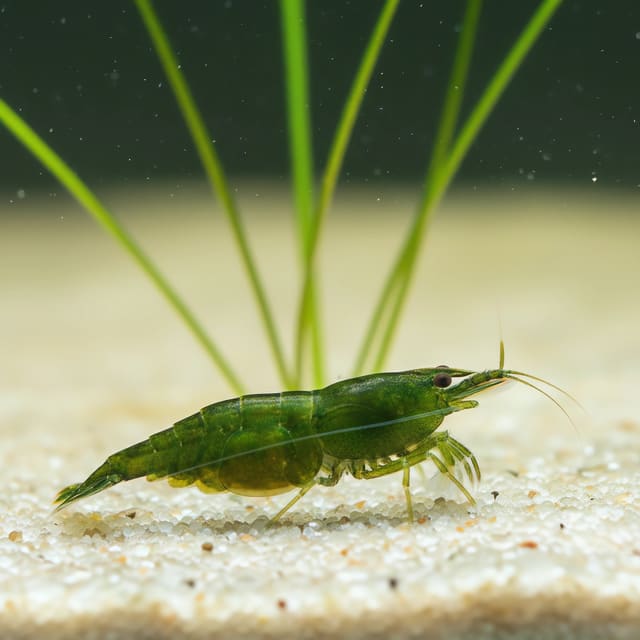
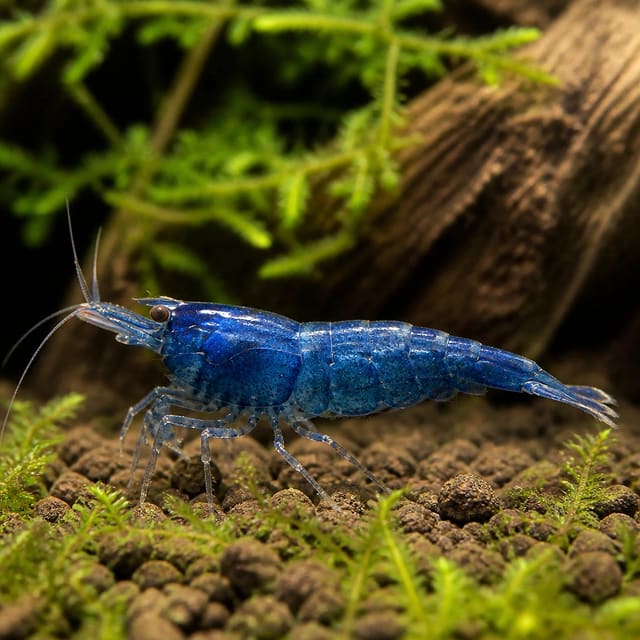
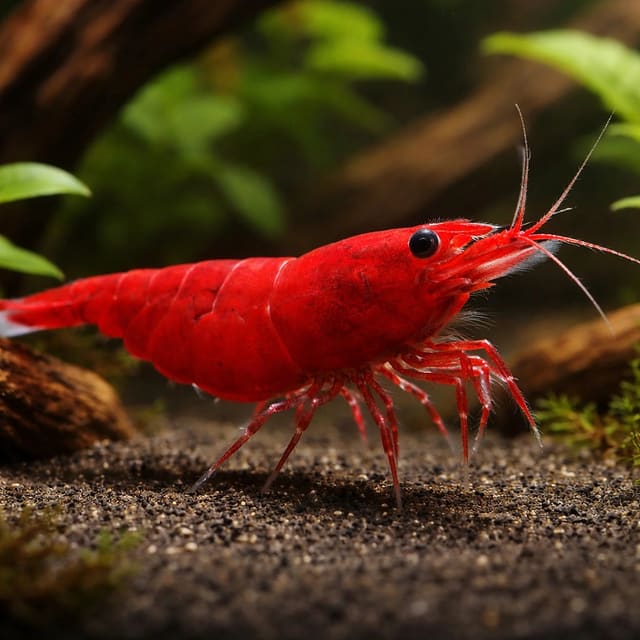
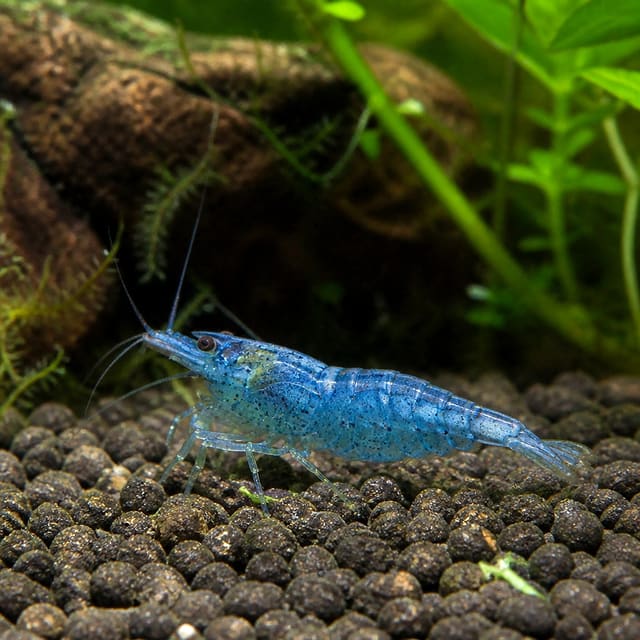
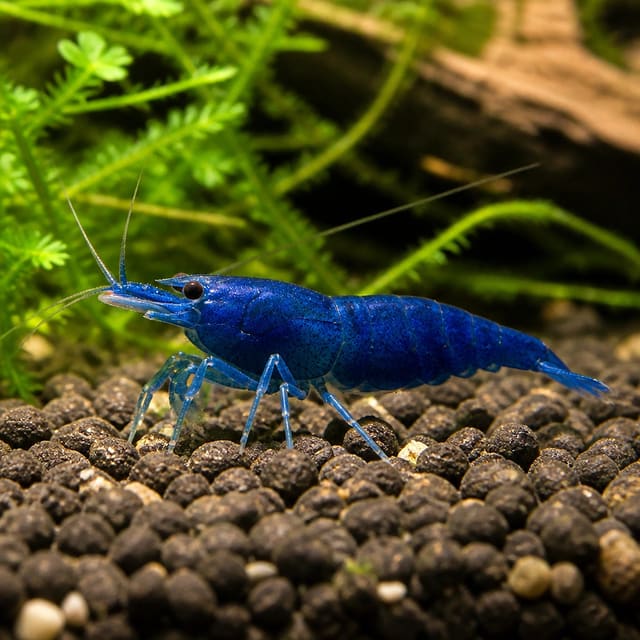
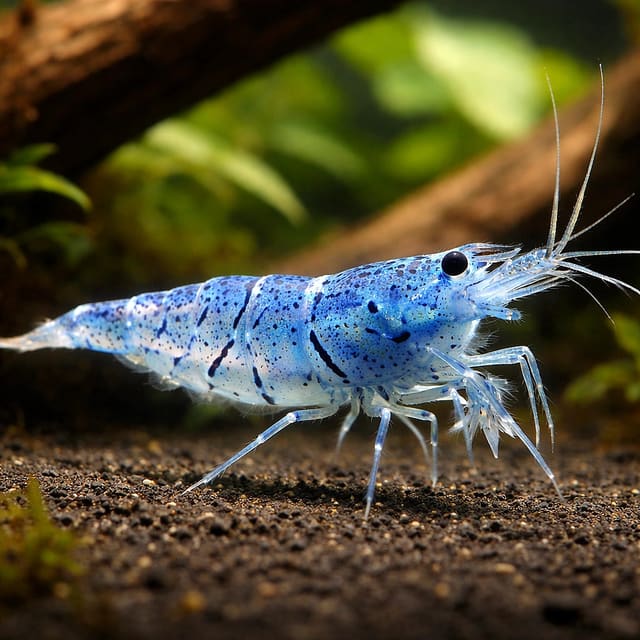
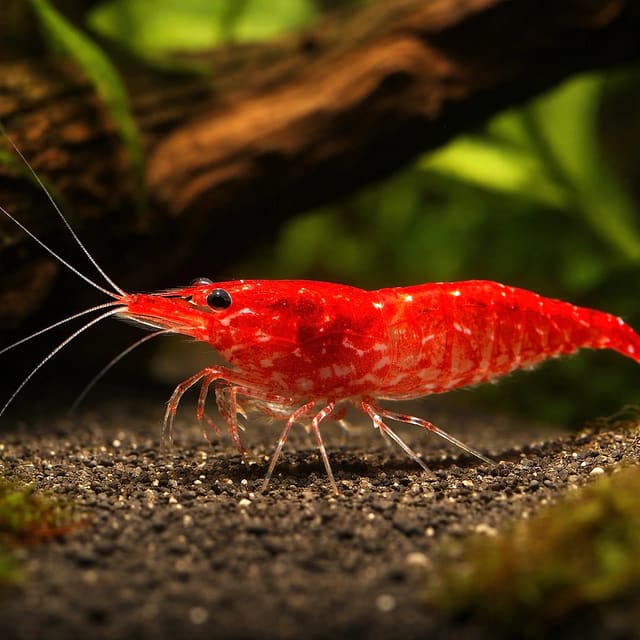
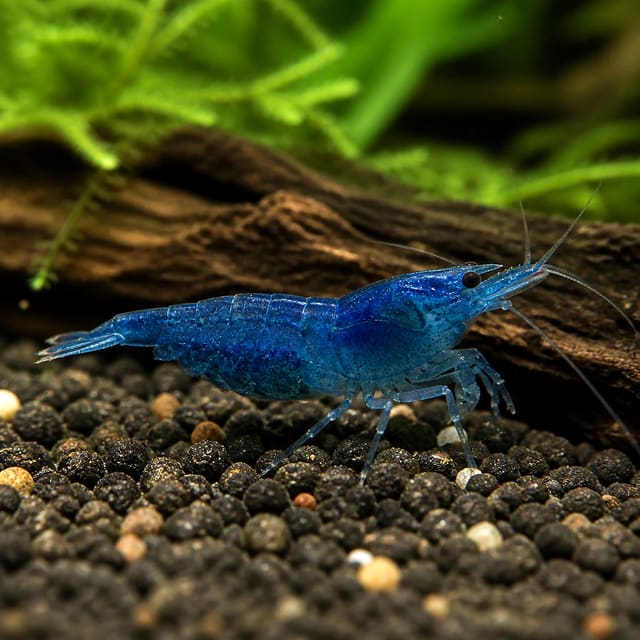
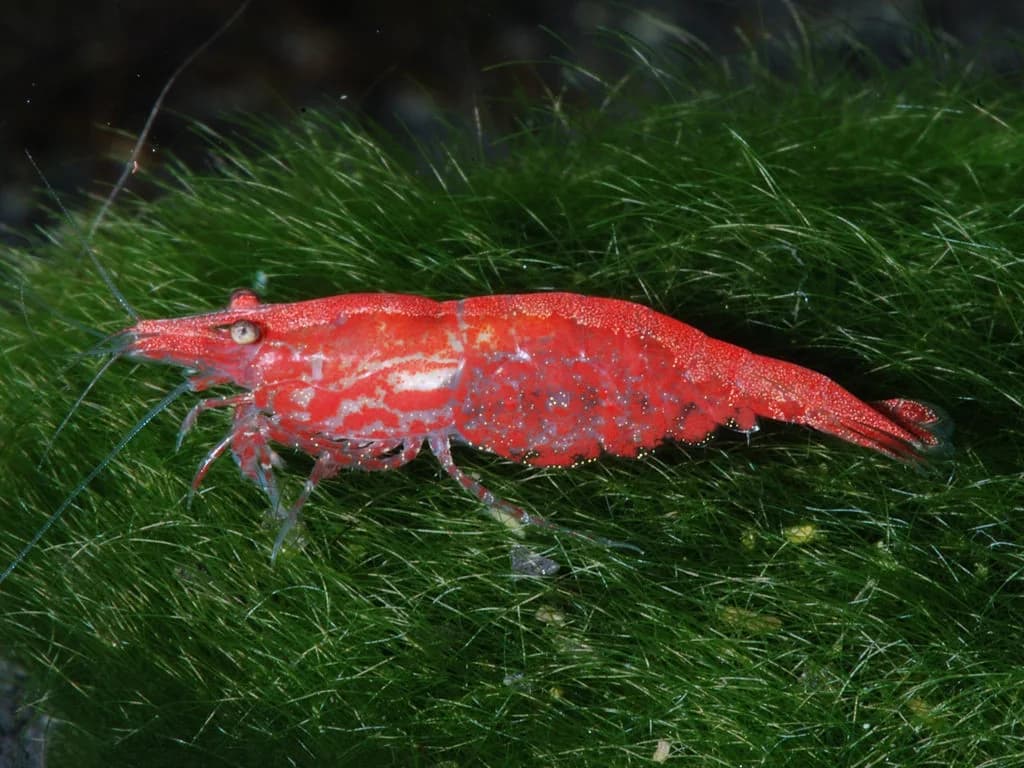
Gallery images have been digitally enhanced to improve image quality. Natural colour, pattern, size and maturity can vary between live animals. The photographs show the yellow form of the species; the shrimp you receive will be the size you selected, and its exact shade may differ from the pictures. Our care guide notes that lineage, lighting, substrate, stress and health can all change how strongly a shrimp shows its colour.
A shrimp aquarium works best when its biology has settled before the animals arrive, so plan the tank around filtration, grazing surfaces and cover rather than around a headline number of litres.
OATA's care sheet for freshwater shrimp and snails recommends an aquarium of at least 10 litres for a group of small shrimp, larger if fish share the tank, and points out that a bigger aquarium keeps temperature and water quality more stable. Tropical Fish Co plans more cautiously and uses a mature, filtered 20-litre aquarium as its starting point for a small group of this species, because the extra water gives more headroom when feeding, temperature or maintenance goes wrong. Neither figure is a biological minimum, and neither turns into a shrimp-per-litre allowance.
The same caution applies to stocking density. A controlled study kept newly hatched Neocaridina davidi at 2.5, 5 and 10 individuals per litre for 90 days and found that density affected growth, but that was a culture experiment on juveniles, not a measure of how many adults a planted home aquarium can hold. Plan instead around the things that really limit a colony: filtration, oxygen, mature grazing area, competition at feeding time, companions and the chance that young shrimp survive and add to the numbers.
A filter is essential in any shrimp aquarium, whatever its size. As the RSPCA's guidance on the aquarium environment explains, a working biological filter lets beneficial bacteria grow; they convert toxic ammonia to nitrite, which is also toxic, and then to the safer nitrate. “Mature” describes that working state, not a fixed wait of two, six or eight weeks: the filter must handle the planned load, and repeated tests must show ammonia and nitrite at zero. OATA's guide to setting up a freshwater aquarium covers cycling, regular testing and gradual stocking, and our first shrimp tank guide walks through the same preparation for invertebrates.
In practice the order is simple: build the aquarium, run the filter, test until ammonia and nitrite stay at zero, then add shrimp a few at a time.
OATA describes freshwater shrimp as usually undemanding of water chemistry, but undemanding is not the same as tolerant of sudden change. The values below come from OATA's care sheet for freshwater shrimp and snails. They are broad guidance for the whole group rather than limits measured for Neocaridina davidi, so use them as a planning range and aim for stability inside it.
| Measure | OATA guidance for freshwater shrimp |
|---|---|
| Temperature | 17–27°C |
| pH | 6.5–8.0 |
| Ammonia | Zero mg per litre |
| Nitrite | Zero mg per litre |
| Nitrate | No more than 20 mg per litre above your normal tap water level |
| General hardness | 4–18 °dH |
| Carbonate hardness | 3–15 °dKH |
Before the shrimp arrive, compare your own readings with these ranges and, where you can, with the measured values of the water the shrimp have been kept in. The comparison that matters most is between the bag and your aquarium: a large gap in temperature, pH or hardness calls for a slow introduction and a closer watch afterwards.
Whether you need a heater depends on your measured room and aquarium temperatures, not on the season or your postcode. A correctly sized, guarded and thermostatically controlled heater may be needed in a cool room, while a warm room or a sunny spot needs a plan for summer overheating. Choose one stable temperature inside the planning range that also suits every other animal in the tank, and keep it there.
Research shows why the upper end deserves respect. Controlled culture studies at 24°C, 28°C and 32°C found that temperature changed growth and reproduction, and in one high-temperature experiment females spawned at 28°C but not at 33°C. Those were laboratory conditions that help explain the animal; 33°C in particular is not a care target.
UK tap water is not one chemistry. The Drinking Water Inspectorate explains that hardness varies with geology and supply, and points customers to their water company for local figures, so test the aquarium itself as well: rock, substrate, top-ups and treatments can all shift it. Water from an ion-exchange softener has had its calcium and magnesium swapped for sodium, so softened water is not automatically suitable for shrimp. Our guide to aquarium water parameters explains what each test means, and the water parameter matcher lets you set your own readings against the ranges above.
Neocaridina davidi is an omnivore. In an established aquarium it grazes biofilm and soft algae from plants, wood, stones and other surfaces. That grazing is valuable, but it is not a complete diet on its own, and a tank that relies on algae alone can run short of food as the group grows.
OATA's care sheet describes freshwater shrimp as grazing on algae in the aquarium and recommends supplementing it with algae wafers, or with commercial pellets made for freshwater shrimp. Our care guide suggests an appropriate complete sinking shrimp food as the nutritional base, with suitable variety alongside it according to the manufacturer's directions and the needs of the rest of the community.
OATA suggests feeding freshwater shrimp only two or three times a week, leaving pellets or wafers for at least 30 minutes so the shrimp have time to eat, and taking care not to overfeed. Uneaten food breaks down and releases toxic waste into the water, which matters all the more in a small aquarium, where conditions are less stable. Treat that rhythm as a starting point, then adjust it by watching the group:
Lift out food that is repeatedly left over and reduce the next portion. If the yellow looks paler than expected, do not assume a colour-enhancing food is the answer: lineage, lighting, substrate, stress, health and even camera settings all affect how a shrimp looks. Give new shrimp time to settle before judging their colour.
Individual shrimp vary, but OATA lists changes that can flag a problem before it becomes a real health issue:
Shrimp grow by moulting, and an empty exoskeleton on the substrate can look alarmingly like a dead shrimp. Hiding can go with a moult too, but neither a cast shell nor hiding on its own tells you whether something is wrong. When behaviour or appearance changes, work through the basics in order:
OATA's shrimp care sheet is direct about copper: freshwater shrimp are very sensitive to it and will die if exposed even to low levels. Before adding any treatment to a shrimp tank, read the current label and every invertebrate warning, identify the actual problem first, and get qualified advice if compatibility is unclear. The Veterinary Medicines Directorate database lists the particulars of authorised veterinary medicines, but a listing there does not make an unnamed aquarium product safe for shrimp.
A 2023 survey found small attached organisms, known as epibionts, on some commercially sourced Neocaridina davidi, with prevalence varying by source. That is a good reason for careful observation and sensible biosecurity, not a reason to medicate every white mark automatically.
Published figures differ. The Wikipedia summary gives a life of one to two years, OATA says freshwater shrimp can live for a couple of years in a well-matured set-up with good water quality, and a field study of one invasive population in Japan estimated roughly 10 to 15 months. Temperature, sex, lineage, predation, food and water quality all change what you will see, so plan for steady ongoing care rather than a fixed lifespan.
Neocaridina davidi is not a livebearer. A mature female carries her eggs on the swimming legs, or pleopods, beneath her abdomen, and the young hatch as small shrimp that live on the bottom and on surfaces from the start. Developmental research summarised in our care guide describes this as direct or abbreviated development, without the salty planktonic larval phase that Amano shrimp go through, and the Wikipedia summary likewise notes that the species has no distinct larval stage. That is why a settled group can produce young in an ordinary freshwater aquarium.
Nothing about that biology makes a growing colony certain. Because the shrimp are sold unsexed, any group you buy may be weighted towards one sex, and no single maturity age, egg count, incubation period or monthly growth rate applies to every aquarium. What helps is simple: mature grazing surfaces, suitable food, protected filter intakes, dense cover and as few sudden changes as possible.
Yellow is one of several colours selectively bred from the same species, alongside red, orange, green, blue, violet, white and clear forms. Because these lines are all one species, colours kept together do not stay separate, and a mixed-colour aquarium should not be expected to breed true. If you want later generations to stay yellow, keep this line in its own aquarium, add only yellow shrimp, and ask the seller what they know about the lineage of any shrimp you add later.
Neocaridina davidi tolerates a wide range of conditions, and released aquarium shrimp are thought to be behind the invasive populations now found in thermally polluted waterways in Japan, the United States, Poland and Germany. Never release shrimp, aquarium water, plants or the contents of equipment into the wild, or into a drain that can reach it. The GB Non-native Species Secretariat's pet code sets out how to rehome animals securely or dispose of them suitably.
Decide what success looks like before deciding how many shrimp to order. A display group in a mixed aquarium, a single-colour breeding line and a nursery aimed at the highest survival of young shrimp each need different space, companions and separation plans. Writing the answers down before ordering makes later troubleshooting far easier than changing several things at once.
Every order is hand-packed by our team: the shrimp are bagged in pure oxygen and packed in an insulated poly box, with a heat pack when the weather calls for it. A licensed live-animal courier carries the parcel on a tracked service, and we email the tracking number and your confirmed delivery date so you know when to be in. The full terms are on our delivery and Live Arrival Guarantee page.
OATA advises adding shrimp to an aquarium only gradually, because the beneficial bacteria in a mature filter have to increase each time more livestock arrive and feeding goes up. Adding too many too quickly can cause “new tank syndrome”, where there are not enough nitrifying bacteria to cope with the extra waste and ammonia and nitrite rise to harmful levels. Keep testing through the first weeks and hold back on further additions until readings stay at zero.
Keep transport water out of the display aquarium, use a dedicated net and bucket where practical, and watch new arrivals closely. Aquatic biosecurity guidance from Cefas uses isolation, health records and disinfection as controls; those principles are sensible at home, even though no single quarantine period suits every aquarium. English licensing guidance also expects sellers to keep animals in appropriate conditions and to give buyers care information, so do ask for details about the batch you are buying.
For a peaceful grazer such as Neocaridina davidi, the compatibility question is almost always about what might eat it, not about what it might do to anything else.
OATA's shrimp care sheet sets two firm rules: freshwater shrimp should not be mixed with any fish that can fit them in their mouth, or with any species known to be predatory. It also warns that shrimp may be eaten by common aquarium fish, and advises checking before mixing shrimp with any fish species. Our cherry shrimp care guide adds that no fish is guaranteed safe with adult shrimp, and an adult-safe pairing says even less about newly hatched young.
A population study discussed in our care guide considered fish predation a plausible reason for low recruitment of young shrimp in the wild. That study cannot predict how any particular pairing will turn out at home, but it is a reminder that young shrimp are the most vulnerable members of a group. A shrimp-only aquarium removes the risk from fish, but not the risks from crowding, equipment, food, disease or water quality, so the same maintenance still applies.
OATA describes freshwater shrimp and snails in general as compatible with most species in the aquarium, but that statement always comes with the mouth-size rule above. Other colours of Neocaridina davidi share this shrimp's care and water needs; the reason to keep them apart is colour, not welfare, as the breeding section explains.
If fish share the aquarium but you still hope to see young shrimp grow up, give them places that fish cannot easily reach. Our care guide recommends dense cover, established grazing surfaces and protected filter intakes, and those matter most for newly hatched shrimp. Feed so that food reaches the bottom and the shrimp can eat without competing with faster fish, and watch the group closely after any change of companion. If numbers fall, or shrimp are seen being chased, move them to their own aquarium rather than waiting to see whether things improve.
Adults of the species are roughly 3–4 cm long at maturity, according to the Wikipedia species summary, while OATA's shrimp care sheet puts the smaller aquarium shrimp at about 3 cm. Growth is gradual and individuals vary, so plan the aquarium around full-grown adults and their young rather than around the size of a new arrival.
OATA recommends at least 10 litres for a group of small freshwater shrimp, and more if fish share the tank. We use a mature, filtered 20-litre aquarium as a more cautious starting point because the extra water gives more headroom. Neither figure is a per-shrimp allowance: filtration, grazing area, companions and a growing colony all count.
Keep them as a group rather than singly. OATA's guidance for social shrimp is a group of at least five. Build the group up gradually, because the filter's bacteria need time to catch up each time more livestock and more food are added.
It can suit a careful beginner whose aquarium is already mature, with measured zero ammonia and nitrite and a stable temperature. Our care guide rates it as intermediate rather than effortless, because a hardy reputation does not make a new, untested or overheating aquarium suitable. Regular testing and gradual change matter more than experience.
They are omnivorous grazers that pick biofilm and soft algae from surfaces. Add a complete sinking shrimp food, algae wafers or pellets made for freshwater shrimp. OATA suggests feeding two or three times a week and leaving the food for at least 30 minutes; lift out leftovers so they do not foul the water.
OATA's broad guidance for freshwater shrimp is 17–27°C, pH 6.5–8.0 and a general hardness of 4–18 °dH, with ammonia and nitrite at zero. Treat these as planning ranges for the group, choose one stable temperature within them and avoid sudden swings. A guarded, thermostatic heater is only needed if your room cannot hold that temperature.
No. Our care guide describes the species as peaceful. The compatibility risk runs the other way: OATA warns that freshwater shrimp may be eaten by common aquarium fish, and newly hatched young are the most exposed.
OATA's rule is never to mix shrimp with fish that can fit them in their mouth or with any predatory species, and no fish is guaranteed safe for newly hatched shrimp. Other colours of the species share its care needs, but mixed colours will not stay true, so a single yellow group, or a shrimp-only aquarium if young shrimp matter to you, is the safest plan.
Each order is hand-bagged in pure oxygen, packed in an insulated poly box with a heat pack when the weather calls for it, and carried by a licensed live-animal courier on a tracked service. Someone must be in to receive it. Film one continuous unboxing video from the sealed parcel to the shrimp still in their bag, then float the sealed bag for 20–30 minutes before releasing. If anything has gone wrong, let us know the same day with your order number and that video under our Live Arrival Guarantee.
These public sources support the identity and care details on this page. Figures from trade and welfare bodies cover groups of animals, and they are presented that way above.
No reviews for this item yet. Bought one? Honest reviews only, good or bad.
What customers say about ordering from us
Easy website plenty of info on fish your buying great to pick a time slot
TRACEY DURRANT · 7 Oct 2026
Got some lovely fish thank you
Kevin Mackie · 7 Oct 2026
Reviews of our shop, collected by Judge.me, an independent third-party review collector. Newest first.