Easy
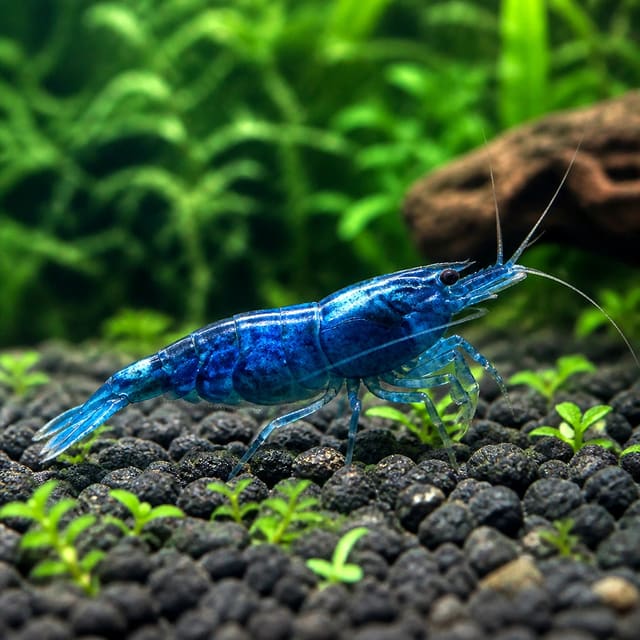
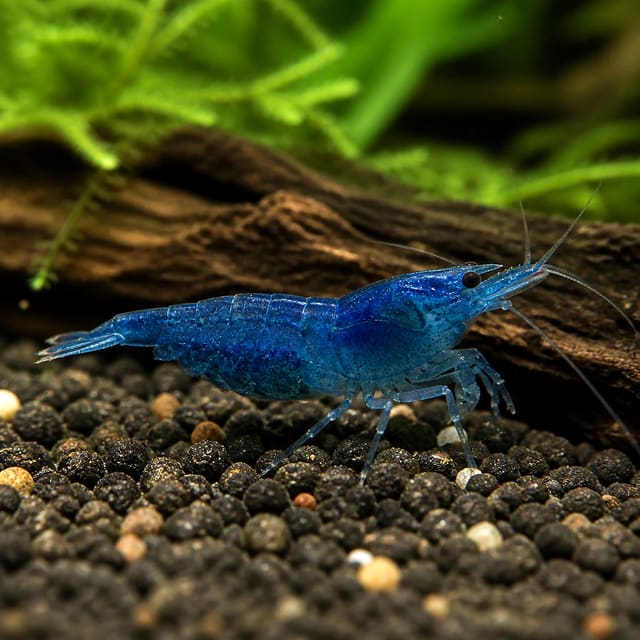
Blue Dream Shrimp (Neocaridina davidi)
18–28°C · pH 6.5–8 · 20L
£16.19

Neocaridina sp. Fire is a small freshwater shrimp from the East Asian genus Neocaridina in the family Atyidae. It suits a mature, filtered aquarium and group keeping at OATA’s freshwater shrimp range of 17–27°C, pH 6.5–8.0 and 4–18°dH. Sold individually at a 1 cm dispatch grade.
Neocaridina sp. Fire
Lives in groups: kept together they stay settled, active and show their best colour.
Neocaridina sp. Fire is a small freshwater shrimp from the East Asian genus Neocaridina in the family Atyidae. It suits a mature, filtered aquarium and group keeping at OATA’s freshwater shrimp range of 17–27°C, pH 6.5–8.0 and 4–18°dH. Sold individually at a 1 cm dispatch grade.
Use a mature, filtered aquarium and measured water—not a shrimp-per-litre rule. Tropical Fish Co uses 20 litres as a cautious starting policy for a small Cherry Shrimp group, above OATA's general 10-litre screen for small shrimp. Provide established grazing surfaces, cover and a protected filter inlet. No fish is guaranteed shrimplet-safe, and breeding should never be promised.
Maintain these water conditions for optimal health and vibrant colors
Neocaridina sp. Fire is a small, land-locked freshwater shrimp from the East Asian genus Neocaridina, part of the family Atyidae. It suits a keeper who can prepare a mature, filtered aquarium, maintain stable water and keep shrimp as a social group. Its care depends on water quality, shelter and measured feeding rather than the arrival size alone.
WoRMS places Neocaridina in Atyidae within the decapod crustaceans. Fire is the aquarium name of this Neocaridina form.
Wikipedia describes Neocaridina as a genus of roughly 25–30 described freshwater shrimp species native to East Asia. That natural range belongs to the genus as a whole. In the aquarium, the practical priorities are a mature biological filter, zero ammonia and nitrite, suitable mineral content, secure cover and tank mates that cannot eat the shrimp.
Choose this shrimp if you are prepared to test the water at least once a week, change 25% of it at least once a week and check every treatment for invertebrate safety. Its small arrival size does not make an immature container suitable. A larger, established aquarium gives temperature and water quality more stability, while plants, gravel or sand and sheltered areas give the group places to use throughout the aquarium.
One purchase supplies one live Neocaridina sp. Fire shrimp. The dispatch grade is 1 cm, which describes the approximate size supplied rather than an adult length. Plan the aquarium from the keeping requirements for a shrimp group, not by treating that dispatch measurement as the animal’s final size.
The exact species has not been identified, so the care advice here follows the genus Neocaridina and its care group. Plan its water, space and companions from that Neocaridina care guidance.
Sex is guaranteed only when the selected option explicitly states male or female. This Neocaridina sp. Fire listing has no sex-guaranteed option.
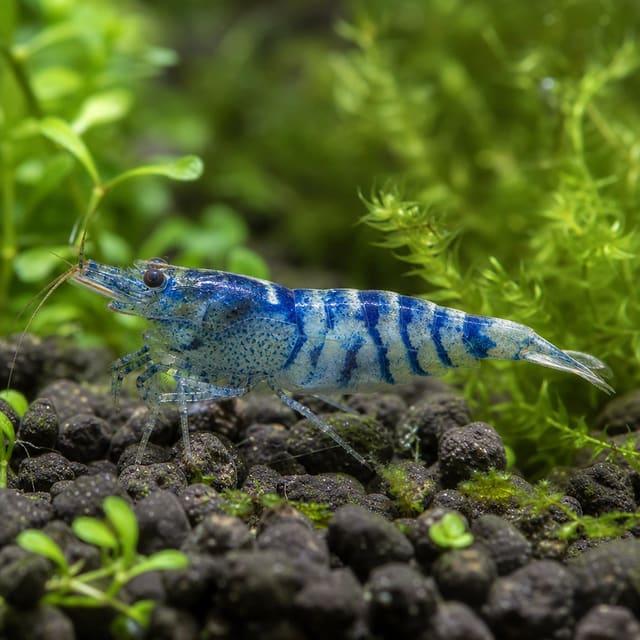
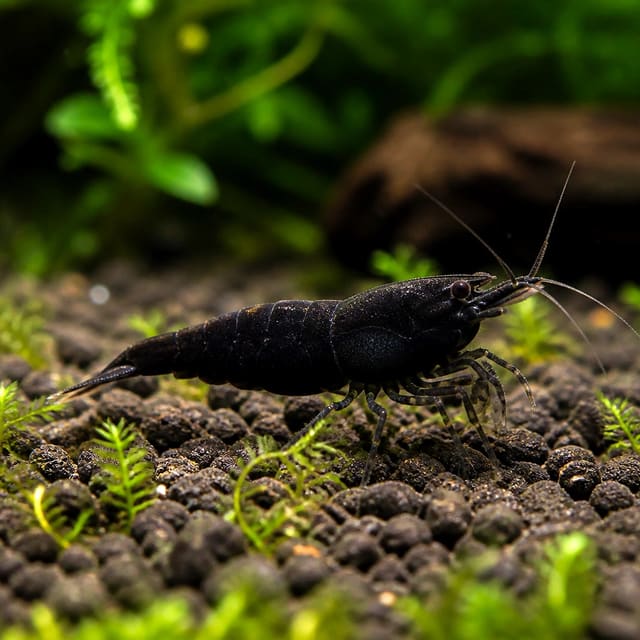
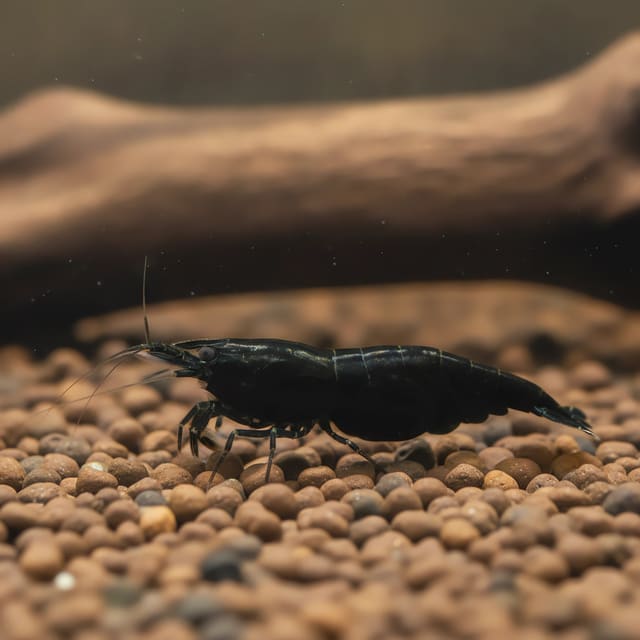
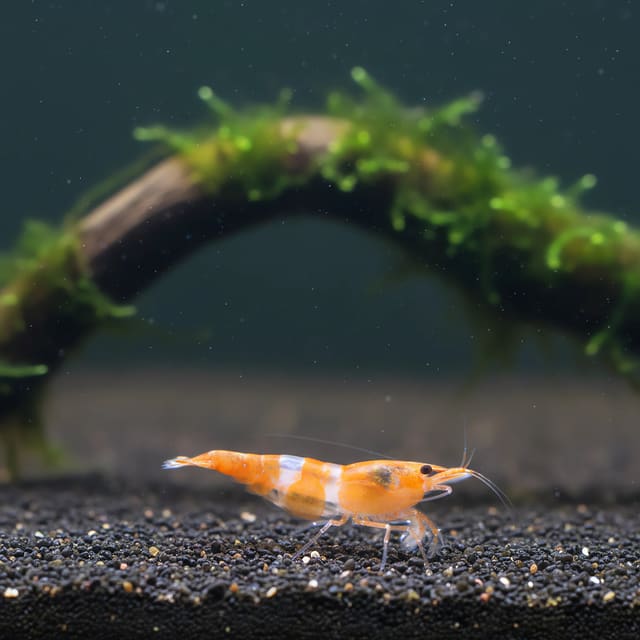
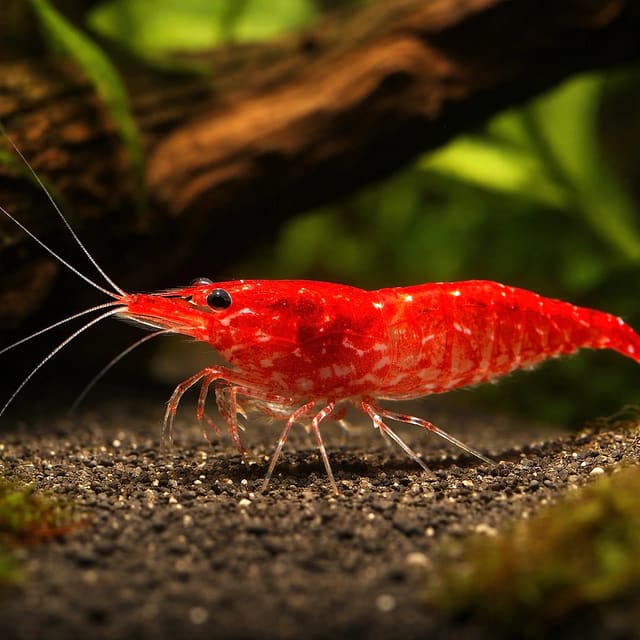
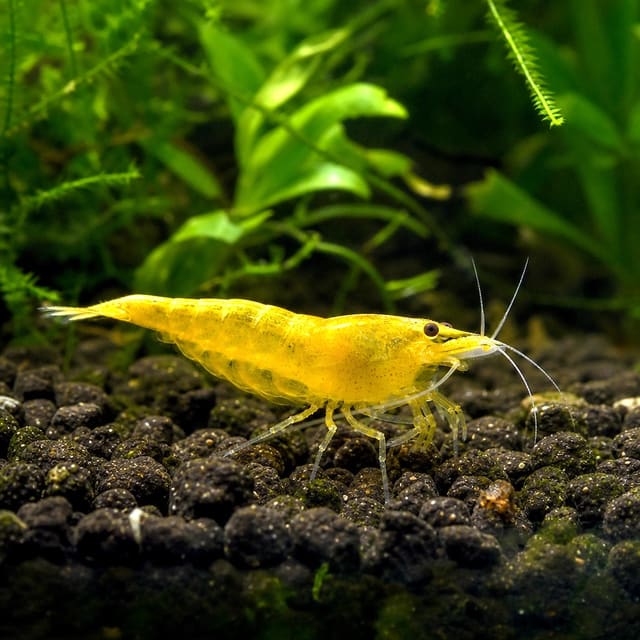
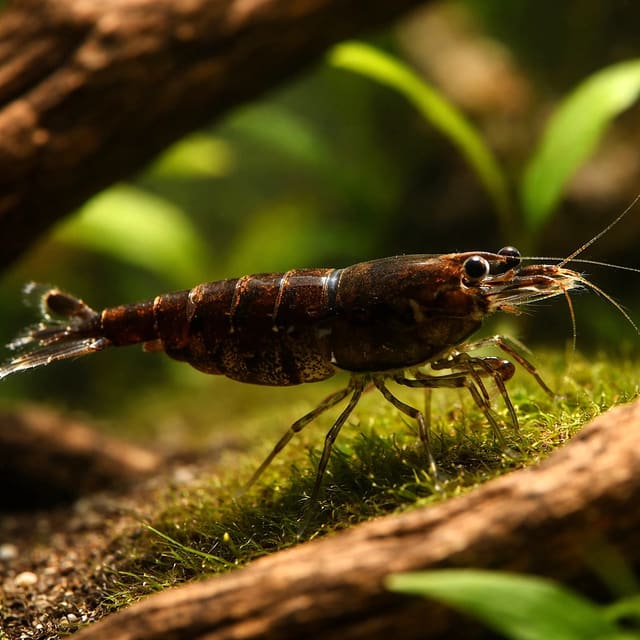
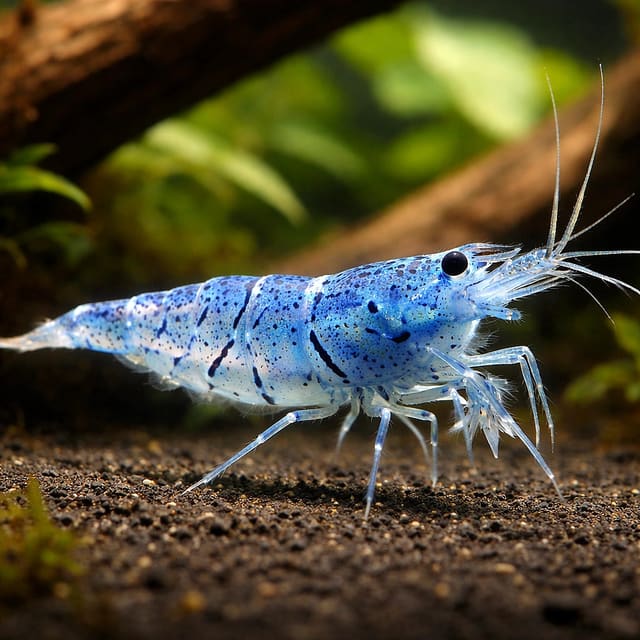
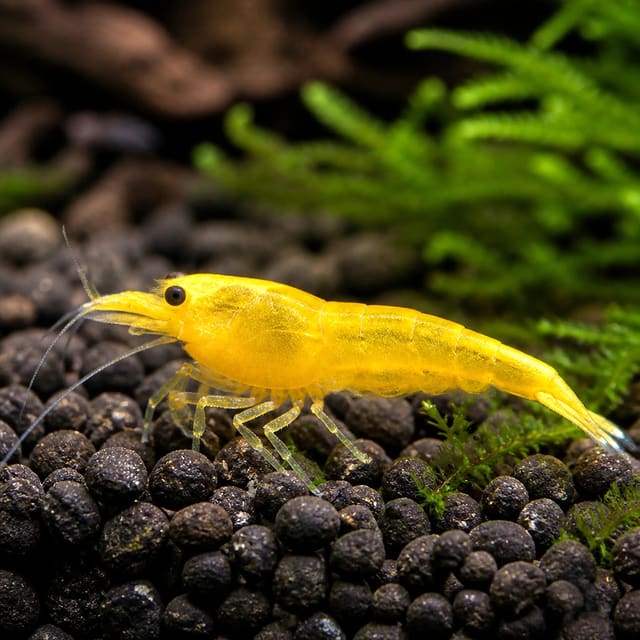
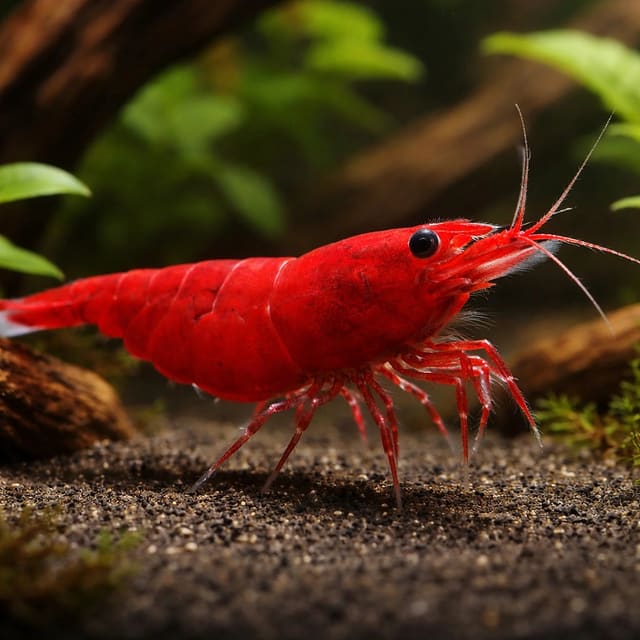
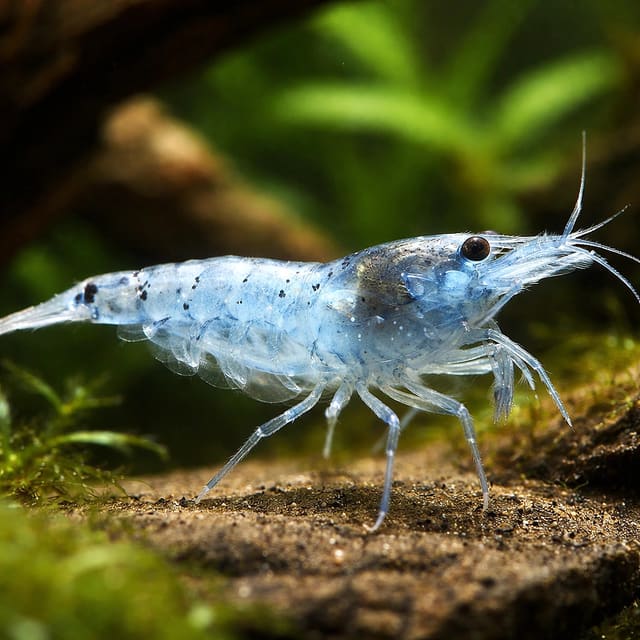
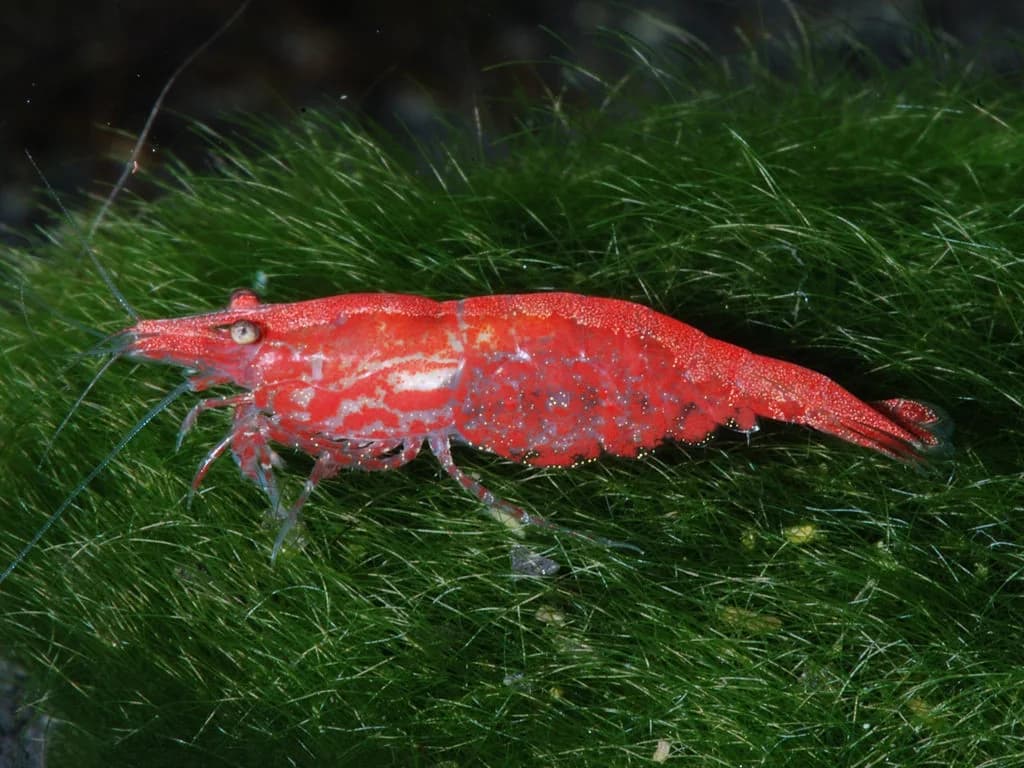
The gallery images are representative of this type of animal rather than photographs of the exact animal supplied, so colours can look slightly different from the live animal. The gallery shows the general Fire appearance as a deep red shrimp with pale antennae on dark gravel, with green plants and wood behind it.
If colour is central to your aquarium plan, browse the current cherry shrimp collection before deciding. Keep the identity and care details for each product separate: a colour label or similar appearance does not turn this genus-level animal into a named Neocaridina species.
Keep the aquarium at 17–27°C, pH 6.5–8.0 and 4–18°dH. OATA’s freshwater shrimp and snail guidance gives these figures for the care group, together with carbonate hardness of 3–15°dKH. Aim for steady conditions within the ranges instead of moving repeatedly between their extremes.
Ammonia and nitrite should both remain at zero mg/l. Nitrate should not rise more than 20 mg/l above the normal level in the tap water used for the aquarium. Test at least weekly so a change is found before it develops into a larger water-quality problem.
Use an aquarium of at least 10 litres for a group of small freshwater shrimp. This is OATA’s group minimum, and the aquarium needs to be larger when fish share it. More water volume also helps temperature and water quality remain stable.
| Suits | Not suited to |
|---|---|
| A mature aquarium with an established filter | A newly started or unfiltered container |
| A social shrimp group with plants and shelter | A single shrimp kept on its own |
| Weekly testing and 25% partial water changes | Aquariums where ammonia or nitrite is detectable |
| Tank mates screened for mouth size and predatory behaviour | Predatory fish or fish able to swallow the shrimp |
| Treatments explicitly safe for invertebrates | Copper exposure, even at low levels |
Maintain 17–27°C, pH 6.5–8.0, general hardness of 4–18°dH and carbonate hardness of 3–15°dKH. These are OATA’s freshwater shrimp-and-snail planning values. Hold the aquarium steady inside these ranges rather than pushing it towards either end.
Record the aquarium’s normal results rather than relying on one isolated reading. The water chemistry guide explains what the principal tests measure, while the water matcher lets you compare measured values with the ranges used here.
OATA advises that nitrate should not exceed the normal tap-water level by more than 20 mg/l. For example, if the tap water measures 10 mg/l nitrate, the aquarium should not rise above 30 mg/l. This is an arithmetic ceiling, not a target to approach. Test at least once a week to see whether nitrate is building up between water changes.
If ammonia or nitrite is detectable, do not add the shrimp. Continue maturing and maintaining the biological filter until both measurements are zero. If temperature, pH or hardness falls outside the stated range, bring the aquarium into range before introducing the animal rather than expecting a newly arrived shrimp to absorb the change.
Run a mature biological filter continuously and confirm that ammonia and nitrite are both zero before adding Neocaridina sp. Fire. OATA calls a filter essential for freshwater shrimp aquariums and warns that stocking too quickly can cause new tank syndrome when the bacterial population cannot process the extra waste.
The RSPCA explains biological filtration as a sequence in which beneficial bacteria process toxic ammonia into nitrite and then into the safer nitrate. The filter therefore does more than collect visible debris: its established bacterial community is part of the aquarium’s waste-processing system.
Our shrimp-keeping guide can help organise the preparation and maturation of a first aquarium. The essential decision is whether the filter has established enough biological capacity, not simply how long the equipment has been running.
Check the filter for blockages during routine maintenance. When its media needs cleaning, rinse it lightly in aquarium water removed during a partial water change. Do not run the media under tap water, because chlorine or chloramine may kill the beneficial bacterial population established in it.
A larger aquarium usually holds temperature and water quality more steadily than a very small one. That extra stability does not replace filtration or testing, but it gives the filter and keeper more water volume in which to manage gradual changes.
Use at least 10 litres for a group of small freshwater shrimp and choose a larger aquarium when fish will share the space. Treat 10 litres as the lower limit for the group and choose an aquarium as large as you reasonably can.
Plants and ornaments create cover instead of leaving the shrimp exposed in an empty tank. Gravel or sand also gives structure to the aquarium floor. The filter remains essential regardless of the amount of planting or decoration.
A 10-litre shrimp aquarium sits at the stated lower limit and therefore leaves less water volume between a feeding mistake and a measurable change in water quality. Choosing more than the minimum can make temperature and water conditions more stable, but it still requires the same weekly testing and water-change routine.
The supplied grade is 1 cm. That number helps set expectations for the animal on arrival, but it is not an adult measurement and must not be used to justify a container below the group minimum. Aquarium planning should account for the complete social group, the filter and all other inhabitants.
Before adding the shrimp, check that plants and ornaments are suitable aquarium furnishings, the filter is working without blockage and the water falls within the stated temperature, pH and hardness ranges. A visually attractive setup is ready only when its biological filtration and water results are ready too.
Allow the shrimp to graze on aquarium algae and supplement that grazing with algae wafers or commercial freshwater-shrimp pellets. OATA describes freshwater shrimp and snails as generally herbivorous and advises feeding them only two or three times a week.
Space two or three feeds across the week rather than adding food every day. Give the shrimp at least 30 minutes to work on wafers or pellets. The supplement makes sure the shrimp are given enough food alongside the algae they graze.
| Decision | Action |
|---|---|
| Visible algae is present | Continue controlled supplementary feeds two or three times weekly. |
| Food remains repeatedly | Reduce the amount at the next feed to limit waste. |
| Algae is scarce | Keep to two or three supplementary feeds a week rather than adding extra feeds. |
| Water quality worsens after feeding | Test ammonia, nitrite and nitrate and review the amount being added. |
Overfeeding is a water-quality problem as well as a feeding problem. Uneaten food breaks down and releases waste into the water, increasing the load on the filter. A larger portion is therefore not a shortcut to better nutrition.
Use algae wafers and foods manufactured for freshwater shrimp. Keep each feed to these foods so the amount given stays easy to judge. A short, repeatable schedule makes it easier to compare appetite with water-test results.
Observe interest in food as part of the health check. A reduced intake or a loss of interest can accompany a wider problem, especially when it appears alongside inactivity, colour change, unusual hiding or altered breathing. Check the aquarium conditions instead of responding with extra food.
Change 25% of the aquarium water at least once every week and test ammonia and nitrite on the same weekly schedule. OATA strongly recommends this routine for freshwater shrimp and snails, with weekly tests to make sure ammonia and nitrite do not build up.
In a 10-litre aquarium, 25% is 2.5 litres. In a 20-litre aquarium, 25% is 5 litres. Base the calculation on the aquarium’s water volume and keep the proportion consistent rather than guessing a different amount each week.
Test the tap water used for replacement as well as the aquarium when assessing nitrate. The aquarium reading should not exceed the normal tap-water level by more than 20 mg/l. Comparing the two values prevents a naturally present tap-water reading from being mistaken for the amount generated inside the aquarium.
For example, an aquarium at 25 mg/l nitrate with tap water at 5 mg/l is already 20 mg/l above its baseline. That reaches OATA’s stated ceiling. Use the maintenance routine to prevent further accumulation rather than accepting a continuing rise.
Do not clean biological media with chlorinated tap water. Preserving the established bacteria helps the filter continue processing waste after maintenance. Water changes, substrate cleaning and filter checks work together, but none replaces the weekly water tests.
Prepare the aquarium before the shrimp travels: the filter should be mature, ammonia and nitrite should read zero, and temperature, pH and hardness should already fall within the stated ranges. Arrange for someone to receive the parcel because live animals must not be left unattended.
Our current delivery and Live Arrival Guarantee policy explains that livestock is hand-bagged in pure oxygen, placed in an insulated poly box and given a heat pack when the weather calls for one. Transport is handled by a courier licensed to carry live animals.
These steps handle the transfer from parcel to aquarium. They do not compensate for an immature filter or unsuitable water, which is why the aquarium checks belong before arrival rather than after the bag is opened.
Once introduced, note normal activity, colour, breathing effort, hiding and interest in food. OATA recommends watching for changes in each of these areas because a departure from the animal’s usual pattern can reveal a developing problem.
Increase the total shrimp population slowly over time. Every additional animal and every increase in feeding adds waste that the biological filter must process. Continue the normal weekly testing and 25% partial water changes instead of treating arrival as the end of aquarium preparation.
Check the shrimp regularly for changes in activity, colour, breathing, hiding, body condition, appetite and physical appearance. The most useful comparison is with the animal’s normal behaviour in the same aquarium, because freshwater shrimp can show natural variation between individuals.
Start with the aquarium conditions. Test ammonia and nitrite, compare nitrate with the tap-water baseline, check the temperature and confirm that the filter is operating without a blockage. A visible health change accompanied by a poor water result makes water quality an immediate husbandry priority.
Freshwater shrimp are highly sensitive to copper and will die even at low exposure levels. Check every aquarium treatment before use and use it only when it is explicitly safe for invertebrates. Do not assume that a product suitable for fish is automatically suitable for shrimp.
Do not guess at a disease treatment from one visual sign. The same change may appear alongside water-quality, feeding or compatibility problems. Record the behaviour and test results, bring any reading back within the care ranges and use only treatments that are safe for invertebrates.
Do not mix Neocaridina sp. Fire with predatory fish or any fish able to fit the shrimp in its mouth. OATA says freshwater shrimp should not be mixed with these fish, even though shrimp are generally compatible with most species in the aquarium.
A fish described as a community inhabitant may still be large enough to swallow a 1 cm shrimp. Compare the fish’s mouth size and known feeding behaviour with the shrimp’s dispatch size before introducing them. The risk assessment must also account for growth, because a fish that is too small to take the shrimp at first may not remain that size.
The presence of plants or caves does not make a predator suitable. Cover can provide shelter, but it cannot remove the feeding behaviour or mouth-size risk that the compatibility rule is designed to prevent.
Individual interactions can vary, and no companion name is an automatic guarantee. Before each addition, note the aquarium volume, current inhabitants and measured water values so every proposed combination is judged by the same rules.
Keep freshwater shrimp as a group rather than planning for one solitary long-term inhabitant. OATA describes shrimp species as usually social. Set the final number from the aquarium volume, filtration capacity and whether fish or other animals already share the system.
If the shrimp begin hiding markedly more than normal, become unusually inactive or show less interest in food after another inhabitant is added, reassess the mix alongside the water results. These changes can signal a welfare problem and should not be dismissed as an inevitable feature of a shared aquarium.
| Proposed companion | Decision rule |
|---|---|
| Predatory fish | Avoid the combination. |
| Fish able to swallow the shrimp | Avoid the combination. |
| Other fish | Assess mouth size, feeding behaviour, aquarium volume and cover first. |
| Additional shrimp | Add gradually and keep testing the filter’s waste-processing results. |
| Any medicated aquarium | Proceed only when every treatment is explicitly safe for invertebrates. |
Compatibility is a continuing decision rather than a one-time label. Growth, increased feeding and added livestock can alter the pressure on aquarium space and filtration, so retain the same weekly observation and testing routine after the initial introduction.
Plan the aquarium for a group of small freshwater shrimp in at least 10 litres rather than for the 1 cm size supplied.
OATA advises at least 10 litres for a group of small freshwater shrimp and a larger aquarium when fish are included; every setup also needs a mature filter.
Keep them as a social group. OATA advises group keeping for shrimp; set the final number from aquarium volume, filtration capacity and the other inhabitants rather than using a fixed universal count.
It suits a keeper who can mature the filter, keep ammonia and nitrite at zero, test weekly, change 25% of the water each week and prevent copper exposure.
Let it graze on aquarium algae and supplement this with algae wafers or commercial freshwater-shrimp pellets, feeding only two or three times a week and leaving the food for at least 30 minutes.
Keep it at 17–27°C and pH 6.5–8.0; OATA’s freshwater shrimp guidance also gives 4–18°dH general hardness and 3–15°dKH carbonate hardness.
Behaviour can vary, so screen the whole mix by predation and mouth size: do not combine it with predatory fish or fish able to swallow the shrimp, and watch for unusual hiding or activity.
OATA says freshwater shrimp are generally compatible with many aquarium inhabitants, but every proposed companion must be non-predatory and unable to fit the shrimp in its mouth.
It is hand-bagged in pure oxygen, placed in an insulated poly box with a heat pack when weather calls for it and carried by a licensed live-animal courier. Make sure someone is in to receive the parcel, and before opening it start a short continuous unboxing video showing the parcel still sealed, the opening and the shrimp still in the bag. Float the bag for 20–30 minutes, then release the shrimp without pouring bag water into the aquarium.
No reviews for this item yet. Bought one? Honest reviews only, good or bad.
What customers say about ordering from us
I have a small group of long finned mountain minnows. So was delighted to be able to order ten of this variety to increase the genetics in my tank . The ones I recieved are healthy but it’s to early to give a verdict on wether they are of a long finned type since they are small currently.
Gordon Walker · 23 Sept 2026
100% success travel and "installation". Pleased with quality of purchase. The Siamese fighter a bit "shy" so have not yet seen him at his best yet but looking good. Happy customer. GG
George E Garratt · 21 Sept 2026
Reviews of our shop, collected by Judge.me, an independent third-party review collector. Newest first.