
 By Tropical Fish Co Editorial Team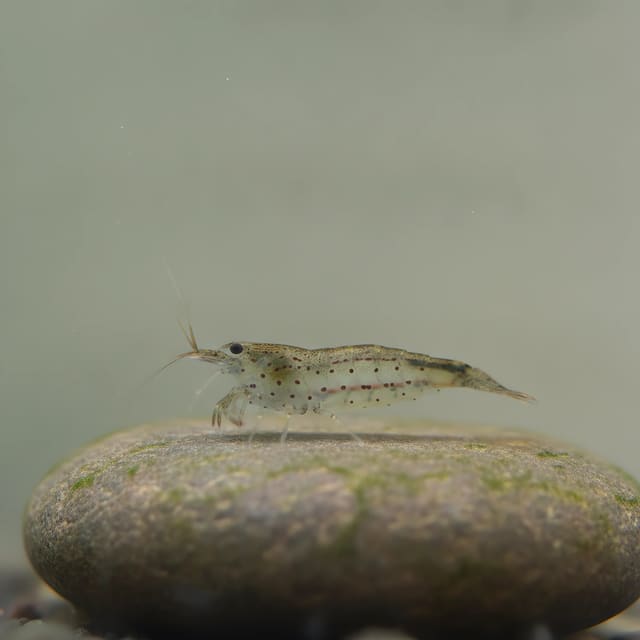
Moderate
Amano Shrimp (Caridina multidentata)
£3.49
Shrimps & Crustaceans · Buying Guide
Find the live UK Amano Shrimp listing, then check today's selectable size, sale unit, price and stock. Verify Caridina multidentata care before checkout.
1 product in stock today
Live prices and stock. Every fish covered by our Live Arrival Guarantee.
Our trained assistant knows this amano shrimp for sale uk page inside out. Ask it anything — water parameters, tank mates, how many to buy — or have it read the guide aloud while you set up your tank.
The fastest safe route to buying Amano Shrimp is to separate what is live now from what remains true over time. The exact Amano Shrimp product page is currently titled 1–5 cm and exposes its selectable Caridina multidentata options live. Open that record for today's available option, unit, price, stock, current image and checkout. Use this page to decide whether the identity, size and group suit your aquarium before you buy.
“Amano Shrimp”, “Japanese shrimp” and “algae shrimp” can all appear in UK searches, but the accepted name is Caridina multidentata Stimpson, 1860. The taxonomic revision treats Caridina japonica as a synonym, and current GBIF and DecaNet records independently use C. multidentata[1][2][3].
That scientific name is the first screen, not the final proof. A translucent body or a familiar common name cannot establish a retail animal's source, lineage, sex, age or health. The revised live grid on this page is intentionally limited to the exact Amano record instead of mixing in Cherry Shrimp, coloured shrimp, algae-eating fish or snails.
If you want to browse beyond this species, use the wider Shrimp & Crustaceans shop. If you want red, blue, yellow or rili forms, use the Cherry Shrimp types comparison; those Neocaridina colour labels should not be presented as Amano variants.
The live Amano product currently uses “1–5 cm” in its title[13]. Three distinctions prevent a useful size signal from becoming misleading:
The best size is therefore not automatically the largest or cheapest. Think about present tank mates, hiding cover, feeding access and the difference between the seller's holding water and your mature aquarium. A smaller shrimp may be more vulnerable to predation; a larger shrimp still needs a suitable group and environment. Neither point creates a universal size rule.
Searchers reasonably ask “how much is an Amano Shrimp?”, but a copied price becomes wrong as soon as the selected size, offer or stock changes. The product card above and the final basket are the live commercial evidence. This guide does not freeze an April or September price into evergreen text.
Compare like with like:
| Check | Why it matters |
|---|---|
| Scientific name | Prevents a common-name match from substituting another shrimp |
| Selected size | Different live options need not have the same price |
| Sale unit | A single animal and a pack are not comparable |
| Availability | A visible product can have individual options unavailable |
| Product image wording | Representative art or photography is not automatically the exact supplied animal |
| Basket total | This is where the currently selected option and order-level charges meet |
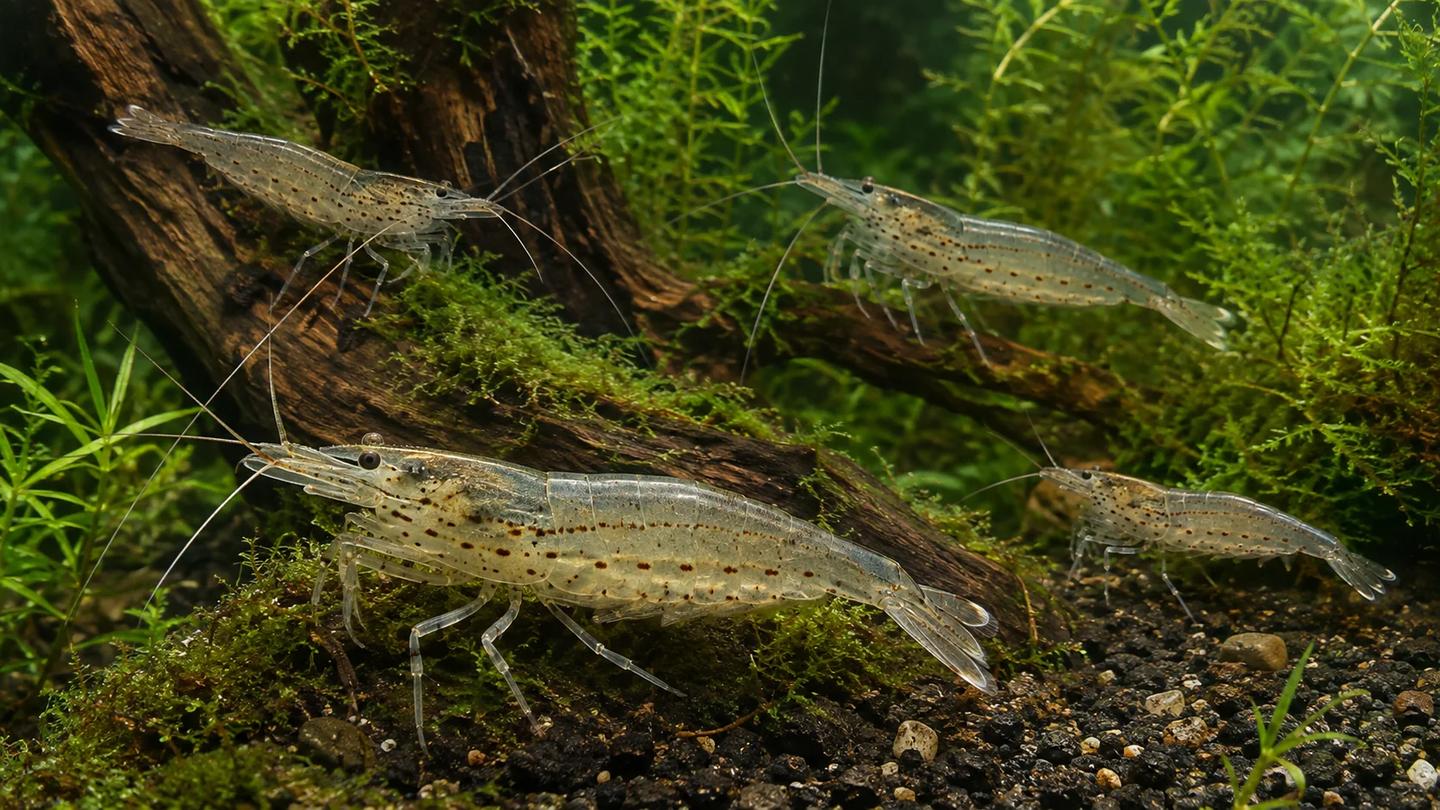
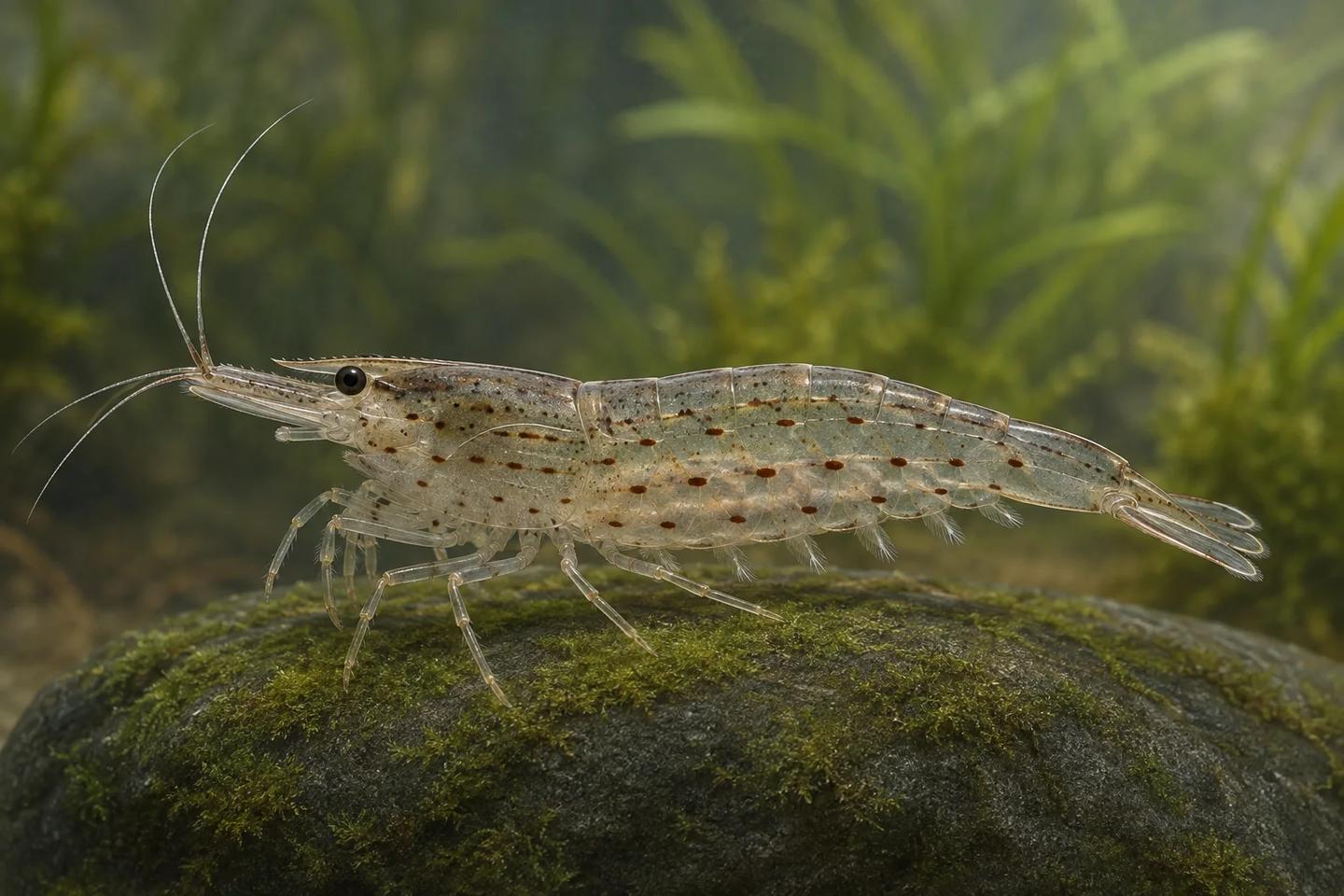
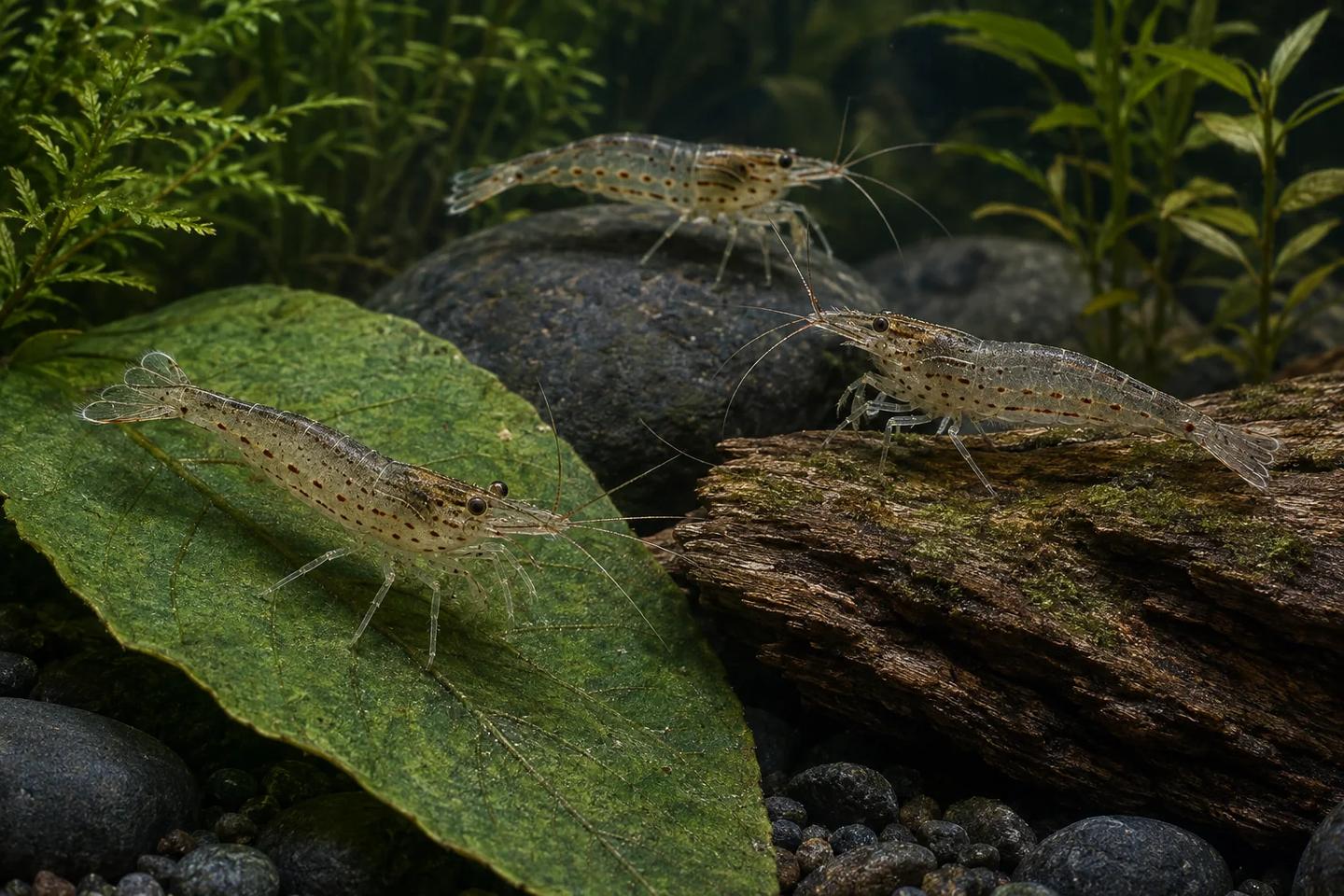
Do not interpret the editorial illustrations on this page as stock photography. Their purpose is to make the normal wild-type form recognisable at mobile size. The current product record owns the live commercial representation.
OATA's UK freshwater shrimp and snail guide says shrimp are usually social and recommends groups of at least five. It gives about 20 litres as a broad starting point for larger species such as Amano Shrimp, with more space when fish are present[7]. That is useful buyer screening, but it is not a controlled C. multidentata minimum and does not support “one shrimp per 8 litres” or any other universal density.
A responsible capacity check includes:
Buying five merely to satisfy a number is not responsible if the aquarium cannot support them. Equally, a large aquarium is not automatically ready if its filter is immature or its fish are likely to hunt shrimp. The Amano Shrimp care guide provides the full evidence-bounded husbandry decision; this page keeps the checkout decision short.
OATA gives broad group guidance of 17–27°C, pH 6.5–8.0 and 4–18 dGH, with ammonia and nitrite at zero[7]. These are not experimentally established exact-species tolerance limits, and they should not be turned into one perfect number.
UK tap-water hardness varies with source and geology, so a city name or postcode stereotype cannot tell you what is in the aquarium[9]. Test the prepared tank and ask for current holding-water information. The practical question is whether the move can be managed without abrupt, poorly measured change—not whether two broad ranges overlap on paper.
Use the water chemistry guide if GH, KH, pH, ammonia, nitrite or source-water treatment is unfamiliar. A water-company report describes the supply; it does not replace an aquarium test taken under current conditions.
Amano Shrimp are bought partly because they graze aquarium surfaces. OATA also recommends appropriate supplementary foods and warns against overfeeding[7]. Those two facts belong together.
No animal can be promised to remove every algae type or correct excess light, nutrients, unstable carbon, poor maintenance or an incorrectly identified growth. Before buying a “clean-up crew”, identify the material and correct its cause. After buying, watch whether each shrimp can access food; a visually clean aquarium is not proof that the group has enough to eat.
The third illustration shows shrimp on leaf, wood and stone only as an observational context. It does not certify what is being consumed or the rate of any result.
OATA cautions that common aquarium fish may eat freshwater shrimp and advises species-specific checking before mixing them[7]. That is safer than a list of fish declared compatible forever.
Screen the actual combination for:
Do not infer safety from one peaceful shop-tank moment. Newly introduced, smaller or freshly moulted shrimp can present a different risk. If the shrimp are the priority, a shrimp-focused aquarium removes much of the uncertainty.
Amano adults live in freshwater, but their life cycle is amphidromous. A controlled 2021 study tested C. multidentata larvae across temperatures and salinities and recorded development under saline treatments[4]. A 2024 experiment separately measured reproductive outcomes at 20, 23 and 26°C[5].
These studies explain why an egg-carrying adult does not mean a self-sustaining freshwater colony. They do not justify copying one laboratory salinity, temperature or feeding schedule as a guaranteed home method. If effortless freshwater reproduction is the buying goal, compare the exact needs of Cherry Shrimp instead.
OATA warns that freshwater shrimp are sensitive to copper. A recent C. multidentata experiment also found conditional physiological and behavioural effects, but it does not produce a universal household “safe” concentration[6].
Never improvise a reduced fish-medicine dose or assume “natural” means safe. Read the exact current label and authorised particulars; the VMD database exists because directions and warnings are product-specific[10]. If shrimp become inactive, discoloured, damaged or stop feeding, test water and obtain qualified advice rather than diagnosing from one sign.
Prepare the mature aquarium before ordering. OATA's general freshwater guidance prioritises controlled transport, suitable measured water and observation, while the English seller guidance includes aquatic environmental monitoring and buyer information[8][11]. Neither source proves a claim about one shipment or creates one fixed acclimation timer for every difference in water.
On arrival, check the order identity and count, packaging condition, animal condition and the seller's current written instructions. Preserve photographs, measurements and timestamps if something is wrong, then contact the seller promptly. The contact or correction form is customer support—not an ecommerce lead or purchase outcome.
Finally, never release shrimp, plants, aquarium water or equipment contents into the wild or a drain that can reach natural water. The GB Non-native Species Secretariat's pet code explains the wider biosecurity reason[12].
Buy only when all six answers are clear:
If any answer is uncertain, keep the item out of checkout until it is resolved. A precise buying pause protects the animals and produces a better customer result than a fast click based on an algae promise.
Visual route into the rest of our UK live-fish range.
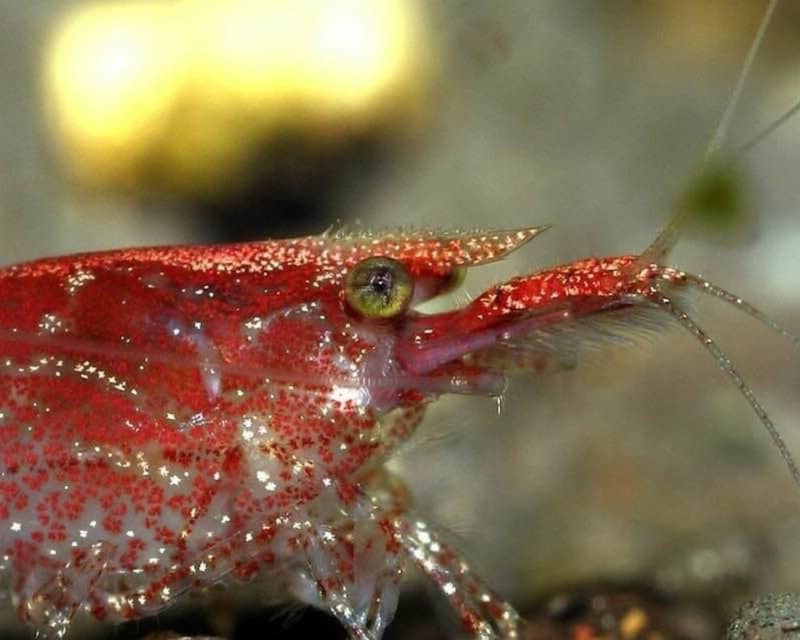
Cherry, Amano, Crystal, Tiger, Bamboo and Caridina shrimp, plus crayfish and crabs. Grade and size stated per listing; shrimp travel well and arrive alive.
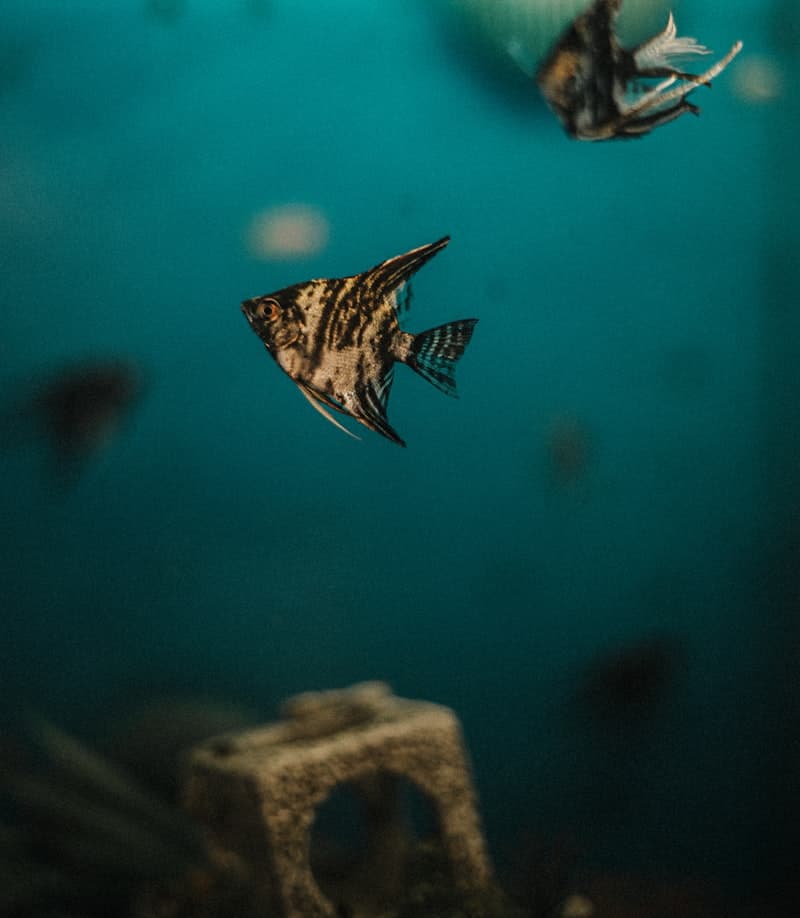
Planted-tank fish for sale UK — peaceful, plant-safe species that showcase aquascaped layouts. Tetras, rasboras, dwarf cichlids, shrimps.
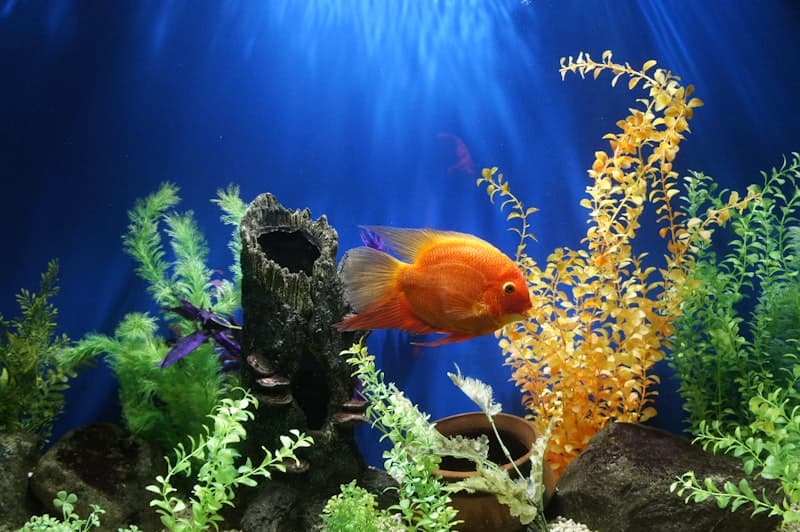
Browse a broad algae-related collection. Check each animal's identity, feeding and aquarium needs; a catalogue match is not proof of grazing suitability.
Material factual claims cite the sources below; store policy and cautious inference are labelled in the article. Sources are grouped by type so you can judge their weight at a glance.
Current accepted-name and synonym cross-check; not proof that a pictured or supplied shrimp is this species.
Independent current taxonomic record; not captive-care guidance.
Explains why UK supply hardness varies and why a local supplier report does not replace testing the aquarium.
Current authorised product particulars and warnings are product-specific; not evidence that an unspecified treatment is shrimp-safe.
English licensed-seller guidance on aquatic monitoring and buyer information; not a guarantee about one retailer, courier or shipment.
Primary taxonomic support for Caridina multidentata, C. japonica synonymy, recorded range and river habitat; not aquarium care or retail-batch proof.
Controlled larval survival and development across temperature and salinity treatments; not a universal home-breeding recipe.
Temperature affected measured reproductive outcomes in 20, 23 and 26°C laboratory treatments; not a universal adult optimum.
Species experiment supporting copper sensitivity and conditional behavioural findings; it does not establish a household safe threshold or medicine dose.
Broad UK group guidance for size, groups, mature filtration, water, cover, feeding, copper, compatibility and specialised larval setup; not an exact-species tolerance study.
UK guidance for mature biological filtration, measured water, transport, context-dependent introduction and observation; not an Amano-specific timer.
Supports responsible disposal and never releasing aquarium animals, plants, water or equipment contents; not a claim that Amano Shrimp is listed as invasive.
Current source for the seller's selectable size, sale unit, price, availability, imagery and checkout; all are volatile and must be read live.
Fishkeeping moves fast and we want every guide spot-on. If you think something here is wrong, out of date, or could be clearer, tell us — our team reads every message and updates the page.
Suggest an editCherry, Amano, Crystal, Tiger, Bamboo and Caridina shrimp, plus crayfish and crabs. Grade and size stated per listing; shrimp travel well and arrive alive.
Planted-tank fish for sale UK — peaceful, plant-safe species that showcase aquascaped layouts. Tetras, rasboras, dwarf cichlids, shrimps.
Browse a broad algae-related collection. Check each animal's identity, feeding and aquarium needs; a catalogue match is not proof of grazing suitability.
Amano shrimp care for UK aquariums: plan a mature 20L-plus tank, group, stable water, feeding, algae limits, tank mates, moulting and breeding.
Shrimp keeping in the UK: choose an identified freshwater shrimp, test your water, mature the filter, and plan feeding, cover and tank mates safely.
Cherry shrimp care for UK aquariums: plan a mature 20L-plus tank, test your water, protect shrimplets and understand feeding, moulting and breeding.
Learn which freshwater aquarium water parameters to test, how to read ammonia, nitrite, nitrate, pH, GH and KH, and when a result needs action.
Keep cardinal tetras thriving in UK water: check tank size, group size, tank mates, temperature and cardinal vs neon differences before you buy.

Evidence-led aquarium editorial team
The Tropical Fish Co editorial team compiles care guidance from the sources cited on each page, separates published evidence from practical husbandry policy, and checks retail links against the current catalogue. First-hand experience is included only when a named contributor and the observation have been verified.