Moderate
Amano Shrimp (Caridina multidentata)
£3.49
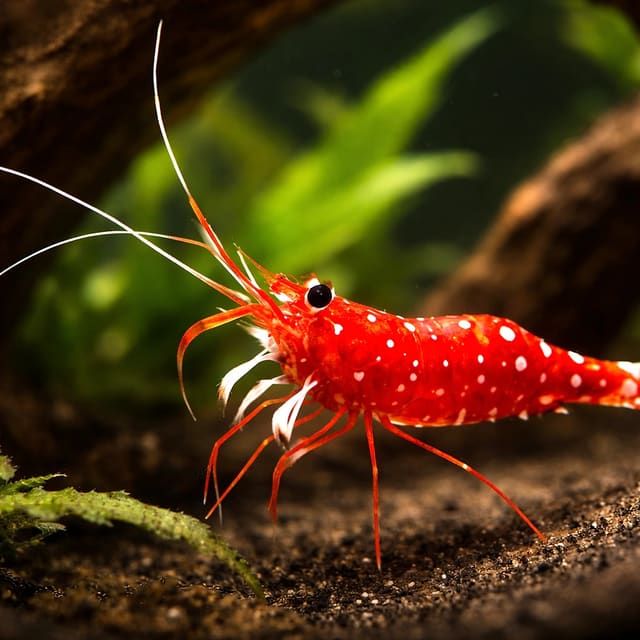
Caridina japonica orange is an orange Amano shrimp form whose accepted scientific name is Caridina multidentata. One purchase supplies one shrimp in the selected 2–3 cm or 3–4 cm dispatch size; plan for an adult length around 5 cm. Keep it in a mature, filtered aquarium and exclude fish able to swallow it or known to be predatory.
Adult size is the maximum length this species reaches at full maturity (scientific sources). The livestock you receive will be younger and smaller — pick a size above for the actual shipping size. Product-photo provenance and any image-specific limitations are stated on the listing.
Caridina multidentata
Lives in groups: kept together they stay settled, active and show their best colour.
Caridina japonica orange is an orange Amano shrimp form whose accepted scientific name is Caridina multidentata. One purchase supplies one shrimp in the selected 2–3 cm or 3–4 cm dispatch size; plan for an adult length around 5 cm. Keep it in a mature, filtered aquarium and exclude fish able to swallow it or known to be predatory.
Adult size is the maximum length this species reaches at full maturity (scientific sources). The livestock you receive will be younger and smaller — pick a size above for the actual shipping size. Product-photo provenance and any image-specific limitations are stated on the listing.
Start with a mature, filtered aquarium. OATA's broad UK guidance suggests approximately 20 litres for Amano Shrimp and at least five for social shrimp, with a larger aquarium when fish are present. Treat those as cautious planning screens—not biological minima or a per-litre formula. Match the complete adult community, test your water, protect the filter inlet and never buy them as a guaranteed algae cure.
Maintain these water conditions for optimal health and vibrant colors
Caridina japonica orange identifies an orange aquarium form of the Amano shrimp. WoRMS now accepts the species as Caridina multidentata and places it in the family Atyidae; Caridina japonica is a junior synonym. The familiar Amano name therefore remains useful in aquarium conversation even though the accepted scientific name has changed.
A natural-history summary for Caridina multidentata records Japan and Taiwan as its native range. Yamato shrimp, Japanese shrimp, Amano shrimp and algae shrimp are established common names for the species. The orange wording on this product identifies the aquarium form being selected without assigning a separate species or a particular geographical origin to that colour.
This shrimp suits a keeper prepared to provide a mature biological filter, measurable water conditions, regular maintenance and careful companion screening. It grazes algae, but that useful feeding behaviour does not replace supplementary food or aquarium cleaning. Its small dispatch size also calls for particular care when choosing fish companions: any fish capable of fitting the shrimp in its mouth presents a feeding risk.
Choose it for a planted or covered freshwater aquarium where the filter is established before livestock enters. Live plants are useful cover, while suitable artificial plants and ornaments can provide shelter where live planting is not used. Keep the aquarium’s actual water measurements, the shrimp’s eventual size and the demands of every companion species at the centre of the decision. You can also browse the shrimp and crustacean collection when comparing different invertebrate choices.
| Suits | Not suited to |
|---|---|
| A mature, filtered freshwater aquarium with cover | An aquarium without an established biological filter |
| Gradual group planning within the filter’s capacity | Rapid stocking that can overwhelm the filter |
| Companions that cannot swallow or prey on the shrimp | Fish able to swallow it or species known to be predatory |
The live size selector identifies the dispatch grade for this offer. Its labels are 2–3 cm and 3–4 cm. Check that selector when ordering rather than relying on a size embedded in older text or imagery. One purchase quantity supplies one animal of the selected option, so a quantity of three means three shrimp in the selected size grade.
The size you select is the size supplied, not the adult size. Use the selected grade when checking whether an existing fish could swallow the new shrimp, but use the adult planning length of around 5 cm when deciding whether the aquarium offers enough long-term room. The larger dispatch grade is not a different species, sex or guaranteed stage of development.
Sex is guaranteed only when the selected option explicitly states male or female. This Caridina japonica orange listing has no sex-guaranteed option. Do not use colour intensity, body outline, dispatch size or a gallery view to assume the sex of the animal that will arrive.
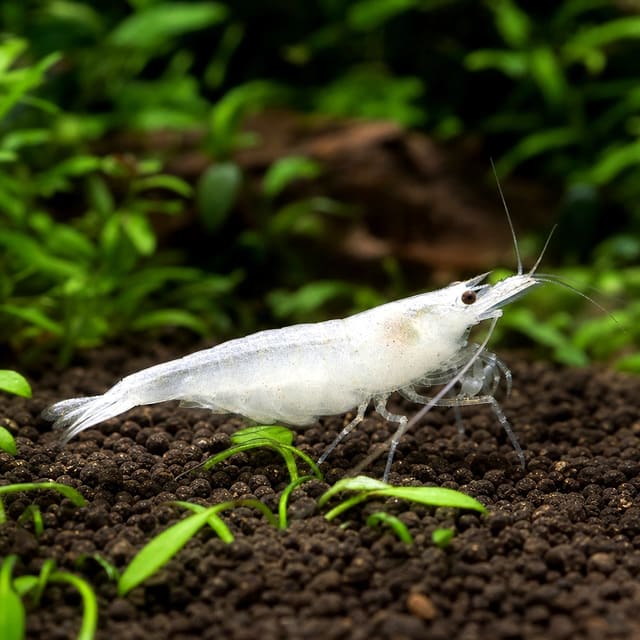
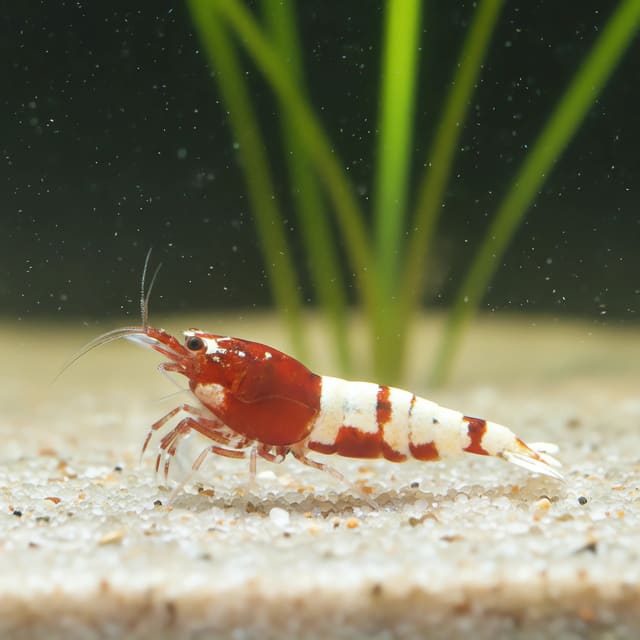
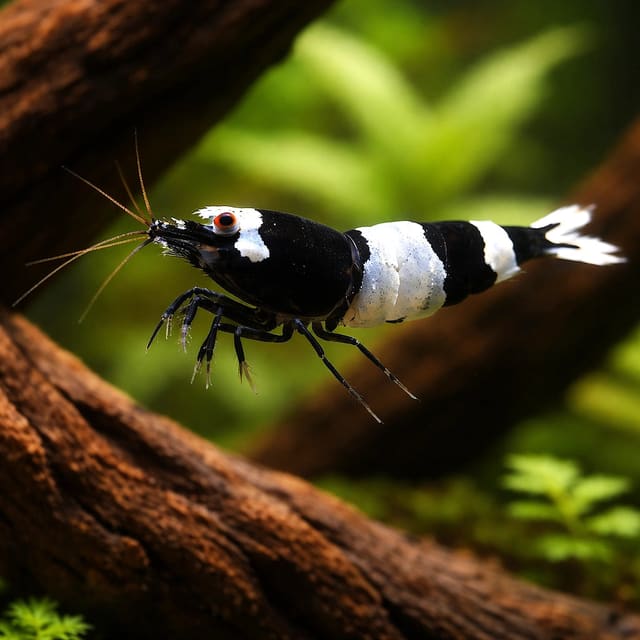
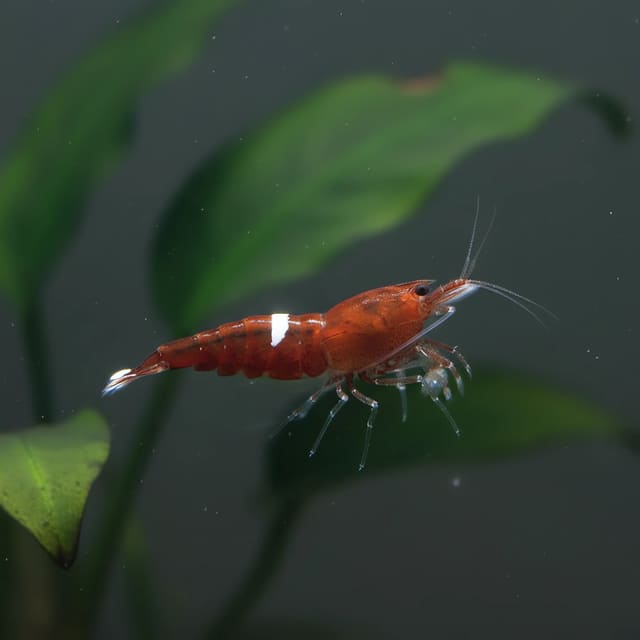
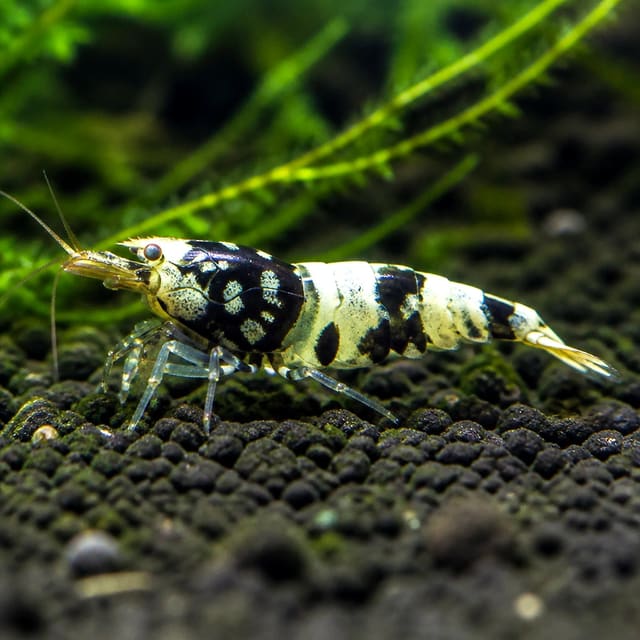
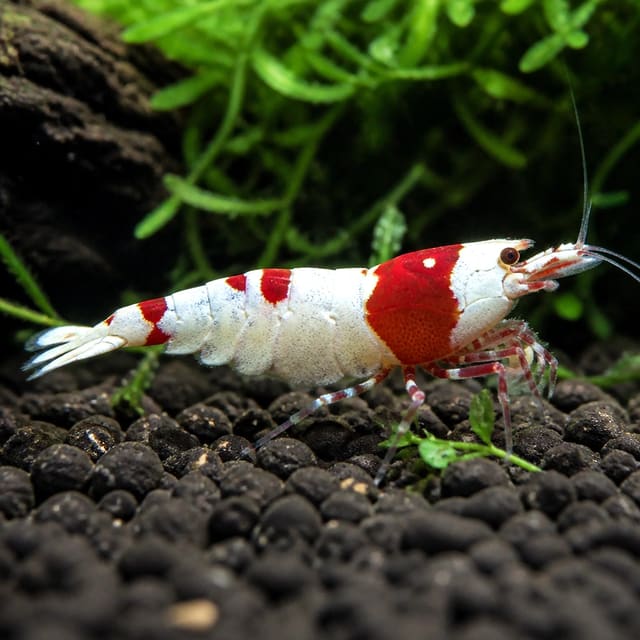
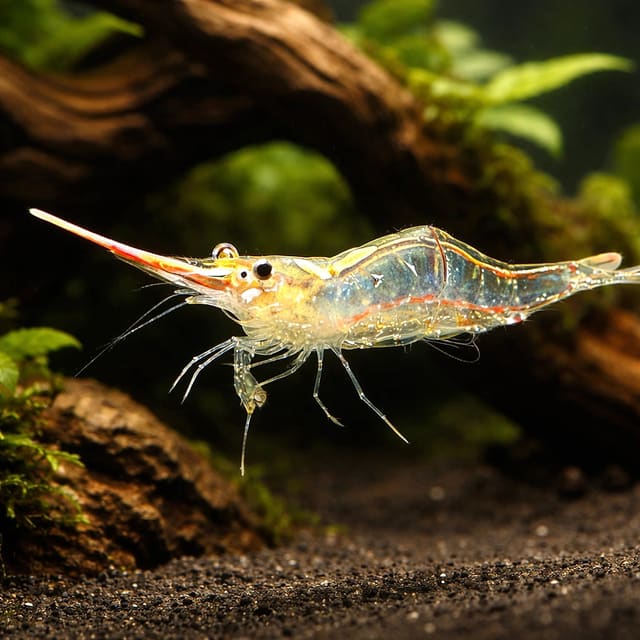
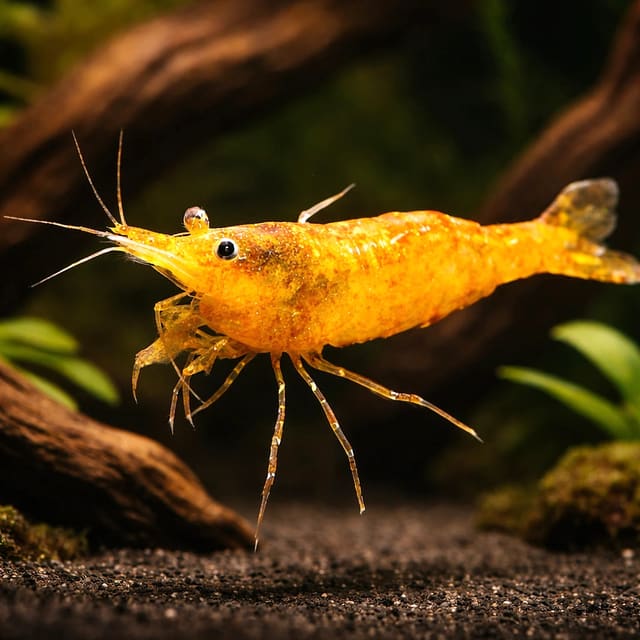
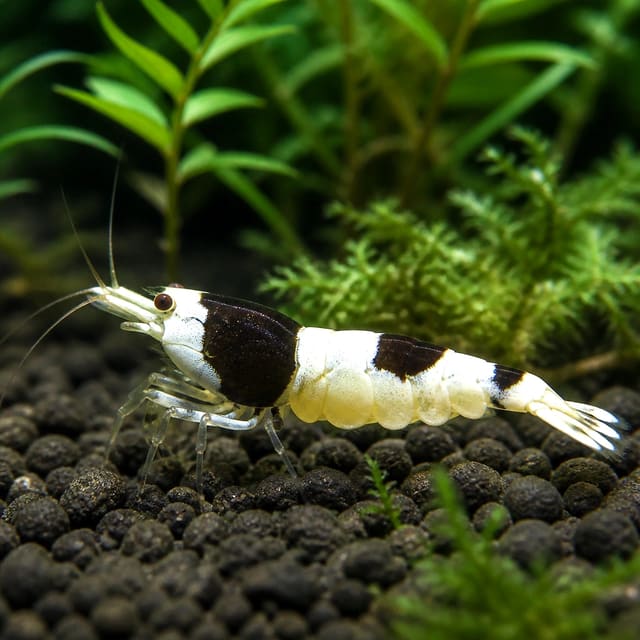
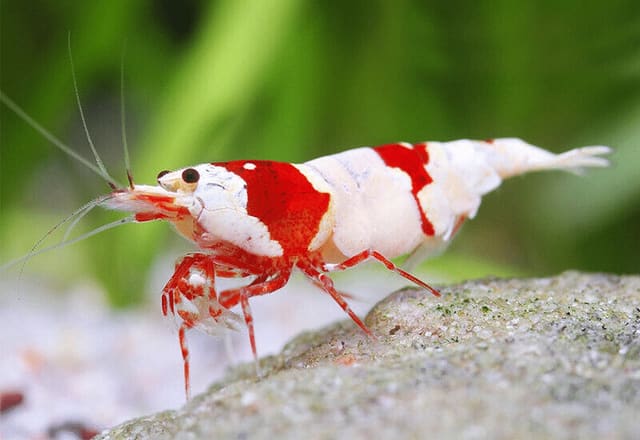
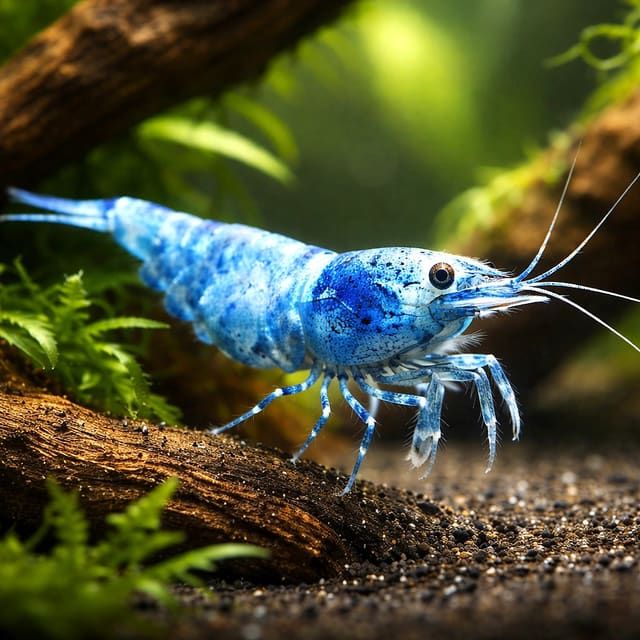
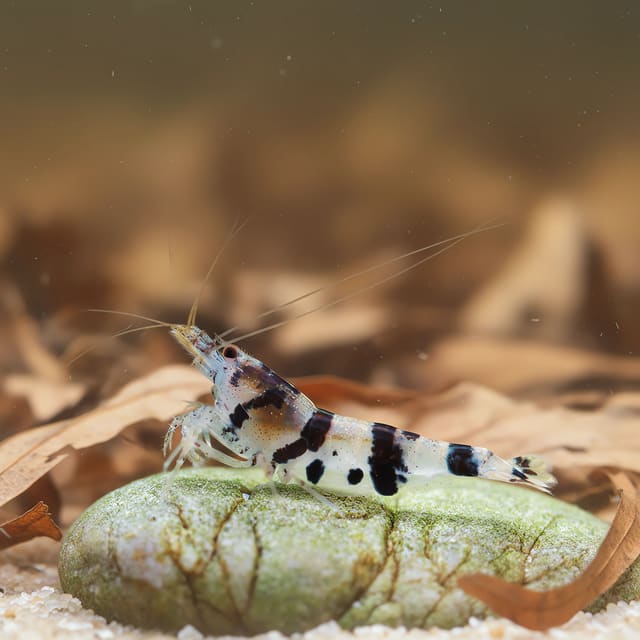
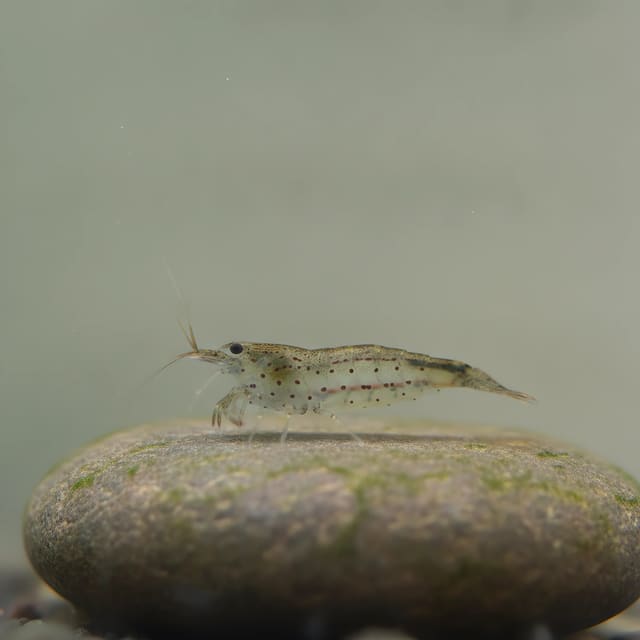
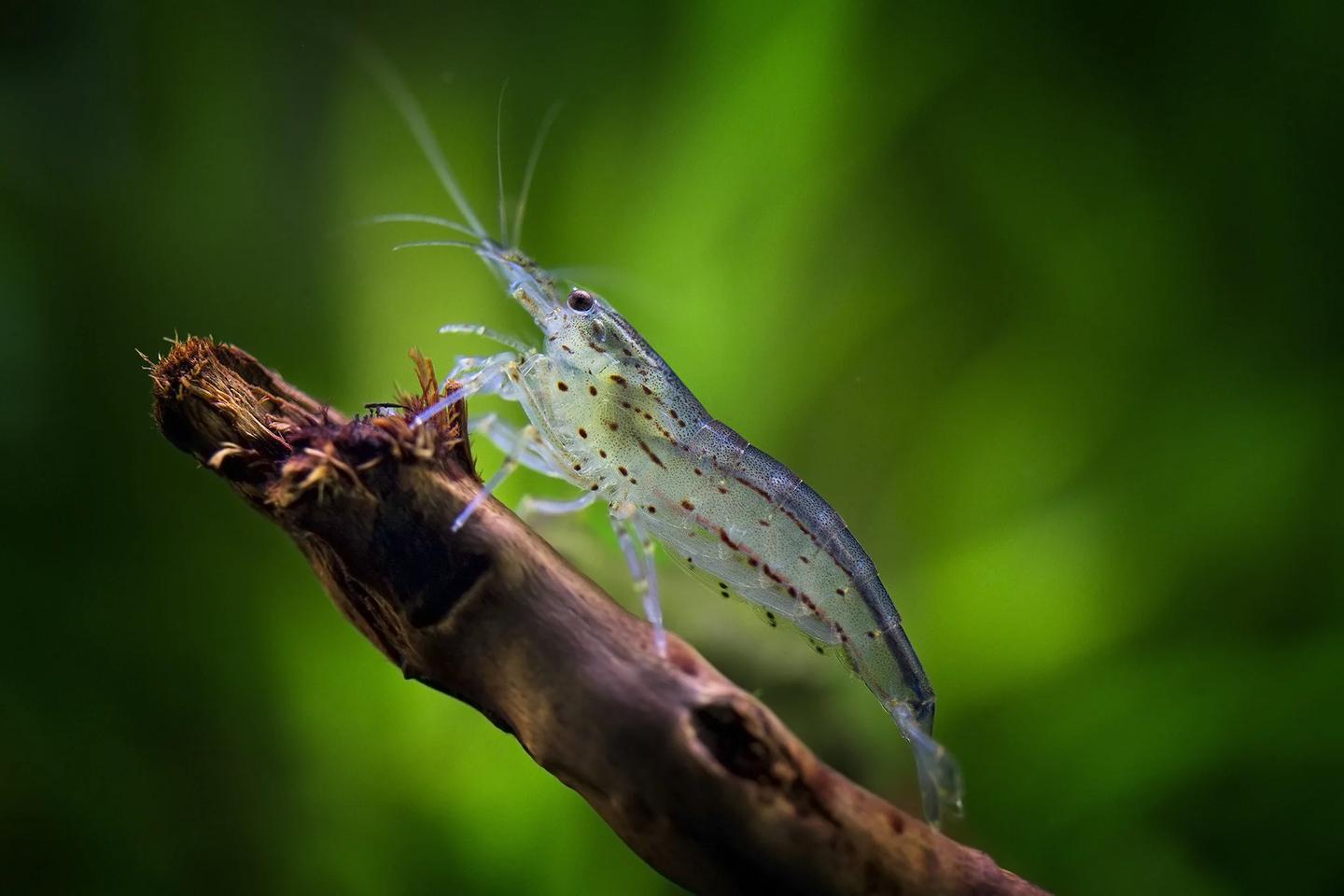
The gallery is there to show the appearance associated with this orange form and its fine speckling. The gallery images are representative of this type of animal rather than photographs of the exact animal supplied, so colours can look slightly different from the live animal. The visible shrimp and aquarium scene also do not alter the purchase unit: the selector and quantity control the commercial choice.
| Ordering decision | What to use |
|---|---|
| Dispatch measurement | The selected 2–3 cm or 3–4 cm label |
| Animals per quantity | One shrimp |
| Long-term planning | Adult length around 5 cm |
| Sex | No sex-guaranteed option |
OATA’s freshwater shrimp and snail guidance gives 17–27°C, pH 6.5–8.0 and 4–18°dH general hardness for the group. These are broad group planning values rather than a species-specific optimum. The same guidance records Amano shrimp at around 5 cm, making that the useful adult length for space and companion planning.
Use an aquarium of approximately 20 litres for larger shrimp such as Amanos, with more volume when fish share the system. This is a starting point for a group in a mature aquarium rather than permission to fill a newly started 20-litre tank immediately. Larger aquariums generally make temperature and water quality more stable, while the needs and waste load of every inhabitant still determine the final stocking plan.
A filter is essential. Before adding the shrimp, test for zero ammonia and zero nitrite. Keep nitrate from exceeding 20 mg per litre above the normal tap-water level, and test the aquarium at least weekly. Carbonate hardness guidance for the group is 3–15°dKH. These measurements belong together: temperature alone cannot show whether an aquarium is ready.
Shrimp are generally social, so plan for a group and increase it slowly enough for the biological filter to adjust as livestock and feeding rise. Fixed headcounts are less useful than checking the aquarium’s volume, filtration, test results and other inhabitants together. Every candidate fish must also pass the mouth-size and predation screen before it enters the plan.
| Planning point | Working figure |
|---|---|
| Adult length | Around 5 cm |
| Amano aquarium guide | Approximately 20 litres; larger with fish |
| Temperature | 17–27°C |
| pH | 6.5–8.0 |
| General hardness | 4–18°dH |
Begin with a filtered aquarium that has matured before the shrimp is introduced. A container of clear water is not the same as a biologically established aquarium: beneficial bacteria in the filter must process waste as livestock and feeding are added. The RSPCA’s aquarium filtration guidance explains the sequence clearly: ammonia is converted to nitrite and then to the safer nitrate form. Both ammonia and nitrite remain toxic, so the readiness test is zero for each.
Use the following order when preparing the aquarium:
A larger aquarium can offer more stable environmental conditions, but volume does not remove the need to mature the filter. Likewise, plants and algae do not process every waste problem by themselves. Treat the working biological filter as essential equipment and the covered layout as the shrimp’s physical environment.
If this is your first invertebrate aquarium, use our shrimp-keeping setup guide before choosing a dispatch date. Work through the filter, substrate, cover and testing decisions while the aquarium is empty. That sequence leaves time to resolve a non-zero ammonia or nitrite result without exposing an animal to it.
Proceed only when the filter is running normally, shelter is in place, replacement-water conditioner is ready and tests show zero ammonia and zero nitrite. If either toxic compound registers, pause the introduction and continue maturing the system. Adding shrimp to compensate for an empty-looking aquarium would increase the waste load before the filter is ready to process it.
Keep temperature between 17 and 27°C, pH between 6.5 and 8.0, general hardness between 4 and 18°dH, and carbonate hardness between 3 and 15°dKH. Record all four alongside ammonia, nitrite and nitrate. A single matching temperature reading cannot compensate for detectable ammonia or for a pH or hardness result outside the working range.
Ammonia and nitrite must each read zero mg per litre. Test the tap water’s normal nitrate level as a baseline, then keep the aquarium reading from exceeding that baseline by more than 20 mg per litre. For example, if conditioned tap water normally reads 10 mg per litre nitrate, the group guideline places the aquarium limit at 30 mg per litre. A tap reading of 20 mg per litre creates a corresponding limit of 40 mg per litre. Recheck the baseline periodically rather than assuming it never changes.
Our water-chemistry guide explains what each test measures, while the water matcher helps compare measured aquarium values with the working ranges. Enter readings taken from the aquarium itself. Estimates based on local water reports cannot reveal ammonia, nitrite or nitrate produced inside the tank.
| Test | Decision point |
|---|---|
| Temperature | Keep within 17–27°C |
| pH | Keep within 6.5–8.0 |
| General hardness | Keep within 4–18°dH |
| Carbonate hardness | Keep within 3–15°dKH |
| Ammonia | Zero mg per litre |
| Nitrite | Zero mg per litre |
| Nitrate | No more than 20 mg per litre above the tap baseline |
Test at least once every week and whenever behaviour, colour, breathing, appearance or feeding changes. If ammonia or nitrite appears, treat the result as a water-quality problem rather than waiting for the next scheduled test. Check filter flow and blockages, review recent additions and carry out the maintenance routine with conditioned replacement water.
Freshwater shrimp are generally herbivorous and graze algae in the aquarium. Treat that grazing as one part of the diet, not as proof that the aquarium always produces enough food. Supplement it with an algae wafer or a commercial pellet made for freshwater shrimp.
Feed two or three times a week. A simple two-feed pattern might use Tuesday and Saturday; a three-feed pattern could use Monday, Wednesday and Saturday. Choose one pattern, observe how much remains and keep the schedule consistent enough to judge the portion. Do not add extra meals merely because the shrimp is visible grazing between feeds.
Leave pellets or wafers for at least 30 minutes so the shrimp has time to feed. At that checkpoint, look at how much remains. A substantial remainder means the next portion should be smaller, because uneaten food can break down and release toxic waste. A cleanly consumed portion does not justify immediately adding another; wait for the next planned feeding day.
When the group grows or fish are added, do not increase food automatically by the same proportion. Increase livestock slowly, then judge each portion by consumption and subsequent water tests. The biological filter must respond to the extra waste created by both animals and food.
A lack of interest in food is one of the changes worth investigating. Check ammonia, nitrite, nitrate, temperature, pH and filter operation before trying a wider selection of foods. Adding several foods at once makes overfeeding more likely and makes it harder to identify the portion that the aquarium can process.
At least once every week, carry out a partial water change of 25%. Use a siphon where practical to remove solid waste from the gravel, and treat replacement tap water with a suitable conditioner before it enters the aquarium. Chlorine and chloramine can harm the biological filter as well as undermine the purpose of the water change.
For a 25% water change, multiply the aquarium’s water volume by 0.25. For a 20-litre aquarium, 25% is 5 litres. A 40-litre aquarium gives 10 litres, and a 60-litre aquarium gives 15 litres. These examples show the recommended proportion; the test results still decide whether water quality needs attention sooner.
| Aquarium volume | 25% water change |
|---|---|
| 20 litres | 5 litres |
| 40 litres | 10 litres |
| 60 litres | 15 litres |
Combine the change with a filter check. Look for blocked flow or trapped debris. When filter media needs cleaning, rinse it lightly in the aquarium water removed during the change. Do not run established media under the tap, because chlorine or chloramine may kill beneficial bacteria. Gentle rinsing in removed tank water reduces bacterial loss while clearing material that restricts flow.
Never use clear water as the maintenance target. An aquarium can look clean while ammonia or nitrite is present, and nitrate cannot be judged by sight. Weekly test records reveal whether the feeding amount, livestock additions and filter performance remain within the aquarium’s capacity.
If nitrate has risen close to the tap baseline plus 20 mg per litre, examine the whole routine rather than changing one number in isolation. Check uneaten food, solid waste, filter flow and recent additions. Keep new livestock additions slow so the filter’s bacterial population has time to increase with the waste load.
Arrange for someone to receive the live-animal parcel rather than leaving it unattended. Before it arrives, make sure the destination aquarium is ready: the filter should be operating, ammonia and nitrite should read zero, and the planned companions should already have passed the mouth-size and predation checks.
Follow the current delivery and Live Arrival Guarantee policy for the arrival procedure. Start filming while the parcel is still sealed, open it in one continuous take and show the shrimp inside the sealed bag before anything is disturbed. Float the bag in the aquarium for 20–30 minutes before release, and keep the transport water out of the aquarium rather than pouring the bag contents into the tank.
Do not combine the arrival with a rapid series of additional livestock introductions. Every added animal and every increase in feeding raises the load handled by the biological filter. A measured introduction gives the established bacterial population time to grow and makes a change in test results easier to connect with a recent addition.
The first weekly checkpoint should include ammonia, nitrite and nitrate testing, the 25% water change, a filter-flow check and a review of feeding. Keep ammonia and nitrite at zero. Compare nitrate with the normal tap-water baseline, then confirm that the difference remains within 20 mg per litre.
If the shrimp becomes unusually inactive or restless, changes colour, shows altered breathing effort, develops visible damage or loses interest in food, test the water promptly rather than waiting for the weekly routine. The observation identifies a reason to investigate; it is not a diagnosis by itself.
Freshwater shrimp are invertebrates and are highly sensitive to copper. They will die if exposed even to low levels, so check every aquarium treatment before use and choose only products explicitly suitable for invertebrates. Do not assume a product is shrimp-safe because it has been used with fish in another aquarium.
Build observation into feeding and maintenance rather than waiting for an obvious crisis. Each shrimp can show small individual variations, but a change from its usual activity or appearance deserves attention. Useful warning signs include increased inactivity, restlessness, unusual behaviour, darker or paler colour, hiding more than normal, altered breathing rate or effort, and spending more time in areas associated with higher oxygen.
Visible changes also matter. Look for white spots, discolouration, lesions, abnormal growths, damage to the exoskeleton, loss of appendages, noticeable weight change, abnormal swelling and reduced interest in food. Record what changed and when it began, because that makes water-test and feeding records more useful.
| Change noticed | First response |
|---|---|
| Inactivity or restlessness | Test water and inspect filter flow |
| Darker or paler colour | Check recent water and treatment changes |
| Altered breathing effort | Test water and check for a filter blockage |
| Reduced feeding | Review the portion and water results |
| Lesions or physical damage | Avoid guesswork with treatments |
Start with measurable causes. Confirm zero ammonia and nitrite, compare nitrate with the tap baseline, check temperature and pH, and make sure the filter is not blocked. Review any recent livestock addition, feeding increase, water change or aquarium product. Carry out the regular conditioned-water maintenance where it is due, but do not add several treatments in response to one sign.
For persistent or serious health changes, contact us with the aquarium volume, current test results, recent additions, foods and any products used. Those details allow a focused assessment while protecting the shrimp from unsuitable medication. Continue to use only treatments marked safe for invertebrates.
Freshwater shrimp may be eaten by common aquarium fish. Avoid mixing this shrimp with any fish that can fit it in its mouth or with any species known to be predatory. That rule is more dependable than a generic list of supposedly peaceful community fish, because compatibility depends on the actual animal sizes and behaviour in the proposed aquarium.
Use the selected dispatch size in the first screen. A 2–3 cm shrimp must be assessed as a 2–3 cm animal when it enters the aquarium; its adult planning length of around 5 cm does not protect it at dispatch size. Apply the same logic to a 3–4 cm selection. If the candidate fish’s mouth can accommodate that shrimp, exclude the pairing.
Plants, caves and ornaments provide valuable cover, but cover should accompany the screening rule rather than replace it. A predator does not become a suitable companion simply because the aquarium contains dense planting. Likewise, a fish described broadly as a community species still needs to pass the mouth-size check.
| Candidate result | Decision |
|---|---|
| Can swallow the shrimp | Avoid |
| Known to be predatory | Avoid |
| Cannot swallow it and is not predatory | Continue to the water and space checks |
| Water needs do not overlap | Do not combine |
| Behaviour or mouth size is unclear | Pause the pairing |
If the mouth size or feeding behaviour is unclear, contact us with the candidate’s exact name, present size, aquarium volume and measured water values for a stocking assessment. The honest answer may remain conditional until the proposed species and sizes are known.
Shrimp species are generally social, so plan this Amano shrimp form as part of a group rather than deliberately designing solitary housing. Choose a group that the mature aquarium, filter and maintenance routine can support, then increase the population slowly. The filter’s beneficial bacteria must grow as livestock waste and feeding rise.
The approximately 20-litre aquarium guide for larger shrimp such as Amanos is a starting point for group planning. Increase the aquarium size when fish are included, because mixed stocking adds waste and reduces the space margin. Aquarium volume, filter condition, measured water quality and companion choice must all agree before another animal is added.
A group does not justify adding many animals at once. New tank syndrome occurs when the bacterial population cannot cope with a fast rise in waste, allowing ammonia or nitrite to reach harmful levels. Zero readings before an addition are essential, but continue testing afterwards because the aquarium’s load has changed.
Use feeding response and weekly tests as practical capacity checks. Food accumulating after the 30-minute feeding period points to an oversized portion, while detectable ammonia or nitrite means the biological system is not processing the present load safely. Resolve those issues before increasing the group.
Compatibility remains conditional even when all proposed animals share the same temperature range. A candidate must also fit the aquarium’s pH and hardness, must not be able to swallow the shrimp and must not be known as predatory. This combined screen protects the group more effectively than choosing companions from a universal name list.
Caridina japonica orange is an orange Amano shrimp form. Its accepted scientific name is Caridina multidentata, an atyid shrimp also known as the Yamato, Japanese, Amano or algae shrimp.
One purchase quantity supplies one shrimp of the selected option. Increase the quantity for additional animals and use the live size selector to make the dispatch-size choice.
The live selector shows 2–3 cm and 3–4 cm dispatch sizes. Plan long-term space and companion choices around an Amano shrimp adult length of approximately 5 cm.
Use a mature, filtered aquarium with gravel or sand and plant or ornament cover. OATA gives approximately 20 litres for larger shrimp such as Amanos, with a larger aquarium required when fish are included.
Shrimp are generally social, so plan a group that the mature aquarium and filter can support. Increase the group slowly so beneficial filter bacteria can adjust as livestock and feeding rise.
OATA’s freshwater shrimp group guidance gives 17–27°C, pH 6.5–8.0 and 4–18°dH general hardness. Keep ammonia and nitrite at zero and nitrate no more than 20 mg per litre above the normal tap-water level.
It grazes algae and should also receive an algae wafer or commercial freshwater-shrimp pellet two or three times a week. Leave the food for at least 30 minutes and reduce later portions if uneaten food accumulates.
Start filming while the parcel is still sealed, then open it in one continuous take and show the shrimp inside the sealed bag. Float the bag in the prepared aquarium for 20–30 minutes before release, and keep the transport water out of the aquarium.
Consider only fish that cannot fit the shrimp in their mouth, are not known to be predatory and share its water requirements. Apply the mouth-size check to the selected 2–3 cm or 3–4 cm dispatch size.
No reviews for this item yet. Bought one? Honest reviews only, good or bad.
What customers say about ordering from us
Easy website plenty of info on fish your buying great to pick a time slot
TRACEY DURRANT · 7 Oct 2026
Got some lovely fish thank you
Kevin Mackie · 7 Oct 2026
Reviews of our shop, collected by Judge.me, an independent third-party review collector. Newest first.