Easy
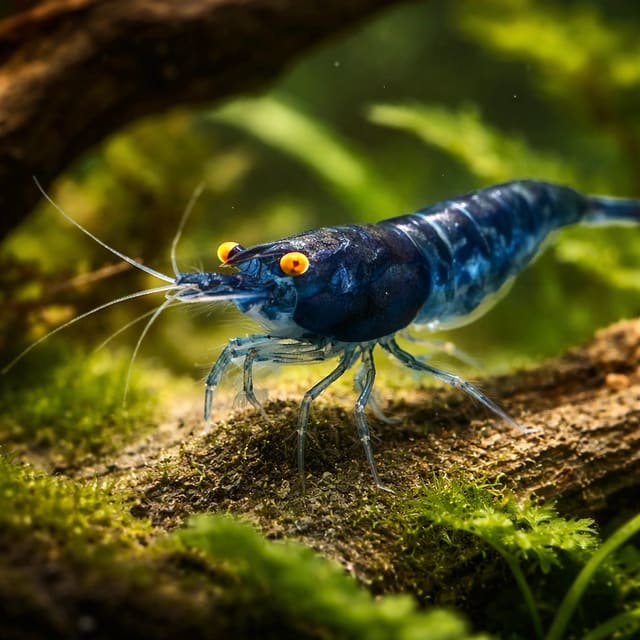
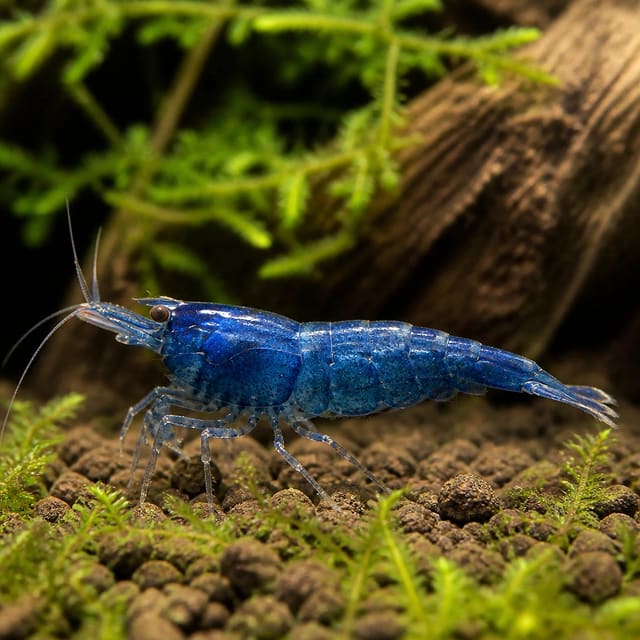
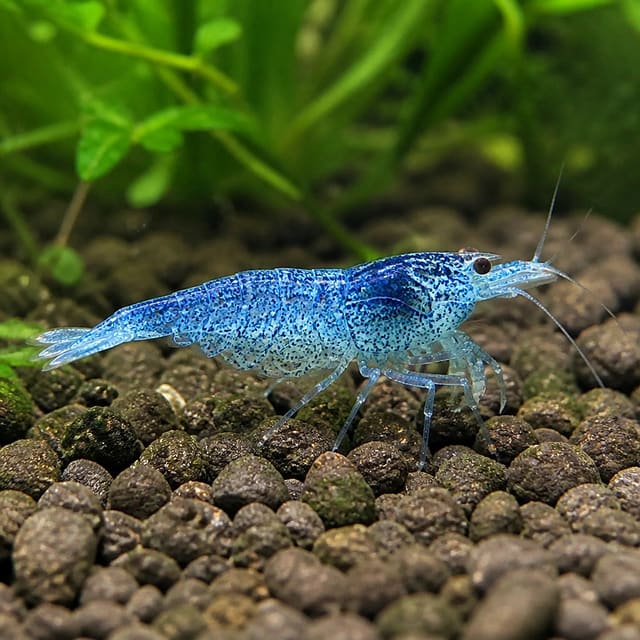
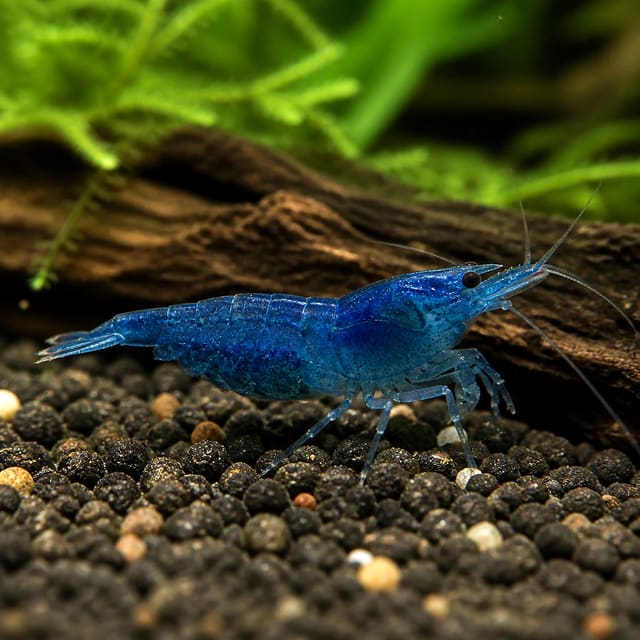
Blue Dream Shrimp (Neocaridina davidi)
18–28°C · pH 6.5–8 · 20L
£16.19

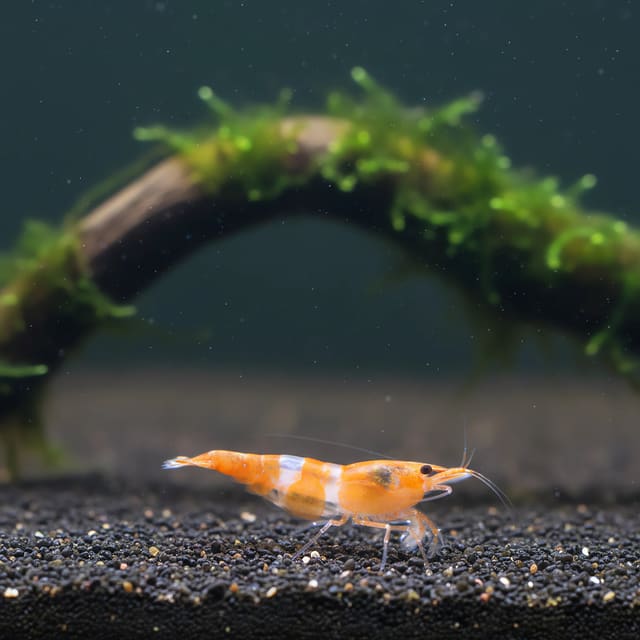
Orange Green Shrimp (Neocaridina davidi) are small freshwater shrimp for a mature, filtered aquarium with established grazing surfaces. One purchase supplies one live shrimp at the 1–1.5 cm dispatch size; adults are recorded at about 3–4 cm, while colour and maturity naturally vary.
Adult size is the maximum length this species reaches at full maturity (scientific sources). The livestock you receive will be younger and smaller. Product-photo provenance and any image-specific limitations are stated on the listing.
Neocaridina davidi
Lives in groups: kept together they stay settled, active and show their best colour.
Orange Green Shrimp (Neocaridina davidi) are small freshwater shrimp for a mature, filtered aquarium with established grazing surfaces. One purchase supplies one live shrimp at the 1–1.5 cm dispatch size; adults are recorded at about 3–4 cm, while colour and maturity naturally vary.
Adult size is the maximum length this species reaches at full maturity (scientific sources). The livestock you receive will be younger and smaller. Product-photo provenance and any image-specific limitations are stated on the listing.
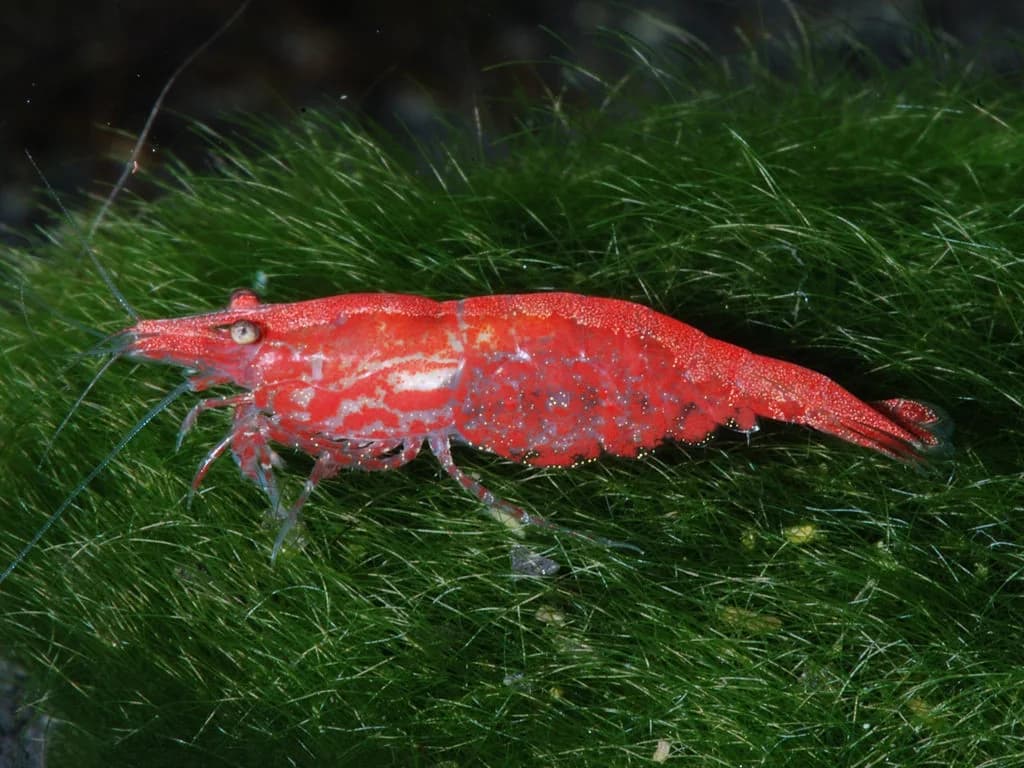
Use a mature, filtered aquarium and measured water—not a shrimp-per-litre rule. Tropical Fish Co uses 20 litres as a cautious starting policy for a small Cherry Shrimp group, above OATA's general 10-litre screen for small shrimp. Provide established grazing surfaces, cover and a protected filter inlet. No fish is guaranteed shrimplet-safe, and breeding should never be promised.
Maintain these water conditions for optimal health and vibrant colors
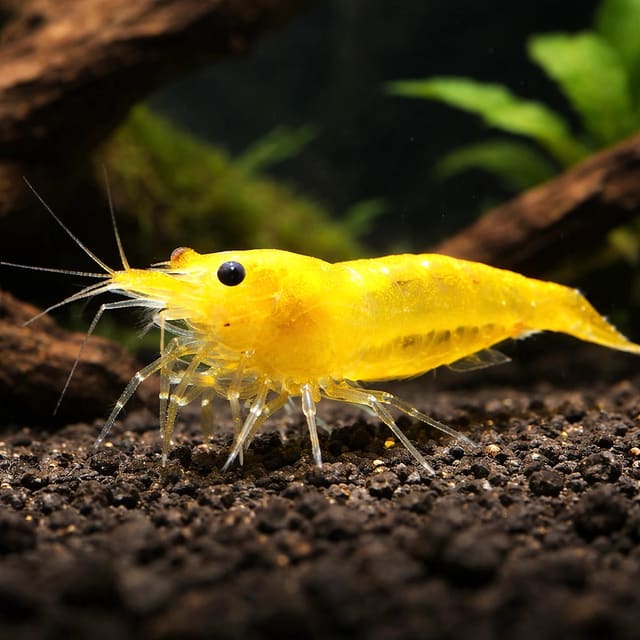
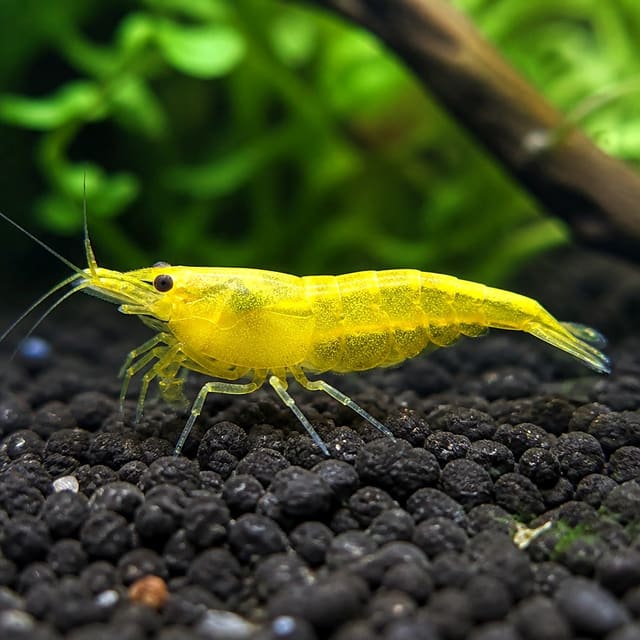
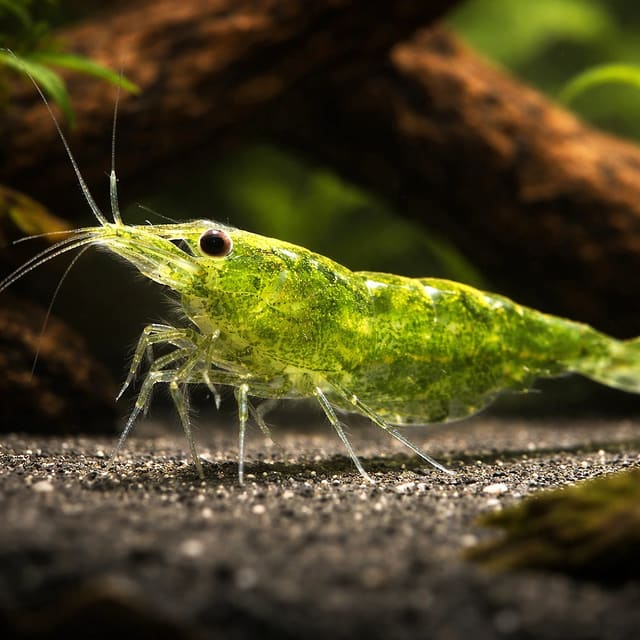
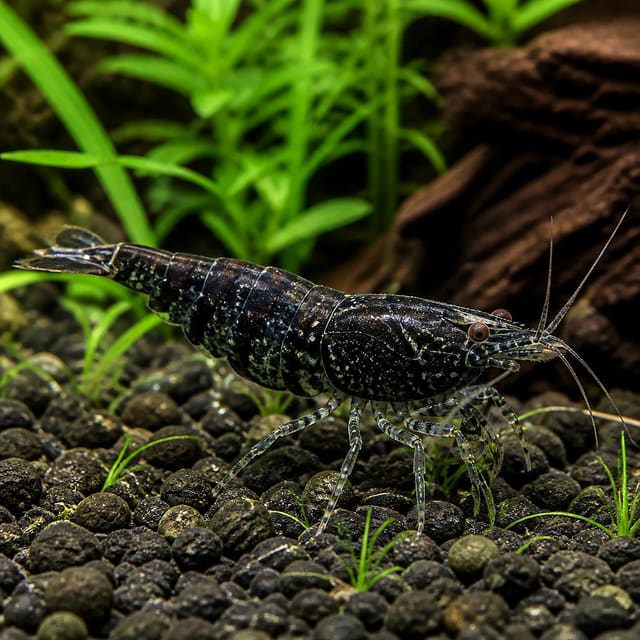
Orange Green Shrimp (Neocaridina davidi) are a selectively coloured form of a small freshwater shrimp from the family Atyidae. Their green body colour can look olive, mossy or brighter under different lighting, backgrounds and stages of maturity. They are best chosen for the quiet detail they add to a mature aquarium: grazing over hardscape, picking at established surfaces and moving between plants rather than behaving like an instant cleaning crew.
This product follows the supplier identity Neocaridina davidi with the trade colour description orange green. The accepted species name is Neocaridina davidi; the colour words stay outside the scientific name because they describe the offered line rather than another species. The dispatch size is 1–1.5 cm. That is the size supplied, not the adult size. A species summary records adults at approximately 3–4 cm, so plan the aquarium around a grown group rather than the small arrival size.
| Sold unit | One live Orange Green Shrimp per purchase |
|---|---|
| Dispatch size | 1–1.5 cm |
| Adult record | Approximately 3–4 cm in the species summary; lineage and sex are not separated in that record |
| Scientific identity | Neocaridina davidi, family Atyidae |
| Care assessment | Intermediate: small in size, but dependent on mature filtration, stable measured water and careful feeding |
| Social planning | OATA's broad shrimp guidance recommends groups of at least five |
Sex is guaranteed only when the selected option explicitly states male or female. This Orange Green Shrimp listing has no sex-guaranteed option.
A single shrimp can be added only where the existing group, tank capacity and compatibility already make sense. For a new group, OATA's broad care guidance recommends at least five social shrimp. Tropical Fish Co uses a mature, filtered 20-litre aquarium as a cautious starting policy for a small Cherry Shrimp group, above OATA's general 10-litre screen for small shrimp. Neither figure is a permanent shrimp-per-litre formula, and a community aquarium needs more room once fish, snails, feeding area and possible juvenile survival are considered.
| Suits | Less suitable for |
|---|---|
| Keepers with a mature filter and measured zero ammonia and nitrite | A brand-new aquarium that has not demonstrated stable biological filtration |
| Planted or structured aquariums with protected filter intakes and established grazing surfaces | Bare temporary setups with little cover or no protected intake |
| People willing to feed a complete shrimp food and watch the group, rather than relying on algae | Anyone expecting shrimp to replace normal cleaning and maintenance |
| Shrimp-focused displays where juvenile survival is important | Communities containing fish able to swallow shrimp or known predators |
| Measured, gradual husbandry with a plan for population growth | Frequent rapid changes to temperature, pH, hardness, food or treatments |
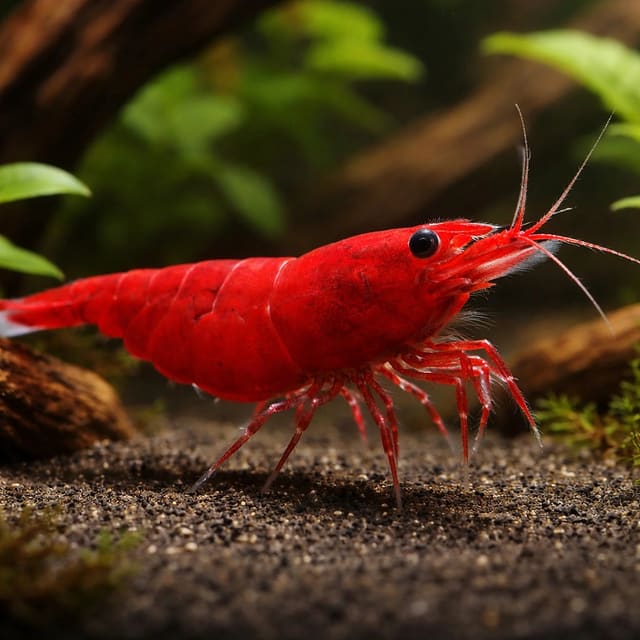
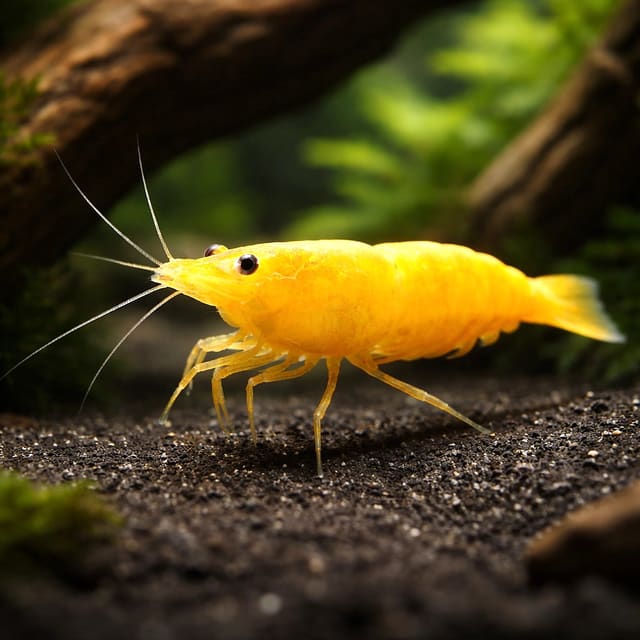
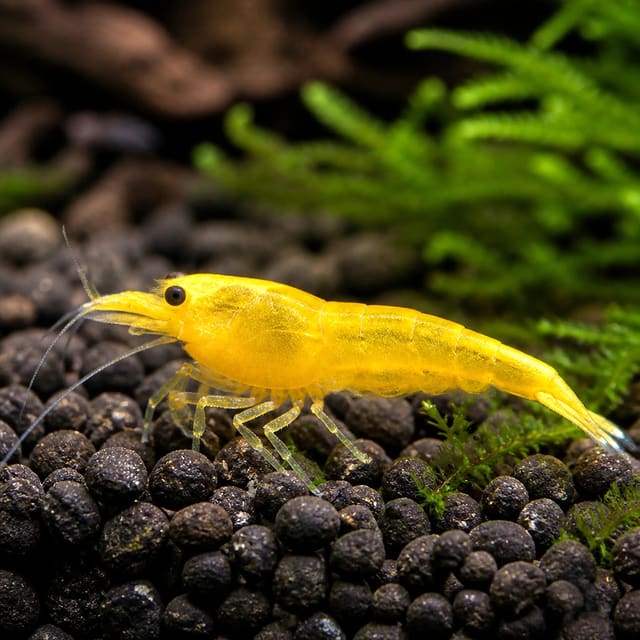
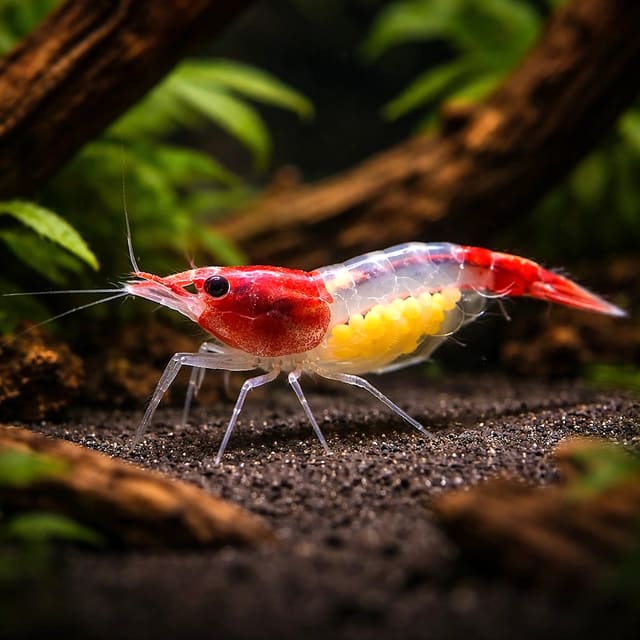
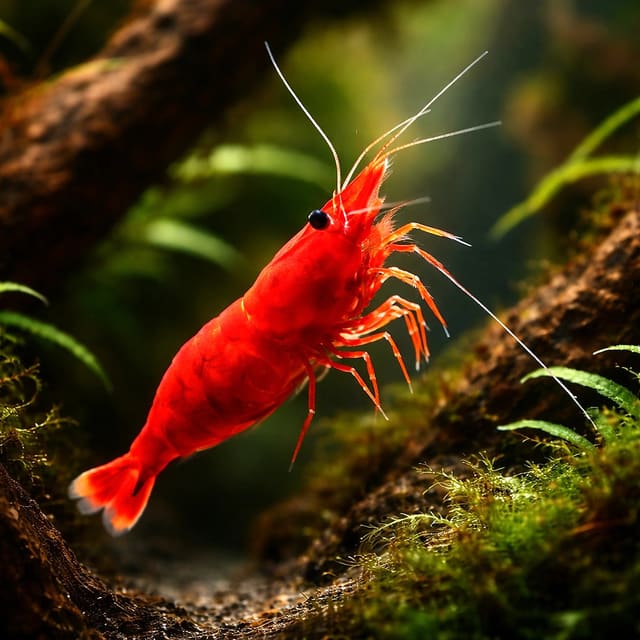
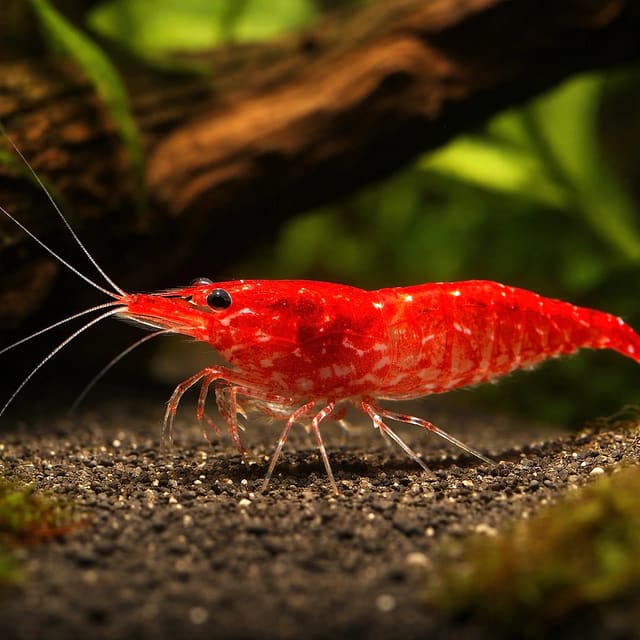
The orange-green colour is a line description, not a promise that every animal will show the same shade under every lamp or substrate. Natural variation is part of live-animal keeping. Gallery images have been digitally enhanced to improve image quality. Natural colour, pattern, size and maturity can vary between live animals.
For a fuller explanation of species care, water decisions and breeding boundaries, read the Cherry Shrimp Care Guide. To compare other colours without treating them as automatic companions, browse the current cherry shrimp collection.
A mixed display, a shrimp-only colony and a single-colour breeding project are different plans. In a mixed display, the main questions are adult fish predation and feeding access. A colony project adds protected intakes, dense cover and space for juveniles. A colour-line project also needs separation from other Neocaridina if maintaining the orange-green appearance matters.
That short plan prevents the animal's small dispatch size from hiding the real work: stable water, mature surfaces, suitable group care and patient observation.
A successful shrimp aquarium begins with biological maturity, not a calendar date. A tank that has been running for a certain number of weeks is not automatically ready. The filter must be able to process the aquarium's actual waste, and water tests should show zero ammonia and zero nitrite before livestock is added. Stock gradually so the bacterial population can respond to each increase in feeding and waste.
The RSPCA explains the essential role of a working biological filter: toxic ammonia is converted to nitrite and then to the safer end product nitrate. Shrimp add less individual waste than large fish, but their small size does not make them immune to an immature system. A filter problem, overfeeding or a dead hidden animal can still change water quality quickly, particularly in a small volume.
Tropical Fish Co's cautious policy starts a small Cherry Shrimp group in 20 litres of mature, filtered water. OATA gives 10 litres as a broad minimum screen for a group of small freshwater shrimp or snails. The extra volume in the store policy offers more headroom for equipment, feeding mistakes, summer heat and routine maintenance. Neither number tells you how many shrimp a tank can hold permanently.
Usable space matters alongside litres. Substrate, wood, rock, filter housings and a low water line all reduce the nominal volume. On the positive side, carefully chosen hardscape and plants create grazing surfaces and sheltered routes. Plan enough open access to inspect the animals and clean equipment without dismantling the whole aquarium.
Established biofilm is valuable because it creates continuous picking opportunities between meals. It is not a substitute for a complete diet, and a tank looking old or green does not prove that it is chemically safe. The useful combination is mature filtration, measured water, established surfaces, deliberate feeding and predictable maintenance.
Before adding the group, test ammonia and nitrite and review nitrate in relation to the source water. Check that the filter flow is normal, the heater or room temperature is stable and any tap water has been treated for chlorine or chloramine. Add animals gradually rather than increasing the biological load and feeding heavily on the same day.
The OATA freshwater aquarium guide recommends regular testing and gradual stocking. Its general setup principles are useful, while the exact water and social advice on this page is kept in shrimp context. If you are preparing your first invertebrate aquarium, the freshwater shrimp setup guide turns those priorities into a practical sequence.
| Before the shrimp arrive | What you are looking for |
|---|---|
| Test ammonia and nitrite | Both remain at zero under the tank's normal feeding routine |
| Observe filter flow | Steady movement without an exposed intake that can pull in small shrimp |
| Measure temperature | A stable reading within the planned range, including the warmest part of the day |
| Check grazing and cover | Established surfaces, hiding places and access to food for the whole group |
| Review companions | No fish that can swallow shrimp and no known predator left unplanned |
OATA's guidance for freshwater shrimp and snails gives 17–27°C, pH 6.5–8.0 and 4–18 dGH. These are useful first screening values for the group, not a controlled species-specific optimum for this colour line. The practical task is to compare the measured source water with the aquarium, choose a stable point within suitable guidance and avoid abrupt changes.
Temperature affects oxygen, metabolism, feeding and reproduction at the same time. Do not heat automatically because the animal is sold as tropical; measure the room and aquarium through a normal day. A cool room may need a correctly sized, thermostatically controlled heater, while a warm room may need an overheating plan and improved gas exchange. Keep equipment guarded so a shrimp cannot rest directly against an unsafe surface.
pH and hardness deserve the same measured approach. UK tap water varies between supplies, and aquarium substrate, rocks, top-ups and water changes can shift the result. Test the aquarium itself rather than assuming a postcode or a water-company average describes the tank. The aquarium water parameters guide explains what each measurement means, and the water matcher helps compare a real set of readings with the stated guidance.
OATA strongly recommends a 25% partial water change at least weekly for freshwater shrimp and snails as a broad routine. Treat that as a starting schedule to be adjusted from test results, stocking, feeding, plant growth and source-water chemistry. Condition replacement tap water before it enters the aquarium, and match temperature closely enough to avoid a sudden swing.
A stable tank is not one whose numbers never move by a decimal point. It is one where changes are understood, gradual and compatible with the animals. Chasing a pH reading with repeated chemical corrections can create more stress than choosing a suitable steady value and maintaining it.
Learn the group's normal pattern. A healthy shrimp may spend long periods grazing, retreat while moulting or explore new food, but a whole-group change deserves attention. Reduced feeding, unusual stillness, frantic movement, repeated attempts to leave the water, widespread pale colour or several animals gathering at unusually high-flow areas can justify immediate water and equipment checks.
| Observation | First practical response |
|---|---|
| Several shrimp stop feeding | Test water, check temperature and equipment, then review recent food, maintenance and additions |
| Filter flow has fallen | Inspect for blockage and clean only as needed while protecting beneficial bacteria |
| Colour appears different | Compare lighting, background, maturity, stress and camera effects before treating appearance alone |
| An empty shell is found | Identify it as a moult if possible and locate the animal; a shell alone is not a diagnosis |
| One fish begins hunting shrimp | Use the prepared separation plan rather than relying on added food or more hiding places |
A test result is most useful when it can be compared with an earlier one. Record the date, time, temperature and recent maintenance so later readings have context. If nitrate begins rising more quickly after the group grows or feeding increases, review portions, waste removal, plant growth and water-change frequency together rather than changing several unrelated things at once.
Topping up replaces evaporated water but leaves many dissolved substances behind. Repeated top-ups can therefore change mineral concentration. A partial water change removes some dissolved waste and replaces part of the water chemistry. Keep both actions deliberate, condition new tap water, and recheck the aquarium after changing source water, substrate or stone.
Small shrimp also depend on equipment consistency. Check that a heater is not creating a very hot corner, that a sponge has not clogged enough to reduce flow and gas exchange, and that plant growth has not sealed the surface. In summer, measure the warmest daily temperature rather than relying on the heater setting. During cold weather, confirm the aquarium itself remains stable instead of treating an indicator light as proof.
| Finding | Measured response |
|---|---|
| Nitrate rises faster than before | Review population, feeding and waste removal before increasing the maintenance burden |
| pH differs morning to evening | Check aeration, plant activity and the normal daily cycle before using an adjuster |
| Hardness creeps upward | Review evaporation, top-up practice, rocks and substrate, then compare source and tank water |
| Several shrimp change behaviour | Test temperature, ammonia and nitrite immediately and inspect all equipment |
Records do not need to become complicated. A notebook with readings, water-change volume, food changes and a brief observation is enough to show whether a problem is sudden or gradual. That distinction is valuable when deciding whether the priority is an emergency water-quality response, equipment repair, feeding adjustment or patient observation.
Neocaridina davidi are omnivorous grazers. In an aquarium they pick at biofilm and soft growth, but they still need an appropriate complete shrimp food. Algae alone is unpredictable in quantity and nutrition, while heavy feeding can foul the very water the shrimp depend on.
Use a complete sinking shrimp food as the nutritional base, following the product instructions and adjusting to the group, temperature and other animals. Suitable variety can be offered carefully, but every addition should have a clear purpose and be removed if it remains uneaten. A feeding dish can make leftovers easier to see, although timid animals must still be able to reach food away from bold competitors.
Shrimp are sometimes marketed as algae eaters, but they do not guarantee control of a named algae and they do not remove the need for normal cleaning. If algae is increasing, investigate light duration, nutrients, feeding and maintenance. Add shrimp because their care and behaviour fit the aquarium, not as a disposable treatment for a maintenance problem.
Growth requires the old exoskeleton to be shed. A moult can be mistaken for a dead animal, and a recently moulted shrimp may hide while the new shell hardens. Keep water chemistry and diet steady; sudden changes made in response to one shell may create a larger problem. Hardness describes part of the dissolved mineral picture, but a single dGH result does not diagnose a moulting issue by itself.
When a shrimp appears unwell, begin with observations that can be verified. Measure temperature, ammonia and nitrite; review nitrate, pH and hardness in context; confirm filter flow and gas exchange; then list recent changes such as new plants, animals, decor, aerosols, foods or treatments. Clear photographs and a short timeline are more useful than trying several medicines at once.
Freshwater shrimp are sensitive to copper exposure. Read the complete current label and every invertebrate warning before any aquarium treatment is used. A product being sold for fish does not make it suitable for shrimp, and this page does not set a universal safe concentration. If treatment is necessary and the label is unclear, obtain suitably qualified advice and use a separate mature system where appropriate.
Do not dose preventively on the basis of colour change, hiding or a single white mark. Similar-looking signs can have different causes, including normal moulting, injury, water quality, stress and organisms that require different responses. Isolate decisions, keep records and protect the rest of the aquarium from unnecessary exposure.
Females carry eggs beneath the abdomen, and Neocaridina davidi young hatch as benthic juveniles rather than needing the prolonged saline larval stage associated with Amano Shrimp. That biology can make aquarium reproduction possible, but it does not promise a colony. The offered shrimp has no guaranteed sex, and one purchase cannot be treated as a guaranteed breeding unit.
If colony growth is the aim, prioritise a mature filter, protected intakes, dense cover, suitable food and freedom from fish predation. Plan for the opposite outcome as well: a successful group can increase the feeding load and available grazing pressure. Avoid promising a fixed maturity age, egg count, incubation time or monthly population increase because temperature, lineage, sex mix, food and survival all vary.
Compatibility starts with the outcome you want. A display where a few adult shrimp coexist with fish is different from a colony intended to retain newly hatched juveniles. No fish can be guaranteed safe for shrimplets. OATA's broad guidance says freshwater shrimp should not be mixed with fish able to fit them in the mouth or with species known to be predatory.
Use adult size, mouth size and feeding behaviour, not a peaceful label alone. A fish may ignore adult shrimp yet hunt juveniles, or it may become more interested after discovering a moulted animal. Territorial behaviour, fast feeding and constant disturbance can also reduce shrimp access to food without obvious predation.
| Question | Why it matters |
|---|---|
| Can the adult companion swallow a shrimp? | If yes, the pairing carries an obvious predation risk |
| Can it take newly hatched juveniles? | Almost any fish can change colony survival even when adults appear safe |
| Do the water ranges genuinely overlap? | A behavioural match still fails if temperature or chemistry pulls one animal outside suitable conditions |
| Who reaches food first? | Fast fish and large snails can leave shrimp underfed while the aquarium still looks well supplied |
| Is cover permanent? | Plant trimming and maintenance can remove the refuge the original plan depended on |
| Is there a separation option? | Observed behaviour is more useful when there is somewhere safe to move an animal |
Other Neocaridina may share broad care needs, but mixing colour lines can change the appearance of future generations and can spread health issues between groups. Snails also require their own species checks, feeding space and water plan. Neither category should be called universally suitable.
A shrimp-only aquarium removes fish predation but not every risk. Intake design, overfeeding, population growth, unstable water, treatments and new-animal biosecurity still matter. It can be the clearest choice when juvenile survival or preservation of one colour line is the goal because feeding access and behaviour are easier to observe.
Quarantine and observation should be practical rather than theatrical. Use dedicated wet equipment where possible, avoid moving shop or transport water into the display, and observe new animals closely. There is no single home quarantine duration supplied here; the important controls are separation, clean equipment, records and a response plan.
Prepare the aquarium and test it before the delivery day. Follow the current arrival guidance for the order and compare the bag water situation with the established aquarium rather than using one universal drip time for every journey. Gradual change is the goal, but the appropriate method depends on bag condition, temperature and chemistry.
Never release shrimp, aquarium water, plants or equipment contents into natural waterways. Rehome responsibly or use an appropriate disposal route, keeping non-native animals and pathogens away from the environment.
The species summary records adult Neocaridina davidi at approximately 3–4 cm. That adult record is separate from the 1–1.5 cm dispatch size and does not divide the result by sex or colour lineage.
Tropical Fish Co uses a mature, filtered 20-litre aquarium as a cautious starting policy for a small group. OATA gives 10 litres as a broad screen for small freshwater shrimp; neither figure is a permanent shrimp-per-litre formula, so allow more room for companions and population growth.
OATA's broad social guidance recommends at least five shrimp. Plan the group around mature filtration, grazing area, feeding access and future juveniles rather than multiplying the aquarium volume by a fixed density rule.
They receive an intermediate store care assessment. Their small size is manageable, but a keeper still needs a biologically mature filter, measured water, protected intakes, appropriate food and the confidence to avoid rapid changes or unsuitable medicines.
They graze biofilm and soft growth, but should receive an appropriate complete shrimp food rather than relying on algae alone. Feed measured portions, make sure the whole group can reach them and remove recurring leftovers before they affect water quality.
OATA's broad freshwater shrimp guidance gives 17–27°C, pH 6.5–8.0 and 4–18 dGH. Use those figures as a group-level planning screen, compare measured source and aquarium water, and make any necessary change gradually.
They are peaceful grazing crustaceans rather than fin-nipping fish. Their main community risk runs the other way: fish may swallow adults or juveniles, while fast companions can outcompete them at food.
Avoid fish that can fit shrimp in their mouths and species known to be predatory. Other shrimp or snails still need matching water, food and health checks, and no fish can be promised safe when newly hatched juveniles matter.
Tropical Fish Co hand-packs live animals in oxygenated bags, an insulated box and a heat pack when weather calls for it, using a licensed live-animal courier. Read the current delivery and Live Arrival Guarantee policy; for a claim, contact the team the same day with the order number and a continuous unboxing video that begins with the parcel sealed and shows the animal in the bag.
The identity and care figures above are kept in their original scope so a dispatch measurement is not confused with adult growth and broad trade guidance is not presented as a laboratory optimum.
No reviews for this item yet. Bought one? Honest reviews only, good or bad.
What customers say about ordering from us
I have a small group of long finned mountain minnows. So was delighted to be able to order ten of this variety to increase the genetics in my tank . The ones I recieved are healthy but it’s to early to give a verdict on wether they are of a long finned type since they are small currently.
Gordon Walker · 23 Sept 2026
100% success travel and "installation". Pleased with quality of purchase. The Siamese fighter a bit "shy" so have not yet seen him at his best yet but looking good. Happy customer. GG
George E Garratt · 21 Sept 2026
Reviews of our shop, collected by Judge.me, an independent third-party review collector. Newest first.