Easy
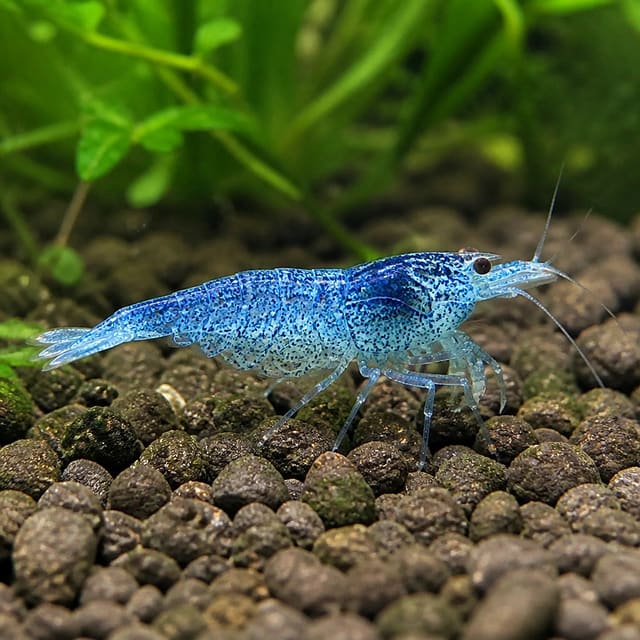
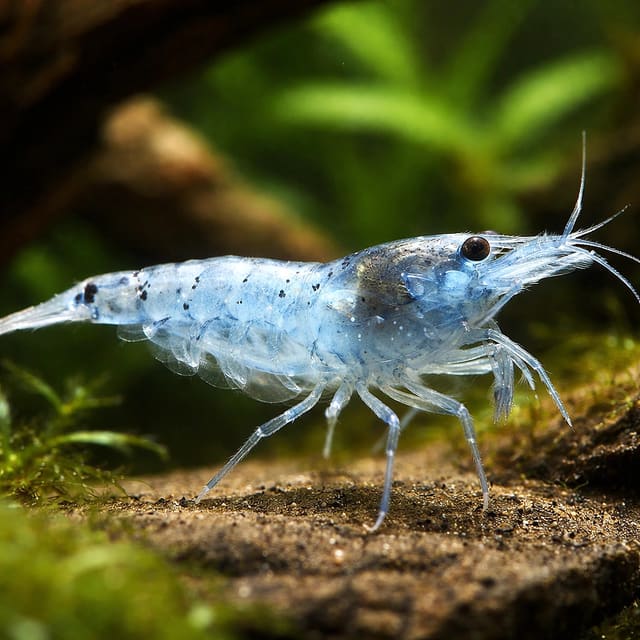
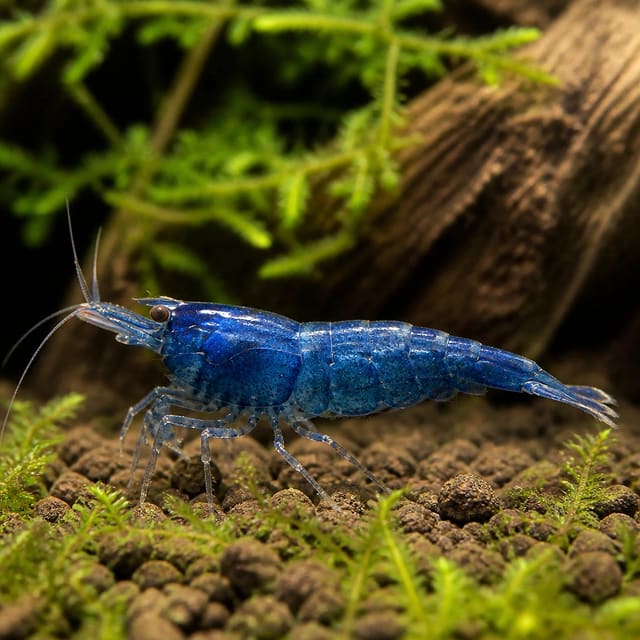
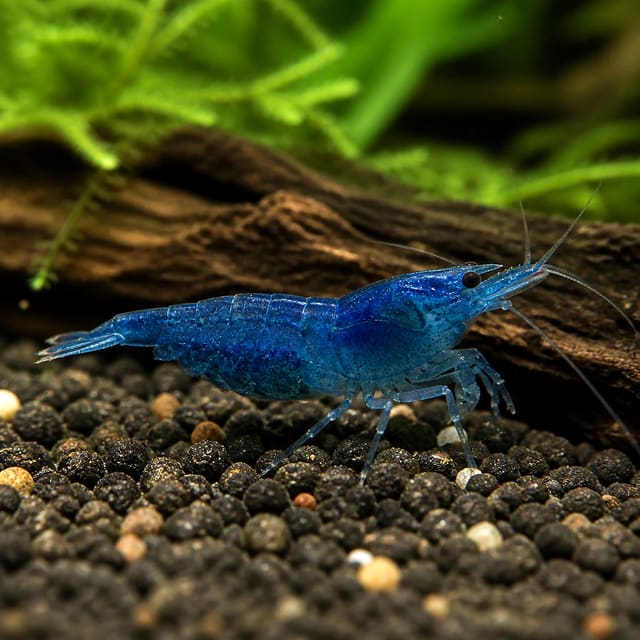
Blue Dream Shrimp (Neocaridina davidi)
18–28°C · pH 6.5–8 · 20L
£16.19

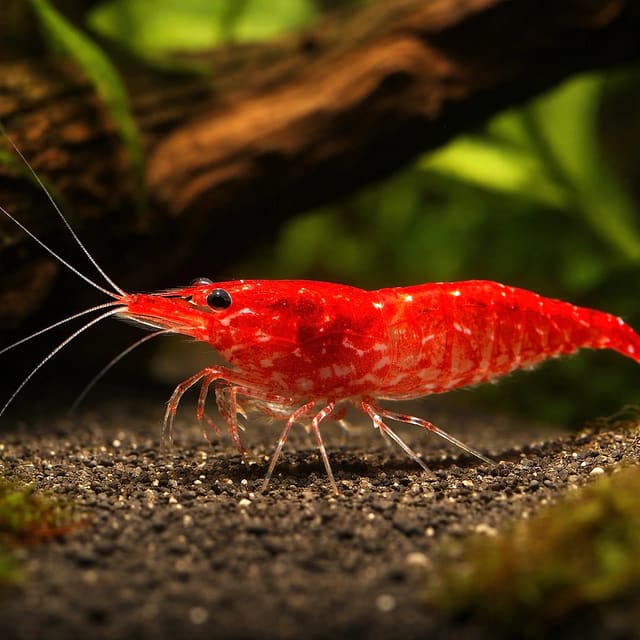
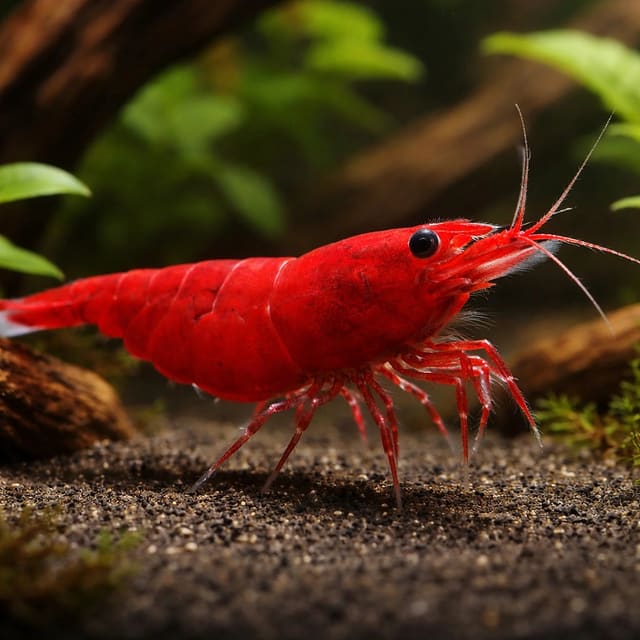
Red Rili Shrimp (Neocaridina davidi) is a red-and-clear colour form of the cherry shrimp species, reaching about 3–4 cm and best kept in a group of five or more in a mature, filtered freshwater aquarium. Each purchase is one shrimp at 1–1.5 cm or 2–2.5 cm.
Adult size is the maximum length this species reaches at full maturity (scientific sources). The livestock you receive will be younger and smaller — pick a size above for the actual shipping size. Product-photo provenance and any image-specific limitations are stated on the listing.
Neocaridina davidi
Lives in groups: kept together they stay settled, active and show their best colour.
Red Rili Shrimp (Neocaridina davidi) is a red-and-clear colour form of the cherry shrimp species, reaching about 3–4 cm and best kept in a group of five or more in a mature, filtered freshwater aquarium. Each purchase is one shrimp at 1–1.5 cm or 2–2.5 cm.
Adult size is the maximum length this species reaches at full maturity (scientific sources). The livestock you receive will be younger and smaller — pick a size above for the actual shipping size. Product-photo provenance and any image-specific limitations are stated on the listing.
Use a mature, filtered aquarium and measured water—not a shrimp-per-litre rule. Tropical Fish Co uses 20 litres as a cautious starting policy for a small Cherry Shrimp group, above OATA's general 10-litre screen for small shrimp. Provide established grazing surfaces, cover and a protected filter inlet. No fish is guaranteed shrimplet-safe, and breeding should never be promised.
Maintain these water conditions for optimal health and vibrant colors
Red Rili Shrimp are a selectively bred colour form of Neocaridina davidi, the freshwater dwarf shrimp better known as the cherry shrimp. The World Register of Marine Species lists Neocaridina davidi (Bouvier, 1904) as an accepted species in the family Atyidae. Older sources and some trade labels use the names Neocaridina heteropoda or N. denticulata sinensis; this listing uses the accepted name.
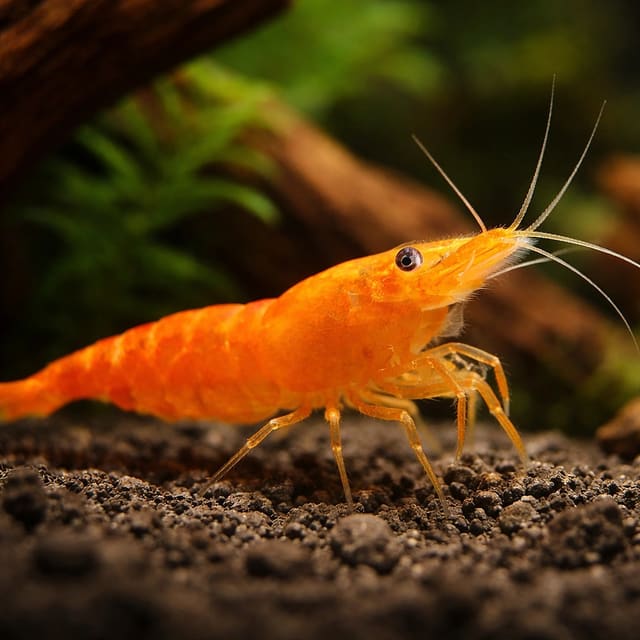
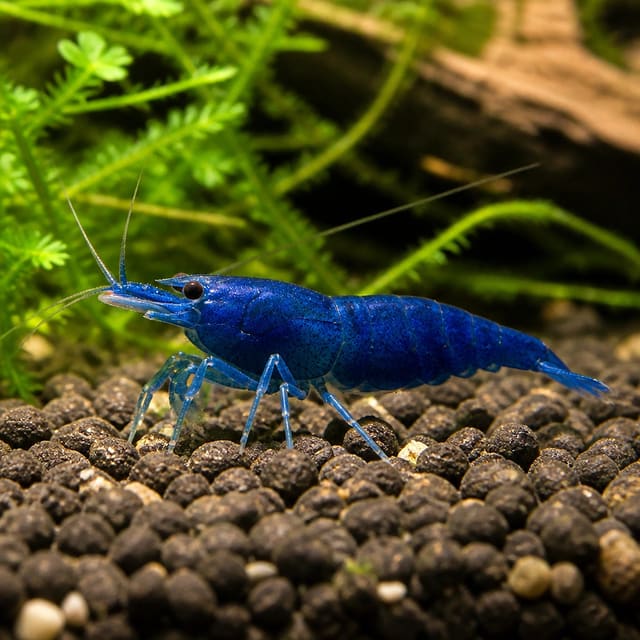
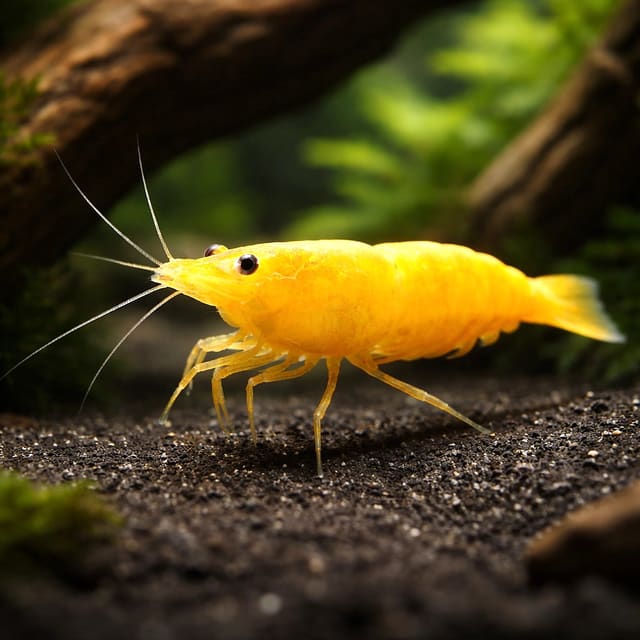
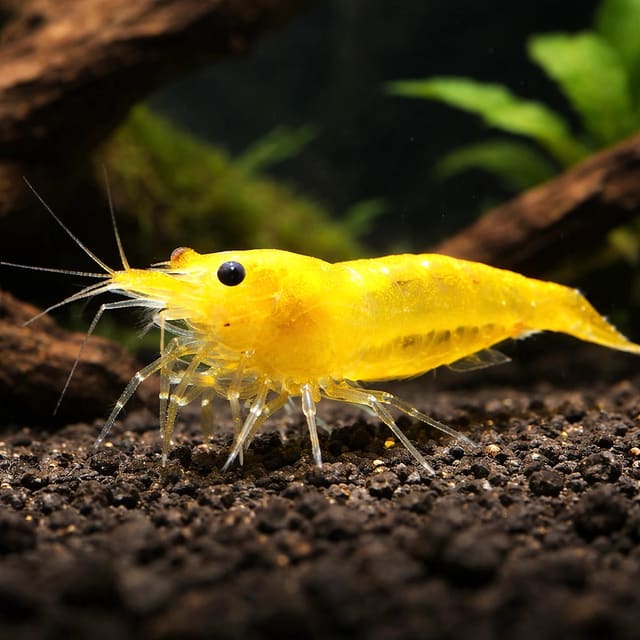
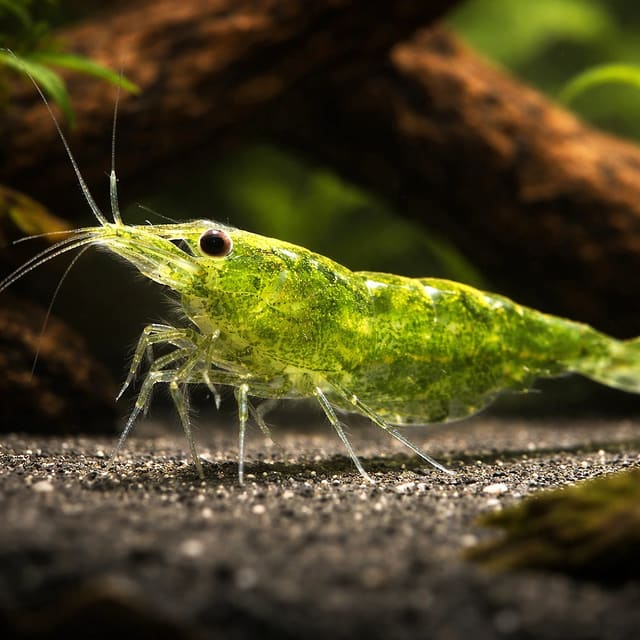
Wild shrimp of this species are a mottled brown. According to the Wikipedia species summary, they come from Taiwan, eastern China, the Korean Peninsula and Vietnam, where they live in lakes, ponds, rivers and streams, and selective breeding has produced red, orange, yellow, green, blue, violet, white and clear forms. The popularity of the red form is where the name cherry shrimp comes from. Adults are approximately 3–4 cm long at maturity.
They are peaceful, busy grazers that spend their day picking over plants, wood and substrate. The most important condition for success is a mature, filtered freshwater aquarium with zero ammonia and nitrite, plenty of cover and no fish large enough to eat them.
Each purchase supplies one live Red Rili Shrimp in the size you choose: 1–1.5 cm or 2–2.5 cm. The size you select is the size supplied, not the adult size. Both are the same Red Rili Shrimp; only the size on arrival differs. The 2–2.5 cm shrimp are closer to adult length and easier to spot among plants, while the 1–1.5 cm shrimp still have some growing to do.
Shrimp species are usually social, and the OATA care sheet for freshwater shrimp and snails advises keeping them in groups of at least five, so set the quantity to five or more rather than buying a single shrimp. A group also makes the colour show far better in a planted tank than one or two animals ever will.
Sex is guaranteed only when the selected option explicitly states male or female. This Red Rili Shrimp listing has no sex-guaranteed option. Every photo in the gallery shows shrimp carrying a cluster of yellow eggs. The shrimp you receive are chosen by size, not by sex or breeding condition, so they may not be carrying eggs and a group cannot be promised to contain both sexes.
| Suits | A mature, filtered freshwater aquarium with dense cover and a regular testing routine |
|---|---|
| Group | At least five, following OATA's guidance for social shrimp |
| Adult size | About 3–4 cm |
| Water | OATA's broad group guidance: 17–27°C, pH 6.5–8.0, 4–18 dGH |
| Avoid | Fish that can fit a shrimp in their mouth, predatory species and copper treatments |
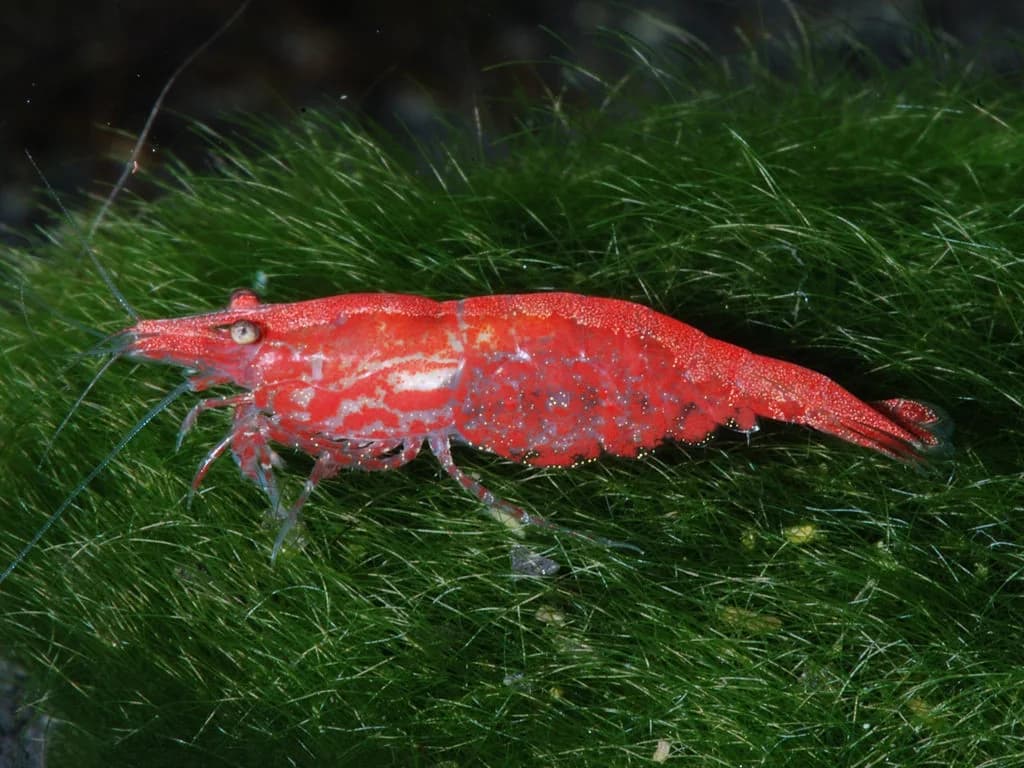
The Red Rili pattern is easy to recognise in the gallery: a solid red head and tail with a clear, glassy section through the middle of the body. The amount of red and the sharpness of the clear band vary from shrimp to shrimp, which is part of the appeal of a group. Gallery images have been digitally enhanced to improve image quality. Natural colour, pattern, size and maturity can vary between live animals.
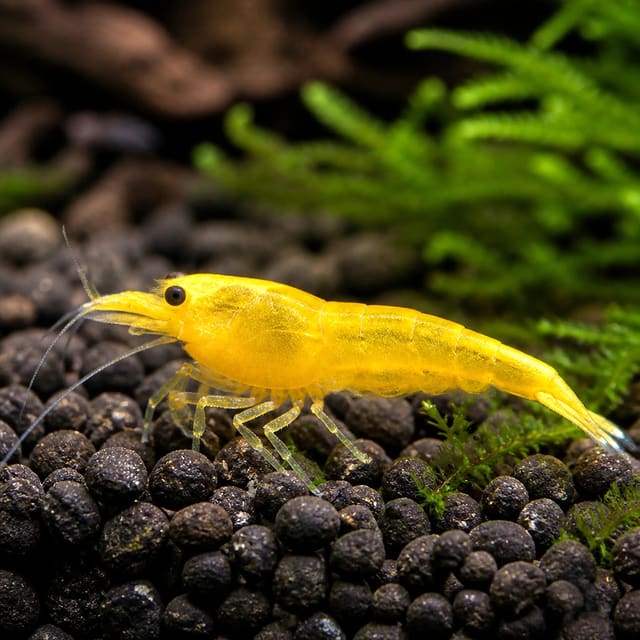
Because Red Rili, cherry red, blue and other lines all belong to one species, their basic care is the same. What differs is inherited colour. If you want to keep one colour line looking consistent over generations, give it a tank of its own rather than mixing lines, because mixed colours may not breed true. You can compare the other colour forms in our cherry shrimp range.
It helps to decide what you want from the shrimp before choosing how many to buy. A display group in a planted community tank, a single-colour line you hope will breed true and a nursery aimed at raising as many young as possible each need different decisions about fish, space and a spare tank.
That short record takes very little time and makes later troubleshooting far easier than changing several things at once.
OATA recommends an aquarium of at least 10 litres for a group of small freshwater shrimp and says it needs to be larger if fish share it. It also makes the point that a larger aquarium keeps temperature and water quality more stable. We use a mature, filtered 20-litre aquarium as a more cautious starting policy for a small group, because the extra water gives more headroom for feeding mistakes, equipment and summer heat. Neither figure is a biological minimum or a formula for how many shrimp a tank can hold.
Plan in this order instead:
A filter is always essential. The RSPCA explains that animals release toxic ammonia and that a working biological filter holds the bacteria that turn it into nitrite, also toxic, and then into the safer nitrate. For shrimp, choose a filter whose intake can take a fine guard or a suitable sponge: newly hatched shrimp are small enough to be drawn into an open intake.
OATA suggests aquarium gravel or sand and, ideally, live plants to provide cover. Where live plants are not used, plastic plants and ornaments such as plant pots or model caves give shelter instead. Add aquarium-safe wood, rock or dense planting so that sheltered surfaces are available all around the tank, and keep enough open access to reach equipment for cleaning. Our guide to setting up a first shrimp tank walks through the equipment in more detail.
A lid or secure cover helps prevent shrimp climbing out, but it must not block ventilation or trap cables. Check the gaps around filter pipes and heater cables as part of the set-up.
Mature is a biological state, not a fixed wait of a set number of weeks. The filter must be able to process the waste the shrimp and any other animals will produce, and tests must show that ammonia and nitrite stay at zero. OATA's freshwater aquarium set-up guidance covers cycling, regular testing and adding animals gradually, and its shrimp sheet asks you to check that ammonia and nitrite are zero before any shrimp go in.
Add livestock slowly. The beneficial bacteria in a filter grow to match the load they receive, so every new group of animals and every increase in feeding needs time for the bacteria to catch up. Overstocking or stocking too quickly causes what OATA calls new tank syndrome: ammonia and nitrite rise and shrimp can become ill or die.
Established surfaces carry biofilm, the thin living film that shrimp graze constantly. In controlled culture work, biofilm on suitable substrates improved juvenile survival and growth and helped maturation and egg incubation. That is a good reason to add shrimp to a settled aquarium with plenty of surface area. It does not make an old-looking tank safe on appearance alone, and biofilm by itself is not a complete feeding plan.
OATA describes freshwater shrimp and snails as usually undemanding of water chemistry and gives these values as a general guide for the whole group. They are planning figures for the whole group rather than measured limits for Neocaridina davidi.
| Parameter | OATA group guidance |
|---|---|
| Temperature | 17–27°C |
| pH | 6.5–8.0 |
| General hardness | 4–18 dGH |
| Carbonate hardness | 3–15 dKH |
| Ammonia | Zero mg per litre |
| Nitrite | Zero mg per litre |
| Nitrate | No more than 20 mg per litre above your tap water level |
Temperature changes how these shrimp grow and breed. In controlled culture at 24°C, 28°C and 32°C, temperature altered growth and reproduction, and in one high-temperature experiment females spawned at 28°C but not at 33°C. Those were experimental conditions. They explain why stability matters; 33°C is not a care target, and none of the figures replaces measuring your own tank.
UK tap water is not one chemistry. Hardness varies with geology and supply, and your water company can give you local figures. Test the aquarium as well, because rock, substrate, top-ups and treatments all change it. Water from an ion-exchange softener has had its calcium and magnesium replaced with sodium, so softened does not automatically mean suitable for shrimp. Our guide to aquarium water chemistry explains each test, and the water parameter matcher lets you compare your readings with stated guidance.
Whether you need a heater depends on your room, not on the season or your postcode. Measure the room and aquarium temperatures over several days. If they cannot stay within a stable range inside OATA's 17–27°C group guidance, fit a correctly sized, guarded heater with a thermostat. Guarding matters because shrimp climb over equipment.
Warm rooms need the opposite plan. A tank in a sunny window or a hot loft can climb well above the range in summer, and the experimental work above shows that high temperatures affect breeding. Keep the tank out of direct sun, allow airflow over the surface and watch the thermometer on hot days.
These shrimp are omnivores. OATA's sheet describes freshwater shrimp as grazers that work over algae in the aquarium and says this should be supplemented with algae wafers, or with commercial pellets made for freshwater shrimp, so they get enough food. Our own guidance is to use an appropriate complete sinking shrimp food as the nutritional base and let grazing on biofilm and soft growth fill the gaps.
OATA suggests feeding freshwater shrimp only two or three times a week. Leave pellets or wafers for at least 30 minutes so the shrimp have time to find them, and take care not to overfeed: uneaten food breaks down and releases toxic waste into the water. Treat that rhythm as a starting point, then adjust by what you see:
Remove what is left over and adjust the next portion rather than adding more.
Pale colour is not automatically a food problem. Lineage, lighting, substrate, stress, health and even camera settings all affect how red a shrimp looks, so check water and conditions before changing the diet. Grazing shrimp also do not remove fish waste or guarantee control of any particular algae; they tidy surfaces, not the underlying causes.
Any reading above zero means the filter is not keeping up. Stop adding food for the moment, carry out a partial water change with conditioned water at the same temperature, and check the filter for blockages. Think back over what has changed: new animals, heavier feeding or recent cleaning can all push a filter past what its bacteria can handle. Keep testing until both readings are back at zero before adding anything new.
OATA calls good husbandry essential for freshwater shrimp. Small, regular jobs done every week keep the water steady, and steady water is what these shrimp need most.
Healthy shrimp spend most of their time picking at surfaces with their front legs, moving steadily over plants, wood and substrate. They come out to food quickly, keep their legs and antennae moving and hold their colour from day to day. Knowing what your group looks like on an ordinary day is the easiest way to notice when something changes.
Shrimp grow by shedding their exoskeleton, and an empty moult lying on the substrate can look alarmingly like a dead shrimp. Count the group before you worry. Hiding often accompanies moulting too, but neither a shed shell nor hiding on its own tells you that anything is wrong.
OATA lists signs worth noticing in freshwater shrimp:
A 2023 survey found small organisms living on the shells of some commercially sourced N. davidi, with prevalence varying by source. That is a reason for careful inspection and good biosecurity, not for medicating automatically whenever a white mark appears.
OATA warns that shrimp and snails are very sensitive to copper and will die if exposed even to low levels. Make sure every treatment added to the aquarium is safe for invertebrates, read the full label including any invertebrate warnings, and identify the problem before treating anything.
We hand-pack every order. Shrimp are hand-bagged in pure oxygen and packed in an insulated poly box, with a heat pack when the weather calls for it, and a licensed live-animal courier delivers the parcel. We email the tracking number and your confirmed delivery date so you know when to be in. If you would like to compare water chemistry before the shrimp arrive, ask us for the values they are held in.
The full terms are on our delivery and Live Arrival Guarantee page.
Keep a net and bucket for this tank where you can, and watch new arrivals closely for the first days. Never release shrimp, aquarium water, plants or the contents of equipment into the wild or into a drain that can reach it. The species tolerates a wide range of conditions and has become invasive in thermally polluted waterways in Japan, the United States, Poland and Germany, where released captive shrimp are thought to be the source. If you ever need to rehome shrimp, follow the GB Non-native Species Secretariat's pet code.
Cherry shrimp are not livebearers. A mature female carries her eggs beneath her abdomen, and the young hatch as tiny bottom-dwelling shrimp. There is no distinct larval stage and no need for the salty water that Amano shrimp larvae require, so the whole cycle can take place in a freshwater aquarium.
That still does not guarantee a colony. Young shrimp survive best with mature surfaces to graze, suitable food, protected filter intakes and dense cover such as moss, and they are at their most vulnerable to fish. We cannot promise a sex mix from an unsexed purchase, a maturity age, an egg count, an incubation period or a growth rate, because each depends on the batch and the conditions in your tank.
If you want one colour line to stay consistent, keep it in a tank of its own. Red Rili kept alongside other colour forms of the same species can interbreed, and their offspring may not look like either parent.
OATA describes freshwater shrimp as generally compatible with most species, with two firm exceptions: they should not be mixed with any fish that can fit them in its mouth, or with any species known to be predatory. Its sheet also notes that shrimp may be eaten by common aquarium fish, which is why each pairing needs thought.
No fish is guaranteed safe with adult shrimp, and a fish that ignores adults may still hunt newly hatched young. Before adding any fish, check:
If you do keep shrimp with fish, give them the advantage. Dense cover such as moss and fine-leaved plants gives adults and young somewhere to retreat, and it needs to stay dense after every trim. Feed in a way that lets food reach the substrate, so shrimp are not left waiting while fish eat everything in mid-water. Watch the first days after each new fish closely, and have a spare tank or container ready so you can separate the shrimp if a tank mate starts hunting them.
Keeping shrimp on their own removes fish predation, which gives young shrimp their best chance. It does not remove the other risks: crowding, equipment, feeding and water quality still need the same care. Our full Cherry Shrimp care guide compares these choices in more depth.
OATA covers freshwater shrimp and snails on the same care sheet, with the same water guidance, and describes both as generally compatible with most species. One exception is worth knowing: the assassin snail preys on other snails, so it matters in a tank where you also keep snails.
Other colour forms of Neocaridina davidi share this species' care, but they can interbreed with Red Rili. That is fine in a mixed display; it is not what you want if you are keeping one colour line for its looks.
| Tank mate | Guidance |
|---|---|
| Fish that can fit a shrimp in their mouth | Avoid |
| Predatory species | Avoid |
| Small peaceful fish | Check each species by name; young shrimp remain at risk |
| Snails | Generally compatible; assassin snails prey on other snails |
| Other Neocaridina colour forms | Same care, but they can interbreed with this line |
Adults of the species are approximately 3–4 cm long at maturity, and OATA puts small aquarium shrimp at about 3 cm. Plan cover, food and tank space around that adult size.
OATA recommends at least 10 litres for a group of small freshwater shrimp, and more if fish share the tank. We use a mature, filtered 20-litre aquarium as a cautious starting point; neither figure is a shrimp-per-litre formula.
Keep a group. OATA notes that shrimp species are usually social and should be kept in groups of at least five, so start with five or more.
It can suit a careful beginner, but only in a mature, filtered aquarium where ammonia and nitrite already read zero and water testing is routine. Hardy never means suitable for a new or overheating tank.
They are omnivorous grazers that pick algae and biofilm from surfaces. Add algae wafers or a complete shrimp food; OATA suggests feeding only two or three times a week, leaving food for at least 30 minutes and then removing what is left.
OATA's broad guidance for freshwater shrimp is 17–27°C, pH 6.5–8.0 and general hardness 4–18 dGH, with ammonia and nitrite at zero. Choose steady values inside that range and change them slowly.
No. They are peaceful grazers that do not chase or nip fish. The risk runs the other way: OATA notes that shrimp may be eaten by common aquarium fish, and newly hatched young are the most vulnerable.
OATA says freshwater shrimp are generally compatible with most species but should not be mixed with fish that can fit them in their mouths or with predatory species. No fish is guaranteed safe for newly hatched young, so a shrimp-only tank protects them best.
We hand-bag them in pure oxygen inside an insulated poly box, with a heat pack when the weather calls for it, and a licensed live-animal courier delivers them. Be at home, film a continuous unboxing video before opening, then float the sealed bag for 20–30 minutes before releasing.
No reviews for this item yet. Bought one? Honest reviews only, good or bad.
What customers say about ordering from us
I have a small group of long finned mountain minnows. So was delighted to be able to order ten of this variety to increase the genetics in my tank . The ones I recieved are healthy but it’s to early to give a verdict on wether they are of a long finned type since they are small currently.
Gordon Walker · 23 Sept 2026
100% success travel and "installation". Pleased with quality of purchase. The Siamese fighter a bit "shy" so have not yet seen him at his best yet but looking good. Happy customer. GG
George E Garratt · 21 Sept 2026
Reviews of our shop, collected by Judge.me, an independent third-party review collector. Newest first.