Easy
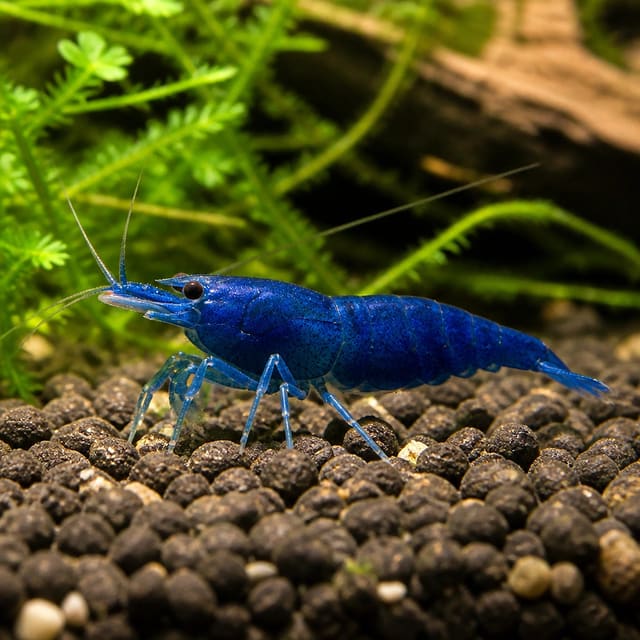
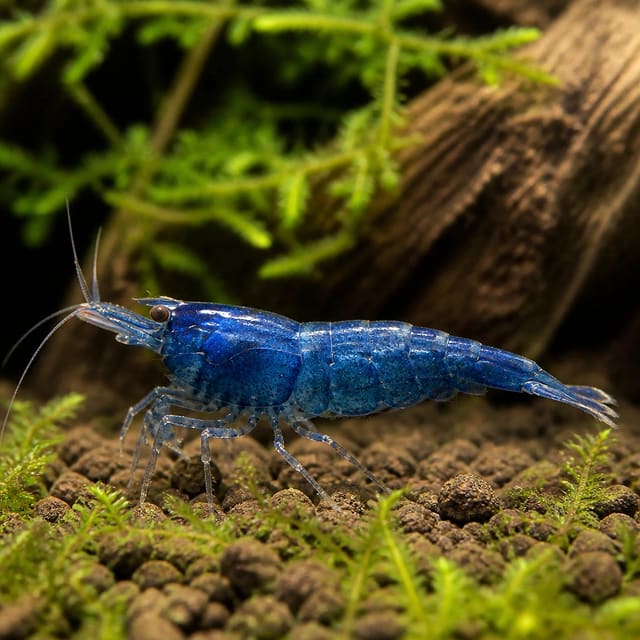
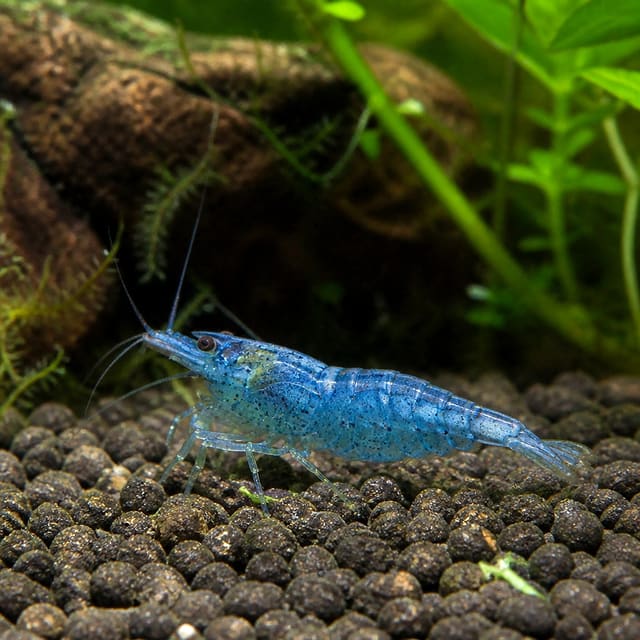
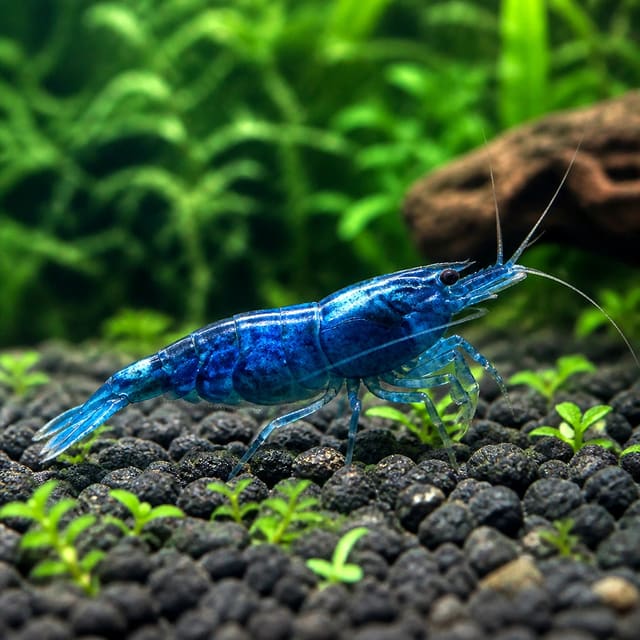
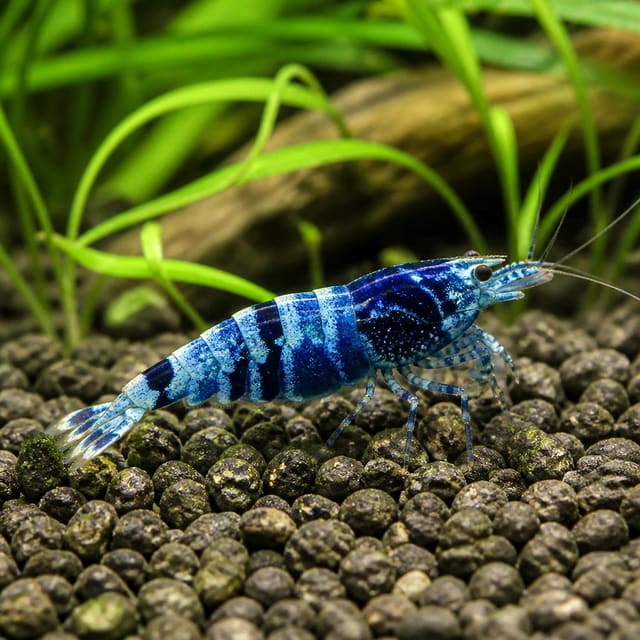
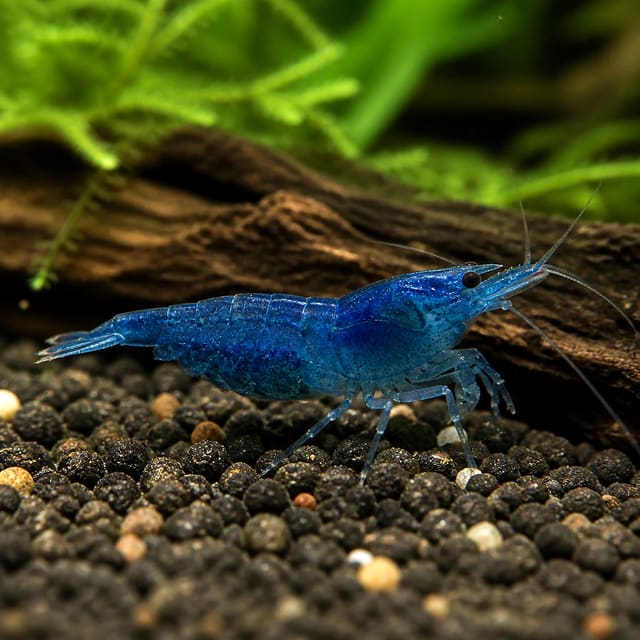
Blue Dream Shrimp (Neocaridina davidi)
18–28°C · pH 6.5–8 · 20L
£16.19

Blue Diamond Shrimp are a blue aquarium colour form of Neocaridina davidi. This listing supplies one unsexed shrimp in a 1 cm or 1.5 cm dispatch size; plan a mature filtered aquarium, a social group and stable measured water before ordering.
Neocaridina davidi
Lives in groups: kept together they stay settled, active and show their best colour.
Blue Diamond Shrimp are a blue aquarium colour form of Neocaridina davidi. This listing supplies one unsexed shrimp in a 1 cm or 1.5 cm dispatch size; plan a mature filtered aquarium, a social group and stable measured water before ordering.
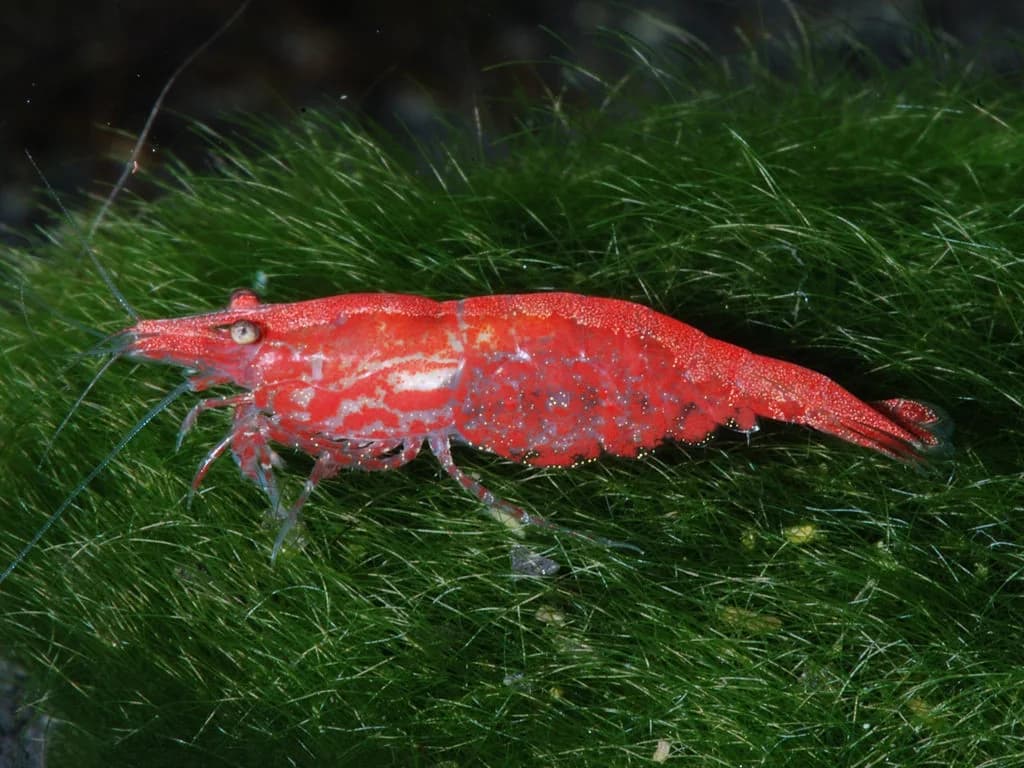
Use a mature, filtered aquarium and measured water—not a shrimp-per-litre rule. Tropical Fish Co uses 20 litres as a cautious starting policy for a small Cherry Shrimp group, above OATA's general 10-litre screen for small shrimp. Provide established grazing surfaces, cover and a protected filter inlet. No fish is guaranteed shrimplet-safe, and breeding should never be promised.
Maintain these water conditions for optimal health and vibrant colors
This listing supplies one live Blue Diamond Shrimp, Neocaridina davidi, per purchase. Choose a supplier-supported dispatch size of 1 cm or 1.5 cm. The size you select is the size supplied, not the adult size. The reviewed general species account describes mature N. davidi as approximately 3–4 cm long, with an unstated measurement endpoint. Treat that as useful mature-size context, an approximate mature-size context.
Sex is guaranteed only when the selected option explicitly states male or female. This Blue Diamond Shrimp listing has no sex-guaranteed option. Breeder, grade, genetic line, sex ratio and future offspring colour are unspecified. “Blue Diamond” is the retail colour-form label; the accepted species name is Neocaridina davidi. Older Neocaridina heteropoda wording belongs to the species' naming history rather than describing a different animal with different care.
Blue Diamond Shrimp suit a keeper prepared to run a mature, filtered freshwater aquarium, measure the water, protect the filter intake and provide established grazing surfaces. Tropical Fish Co's reviewed care guide rates this as intermediate: the animal is small and peaceful, but small still calls for regular maintenance. The important work is maintaining stable water, providing complete food as well as grazing opportunities, and choosing companions that cannot swallow or continually outcompete the shrimp.
The broad UK trade-body screen for smaller freshwater shrimp is 17–27°C, pH 6.5–8.0 and 4–18 dGH. Those values are broad group guidance rather than experimental limits for this colour form. Compare the seller's measured holding water with the prepared aquarium and make any change gradually. Ammonia and nitrite should be zero, and a stable mature system matters more than chasing a point near one edge of a broad range.
| Suits | Not suited to |
|---|---|
| A mature filtered aquarium with established biofilm and cover | A newly filled or uncycled aquarium |
| A keeper who can test water and feed a complete shrimp food | A tank expected to supply a complete diet from algae alone |
| A planned social group with space and filtration for possible population growth | An isolated one-shrimp plan or an automatic shrimp-per-litre formula |
| A shrimp-focused setup, or carefully screened companions | Fish or crustaceans able to hunt adults or shrimplets |
OATA's broad guidance uses a group of at least five for social shrimp and a general 10-litre screen for a small group. Tropical Fish Co uses a mature filtered 20-litre aquarium as its more cautious starting policy. Neither number is a capacity formula. One purchase supplies one shrimp; plan the rest of the social group separately. The final plan must allow for filtration, accessible food, cover, maintenance access, companions and possible breeding.
For the full husbandry context, read the Cherry Shrimp care guide. The guide covers the accepted species, the store's cautious planning policy and the limits of the broad trade-body values used on this page.
A shrimp aquarium is ready when its biological filter can process waste, ammonia and nitrite remain at zero, temperature and chemistry are stable, and the aquarium provides established surfaces for grazing. A tank that has simply been running for a stated number of days may still be immature. Test the water, verify the filter's performance and inspect the aquarium for stable conditions before adding livestock. If this is your first invertebrate setup, use the shrimp-keeping setup guide as a practical preparation sequence.
Provide aquarium-safe plants, wood, stone or other structure that creates grazing area and refuge while allowing debris to be removed. A layer of leaf litter may add cover and grazing surface when it is suitable for the aquarium, alongside a complete food. Keep enough open access to inspect the shrimp and remove uneaten food. Cover filter intakes with suitable fine protection to protect small shrimp from the filter, while preserving adequate water flow and oxygen exchange.
The broad social starting point is at least five shrimp. Because this product supplies one animal, decide how the purchase contributes to the intended group before ordering. Plan the group with this unsexed offer. If males and females are present and conditions support reproduction, the population may change. If breeding occurs, survival and colour outcomes vary; reserve filtration, feeding access and maintenance capacity for possible young.
Tropical Fish Co's 20-litre starting policy is deliberately above OATA's broad 10-litre screen. Capacity also depends on usable area and filtration. A tall empty aquarium and a mature planted aquarium of the same nominal volume can provide very different grazing area, shelter and feeding access. Stocking also depends on other animals, filter performance, maintenance, temperature and how much food reaches the shrimp while preserving water quality. Avoid converting either 10 or 20 litres into a permanent shrimp-per-litre rule.
Shrimp can be affected by rapid differences in temperature or dissolved minerals even when both aquariums appear to sit within a broad published range. Before arrival, record the prepared aquarium's temperature, pH and general hardness. Ask for the current holding-water values where available, then use a controlled acclimation method appropriate to the measured difference and the store's arrival instructions. Condition replacement tap water and complete any needed chemistry adjustments gradually, well before arrival.
Routine stability comes from consistent maintenance. Use dechlorinated water, match replacement water sensibly, preserve beneficial biological media during filter cleaning, and test whenever animals behave unusually or a maintenance change has been made. UK tap water varies by place and season; measurements from the actual aquarium guide the plan. The water-chemistry guide explains what the common readings mean and why trends are more useful than a single isolated result.
Check the exact invertebrate warnings on fish medicines, fertilisers, algaecides and household products before use. Check the exact current label for invertebrate warnings, dose only for the real water volume and seek qualified advice when the label is unclear. Copper deserves particular caution, and every product still needs an exact invertebrate safety check. Remove the cause of poor water quality instead of using chemical shortcuts.
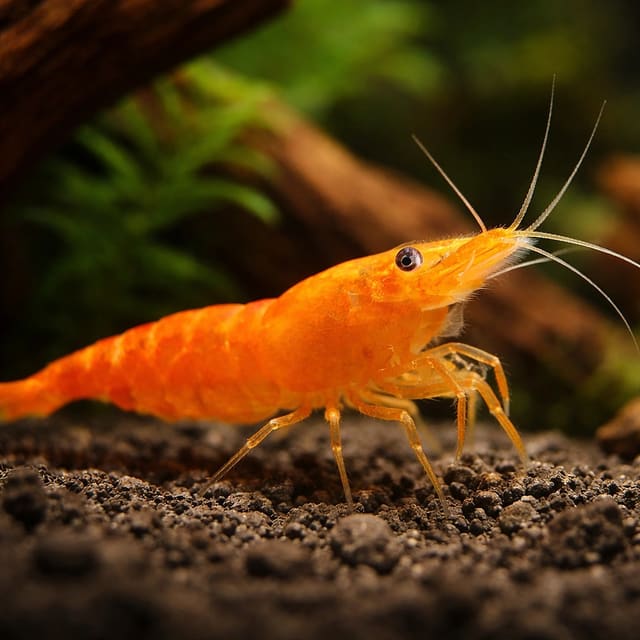
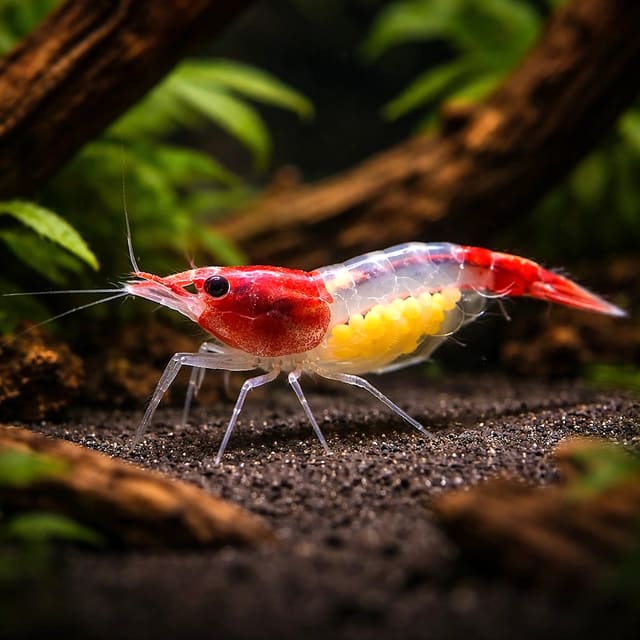
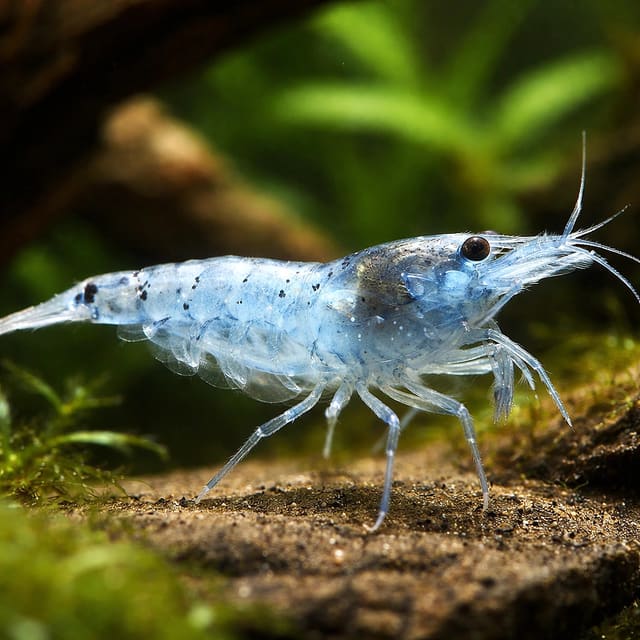
Before choosing between colour forms, you can browse the current shrimp collection. Treat each product as its own offer: names such as Blue Diamond and Blue Dream do not certify a shared breeder, lineage, grade or future colour outcome.
Use 17–27°C, pH 6.5–8.0 and 4–18 dGH as broad freshwater-shrimp planning guidance. These figures come from a trade-body sheet covering freshwater shrimp and snails; Tropical Fish Co retains them as a first screen while explicitly avoiding the claim that they are controlled Neocaridina davidi limits. A stable aquarium comfortably within the screen is preferable to repeated adjustments made to hit a fashionable exact number.
Temperature changes metabolism, oxygen demand, feeding and waste production. Make any transition between different holding and destination temperatures gradual. Choose a stable routine temperature that also suits every other resident. Provide dependable oxygen exchange and watch for deterioration during hot weather, when warm water holds less oxygen and biological demand can rise. Avoid placing the aquarium where sun, radiators or cold draughts cause daily swings.
pH is meaningful only alongside the water's buffering and mineral context. General hardness gives a broad view of dissolved calcium and magnesium, and should be read alongside other tests and the animal's condition. Test consistently with a suitable method, compare trends, and investigate unexpected movement rather than dosing from guesswork. The water matcher can help compare measured aquarium values with the broad screen, alongside separate checks of maturity, contaminants, acclimation history and companions.
Ammonia and nitrite should be zero. Keep nitrate controlled through sensible feeding, plant care and appropriately sized water changes. Any detectable ammonia or nitrite means the biological system needs attention; pause further stocking while resolving it. If a shrimp is inactive, failing to feed or repeatedly attempting to leave the water, check temperature, oxygenation, ammonia, nitrite and recent changes promptly. Observations can guide investigation, and should lead to measured checks.
Neocaridina davidi graze biofilm, algae and detritus, and those resources vary over time; use a complete food for dependable nutrition. Offer an appropriate complete sinking shrimp food as the nutritional base. Small portions placed where the shrimp can reach them are better than a large amount that disperses, disappears into the substrate and decomposes. Observe whether the animal actually feeds, then remove recurring excess before it degrades water quality.
Established plants, wood, stone and other aquarium-safe surfaces support continuous browsing. They are useful habitat, a supplement to prepared food. Likewise, blanched vegetable or leaf material can be used cautiously when appropriate, in small amounts that complement complete food and are removed before fouling. Change foods gradually, follow the manufacturer's storage and feeding instructions, and adjust the portion according to the actual number of shrimp, competing animals and observed leftovers.
Fast fish may consume prepared food before shrimp can reach it. If companions are present, distribute food so that the shrimp receive a fair share while removing leftovers. Night-time or sheltered feeding can sometimes improve access, but confirm the result by observation. A shrimp-only aquarium makes feeding and juvenile protection easier to manage, although it still requires restraint: excess food can overwhelm a small system quickly.
Shrimp grow by moulting. A shed exoskeleton is a normal moult; in a healthy aquarium it can be left for shrimp to graze. At the same time, repeated failed moults, unexplained losses or unusual inactivity warrant checks of temperature, ammonia, nitrite, recent water changes, possible contaminants and food access. Use measured evidence and exact product instructions before considering mineral or chemical dosing.
When comparing this offer with Blue Dream Shrimp, use the stated offer for each animal. Shared species identity leaves lineage, shade, grade and offspring colour to the evidence for each offer.
Blue Diamond Shrimp are peaceful, but peaceful animals can still be eaten or outcompeted. Fish pairing remains a predation risk, especially for tiny shrimplets. The most predictable option when juvenile survival or colour-line control matters is a shrimp-focused aquarium.
Exclude fish or crustaceans capable of swallowing the shrimp, animals known to hunt small invertebrates and territorial residents that repeatedly investigate or strike at them. Even small fish may take shrimplets or harass adults. Evaluate the companion's adult mouth size and normal foraging behaviour, alongside its displayed shop size. Dense cover can reduce exposure while predator behaviour still needs screening.
Any companion must share a stable point within its own supported temperature, pH and hardness guidance. It must also have enough room for its adult size and social needs while leaving useful shrimp habitat. Fast or aggressive feeders can create chronic underfeeding through feeding competition alone. Plan sheltered feeding access and observe the shrimp eating and confirm food reaches them.
Snails and other shrimp also require exact-species screening. Compare each invertebrate's water needs, temperament and medicine tolerance. Larger crustaceans may be predators. Mixing Neocaridina colour forms may also matter to keepers seeking predictable colour inheritance; this listing makes no genetics promise, so use a single-form setup when that outcome is the priority.
Continue checking compatibility after introduction. Watch for missing shrimp, damaged appendages, persistent hiding, frantic swimming, failure to reach food or companions repeatedly probing cover. Check water and oxygen first when behaviour changes, then separate animals if pursuit or predation is observed. Separate animals promptly after observed pursuit or predation.
Read the current delivery and Live Arrival Guarantee policy before dispatch. For any Live Arrival Guarantee claim, record a continuous unboxing video from the sealed outer parcel through showing the animal in the sealed bag, and follow the policy's current evidence and contact steps. This claim procedure is separate from acclimation: after recording any required evidence, compare the bag and aquarium conditions and follow the supplied arrival guidance.
Once introduced, keep lighting modest and disturbance low. Verify that the shrimp can stand, move and reach cover, then observe feeding over the following days. Temporary hiding is common, especially in a planted aquarium, but unexplained absence should prompt careful checks of filter intakes, overflows, companions and water. Avoid repeatedly dismantling the aquarium to force a sighting.
Keep a simple record of water tests, maintenance, food and unusual behaviour. Small systems can change quickly, and a written trend is more useful than memory when something goes wrong. Add further livestock only after the initial group is feeding and the aquarium remains stable.
The reviewed species summary describes mature Neocaridina davidi as approximately 3–4 cm long, without defining a measurement endpoint. Treat that as approximate mature context rather than an exact sex-specific maximum. The 1 cm and 1.5 cm values on this product are dispatch sizes, not adult sizes.
Tropical Fish Co uses a mature filtered 20-litre aquarium as a cautious starting policy for a small group. OATA gives a broader 10-litre screen for smaller freshwater shrimp. Neither is a shrimp-per-litre formula: filtration, grazing area, cover, companions, feeding and possible population growth all affect the plan.
Use at least five as OATA's broad social-shrimp starting guidance. This product supplies one unsexed shrimp per purchase, so one quantity does not establish the group or a sex ratio. Plan the whole group and the aquarium's capacity before ordering.
They can suit a prepared newer keeper, but Tropical Fish Co's current care guide rates the care level intermediate. The aquarium should be mature, stable and measured, with protected filtration, complete food and carefully screened companions.
They graze biofilm, algae and detritus, but those resources are not assumed to be a complete or constant diet. Provide an appropriate complete sinking shrimp food, use portions small enough to avoid fouling, and confirm that the shrimp can reach the food.
Use 17–27°C, pH 6.5–8.0 and 4–18 dGH as broad OATA freshwater-shrimp guidance, not controlled Neocaridina davidi limits. Choose a stable point shared by all residents and compare the seller's holding water with the prepared aquarium before acclimation.
They are peaceful grazing shrimp and are not sold as fin nippers. Their greater risk in a community is being eaten, harassed or excluded from food. Persistent hiding, loss or failure to feed requires a water and compatibility review.
A shrimp-focused aquarium is the clearest choice when juvenile survival matters. Other animals require screening for adult mouth size, hunting behaviour, water, space and feeding speed. No fish is guaranteed safe with adults, and adult tolerance does not establish shrimplet safety.
Tropical Fish Co uses a licensed live-animal courier under its current delivery policy. Someone must receive the parcel. For a Live Arrival Guarantee claim, record continuous video from the sealed outer parcel through showing the shrimp in the sealed bag, and follow the current policy steps.
Accepted identity: the WoRMS taxon record supports Neocaridina davidi in Atyidae. The reviewed general species summary supplies the older N. heteropoda naming history, East Asian distribution, approximate 3–4 cm mature context and aquarium colour-form background. Distribution describes the species, while the origin of this batch is unspecified.
Broad husbandry guidance: OATA's freshwater shrimp and snail care sheet supports the broad water, group and general small-aquarium screens. Those figures remain broad group guidance. General filtration, maturation and water-testing guidance is used only for aquarium process, as general aquarium guidance.
Offer: this product supplies one unsexed shrimp per purchase in the chosen 1 cm or 1.5 cm dispatch size. Batch origin, lineage, grade, sex and breeding outcome are unspecified.
Set a regular time to look at the animals before opening a food container or moving decor. Notice whether several shrimp are grazing in the open, whether any are persistently hidden, and whether the group is reaching all parts of the aquarium. The point is to learn the normal pattern for this aquarium. A single shrimp hiding after a disturbance is different from a whole group leaving its usual cover or sitting at the surface. Use that difference to decide when to test water and examine equipment promptly.
Test ammonia and nitrite routinely and after a change in feeding, stocking or filter performance. OATA's general care sheet calls for regular testing and partial water changes; it gives a weekly 25% recommendation for freshwater shrimp and snails. Treat that as general maintenance guidance rather than a compulsory volume for every particular aquarium. The replacement water must be conditioned, and its temperature and chemistry should be considered before it enters a small shrimp system. A modest, predictable routine can be easier on animals than neglect followed by a sudden major correction.
Use a siphon carefully around small shrimp. Before discarding water, check the container and any exposed intake for animals that may have been drawn in. Clean visible debris while retaining useful grazing surfaces. If a filter needs attention, rinse reusable biological media lightly in removed aquarium water as described in general trade-body advice, and keep it wet. Do not run filter media under the tap: chlorine or chloramine may kill the beneficial bacteria that process waste. Rinse it lightly in removed aquarium water. Return equipment to service promptly, then confirm flow and observe the group.
The right amount of prepared food changes as shrimp grow, companions join, plants change and juveniles appear. At feeding time, look for actual access rather than assuming that a pellet on the substrate has fed the whole group. If the same amount is left repeatedly, reduce the next portion and remove recurring leftovers. If fast companions take the food, use a sheltered feeding place and check whether the shrimp reach it. Use sheltered feeding spots and remove excess food when companions compete.
Biofilm on plants, wood and other safe surfaces is useful browsing material, yet it fluctuates with light, maintenance and the age of the aquarium. A visually green tank may still lack a balanced food supply, while a clean-looking mature surface may support grazing. Keep an appropriate complete shrimp food available and let observation and water tests guide portions. If vegetables or leaf material are offered, use an amount the aquarium can process and remove leftovers before they spoil. New foods should be introduced one at a time so that a change in feeding or waste is easier to understand.
A transparent shed shell alone is a normal sign of growth, and calls for no automatic supplement. If a shrimp seems trapped in a moult, several animals become inactive, or losses follow a maintenance event, begin with the measurable basics: temperature, ammonia, nitrite, pH, general hardness, oxygenation and the filter's operation. Review recent additions, untreated water, fertiliser, aerosol exposure and medicines. Comparing what changed is more useful than immediately adding several products, because an unmeasured correction can create a second shock.
Record the date, measurements and a clear photograph if practical. Contact an experienced aquatic retailer or suitably qualified veterinary professional when a problem persists or is severe. A change in colour or one white mark needs assessment before treatment; check every medicine's invertebrate warning. Read its current invertebrate warning before any treatment. If a companion is seen hunting or repeatedly displacing shrimp, provide separation; separate animals when predation is observed.
A group can include females and males, but this listing supplies unsexed individuals and has no guaranteed mix. A female may carry eggs externally beneath her abdomen; young of this species develop without the long saline larval stage associated with Amano Shrimp. Eggs, hatching and juvenile survival still depend on the animals and aquarium conditions. Tiny juveniles face greater intake and predation risks than adults. A protected filter inlet, established fine grazing surfaces and dense refuge can support them, while feeding and water quality still need attention.
If keeping a named blue line matters, decide how you will manage other colour forms before mixing groups. The label on this page describes the offered blue form, while lineage and offspring colour remain unspecified. A shrimp-only aquarium simplifies observation and avoids fish predation, but it still needs capacity for a changing population. Reassess the number of animals, food access and measured water as the group develops rather than applying a fixed shrimp-per-litre formula.
No reviews for this item yet. Bought one? Honest reviews only, good or bad.
What customers say about ordering from us
I have a small group of long finned mountain minnows. So was delighted to be able to order ten of this variety to increase the genetics in my tank . The ones I recieved are healthy but it’s to early to give a verdict on wether they are of a long finned type since they are small currently.
Gordon Walker · 23 Sept 2026
100% success travel and "installation". Pleased with quality of purchase. The Siamese fighter a bit "shy" so have not yet seen him at his best yet but looking good. Happy customer. GG
George E Garratt · 21 Sept 2026
Reviews of our shop, collected by Judge.me, an independent third-party review collector. Newest first.