Easy
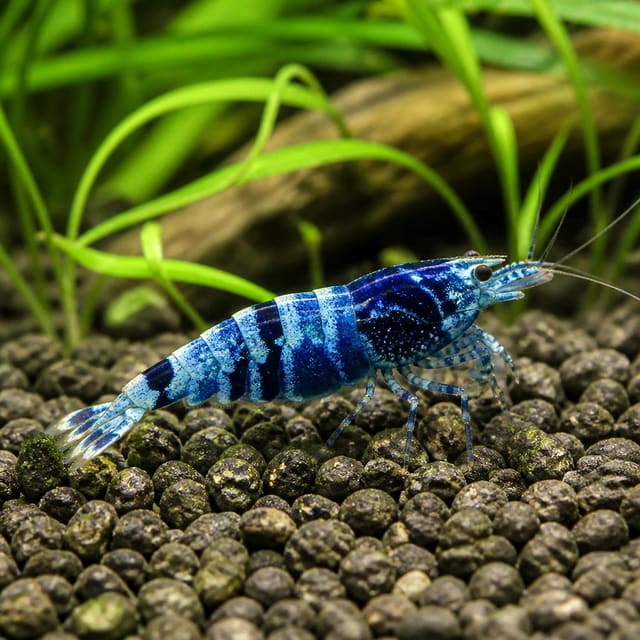
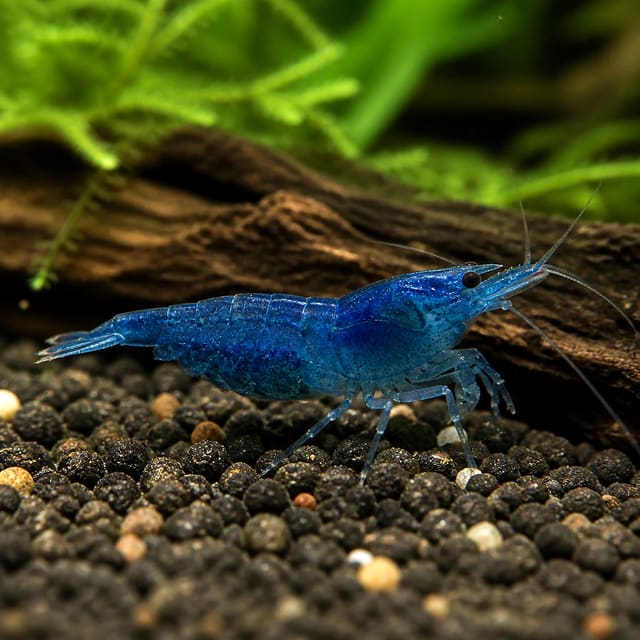
Blue Dream Shrimp (Neocaridina davidi)
18–28°C · pH 6.5–8 · 20L
£16.19
Photo coming soon
The size, price and care details on this page are for this listing.
Cherry Shrimp (Neocaridina denticulata) is sold as one live freshwater shrimp in 1–1.5 cm or 2–2.5 cm dispatch sizes. It needs a mature filtered aquarium, stable tested water, cover and companions that cannot swallow it.
Neocaridina denticulata
Lives in groups: kept together they stay settled, active and show their best colour.
Cherry Shrimp (Neocaridina denticulata) is sold as one live freshwater shrimp in 1–1.5 cm or 2–2.5 cm dispatch sizes. It needs a mature filtered aquarium, stable tested water, cover and companions that cannot swallow it.
Use a mature, filtered aquarium and measured water—not a shrimp-per-litre rule. Tropical Fish Co uses 20 litres as a cautious starting policy for a small Cherry Shrimp group, above OATA's general 10-litre screen for small shrimp. Provide established grazing surfaces, cover and a protected filter inlet. No fish is guaranteed shrimplet-safe, and breeding should never be promised.
Maintain these water conditions for optimal health and vibrant colors
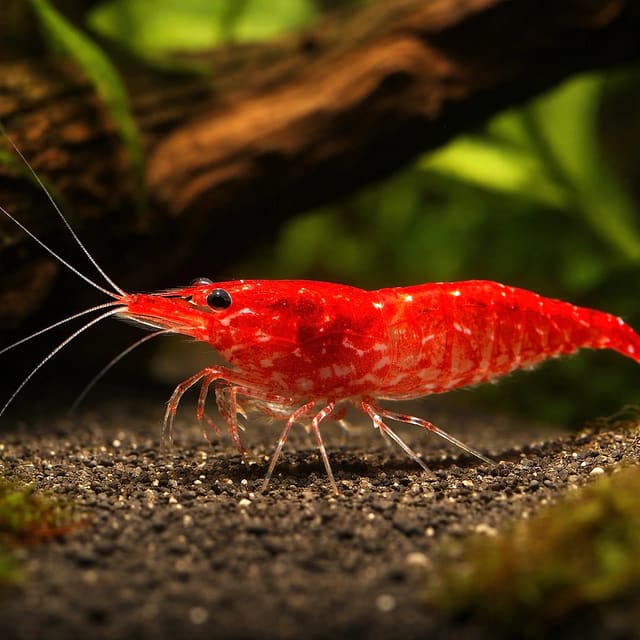
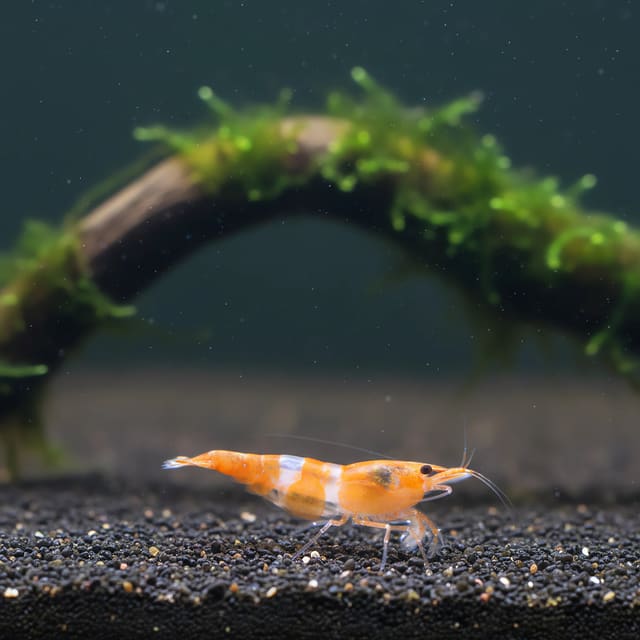
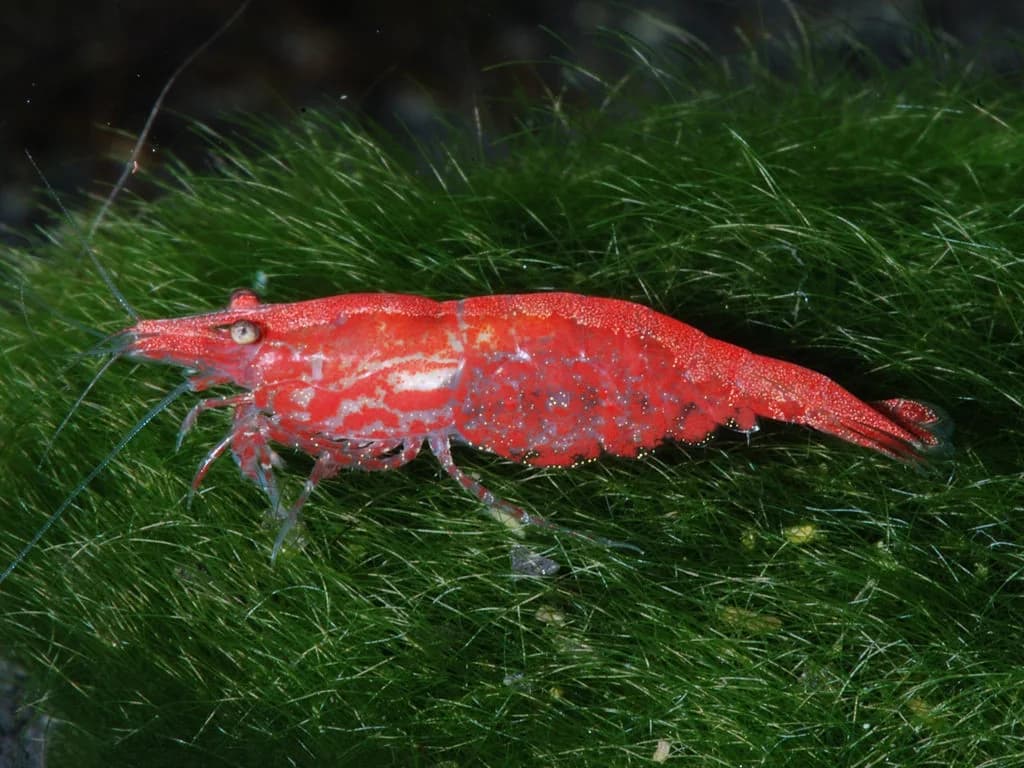
Cherry Shrimp brings constant close-up activity to a planted freshwater aquarium. The animal spends much of its time walking over leaves, wood, stones and substrate, using its fine front appendages to pick at edible material on surfaces. Its small scale makes the details easy to miss from across the room, but at close range the antennae, jointed legs and translucent red-orange pattern are a large part of the appeal.
This product is supplied under the scientific name Neocaridina denticulata, an accepted species in the family Atyidae. The common name cherry shrimp is also widely used for red forms of Neocaridina davidi. Those identities are kept separate here: facts stated for N. davidi, including its 3–4 cm adult length, native range and lifespan, are not transferred to this N. denticulata offer.
One purchase supplies one live shrimp in the size chosen: 1–1.5 cm or 2–2.5 cm. The size you select is the size supplied, not the adult size. Both bands describe dispatch length, and neither establishes a species-level adult maximum. Sex is guaranteed only when the selected option explicitly states male or female. This Cherry Shrimp listing has no sex-guaranteed option.
This shrimp suits a keeper who can offer mature biological filtration, stable tested freshwater, planted or textured grazing surfaces, careful feeding and tank mates unable to eat it. It is not a decorative solution for a new or unstable aquarium. Shrimp are particularly vulnerable to ammonia, nitrite, abrupt water changes and copper exposure, so the quiet fundamentals matter more than chasing a perfect display.
| Suits | A mature filtered freshwater aquarium with stable water, cover, grazing surfaces and non-predatory companions |
|---|---|
| One purchase | One live shrimp in either a 1–1.5 cm or 2–2.5 cm dispatch-size band |
| Identity | Neocaridina denticulata, family Atyidae; do not silently substitute N. davidi measurements |
| Adult size | No unqualified species-level maximum stated for this offer; dispatch bands are not adult lengths |
| Water context | OATA broad freshwater-shrimp-and-snail guidance: 17–27 °C, pH 6.5–8.0 and 4–18 dGH |
| Social plan | Keep as a group and add gradually, with the number governed by mature aquarium capacity |
| Main hazard | Predatory fish or any fish able to fit the shrimp in its mouth; copper-unsafe treatments are also dangerous |
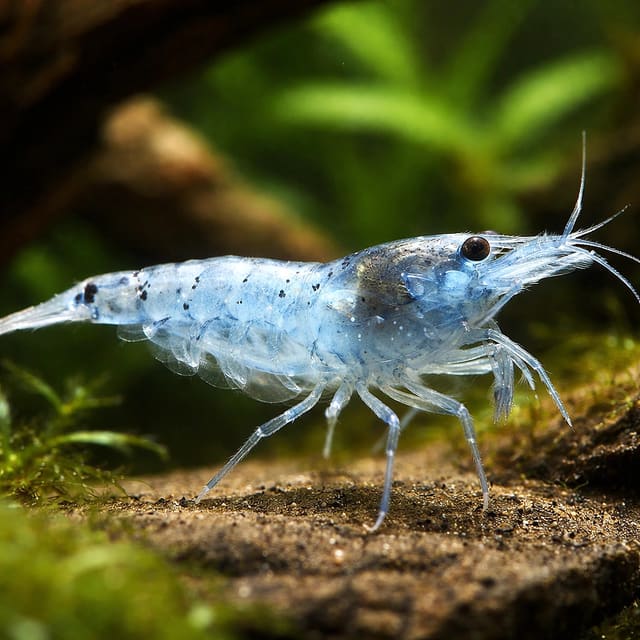
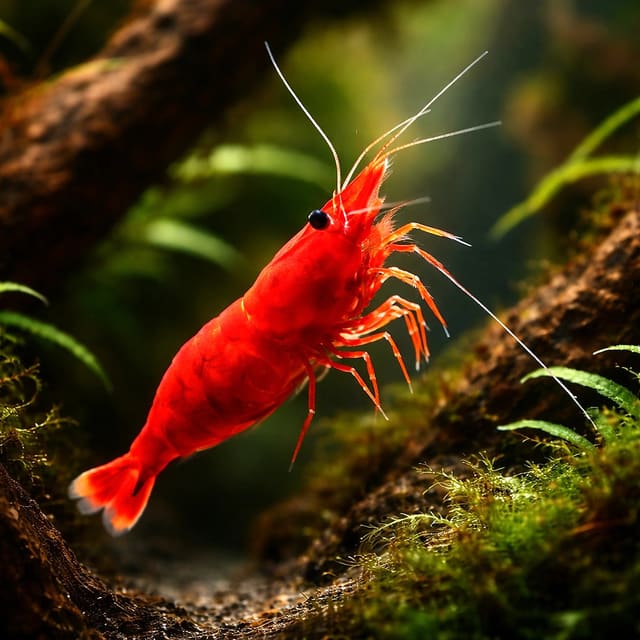
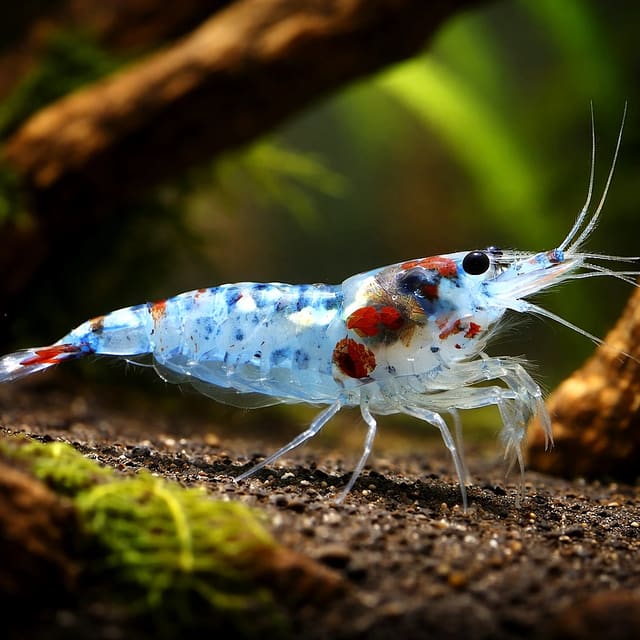
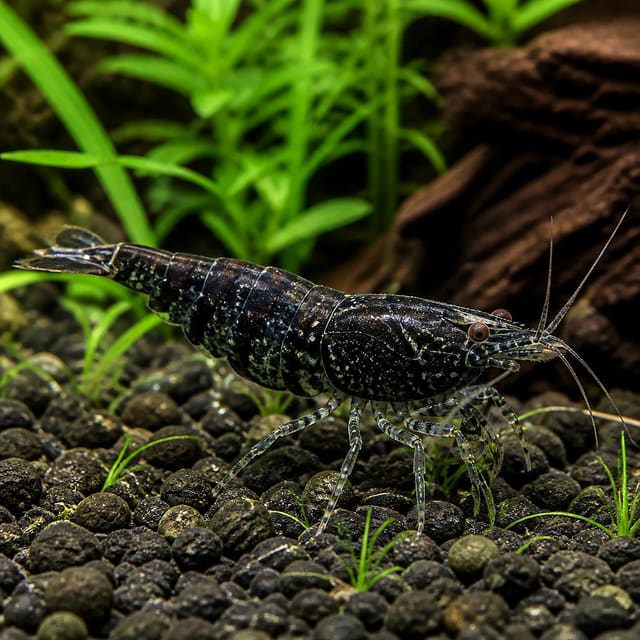
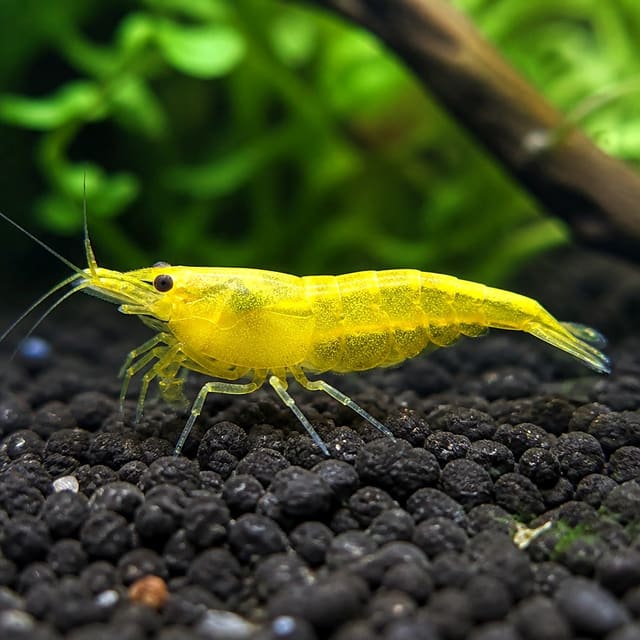
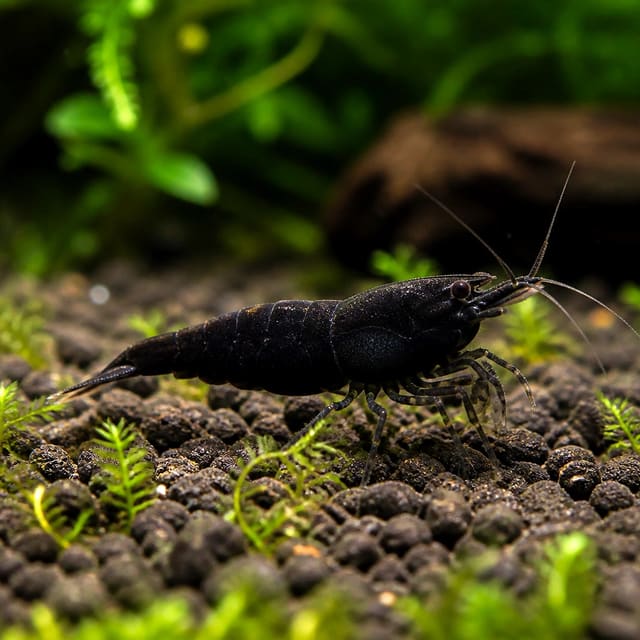
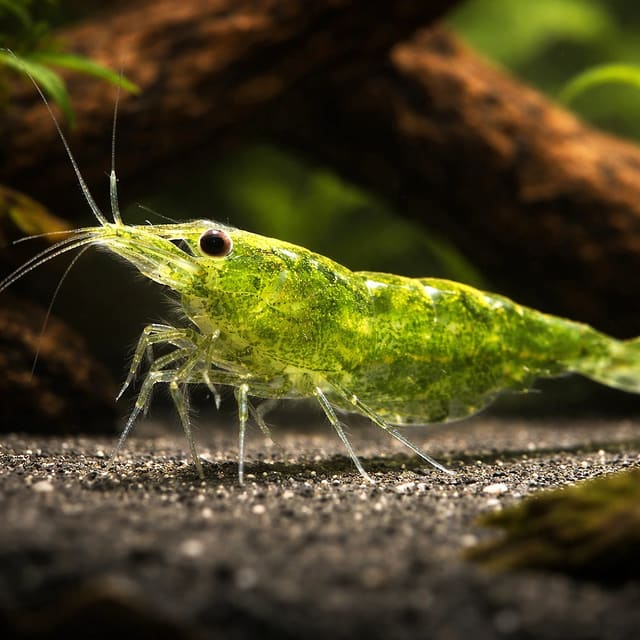
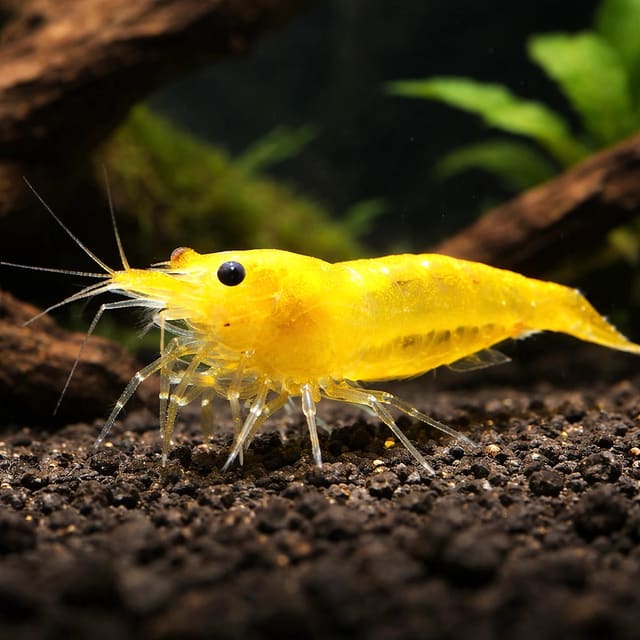
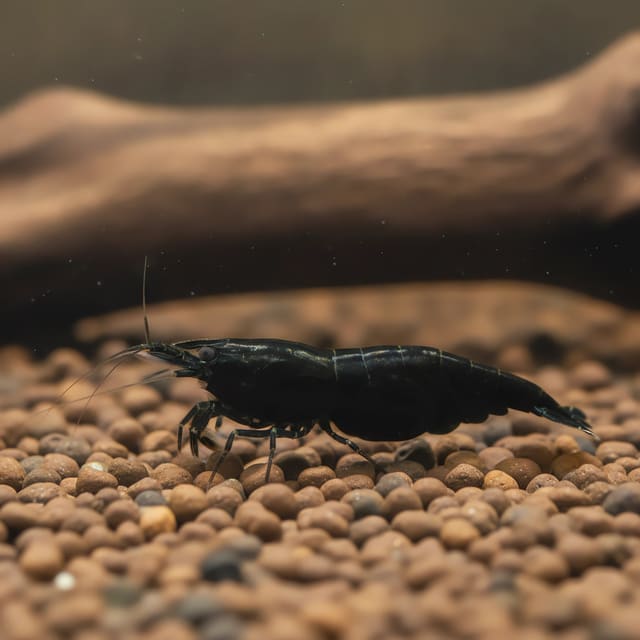
The gallery shows the red-orange trade appearance in several useful scenes: a close aquarium view, two shrimp together, a clean side profile and one shrimp on a leaf. Colour depth, translucency, pattern and maturity can vary from animal to animal, so assess the product as live livestock rather than expecting every marking to match a picture.
Gallery images have been digitally enhanced to improve image quality. Natural colour, pattern, size and maturity can vary between live animals.
The listing retains an easy care assessment because a prepared keeper can meet the broad needs without specialist marine equipment or unusually narrow water chemistry. Easy does not mean tolerant of an uncycled aquarium, careless medication or large parameter swings. A beginner who understands the nitrogen cycle, tests water and starts with a mature setup can be a better keeper than an experienced aquarist treating shrimp as an afterthought.
The essential preparation is simple to describe: establish the aquarium, run the filter until biological processing is mature, confirm zero detectable ammonia and nitrite, learn the tap-water hardness and pH, and make sure every treatment or additive is explicitly safe for freshwater invertebrates.
Neocaridina denticulata is accepted as a species, but the cherry shrimp name is used loosely in the aquarium trade. The natural-history account in the supporting material describes N. davidi, not N. denticulata. That account is useful for understanding why many red aquarium shrimp are called cherry shrimp, yet it cannot supply an exact adult maximum, lifespan or native range for the animal named on this product.
This distinction is not merely academic. An adult-size card is often reused by shopping tools, compatibility filters and automated assistants without the paragraph around it. Leaving the number out is more useful than publishing a confident value for a different species. The dispatch sizes remain exact and prominent, so the buyer still knows what will be sent.
To compare other colour lines sold separately, browse the cherry shrimp collection. Those products are alternatives, not proposed tank mates.
The best shrimp aquarium is mature, calm and rich in surfaces. Wood, plants, stones and substrate collect the films and tiny particles that shrimp investigate throughout the day. The goal is not visible dirt; it is a stable, biologically active environment where filtration, feeding and maintenance are balanced.
OATA's broad guidance for freshwater shrimp and snails recommends an aquarium of at least 10 litres for a group of small species, with a larger aquarium when fish are included. That is group-level advice, not a species-specific minimum for N. denticulata. Use it as a floor for planning, then favour more water volume and usable surface area because both improve stability and provide more grazing habitat.
A longer aquarium usually gives more floor, plant and hardscape area than a tall vessel of the same volume. This is helpful for animals that spend much of their time on surfaces. Avoid cramming the layout so tightly that waste collects in unreachable pockets or the keeper cannot see the animals. Combine dense cover with open areas where feeding and observation are easy.
The freshwater shrimp-keeping guide explains how to prepare a mature planted setup before livestock arrives. Give the aquarium time to establish rather than adding shrimp as soon as the water looks clear. Clear water can still contain toxic ammonia or nitrite, and a new aquarium may have very little established grazing material.
A working biological filter is essential. Beneficial bacteria process toxic ammonia into nitrite and then nitrate. Shrimp should be introduced only after testing confirms that ammonia and nitrite are zero. Choose filtration appropriate to the aquarium's volume and stocking, and make the intake safe for a 1–1.5 cm animal. A sponge-covered intake can reduce the risk of small shrimp being drawn in while adding another textured surface to graze.
Maintain gentle, effective circulation across the aquarium rather than allowing stagnant pockets. Surface movement supports gas exchange. Watch the animals: unusual inactivity, restlessness or spending more time than normal in high-flow or high-oxygen areas can be a warning that deserves immediate water and equipment checks.
Live plants are valuable because they provide cover, fine surfaces and a more complex environment. Mosses, compact plants, roots and driftwood create places for a group to spread out. Choose aquarium-safe materials and rinse new hardscape appropriately. Avoid painted or metallic decorations whose composition is uncertain.
OATA recommends aquarium gravel or sand and ideally live plants for cover. Keep enough open substrate to see uneaten food and remove it. A heavily planted aquarium can still be maintained carefully; the aim is to preserve stability while preventing decaying food and trapped waste from accumulating beyond the filter's capacity.
OATA's freshwater shrimp-and-snail care sheet gives a broad group range of 17–27 °C, pH 6.5–8.0 and general hardness of 4–18 dGH. It also gives carbonate hardness of 3–15 dKH. These values cover a wide group and are not a measured N. denticulata optimum. They are useful for screening obvious mismatches, while day-to-day success depends on stable tested water and careful changes.
Use the water chemistry guide to understand what each result means, then compare readings with the broad range using the water matcher. General hardness relates mainly to dissolved calcium and magnesium; carbonate hardness relates to buffering. Shrimp also need clean water with zero ammonia and nitrite, so a pH or hardness match never proves the aquarium is ready.
Avoid chasing numbers with large additions. If the aquarium sits outside the broad screen, first confirm the test and identify why. Tap water, substrate, rocks, remineralising salts, water changes and other products can all affect the result. Make any necessary change deliberately and gradually, with the animals' current condition in mind.
OATA warns that freshwater shrimp and snails are very sensitive to copper and will die if exposed even to low levels of copper. Read the label of every medication, algaecide, plant treatment and additive before it enters the aquarium. A product described as safe for fish is not automatically safe for shrimp. Where a fish needs treatment that is unsafe for invertebrates, use an appropriate separate treatment system rather than exposing the shrimp colony.
Do not assume a product is safe because it was used once without an obvious loss. Dose, water chemistry and cumulative exposure can differ. Keep the product label, use accurate water volume and follow the manufacturer or veterinary direction for an invertebrate-safe treatment.
OATA describes freshwater shrimp and snails as generally herbivorous grazers that feed on aquarium algae and should receive supplementary algae wafers or commercial shrimp pellets. Its broad schedule is two or three feeds a week, allowing at least 30 minutes for pellets or wafers before removing excess. Use foods intended for freshwater shrimp and size the portion to the actual group.
Visible algae does not guarantee a complete diet, and a spotless aquarium does not justify pouring in extra food. Start with a very small portion, see how quickly the group gathers and note what remains. Remove significant leftovers before they decay. In a mixed aquarium, make sure fish do not take the entire shrimp ration and that extra feeding does not drive ammonia or nitrate upward.
Do not add household vegetables, leaves or supplements simply because another aquarium uses them. Preparation, pesticides, decomposition and nutritional balance vary. A complete shrimp food and a mature range of grazing surfaces form the safer foundation.
OATA strongly recommends a partial water change of 25% at least once every week. Treat replacement tap water with conditioner for chlorine or chloramine and bring it close to the aquarium temperature. Refill gently. Shrimp respond poorly to abrupt changes, so consistency between the old and replacement water matters.
Check filter flow and remove blockages. If the media needs cleaning, rinse it lightly in water removed from the aquarium and do not run it under the tap, because chlorine or chloramine can kill the bacteria supporting biological filtration. Siphon accessible debris without turning every maintenance session into a complete rearrangement. Count visible shrimp before and after moving hardscape or equipment.
Be present to receive the parcel. Before opening it, start a continuous unboxing video that shows the sealed parcel, then the shrimp still in the sealed bag; this is the evidence needed for any Live Arrival Guarantee claim. Inspect the animal and contact Tropical Fish Co on the same day if something has gone wrong. Once the video evidence is secured, use the current steps on the delivery and Live Arrival Guarantee page.
After introduction, observe activity, posture and feeding without repeatedly moving decor. A shrimp may spend time under cover, but a marked change in normal movement, prolonged inactivity, restlessness, abnormal swelling, shell damage, discolouration or loss of interest in food should prompt immediate water testing. Address measurable water or equipment problems first and seek appropriate expert help where the signs persist.
Shrimp keeping rewards attention to small changes. Because the animals are quiet and spend time under cover, trouble can develop without the obvious surface gasping seen in some fish. A short, regular observation routine makes subtle shifts easier to recognise.
Shrimp shed their exoskeleton as they grow. An empty, translucent shell can look like a dead animal at first glance, so inspect it before reacting. A successful moult is normal; repeated failed moults or sudden deaths are not. Stable water and appropriate hardness are more useful than adding a product by habit.
Avoid turning every moult into a chemistry intervention. Test the water, compare it with the established routine and look for recent changes in conditioner, fertiliser, food, rock, substrate or water source. When several animals show trouble, treat the pattern as a system warning rather than an isolated accident.
OATA treats freshwater shrimp as social and advises keeping them in groups. The aquarium's mature capacity, surface area and the presence of fish determine a sensible number. Add gradually so the filter and feeding routine can respond. A small shrimp creates less waste than a large fish, but a growing group still increases total demand.
Do not use reproduction as proof that every condition is ideal. Animals can reproduce under conditions that are not a good long-term plan, and this exact listing does not promise breeding or a sex ratio. If young appear, filter-intake safety, feeding competition and predator risk become even more important.
A shrimp-only or invertebrate-focused aquarium makes observation and feeding simpler. In a fish community, provide cover but accept that no layout can make a mouth-sized shrimp safe from a determined predator. Fish that ignore adults may still eat smaller animals. The compatibility decision should therefore include the smallest shrimp likely to be present, not only the larger dispatch band.
Food competition works in both directions. Fast fish can take pellets before shrimp reach them, while excessive food added for the shrimp can damage water quality for everyone. Feed in a way that allows access without leaving a surplus. Watch after lights and room activity change, because some interactions occur outside the keeper's usual viewing time.
A simple notebook is enough. Record water-change date and volume, temperature, pH, hardness, ammonia, nitrite, nitrate, food changes, products added and any unusual behaviour. The value comes from comparing like with like. A single number is less informative than a stable sequence followed by a clear change.
Keep packaging or a photograph of product labels for conditioners, fertilisers and treatments. If a problem occurs, the ingredient and dose are easier to check. This is particularly important with copper and products marketed broadly for aquariums without an invertebrate-safety statement.
Do not add more livestock while ammonia or nitrite is detectable, filter flow is uncertain, unexplained deaths are occurring, the aquarium has undergone a large recent change or the keeper is still identifying a treatment risk. Stabilise the aquarium and understand the cause first. Extra animals increase demand and make the evidence harder to read.
Likewise, delay changes in layout, substrate and filtration when a group has only just arrived. Give the animals a consistent environment, observe them and make one necessary change at a time. Stability is created through disciplined small decisions rather than leaving unsuitable conditions untouched.
The two size bands let the keeper choose the length of the shrimp sent, but they do not create different care categories. Both need the same mature filtration, stable water, safe intake, cover and predator assessment. Choose by the aquarium that exists now, not by an assumed future adult length.
A 1–1.5 cm shrimp is less conspicuous, fits through smaller gaps and can be swallowed by a wider range of fish. It may be harder to count in dense planting. A 2–2.5 cm shrimp is easier to see and may be less vulnerable to the smallest mouths, but it remains prey-sized for many fish and still needs an intake guard. The larger dispatch band is not a guarantee of sex, maturity, adult size or breeding readiness.
In a species-focused aquarium, either band can work when the filter and layout are safe. In a mixed aquarium, assess the smaller band against the largest mouth in the tank. If the community is unsafe for 1 cm shrimp, selecting 2–2.5 cm is not a reliable workaround for predation.
The nominal volume printed on an aquarium is not always the water volume after substrate, wood, rocks and an air gap are added. This matters when dosing conditioner, treatment or food and when judging how quickly water conditions can change. Use the real setup as the basis for maintenance and product dosing.
Usable surface area also matters. A branchy piece of wood, plant leaves and textured substrate offer more places to graze than bare glass, but they also create areas where food and waste can collect. Arrange the aquarium so water circulates and the keeper can inspect key areas without dismantling the habitat every week.
Plants make excellent cover and grazing structure, but plant treatments and fertilisers must be assessed with the same care as fish medication. A product intended for planted aquariums is not automatically harmless to shrimp. Check the ingredient and safety information before use, follow the stated dose for the actual water volume and avoid combining products casually.
Prepare new plants according to trustworthy vendor directions and keep uncertain treatments out of the livestock aquarium. If a new product is introduced, record the date and dose. That record becomes valuable if activity changes or moulting problems appear later.
If shrimp become unusually inactive, restless or begin dying, pause feeding and new additions, check equipment and test temperature, ammonia, nitrite, nitrate, pH and hardness. Review everything recently added: replacement water, conditioner, fertiliser, medication, food, plants, rocks and decor. Several small changes made together can obscure the cause.
Use water changes carefully when a contaminant or toxic nitrogen result is suspected, matching temperature and conditioning the replacement water. Do not reach for a general fish medicine unless it is clearly safe for shrimp and appropriate to the diagnosed problem. Persistent losses or abnormal swelling, lesions, shell damage or breathing changes deserve qualified aquatic-health advice.
Visibility comes from layout and patient observation, not from adding food repeatedly. Place one or two feeding areas where the keeper can see the animals while leaving plenty of natural grazing surface elsewhere. A small dish can make leftover food easier to remove when it suits the layout, but it should not replace varied surfaces or good maintenance.
Count what can be seen at different times instead of expecting every shrimp to appear together. Individuals may use cover, especially after arrival or around a moult. A stable pattern of partial visibility is different from an entire group vanishing immediately after predatory fish are added.
Cherry Shrimp is peaceful, but peaceful does not mean protected. The central compatibility question is whether another animal can catch, swallow or repeatedly disturb a shrimp. Water overlap, feeding access and treatment safety come next.
OATA advises against mixing freshwater shrimp with any fish able to fit them in its mouth or any species known to be predatory. Apply that rule at the fish's adult size and to the smaller 1–1.5 cm dispatch band. A fish sold as a juvenile may become unsafe later, and an adult shrimp that is ignored does not prove that smaller shrimp would be safe.
Avoid puffers and other purposeful invertebrate hunters. Large or predatory fish are unsuitable even when the aquarium has dense planting. Cover can reduce exposure, but it cannot turn prey into a compatible tank mate.
| Usually safest | A species-focused shrimp setup or a carefully chosen peaceful community whose fish remain too small to swallow the shrimp |
|---|---|
| Needs caution | Any fish community, fast feeders, animals that investigate or pick at shrimp, and tanks that may need fish medication unsafe for invertebrates |
| Avoid | Predatory species, fish with a mouth large enough to take the shrimp, pufferfish and copper-unsafe treatment plans |
| Always verify | Adult size, diet, water overlap, feeding behaviour, filter-intake safety and the smallest shrimp likely to be present |
Small peaceful fish and non-predatory snails may be considered only after the full setup is assessed. The word peaceful describes ordinary aggression, not feeding instinct. Some fish hunt tiny crustaceans without behaving aggressively towards other fish. Observe closely and be ready to separate the animals if shrimp disappear, remain hidden continuously or cannot reach food.
Snails can share broad water needs with many shrimp, but they add waste and compete for some foods. Make sure the aquarium supports the combined group. Avoid assuming every snail is harmless: identify the species and its adult size and diet before introduction.
A community can become incompatible the day one occupant needs medication. Many fish treatments are not suitable for shrimp, and OATA's copper warning is unequivocal. Plan where a fish could be treated separately. Never expose the entire aquarium to a product based only on a fish-safe label.
Add one planned group, allow the biological filter and feeding routine to settle, then reassess. Test ammonia and nitrite after a stocking change. Observe the aquarium at food time and during quiet periods. Shrimp that remain active on surfaces and emerge to feed are easier to monitor than a group forced permanently into hiding.
If the goal is a visible shrimp display, a species-focused aquarium is often the clearer choice. It permits a gentler feeding plan, reduces predator risk and makes changes in activity or condition easier to detect.
This product follows the name Neocaridina denticulata. The 3–4 cm adult figure commonly published for N. davidi is a separate species record and is not used as an adult maximum here. The 1–1.5 cm and 2–2.5 cm bands describe dispatch size only.
OATA's broad group guidance recommends an aquarium of at least 10 litres for a group of small freshwater shrimp or snails, with more space needed when fish are included. A larger mature aquarium is easier to keep stable and offers more grazing surface.
Yes. OATA describes freshwater shrimp as social and says they should be kept in groups. Choose a group the aquarium's mature filtration and usable surface area can support, then add livestock gradually.
It can suit a prepared beginner, which is why the store assessment is easy. The aquarium must still be mature and filtered, ammonia and nitrite must be zero, water changes must be consistent, and every treatment must be checked for invertebrate and copper safety.
OATA's broad guidance describes freshwater shrimp as grazers and recommends supplementary algae wafers or commercial shrimp pellets. Feed a small group two or three times a week, allow at least 30 minutes for the food and remove significant leftovers.
OATA's broad freshwater-shrimp-and-snail guidance gives 17–27 °C, pH 6.5–8.0 and 4–18 dGH. These are group-level values rather than a species-specific optimum, so keep the aquarium stable, test it regularly and avoid abrupt corrections.
No. They are peaceful grazing invertebrates and are not fish fin nippers. Their greater risk is the reverse: fish may eat or repeatedly disturb them, especially when the shrimp are small.
Consider only animals with compatible water that cannot fit the shrimp in their mouth and are not predatory. Small peaceful fish and non-predatory snails may be assessed conditionally, but a shrimp-focused aquarium remains the lowest-risk option.
Tropical Fish Co hand-packs live animals in oxygenated bags inside an insulated poly box, adding a heat pack when conditions call for it, and uses a licensed live-animal courier. Be present to receive the parcel. Before opening, start a continuous unboxing video showing the sealed parcel and then the shrimp still in the sealed bag; this is required evidence for any Live Arrival Guarantee claim.
The scientific identity is anchored to the accepted Neocaridina denticulata record. The Neocaridina davidi natural-history summary explains the widespread cherry shrimp usage, but its 3–4 cm adult length, range and lifespan remain attached to that separate species.
The practical water, aquarium, feeding, social, copper and compatibility advice comes from the OATA freshwater shrimp and snail care sheet. It is broad group guidance rather than a species-specific optimum. The RSPCA aquarium environment guidance supports the filtration and nitrogen-cycle essentials.
No reviews for this item yet. Bought one? Honest reviews only, good or bad.
What customers say about ordering from us
Easy website plenty of info on fish your buying great to pick a time slot
TRACEY DURRANT · 7 Oct 2026
Got some lovely fish thank you
Kevin Mackie · 7 Oct 2026
Reviews of our shop, collected by Judge.me, an independent third-party review collector. Newest first.