
 By Hannah Nielsen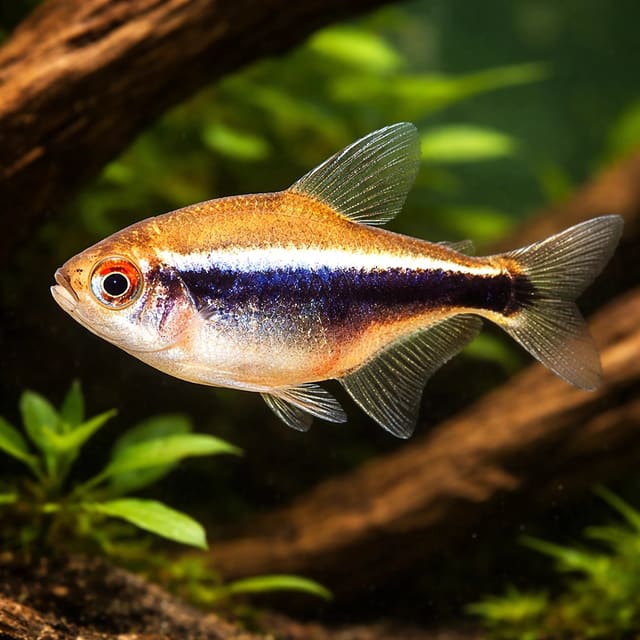
−14%
Black Neon Tetra (Hyphessobrycon herbertaxelrodi)
20–28°C · pH 5–7.5 · 72L
£2.57£2.99
Tetras · Buying Guide
Black neon tetra care, tank mates and how it differs from the common neon tetra — the hardy schooler that thrives in UK tap water. See live stock.
11 products in stock today
Live prices and stock. Every fish covered by our Live Arrival Guarantee.
20–28°C · pH 5–7.5 · 72L

21–25°C · pH 5–7
22–25°C · pH 6–7.4

23–27°C · pH 5.5–7 · 60L
17–27°C · pH 6.5–8
22–26°C · pH 6.4–7.4 · 41L
17–27°C · pH 6.5–8

21–25°C · pH 5–7

22–26°C · pH 6–7.5 · 60L
The shaded band shows the range black neon tetra is comfortable in. Match it to your tap water before you buy.
Our trained assistant knows this black neon tetra page inside out. Ask it anything — water parameters, tank mates, how many to buy — or have it read the guide aloud while you set up your tank.
If you have searched "black neon tetra" and landed on advice that reads suspiciously like neon-tetra advice with the word "black" pasted in front — you're not imagining it. Most of the internet treats these two fish as the same animal. They are not, and getting the difference right changes which fish actually belongs in your tank.
I'm Hannah. I photograph planted-community tanks for Tropical Fish Co, and the black neon tetra is one of the species I shoot most often because it's so photogenic over dark substrate. It's also the fish I most often have to re-introduce to customers who think they already know it. This guide is the version I'd give a friend in Reading or Birmingham who has hard tap water, a 60 L planted tank, and wants a schooling fish that will actually thrive instead of merely survive.
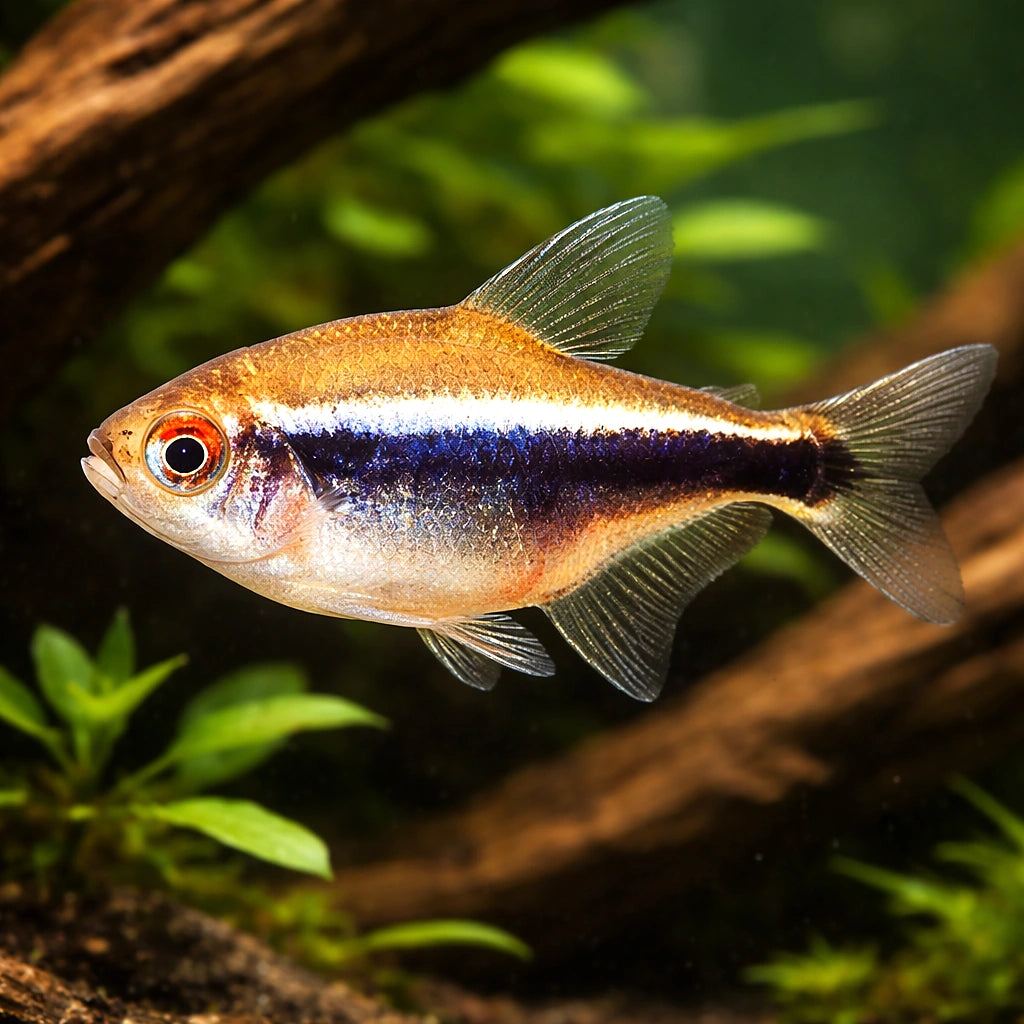
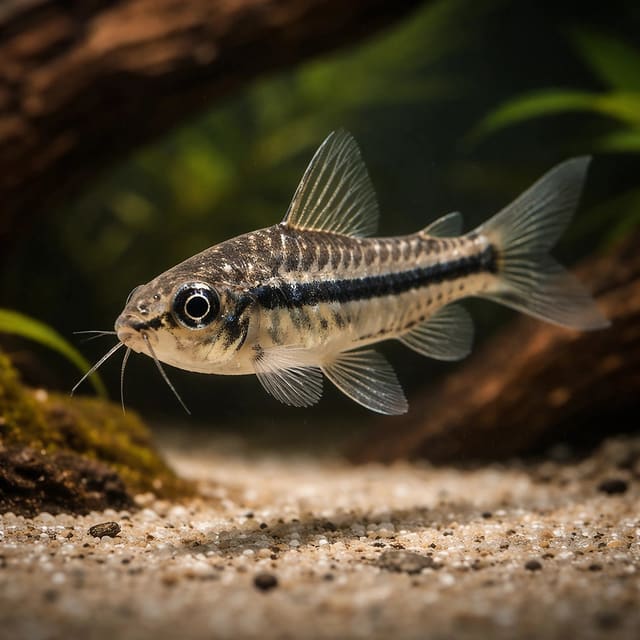
A single black neon over driftwood — the green-over-black side stripe is the species' signature, and it has no red belly at all (that's the common neon). Photo: Tropical Fish Co editorial.
The black neon tetra is Hyphessobrycon herbertaxelrodi, described by Jacques Géry in 1961 and named in honour of the American aquarist Herbert R. Axelrod [1]. The common neon tetra is Paracheirodon innesi — a different genus altogether. They are cousins within the broad characin family, not the same fish in two colours.
Three practical consequences follow from that, and all three matter at the point of purchase:
These four are the small tetras UK keepers compare most often. The table below is the decision shortcut; the column that matches your water and tank size is your fish.
| Attribute | Black Neon Tetra | Common Neon Tetra | Cardinal Tetra | Ember Tetra |
|---|---|---|---|---|
| Species | H. herbertaxelrodi | P. innesi | P. axelrodi | H. amandae |
| Adult size | 3.5–4 cm | 3 cm | 3.5–5 cm | 1.5–2 cm |
| Colour | Green-over-black stripe | Red + blue stripe | Full red + blue | Orange-red |
| Hardness tolerance | 3–15 dGH (flexible) | 2–10 dGH | 1–8 dGH (soft) | 2–15 dGH |
| UK hard tap water OK? | Yes | Maybe | No (needs RO) | Yes |
| Hardiness | Very hardy | Moderate | Sensitive | Hardy |
| Lifespan | ~5 years | 2–3 years | 4–6 years | 3–4 years |
| Minimum tank | 60 L | 60 L | 60 L | 30 L |
If your water is hard and you want a robust, long-lived schooler, the black neon wins outright. Reach for cardinals only if you keep soft, acidic water; reach for embers if you're working in a true nano tank under 40 litres.
The number that matters most is the group size, and the honest figure is eight as a minimum, ten to twelve as the target. Below eight, the shoal stops behaving like a shoal — you get scattered, skittish fish and the green stripe never reaches full intensity. Seriously Fish recommends a mixed-sex group of at least 8–10 for exactly this reason [3].
For tank size, picture horizontal swimming room rather than raw volume. Seriously Fish puts the practical floor at an 80 × 30 cm footprint, roughly 70 litres [3]; in real UK living-room terms a 60 L planted tank comfortably holds a group of ten with room for tank mates.
Stocking plans that work, by tank size:
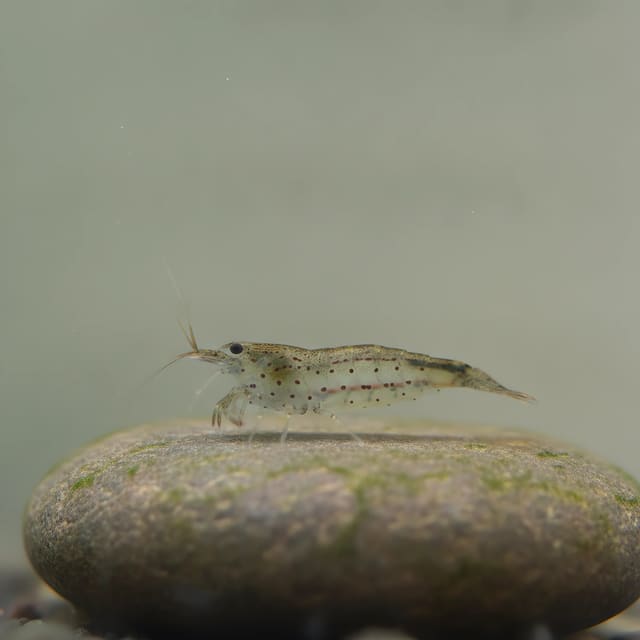
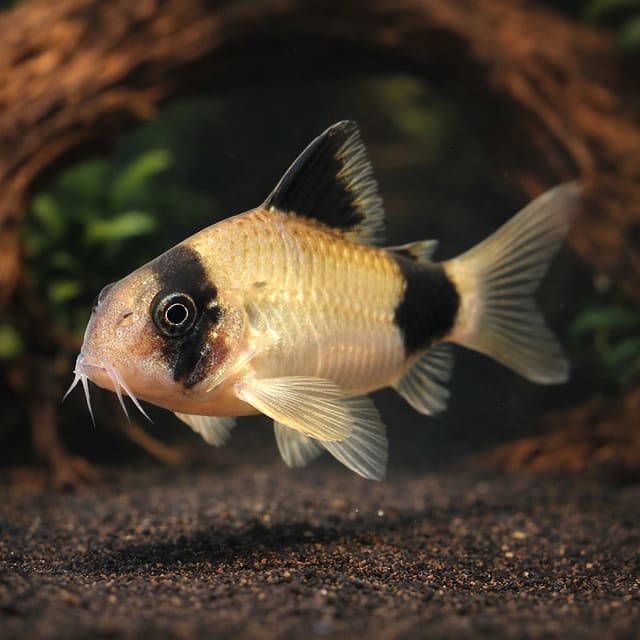
Black neons are peaceful, unfussy mid-water swimmers, which makes them one of the easiest tetras to stock around. The rule is simple: match their scale and their temperament, and keep out anything big enough to treat a 4 cm fish as a snack. Each link below goes to our full care guide for that species.
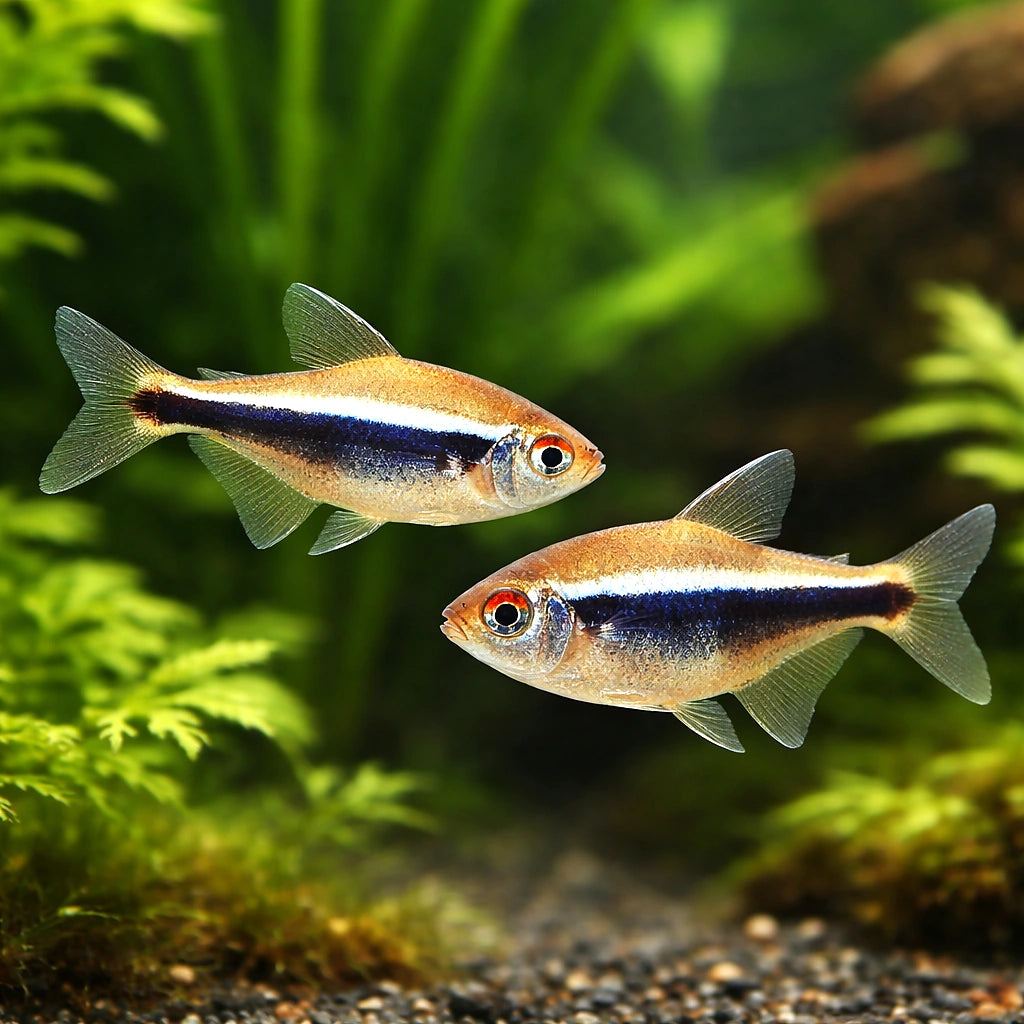
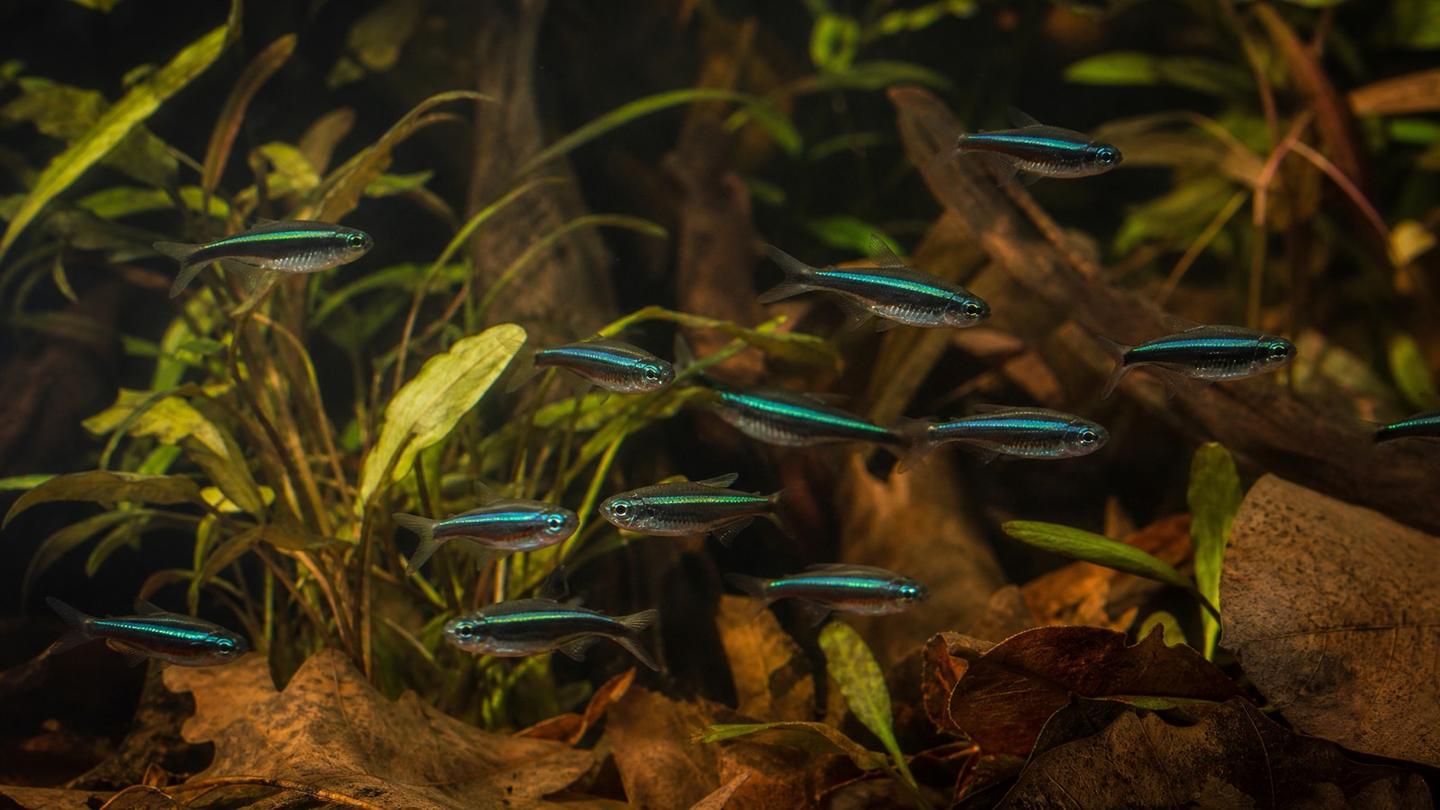
Two black neons in a planted layout — over a dark substrate the green line above the black band reaches its full glow. This is the look you're aiming for, and it's why we always say "dark substrate, real plants." Photo: Tropical Fish Co editorial.
Black neons aren't demanding, but a handful of choices decide whether they look grey or glowing:
A black neon's green stripe is iridescent — it reflects light rather than producing pigment. Over a bright, reflective substrate the surrounding glare drowns it out; over dark sand the stripe is the brightest thing in frame, so it reads as a vivid neon line. It's the same reason our holding tanks for these fish all run black sand.
For such a forgiving fish, almost every disappointment traces back to one of these — and all are avoidable before the fish even arrive:
Whether the fish travel to you or you collect them in person, the welfare markers are the same. Look for a tight, active shoal cruising in open water rather than fish hanging in corners; clean, unblemished flanks with the stripe clearly defined; and no clamped fins, white spots, or rapid gilling. A reputable supplier quarantines new stock and will happily tell you how long their black neons have been settled.
If you want to go further into the hobby, the UK has genuine community support that costs nothing: the Federation of British Aquatic Societies lists affiliated local clubs across the country, and forums such as Practical Fishkeeping's community are good places to compare biotope setups for Brazilian tetras [4]. Joining a local society is the fastest way to see established planted community tanks in person.
Black neons are robust shippers — their wide water tolerance means a small pH or hardness gap on arrival doesn't faze them the way it would a cardinal. We still drip-acclimate every order. For tetras this is a roughly 30-minute drip, slower than guppies but quicker than the 45 minutes we give pH-sensitive cardinals:
Live arrival guarantee: photograph the unopened bag within two hours of delivery if anything arrives in poor condition, and we'll refund or replace.
For the deep dive on the fish black neons are most often confused with — including breeding and the dreaded neon tetra disease — the neon tetra care guide is the natural next read. If you keep soft water and want maximum colour, the cardinal tetra care guide covers the sensitive showpiece alternative.
Comparing schools side by side? The cardinal tetra UK guide and the Ember tetra care guide sit alongside this page in the tetra cluster. And when you're ready to stock, the tetras hub and our tropical fish for sale listing show everything available this week.
Visual route into the rest of our UK live-fish range.
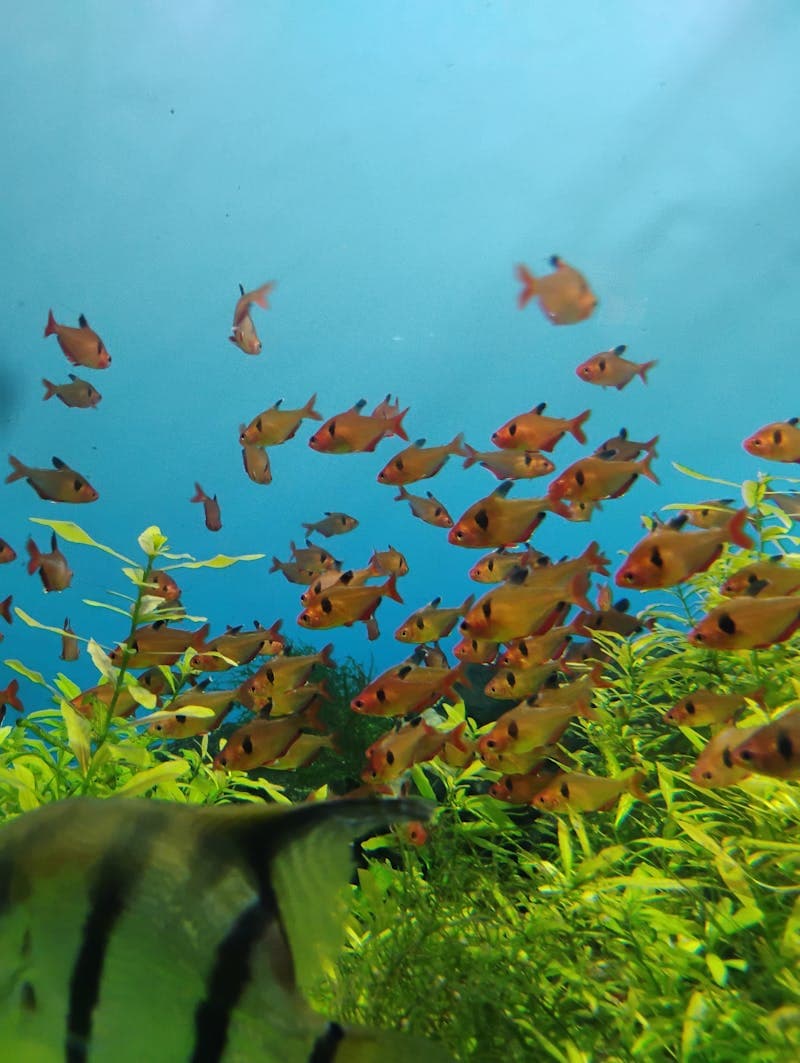
Premium Tetras for sale UK — Cardinal, Ember, Black Neon, Rummy Nose, Serpae, Diamond, Glowlight and more. Peaceful community schoolers.
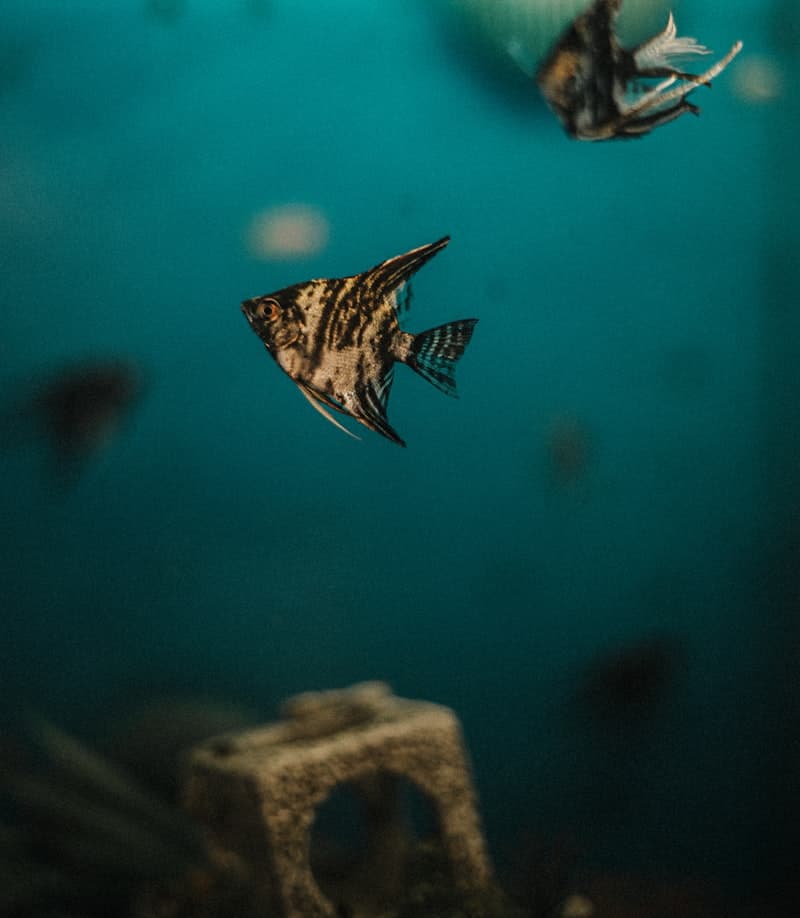
Tropical fish for sale UK — tetras, cichlids, bettas, guppies and corydoras. Specialist delivery backed by our Live Arrival Guarantee.
Material factual claims cite the sources below; store policy and cautious inference are labelled in the article. Sources are grouped by type so you can judge their weight at a glance.
Peer-reviewed comparison of thermal limits and metabolism of neon vs black neon tetra (PubMed 31789229).
Source for water-parameter ranges, max size and Paraguay-basin distribution.
Independent hobbyist cross-check on shoaling minimums, tank size and type locality.
UK hobbyist reference describing the black neon's Rio Taquari habitat and biotope setup.
Side-by-side keeper comparison of black neon vs common neon tetra hardiness and colour.
UK utility source confirming the South-East tap water is hard — used in the hard-water tolerance argument.
Fishkeeping moves fast and we want every guide spot-on. If you think something here is wrong, out of date, or could be clearer, tell us — our team reads every message and updates the page.
Suggest an editPremium Tetras for sale UK — Cardinal, Ember, Black Neon, Rummy Nose, Serpae, Diamond, Glowlight and more. Peaceful community schoolers.
Tropical fish for sale UK — tetras, cichlids, bettas, guppies and corydoras. Specialist delivery backed by our Live Arrival Guarantee.
Neon tetra care for UK aquariums: check 60 cm tank length, group size, heater, water, tank mates, feeding and mature-tank needs before buying.
Keep cardinal tetras thriving in UK water: check tank size, group size, tank mates, temperature and cardinal vs neon differences before you buy.
Harlequin rasbora care for UK aquariums: check 60 cm tank length, group size, 5 cm adult size, water, tank mates and lookalike species before buying.
Planted-Tank Photographer & Writer · 10+ years in the hobby
Hannah is a Cambridge-based aquarium photographer and writer whose planted-tank work has appeared in Practical Fishkeeping and the ADA Aqua Journal digital edition. She writes Tropical Fish Co's deep species guides on schooling tetras and planted-tank communities — always accompanied by her own photography, never stock imagery.