Easy
Parallel Nerite Snail (Neritina sp.)
17–27°C · pH 6.5–8
£4.99

Red Spotted Nerite Snails (Neritina sp.) are freshwater aquarium gastropods in the Neritidae family; the genus also includes marine and brackish-water snails. They suit a mature filtered aquarium; OATA’s freshwater shrimp and snail guidance gives 17–27°C, pH 6.5–8.0 and 4–18°dH, and an approximately 20-litre aquarium is the cautious group-level plan where adult size is unknown. Sold individually at a 1–1.5 cm dispatch grade.
Neritina sp.
Lives in groups: kept together they stay settled, active and show their best colour.
Minimum of 2 per order.
Red Spotted Nerite Snails (Neritina sp.) are freshwater aquarium gastropods in the Neritidae family; the genus also includes marine and brackish-water snails. They suit a mature filtered aquarium; OATA’s freshwater shrimp and snail guidance gives 17–27°C, pH 6.5–8.0 and 4–18°dH, and an approximately 20-litre aquarium is the cautious group-level plan where adult size is unknown. Sold individually at a 1–1.5 cm dispatch grade.
Nerite snail is a trade umbrella, not one species. Confirm the supplied taxon and holding water, use a mature covered aquarium with established grazing surfaces, stock from food availability rather than a litre formula, and treat egg capsules, medicines and tank mates as species-specific decisions.
Maintain these water conditions for optimal health and vibrant colors
Red Spotted Nerite Snails (Neritina sp.) are freshwater aquarium gastropods in the Neritidae family. WoRMS recognises Neritina as an accepted genus, but the name on this animal stops at genus level rather than identifying one species. This suits a keeper prepared to use cautious freshwater-snail parameters, maintain a mature filtered aquarium and screen every proposed companion for predation risk.
Wikipedia describes Neritina as a genus of small aquatic snails with an operculum. Across the genus, its members include marine, brackish-water and sometimes freshwater gastropods. This offer is for freshwater aquarium keeping, so the practical instructions below use freshwater snail guidance rather than treating every member of the genus as biologically identical.
An operculum is part of the genus description and helps identify these animals as nerites. The decisive husbandry points are a mature biological filter, measurable water quality, algae-based feeding, absolute protection from copper and exclusion of fish that can eat snails.
One purchase supplies one live snail. The 1–1.5 cm grade describes its size at dispatch, not its eventual adult length. The exact species has not been identified, so the care advice here follows the genus Neritina and its care group. Plan the aquarium from the cautious space and water guidance below rather than extrapolating adult size from the dispatch measurement.
Sex is guaranteed only when the selected option explicitly states male or female. This Red Spotted Nerite Snails listing has no sex-guaranteed option.
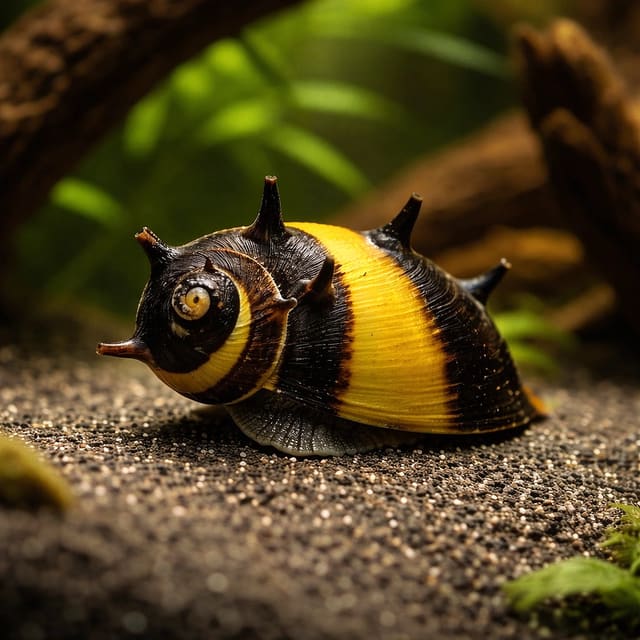
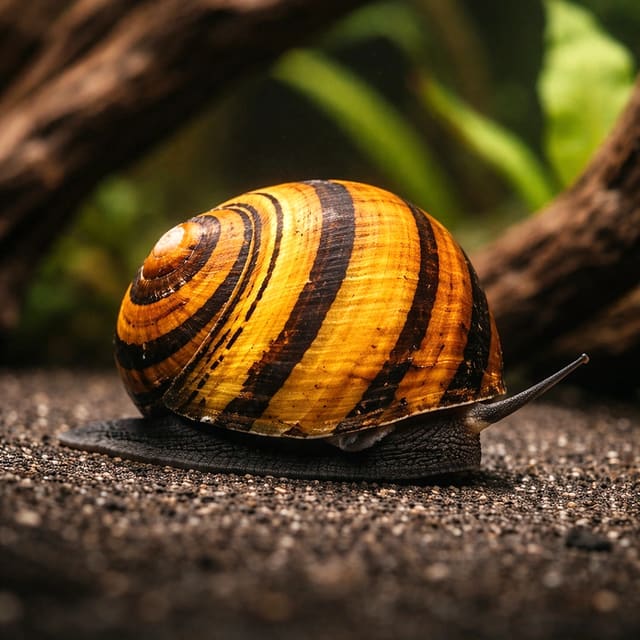
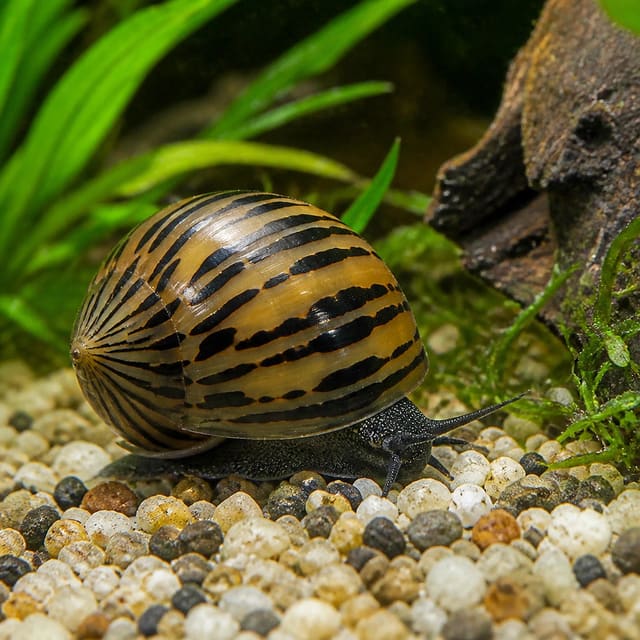
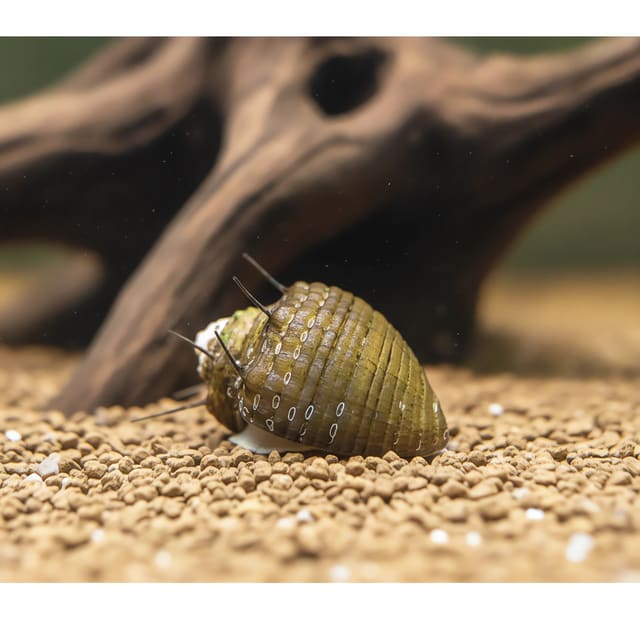
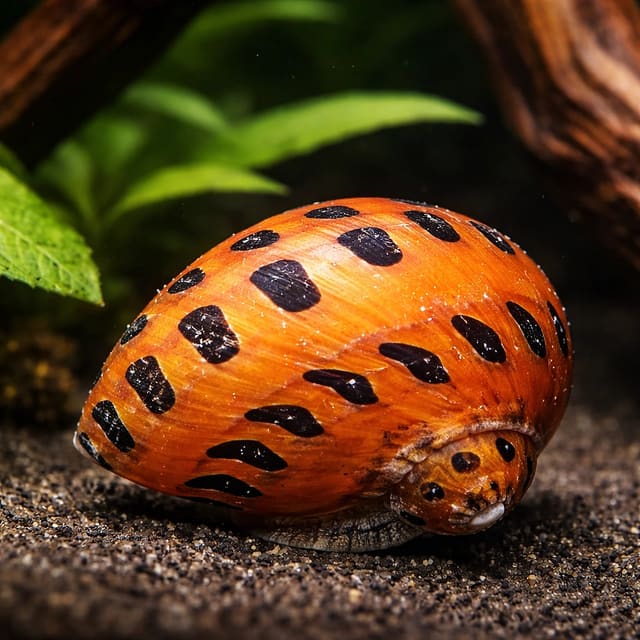
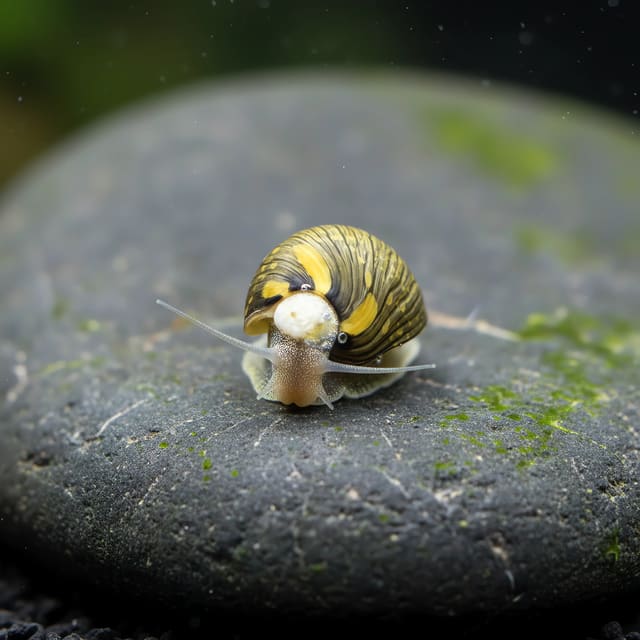
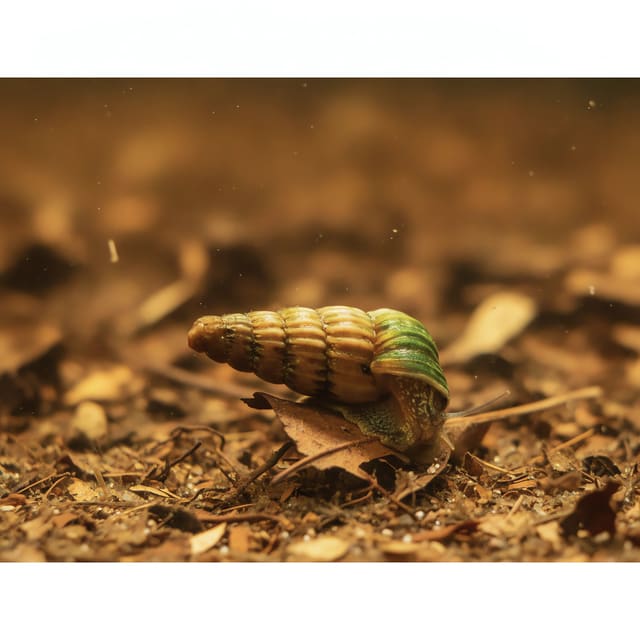
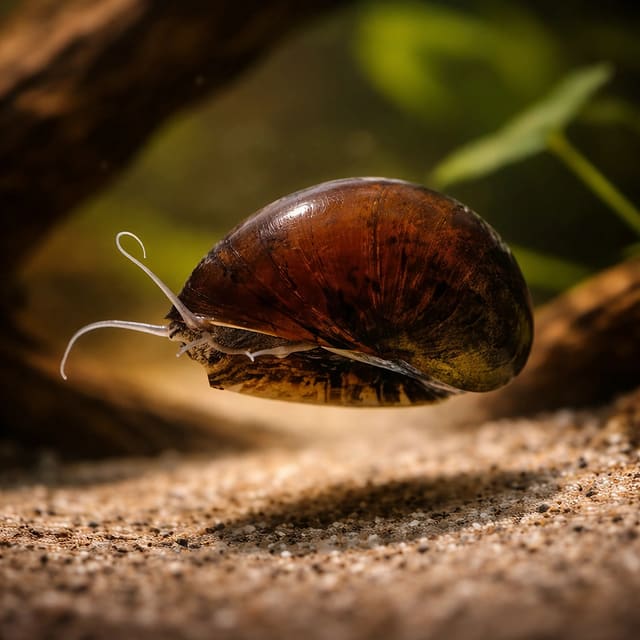
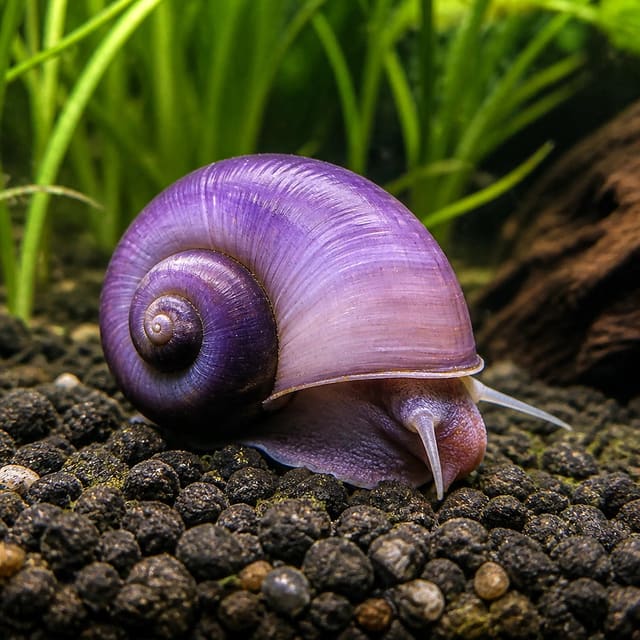
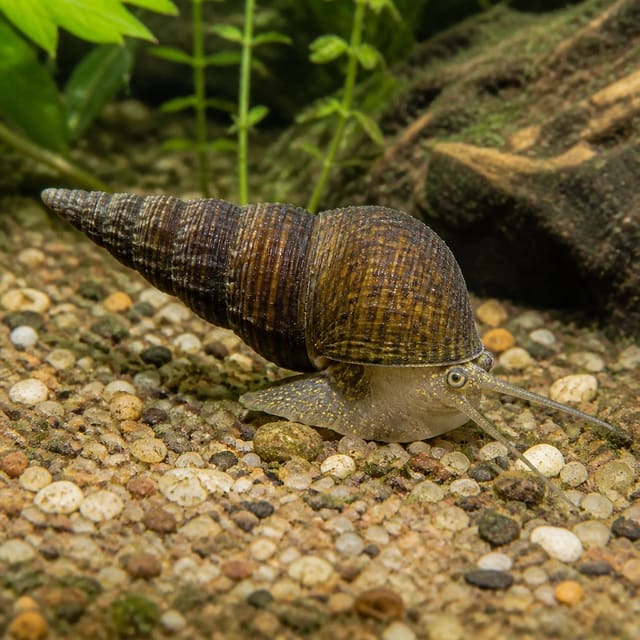
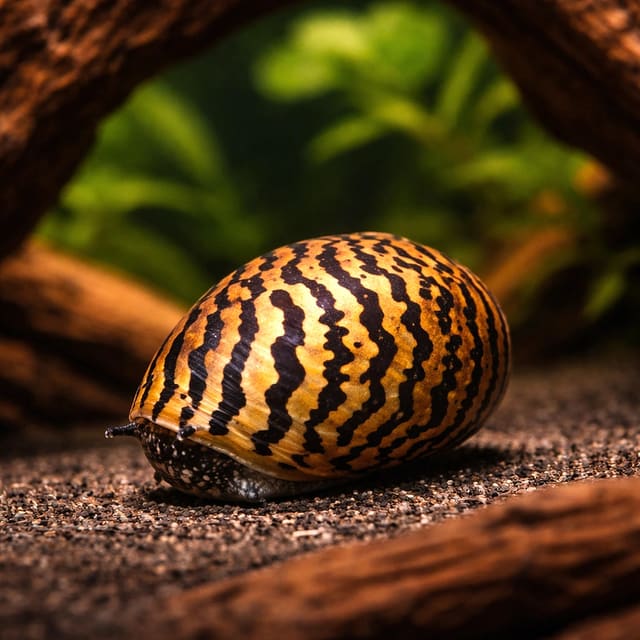
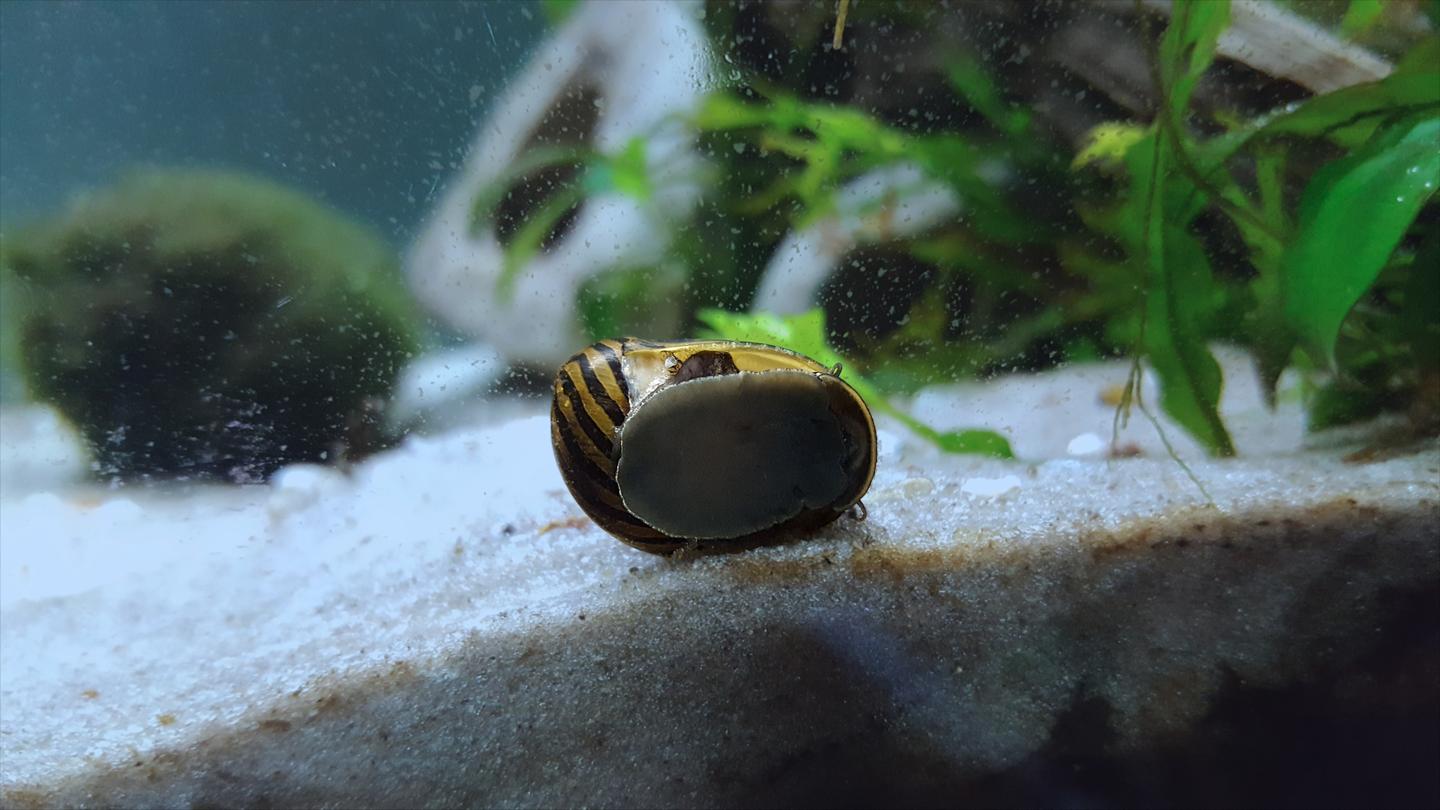
The gallery images are representative of this type of animal rather than photographs of the exact animal supplied, so colours can look slightly different from the live animal. The gallery image shows one rounded, red and black-spotted shell, but that visible pattern describes the pictured snail rather than guaranteeing the markings of another animal.
If you are comparing different named and patterned nerites, browse the nerite snail collection. Keep the identity attached to each product separate when comparing care, because this animal is labelled only as Neritina sp..
Keep the aquarium at 17–27°C, pH 6.5–8.0 and 4–18°dH general hardness. OATA’s freshwater shrimp and snail sheet gives these values for the group; treat them as broad aquarium guidance, not a species-specific optimum. It also gives 3–15°dKH carbonate hardness, zero ammonia, zero nitrite and nitrate no more than 20 mg per litre above the normal tap-water level.
Use an aquarium of approximately 20 litres as the cautious starting plan, and increase that space when fish share the aquarium. OATA recommends at least 10 litres for groups of small freshwater shrimp or snails and approximately 20 litres for larger species. Because this genus-level identity has no adult measurement for placing it in the smaller category, the larger planning figure is the responsible choice.
| Suits | Not suited to |
|---|---|
| A mature, filtered freshwater aquarium | An unfiltered or newly stocked aquarium with unstable waste levels |
| Water held within 17–27°C and pH 6.5–8.0 | An aquarium where ammonia or nitrite is detectable |
| A keeper who tests water and changes it weekly | Aquariums treated with copper |
| Companions screened for snail predation | Pufferfish, loaches or any fish that can eat snails |
Set the aquarium within 17–27°C, pH 6.5–8.0, 4–18°dH and 3–15°dKH. Choose stable values inside those bands instead of repeatedly moving temperature or chemistry from one end to the other. A test result is useful only when it leads to a clear decision: compare the reading with the target, identify what changed and correct the cause without exposing the snail to another abrupt swing.
Measure temperature, pH, general hardness and carbonate hardness before introducing the snail. Then test ammonia and nitrite regularly, with at least weekly testing as part of maintenance. The aquarium water chemistry guide explains what the measurements mean, while the water matcher provides a direct way to compare measured values with this care range.
Do not chase a particular number by making several rapid changes. A result outside the guidance calls for a controlled correction and another test. Record the aquarium and tap-water readings together so that weekly trends reveal whether waste is accumulating or hardness is shifting.
For example, a temperature of 24°C, pH 7.2 and general hardness of 10°dH all sit within the stated bands. If ammonia and nitrite are also zero, keep the routine steady rather than adjusting water that already meets the plan. If the same test shows detectable nitrite, stop further livestock additions, inspect the filter and retest after addressing the waste-processing problem.
Compare like with like each week. Use the same test method, record the units and note whether the reading was taken before or after a water change. That consistency makes a developing trend easier to recognise than isolated numbers taken under different conditions.
Run a mature biological filter continuously. OATA says a filter is always essential for freshwater shrimp and snails, while the RSPCA explains the biological filtration process: beneficial bacteria convert toxic ammonia into nitrite and then into the safer waste product nitrate. The snail still adds waste, so algae-grazing behaviour never replaces filtration or maintenance.
Larger aquariums generally provide more stable temperature and water-quality conditions. That stability is the reason to plan space conservatively rather than choosing a vessel around the snail’s 1–1.5 cm dispatch grade. The grade describes the animal arriving, while the aquarium must continue working as waste and feeding affect the biological load.
Add livestock slowly. OATA warns that beneficial bacteria need to increase whenever more animals and more feeding raise the waste load. Adding too much too quickly can produce new tank syndrome, where the bacterial population cannot process the resulting ammonia and nitrite. Use the first-aquarium preparation guide for a practical sequence for maturing and checking a freshwater invertebrate setup.
A clear aquarium is not enough on its own because dissolved waste may be present before the water looks dirty. Use the filter check and test results together. Stable readings show that the biological system is keeping pace; detectable ammonia or nitrite means additions should stop while the cause is corrected.
Arrange the aquarium so the snail can move between submerged surfaces while remaining within stable filtered water. Aquarium gravel or sand forms the base recommended by OATA, and live plants are the preferred form of cover. Plastic plants and suitable ornaments, including plant pots or model caves, can provide shelter where live planting is not used.
Algae grazing is part of this animal’s daily feeding opportunity, but the aquarium should not be treated as self-feeding. The amount of algae naturally present changes with the aquarium, and routine supplementary feeding remains necessary. Keep enough accessible submerged surface around the planting and ornaments for grazing while preserving clear water movement through the filter.
| Item | Decision |
|---|---|
| Filter | Essential for processing waste and maintaining water quality |
| Gravel or sand | Use as the aquarium base |
| Live plants | Use where practical to provide cover |
| Artificial plants or ornaments | Add when live plants are absent so shelter remains |
| Extra aquarium volume | Provide it when fish share the setup |
Judge the setup by measurable outcomes. The correct arrangement keeps ammonia and nitrite at zero, allows regular waste removal and gives the snail access to cover and grazing surfaces. Decorative complexity is useful only when it does not obstruct maintenance or prevent you from observing changes in activity, colour, appearance and feeding.
Provide algae-based nutrition. OATA describes freshwater shrimp and snails as generally herbivorous animals that graze algae in the aquarium, and it says this grazing should be supplemented with algae wafers. Commercial pellets made for freshwater shrimp can also be used for both shrimp and snails.
Overfeeding creates a water-quality problem rather than an extra reserve for the snail. Uneaten food breaks down and releases toxic waste, increasing the demand on the filter and potentially raising ammonia or nitrite. The correct portion is therefore the amount that gives the snail feeding time without leaving a continuing build-up.
Watch the response instead of assuming that visible algae meets the whole diet. Record whether the snail approaches or remains on the food during the feeding period. Reduced intake or a lack of interest in food belongs on the health-observation checklist, particularly when it appears alongside unusual inactivity, a colour change or visible shell and body abnormalities.
Keep the feeding schedule separate from aquarium cleaning. A snail that grazes algae still needs weekly testing and water changes, while a clean-looking aquarium still needs supplementary food. These two decisions protect different needs: feeding supplies nutrition, and maintenance controls the waste produced by livestock and uneaten food.
If food remains after the snail has had at least 30 minutes to feed, do not respond by adding a different food beside it. Remove the continuing build-up and reduce the next portion. Check ammonia and nitrite if leftovers have begun to break down, because the filter must process the resulting waste.
If the food is accepted without a continuing residue, keep the same measured portion and schedule. Change one factor at a time so that the next observation has a clear meaning. A repeated loss of interest calls for water testing and a health check rather than a series of larger portions.
Complete a 25% partial water change at least once every week. Treat replacement tap water with a conditioner that removes chlorine or chloramine before adding it to the aquarium. A siphon can remove solid waste from the gravel during the same maintenance session.
If the filter needs cleaning, do not run it under the tap. Chlorine or chloramine may kill the beneficial bacteria established in the media. Rinse the media lightly in aquarium water removed during the partial water change; this reduces the number of bacteria lost while clearing material that obstructs the filter.
A maintenance decision should follow the readings and physical checks. Detectable ammonia or nitrite means the aquarium requires immediate attention, not a delayed adjustment at the next routine session. A blocked filter also requires action because water must pass through the biological media for the bacterial population to process waste.
Repeat the 25% partial water change at least once every week. Use the same session for testing, solid-waste removal and a filter-flow check so that each part of the aquarium is assessed on a dependable schedule.
Repeated movement in the wrong direction needs a cause-based response. Improve waste removal, correct overfeeding or address filter flow rather than making an isolated water change and ignoring the pattern. The record helps distinguish a single unusual reading from a developing maintenance problem.
Never expose this snail to copper. Freshwater snails are invertebrates, and OATA warns that they will die if exposed even to low levels of copper. Check every aquarium treatment before use and select only products stated to be safe for invertebrates.
The copper warning is unconditional. A treatment intended for fish still enters the same water as the snail, so the safety assessment must cover every inhabitant. Moving attention only to the animal showing symptoms can expose the invertebrates sharing its system.
General good husbandry remains the first line of prevention: maintain the biological filter, keep ammonia and nitrite at zero, prevent excess food from decomposing and complete weekly partial water changes. These actions do not diagnose or treat illness, but they remove avoidable water-quality stress while you assess a change.
If activity, colour, appearance or feeding changes, test the water first and speak to our team with the readings and a description of what changed. Do not add an unexamined treatment while waiting, because a product containing copper creates a direct lethal risk to freshwater snails.
Be present to receive the parcel. Tropical Fish Co’s delivery and Live Arrival Guarantee policy says livestock is hand-bagged in pure oxygen, placed in an insulated box and supplied with a heat pack when the weather calls for it. The parcel must not be left unattended.
The video instruction applies to every delivery so the sealed condition and opening are captured before floating or release. For a Live Arrival Guarantee claim, send us the order number and continuous unboxing video on the same day. The video should show the sealed parcel, the uninterrupted opening and the animal still in its sealed bag.
Keep arrival checks separate from routine aquarium testing. Before the parcel comes, confirm the receiving aquarium is mature, filtered and within 17–27°C, pH 6.5–8.0 and 4–18°dH. On arrival, follow the parcel and floating sequence above without adding extra unmeasured stages.
These checks separate preparation from acclimatisation. The aquarium should already meet the care plan before filming begins; the 20–30 minute floating period is not the time to correct an immature filter or unsuitable water readings.
Use changes in normal activity, colour, appearance and feeding as prompts to inspect the aquarium. OATA’s observation guidance includes increased inactivity, restlessness or unusual behaviour; darker or paler colour; lesions, discolouration or abnormal growths; and reduced food intake.
| Observation | First action |
|---|---|
| Reduced activity | Test temperature, ammonia and nitrite |
| Darker or paler colour | Compare current water readings with the established range |
| Lesion, discolouration or abnormal growth | Record what changed and check water quality |
| Reduced feeding interest | Review the portion, leftovers and recent test results |
| Repeated waste readings above target | Address filtration, stocking pace and decomposing food |
Do not use one observation as a diagnosis. A water test gives you an immediate, measurable place to begin. Ammonia or nitrite above zero requires prompt correction, while a blocked filter or accumulated food gives you a practical cause to address.
Keep a short weekly record of temperature, pH, ammonia, nitrite, nitrate and maintenance completed. Add notes only when activity, colour, appearance or food intake changes. This creates a useful comparison with the animal’s own recent pattern without assigning a species-specific behaviour to a genus-level identity.
When a change persists after water-quality checks, send our team the readings, maintenance history and a clear description. Keep copper out of the aquarium throughout the assessment and use only treatments confirmed as safe for invertebrates.
Record the time of the observation, the latest feeding and the current test results. Repeat the relevant water test after correcting any clear problem, such as a blockage or decomposing food. A return to the established readings gives a measurable checkpoint; continued abnormal appearance or behaviour still deserves further assessment.
Use recent records rather than memory when describing the change. “Ammonia rose from zero to a detectable result after food accumulated” leads to a clearer action than “the aquarium seems different”. Keep the description factual and avoid adding treatment until its safety for invertebrates has been checked.
Avoid pufferfish, loaches and any fish that can eat snails. OATA specifically says snails should not be mixed with fish that can eat them and names pufferfish and loaches as examples. This exclusion remains unconditional because the snail’s shell does not turn a known snail predator into a suitable companion.
Freshwater shrimp and snails may be eaten by common aquarium fish, so a general “community fish” label is not enough for a compatibility decision. Screen the exact proposed fish for whether it eats snails before combining it with this animal. If that behaviour is unclear, do not use the mixed aquarium as the test.
OATA describes freshwater shrimp and snails as generally compatible with most aquarium species, but it also requires caution because common fish may eat them. Treat that statement as permission to assess a proposed combination, not as a universal tank-mate list.
For a stocking assessment, send our team the aquarium volume, measured water values and the exact names of its inhabitants. A name-based assessment is more useful than a broad label such as peaceful, community or bottom-dwelling because the decisive question is whether the proposed companion can eat the snail.
A proposed aquarium containing several apparently calm animals still fails if one resident is a loach or pufferfish. Remove the incompatible plan rather than averaging that risk against the behaviour of the other inhabitants. The same rule applies when a different fish is known to eat snails.
If every resident passes the predation screen, continue with the water, space and waste checks. Passing one stage does not cancel another: an animal that does not eat snails still needs compatible water, while a chemically compatible aquarium still needs enough volume and biological capacity for the complete community.
Increase aquarium volume when fish share the setup. OATA’s approximately 20-litre larger-category figure is a cautious starting point for this unidentified Neritina, not a complete mixed-community allowance. The final plan must account for every animal and the additional waste and feeding that enter the filter.
Snails are not social creatures under OATA’s group guidance, so this animal does not need a social group of its own. One may be kept without adding companions for social reasons. If more livestock is introduced, add it slowly so the biological filter’s bacterial population can grow with the increased waste load.
| Check | Required result |
|---|---|
| Predation | No pufferfish, loaches or other fish that can eat snails |
| Water | Shared conditions remain within 17–27°C and pH 6.5–8.0 |
| Waste | Ammonia and nitrite remain at zero mg per litre |
| Space | More than the cautious snail-only plan when fish are included |
| Treatment | Every product used is safe for invertebrates and contains no copper risk |
Do not add several animals together merely because the test results were acceptable beforehand. OATA warns that stocking too quickly can exceed the biological filter’s capacity and cause new tank syndrome. Introduce livestock gradually, continue weekly testing and pause additions whenever ammonia or nitrite appears.
This staged approach makes the effect of each addition easier to observe. It also prevents a passing water test from being treated as unlimited capacity. Aquarium volume, filter performance and feeding all belong to the same stocking decision.
This is a genus-level identity, so do not use the 1–1.5 cm dispatch grade as an adult-size forecast. Plan conservatively with OATA’s approximately 20-litre larger-category aquarium guidance rather than assigning a species measurement.
Use approximately 20 litres as the cautious starting plan and provide more space when fish share the aquarium. This follows OATA’s freshwater shrimp and snail group guidance because the exact species and adult-size category are unknown.
These snails do not need a social group. OATA says snails are not social creatures, so keep one without adding companions for social reasons and introduce any further livestock slowly.
They suit a keeper who can provide a mature filtered aquarium, test water weekly, complete 25% weekly water changes, feed two or three times a week and keep copper out of every treatment.
It grazes aquarium algae and should receive supplementary algae wafers; commercial freshwater-shrimp pellets can also be used. OATA advises feeding freshwater shrimp and snails two or three times a week and allowing at least 30 minutes to feed.
OATA’s freshwater shrimp and snail guidance gives 17–27°C, pH 6.5–8.0, 4–18°dH and 3–15°dKH. Keep ammonia and nitrite at zero mg per litre.
OATA treats freshwater snails as generally compatible with most aquarium species and says snails are not social creatures. The main compatibility decision is protecting this snail from fish that may eat it.
Consider aquarium species only after screening them for snail-eating behaviour. Avoid pufferfish, loaches and any other fish that can eat snails; OATA warns that common aquarium fish may eat freshwater snails.
Start filming the sealed parcel before opening, keep the take continuous and show the animal inside its sealed bag. Inspect it that day, then float the bag for 20–30 minutes before release and do not pour bag water into the aquarium.
No reviews for this item yet. Bought one? Honest reviews only, good or bad.
What customers say about ordering from us
I have a small group of long finned mountain minnows. So was delighted to be able to order ten of this variety to increase the genetics in my tank . The ones I recieved are healthy but it’s to early to give a verdict on wether they are of a long finned type since they are small currently.
Gordon Walker · 23 Sept 2026
100% success travel and "installation". Pleased with quality of purchase. The Siamese fighter a bit "shy" so have not yet seen him at his best yet but looking good. Happy customer. GG
George E Garratt · 21 Sept 2026
Reviews of our shop, collected by Judge.me, an independent third-party review collector. Newest first.