
 By Hannah Nielsen
Moderate
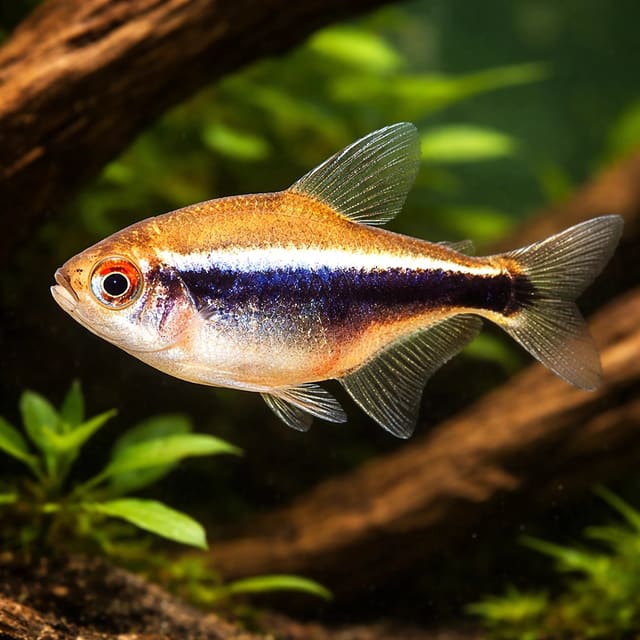
Neon Tetra (Paracheirodon innesi)
21–25°C · pH 5–7
£2.99
Barbs · Buying Guide
Gold barb care for UK tanks — the hardy golden schooler that shrugs off cool water and hard tap. Tank size, mates, hardiness, and live stock. Shop now.
9 products in stock today
Live prices and stock. Every fish covered by our Live Arrival Guarantee.
21–25°C · pH 5–7

23–27°C · pH 5.5–7 · 60L
20–28°C · pH 5–7.5 · 72L

21–25°C · pH 5–7
22–25°C · pH 6–7.4
22–26°C · pH 6.4–7.4 · 41L
17–27°C · pH 6.5–8
17–27°C · pH 6.5–8
The shaded band shows the range gold barb is comfortable in. Match it to your tap water before you buy.
Our trained assistant knows this gold barb page inside out. Ask it anything — water parameters, tank mates, how many to buy — or have it read the guide aloud while you set up your tank.
Walk into the schooling-fish conversation as a UK beginner and you get pointed at neons and cardinals every time. Then you test your tap water, find it's hard and alkaline, and realise the "gold standard" fish everyone recommended actually want soft, acidic water you'd have to manufacture. It's a frustrating place to start.
The gold barb sidesteps the whole problem. Barbodes semifasciolatus — sold as the gold barb, Schubert's barb, or Chinese barb — is a hardy golden schooler that genuinely thrives in hard British tap water and shrugs off cooler temperatures that would stress a tetra. It's been a hobby staple for decades, and it remains one of the most forgiving community fish you can buy.
I'm Hannah, the site's planted-tank photographer. I've spent years photographing schooling fish, and the gold barb is the one I keep recommending to friends who've just discovered their water is "wrong" for cardinals. This guide is the answer I'd give a customer in Reading or Leeds who asks: "I've got hard water and a 80-litre tank — what golden community fish will actually be easy?"
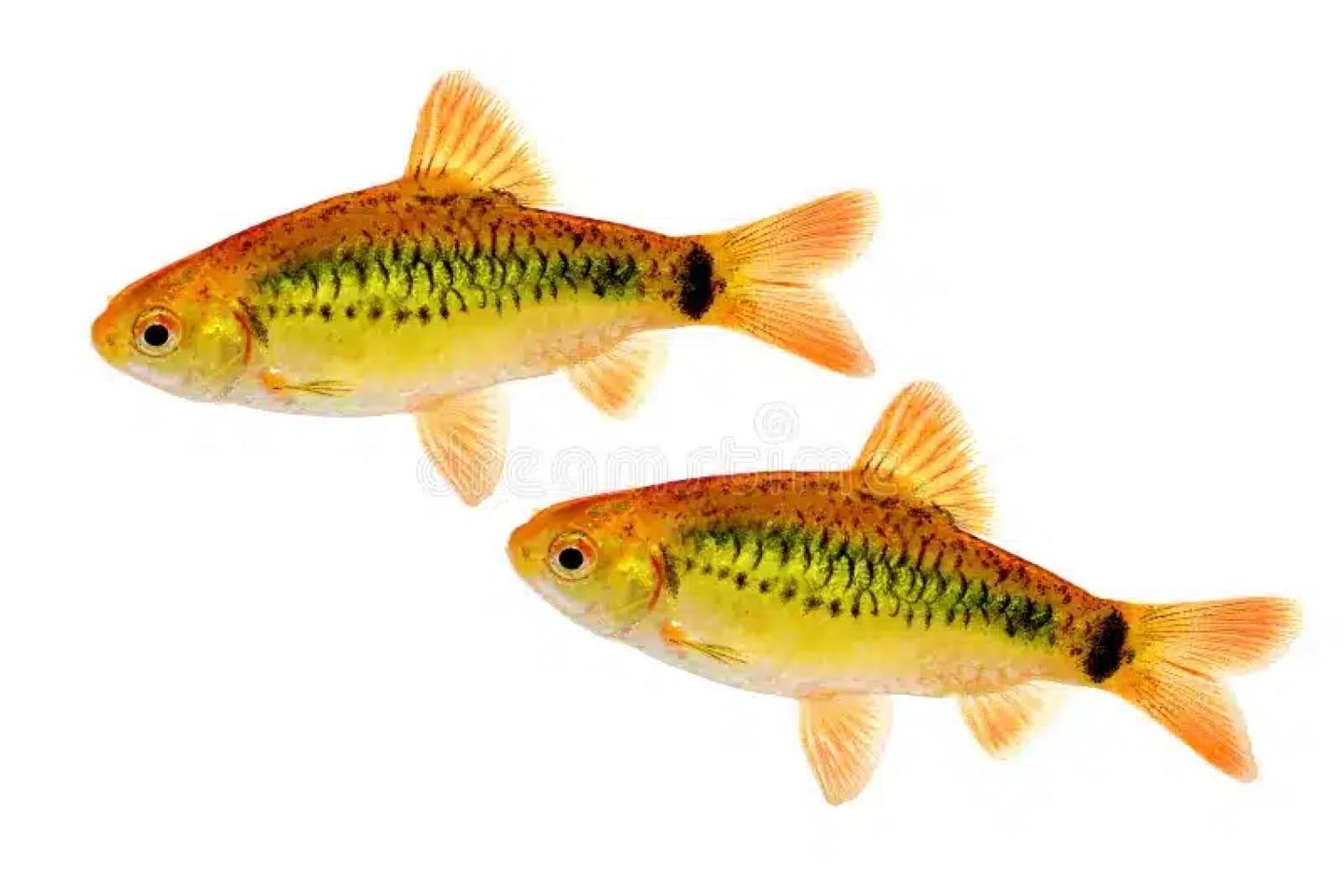
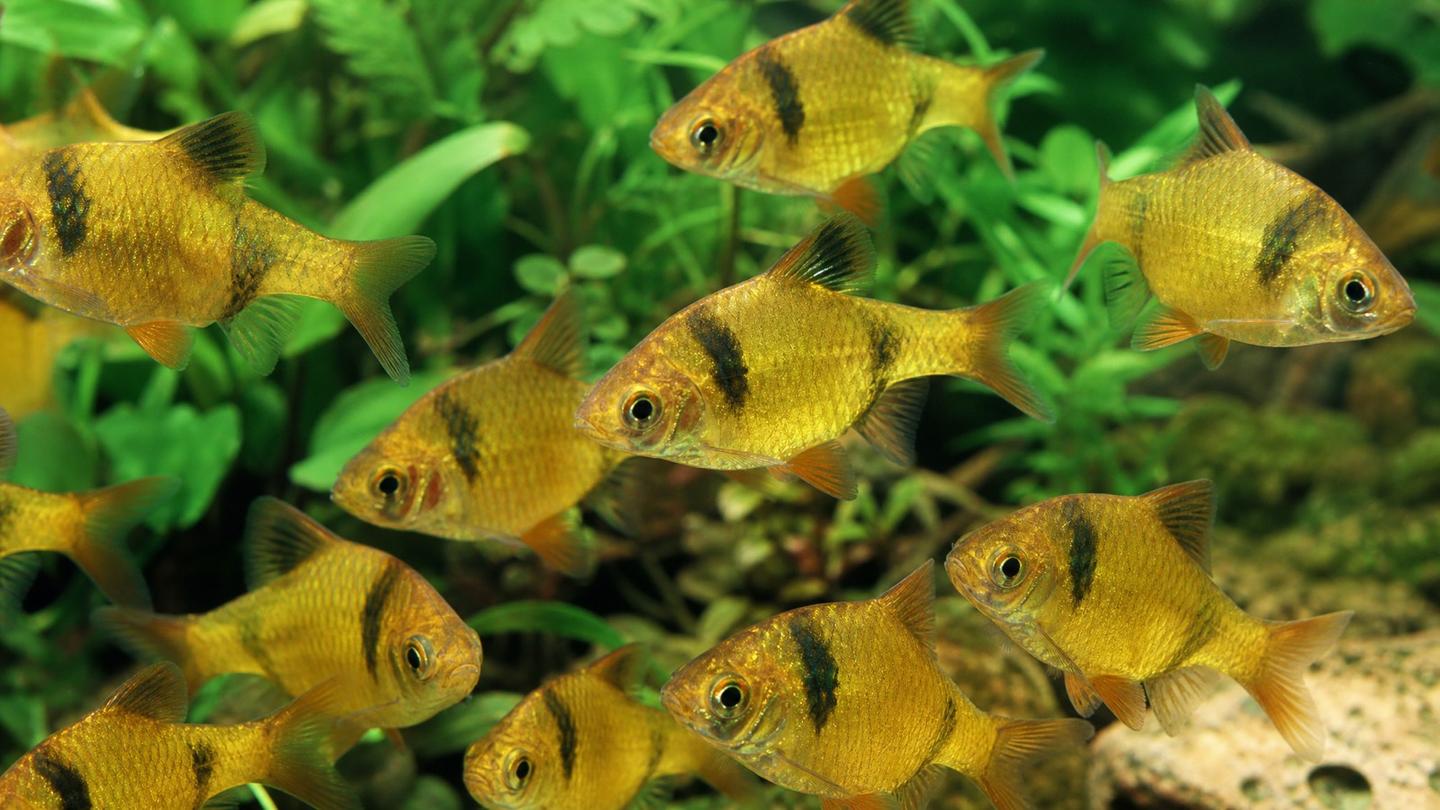
Gold barbs in a holding group — note the brassy-gold flank and the faint vertical bars that catch the light. New arrivals look paler and colour up over the first week as they settle. The image of the school at the top of this page is our own editorial illustration. Credit: Tropical Fish Co.
The gold barb's selling point isn't colour intensity — a cardinal beats it there. It's tolerance: of hard water, of cool water, and of a beginner's parameter wobbles. The table below shows where it wins.
| Attribute | Gold Barb | Neon Tetra | Cardinal Tetra | Black Neon Tetra |
|---|---|---|---|---|
| Adult size | 6–7.5 cm | 3–4 cm | 4–5 cm | 4 cm |
| Minimum tank | 80 L | 40 L | 60 L | 60 L |
| Temperature | 18–24 °C | 20–26 °C | 23–27 °C | 23–27 °C |
| Tolerates cool / no-heater room | ✓ Yes | Maybe | ✗ | ✗ |
| Hardness tolerance | 5–19 dGH | 2–12 dGH | 1–10 dGH | flexible |
| Hard UK tap water OK? | ✓ Yes | Maybe | ✗ | ✓ |
| Fin-nipping risk | Low (in a group) | None | None | None |
| Beginner-friendly | ✓ Yes | Yes (mature tank) | Maybe | Yes |
If your water is hard, your room runs cool, or your tank is on the bigger side of 80 L — the gold barb is the easy answer. An Ember tetra is the smaller orange schooler, but its guide still starts around 45 L with a useful 45 × 30 cm footprint; the gold barb simply gets too big and too active for that setup.
Before you buy any schooling fish, check your postcode's water hardness on your supplier's site. If it comes back "hard" or "very hard" — which covers most of the South-East and Midlands [5] — the gold barb saves you the cost and faff of an RO unit that cardinals would demand. Read the full picture in our water chemistry guide.
The single most important number on this page: six minimum, eight to ten ideal [3]. Gold barbs are a shoaling fish, and almost every "my barb is a bully" story traces back to someone keeping two or three. A proper group turns that energy inward — males flare and chase each other harmlessly — instead of aiming it at long-finned neighbours [6].
Stocking guide by tank size:
Gold barbs are peaceful but busy. The trick with tank mates is to match their pace and avoid trailing fins. Anything calm, similarly sized, and not slow-and-flowing makes a good partner. Here are the companion groups we'd actually put with them — each links to a care guide so you can check the detail:
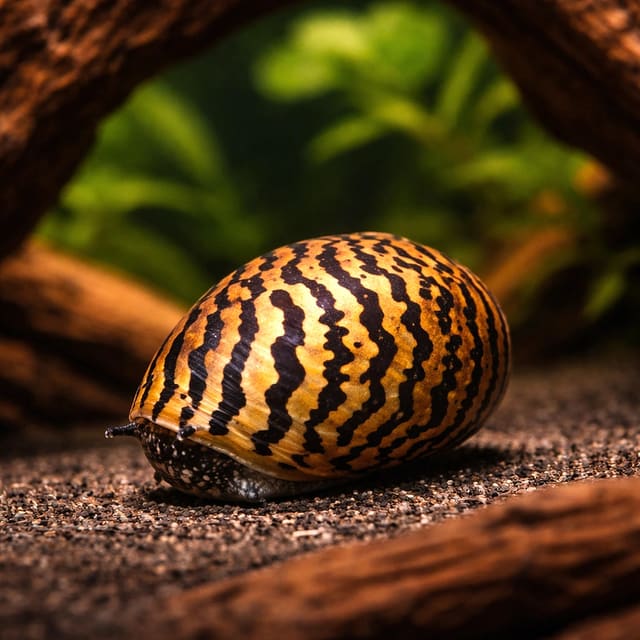
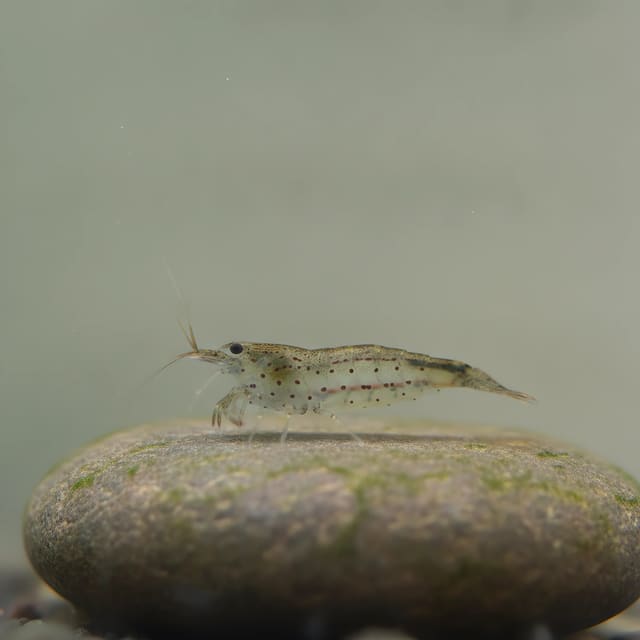
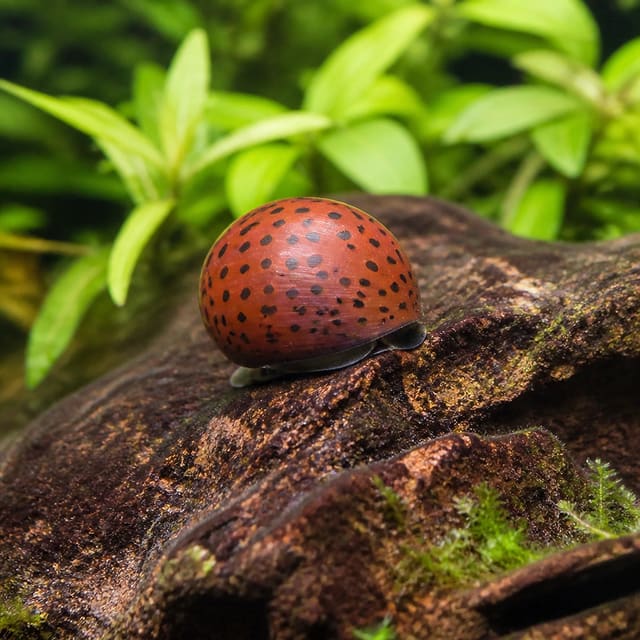
Adult shrimp and nerite snails are some of the best value tank mates you can add to a gold barb tank: they clear algae and leftover food, they ask for nothing in return, and gold barbs leave adult shrimp alone. The one caveat is shrimplets — a hungry barb will pick off baby shrimp, so treat shrimp breeding as a separate-tank project rather than something that'll boom in a barb community.
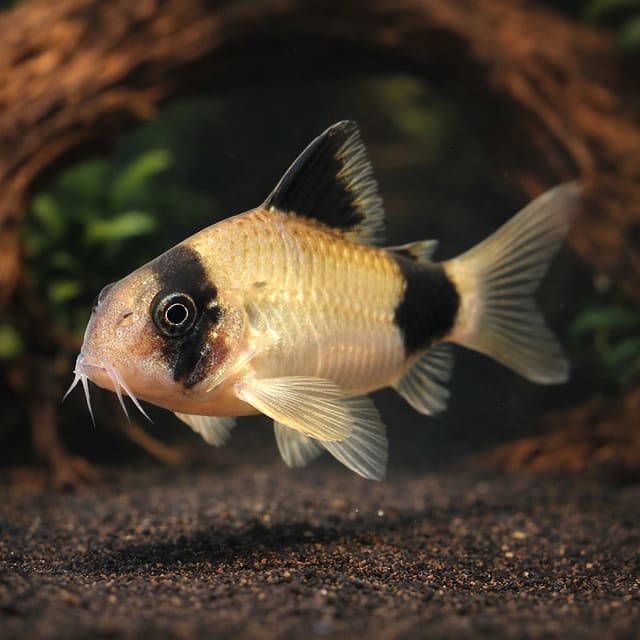
A panda cory (Corydoras panda) — one of our most-recommended bottom companions for gold barbs. It works the substrate the barbs ignore and shares the same easy temperament. Photo: Tropical Fish Co.
Gold barbs are among the hardier shippers we send, precisely because their wide tolerance for temperature and hardness means the inevitable small shifts in transit don't faze them. They still deserve a careful acclimation:
A wide environmental tolerance is a shipping advantage. A fish that's comfortable anywhere from 18 to 24 °C and 5 to 19 dGH [1] doesn't get shocked by the temperature drift or the pH of your tap water the way a soft-water specialist does. It's the same reason we rate the gold barb so highly as a first community fish: the biology is forgiving from the moment the box arrives.
Live arrival guarantee: photograph any unopened bag within two hours of delivery if a fish hasn't travelled well, and we'll refund or replace.
Gold barbs are easy, but "easy" isn't "foolproof". These are the four problems that bring people to our support inbox, and how to dodge each:
The most expensive gold barb mistake is buying a small group and planning to add more in a month. By then your first fish have claimed the tank and may harass the newcomers, and you've paid two delivery charges. Decide your final school size before you order and buy it in one go — six, eight or ten fish that arrive together settle as one calm shoal.
If this is your first tank, start with the fundamentals before you buy a single fish — our first tropical tank guide walks through cycling, stocking order, and the kit you actually need, and the water chemistry guide explains exactly why your hard UK tap water is a gift for gold barbs.
Comparing schoolers side by side? The cardinal tetra guide covers the soft-water alternative that gold barbs quietly outclass for most British water, while the Ember tetra care guide explains the smaller orange option and its separate 45 L, footprint and water checks.
Shopping by category? Browse the full barbs hub for every barb we stock this week, or our tetras hub for more peaceful schoolers — and see everything swimming right now on tropical fish for sale UK.
Visual route into the rest of our UK live-fish range.
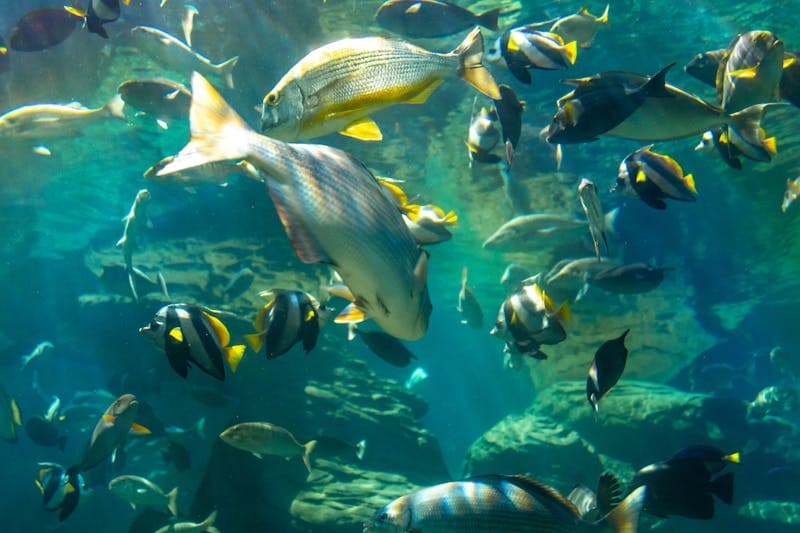
Aquarium barbs for sale UK — Cherry, Tiger, Rosy, Denison, Gold, Odessa. Hardy community fish, perfect for beginners.
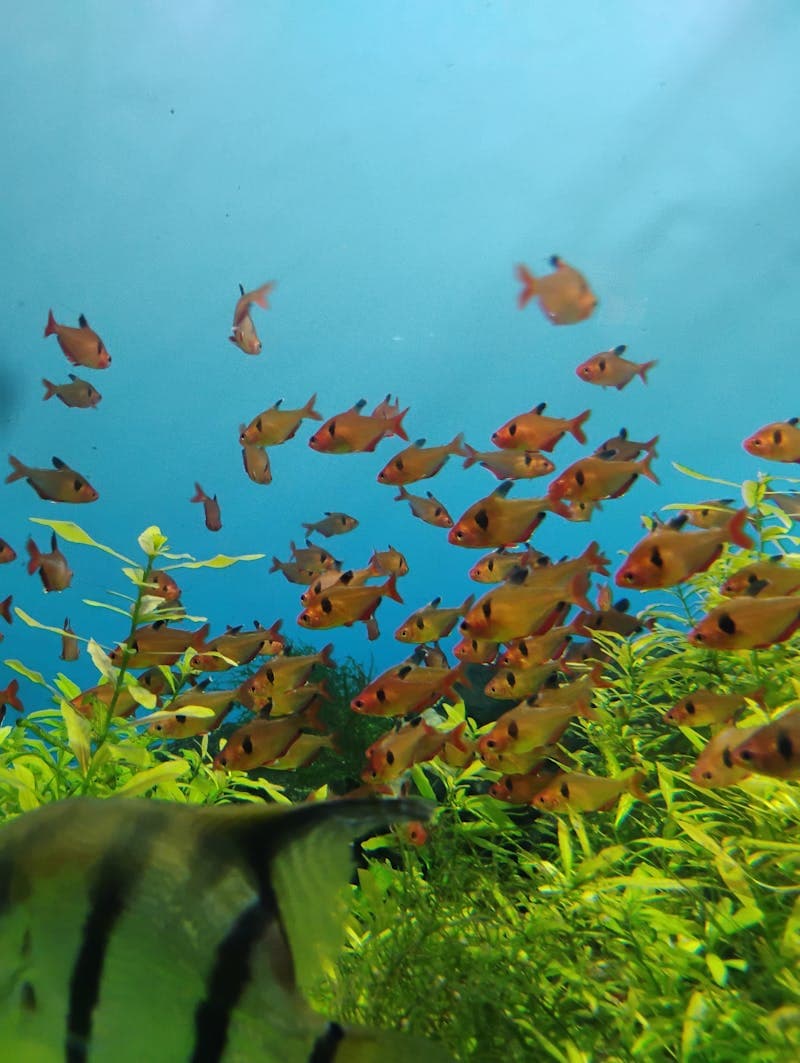
Premium Tetras for sale UK — Cardinal, Ember, Black Neon, Rummy Nose, Serpae, Diamond, Glowlight and more. Peaceful community schoolers.
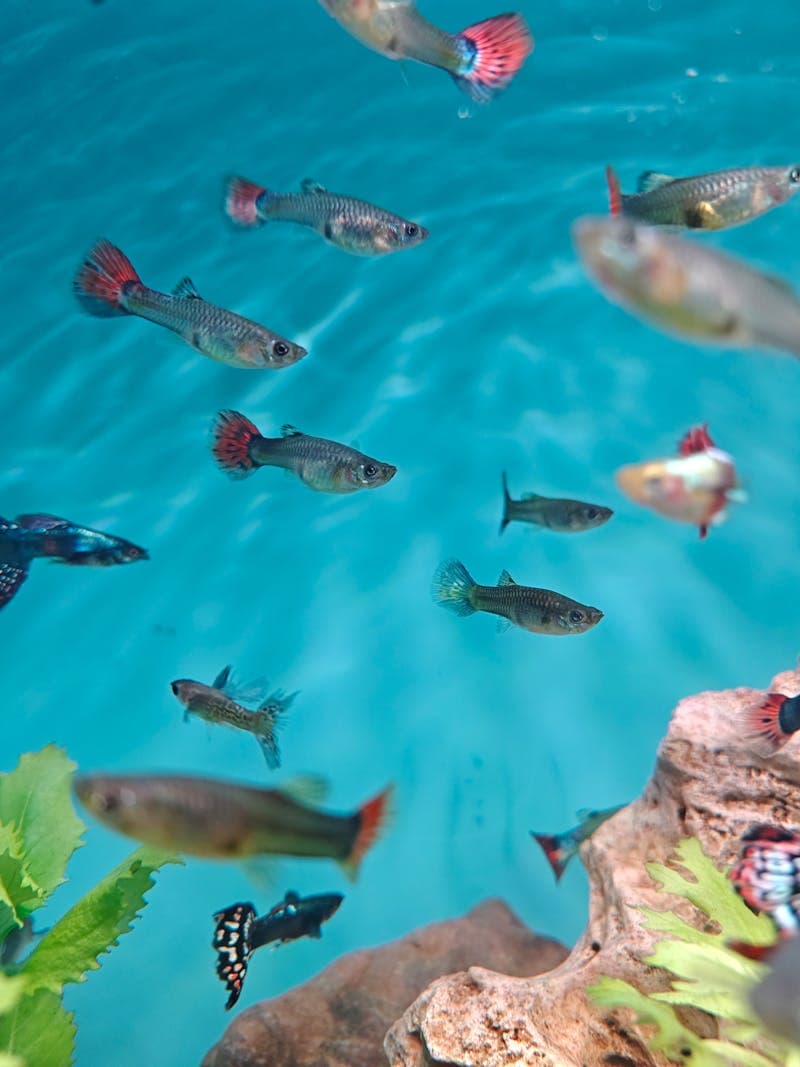
Tropical fish for sale UK — tetras, cichlids, bettas, guppies and corydoras. Specialist delivery backed by our Live Arrival Guarantee.
Material factual claims cite the sources below; store policy and cautious inference are labelled in the article. Sources are grouped by type so you can judge their weight at a glance.
Authoritative taxonomic catalogue — used for valid-name and synonymy (Puntius / Capoeta / Barbus semifasciolatus) verification.
Source for max size (7.6 cm TL), temperature 18–24 °C, pH 6.0–8.0, dH 5–19, and Red River / Hainan distribution.
Independent hobbyist cross-check on group size (8–10), tank dimensions and peaceful temperament.
UK hobbyist reference — cited for cooler-water tolerance and community behaviour of the smaller barbs.
Barb behaviour video — referenced on why a tight school curbs barb fin-nipping.
UK tap-water authority — confirms the hard, chalk-fed supply across the South-East that gold barbs handle without RO.
Fishkeeping moves fast and we want every guide spot-on. If you think something here is wrong, out of date, or could be clearer, tell us — our team reads every message and updates the page.
Suggest an editAquarium barbs for sale UK — Cherry, Tiger, Rosy, Denison, Gold, Odessa. Hardy community fish, perfect for beginners.
Premium Tetras for sale UK — Cardinal, Ember, Black Neon, Rummy Nose, Serpae, Diamond, Glowlight and more. Peaceful community schoolers.
Tropical fish for sale UK — tetras, cichlids, bettas, guppies and corydoras. Specialist delivery backed by our Live Arrival Guarantee.
Harlequin rasbora care for UK aquariums: check 60 cm tank length, group size, 5 cm adult size, water, tank mates and lookalike species before buying.
Set up a tropical fish tank in 10 evidence-led steps: choose the tank, install filter and heater, cycle safely, test the water and add fish carefully.
Learn which freshwater aquarium water parameters to test, how to read ammonia, nitrite, nitrate, pH, GH and KH, and when a result needs action.
Keep cardinal tetras thriving in UK water: check tank size, group size, tank mates, temperature and cardinal vs neon differences before you buy.
Planted-Tank Photographer & Writer · 10+ years in the hobby
Hannah is a Cambridge-based aquarium photographer and writer whose planted-tank work has appeared in Practical Fishkeeping and the ADA Aqua Journal digital edition. She writes Tropical Fish Co's deep species guides on schooling tetras and planted-tank communities — always accompanied by her own photography, never stock imagery.