Moderate
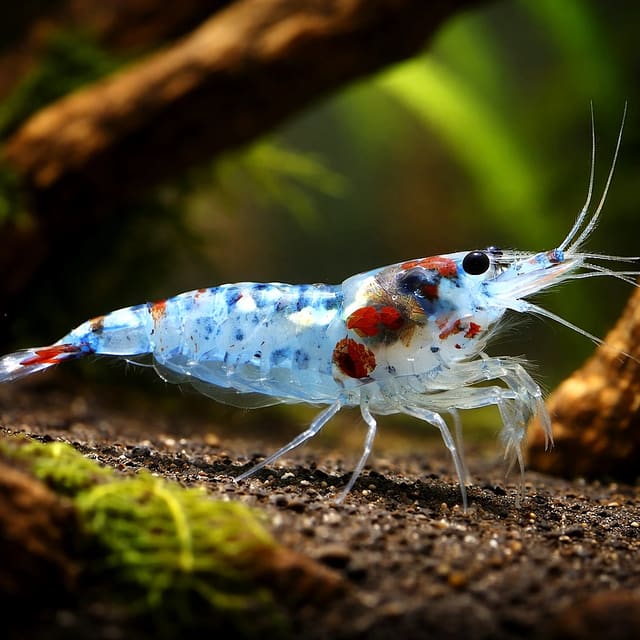
Blue Rili Shrimp (Neocaridina davidi)
17–27°C · pH 6.5–8
£19.99

Amano Shrimp (Caridina multidentata), sold individually in 1–2, 2–3, 3–4 or 4–5 cm dispatch grades for mature, filtered freshwater aquariums.
Caridina multidentata
Lives in groups: kept together they stay settled, active and show their best colour.
Amano Shrimp (Caridina multidentata), sold individually in 1–2, 2–3, 3–4 or 4–5 cm dispatch grades for mature, filtered freshwater aquariums.
Start with a mature, filtered aquarium. OATA's broad UK guidance suggests approximately 20 litres for Amano Shrimp and at least five for social shrimp, with a larger aquarium when fish are present. Treat those as cautious planning screens—not biological minima or a per-litre formula. Match the complete adult community, test your water, protect the filter inlet and never buy them as a guaranteed algae cure.
Amano Shrimp are peaceful, algae-grazing freshwater shrimp for mature, filtered aquariums. The accepted scientific name is Caridina multidentata, as recorded by OBIS/WoRMS. Older supplier lists may use Caridina japonica; this is a junior synonym of the same accepted species, not a different shrimp, according to the corresponding synonym record.
This product has four selectable dispatch grades: 1–2 cm, 2–3 cm, 3–4 cm and 4–5 cm. These ranges describe the grade used when shrimp are selected for dispatch, so an individual is not guaranteed to measure exactly at either endpoint. One selected quantity buys one Amano Shrimp. It does not buy a pair or a group. The options are based on size and do not promise male or female animals.
Amano Shrimp are best bought for their interesting grazing behaviour and their ability to assist with routine aquarium upkeep. They continually browse aquarium surfaces for edible material, but they cannot correct an immature filter, excessive feeding, unsuitable lighting, unstable water or neglected maintenance. Before ordering, prepare an established aquarium with biological filtration, substrate, cover, stable freshwater and no likely predators.
| Accepted name | Caridina multidentata |
|---|---|
| Older supplier synonym | Caridina japonica |
| Family | Atyidae |
| Available grades | 1–2 cm, 2–3 cm, 3–4 cm and 4–5 cm |
| Sale unit | One shrimp per selected quantity |
| Adult planning size | About 5 cm |
| Aquarium | Mature, filtered freshwater setup with substrate and cover |
| Group guidance | At least five shrimp |
| Space guidance | About 20 litres for larger shrimp such as Amanos; more space with fish |
| Broad water guidance | 17–27°C, pH 6.5–8.0 and 4–18 dGH |
| Food | Natural algae grazing, supplemented with suitable algae wafers or commercial shrimp pellets |
| Compatibility | Peaceful, but vulnerable to predators and fish able to swallow shrimp |
| Breeding | Specialised; planktonic larvae require brackish conditions and appropriate food |
The numerical care values above come from the UK OATA freshwater shrimp and snail care sheet. Its 17–27°C, pH 6.5–8.0 and 4–18 dGH figures are broad freshwater-invertebrate guidance, not a supplier specification or a proven species-specific optimum for Amano Shrimp. Stability and suitability for the whole aquarium remain more useful than repeatedly adjusting water to chase an arbitrary central value.
Amano Shrimp should not be used to test whether a new aquarium is ready. Biological filtration needs to be established before livestock are introduced, and water should be tested rather than judged by appearance alone. Clear water can still be unsuitable if the filter is immature or conditions are changing quickly. General RSPCA aquarium guidance likewise supports establishing biological filtration, testing water and avoiding sudden environmental changes.
The aquarium should contain a suitable substrate and plenty of physical cover. Plants, aquarium wood, stone and other shrimp-safe furnishings can provide sheltered areas and additional surfaces to explore. Cover is particularly important when shrimp moult, because moulting is a normal but vulnerable part of their growth. A secure lid is also recommended.
If this is your first shrimp aquarium, prepare it before choosing a dispatch grade. Our freshwater shrimp-keeping guide explains the practical sequence of setting up, maturing and checking a shrimp aquarium. Do not rely on an arrival date to provide enough time for a newly installed filter to become established.
For a species-focused preparation checklist, use the Amano Shrimp care guide alongside the measured requirements on this listing.
OATA recommends keeping at least five shrimp. One quantity on this listing is one animal, so select the number deliberately if you are starting or adding to a group. The recommendation is not a claim that several shrimp are packed under one selection, nor does it mean that any quantity forms a breeding pair.
For larger freshwater shrimp such as Amanos, OATA suggests an aquarium of about 20 litres, with more space when fish are present. Treat that as a starting context rather than permission to crowd a small aquarium. Stocking, the amount of cover, filtration, feeding and the needs of every other resident all affect whether a particular setup is appropriate. Larger water volumes are generally easier to keep stable and offer more room when a mixed community is being planned.
Amano Shrimp are peaceful, but peaceful behaviour does not make them safe from other animals. Avoid known predators and any fish able to swallow the selected shrimp. Also consider how a fish investigates food: a species that does not fight with other fish may still hunt or repeatedly harass crustaceans.
The selected dispatch grade matters when making this assessment, but size never guarantees safety. A larger Amano may be harder for a small fish to swallow than a smaller specimen, yet it remains unsuitable with a determined predator. Allow for moulting as well, when a shrimp needs cover and should not be exposed to persistent attention.
Caridina multidentata belongs to the freshwater shrimp family Atyidae. Amano Shrimp is the familiar common name, while Yamato Shrimp and Japanese Shrimp are also recorded English names. The older scientific name Caridina japonica remains common in trade catalogues and historical aquarium writing, which is why both names may appear during product research.
A peer-reviewed taxonomic revision stabilised the identity of C. multidentata, including the designation of a neotype. It records the species from Japan, Ogasawara, the Ryukyu Islands, Taiwan, Fiji and Madagascar, with field observations associated with large rivers and large rocks. The full taxonomic revision and habitat account is useful scientific context, but a field habitat should not be copied literally as an aquarium formula. A closed aquarium still requires deliberate filtration, testing, appropriate stocking and routine maintenance.
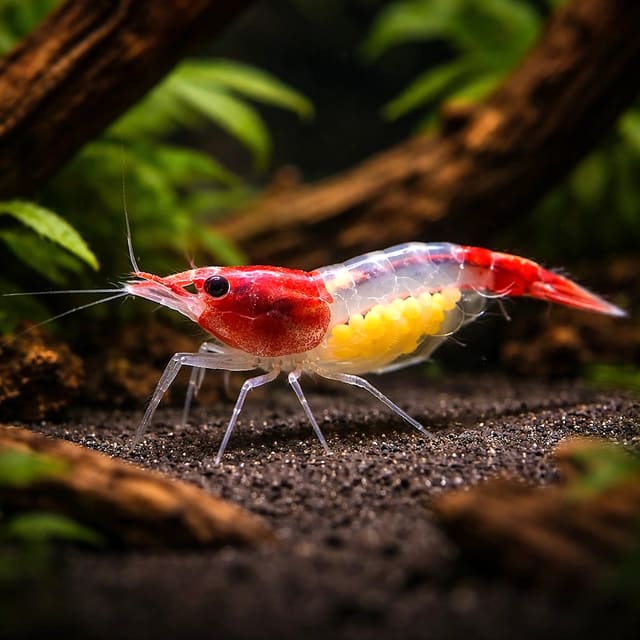
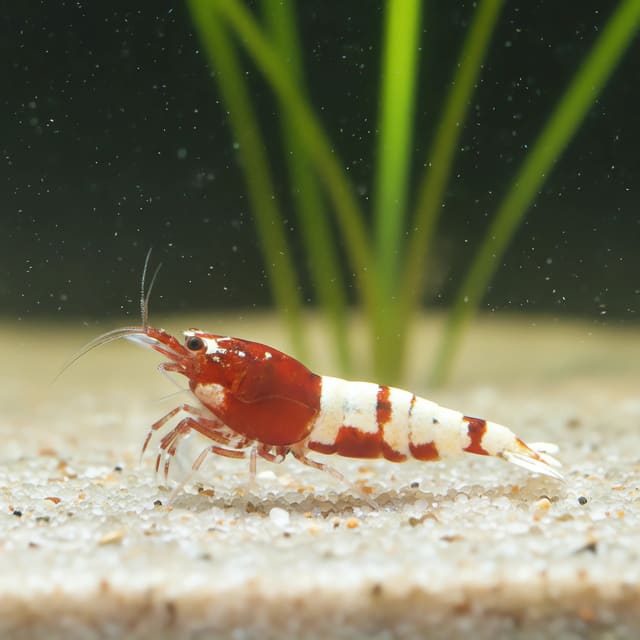
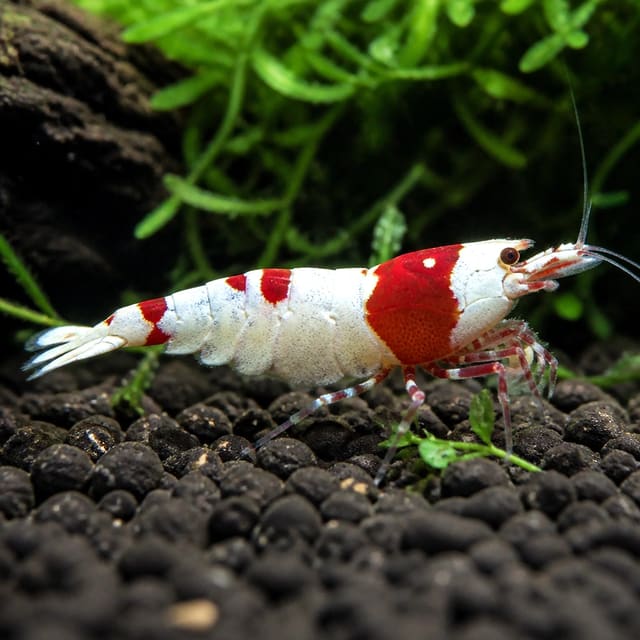
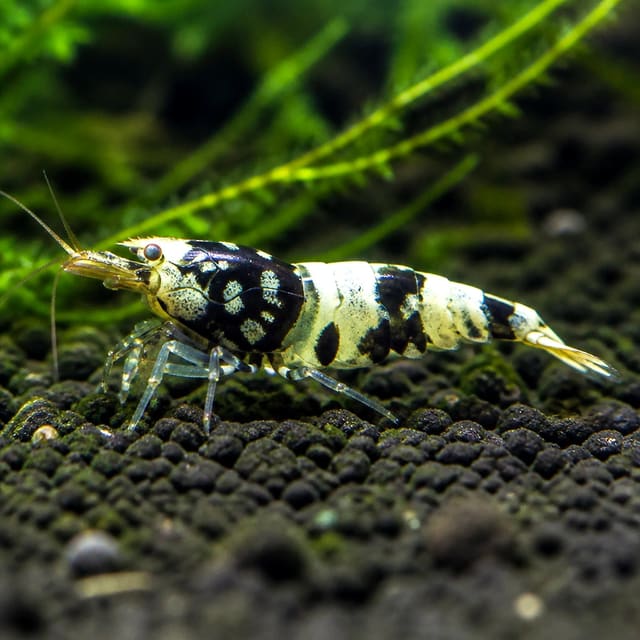
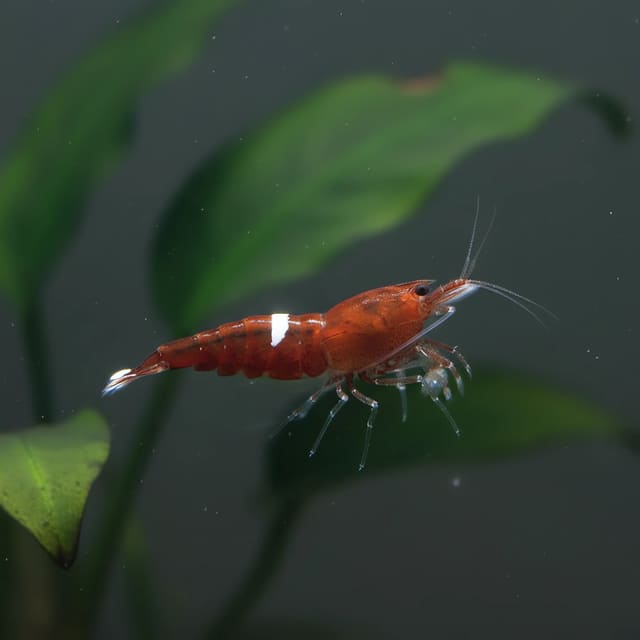
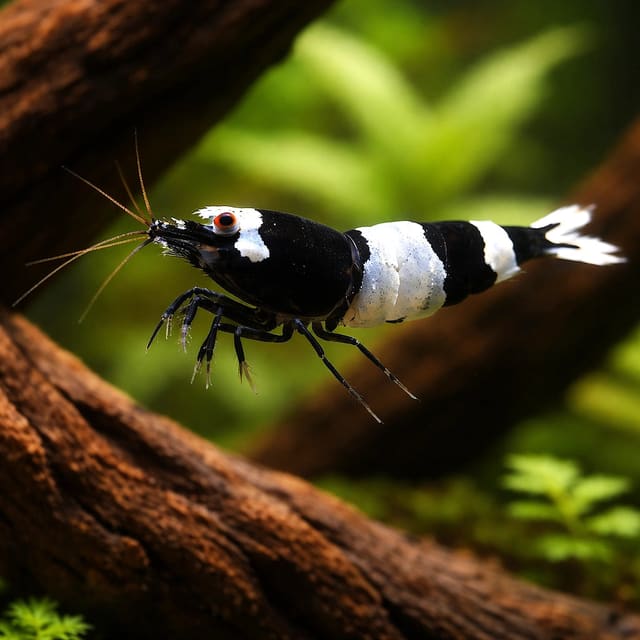
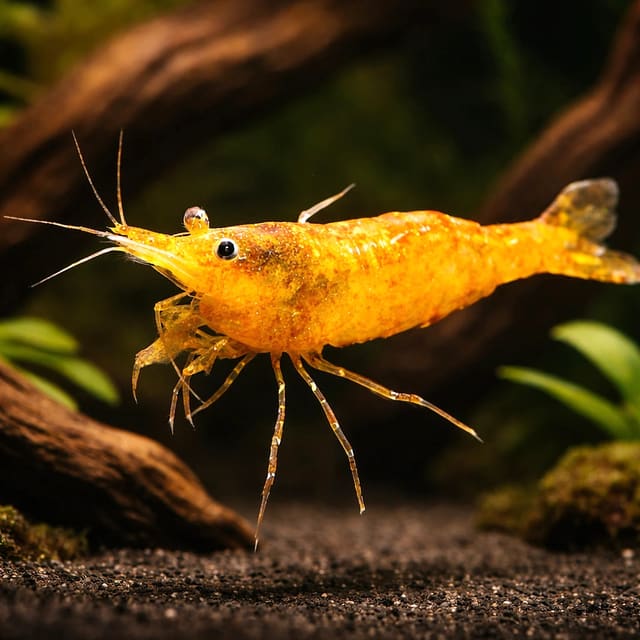
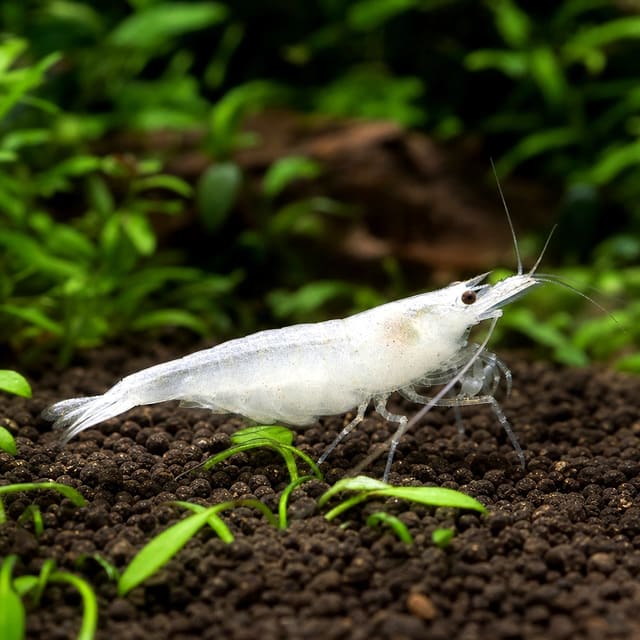
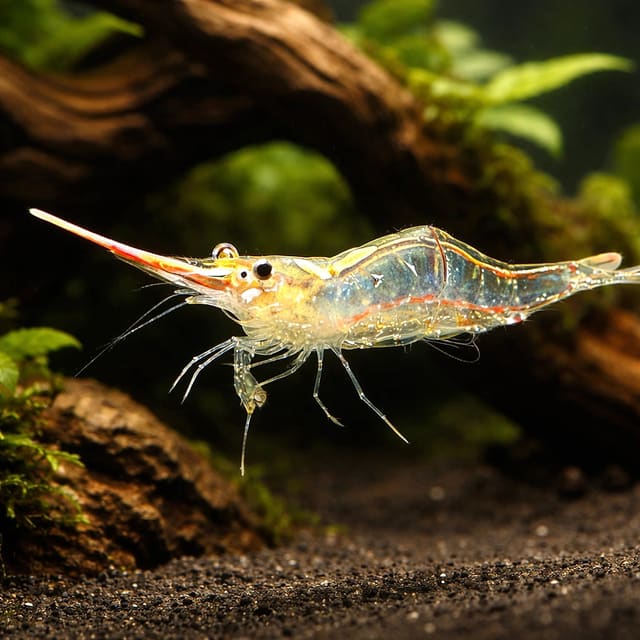
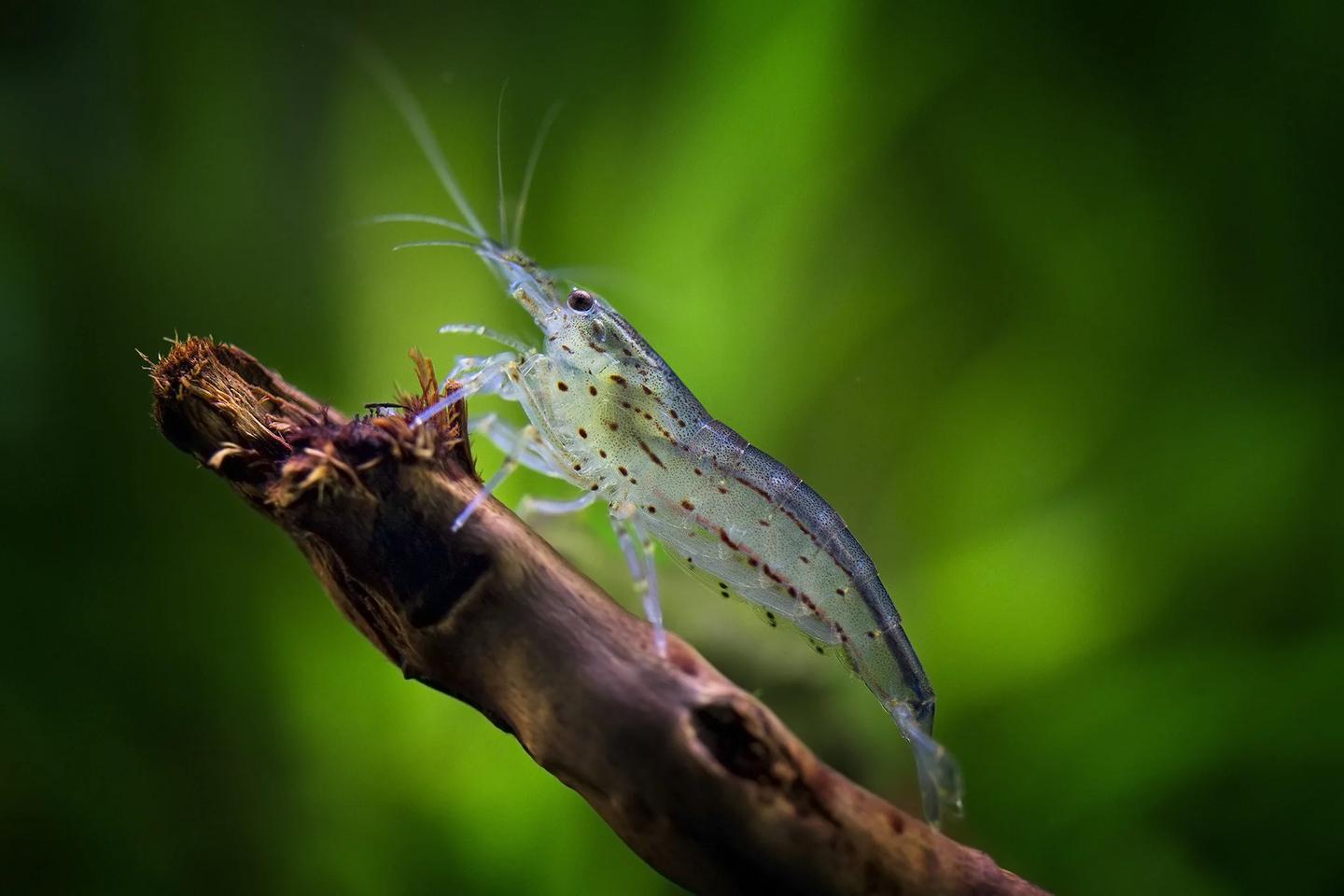
The representative animal in the gallery is translucent, with dark dotted and dashed lateral markings, and is shown in side profile on a smooth rock. Amano Shrimp are not offered here as a selectively coloured variety, and natural appearance varies between individuals and with maturity.
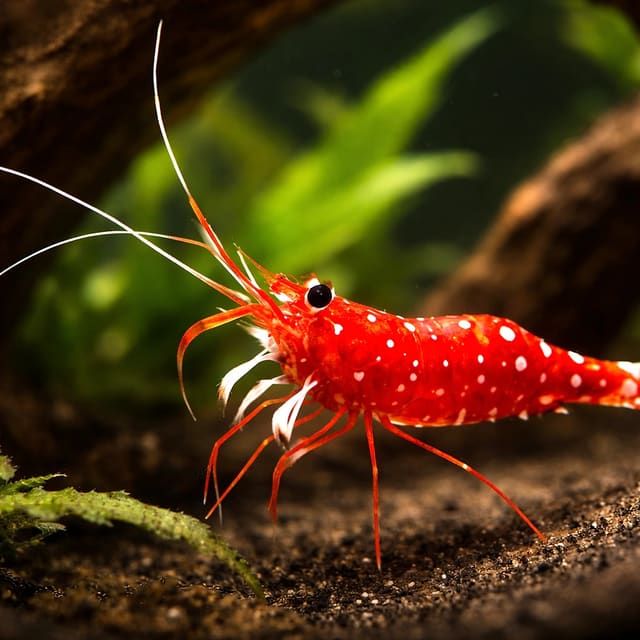
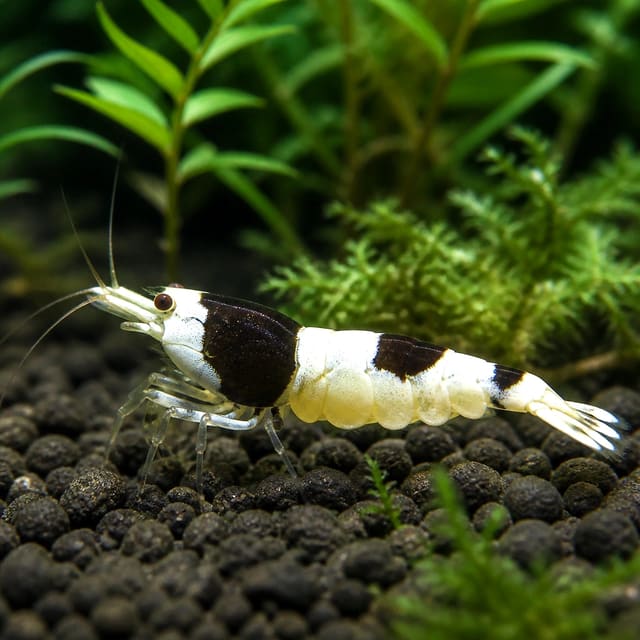
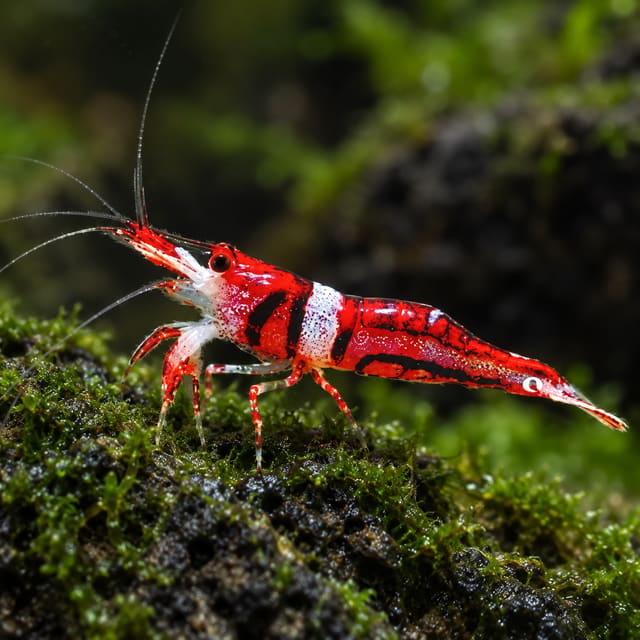
Gallery images have been digitally enhanced to improve image quality from source photographs. They show the listed animal type; natural colour, pattern, size and maturity can vary between live animals.
All four options are the same listed species. The difference is the dispatch grade selected from the product menu:
A dispatch grade is a practical selection range, not a precision measurement or a statement of age. Individual proportions, markings, colour and maturity can differ. Do not infer sex from the selected size, and do not choose a grade on the assumption that it guarantees a particular behaviour, grazing result or compatibility outcome.
When adding shrimp to an established group, choose according to the risks and structure of the aquarium rather than appearance alone. Check that smaller animals cannot be swallowed, that all shrimp can reach suitable food, and that there is enough cover for the total number. If existing residents make the smallest grade unsafe, selecting a larger grade may reduce one risk but cannot make a predatory community suitable.
An established filter is essential. Its role is not simply to move water: mature biological filtration processes waste produced within the aquarium. That biological community takes time to establish, so adding Amano Shrimp immediately after installing equipment is poor preparation even if the water initially looks clean.
Continue testing after the aquarium is established, especially after livestock additions, maintenance or any unexplained change. Results should be interpreted alongside recent feeding, filtration, stocking and water-change history. If a test indicates a problem, address the cause rather than repeatedly adding products without understanding how they affect invertebrates.
OATA recommends substrate and cover for freshwater shrimp. Arrange the aquarium so cover is distributed rather than confined to one corner. This gives shrimp somewhere nearby to retreat while exploring different parts of the tank and avoids making a single shelter the only usable space.
Use aquarium-safe materials and make sure furnishings are stable. Avoid introducing unverified chemicals through ornaments, treatments or preparation products. Amano Shrimp browse available surfaces, so a furnished, established aquarium offers a more suitable environment than a bare, newly filled container.
A secure lid is recommended for freshwater shrimp. Check openings around equipment before introduction and after maintenance. The filter should be operating correctly, and the aquarium should have enough cover for the selected grade and group size. Complete these checks before opening the transport bag so acclimation is not interrupted by last-minute alterations.
The broad OATA freshwater shrimp and snail guidance is 17–27°C, pH 6.5–8.0 and 4–18 dGH. These ranges are useful screening information, but they should not be presented as an exact Amano Shrimp optimum. They also do not prove that any aquarium within all three numerical limits is automatically suitable. Filtration maturity, water stability, treatments, stocking and predator risk still matter.
Measure the water you actually have. Avoid changing temperature, pH or hardness rapidly simply to reach a preferred-looking number. Sudden change can be more disruptive than a stable value that already sits within suitable broad guidance. If source and aquarium water differ, careful acclimation becomes especially important.
Our water matcher can help you compare measured aquarium values with published guidance. It does not replace testing or make a compatibility decision by itself. Use it as one part of a wider check that includes tank maturity, volume, other livestock and the safety of any additives.
Carry out regular partial water changes using appropriately conditioned water, avoiding abrupt environmental swings. Match replacement water sensibly to the aquarium rather than making dramatic changes during routine maintenance. Where an urgent water-quality problem exists, deal with that welfare issue promptly, but investigate why it occurred so it is not repeated.
Do not assume that an established aquarium stays suitable indefinitely. Filters can be disrupted, feeding can increase, equipment can fail and new livestock can change the load on the system. Routine observation and testing are therefore part of ongoing Amano Shrimp care, not merely preparation for the first order.
Amano Shrimp graze algae within the aquarium, but visible algae should not be treated as a complete or reliably permanent food plan. The amount available changes as the aquarium matures, maintenance is carried out and grazing increases. Observe the whole group and provide suitable supplementary food rather than waiting until there is obviously nothing left to browse.
OATA recommends algae wafers or commercial shrimp pellets as supplementary foods, offered two or three times weekly. The appropriate amount depends on how many shrimp and other animals are present and how much food is already available in the aquarium. Start cautiously, watch what is consumed and reduce the amount if uneaten food remains.
Overfeeding creates additional waste and can undermine the stable conditions shrimp require. Adding more food is not always the correct response to a shrimp being difficult to see; it may simply be under cover or grazing elsewhere. Check the aquarium calmly before increasing portions.
Where other livestock share the tank, make sure the shrimp can reach food without exposing themselves to harassment. More space and distributed cover make this easier, but food does not make an unsafe predator-and-prey combination acceptable. Compatibility must be resolved before feeding strategy.
Amano Shrimp can contribute useful grazing activity in an established aquarium. They browse surfaces and may reduce some accessible growth, but the result varies with the aquarium, the amount and nature of the growth, the number of shrimp and the availability of other food. No fixed cleaning outcome is promised.
Persistent algae is usually a reason to review aquarium management as a whole. Check lighting, feeding, stocking, maintenance, plant condition, circulation and water quality rather than purchasing livestock as the sole response. Shrimp add biological activity and interest; they are not a substitute for cleaning glass, maintaining equipment or correcting an underlying imbalance.
Do not starve Amano Shrimp in an attempt to force a particular grazing result. Suitable supplementary feeding remains part of responsible care. Conversely, excessive supplementary food may increase waste and reduce the need to browse other aquarium surfaces. A measured approach serves both the shrimp and the wider system.
Amano Shrimp are peaceful towards aquarium companions, but compatibility depends largely on whether those companions are safe around shrimp. Exclude known crustacean predators and fish that can swallow the selected grade. Mouth size is a useful first check, although it is not the only consideration: hunting behaviour, persistence and the availability of cover also matter.
Avoid relying on a universal list of supposedly safe species. Individual aquarium conditions and animal behaviour vary, and a fish considered peaceful in a community may still investigate or consume invertebrates. Observe existing residents at feeding time, consider their adult rather than current size and research their natural feeding behaviour.
When fish are present, allow more space than the approximate 20-litre starting context for larger shrimp. Extra water volume alone does not guarantee compatibility, but a cramped aquarium offers fewer opportunities for separation and cover. The needs of the fish may also set a substantially larger minimum than the shrimp guidance.
Smaller Amano grades require especially careful screening. Larger grades may be less easy for a small fish to swallow, but no grade is protected from a capable predator. Freshly moulted shrimp also need access to shelter, making permanent cover more important than decorations added only for arrival day.
If you are uncertain, choose the cautious option and do not combine the animals. It is better to prepare a dedicated or demonstrably shrimp-safe aquarium than to depend on the hope that a predator will ignore them. Our freshwater shrimp comparison guide can help distinguish different shrimp types before choosing, but any final community decision still requires research into every resident.
Moulting is a normal part of shrimp growth. Suitable cover allows a shrimp to shelter during this process. Avoid unnecessary disturbance, sudden environmental changes and unverified treatments, particularly when shrimp have recently arrived or maintenance has just been completed.
Regular maintenance is preferable to allowing waste to accumulate and then carrying out an avoidably disruptive reset. Keep the filter functioning, make conditioned partial water changes and test whenever behaviour or appearance gives cause for concern. Any maintenance product used in the aquarium must be assessed for invertebrate safety.
Do not diagnose a specific moulting problem from a single observation or assume that one additive will correct it. Review measured water, recent changes, feeding, treatment history and the condition of the whole group. Unsupported mineral remedies can create new instability if they are added without knowing the starting water chemistry.
Following the OATA freshwater shrimp and snail guidance cited above, freshwater invertebrates are highly sensitive to copper. Never assume that a fish medication, plant treatment or general aquarium product is safe for Amano Shrimp. Read the instructions and use only treatments explicitly confirmed as suitable for invertebrates in the intended application.
If treatment is needed for another aquarium resident, check the active ingredients and the manufacturer's current guidance before dosing. Removing shrimp after a product has entered the water may not remove the exposure, and transferring animals into an unprepared container creates a separate welfare problem. Plan treatment carefully rather than improvising.
Copper safety also matters before purchase. If the aquarium has recently been medicated, establish what was used and whether the system is suitable for invertebrates before ordering. Where the history is unknown, seek reliable product-specific advice and test where appropriate rather than taking a risk with live shrimp.
The OATA introduction guidance cited above supports cautious temperature equalisation and gradual mixing; shrimp should be introduced cautiously because transport water and aquarium water may differ. Prepare the aquarium first: confirm that the filter is working, the lid is secure, cover is available and no treatment or predator has been overlooked. Keep the aquarium lights low during introduction.
This is a gradual acclimation method, not a reason to extend transport exposure indefinitely. The evidence-backed guidance is to float for temperature and then add small amounts of aquarium water for at least 30 minutes. A fixed 45- or 60-minute drip routine is not required by the reviewed guidance.
Keep handling calm and organised. Have any clean shrimp-safe container or transfer equipment ready before opening the bag, and make sure it has not been exposed to household cleaners or unsuitable aquarium treatments. Do not interrupt acclimation to rearrange the tank or search for a lid.
Monitor the aquarium closely during the first week. Check the shrimp without repeatedly disturbing cover, continue normal testing and pay attention to meaningful changes in movement, behaviour or colour. Some variation between live individuals is natural, but a persistent or group-wide change is a reason to investigate the environment.
Begin with measured facts. Confirm that filtration and heating equipment are operating as intended, test the water, review any recent maintenance and check that no unsuitable product has been added. Consider whether another resident is harassing the shrimp or preventing access to cover and food.
If more than one shrimp is affected, look for a shared environmental cause before assuming an isolated health problem. Recent water changes, filter disruption, treatment, overfeeding or the addition of other livestock may provide useful context. Avoid adding several corrective products at once, because doing so can obscure the cause and create further change.
When one shrimp cannot be found, inspect the aquarium carefully without dismantling it immediately. Check secure openings and observe sheltered areas. The presence of cover means shrimp will not always remain in full view, and unnecessary rearrangement can disturb the whole aquarium.
Do not respond to every concern with extra food. First assess whether food is already present, whether leftovers remain and whether the shrimp can reach feeding areas safely. Overfeeding can worsen water quality and does not resolve incompatibility or immature filtration.
Amano Shrimp do not usually establish the straightforward freshwater colonies associated with some other aquarium shrimp. Their larvae are planktonic and require brackish conditions and specialised food. Eggs or larvae appearing in a freshwater aquarium should therefore not be interpreted as a guarantee that juveniles will be raised successfully.
A peer-reviewed laboratory study of Caridina multidentata tested larval development across salinities of 17–34 ppt. That controlled larval study supports the presence of a specialised saline phase, but its experimental treatments are not a complete home-breeding recipe and do not guarantee an outcome in an aquarium.
Choose Amano Shrimp because you want to keep the adult freshwater animal, not because you expect easy colony production. Successful larval rearing requires separate research, appropriate facilities and close control of conditions and food. Ordinary freshwater care should remain focused on stable filtration, safe companions, suitable feeding and good welfare.
This species suits an aquarist who has a mature freshwater aquarium, is prepared to keep a group, can screen out predators and wants a relatively large, understated shrimp with natural grazing behaviour. The retailer care label is intermediate, reflecting the need for careful acclimation, invertebrate-safe treatment choices and considered community planning.
It is not the best purchase for an uncycled setup, an aquarium with uncertain medication history, a community containing likely predators or somebody expecting a guaranteed algae-removal service. It is also not an easy choice for a customer whose main goal is routine freshwater colony breeding, because the larvae require specialised brackish care.
Amano Shrimp are larger and less focused on vivid colour than many smaller ornamental shrimp. If colour, adult scale, breeding expectations or aquarium style are still undecided, compare the available types before ordering. You can also browse the current shrimp and crustacean collection; products shown there are alternatives to consider, not automatic tank mates for Amanos.
Choosing the largest available grade does not remove any of these requirements. Likewise, buying a group does not compensate for an immature filter or unsafe fish. Tank preparation should be complete before the animals are dispatched.
Live-animal delivery and Live Arrival Guarantee support are subject to the eligibility, receipt and reporting requirements in our current delivery policy. Read that policy before ordering and choose an available delivery arrangement that allows the parcel to be received promptly. No unconditional delivery or survival promise is made outside those terms.
On arrival, inspect the shrimp without delay and follow the policy if there is a concern. If the animals arrive normally, move directly into the careful temperature adjustment and gradual water-mixing process described above. Preparing the aquarium and acclimation equipment in advance makes arrival calmer for both the shrimp and the aquarist.
No reviews for this item yet. Bought one? Honest reviews only, good or bad.
What customers say about ordering from us
I have a small group of long finned mountain minnows. So was delighted to be able to order ten of this variety to increase the genetics in my tank . The ones I recieved are healthy but it’s to early to give a verdict on wether they are of a long finned type since they are small currently.
Gordon Walker · 23 Sept 2026
100% success travel and "installation". Pleased with quality of purchase. The Siamese fighter a bit "shy" so have not yet seen him at his best yet but looking good. Happy customer. GG
George E Garratt · 21 Sept 2026
Reviews of our shop, collected by Judge.me, an independent third-party review collector. Newest first.