
 By Hannah Nielsen
Easy / peaceful shoaling fish
Ember Tetra (Hyphessobrycon amandae)
24–28°C · 30L
£3.99
Tetras · Buying Guide
Everything UK aquarists need to buy and keep ember tetras — the nano-tank schooler that actually tolerates UK tap water. Tank size, mates, feeding, and live stock.

8 products in stock today
Live prices and stock. Every fish covered by our Live Arrival Guarantee.
24–28°C · 30L

23–27°C · pH 4.5–7 · 60L

24–28°C · pH 4–6.5 · 40L

23–27°C · pH 5.5–7.5 · 40L

23–28°C · pH 6–7.5 · 60L

20–26°C · pH 6.5–8.3 · 40L

18–28°C · pH 6.5–8 · 20L

22–26°C · pH 6–7.5 · 60L
Because the internet's ember-tetra advice is almost always a translation of neon-tetra advice — and embers are a different fish. They're half the size. They tolerate wider water parameters. They live longer. They feed differently. And they thrive in tanks where a cardinal tetra would struggle.
I'm Hannah. I've photographed ember tetra schools on and off for seven years across tanks from 30 L nano jars to 120 L display aquariums. This guide is the version I'd write for a friend in London who just got a 40 L tank for their desk and needs advice that actually matches their tap water.

Two ember tetras from our current holding tank. The orange-red saturation here is the "mature-tank colour" — new arrivals look paler until they settle for a week. Photo: Tropical Fish Co warehouse.
| Attribute | Ember Tetra | Neon Tetra | Cardinal Tetra |
|---|---|---|---|
| Adult size | 1.5–2 cm | 3–4 cm | 3.5–5 cm |
| Minimum tank | 30 L | 40 L | 60 L |
| Water hardness | 2–15 dGH | 2–12 dGH | 1–10 dGH |
| UK tap water OK? | ✓ Yes | Maybe | ✗ |
| Lifespan | 3–4 years | 2–3 years | 5–8 years |
| Beginner-friendly | ✓ Yes | Yes (mature tank) | Maybe |
| Planted-tank colour impact | High (orange) | Very high (red+blue) | Very high (full red+blue) |
| Price per fish | £2–£4 | £1.80–£3.50 | £2.50–£5 |
If your tank is under 60 L or your water is above 12 dGH — pick ember tetras. That covers about 70% of UK aquariums.
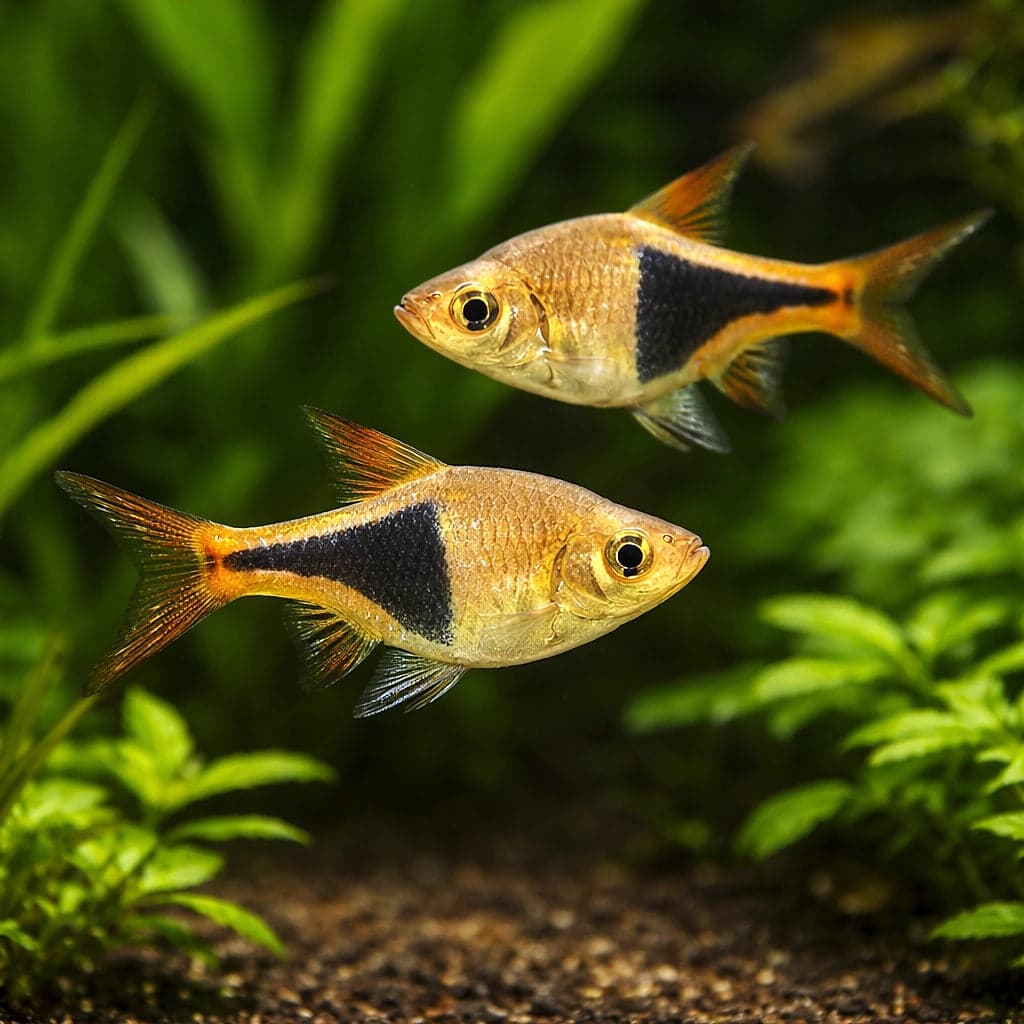
Harlequin Gold rasbora — our most-recommended schooling partner for ember tetras. Same water chemistry, gentle temperament, complementary colour against the ember orange. Photo: Tropical Fish Co warehouse.
The rule is the same as for cardinals — ten is the floor, not the target. Below ten, the school breaks down and you get individual fish hiding behind the heater.
Stocking guide by tank size:
Embers are peaceful shy fish. Their tank mates must match both.
Avoid: any fish over 5 cm adult (will eat embers), angelfish (will eat embers by month 4 when they mature), bettas (male bettas aggressive toward all small fish).
Ember tetras are the only tetra I'd genuinely recommend for a tank under 40 L. But nano tanks are less forgiving than standard tanks, and a few things matter more than they would at 100 L:
Ember tetras are hardier shippers than cardinals because their narrow water-chemistry tolerance is less narrow. Our acclimation protocol:
Live arrival guarantee: photograph the unopened bag within 2 hours of delivery if any fish are DOA. Full refund or replace.
Small body size = lower metabolic rate = less ammonia production per hour in the bag. A 2 cm ember in a standard shipping bag produces roughly 1/5 the ammonia of a 5 cm cardinal tetra over the same transit time. That's why our first-week survival rate on embers is 99%+ — the shipping physiology is on their side.
For the deep-dive on ember tetra breeding, genetics, and planted-tank aquascaping, the ember tetra care guide goes further than this buying-focused page.
If you're comparing schools side by side, the cardinal tetra guide is the natural next read — it covers the harder-water-sensitive alternative.
Shopping by tank size? See our nano-tank fish hub for everything 5 cm and under in stock this week.
Visual route into the rest of our UK live-fish range.
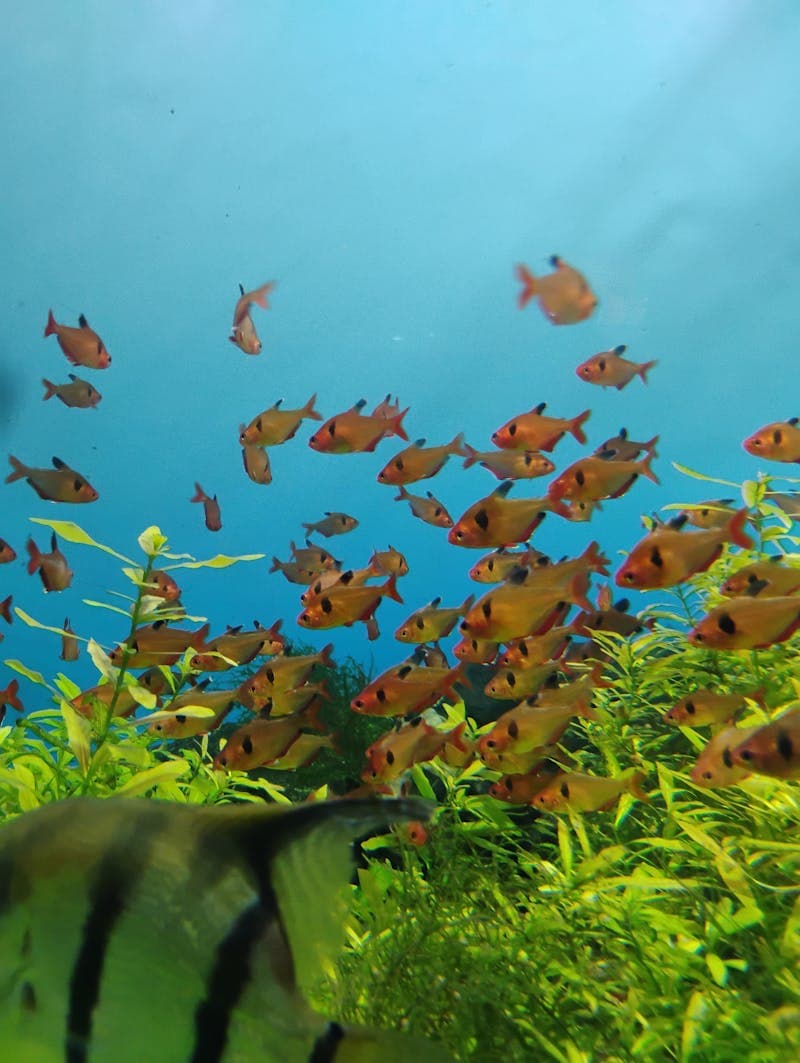
Premium Tetras for sale UK — Cardinal, Ember, Black Neon, Rummy Nose, Serpae, Diamond, Glowlight and more. Peaceful community schoolers.
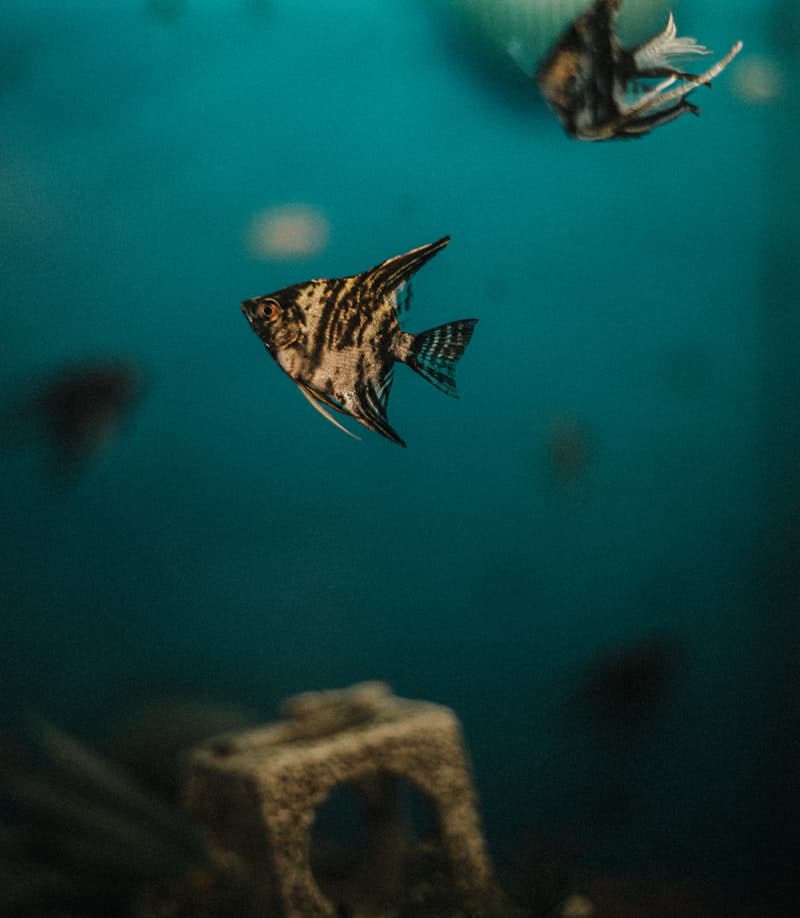
Best nano tank fish for UK aquariums — species that thrive in tanks under 40 litres. Micro schoolers, dwarf species, shrimps.
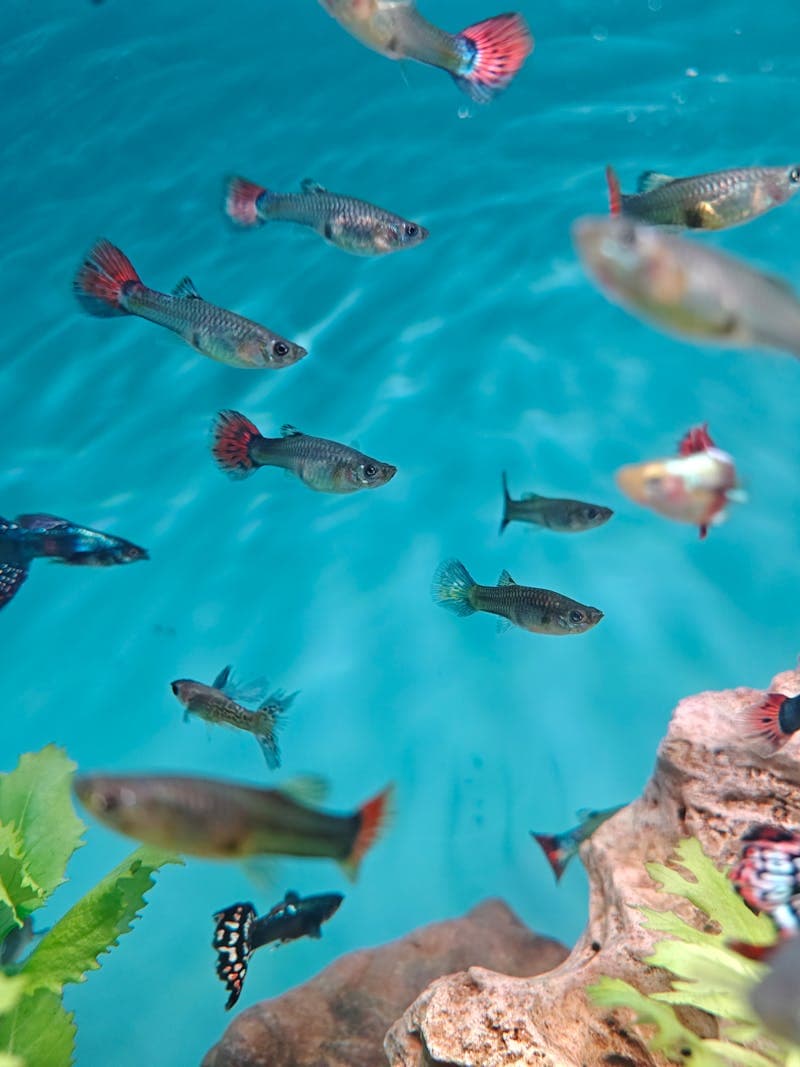
The best tropical fish for beginners UK — hand-picked easy-care species that thrive with minimal fuss. Perfect starter community tank candidates.
Every claim in this article is backed by a source below. We group them by type so you can judge the weight of each one at a glance.
Original species description — cited on the Amanda naming fact.
Source for water-parameter ranges, habitat, and max size.
Status: Least Concern — referenced in wild-vs-farmed note.
Independent hobbyist cross-check on aquarium behaviour and shoaling minimums.
UK husbandry reference — cross-checked for tank-mate notes.
Nano-aquarium setup protocol — referenced in the 30 L tank section.
UK tap water reference — cited in the 'hard-water tolerance' argument.
Fishkeeping moves fast and we want every guide spot-on. If you think something here is wrong, out of date, or could be clearer, tell us — our team reads every message and updates the page.
Suggest an editPremium Tetras for sale UK — Cardinal, Ember, Black Neon, Rummy Nose, Serpae, Diamond, Glowlight and more. Peaceful community schoolers.
Best nano tank fish for UK aquariums — species that thrive in tanks under 40 litres. Micro schoolers, dwarf species, shrimps.
The best tropical fish for beginners UK — hand-picked easy-care species that thrive with minimal fuss. Perfect starter community tank candidates.
Ember tetra care for UK nano tanks: 30L setup, shrimp-safe tank mates, group size, diet, water parameters and live Ember Tetra stock.
Cardinal tetra care for UK aquariums — cardinal vs neon compared, 60L+ tank, warm soft water, ideal group size, tank mates and feeding.
Complete Harlequin Rasbora (Trigonostigma heteromorpha) care guide — tank size, water parameters, diet, tank mates, breeding. Written for UK hobbyists.