Moderate
Neon Tetra (Paracheirodon innesi)
21–25°C · pH 5–7
£2.99

The Green Neon Tetra (Paracheirodon simulans) is an American tetra from the upper Negro and Orinoco river basins that reaches 2.0 cm standard length. It suits a prepared soft-water keeper: keep at least 8–10 at 23–27°C, pH 5.5–6.0 and 1–4 dGH, the overlap of FishBase and Seriously Fish. Sold individually in dispatch sizes from 0.5–1 cm to 2–2.5 cm.
Adult size is the maximum length this species reaches at full maturity (scientific sources). The livestock you receive will be younger and smaller — pick a size above for the actual shipping size. Product-photo provenance and any image-specific limitations are stated on the listing.
Paracheirodon simulans
Shoaling fish: kept in a group they feel safer, stay calmer and show their best colour.
Minimum of 2 per order.
The Green Neon Tetra (Paracheirodon simulans) is an American tetra from the upper Negro and Orinoco river basins that reaches 2.0 cm standard length. It suits a prepared soft-water keeper: keep at least 8–10 at 23–27°C, pH 5.5–6.0 and 1–4 dGH, the overlap of FishBase and Seriously Fish. Sold individually in dispatch sizes from 0.5–1 cm to 2–2.5 cm.
Adult size is the maximum length this species reaches at full maturity (scientific sources). The livestock you receive will be younger and smaller — pick a size above for the actual shipping size. Product-photo provenance and any image-specific limitations are stated on the listing.
Start here: use a mature, filtered aquarium at least 60 cm long. FishBase and OATA compile groups of five or more; our conservative planning screen starts at eight, then checks usable volume, water, filtration and every adult tank mate.
Maintain these water conditions for optimal health and vibrant colors
Green Neon Tetra, Paracheirodon simulans, is a tiny freshwater tetra from South America. FishBase places it in Acestrorhamphidae, the American tetra family, and records its distribution in the upper Negro and Orinoco river basins. It is a pelagic fish, meaning it lives in open water rather than depending on the bottom of its natural habitat. It suits a prepared soft-water keeper who can maintain a mature filter, a proper school and carefully screened companions.
The decisive feature is its size. FishBase records a maximum of 2.0 cm standard length. Keep that adult measurement separate from the dispatch sizes shown by the selector. Seriously Fish uses 25 mm standard length for aquarium planning, reinforcing the need to judge space, food and companions around an exceptionally small fish rather than treating it like a larger general community tetra.
| Suits | Not suited to |
|---|---|
| A mature aquarium with a base of at least 45 × 30 cm | An immature or unfiltered aquarium |
| A school of at least 8–10 Green Neon Tetras | Keeping one fish alone or in too small a group |
| Soft, acidic water maintained within the species overlap | A hard, alkaline community without matching water needs |
| A species-only aquarium or carefully screened community | Fish large enough to eat them or aggressive companions |
| Dim planting, cover and open swimming room | A bare layout without shelter |
Keep the aquarium at 23–27°C, pH 5.5–6.0 and 1–4 dGH. These routine values are the overlap of FishBase’s recorded environment and Seriously Fish’s aquarium range. Maintain a chosen point within that overlap rather than allowing the aquarium to move repeatedly between its endpoints.
This combination suits a keeper prepared to maintain a mature biological filter, test the water, offer suitably small food and preserve calm swimming space. The species is peaceful, but its very small body and specialised requirements make a casually assembled community a poor plan. A single-species aquarium is a sound choice; a community needs diminutive, non-aggressive fish that match the same conditions.
Browse the current tetra collection when comparing it with other members of this broad aquarium group. Compare each animal by adult measurement, group needs, water range and temperament rather than assuming all tetras require identical care.
One purchase supplies one Green Neon Tetra in the size selected through the live selector. To plan a group of eight, choose a quantity of eight; to plan a group of ten, choose a quantity of ten. Check the live selector for the dispatch sizes that can be chosen when ordering.
| Selector label | Meaning |
|---|---|
| 0,5 - 1 cm | One animal in that dispatch size |
| 1-2 cm | One animal in that dispatch size |
| 1,5 - 2 cm | One animal in that dispatch size |
| 2-2.5 cm | One animal in that dispatch size |
The size you select is the size supplied, not the adult size. Dispatch sizes describe the selected animal at supply; they are not separate colour forms and should not be used to infer sex, life stage or origin. FishBase’s 2.0 cm figure is the adult standard-length record used throughout this page.
Sex is guaranteed only when the selected option explicitly states male or female. This Green Neon Tetra listing has no sex-guaranteed option. Plan the purchase as a social group rather than as a guaranteed pair, breeding group or chosen sex ratio.
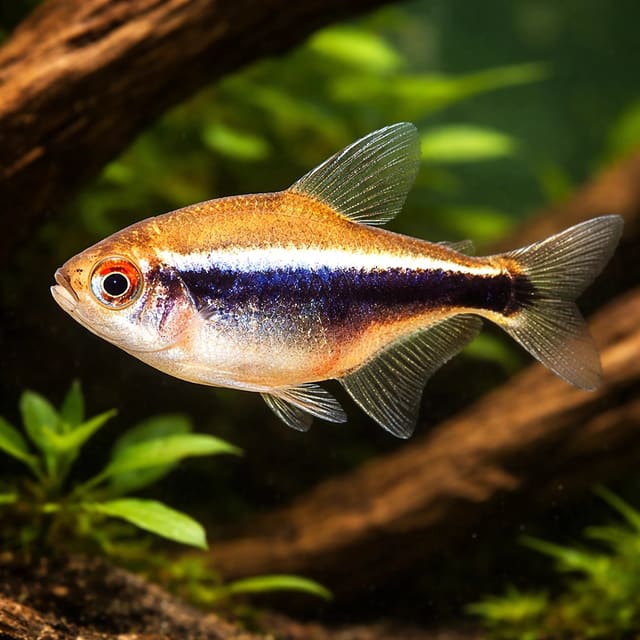
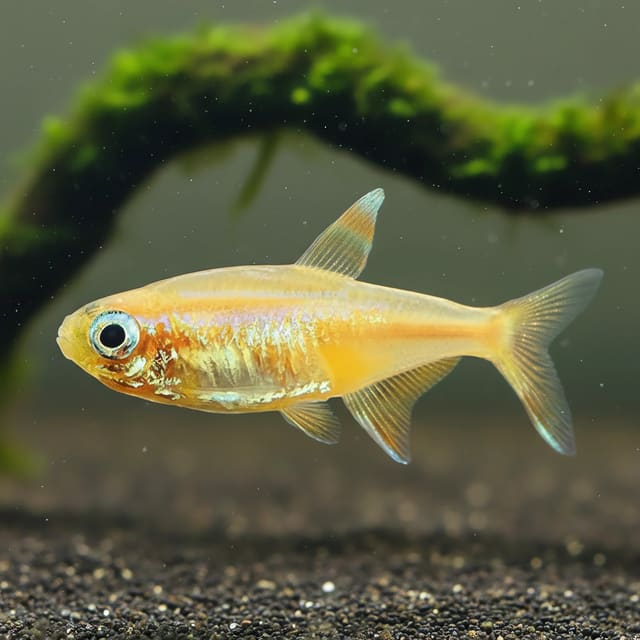
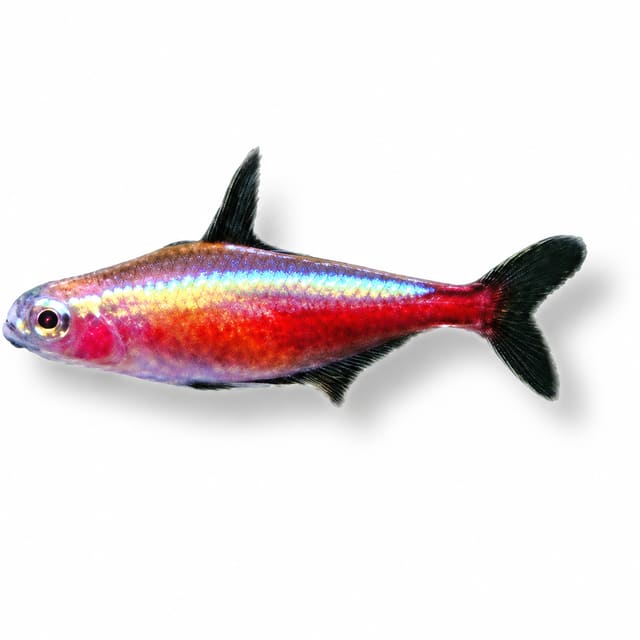
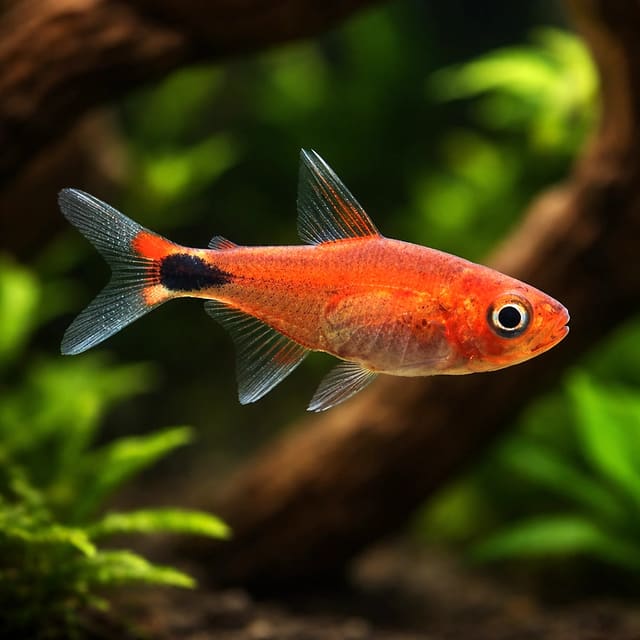
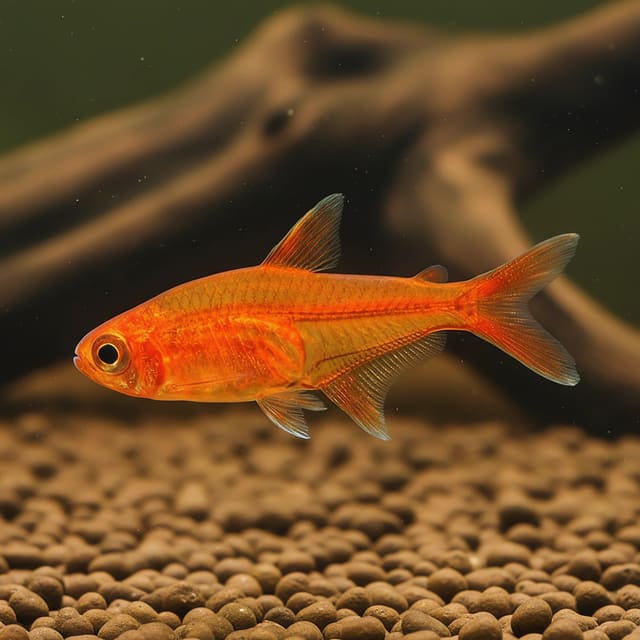
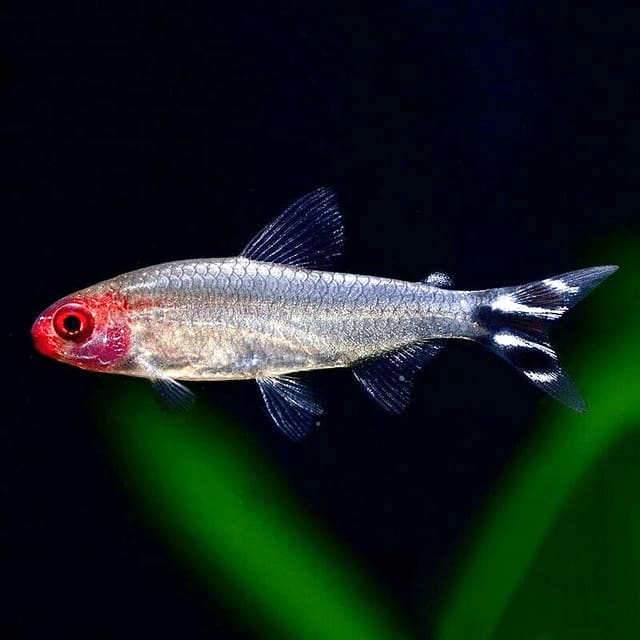
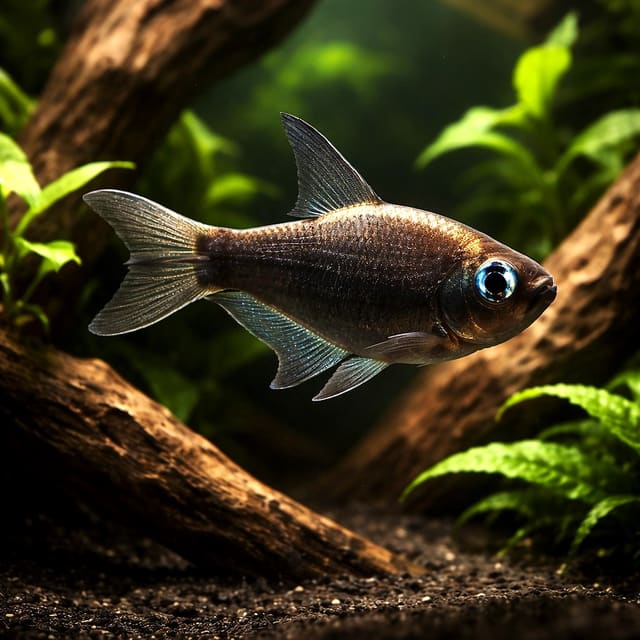
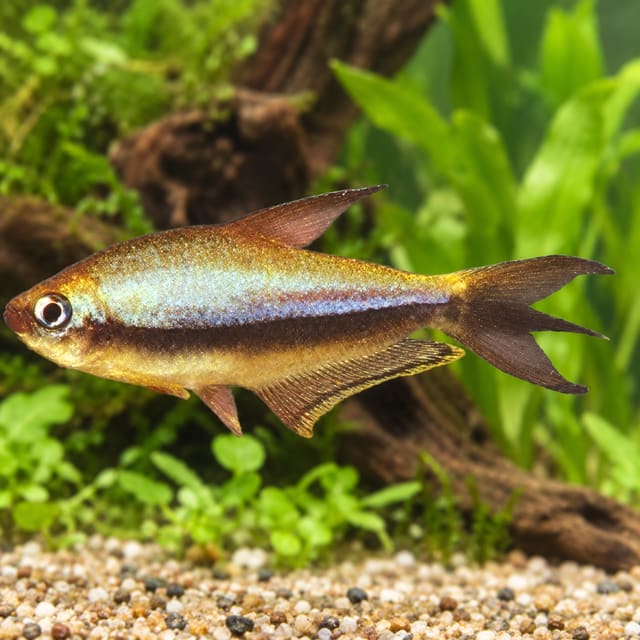
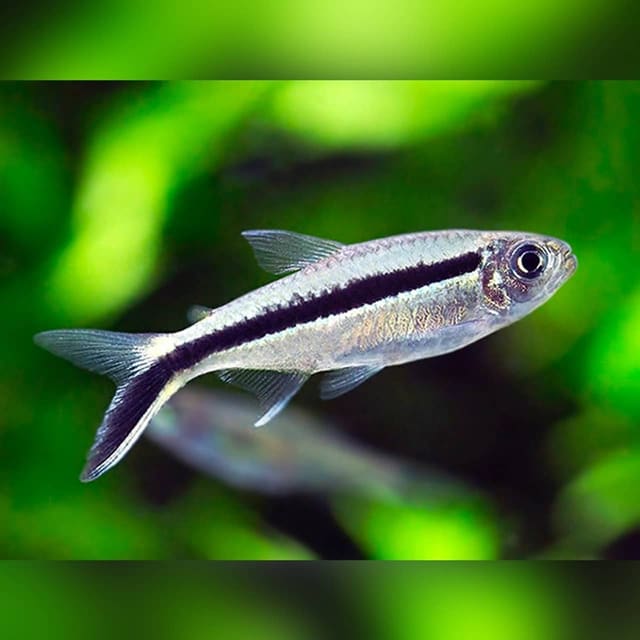
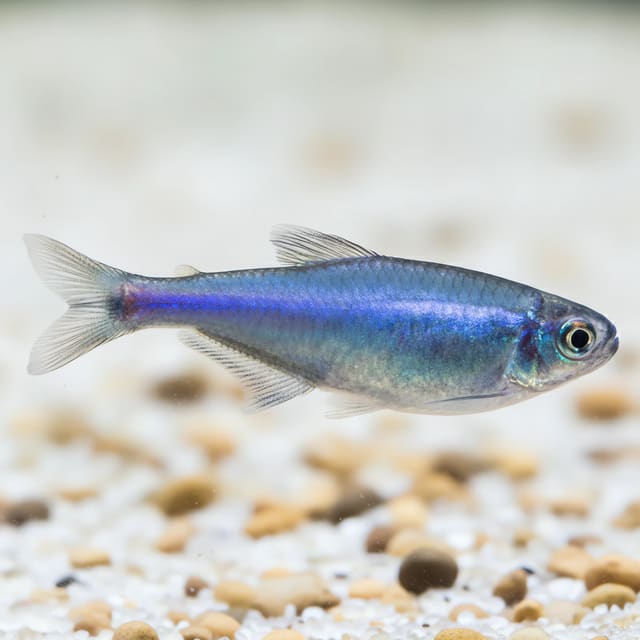
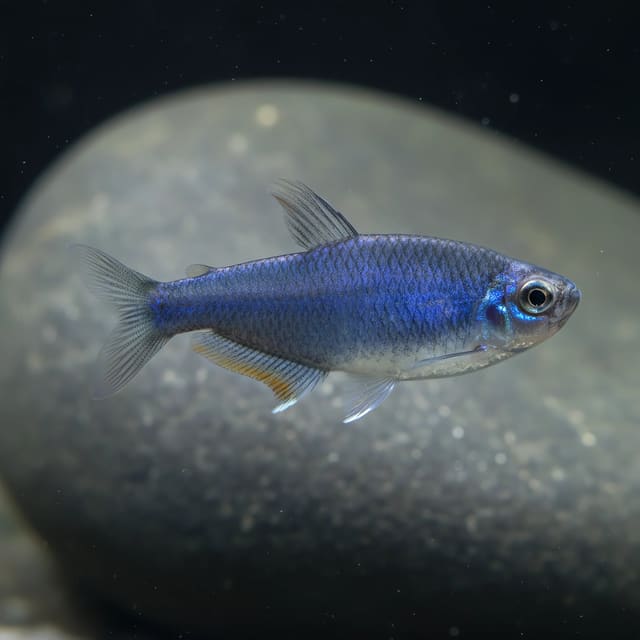
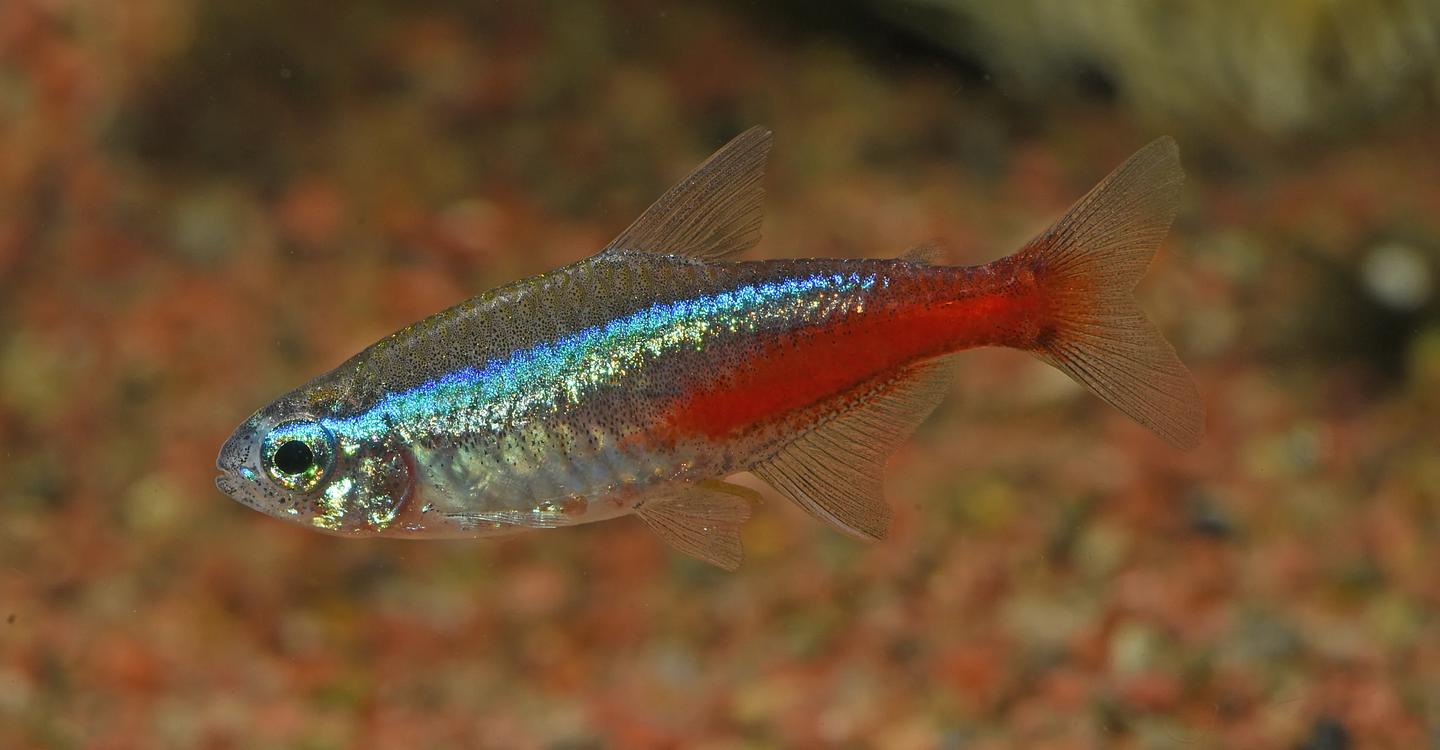
The gallery images are representative, based on reference photographs of this species, so colours can look slightly different from the live animal. Use the written identity, dispatch selector and care requirements for decisions rather than estimating size or sex from an image.
Group welfare and aquarium capacity must be considered together. Seriously Fish recommends at least 8–10 specimens because the fish should be less shy and show more interesting behaviour in a proper school. Do not add the whole group to an aquarium whose filter is immature or whose existing livestock already fills its safe capacity. Complete the aquarium plan first, then choose the quantity the mature system can support.
Read the current delivery and Live Arrival Guarantee policy before checkout. It explains how to receive, film, inspect and acclimatise the fish.
Seriously Fish recommends a base of at least 45 × 30 cm, corresponding to about 41 litres, for Paracheirodon simulans. Treat both parts of that recommendation as important. A vessel can hold the stated volume yet offer a poor footprint, while a long base provides more useful horizontal room for a school.
Keep at least 8–10 together. The species naturally forms schools, and the stated minimum is intended to make the fish less shy and encourage more interesting behaviour. One purchase supplies one animal, so the complete quantity must be chosen deliberately. A larger school still has to fit the aquarium’s footprint, filtration capacity and total stocking plan.
For a worked example, a nominal 41-litre aquarium with the required 45 × 30 cm base meets the species recommendation before other livestock are assessed. Filling that same aquarium with several additional groups would change the decision because each animal adds waste and uses space. Conversely, extra litres do not compensate for an unsuitable companion that could eat or intimidate these tiny tetras.
Seriously Fish pairs the approximately 41-litre setup with filter turnover of four to five times the aquarium volume per hour. For that example, it gives a filter rating of roughly 165–205 litres per hour. Use the figure to select or adjust filtration while checking that the resulting movement still leaves calm areas; the maintenance guidance describes this fish as best suited to fairly dim, structured surroundings rather than a bare, turbulent display.
Keep the aquarium at 23–27°C, pH 5.5–6.0 and 1–4 dGH. These routine values are the overlap of FishBase’s species environment and Seriously Fish’s aquarium guidance. Choose stable values within the overlap rather than allowing repeated movement from one endpoint to another.
FishBase records 23–27°C, pH 5.5–6.0 and hardness up to 4 dH. Seriously Fish gives broader aquarium bounds of 21–35°C, pH 3.0–6.5 and 1–8 dGH. Using the shared range keeps every routine value inside both references and points towards soft, acidic conditions rather than a hard, alkaline community chosen without comparison.
| Measurement | How to use it |
|---|---|
| Temperature | Keep the chosen value within 23–27°C and prevent repeated swings |
| pH | Maintain a measured value within pH 5.5–6.0 |
| General hardness | Keep the aquarium within 1–4 dGH |
| Ammonia | Maintain zero mg per litre |
| Nitrite | Maintain zero mg per litre |
Read our aquarium water chemistry guide before changing a value you do not routinely measure. Temperature, pH, hardness, ammonia, nitrite and nitrate answer different questions, so one acceptable reading cannot compensate for a toxic ammonia or nitrite result.
Use the water matcher to compare measured aquarium conditions with the stated ranges. Enter the readings from the actual aquarium rather than relying on a regional tap-water average. Repeatable results help distinguish a persistent mismatch from an isolated test error.
When planning a community, apply the full overlap test. A potential companion must share a usable part of the 23–27°C, pH 5.5–6.0 and 1–4 dGH routine range while also matching the aquarium’s actual maintained values. A theoretical match at one endpoint is less useful than conditions that can be held consistently for every animal.
The RSPCA explains that a well-set-up and maintained filter is vital because fish release toxic ammonia. Beneficial bacteria in biological filter media convert ammonia to nitrite, which is also toxic, and then to the safer nitrate. Clear-looking water does not replace those biological processes.
OATA’s tetra and pencilfish guidance gives zero mg per litre for ammonia and nitrite, with nitrate kept to no more than 20 mg per litre above the normal tap-water level. These are group-level water-quality limits. Apply them alongside the Green Neon Tetra’s routine range for temperature, pH and hardness.
Adding fish increases both waste and feeding. OATA warns that the beneficial bacterial population must grow as livestock and food increase; adding too many fish too quickly can produce new tank syndrome, with ammonia and nitrite rising to harmful levels. A mature filter therefore needs both an established bacterial population and a stocking pace it can accommodate.
Our first tropical aquarium guide helps organise preparation before livestock arrives. Use it to complete the aquarium, establish filtration and confirm repeatable test results before choosing the school. Green Neon Tetras are especially small, and Seriously Fish notes that trade fish can be sensitive after import, so stable preparation matters more than rushing the introduction.
Seriously Fish describes a heavily planted or natural-style aquarium as particularly effective for Green Neon Tetras. A sandy substrate with driftwood roots and branches creates structure, while fairly dim lighting suits the recommended presentation. The aim is a sheltered layout that still leaves a clear route for the school to move.
Dried leaf litter can add cover and encourage colonies of microorganisms as it decomposes. The profile describes those colonies as a valuable secondary food source for fry and says the humic substances released by the leaves are considered beneficial. Alder cones can serve a similar decorative and botanical role.
| Layout element | Practical purpose |
|---|---|
| Live plants | Provide cover and break up exposed areas |
| Open water | Leaves room for the school to move |
| Sand | Supports the natural-style arrangement described for the species |
| Driftwood | Adds roots, branches and sheltered structure |
| Leaf litter | Adds cover and supports microbial growth as it decomposes |
| Dim lighting | Matches the profile’s preferred presentation |
OATA’s broader tetra guidance also recommends gravel or sand, plants or suitable ornaments for shelter, swimming space and a gentle current for smaller species. Combine those principles with the minimum 45 × 30 cm footprint instead of choosing decorations first and trying to fit the school into the remaining space.
Natural peat is unnecessary. Seriously Fish advises against it because collecting peat is unsustainable and environmentally destructive. Plants, wood, dried leaves and alder cones can create the intended sheltered character without using harvested peat.
Check the finished aquascape from the fish’s scale. If branches and plants divide every open route, remove or reposition an element. If the aquarium is a bright, exposed box with nowhere for the school to withdraw, add structured cover. The strongest layout offers both choices: shaded planted zones for security and unobstructed water where the group can school.
Seriously Fish describes Green Neon Tetra as likely omnivorous. In nature it feeds on small invertebrates, crustaceans, filamentous algae, fallen fruit and similar items. Aquarium feeding should use that variety as a model without depending on the fish to graze enough food from the aquascape.
A quality dried food can form the prepared part of the diet. Add suitably small live or frozen foods such as chironomid larvae, mosquito larvae, Daphnia or Moina. Freeze-dried bloodworm and freeze-dried Daphnia are also named options. Select particles each fish can take comfortably because the species reaches only 2.0 cm standard length in the adult-size record used here.
OATA’s tetra and pencilfish sheet recommends feeding what the fish can eat within a few minutes, once a day. That schedule limits the build-up of uneaten food, which breaks down and releases toxic waste. Portion size is therefore judged by observed intake rather than by continuing to add food until some reaches the bottom.
Variety means rotating suitable foods, not combining large portions of every item at one meal. Dried food alone may sustain the fish, but the species profile recommends a varied menu containing live and frozen items. Keep those additions small and appropriate to the animal’s scale.
Feeding and filtration are linked. Every uneaten fragment adds to the waste the biological filter must process, while heavy feeding can raise ammonia, nitrite or nitrate when capacity is exceeded. A short, observed daily meal supports nutrition without undermining the soft, clean water the school requires.
Prepare the complete aquarium before introducing Green Neon Tetras. The filter must be working, ammonia and nitrite must both measure zero, and the temperature, pH and hardness must sit within 23–27°C, pH 5.5–6.0 and 1–4 dGH. Confirm that the footprint is at least 45 × 30 cm and that the plan includes at least 8–10 animals.
OATA recommends increasing aquarium populations slowly because beneficial filter bacteria need to respond whenever livestock and feeding increase. This matters even when each individual fish is tiny: a full school creates a combined increase in waste, and existing fish are already using part of the filter’s capacity.
Seriously Fish says this species can be sensitive, especially after import. Use subdued surroundings and the recommended structured, dim aquarium to reduce unnecessary exposure. Do not combine the introduction with a major rearrangement, an untested change in water chemistry or an abrupt rise in stocking beyond the filter’s capacity.
At the first feeding opportunities, confirm that the fish approach and swallow suitably small food. OATA identifies reduced intake, hiding more than normal, altered swimming, colour changes and faster or slower gill movement as signs that merit attention. One brief observation is less useful than comparing each check with the group’s developing normal pattern.
Keep introduction and diagnosis separate. A fish that hides or refuses food can be responding to water quality, surroundings, competition or illness. Start with measured aquarium conditions and the complete setup rather than assigning a disease from one sign. If ammonia or nitrite is detected, treat water quality as an immediate husbandry problem and avoid increasing the population further.
OATA strongly recommends a 25% partial water change at least once every week for tetras and pencilfish. Use the change to remove dissolved waste and siphon solid debris from the substrate. Treat replacement tap water with a suitable conditioner to remove harmful chlorine or chloramine before it enters the aquarium.
Test at least weekly. Ammonia and nitrite must remain at zero mg per litre, while nitrate should stay no more than 20 mg per litre above the normal tap-water level. Include temperature, pH and hardness in the routine because this aquarium must also stay within 23–27°C, pH 5.5–6.0 and 1–4 dGH.
| Weekly task | Required result |
|---|---|
| Ammonia test | Zero mg per litre |
| Nitrite test | Zero mg per litre |
| Nitrate comparison | No more than 20 mg/l above tap water |
| Water change | 25% at least once a week |
| Filter check | No blockage restricting operation |
| Fish check | No concerning change from normal |
Check the filter for blockages. When cleaning is necessary, do not rinse biological media under the tap because chlorine or chloramine may kill the established bacteria. Rinse it lightly in aquarium water removed during the partial water change; this reduces bacterial loss while clearing accumulated debris.
Observe the fish whenever routine care brings you close to the aquarium. OATA highlights hanging at the surface, sitting on the bottom, erratic swimming, unusual hiding, altered aggression, faster or slower gill movement, white spots, fluffy growths, damaged fins or scales, changing body condition and reduced appetite.
If you see a change, test the water first and review recent feeding, stocking and maintenance. Several different problems can produce similar behaviour, so one visible sign is not a diagnosis. If the change persists or the fish’s condition causes concern, contact us for further health guidance.
A repeatable routine protects the biological filter and makes unusual results easier to recognise. Record the test readings and completed water change instead of relying on whether the water looks clear. Clear water may still contain ammonia or nitrite, while a tested aquarium gives a direct basis for the next action.
Green Neon Tetra is peaceful with other species, but Seriously Fish does not regard it as an ideal general community fish because of its very small size and specialised requirements. The preferred plan is a species-only aquarium or, at most, a carefully screened community of diminutive, non-aggressive fish.
The species profile names diminutive non-aggressive characids and smaller callichthyid or loricariid catfishes as possible categories. These are conditional categories rather than universal tank-mate promises. The exact candidate must share the maintained temperature, pH and hardness, fit the aquarium and leave the Green Neon Tetras able to feed and school normally.
| Candidate | Decision rule |
|---|---|
| Fish large enough to eat them | Avoid because smaller tetras should not be kept with potential predators |
| Aggressive fish | Avoid; the species recommendation is limited to non-aggressive companions |
| Diminutive characids | Consider only after checking water, space and temperament |
| Smaller callichthyid catfishes | Consider only when water and bottom-space needs overlap |
| Smaller loricariid catfishes | Consider only when water, space and feeding needs overlap |
| Another Green Neon Tetra | Suitable as part of the planned school of at least 8–10 |
OATA’s broad compatibility rule is that smaller tetras should not be kept with any fish large enough to eat them, while tetras mix best with species of similar size and temperament. Use both tests. Similar size cannot rescue a water mismatch, and peaceful behaviour cannot make a predator safe.
A community also has to fit the 45 × 30 cm minimum footprint and the biological capacity of the filter. Bottom-dwelling companions need their own usable area rather than being treated as livestock that takes no space. A second schooling species needs room for its complete group, not just one or two token fish.
For a stocking and compatibility assessment, contact us with the aquarium dimensions, measured temperature, pH and hardness, current livestock and the number of Green Neon Tetras planned. Those details allow the complete combination to be screened rather than judging a companion by its shop label alone.
Work through compatibility in a fixed order. A candidate that fails an early safety check should not be rescued by a later advantage such as attractive colour or use of a different swimming level.
For example, a small fish that shares the water range still fails if it is aggressive. A peaceful bottom fish still fails if its temperature or chemistry needs fall outside the aquarium’s maintained conditions. A compatible category can also fail when the aquarium lacks enough bottom area, open water or biological capacity for both groups.
Observe the assembled community for changes from normal. Repeated hiding, loss of feeding interest, damaged fins, altered colour, erratic swimming or a change in breathing should trigger a water test and a review of the combination. The response is to identify the limiting factor, not to add more fish automatically.
Individual behaviour may differ, so every new combination carries some uncertainty even after a careful screen. Keep the decision conditional on what happens in the actual aquarium. If a fish begins chasing, blocking food or forcing the school into persistent hiding, separate the incompatible animals rather than waiting for visible injury.
A single-species setup removes many of these community variables and remains fully appropriate. It allows the footprint, dim planting, filter flow and feeding routine to be arranged around one school of at least 8–10 Green Neon Tetras.
Green Neon Tetra reaches 2.0 cm standard length according to FishBase. Plan the aquarium, food and companions around that adult figure rather than the dispatch size.
Green Neon Tetra needs an aquarium with a base of at least 45 × 30 cm, corresponding to about 41 litres, according to Seriously Fish. Allow additional space and filtration capacity for other livestock.
Keep at least 8–10 Green Neon Tetras together. Seriously Fish recommends that minimum because this schooling species should be less shy and display more interesting behaviour in a proper group.
Green Neon Tetra suits a keeper prepared to maintain a mature filter, soft acidic water, suitably small food and a school of at least 8–10. Its sensitivity after import and specialised community requirements demand deliberate preparation.
Green Neon Tetra eats a varied omnivorous diet. Offer quality dried food plus suitably small live, frozen or freeze-dried bloodworm, mosquito larvae, Daphnia or Moina, and feed only what the group can eat within a few minutes once a day.
Keep this fish at 23–27°C, pH 5.5–6.0 and 1–4 dGH, the overlap of FishBase and Seriously Fish. Maintain stable values within that range rather than moving repeatedly between the endpoints.
This fish is peaceful, but its very small size and specialised requirements make a general community unsuitable. Keep it alone as a species group or with carefully screened, diminutive and non-aggressive companions.
It may live with diminutive non-aggressive characids or smaller callichthyid and loricariid catfishes when their water, space and feeding needs overlap. Avoid aggressive fish and any fish large enough to eat these tiny tetras.
Start filming the sealed parcel before opening it, then record continuously as it is opened with the fish still inside the sealed bag. Someone must be present to receive the parcel; float the bag for 20–30 minutes, never pour the bag water into the aquarium, and follow the Tropical Fish Co policy for any Live Arrival Guarantee claim.
No reviews for this item yet. Bought one? Honest reviews only, good or bad.
What customers say about ordering from us
I have a small group of long finned mountain minnows. So was delighted to be able to order ten of this variety to increase the genetics in my tank . The ones I recieved are healthy but it’s to early to give a verdict on wether they are of a long finned type since they are small currently.
Gordon Walker · 23 Sept 2026
100% success travel and "installation". Pleased with quality of purchase. The Siamese fighter a bit "shy" so have not yet seen him at his best yet but looking good. Happy customer. GG
George E Garratt · 21 Sept 2026
Reviews of our shop, collected by Judge.me, an independent third-party review collector. Newest first.