Easy
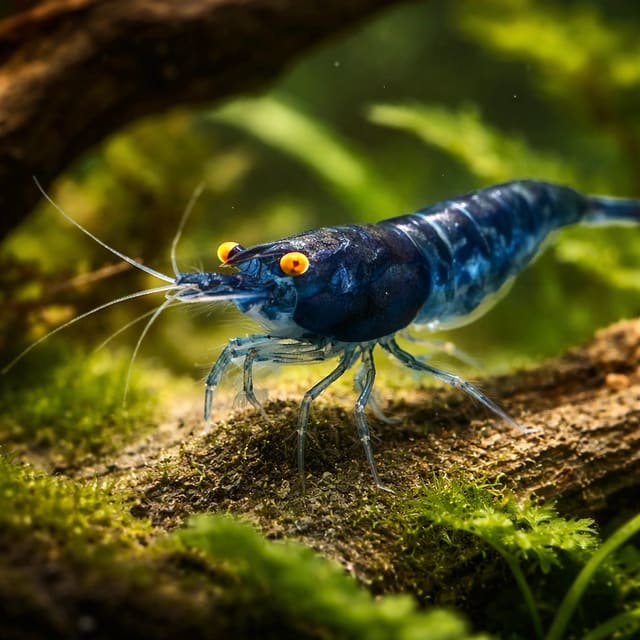
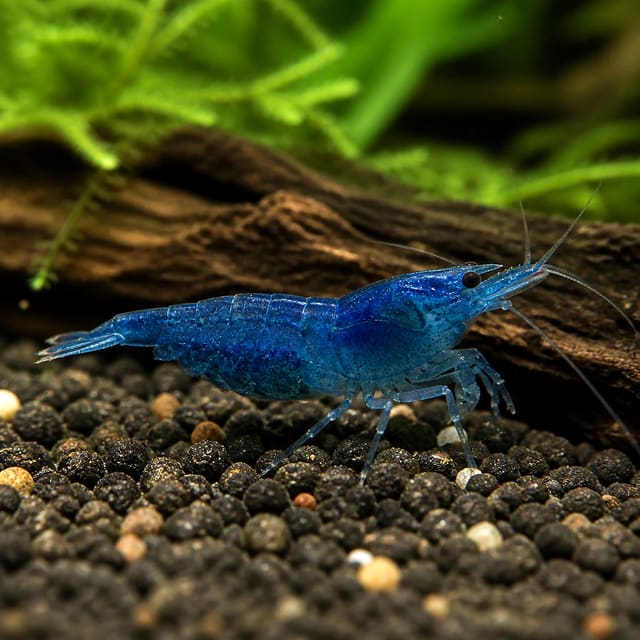
Blue Dream Shrimp (Neocaridina davidi)
18–28°C · pH 6.5–8 · 20L
£16.19

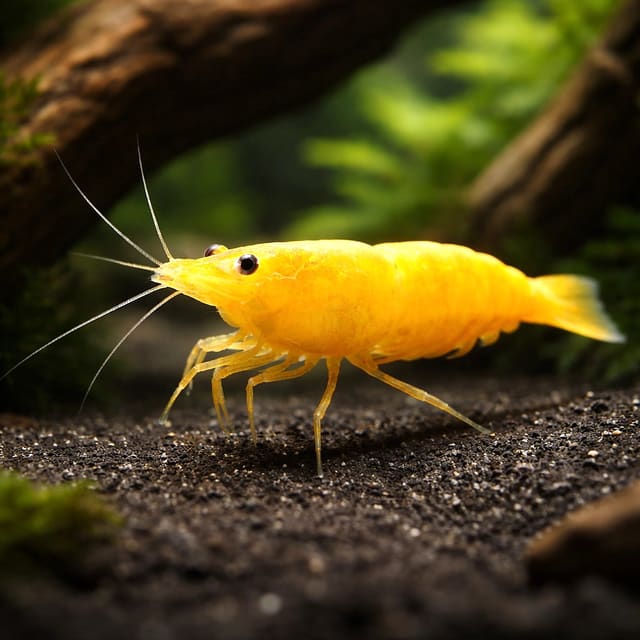
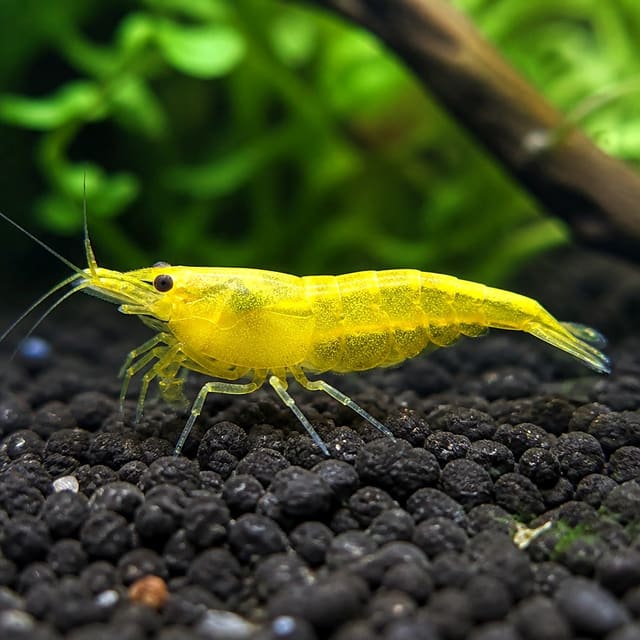
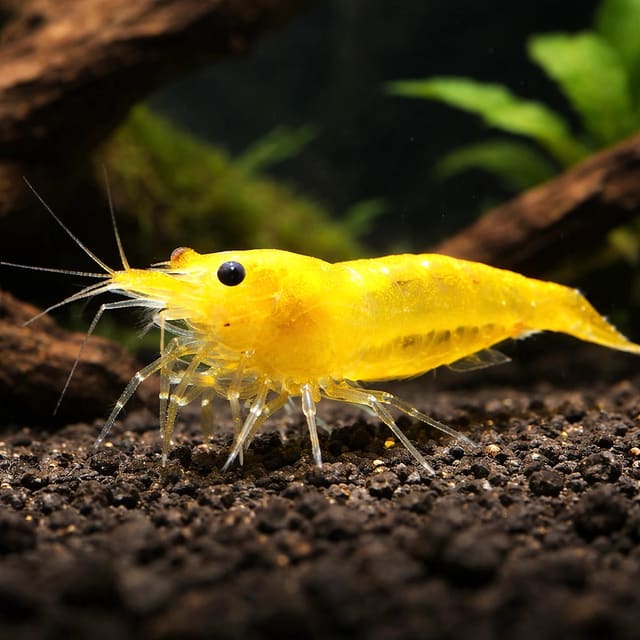
The Yellow Cherry Shrimp (Neocaridina davidi) is a freshwater atyid shrimp native to Taiwan, east of China, the Korean Peninsula and Vietnam that reaches 4 cm. It suits intermediate keepers with mature filtration; OATA’s group guidance is at least five shrimp, 17–27°C, pH 6.5–8.0 and 4–18 dGH, while our cautious starting policy is 20 litres. Sold individually.
Adult size is the maximum length this species reaches at full maturity (scientific sources). The livestock you receive will be younger and smaller. Product-photo provenance and any image-specific limitations are stated on the listing.
Neocaridina davidi
Lives in groups: kept together they stay settled, active and show their best colour.
The Yellow Cherry Shrimp (Neocaridina davidi) is a freshwater atyid shrimp native to Taiwan, east of China, the Korean Peninsula and Vietnam that reaches 4 cm. It suits intermediate keepers with mature filtration; OATA’s group guidance is at least five shrimp, 17–27°C, pH 6.5–8.0 and 4–18 dGH, while our cautious starting policy is 20 litres. Sold individually.
Adult size is the maximum length this species reaches at full maturity (scientific sources). The livestock you receive will be younger and smaller. Product-photo provenance and any image-specific limitations are stated on the listing.
Use a mature, filtered aquarium and measured water—not a shrimp-per-litre rule. Tropical Fish Co uses 20 litres as a cautious starting policy for a small Cherry Shrimp group, above OATA's general 10-litre screen for small shrimp. Provide established grazing surfaces, cover and a protected filter inlet. No fish is guaranteed shrimplet-safe, and breeding should never be promised.
Maintain these water conditions for optimal health and vibrant colors
Yellow Cherry Shrimp is a selectively bred yellow colour form of Neocaridina davidi, a freshwater shrimp native to Taiwan, east of China, the Korean Peninsula and Vietnam that reaches 4 cm. The World Register of Marine Species places this accepted species in the family Atyidae and the order Decapoda. It suits an intermediate keeper prepared to provide mature biological filtration, measured water, controlled feeding and safe treatment choices.
Wikipedia’s summary of Neocaridina davidi describes the species as an omnivore associated with lakes, ponds, rivers and streams across its native range. Wild-type animals are mottled brown, while selective breeding has produced yellow and several other colour forms. That history explains the aquarium colour form without determining the lineage, sex or future colour of an individual shrimp.
Adults reach 4 cm. Use that figure when judging filter guards, gaps around equipment and whether a fish could swallow an adult. Tiny juveniles remain more exposed than adults, so adult size alone cannot decide compatibility.
The shrimp itself is peaceful, but successful care depends on aquarium maturity and stability. It is not suited to someone seeking an animal for an unfiltered, newly filled or untested aquarium.
| Suits | Not suited to |
|---|---|
| Intermediate keepers who test their water | Newly filled or unfiltered aquariums |
| Mature aquariums with protected filter intakes | Aquariums with measurable ammonia or nitrite |
| Groups planned from at least five shrimp | Homes with predatory fish or fish able to swallow shrimp |
| Stable water within the OATA planning ranges | Setups exposed to abrupt water changes or copper |
Keep this ornamental shrimp and all aquarium water, plants and equipment contents away from natural waterways. Secure rehoming through another aquarium keeper is the responsible choice if the aquarium can no longer be maintained.
One purchase supplies one Yellow Cherry Shrimp. The recorded dispatch size is 1–1.5 cm. Dispatch size describes the shrimp at the point of supply; it is not the adult length. Allow for an adult reaching 4 cm even when the new arrival is much smaller.
Sex is guaranteed only when the selected option explicitly states male or female. This Yellow Cherry Shrimp listing has no sex-guaranteed option.
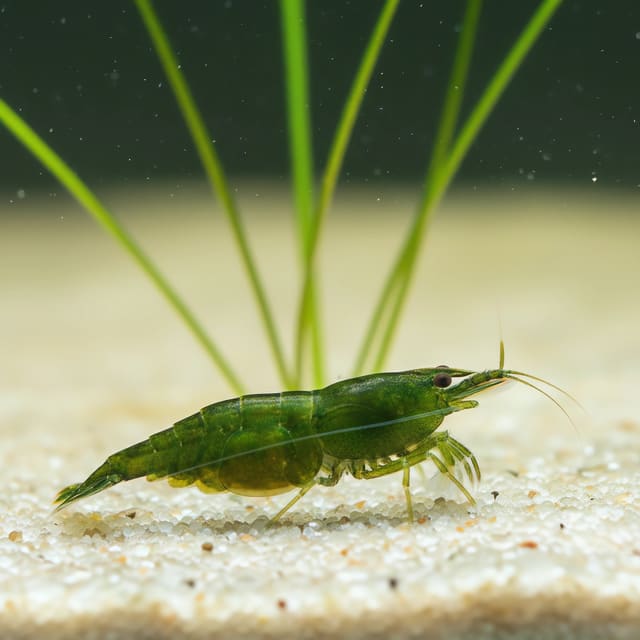
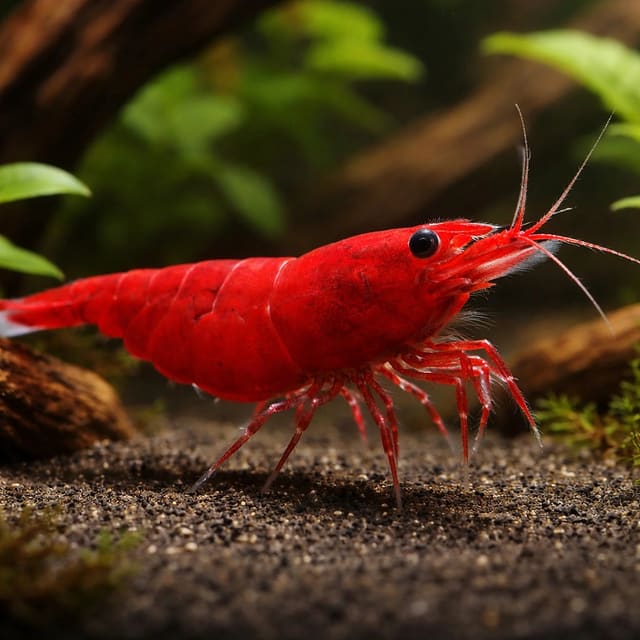
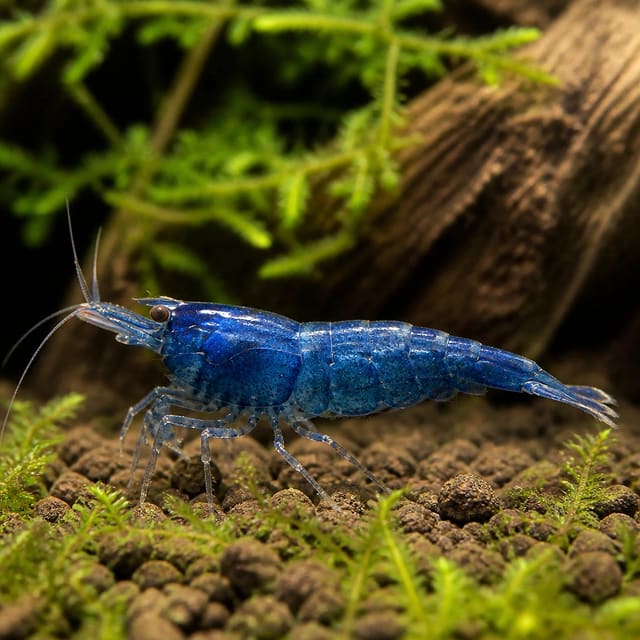
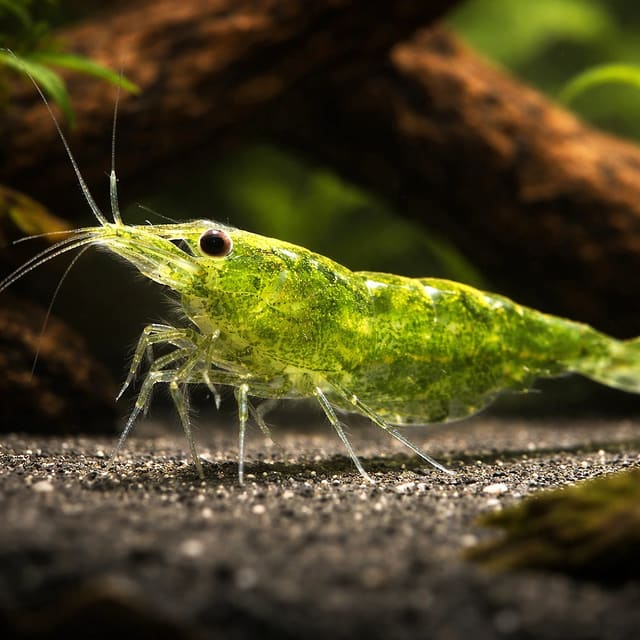
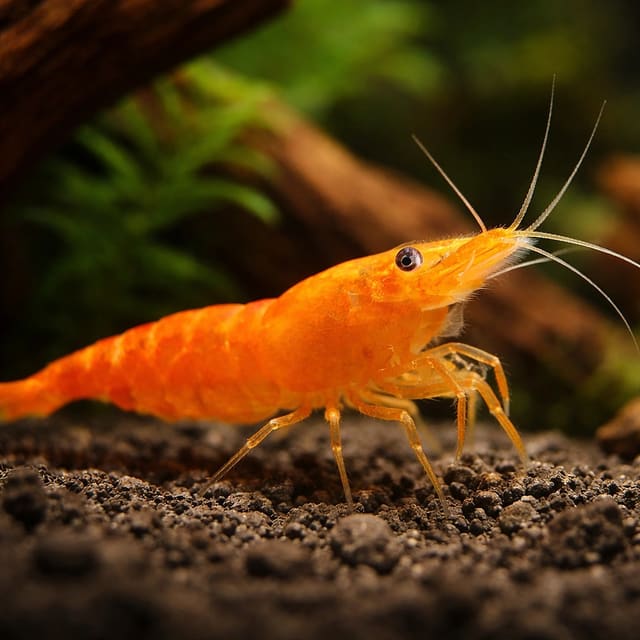
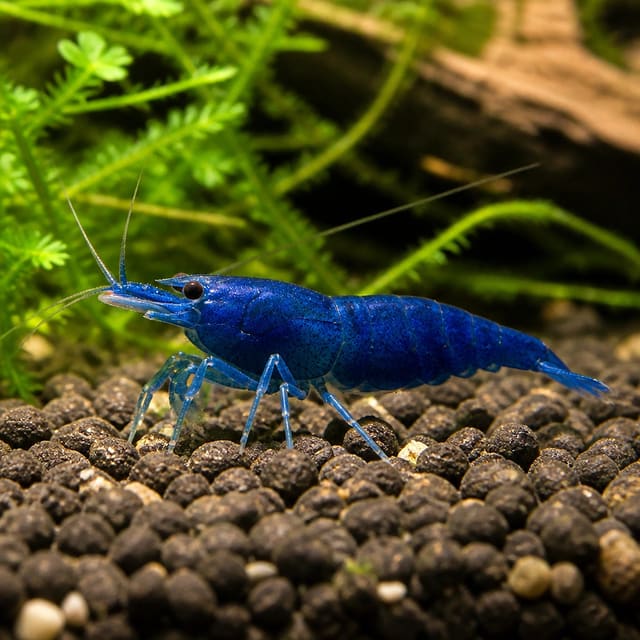
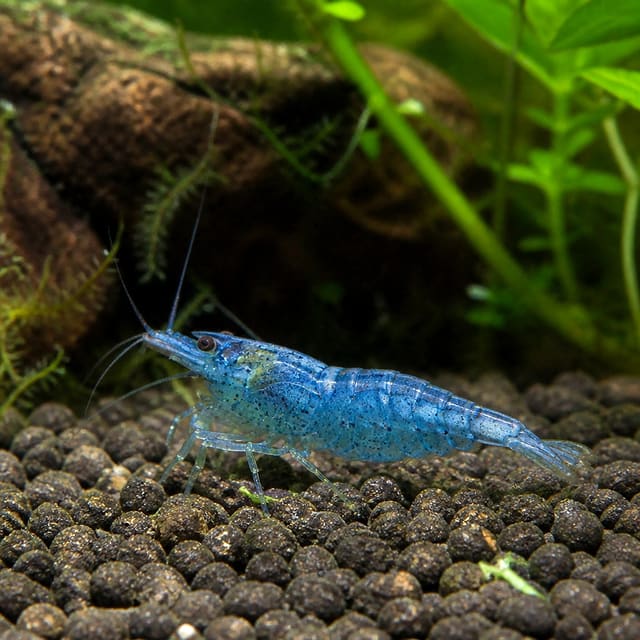
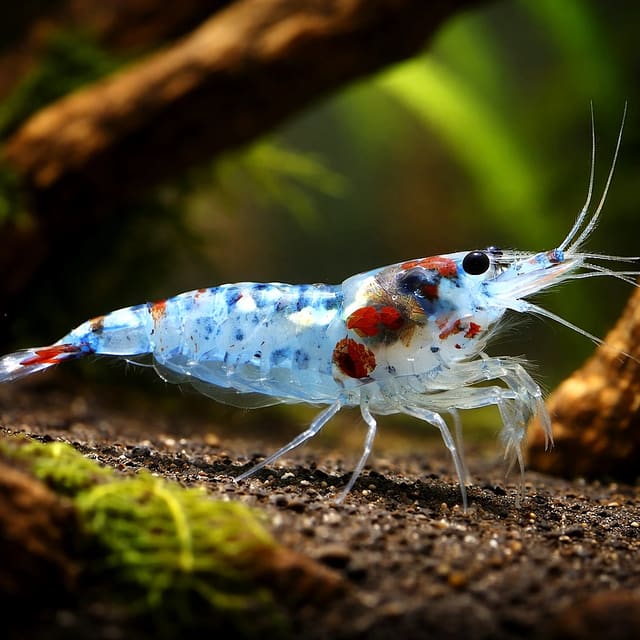
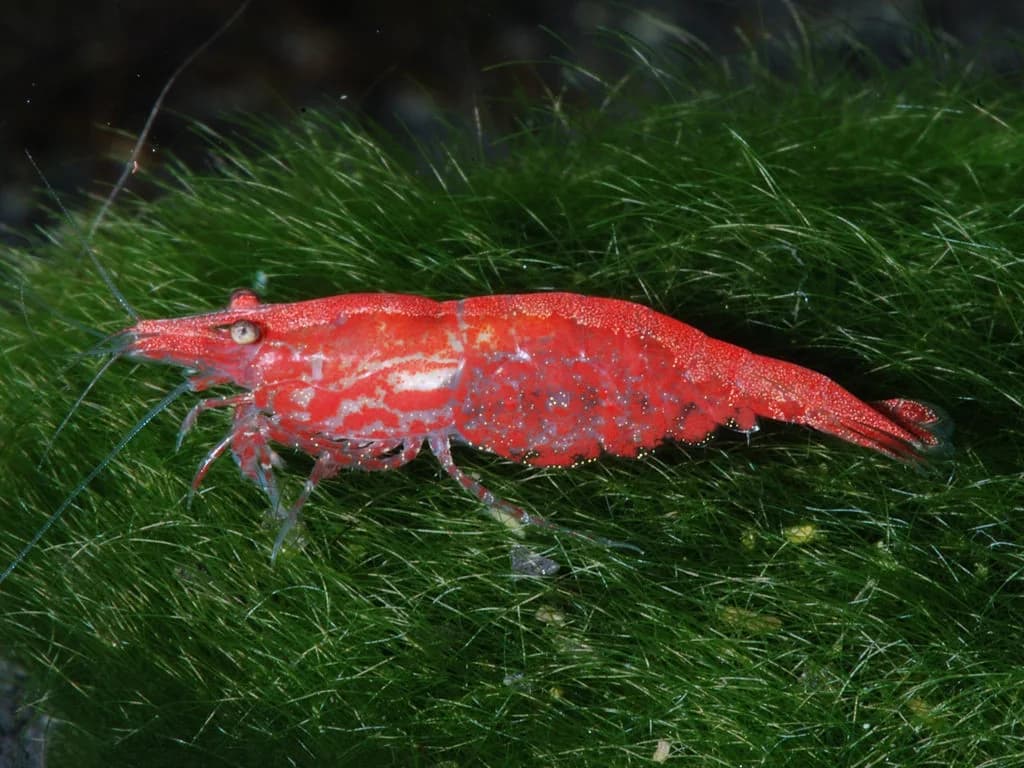
The gallery images are representative of this type of animal rather than photographs of the exact animal supplied, so colours can look slightly different from the live animal.
OATA’s freshwater shrimp and snail guidance gives 17–27°C, pH 6.5–8.0 and 4–18 dGH for the group, not a species-specific optimum. Choose a stable point inside these screening ranges rather than moving repeatedly around the full span. Ammonia and nitrite should both measure zero.
Tropical Fish Co uses a mature, filtered 20-litre aquarium as a cautious starting policy for a small group. This sits above OATA’s general 10-litre screen for small freshwater shrimp and gives more headroom for equipment, feeding and change. Neither figure creates a permanent shrimp-per-litre rule. Increase the space when fish, other animals or expected population growth add pressure.
| Planning question | Starting answer |
|---|---|
| Purchase unit | One animal per purchase |
| Dispatch size | 1–1.5 cm |
| Adult length | 4 cm |
| Small-group aquarium | Start planning at 20 litres |
| Social group | Plan for at least five shrimp |
| Water | 17–27°C, pH 6.5–8.0, 4–18 dGH |
Read our complete Cherry Shrimp Care Guide before finalising the aquarium. It explains why mature filtration, established grazing surfaces, a protected intake and measured water matter more than a simple stocking ratio.
Start with a working biological filter and prove its performance with water tests. The RSPCA’s aquarium guidance explains that beneficial bacteria convert toxic ammonia first to nitrite and then to safer nitrate. For Yellow Cherry Shrimp, ammonia and nitrite should both remain at zero before livestock enters the aquarium.
A mature aquarium is defined by biological function, not by waiting a fixed number of weeks. A clean-looking tank can still be immature, while an established-looking aquarium can become unstable after filter damage, excessive cleaning or a sudden rise in feeding. Test the water and assess filtration rather than relying on the calendar or the appearance of the glass.
The OATA freshwater aquarium set-up guidance supports cycling, water testing and gradual stocking. Add livestock slowly so the bacterial population can adjust as waste and feeding increase. A sudden increase can create new tank syndrome even when the aquarium has previously completed a cycle.
Our guide to preparing and maturing a shrimp aquarium helps turn these checks into a practical setup sequence. If ammonia or nitrite appears before purchase, postpone the introduction, inspect the filter and restore stable zero readings. Do not use the planned delivery date as a reason to accept failing water tests.
| What you see | What to do |
|---|---|
| Zero ammonia and nitrite | Continue testing while completing the setup |
| Any ammonia or nitrite | Inspect filtration and delay livestock |
| Unprotected intake | Fit a fine guard before shrimp enter |
| No established surfaces | Add safe structure and allow it to mature |
Choose a stable operating point between 17 and 27°C, pH 6.5 and 8.0, and 4 and 18 dGH. OATA also gives 3–15 dKH for freshwater shrimp and snails. These wide bands are group guidance, not a species-specific optimum or an instruction to move the aquarium between extremes. Record where your aquarium normally sits, then make changes gradually.
Use a liquid or other suitable aquarium test method consistently so results can be compared over time. Our water chemistry guide explains what temperature, pH, hardness, ammonia, nitrite and nitrate tell you. Test the aquarium itself because substrate, rocks, top-ups, conditioners and household water treatment can alter the chemistry after tap water enters the tank.
A heater is needed only when the aquarium cannot remain at the stable temperature selected for its inhabitants. A cool room that lets the tank fall below 17°C needs a correctly sized, thermostatically controlled and guarded heating solution. A room that already holds the aquarium steadily inside the range does not need a heater simply because this is a freshwater shrimp.
Plan for overheating as carefully as cold. A reading close to 27°C during ordinary conditions leaves little room for a summer rise. Track the warmest part of the day, check heater operation and improve the room-level heat plan before the temperature moves beyond the range. Do not treat 27°C as a target merely because it is the upper planning value.
| Measured situation | Decision |
|---|---|
| 16°C and still falling | Stabilise with suitable guarded heating before introduction |
| 22°C and steady | Maintain and continue monitoring |
| 27°C with a warm day ahead | Act on the overheating risk before adding livestock |
| pH or hardness changing quickly | Find the cause and restore gradual change |
Use the aquarium water matcher to compare your measured values with the planning bands. The useful result is a measured comparison, not a postcode assumption. UK water varies, and softened household water should not be treated as automatically suitable without testing.
Write temperature, pH and hardness in a simple log before and after meaningful maintenance. When a value changes, review recent water changes, top-ups, new rocks, substrate, treatments and equipment before adding corrective products. Changing several things together hides the cause and can expose the shrimp to a sharper swing.
Give the shrimp a filtered aquarium with substrate, sheltered structure and established surfaces. Sand or aquarium gravel can form the base. Live plants are useful because their leaves and stems create cover and grazing area; aquarium-safe artificial plants and ornaments can provide shelter when live plants are not used.
Wood, rock and other aquarium-safe structures increase the area over which shrimp can forage. Arrange them so you can still see the intake, clean around equipment and inspect the group. A crowded arrangement that blocks maintenance access can hide food waste or equipment faults, so balance shelter with clear working space.
Check the filter at its strongest normal setting and look for any opening that could trap a 1–1.5 cm arrival or a smaller juvenile in the future. Fit a fine guard or suitable sponge to risky intakes. Inspect that guard for clogging during maintenance because a blocked cover can reduce filter performance.
A filter remains essential even though shrimp have a relatively small body. Biological filtration processes waste from the animals, food and other aquarium inhabitants. Select equipment around the complete aquarium load rather than calculating only from the number of shrimp. With fish or other livestock, increase space and filtration headroom.
| Feature | Purpose |
|---|---|
| Mature filter | Processes waste and supports stable water |
| Protected intake | Reduces the risk of trapping small shrimp |
| Plants and structure | Create cover and established grazing area |
| Sand or gravel | Provides an aquarium base and additional surface |
| Maintenance access | Allows inspection and removal of waste |
Work from real water volume after substrate, wood and equipment displace water. The 20-litre house policy is a cautious starting point for a small group, not permission to fill every part of that volume with décor or additional livestock. Footprint, feeding access and filter capacity remain practical limits.
Use a secure cover where the aquarium design creates an escape route, while keeping ventilation and cables safe. Place food where several shrimp can approach it and where leftovers are visible. Established surfaces should support routine grazing, but an old-looking or heavily planted aquarium still needs measured zero ammonia and nitrite.
Neocaridina davidi is omnivorous and spends much of its time grazing. In an aquarium, the group can browse biofilm and some soft growth from plants, wood, rock, substrate and filter surfaces. Grazing is useful behaviour, but it does not make the shrimp a complete algae-control solution or remove the need for an appropriate food.
Use a complete sinking shrimp food as the nutritional base. An algae wafer or a commercial pellet made for freshwater shrimp can also be used when its label is appropriate for invertebrates and the rest of the aquarium. Follow the manufacturer’s portion guidance, then adjust from what the group actually eats and from the water-test trend.
OATA advises feeding freshwater shrimp and snails two or three times a week. Use that as an initial rhythm in a mature shrimp aquarium, then assess grazing area, group size, other livestock and recurring leftovers. Leave pellets or wafers for at least 30 minutes so the shrimp have time to reach them. Remove recurring excess and reduce the next portion rather than allowing food to decay.
| Observation | Response |
|---|---|
| Every shrimp can reach the food | Keep watching until the feeding period ends |
| Food repeatedly remains | Remove excess and reduce the next portion |
| Faster companions take everything | Change placement or reassess the community |
| Water tests worsen after feeding | Review the portion, waste removal and filtration |
| Little natural grazing is visible | Check surface maturity and the completeness of the diet |
Do not rely on visible algae alone. Algae quantity and type change, while a complete food offers a more dependable base. Equally, do not add food simply because shrimp graze constantly; grazing includes very small material on established surfaces and is not proof that a large supplementary meal is required.
Place food on an accessible surface where waste can be found. If the group grows or juveniles appear, reassess access rather than applying a fixed food-per-shrimp formula. Feeding competition, the amount of mature surface and the full aquarium population all affect the decision.
When feeding interest drops, measure temperature, ammonia and nitrite and inspect the filter before trying several new foods. A reduced intake can accompany a water-quality or health change. Treat it as an observation to investigate rather than masking it with a richer meal.
At least once every week, carry out a partial water change of 25%. Treat replacement tap water with a suitable conditioner to remove chlorine or chloramine before it enters the aquarium. Keep the replacement water reasonably aligned with the aquarium conditions so routine maintenance does not create a sharp temperature or chemistry change.
Test ammonia and nitrite at least weekly and keep both at zero. Track nitrate against the normal tap-water level; OATA advises that aquarium nitrate should not exceed 20 mg per litre above that baseline. A single result is useful, but a written trend shows whether feeding, stocking or maintenance is moving the system in the wrong direction.
Check the filter and intake guard for blockages during the weekly routine. When filter media needs cleaning, rinse it lightly in aquarium water removed during the partial water change. Do not run it under the tap because chlorine or chloramine may kill the beneficial bacterial population established in the media.
| Weekly finding | Next action |
|---|---|
| Ammonia or nitrite above zero | Treat it as an urgent water-quality problem and inspect filtration, waste and stocking |
| Food collecting in one area | Remove it and adjust the next feed |
| Intake guard clogged | Rinse it in removed aquarium water |
| Nitrate trend rising | Review feeding, waste removal, stocking and water changes |
Avoid cleaning every biological surface at once. Deeply disturbing substrate, replacing media and making other major changes together can reduce stability and make the cause of a later problem difficult to identify. Spread non-urgent maintenance where practical and preserve functioning filter media.
Increase observation after adding livestock because feeding and waste have changed. Add further animals slowly, only while the filter continues to hold ammonia and nitrite at zero. Aquarium volume does not compensate for a damaged filter or rapidly rising biological load.
Have the mature aquarium running and make sure someone can receive the parcel. Live animals should not be left unattended after delivery.
Follow the current delivery and Live Arrival Guarantee policy for the unpacking and claim process. Float the bag for 20–30 minutes before release, and never pour the bag water into the aquarium.
Before release, confirm that ammonia and nitrite are zero and that the protected intake, filter and heater are operating normally. Keep movements controlled and avoid repeatedly transferring the shrimp between containers.
During the first week, continue the normal water-testing routine and keep ammonia and nitrite at zero. Avoid adding several further animals immediately. Beneficial bacteria must adjust whenever livestock and feeding increase, and gradual stocking reduces the risk of waste exceeding the filter’s capacity.
| Arrival checkpoint | Required decision |
|---|---|
| Parcel still sealed | Start the continuous video before opening it |
| Aquarium tests fail | Resolve water quality before introduction |
| Bag has floated for under 20 minutes | Continue to the 20–30-minute window |
| Transport water remains in the bag | Keep it out of the aquarium during release |
| Intake guard has moved | Refit it before releasing the shrimp |
Learn the normal appearance and activity of the group so changes stand out. Warning signs include increased inactivity, restlessness, unusual swimming, darker or paler colour, increased hiding, altered breathing effort, damage to the exoskeleton, loss of appendages, abnormal swelling, weight change or reduced interest in food.
An empty exoskeleton can resemble a dead shrimp. Hiding may occur around moulting, but neither a shed shell nor hiding alone identifies a health problem. Compare the observation with the rest of the group and check the aquarium before choosing a treatment.
Freshwater shrimp are highly sensitive to copper and will die if exposed even to low levels. Read the exact current label and every invertebrate warning before adding any aquarium medicine, fertiliser or treatment. Do not assume that a product suitable for fish is suitable for shrimp, and do not calculate a safe copper level from a different animal or a single general claim.
| Change | First response |
|---|---|
| Reduced feeding | Test water and inspect equipment before changing foods |
| Several shrimp inactive | Measure temperature, ammonia and nitrite immediately |
| Shell-like object | Check whether it is an empty moult before acting |
| Medicine considered | Read the exact invertebrate warning and identify the problem |
| Persistent severe signs | Seek qualified aquatic or veterinary help |
Good records improve the response. Note when the problem began, which animals are affected, test results, recent maintenance, new livestock and every product added. This is safer than changing food, water chemistry and medication simultaneously.
Keep dedicated wet equipment where practical and avoid moving water or tools directly from a treated aquarium. Prevention depends on mature filtration, measured water, appropriate food and careful introductions; medication cannot compensate for ammonia, nitrite, overheating or damaged filtration.
Yellow Cherry Shrimp is peaceful, but that does not make every community safe. Avoid fish able to fit the shrimp in their mouth and species known to be predatory. Apply that test to the fish at full adult size rather than judging a juvenile or a small individual already in the aquarium.
No fish is guaranteed safe for newly hatched shrimplets. A fish that ignores an adult may still eat juveniles, disturb a freshly moulted shrimp or take food before the group can reach it. Dense cover can reduce exposure, but it cannot turn a predator into a dependable companion.
| Goal | Planning response |
|---|---|
| Reduce fish predation | Choose a shrimp-only aquarium |
| Mixed display | Screen every adult fish and maintain a separation plan |
| Juvenile survival | Do not treat any fish as guaranteed safe |
| Uncertain behaviour | Delay the pairing and contact us for a stocking assessment |
A shrimp-only aquarium removes fish predation, but it does not remove crowding, equipment, feeding or water-quality risks. Continue to protect the intake, plan for population change and keep ammonia and nitrite at zero.
Do not use a generic label such as “community fish” or “algae eater” as a compatibility decision. The useful assessment concerns the exact species, its adult size and behaviour, the aquarium’s water, and what you want the shrimp group to achieve. Keep a practical separation option ready because behaviour can change as fish mature or territories develop.
Shrimp are social aquarium animals, and OATA advises keeping social shrimp in groups of at least five. Plan the aquarium for that complete group rather than buying one animal and treating the 20-litre policy as a per-shrimp allowance. One purchase supplies one shrimp, so use purchase quantity to build the intended group deliberately.
Start from a mature, filtered 20-litre aquarium under our cautious policy, then increase space for fish, other animals and possible population growth. Consider real water volume, filter capacity, mature grazing area, feeding access and summer temperature. No multiplication of litres by a fixed shrimp ratio can replace those checks.
A mixed display and a shrimp-focused colony have different priorities. Fish predation may reduce juvenile survival even when adults remain visible. A shrimp-only aquarium removes that particular pressure and makes feeding competition easier to observe, but the keeper must still manage filtration, food and population change.
Females carry eggs externally beneath the abdomen, and juveniles hatch as benthic miniature shrimp rather than passing through the prolonged saline larval stage associated with Amano Shrimp. That biology does not guarantee eggs, a particular sex mix or a surviving colony. Mature surfaces, protected intakes, suitable food, cover and stable water remain the practical preparation.
| If your priority is | Plan for |
|---|---|
| A small display group | At least five shrimp, visible feeding access and cautious stocking |
| Juvenile survival | A shrimp-only setup, protected intake and dense usable cover |
| A yellow colour line | A single-colour aquarium and careful identity records |
| A mixed community | More space, compatible water and a separation plan |
If preserving the yellow line matters, keep the group separate from other Neocaridina colour forms. Do not promise that mixed colours will produce a particular result. Keep notes on the animals introduced rather than trying to infer lineage from colour alone.
You can compare cherry shrimp colour forms before choosing a single-line or mixed display. Treat colour as an appearance choice; every form still needs the same measured approach to mature filtration, water quality, feeding and compatibility.
Yellow Cherry Shrimp reaches 4 cm as an adult. Plan filter guards, equipment gaps and compatibility around that adult length rather than the smaller dispatch size.
Tropical Fish Co uses a mature, filtered 20-litre aquarium as a cautious starting policy for a small group. OATA’s broader guidance screens from 10 litres for small freshwater shrimp, but extra livestock, equipment and population growth require more space.
OATA’s group guidance says social shrimp should be kept in groups of at least five. One purchase supplies one shrimp, so plan the purchase quantity around the complete starting group.
This shrimp has an intermediate store care rating because it needs mature filtration, zero ammonia and nitrite, measured water, controlled feeding and safe treatment choices. It is not suitable for an unfiltered, newly filled or untested aquarium.
Neocaridina davidi is omnivorous. Provide a complete sinking shrimp food while allowing it to graze established biofilm and soft growth; OATA advises feeding freshwater shrimp two or three times a week and leaving pellets or wafers for at least 30 minutes.
OATA’s freshwater shrimp group guidance is 17–27°C, pH 6.5–8.0 and 4–18 dGH, with ammonia and nitrite at zero; these values are not a species-specific optimum. Choose a stable point within the ranges and make changes gradually.
This shrimp is peaceful. Compatibility risk comes from fish attacking or eating shrimp and from competition for food, not from the shrimp being described as aggressive or a fin nipper.
Avoid predatory fish and any fish able to fit the shrimp in its mouth. No fish is guaranteed safe for juveniles, so screen adult mouth size, hunting and territorial behaviour, feeding competition, shared water conditions and cover; choose a shrimp-only aquarium when reducing fish predation is the priority.
Start filming the sealed parcel before opening it and continue in one take while the parcel is opened and the animal remains inside the sealed bag. Someone must be present to receive it; float the bag for 20–30 minutes before release and never pour the bag water into the aquarium.
No reviews for this item yet. Bought one? Honest reviews only, good or bad.
What customers say about ordering from us
I have a small group of long finned mountain minnows. So was delighted to be able to order ten of this variety to increase the genetics in my tank . The ones I recieved are healthy but it’s to early to give a verdict on wether they are of a long finned type since they are small currently.
Gordon Walker · 23 Sept 2026
100% success travel and "installation". Pleased with quality of purchase. The Siamese fighter a bit "shy" so have not yet seen him at his best yet but looking good. Happy customer. GG
George E Garratt · 21 Sept 2026
Reviews of our shop, collected by Judge.me, an independent third-party review collector. Newest first.