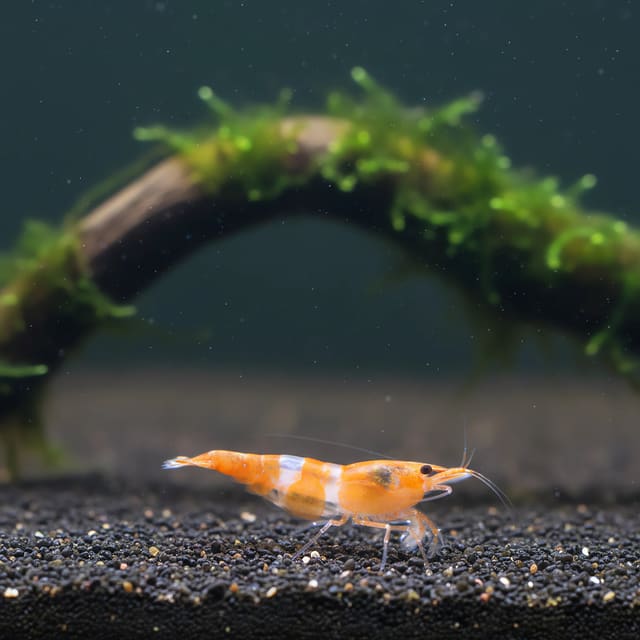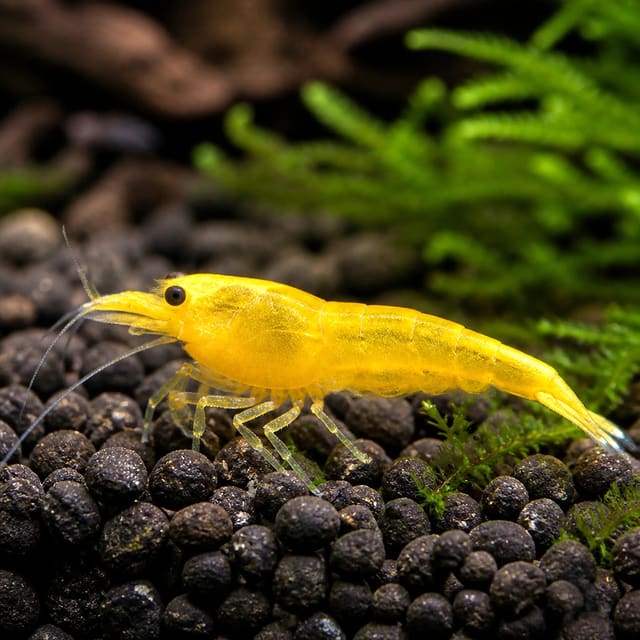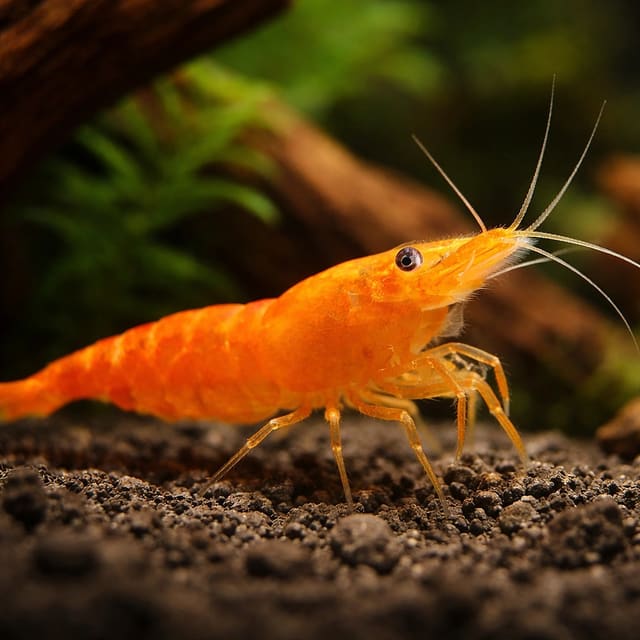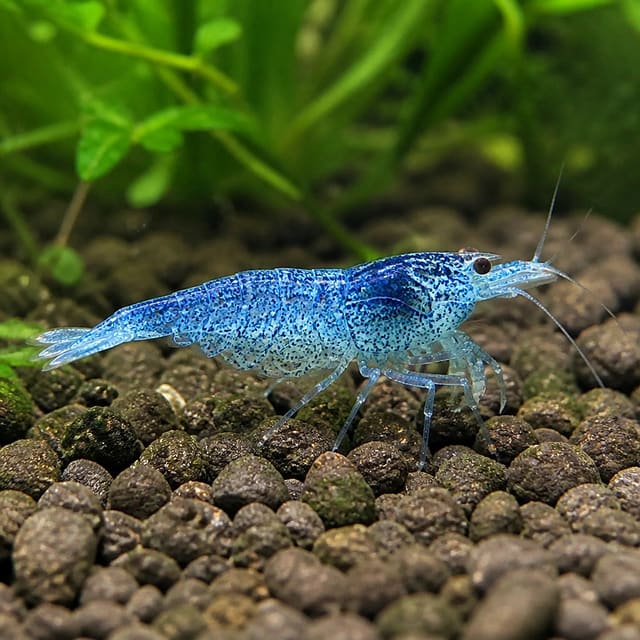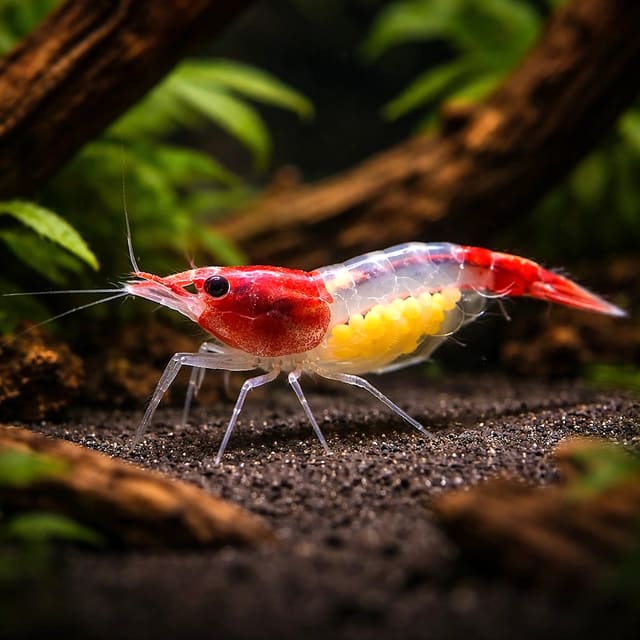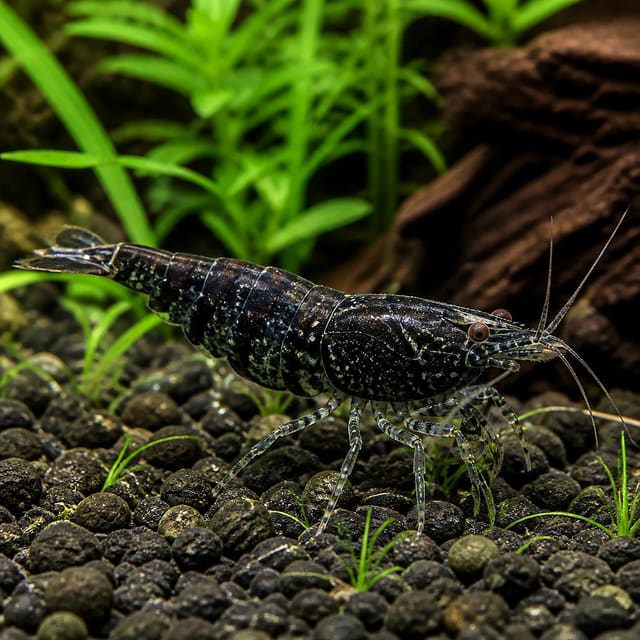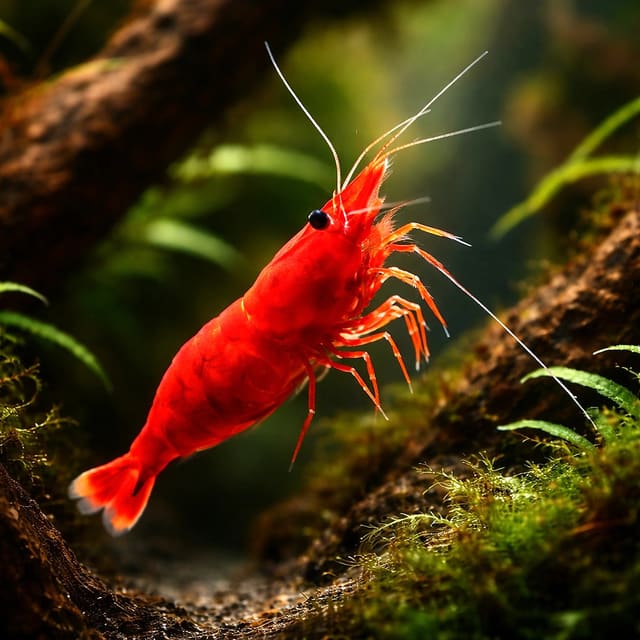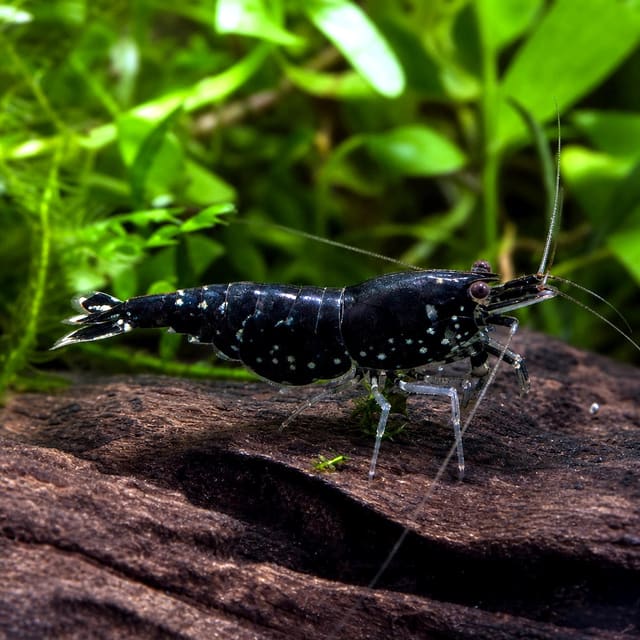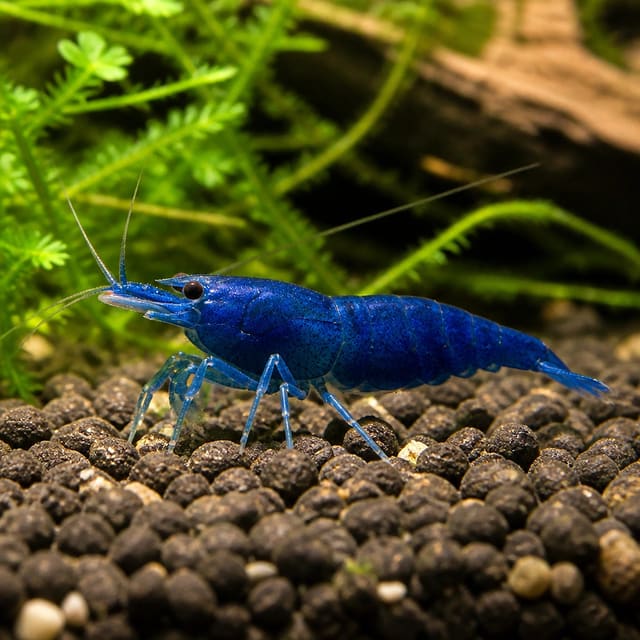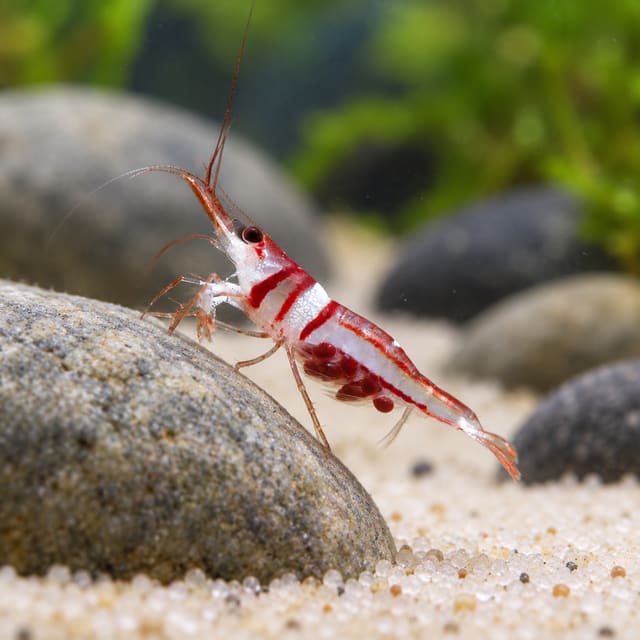
Harlequin Sponge Shrimp (Caridina spongicola)
17–27°C · pH 6.5–8
£32.99

The Assorted Cherry Shrimp (Neocaridina davidi) is a freshwater shrimp in the Atyidae family from Taiwan, east of China, the Korean Peninsula and Vietnam that reaches approximately 4 cm. It suits intermediate keepers with a mature, filtered aquarium and a group of at least five; OATA's freshwater-shrimp guidance gives 17–27°C and pH 6.5–8.0. Sold as a pack of 10 live shrimp.
Adult size is the maximum length this species reaches at full maturity (scientific sources). The livestock you receive will be younger and smaller. Product-photo provenance and any image-specific limitations are stated on the listing.
Neocaridina davidi
The Assorted Cherry Shrimp (Neocaridina davidi) is a freshwater shrimp in the Atyidae family from Taiwan, east of China, the Korean Peninsula and Vietnam that reaches approximately 4 cm. It suits intermediate keepers with a mature, filtered aquarium and a group of at least five; OATA's freshwater-shrimp guidance gives 17–27°C and pH 6.5–8.0. Sold as a pack of 10 live shrimp.
Adult size is the maximum length this species reaches at full maturity (scientific sources). The livestock you receive will be younger and smaller. Product-photo provenance and any image-specific limitations are stated on the listing.
Use a mature, filtered aquarium and measured water—not a shrimp-per-litre rule. Tropical Fish Co uses 20 litres as a cautious starting policy for a small Cherry Shrimp group, above OATA's general 10-litre screen for small shrimp. Provide established grazing surfaces, cover and a protected filter inlet. No fish is guaranteed shrimplet-safe, and breeding should never be promised.
Maintain these water conditions for optimal health and vibrant colors
The Assorted Cherry Shrimp (Neocaridina davidi) is a small freshwater crustacean in the Atyidae family. WoRMS recognises Neocaridina davidi as the accepted species name. It is native to Taiwan, east of China, the Korean Peninsula and Vietnam, where it inhabits inland lakes, ponds, rivers and streams. Adults reach approximately 4 cm, so plan around that length for each mature shrimp. This group suits an intermediate keeper who can provide established biological filtration, measured water quality, grazing surfaces and careful tank-mate screening.
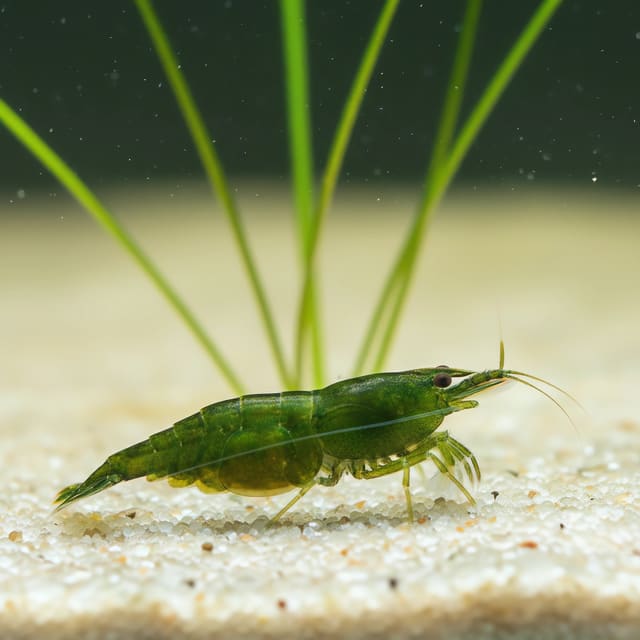
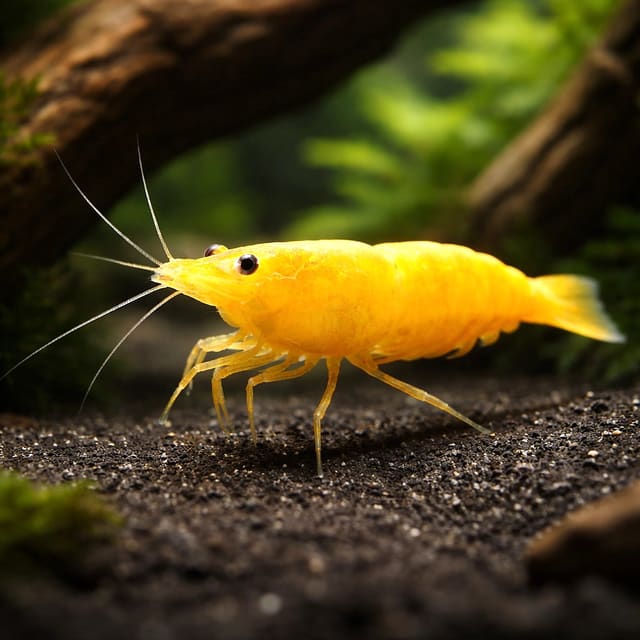
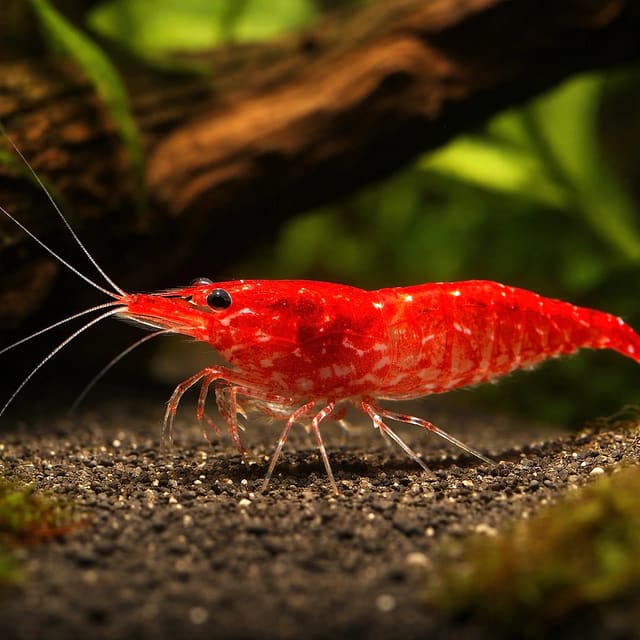
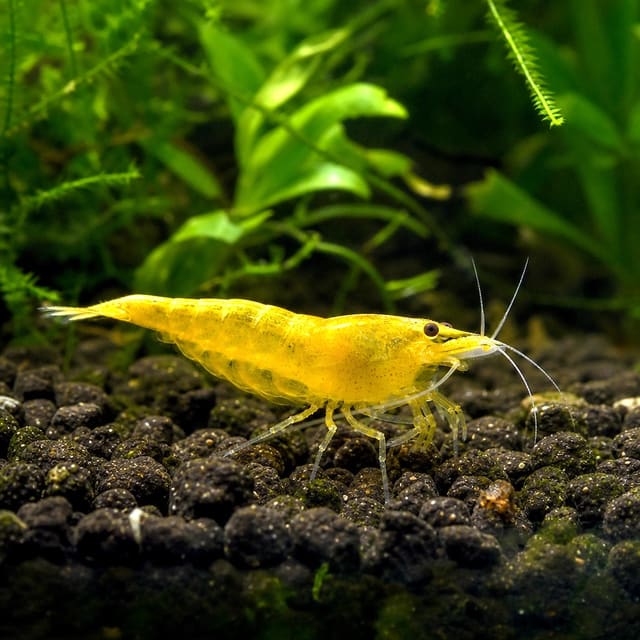
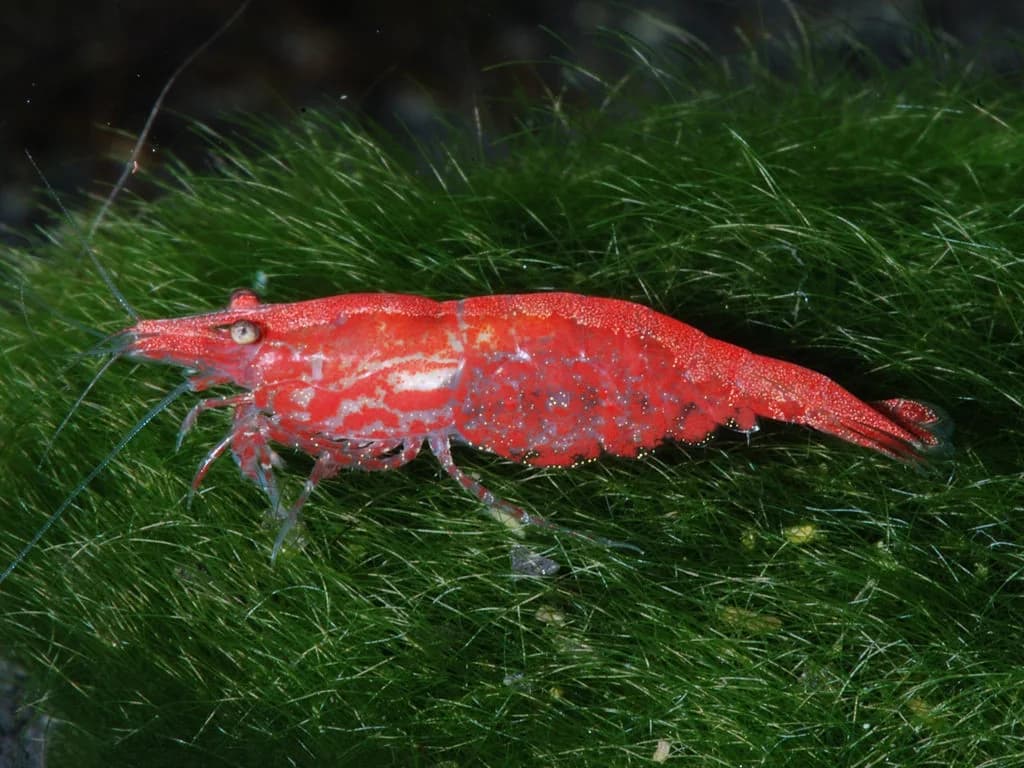
A Wikipedia overview of Neocaridina davidi describes the species as omnivorous. Its wild-type colour is mottled brown, while selective breeding has produced red, orange, yellow, green, blue, violet, white and clear forms. This pack brings together assorted aquarium colours rather than one named colour line.
Keep the shrimp at 17–27°C, pH 6.5–8.0 and 4–18 dGH, with ammonia and nitrite at 0 mg/l. OATA's freshwater-shrimp sheet gives these figures as broad group guidance rather than a species-specific optimum. Keep changes gradual and judge the aquarium by measurements rather than assuming that any tap water or room temperature will suit them.
Use a mature, filtered aquarium starting at 20 litres for this small group. That is Tropical Fish Co's cautious planning policy, above OATA's general 10-litre screen for small shrimp; it is not a permanent shrimp-per-litre formula. Account for substrate, hardscape, equipment, every companion and possible population growth. Keep at least five shrimp together, provide cover and established grazing surfaces, and protect any filter inlet that could trap small shrimp.
One purchase supplies a pack of 10 live assorted Cherry Shrimp. The pack is a colour mix, not ten examples of one fixed strain and not a promise of a particular colour count. Plan feeding access, shelter and filtration for all ten animals from the start rather than treating the group as a single stocking unit.
Sex is guaranteed only when the selected option explicitly states male or female. This 10 × Assorted Cherry Shrimp listing has no sex-guaranteed option.
The gallery images are representative of this type of animal rather than photographs of the exact animal supplied, so colours can look slightly different from the live animal.
A mixed-colour group works best for a keeper whose priority is varied appearance and shrimp behaviour. It is not the right starting point when preserving one named colour line is the aim, because the colour mix does not promise that later generations will retain a particular appearance. The absence of a promised sex ratio also means the pack must not be treated as a guaranteed breeding group.
| Suits | Not suited to |
|---|---|
| A mature, filtered aquarium starting at 20 litres | An immature or untested aquarium |
| A keeper prepared to test ammonia and nitrite | A setup relying on appearance instead of water tests |
| A social shrimp group of at least five | Planning to keep the shrimp alone |
| An aquarium with cover, grazing surfaces and a protected intake | A bare setup without shelter or safe filtration |
| A carefully screened peaceful community or shrimp-only aquarium | Fish that can swallow shrimp or species known to be predatory |
| A keeper who wants assorted colours | A project requiring one guaranteed colour line or sex ratio |
The pack of ten already exceeds OATA's group figure of at least five, but group size is only one part of the decision. Confirm that the filter is mature, ammonia and nitrite measure zero, the aquarium can remain within the planned temperature and chemistry ranges, and every shrimp can reach shelter and food. With fish or other livestock, increase space according to the complete adult community rather than applying a shrimp-per-litre shortcut.
Plan for each shrimp to reach approximately 4 cm. Size the aquarium, feeding access and equipment safety for that adult length from the start. Plan every companion, filter guard and feeding area around shrimp of that adult length.
Start with a mature, filtered 20-litre aquarium for the pack, then increase the plan for fish, other livestock or population growth. Our complete Cherry Shrimp care guide explains why 20 litres is a cautious house policy rather than a biological minimum. OATA's lower 10-litre figure is a general screen for a group of small shrimp. Neither figure supports a permanent number of shrimp per litre.
A larger water volume generally gives more room for equipment, feeding and gradual change, but volume cannot compensate for an immature filter or poor testing. A 20-litre aquarium with measurable ammonia is not ready, while a larger aquarium still needs established biological filtration and protected intakes.
Use footprint as well as litres when comparing aquariums. Shrimp graze and feed on surfaces, so wood, plants, rock and accessible substrate all contribute useful area. Keep some routes open for inspection and maintenance. Dense cover should not prevent you from checking the filter inlet, finding recurring uneaten food or seeing whether all ten shrimp can reach feeding areas.
Keep the aquarium at 17–27°C, pH 6.5–8.0 and 4–18 dGH. Maintain carbonate hardness within 3–15 dKH, ammonia at 0 mg/l and nitrite at 0 mg/l. Nitrate should not exceed 20 mg/l above the normal tap-water level. These figures come from OATA's freshwater shrimp and snail guidance.
Choose stable values within those ranges and avoid abrupt changes. A reading inside the range is only useful when ammonia and nitrite are also zero, the temperature is steady and recent maintenance has not caused a sudden chemistry shift. Use the same tests consistently so trends are easier to recognise.
| Reading | Decision |
|---|---|
| Temperature 17–27°C | Keep it stable; use a heater only when the measured aquarium cannot remain within the chosen range. |
| pH 6.5–8.0 | Record the normal value and investigate a sudden shift before adding livestock. |
| General hardness 4–18 dGH | Test the aquarium itself because substrate, rock, top-ups and treatment can alter the result. |
| Ammonia or nitrite above 0 mg/l | Pause livestock additions and address filtration and water quality. |
| Rising nitrate | Review feeding, stocking and the maintenance routine before it exceeds the advised limit. |
UK tap-water chemistry varies, so test rather than relying on a postcode or a description such as hard or soft. Our guide to understanding aquarium water values explains what each measurement means, while the water matcher helps compare measured aquarium values with the planned range.
Do not chase a reading by changing several things together. If a value moves unexpectedly, check the test procedure, temperature, recent top-ups, water changes, substrate, rock and treatments. Correct the cause gradually and remeasure. This approach is safer than repeatedly adjusting pH or hardness without knowing why it changed.
Use a mature biological filter and confirm ammonia and nitrite remain at 0 mg/l before adding the pack. Maturity is a measured biological condition, not a fixed number of days. The filter must contain enough beneficial bacteria to process the planned waste load, and the aquarium must remain stable when fed and maintained.
The RSPCA explains the role of biological filtration: bacteria convert toxic ammonia to nitrite and then to the safer nitrate. OATA's freshwater aquarium setup guidance also supports cycling, regular testing and gradual stocking. Use the test results, not the aquarium's age or appearance, to decide whether it is ready.
Biofilm helps create established grazing surfaces, but it does not replace a complete feeding plan or water testing. An aquarium can look mature while still producing ammonia or nitrite. Likewise, clear water can contain harmful dissolved waste, so visual clarity is not a substitute for measurements.
Add livestock gradually whenever a community is being built. Every increase in animals and feeding requires the biological filter to process more waste. Before increasing the load, confirm that ammonia and nitrite remain zero and that the existing inhabitants feed and behave normally. Our guide to preparing and maturing a shrimp aquarium gives a practical setup sequence for the period before livestock arrives.
Use an appropriate complete sinking shrimp food as the nutritional base, then provide suitable variety according to the food manufacturer's directions and the needs of the whole community. Neocaridina davidi is omnivorous and will graze biofilm and some soft growth, but natural grazing alone is not a complete household feeding plan.
Offer a portion that all ten shrimp can reach without leaving recurring excess to decay. Food must remain accessible long enough for shrimp to gather and feed, but any repeated leftovers mean the next portion should be reduced. Uneaten food breaks down into waste, so feeding decisions must be tied to ammonia, nitrite and nitrate trends.
Spread food across more than one accessible point when competition prevents part of the group from feeding. Keep each point visible enough to check for leftovers. Hiding food deep in inaccessible hardscape makes it difficult to distinguish grazing from accumulating waste.
Do not judge nutrition from colour intensity alone. This is an assorted-colour pack, and inherited colour, lighting, substrate, stress, health and image processing can all alter how a shrimp appears. A pale-looking individual does not automatically need colour-enhancing food. Check behaviour, feeding access, body condition and measured water quality together.
Grazing on established surfaces does not show that the aquarium contains enough balanced nutrition. Established surfaces support natural browsing between meals; complete shrimp food supplies the nutritional base. Keep the two roles separate when adjusting the routine.
Carry out a 25% partial water change at least once every week. Test ammonia and nitrite at least weekly, monitor nitrate, and treat replacement tap water with a conditioner that removes chlorine or chloramine before adding it to the aquarium. Match the replacement water carefully enough to avoid an abrupt temperature or chemistry change.
Use a siphon where practical to remove solid waste from accessible substrate. Do not strip every surface clean at the same time: the aim is to remove accumulating waste while preserving useful grazing areas and a stable biological system. Check beneath feeding points, around hardscape edges and near the filter intake, where excess food or debris can gather.
Clean the media only by that light rinse, so fewer beneficial bacteria are lost. The established bacterial population is part of the aquarium's waste-processing capacity. After any substantial maintenance, recheck ammonia and nitrite and observe the group rather than assuming that clear water means the system is stable.
Use a simple weekly record for temperature, pH, hardness where relevant, ammonia, nitrite, nitrate and the amount of food repeatedly left behind. A sequence of readings is more useful than one isolated number. For example, nitrate rising each week while ammonia and nitrite remain zero points towards reviewing feeding, stocking and water-change effectiveness; detectable ammonia or nitrite calls for an immediate review of filtration and livestock load.
Change one manageable factor at a time wherever animal welfare allows. If feeding, filter cleaning, water chemistry and decor are all altered together, the cause of a later change becomes difficult to identify. A steady routine makes unusual behaviour or test results easier to recognise.
Check temperature, ammonia and nitrite immediately when behaviour, feeding or appearance changes. Then review nitrate, pH and hardness in context, inspect filtration and heating, and consider recent maintenance, new livestock, plants, decor, aerosols, foods and treatments. Compare the affected shrimp with the rest of the group before changing several parts of the aquarium.
| What you notice | What to do |
|---|---|
| Unusual inactivity, restlessness or swimming | Test water and inspect temperature, flow and equipment. |
| A marked change from the shrimp's normal colour | Check water, stressors and recent additions rather than treating colour alone. |
| More hiding than normal | Check companions, cover, water quality and whether moulting may be involved. |
| Changed breathing rate or effort, or more time spent in areas with higher oxygen levels | Inspect filtration, aeration and water-test results promptly. |
| White spots, lesions, abnormal growths, exoskeleton damage or lost appendages | Record clear observations and seek suitably qualified veterinary help when signs persist or are severe. |
| Reduced feeding or abnormal swelling | Review food, water quality and the condition of the whole group. |
An empty exoskeleton can resemble a dead shrimp, and hiding may accompany moulting. Neither observation alone identifies a health problem. Check whether the shell is hollow, locate the animals where possible and assess the aquarium before reaching a conclusion.
Protect these invertebrates from copper. Freshwater shrimp are very sensitive to copper and will die if exposed even to low levels. Read the complete current label and every invertebrate warning before adding any medicine or treatment. Do not use a product unless its exact instructions are compatible with shrimp.
A white mark or changed behaviour does not identify one disease or justify automatic medication. Prioritise measurements and equipment checks, record what changed and avoid combining treatments. Seek suitably qualified aquatic or veterinary help when signs persist or are severe, taking your recorded observations and water readings with you.
Arrange for someone to receive the parcel in person, then follow the current Tropical Fish Co delivery and Live Arrival Guarantee policy. The shrimp are hand-bagged in pure oxygen and placed in an insulated poly box, with a heat pack when the weather calls for it. A licensed live-animal courier carries the parcel.
Before delivery day, confirm that the aquarium is mature and filtered, with ammonia and nitrite at zero and temperature inside the planned 17–27°C range.
After release, observe whether the shrimp can reach cover and settle onto established surfaces. Keep the planned routine steady instead of making several immediate changes to food, decor and water chemistry. Acclimatise gradually, then add any further livestock slowly once the shrimp have settled.
For a claim, the continuous recording must begin with the parcel still sealed, show it being opened and show the animals still inside the sealed bag. Contact us the same day with the order number and video if an arrival problem has occurred.
Avoid fish that can fit these shrimp in their mouth and avoid species known to be predatory. OATA gives both restrictions for freshwater shrimp. No fish is guaranteed safe with these shrimp, and newly hatched shrimplets face even greater risk, so decide whether the goal is an attractive mixed display or the greatest possible juvenile survival.
The Tropical Fish Co guide assesses Cherry Shrimp as peaceful. They are peaceful, but their own temperament does not remove the risk posed by a companion. Screen the complete adult community rather than relying on a broad peaceful label.
A shrimp-only aquarium removes fish predation, but it does not remove risks from water quality, food, crowding, equipment or treatments. Continue to protect intakes, test water and provide feeding access. If juveniles are a priority, dense usable cover and the absence of fish reduce one major risk without guaranteeing colony growth.
Do not use body size at purchase to predict a companion's adult mouth size or behaviour. Plan with the adult community and allow enough space for every animal after growth. Watch actual feeding and shelter access after introduction, because a pairing that shares water values may still create competition.
Before choosing companions, write down the aquarium's volume, measured water values, adult companion list and your aim for the shrimp. Those details allow a decision based on mouth size, predation, chemistry, feeding and cover rather than a universal tank-mate list.
Treat this as an assorted display group rather than a guaranteed breeding project. The pack contains ten mixed-colour Neocaridina davidi, but its sex ratio is not promised. A particular pair, egg count, incubation time or rate of colony growth must not be assumed.
Females of this species carry eggs externally beneath the abdomen, and young hatch as benthic juveniles rather than passing through the prolonged saline planktonic stage associated with Amano Shrimp. That biology allows reproduction in freshwater, but it does not promise that this pack will breed or that juveniles will survive.
| Your aim | Planning decision |
|---|---|
| Assorted-colour display | Provide the mature 20-litre starting plan, at least five shrimp, cover and feeding access for all ten. |
| Preserve one named colour | Use a separately confirmed single-colour line rather than assuming a mixed pack will breed true. |
| Maximise juvenile survival | Use protected intakes, dense usable cover and a shrimp-only aquarium to remove fish predation. |
| Mixed community | Screen adult mouth size, predation, territory, water overlap and feeding competition. |
If juveniles appear, reassess real water volume, grazing area, feeding access, filter capacity and maintenance rather than applying a fixed shrimp-per-litre ratio. Increase feeding only from observation and test trends; adding food without checking leftovers and waste can damage water quality.
Mixed colours may produce young whose appearance differs from the adults. Selective breeding created many aquarium colour forms, while the wild-type species is mottled brown. Do not interpret a later colour change as proof of illness without checking the individual's normal appearance, behaviour, feeding and water quality.
Keep a separation plan for compatibility problems or a project whose goals change. An aquarium planned for a mixed display may not serve a later single-line breeding aim, and a community built around adult coexistence may not protect tiny juveniles. Decide which outcome matters before choosing companions.
They reach approximately 4 cm at maturity. Plan the aquarium, filter protection, feeding access and companions around that adult length rather than the size on arrival.
Neocaridina davidi should start in a mature, filtered aquarium of 20 litres under Tropical Fish Co's cautious policy, then move to a larger plan for companions or population growth; this is not a shrimp-per-litre formula.
OATA's freshwater-shrimp guidance says to keep social shrimp in groups of at least five. This pack contains ten, so provide shelter, grazing area and feeding access for the whole group.
We assess them as intermediate because they require a mature filter, measured zero ammonia and nitrite, gradual change, protected intakes, appropriate food and careful screening of every tank mate.
They are omnivorous grazers. Use an appropriate complete sinking shrimp food as the nutritional base, provide suitable variety according to the manufacturer and remove recurring excess before it decays.
Keep it at 17–27°C, pH 6.5–8.0 and 4–18 dGH. OATA gives these as broad freshwater-shrimp guidance, with ammonia and nitrite at 0 mg/l.
It is a peaceful shrimp. Compatibility still depends on whether companions may swallow or hunt the shrimp, compete for food or require different water.
Avoid fish able to fit the shrimp in their mouth and species known to be predatory. Screen every other pairing for adult mouth size, hunting, territory, feeding competition and shared water requirements; no fish is guaranteed shrimplet-safe.
Tropical Fish Co's policy uses pure-oxygen bags, an insulated poly box, a heat pack when weather calls for it and a licensed live-animal courier. Receive the parcel in person, film continuously from the sealed parcel, and float the bag for 20–30 minutes before releasing.
No reviews for this item yet. Bought one? Honest reviews only, good or bad.
What customers say about ordering from us
I have a small group of long finned mountain minnows. So was delighted to be able to order ten of this variety to increase the genetics in my tank . The ones I recieved are healthy but it’s to early to give a verdict on wether they are of a long finned type since they are small currently.
Gordon Walker · 23 Sept 2026
100% success travel and "installation". Pleased with quality of purchase. The Siamese fighter a bit "shy" so have not yet seen him at his best yet but looking good. Happy customer. GG
George E Garratt · 21 Sept 2026
Reviews of our shop, collected by Judge.me, an independent third-party review collector. Newest first.