Easy
Blue Dream Shrimp (Neocaridina davidi)
18–28°C · pH 6.5–8 · 20L
£16.19
Neocaridina davidi blue tar striped is a colour form of a freshwater atyid shrimp native to Taiwan, east of China, the Korean Peninsula and Vietnam, and reaches 4 cm. It suits keepers with a mature, filtered aquarium; OATA's freshwater-shrimp guidance gives groups of at least five, 17–27°C and pH 6.5–8.0. Sold individually.
Adult size is the maximum length this species reaches at full maturity (scientific sources). The livestock you receive will be younger and smaller. Product-photo provenance and any image-specific limitations are stated on the listing.
Neocaridina davidi
Lives in groups: kept together they stay settled, active and show their best colour.
Neocaridina davidi blue tar striped is a colour form of a freshwater atyid shrimp native to Taiwan, east of China, the Korean Peninsula and Vietnam, and reaches 4 cm. It suits keepers with a mature, filtered aquarium; OATA's freshwater-shrimp guidance gives groups of at least five, 17–27°C and pH 6.5–8.0. Sold individually.
Adult size is the maximum length this species reaches at full maturity (scientific sources). The livestock you receive will be younger and smaller. Product-photo provenance and any image-specific limitations are stated on the listing.
Use a mature, filtered aquarium and measured water—not a shrimp-per-litre rule. Tropical Fish Co uses 20 litres as a cautious starting policy for a small Cherry Shrimp group, above OATA's general 10-litre screen for small shrimp. Provide established grazing surfaces, cover and a protected filter inlet. No fish is guaranteed shrimplet-safe, and breeding should never be promised.
Maintain these water conditions for optimal health and vibrant colors
The blue tar striped shrimp (Neocaridina davidi) is a small freshwater crustacean in the family Atyidae. It is native to Taiwan, east of China, the Korean Peninsula and Vietnam, where the species inhabits lakes, ponds, rivers and streams. Plan for an adult length of 4 cm. This shrimp suits a keeper who can provide a mature, filtered aquarium, measure water quality and make changes gradually; its store care assessment is intermediate.
WoRMS recognises Neocaridina davidi as the accepted species in Atyidae. “Blue tar striped” identifies the aquarium colour and pattern rather than a separate species. Wikipedia describes the species' East Asian distribution, freshwater habitats and omnivorous natural diet. Mature shrimp reach up to about 4 cm, so choose cover, feeding points and companions for fully grown animals.
Keep the aquarium at 17–27°C, pH 6.5–8.0 and 4–18 dGH, with ammonia and nitrite at zero. OATA's freshwater-shrimp guidance gives these broad group planning values and says social shrimp should generally be kept in groups of at least five. Choose a stable point within the ranges instead of allowing the aquarium to swing between their limits.
Start with a mature, filtered 20-litre aquarium for a small group under Tropical Fish Co's cautious planning policy. Add more space when fish or other livestock share the system. Established grazing surfaces, cover and a protected filter intake are more useful than trying to calculate a permanent number of shrimp per litre.
| Suits | Not suited to |
|---|---|
| Mature, filtered aquariums with measured water | Immature or untested aquariums |
| Groups of at least five | Keeping a single shrimp on its own |
| Stable water within 17–27°C | Systems subject to abrupt temperature or chemistry changes |
| Planted or structured tanks with grazing surfaces | Bare systems without cover or established grazing areas |
| Carefully screened communities | Predatory fish or fish able to swallow the shrimp |
One purchase supplies one blue tar striped shrimp. The dispatch grade is 1–1.5 cm, while 4 cm is the adult planning length; a small arrival still needs an aquarium designed around its mature size, social group and the full community. The animal is sold individually, but plan to keep a group of at least five rather than treating the purchase unit as a care recommendation.
Sex is guaranteed only when the selected option explicitly states male or female. This Neocaridina davidi blue tar striped listing has no sex-guaranteed option.
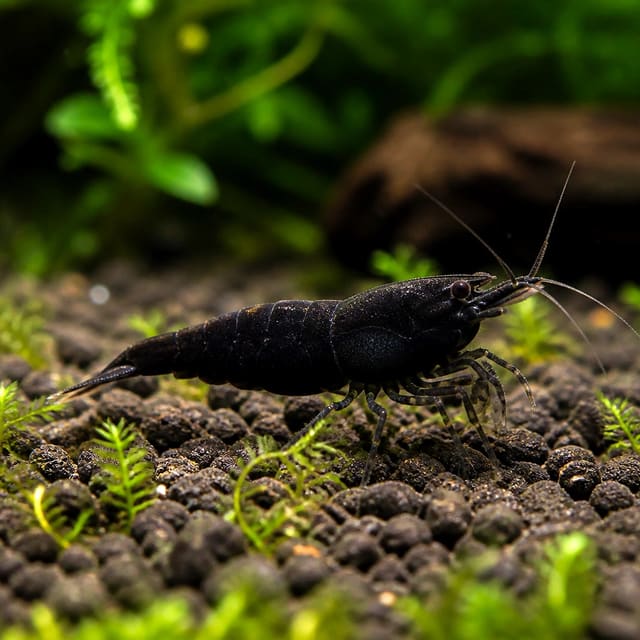
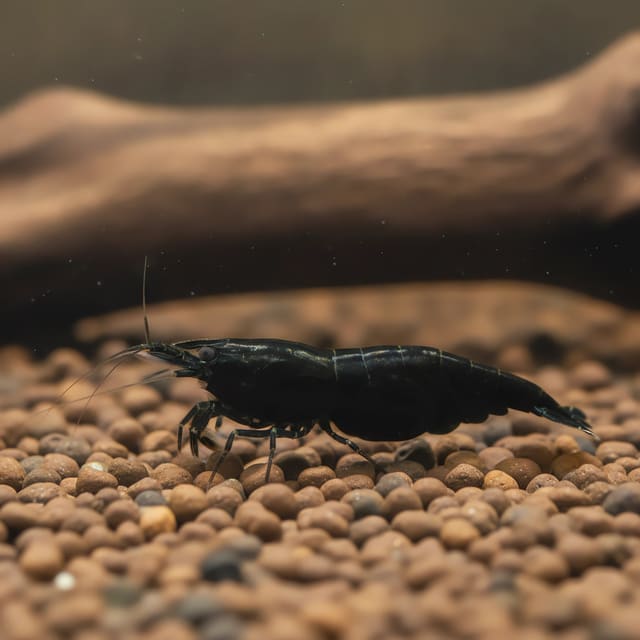
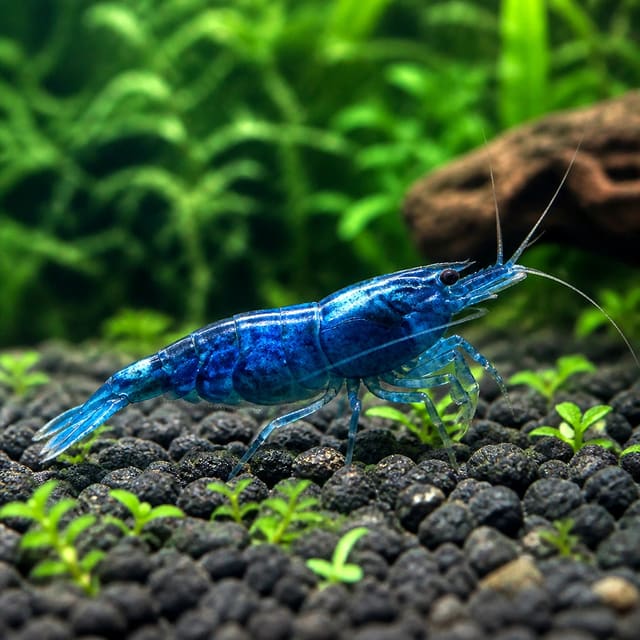
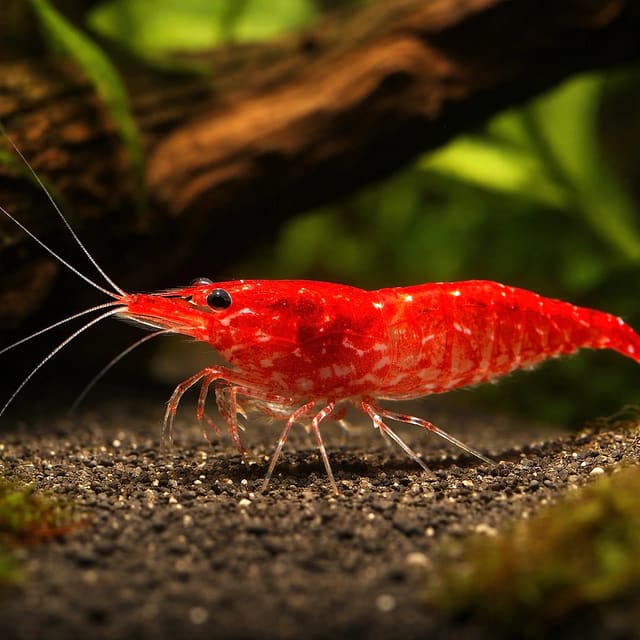
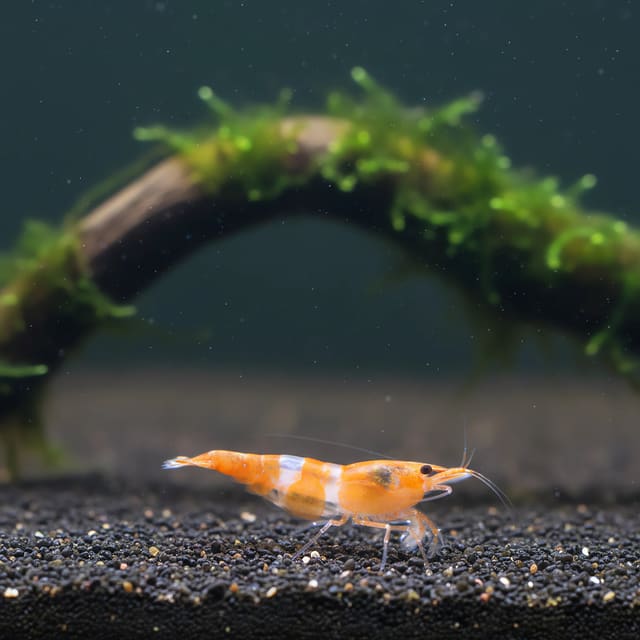
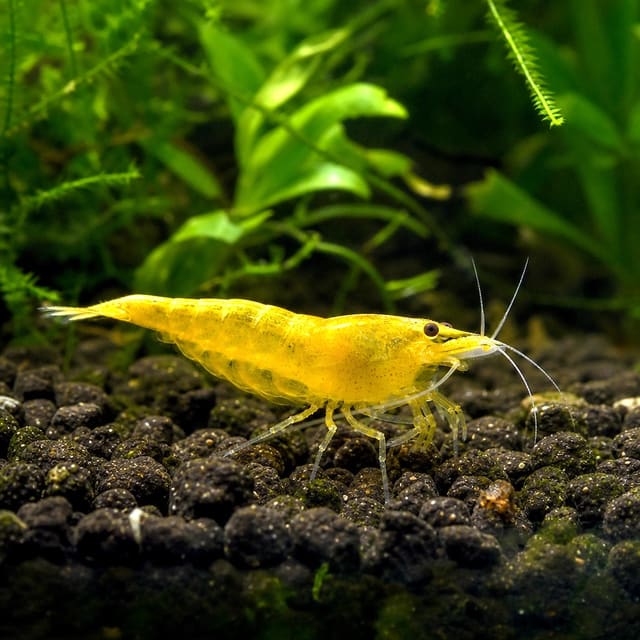
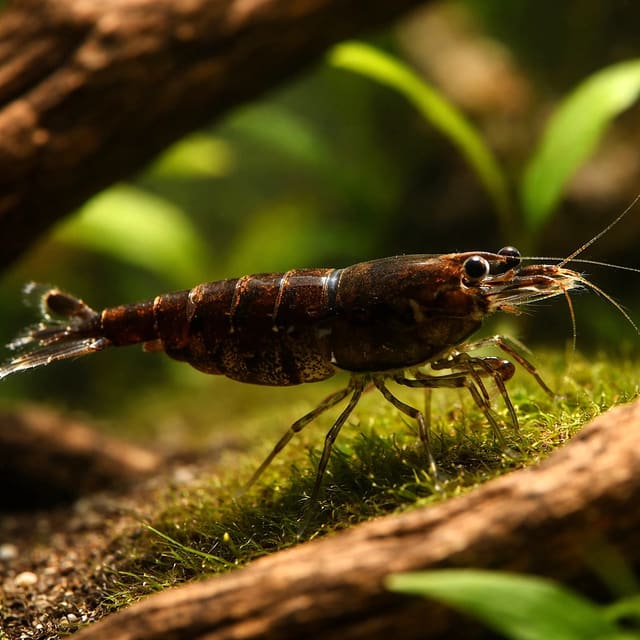
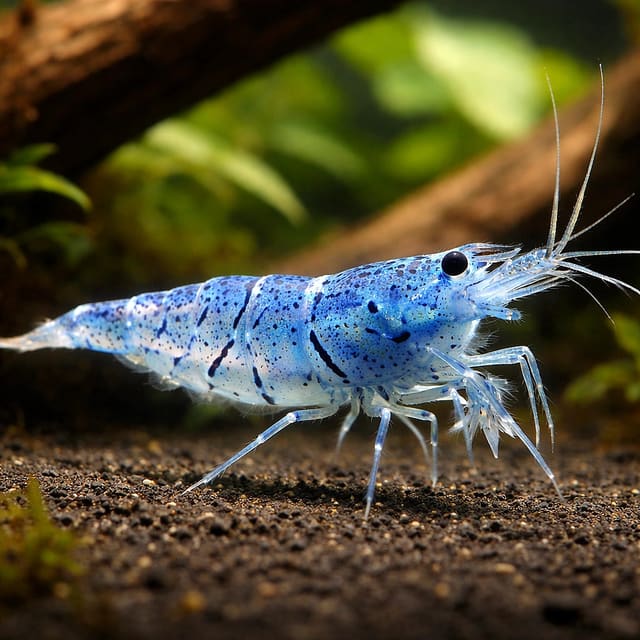
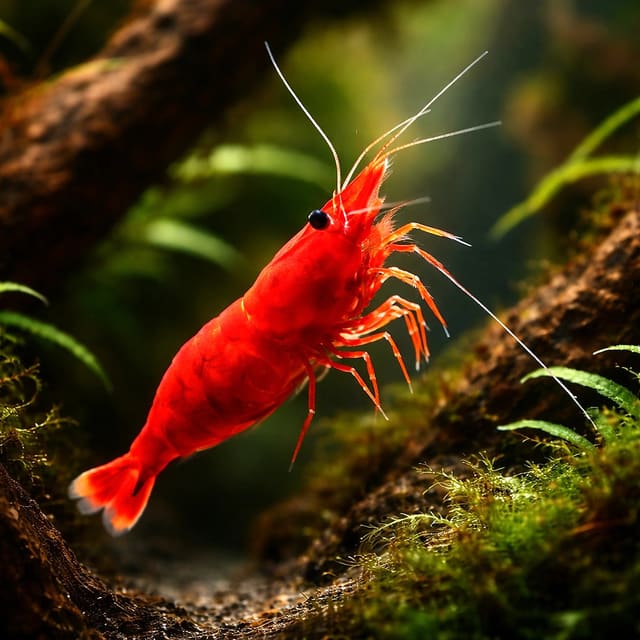
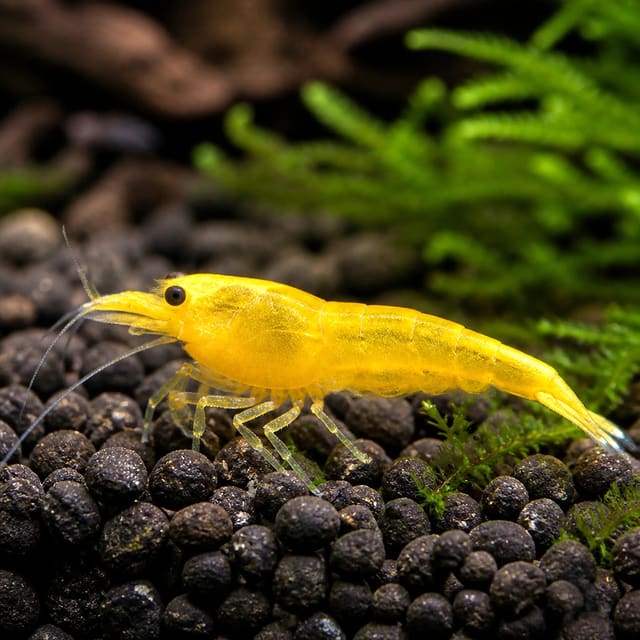
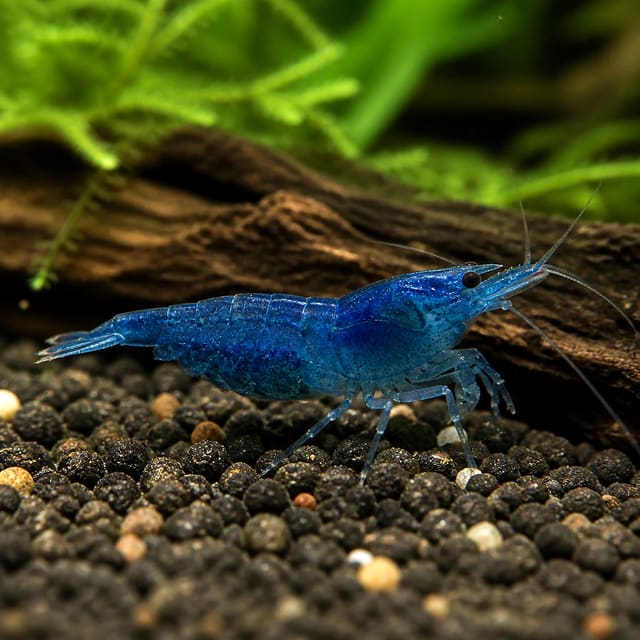
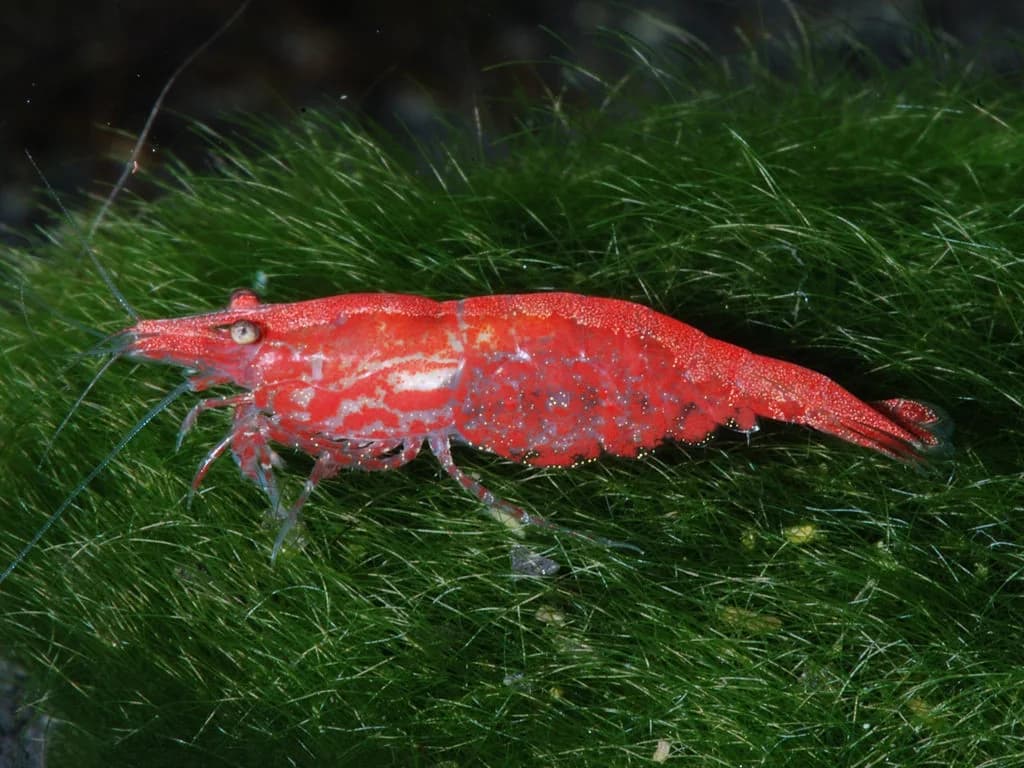
The gallery images are representative of this type of animal rather than photographs of the exact animal supplied, so colours can look slightly different from the live animal.
The name blue tar striped describes a blue colour form with a striped pattern. Colour depth can also look different under different aquarium lighting, backgrounds and plant cover, so identify this offer by the complete form name rather than expecting every individual to match one photographed shade. Plan breeding around the shrimp you receive rather than around the colour name.
Keep the named colour form separate if preserving its appearance matters to you. Mixing colour lines can change what later generations look like, while an unsexed purchase cannot promise a breeding pair or a particular sex ratio. For an overview of related forms, browse the cherry shrimp collection and compare each animal's identity before combining groups.
Use a mature, filtered 20-litre aquarium as the cautious starting point for a small group. Tropical Fish Co places this above OATA's general 10-litre screen for small freshwater shrimp because the extra water and footprint provide more room for equipment, grazing surfaces and routine error. Neither figure is a permanent stocking formula. Increase the plan when fish, snails or other livestock share the aquarium.
Work from the aquarium's real water volume after substrate, wood, rock and equipment have displaced water. A nominal 20-litre tank holding less water after decoration still needs enough open access for maintenance, covered feeding areas and stable filtration. If five shrimp share the aquarium with fish, do not divide 20 litres by five and assume the remaining capacity belongs to the fish. Assess the combined waste, feeding competition, adult companions and possible juvenile survival.
Maturity is demonstrated by biological filtration and measured water, not by a fixed number of days. The OATA freshwater aquarium guidance supports cycling, testing and gradual stocking. Add animals slowly so the filter's bacterial population can adjust to increased waste and feeding.
Use the complete Cherry Shrimp Care Guide to work through filtration, water, feeding and population planning together. The important decision is whether the finished aquarium can remain stable, not whether a simple litre ratio appears to fit.
Provide aquarium-safe plants, wood, rock or other structure that creates sheltered surfaces throughout the aquarium. Shrimp graze across surfaces and retreat among fine cover, so arrange the tank as a connected habitat rather than placing one ornament in an otherwise bare space. Ideally use live plants for cover; if live plants are not used, add plastic plants and suitable ornaments such as plant pots or model caves for shelter.
Use aquarium gravel or sand and keep enough access around the hardscape to inspect the shrimp, siphon debris and reach the filter. Structure should not prevent routine maintenance or create inaccessible pockets where uneaten food repeatedly accumulates. Stability depends on being able to clean selectively without dismantling the entire habitat.
Fit a fine guard or suitable sponge wherever a small shrimp or juvenile could be drawn into an intake. Check that the guard does not clog and reduce flow. A protected intake combines mechanical safety with the biological filtration needed to process waste; it is not a substitute for checking the filter itself.
Biofilm supports natural grazing, but it is not a complete feeding plan and an old-looking aquarium is not automatically a safe one. Water tests must still show zero ammonia and nitrite, and the shrimp still need an appropriate complete food. Visible algae also cannot demonstrate that enough balanced nutrition is reaching every animal.
If you are preparing your first dedicated system, follow the step-by-step advice on how to prepare and mature a shrimp aquarium. Finish the layout, protect the intake and prove the filter before livestock is added; correcting those features afterwards creates unnecessary disturbance.
Keep temperature at 17–27°C, pH at 6.5–8.0 and general hardness at 4–18 dGH. OATA also gives 3–15 dKH for freshwater shrimp and snails. Set a stable target that fits the rest of the aquarium instead of using the endpoints as permission for regular fluctuation.
Ammonia and nitrite must measure zero. Keep nitrate from rising more than 20 mg/l above the normal level in the tap water used for changes. Test the aquarium itself because substrate, rocks, top-ups, livestock and maintenance can alter water after it enters the tank. Our water chemistry guide explains what each reading means and why a value should be considered alongside the others.
The water matcher can organise the measured comparison. Enter actual readings rather than labels such as “soft”, “hard” or “tropical”, because those words do not show the size of a chemistry difference.
Use a heater only when the room and aquarium cannot remain at a stable chosen temperature within 17–27°C. A cool room may require a correctly sized, guarded and thermostatically controlled heater. A warm room needs an overheating plan instead of additional heat. Check actual daily temperatures before deciding, then place equipment so shrimp cannot be trapped or exposed to an unsafe surface.
Do not chase a single reading with abrupt chemical corrections. Recheck an unexpected result, inspect equipment and review recent changes before acting. A steady aquarium within the working ranges is the objective.
Use an appropriate complete sinking shrimp food as the nutritional base. Neocaridina davidi is an omnivore and will graze biofilm and soft growth, but visible algae alone cannot show that every animal receives a balanced diet. Choose food labelled for freshwater shrimp and follow its portion guidance while observing how this particular group feeds.
Following OATA's freshwater shrimp guidance, feed only two or three times a week and leave pellets or wafers for at least 30 minutes so the shrimp can feed. Keep to that frequency and adjust the portion by watching how this group feeds. The aim is for every shrimp to gain access without leaving recurring excess to decay.
Established surfaces provide grazing opportunities between planned feeds. Preserve enough of those surfaces during cleaning, but do not allow the idea of biofilm to justify leaving decaying food or solid waste in place. Food and grazing habitat have different jobs: one provides controlled nutrition, while the other supports natural foraging and distributes access.
Colour is not a reliable feeding gauge by itself. Lighting, substrate, inherited pattern, stress, health and the way an image was produced can all alter how the blue colour and stripes appear. Do not add colour food automatically because one shrimp looks paler. First compare behaviour, food access, water measurements and the rest of the group.
Carry out a partial water change of 25% at least once each week. Treat replacement tap water with a suitable conditioner before it enters the aquarium so chlorine or chloramine does not damage the animals or the biological filter. Match replacement water carefully enough to avoid an abrupt temperature or chemistry change.
Test ammonia and nitrite at least weekly and record the results. Check nitrate, pH, hardness and temperature often enough to detect movement before livestock behaviour changes. A short log is more useful than memory: write down the date, readings, water-change volume, feeding changes and any maintenance carried out.
The RSPCA explains why biological filtration is vital: beneficial bacteria convert toxic ammonia to nitrite and then to the safer nitrate. A filter must therefore remain running, correctly sized and free from blockages while its bacterial media is protected.
Clean enough to control waste while retaining useful established surfaces. Avoid dismantling all hardscape, replacing all media and scrubbing every grazing surface in one session. Stagger necessary work so the aquarium keeps biological stability and the shrimp retain sheltered feeding areas.
A zero ammonia result today does not replace next week's test. If readings begin to move, reduce the immediate load on the system by removing uneaten food, checking flow and confirming that no animal or organic material is decomposing. Then correct the underlying feeding, stocking or maintenance issue. Do not conceal a rising trend by repeatedly changing several variables without recording what was done.
Arrange for someone to receive the parcel so live animals are not left unattended. Our delivery and Live Arrival Guarantee policy explains the current packing, tracking and claim process. Animals are hand-bagged in pure oxygen, placed in an insulated box and packed with a heat pack when the weather calls for one, then carried by a tracked courier licensed for live animals.
OATA's freshwater-shrimp guidance requires ammonia and nitrite to measure zero. Tropical Fish Co's Cherry Shrimp Care Guide advises using a mature aquarium with cover and a protected filter intake; prepare these before the animal arrives.
After introduction, note where the shrimp settles, whether it can reach cover and how it moves compared with the rest of the group. OATA's health checklist advises watching for increased inactivity, restlessness, unusual swimming, stronger hiding, altered colour, abnormal breathing effort, shell damage, swelling and reduced interest in food. A single behaviour must be considered alongside measured water and the behaviour of other animals.
During the first week, keep the normal testing and maintenance routine consistent. If behaviour changes, measure temperature, ammonia and nitrite before altering food, water chemistry or equipment. Recording one change at a time makes it easier to identify whether the issue is water quality, predation, feeding competition or the physical setup.
Measure temperature, ammonia and nitrite immediately when activity, breathing, feeding, colour or appearance changes. Review nitrate, pH and hardness in context, then inspect the filter, intake guard, heating and recent maintenance. A measured sequence is safer than choosing a treatment from one visible sign.
Seek suitably qualified aquatic or veterinary help when signs persist or are severe, or when several animals are affected. Do not diagnose every pale patch, white mark or period of hiding as the same condition. Moulting, stress, injury, water quality and organisms on the shell can create different appearances that require different responses.
Freshwater shrimp are very sensitive to copper and will die if exposed even to low levels. Read the exact current label and every invertebrate warning before any medicine or treatment enters the aquarium. Do not treat a different product, another crustacean or an informal dose as proof that a treatment is safe for shrimp. Add a medicine or treatment only when its label shows it is safe for invertebrates.
Also review aerosols, cleaning products, plant treatments and equipment shared with another aquarium. Dedicated wet equipment can reduce transfer risks. Never use a medicine simply because one symptom resembles an online image, and do not combine products unless their current directions explicitly allow it.
Good records narrow the decision. Keep the water readings, feeding history, recent additions and photographs together. That makes it possible to distinguish a sudden system-wide problem from an issue affecting one shrimp and reduces the temptation to change several conditions at once.
An empty exoskeleton can resemble a dead shrimp, and hiding may accompany moulting. Check the shell carefully and observe the group before concluding that an animal has died. A moult alone is not a diagnosis of health or water chemistry, so use measured conditions and the shrimp's wider behaviour when deciding whether action is needed.
Neocaridina davidi develops directly rather than passing through the prolonged saline planktonic larval phase associated with Amano shrimp. A mature female carries eggs externally beneath the abdomen, and young hatch as benthic juveniles. This biology does not promise that an unsexed purchase contains a female, a male or a productive pair.
A shrimp-only aquarium removes fish predation but does not remove risks from water quality, crowding, equipment or feeding. If preserving the blue tar striped appearance matters, use a single-line aquarium and keep clear records of every animal introduced. Mixed colour forms can produce later generations that do not retain the named appearance.
Never release shrimp, aquarium water, plants or equipment contents into the wild or into a drain that may reach natural water. The species is becoming invasive in thermally polluted waterways in Japan, the United States, Poland and Germany, where released captive shrimp are thought to be the cause. Rehome unwanted animals securely and dispose of water and plant material in a way that prevents escape.
Avoid fish that can fit the shrimp in their mouth and avoid species known to be predatory. OATA warns that freshwater shrimp may be eaten by common aquarium fish, while the Tropical Fish Co guide makes the practical limit clear: no fish is guaranteed safe for tiny shrimplets. A fish that ignores an adult shrimp may still hunt juveniles or a vulnerable newly moulted animal.
The shrimp itself carries a peaceful store temperament assessment. Compatibility still depends on the complete adult community, not a peaceful label alone. Screen every proposed companion for adult mouth size, hunting behaviour, territorial behaviour, feeding speed, shared water requirements and the amount of cover that remains after routine plant trimming.
| Check | Decision |
|---|---|
| Adult mouth size | Do not combine the animals if the fish can swallow the shrimp. |
| Predatory behaviour | Avoid species known to hunt shrimp or similar invertebrates. |
| Water overlap | Both animals must remain within 17–27°C and the chosen pH and hardness. |
| Feeding competition | Shrimp must be able to reach complete food without fish taking every portion. |
| Territory and cover | Retain connected refuges that fish cannot control continuously. |
| Juvenile goal | Choose a shrimp-only aquarium when maximising shrimplet survival is the priority. |
Observe the actual animals after introduction because individual behaviour can change with maturity, territory and feeding conditions. Have a separation plan ready before combining them. Waiting until repeated hunting occurs can leave too little time to protect a small shrimp.
Do not interpret plants or caves as a guarantee. Cover reduces exposure only when shrimp can reach it, fish cannot dominate every entrance and maintenance does not remove it. A screened community may work for an adult display, while a shrimp-only setup gives greater control where juvenile survival matters.
Decide whether the aquarium's main goal is a mixed display, a blue colour line or maximum juvenile survival. Each goal changes the acceptable risk. A mixed display requires screening fish and accepting that even apparently peaceful companions may take shrimplets. A shrimp-focused aquarium removes that fish-predation pathway and makes food access easier to observe.
Use a shrimp-only aquarium with mature filtration, established grazing surfaces and controlled feeding. This removes fish predation, but water quality, equipment safety, food access and population growth still require active management. A shrimp-only label does not make an overfed or immature aquarium safe.
Snails and other invertebrates still add waste and may compete at food, so include them in the volume and feeding assessment rather than treating them as neutral additions. When any new animal is proposed, repeat the same adult-size, water-overlap, feeding and behaviour screen. Compatibility is a property of the complete aquarium and its goal, not a permanent list attached to one shrimp.
Plan for an adult length of 4 cm so the aquarium suits fully grown shrimp.
Tropical Fish Co uses a mature, filtered 20-litre aquarium as a cautious starting policy for a small group; plan larger when fish or other livestock share it.
OATA's freshwater-shrimp guidance says social shrimp should generally be kept in groups of at least five.
It has an intermediate store care assessment because the keeper must maintain mature filtration, measured zero ammonia and nitrite, gradual changes and controlled feeding.
It is an omnivore that grazes; use an appropriate complete sinking shrimp food as the nutritional base, allow access to established biofilm and remove recurring excess.
OATA's freshwater-shrimp guidance gives 17–27°C, pH 6.5–8.0 and 4–18 dGH as broad group planning values; keep the chosen conditions stable.
The Tropical Fish Co guide assesses it as peaceful; still screen companions for predation, territorial behaviour and feeding competition.
Fish can be considered only when their adult mouths cannot take the shrimp and they are not predatory; a shrimp-only aquarium removes fish predation risk.
It is hand-bagged in pure oxygen, packed in an insulated box with a heat pack when weather calls for it, and carried by a tracked, licensed live-animal courier.
No reviews for this item yet. Bought one? Honest reviews only, good or bad.
What customers say about ordering from us
Easy website plenty of info on fish your buying great to pick a time slot
TRACEY DURRANT · 7 Oct 2026
Got some lovely fish thank you
Kevin Mackie · 7 Oct 2026
Reviews of our shop, collected by Judge.me, an independent third-party review collector. Newest first.