−14%
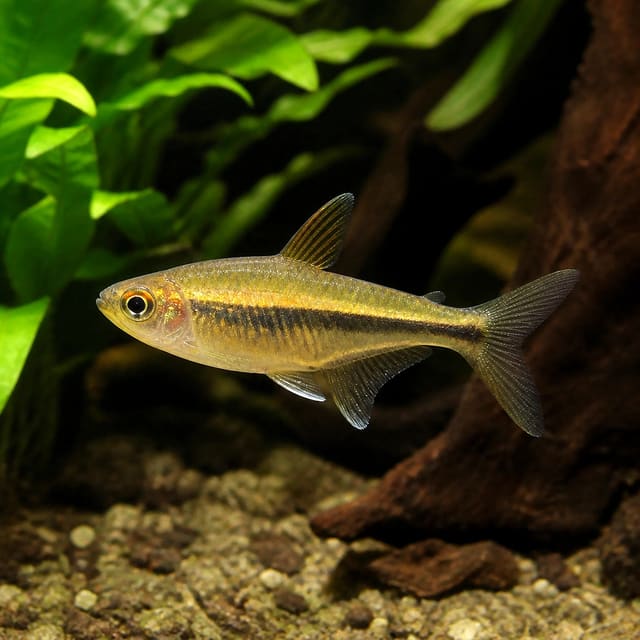
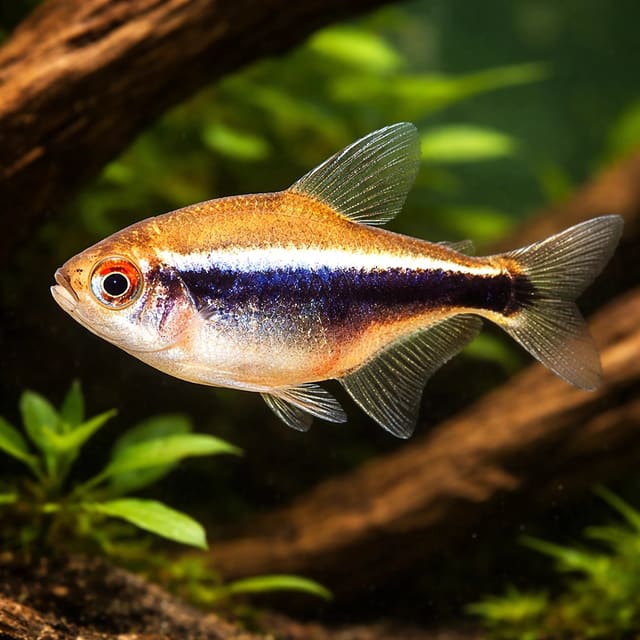
Black Neon Tetra (Hyphessobrycon herbertaxelrodi)
20–28°C · pH 5–7.5 · 72L
£2.57£2.99

The Super Blue Emperor Tetra is a small Brazilian Inpaichthys kerri colour line for a mature aquarium with a proper social group, steady water and peaceful companions. One purchase supplies one unsexed fish in the chosen size.
Inpaichthys kerri
Shoaling fish: kept in a group they feel safer, stay calmer and show their best colour.
Minimum of 2 per order.
The Super Blue Emperor Tetra is a small Brazilian Inpaichthys kerri colour line for a mature aquarium with a proper social group, steady water and peaceful companions. One purchase supplies one unsexed fish in the chosen size.
Maintain these water conditions for optimal health and vibrant colors
| Good fit | A mature aquarium with a 60 × 38 cm or larger footprint, a group of at least six and calm companions. |
|---|---|
| Reconsider if | The fish would be kept alone, with large predators or in unstable water. |
| Sold unit | One unsexed fish in the chosen size. |
The Super Blue Emperor Tetra offered here is Inpaichthys kerri, a small Brazilian tetra also called the Royal Tetra, Blue Emperor Tetra or Purple Emperor Tetra. “Super Blue” is the supplier's colour-line wording, not part of the scientific binomial. This fish should not be confused with the different Emperor Tetra, Nematobrycon palmeri, simply because both common names contain the word emperor.
One purchase supplies one live, unsexed fish in the size you choose. Sex is guaranteed only when the selected option explicitly states male or female. This Super Blue Emperor Tetra listing has no sex-guaranteed option. The four live size choices are 2–2.5 cm, 2.5–3 cm, 3–3.5 cm and over 3.8 cm. The size you select is the size supplied, not the adult size. These are practical dispatch grades, and the open-ended “over 3.8 cm” option has not been turned into a false upper limit.
FishBase records a maximum of 2.8 cm standard length for a male or unsexed specimen. Seriously Fish gives 35 mm standard length for the species. Standard length ends at the base of the tail, so a supplied or visually measured total length can be greater without contradicting that record. Keep the measurement type attached to the number and do not describe a dispatch grade as the final size of every fish.
This is a social species rather than a single display fish. FishBase advises a group of five or more, while the specialist profile says it fares best in a group and that keeping around six helps keep display and aggression among its own kind. A practical recommendation is six or more. A larger group can be rewarding only when aquarium footprint, filtration and total stocking genuinely support it.
Seriously Fish gives a 60 × 38 cm base, roughly 68 litres, for a small group. Treat that as a species-specific starting point, not a target to pack tightly. The group also needs open midwater swimming room, planted or wooded refuge, gentle to moderate circulation and stable water. OATA's broader tetra guidance starts at 45 litres for a small shoal of a smaller species, but the more specific 60 × 38 cm / 68-litre profile is the better guide for this fish.
Tropical Fish Co rates the Super Blue Emperor Tetra as intermediate. It is peaceful and accepts common aquarium foods, but the keeper still needs a mature filter, a real group, stable warm water and calm companions. A first-time keeper can succeed after preparing the aquarium properly; the first tropical tank guide helps with cycling and setup before livestock arrives.
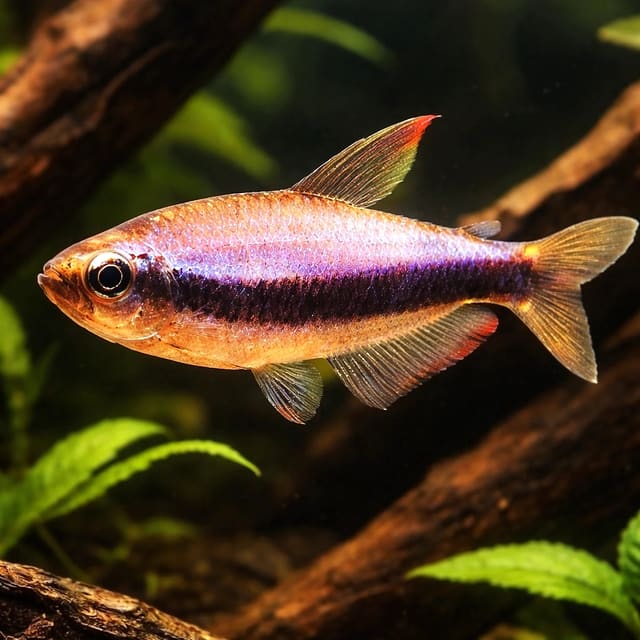
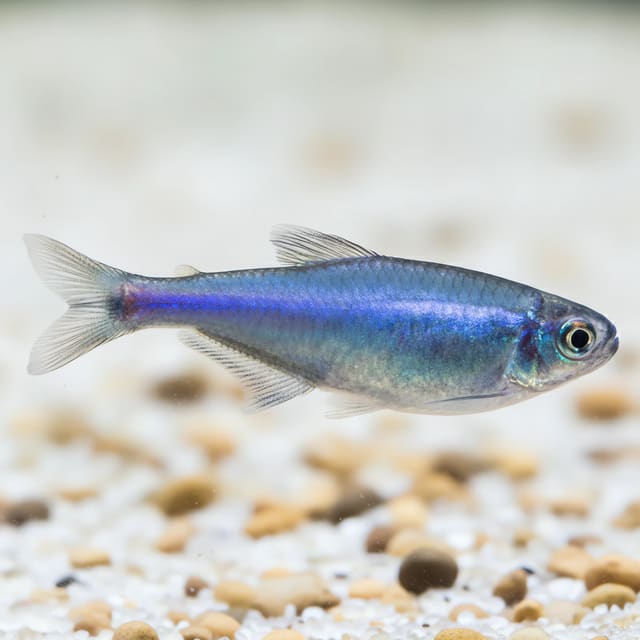
The gallery currently contains one side-view photograph of a blue fish in an aquarium. Gallery images have been digitally enhanced to improve image quality. Natural colour, pattern, size and maturity can vary between live animals. Blue and violet sheen changes with angle, lighting, stress, maturity and individual condition. Sex and maximum colour are not guaranteed by this listing.
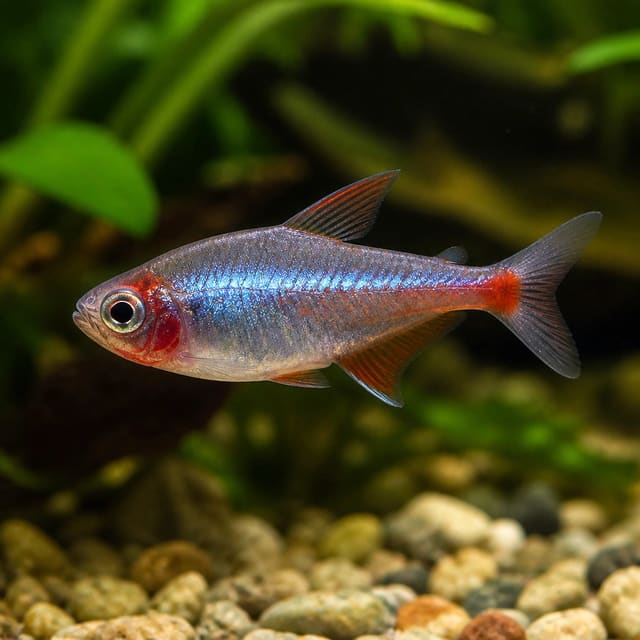
For a familiar small-tetra comparison, the checked Neon Tetra product is useful when comparing visual style and community purpose. It is a different species, not an interchangeable colour option or an automatic tank mate. The tetras collection shows the wider range, but every candidate still needs its own adult size, group, temperature and temperament checked.
Inpaichthys kerri is a freshwater tetra from the Aripuanã River in the upper Madeira basin of Mato Grosso, Brazil. FishBase places it in Acestrorhamphidae and records it as the Royal Tetra. This product is offered as the Super Blue trade line, but the breeding or collection origin of the individual fish is not stated. Native range describes the species; it must not be presented as the provenance of each animal sold.
Blue Emperor Tetra, Purple Emperor Tetra, Royal Tetra and Kerri Tetra are common names used for this species. Common names overlap in the aquarium trade, so the scientific name is the reliable customer anchor. The different Emperor Tetra Nematobrycon palmeri is not the animal offered here. Never mix the identities merely to attract a broader search phrase.
FishBase gives 2.8 cm standard length for its maximum male or unsexed record. Seriously Fish gives 35 mm standard length. SL excludes the caudal fin. Those numbers describe biological records, while the option labels describe fish at dispatch and may be based on practical trade measurement. A fish in the over-3.8 cm grade is not evidence that the FishBase SL record is wrong; the measurement method and inclusion of the tail may differ.
Small body length does not make a jar or tiny desktop aquarium suitable. A group needs swimming length, social space, stable temperature and enough water volume to buffer change. Use the species-profile base of 60 × 38 cm and roughly 68 litres for a small group, then increase space for a larger group or community. A long usable footprint is more valuable than the same litres in a tall, narrow shape.
Keep at least six. FishBase's baseline is five or more, and Seriously Fish says a group of about six generally keeps any fin-nipping tendency and aggression directed among conspecifics. The species does not always form a tight synchronised shoal; a healthy group may spread out, explore and then regroup. Loose grouping is not proof that the social need has disappeared.
Rival fish may display and make short chases. Provide enough group members, swimming space and visual refuge so attention is distributed. Watch for one fish continually hiding, being excluded from food, losing condition or carrying damaged fins. Those signs call for a review of group size, space, cover, water and companions rather than an assumption that “tetras always get on”.
Order quantity must reflect the planned group because one purchase is one fish. Do not rely on another tetra species to fill the social role of I. kerri. If an emergency leaves a single individual, review health and quarantine needs, then plan an appropriate same-species group when safe.
Seriously Fish describes both a natural-looking sand, wood and leaf-litter arrangement and a well-maintained planted aquarium as suitable. Use wood, roots and plants to create shaded refuge around the back and ends, while retaining a clear midwater lane. Dimmer areas can make blue-violet iridescence easier to see without forcing every fish into the open.
Leaves and tannins are optional. If used, choose aquarium-safe material, add it gradually and watch the effect on pH and oxygen. Replace decaying material before it fouls the water. A clean planted aquarium is valid even when it is not a strict blackwater display. FishBase records this species as pelagic, so keep a continuous midwater lane for the group.
Keep the lid secure because small active fish can startle. Protect filter intakes for the smallest dispatch grade and make sure current does not pin fish against equipment. Decorations must be stable, free of sharp edges and arranged so the group cannot become trapped behind them.
The species husbandry profile gives 24–27°C, pH 5.5–7.0 and 1–12 dGH. FishBase reports 24–27°C, pH 6.0–8.0 and 5–12 dH as environmental values. Seriously Fish also cautions that the species does not do well in alkaline conditions. For routine aquarium care, use the species-profile 24–27°C, pH 5.5–7.0 and 1–12 dGH range, then match the source water where known and avoid abrupt change.
Do not chase a dramatic low pH or alter hardness with an unmeasured product. Test the tap or source water, understand general and carbonate hardness, and choose a stable point suitable for every fish in the aquarium. The water chemistry guide explains the measurements; the water matcher helps compare actual test results with stated guidance.
Temperature should also remain steady. Use an appropriately sized heater and a separate thermometer, and keep the aquarium away from direct sun, radiators and cold draughts. Warm water carries less dissolved oxygen, so surface movement and sensible stocking become especially important in hot weather.
Provide a mature biological filter. OATA and the RSPCA both stress the importance of filtration because fish produce ammonia, which is toxic and must be processed by beneficial bacteria. Ammonia and nitrite should be zero. A clear aquarium can still be chemically unsafe, so test rather than judge by sight.
Seriously Fish recommends a turnover of roughly four to five times the aquarium volume per hour for its example setup. Treat that as equipment guidance, then judge the actual flow at fish level. The group should have steady circulation and surface movement without fighting a hard jet. Diffuse the outlet or create calmer refuge if the smallest fish are pushed aside or cannot feed.
Do not switch a mature filter off for long periods. During maintenance, preserve the established biological media and avoid replacing all of it at once. Check for blocked intakes and reduced flow. An air stone can improve gas exchange, but it does not replace biological filtration or remove ammonia by itself.
Seriously Fish says this species accepts most prepared foods and benefits from regular small live or frozen foods such as brine shrimp and Daphnia. OATA's broader tetra sheet recommends quality flake or granule with small live or frozen items, fed in amounts eaten within a few minutes. Use a varied diet rather than relying on one food.
Choose particles that the smallest fish can swallow. Fine flakes or micropellets can be practical staples, with small frozen or live invertebrate foods rotated in from safe aquarium sources. Spread food across the swimming area so a confident fish does not monopolise it. Watch every individual feed; a full shoal can hide one fish that is repeatedly missing meals.
Adjust portions to body condition, temperature and the total community. Persistent leftovers increase the waste load, while food that is too large or offered in one spot can leave shy fish thin. Strong blue colour depends on genetics, maturity, condition, social confidence and lighting as well as diet; no food can guarantee every fish matches a saturated photograph.
OATA recommends regular testing and a weekly partial water change of about 25% as broad tetra guidance. Adapt the volume to stocking, source water and nitrate trend, but keep the routine predictable. Match replacement-water temperature, use conditioner where required and avoid abrupt chemistry shifts.
Observe the group daily. Useful welfare signs include clear eyes, intact fins and scales, controlled swimming, steady breathing and an appropriate feeding response. A fish that hangs apart, clamps its fins, breathes rapidly, loses colour suddenly or stops eating needs attention. These are warning signs, not a diagnosis; first check water, temperature, oxygenation and equipment.
Do not medicate the display aquarium simply because one sign looks familiar. Different problems can appear similar, and an unsuitable treatment can harm livestock or filter bacteria. Seek experienced aquatic or veterinary advice when basic corrections do not resolve the concern.
Prepare the group aquarium before dispatch: confirm stable temperature, zero ammonia and nitrite, a mature filter and compatible existing fish. On arrival, use the current delivery policy and order guidance, keep disturbance low and avoid unnecessary delay. Keep the aquarium covered and do not add transport water to the aquarium.
New fish can look pale after transport because stress, unfamiliar lighting and social adjustment suppress colour. Judge breathing, balance and swimming before expecting display. Offer a light feed only after the fish have settled and are swimming normally and test water more often after adding a group because the biological load rises at once.
Seriously Fish describes aquarium spawning and sex differences, but this listing does not promise sex, a pair or a breeding outcome. Females are generally less colourful and stockier; adipose-fin colour can differ between mature sexes. Those features are not a reliable guarantee for every juvenile or domestic colour line.
If breeding is the aim, research a dedicated setup and begin with a healthy group. Do not buy two unsexed fish and assume they will form a pair. This care page does not turn specialist breeding notes into a recipe or promise egg numbers, hatching time or success.
Super Blue Emperor Tetras are generally peaceful when kept in a suitable group. That does not mean every community is safe. They can be outcompeted by much larger or more boisterous fish, while a too-small group can concentrate display and fin-directed behaviour on one individual.
Seriously Fish names small tetras, pencilfish, hatchetfish, Apistogramma or other dwarf cichlids, peaceful Corydoras and Otocinclus, smaller gouramis, rasboras and peaceful barbs as possible companions. Each suggestion remains conditional on compatible temperature, pH, hardness, adult size, group need and available footprint. The name appearing in a source is not a universal mixing guarantee.
Choose calm fish of similar scale and make sure every shoaling or social species has its own proper group. A peaceful bottom-dweller still needs floor space and may be unsuitable if the aquarium cannot support both its group and the tetra shoal. Dwarf cichlids add territory, so use them only where the layout and footprint can absorb that behaviour.
Avoid large predators, highly aggressive species and very boisterous feeders. Be cautious with persistent fin-nippers and very slow or long-finned fish if the aquarium is cramped. More cover can help, but it cannot make an undersized community appropriate.
Do not promise safety for fish fry or tiny shrimp. A small tetra can investigate and eat animals that fit its mouth. Adult shrimp may coexist in a structured aquarium, but a breeding colony needs a separate risk assessment and abundant refuge.
Check the community at adult size, not only at purchase size. Confirm overlapping water needs and enough feeding access. After introduction, watch whether the group uses open water, whether every fish feeds and whether one individual is repeatedly displaced. Persistent hiding, fin damage or weight loss is evidence to change the arrangement rather than waiting for the fish to “settle”.
One purchase supplies one fish, so calculate the quantity needed for at least six before arranging delivery. Check that the 60 × 38 cm, roughly 68-litre species-profile starting point remains usable after wood, plants and equipment are installed. A larger community needs more space because every existing fish contributes waste and uses swimming room.
Choose one dispatch size that fits the existing community. The smallest grade needs protection from large mouths and strong intakes. A larger grade does not remove the need for a same-species group. Avoid mixing sizes solely to chase a particular sex ratio, because this listing does not guarantee sex and juvenile appearance is not a dependable promise.
Leave a clear midwater lane long enough for the group to move together. Put planting, wood or roots around the rear and ends so a chased fish can leave view without being trapped. Check that décor is stable and that no narrow gap can hold a startled fish. A secure lid is especially useful during introduction and maintenance.
Look at the actual current before arrival. Seriously Fish's example turnover is four to five times the aquarium volume each hour, but outlet design changes how that feels. Surface movement should support gas exchange while plants and hardscape create calmer zones. Adjust the outlet if the smallest fish would have to swim hard simply to remain in place.
Test the aquarium rather than relying on clear appearance. Temperature should be stable within 24–27°C, and the selected pH and hardness should sit within an appropriate part of the species range without repeated correction. Ammonia and nitrite should be zero. Record results so a slow change can be recognised after the group is added.
Preserve established biological media and avoid replacing all of it together. Check that the heater, thermometer, filter and lid are working before delivery day, not while a bag is waiting.
Use the current delivery policy and order guidance when the fish arrive. Keep handling brief, the aquarium covered and the surroundings calm. Colour may be subdued at first; assess balance, breathing and controlled swimming before expecting the blue sheen shown in a settled photograph.
Offer a small, appropriately sized meal only after the group is swimming normally. Scatter food across the lane so one confident fish cannot take everything. Watch that the smallest or shyest fish swallows food, and remove material that remains uneaten. Test water more frequently during the first week because several fish add waste at the same time.
Short display and chasing can be normal, especially as a new hierarchy develops. Persistent exclusion is different. A fish that is always behind the filter, misses every meal, loses weight or carries torn fins needs action. Review group size, layout, cover, companion behaviour and water rather than assuming time alone will fix the problem.
Long-term success comes from stable routines: a varied fine diet, predictable partial water changes, maintained filtration and enough social space. Reassess the aquarium when plants fill the swimming lane or when new fish are proposed. The system's capacity can change even when the tank dimensions stay the same.
FishBase records 2.8 cm standard length for a male or unsexed specimen, while Seriously Fish gives 3.5 cm SL. SL excludes the tail. Dispatch grades are practical supplied sizes and should not be mistaken for one universal adult total length.
Seriously Fish gives a 60 × 38 cm base, roughly 68 litres, for a small group. Use more room for a larger group or community, and preserve open midwater swimming space as well as planted or wooded refuge.
Keep at least six. FishBase says five or more, while the species profile explains that a group of about six helps keep display and aggression among their own kind. A larger group needs proportionally more space and filtration.
Tropical Fish Co rates it intermediate. A prepared newer keeper can succeed, but the aquarium must be mature and the keeper must provide a real group, stable warm water, good filtration and calm companions.
Use a quality fine flake or micropellet as a practical staple and rotate small frozen or live foods such as Daphnia and brine shrimp. Choose particles every fish can swallow, spread food across the group and avoid persistent leftovers.
The species aquarium profile gives 24–27°C, pH 5.5–7.0 and 1–12 dGH. FishBase reports a broader environmental pH of 6.0–8.0. Stable water within an appropriate part of the range is safer than repeated chemical correction.
They are generally peaceful. Display and short chasing can occur, and the species profile says fin-directed behaviour is more likely when too few are kept. Maintain at least six, provide room and intervene if one fish is repeatedly targeted.
Species guidance names calm small tetras, pencilfish, hatchetfish, peaceful Corydoras and Otocinclus, smaller gouramis, rasboras and peaceful barbs. Use only companions with matching water and enough room for every species' adult size and social group.
Fish are hand-packed in oxygen-filled bags, an insulated box and a heat pack when weather calls for it, then carried by a licensed live-animal courier. Read the current delivery and Live Arrival Guarantee policy. A claim requires same-day contact and a continuous unboxing video showing the sealed parcel being opened and the fish still in the bag.
The listed dispatch sizes describe the fish supplied; the care references support aquarium planning. Group-level guidance is kept labelled and does not replace species-specific evidence.
No reviews for this item yet. Bought one? Honest reviews only, good or bad.
What customers say about ordering from us
I have a small group of long finned mountain minnows. So was delighted to be able to order ten of this variety to increase the genetics in my tank . The ones I recieved are healthy but it’s to early to give a verdict on wether they are of a long finned type since they are small currently.
Gordon Walker · 23 Sept 2026
100% success travel and "installation". Pleased with quality of purchase. The Siamese fighter a bit "shy" so have not yet seen him at his best yet but looking good. Happy customer. GG
George E Garratt · 21 Sept 2026
Reviews of our shop, collected by Judge.me, an independent third-party review collector. Newest first.