Moderate
Cardinal Tetra (Paracheirodon axelrodi)
23–27°C · pH 5.5–7 · 60L
£2.54
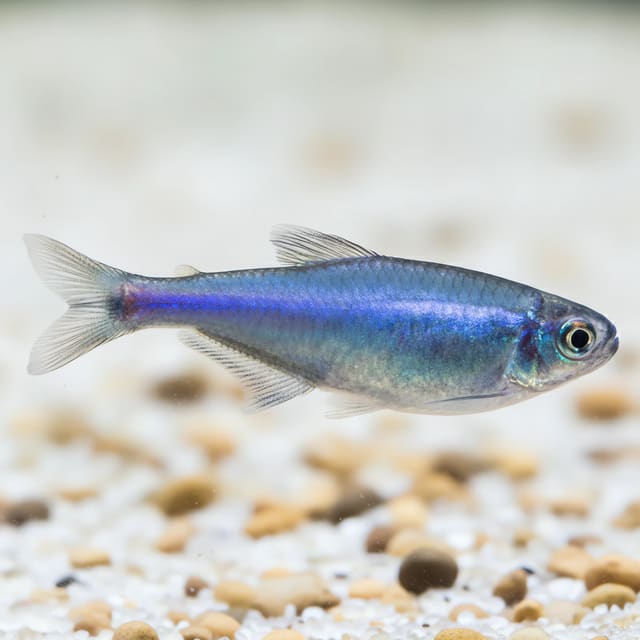
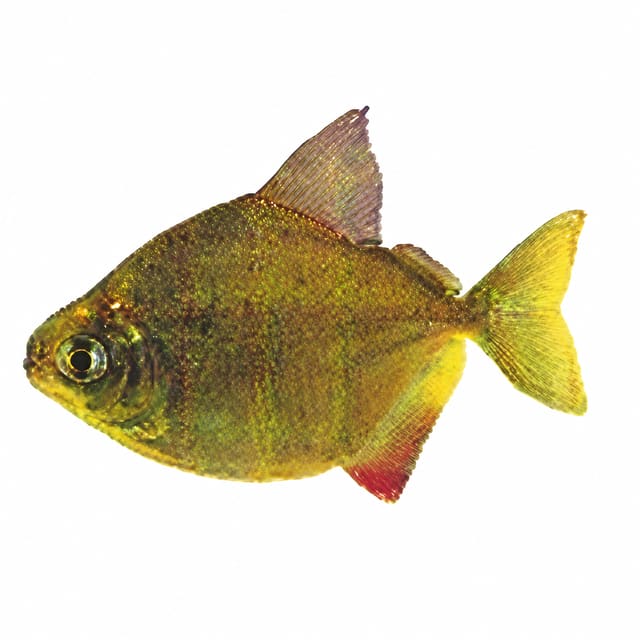
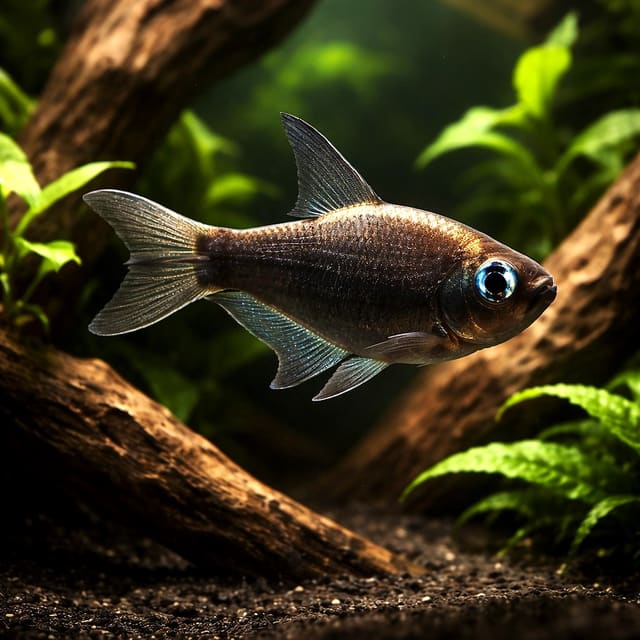
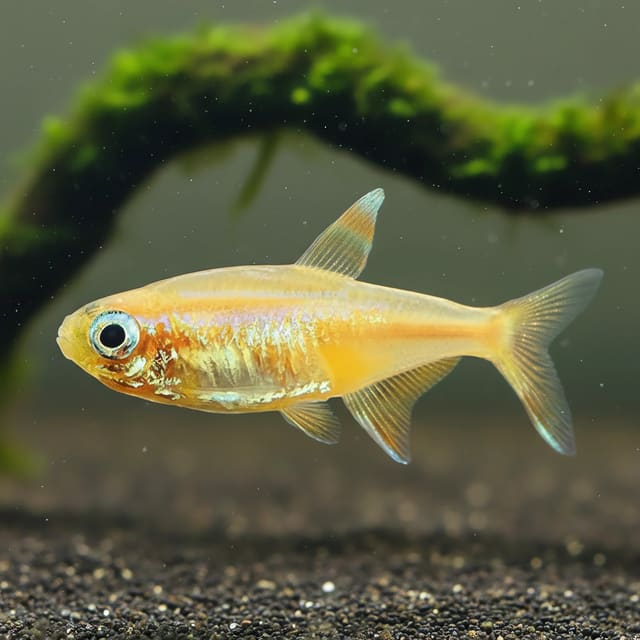
Blue Emperor - Gold (Inpaichthys kerri) is a small social tetra for a mature aquarium with shelter and calm companions. Keep six or more; one purchase supplies one fish, with 1–2 cm and over 3 cm size choices.
Inpaichthys kerri
Shoaling fish: kept in a group they feel safer, stay calmer and show their best colour.
Blue Emperor - Gold (Inpaichthys kerri) is a small social tetra for a mature aquarium with shelter and calm companions. Keep six or more; one purchase supplies one fish, with 1–2 cm and over 3 cm size choices.
Maintain these water conditions for optimal health and vibrant colors
Blue Emperor - Gold is the gold trade form of Inpaichthys kerri, a small South American tetra best enjoyed as part of a group. Its appeal is the combination of a light gold appearance and the everyday activity of several fish sharing a well arranged aquarium. Give the group room to move, sheltered areas to retreat into and quiet companions that allow everyone to feed. A mature planted tank can work very well, provided the planting leaves useful swimming space.
Tropical Fish Co supplies one live fish per purchase quantity. This listing has two size choices: 1–2 cm and over 3 cm. The size you select is the size supplied, not the adult size. Check the live selector when ordering and choose the quantity needed for your aquarium plan; the care recommendation to keep a group is separate from the number included in one purchase.
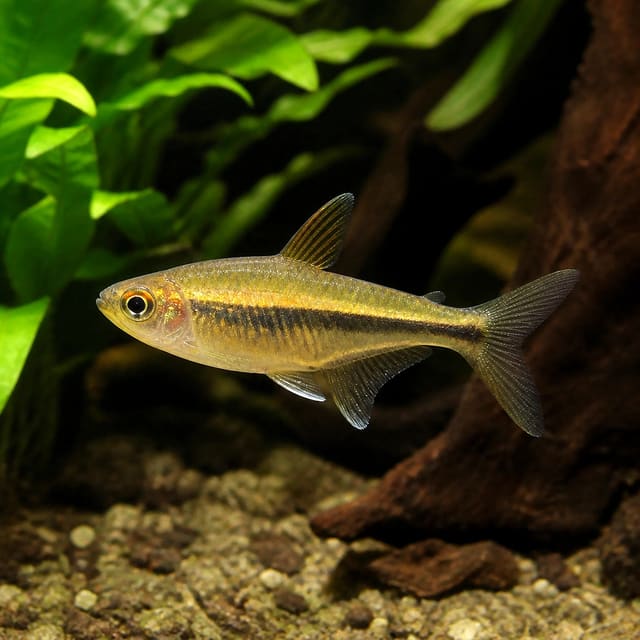
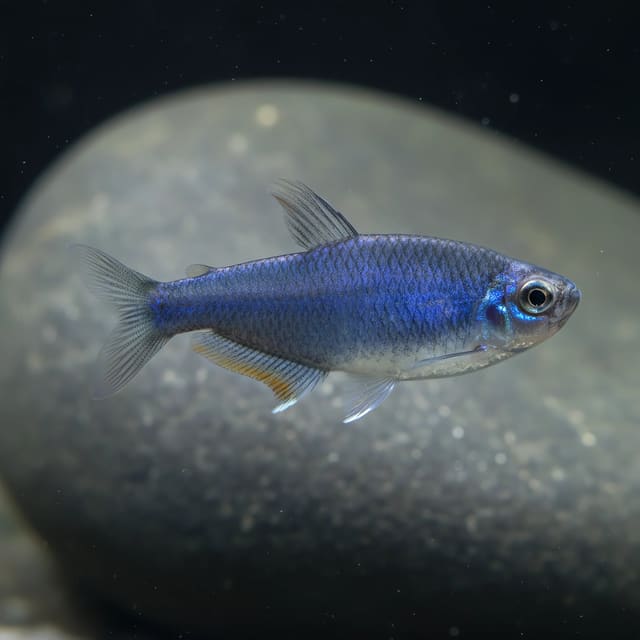
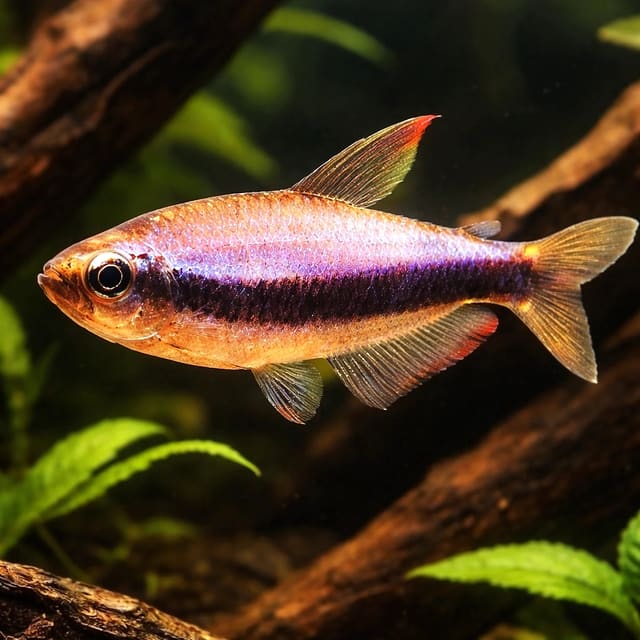
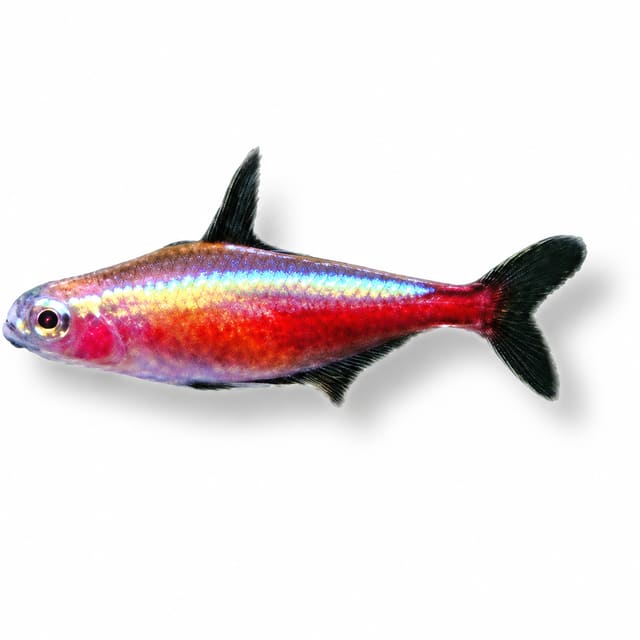
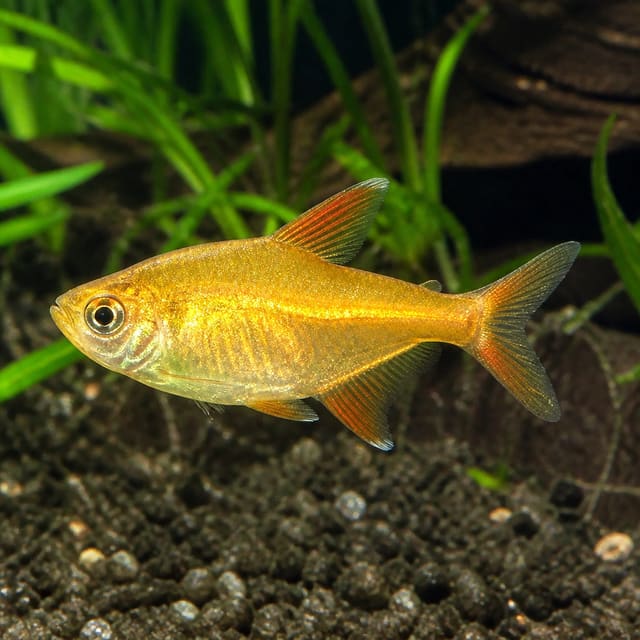
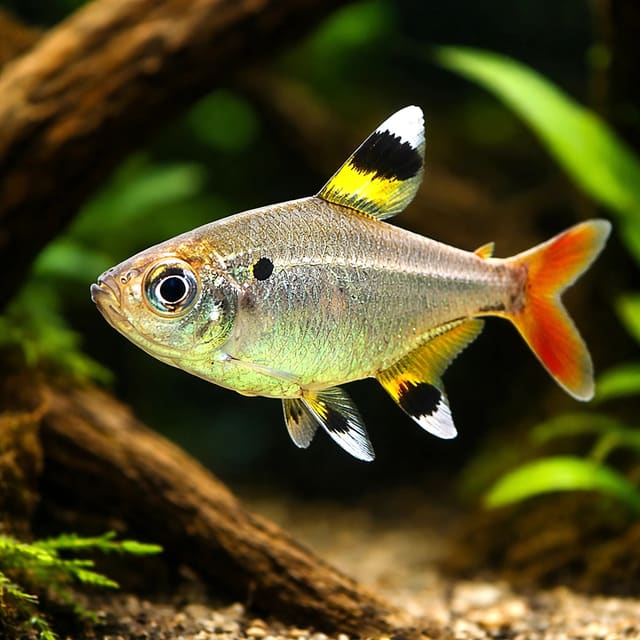
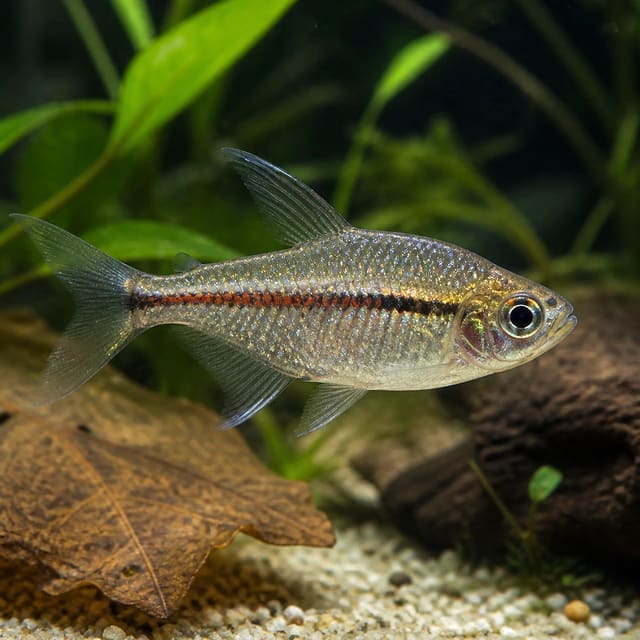
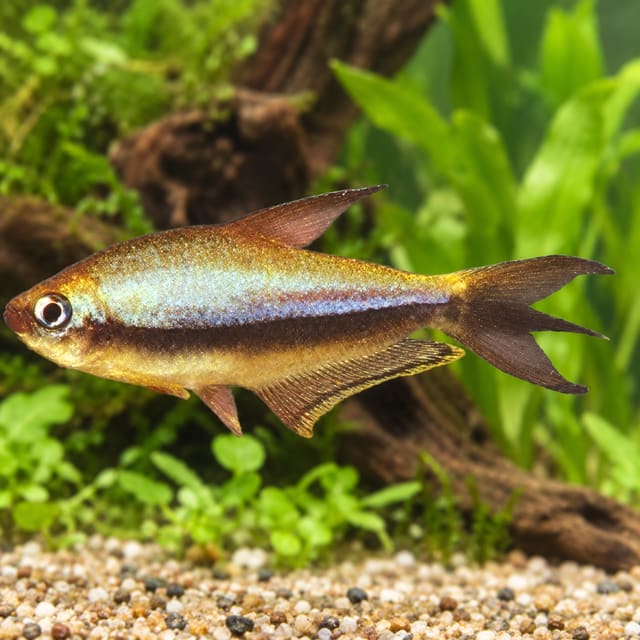
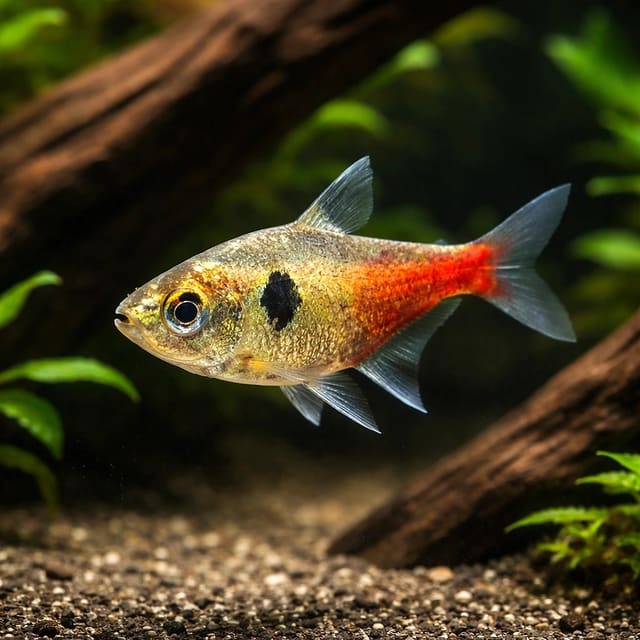
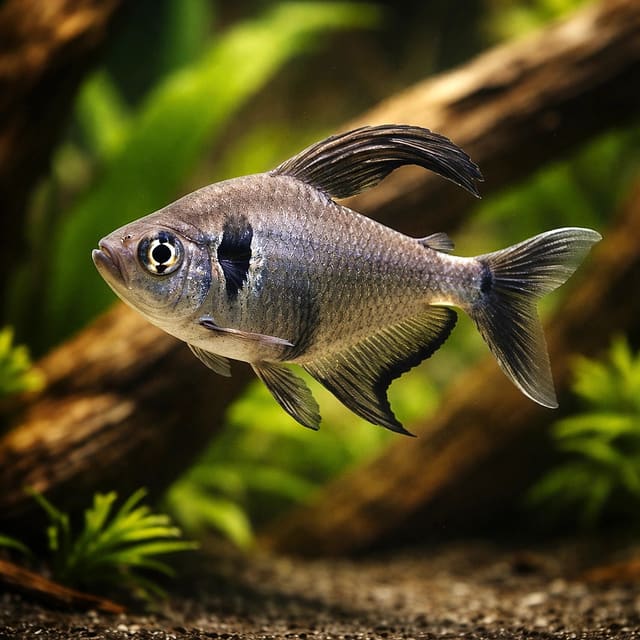
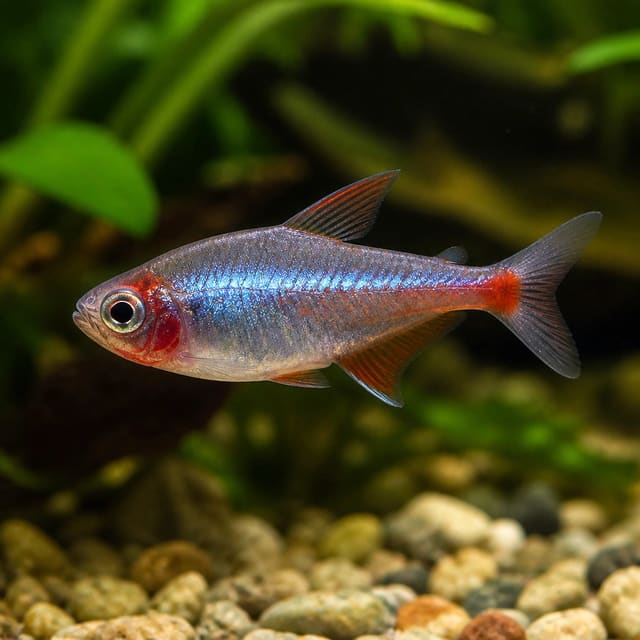
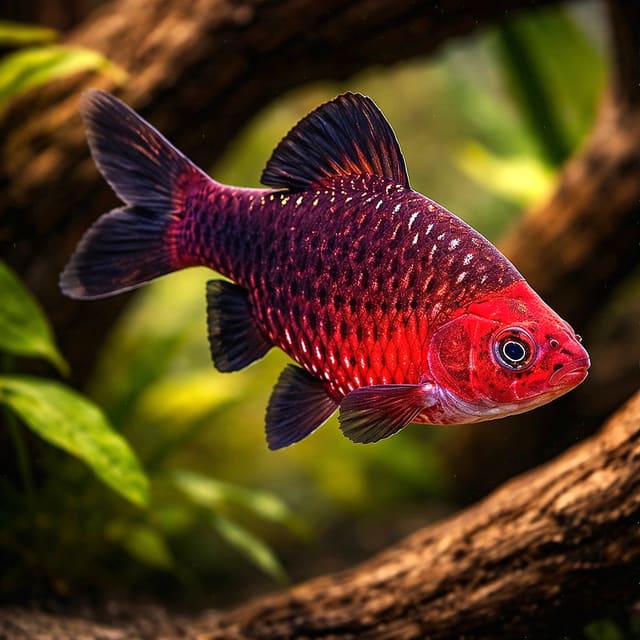
Sex is guaranteed only when the selected option explicitly states male or female. This Blue Emperor listing has no sex-guaranteed option. The gallery images are representative of this type of animal rather than photographs of the exact animal supplied, so colours can look slightly different from the live animal.
Think of a small group living among cover with a clear route through the middle of the aquarium. They should be able to leave an interaction, find a quieter patch and come forward for food without being crowded out. That is a more useful starting point than choosing a tank by the fish's purchase size. A juvenile still needs a home planned around adult activity and the needs of its companions.
For routine aquarium care, use 24–27°C, pH 5.5–7.0 and general hardness of 1–12 dGH as the species guidance. Keep six or more together where space allows. The group does not have to move as a tightly synchronised shoal to be behaving normally: individuals may spread out, display or regroup. Constantly hiding, losing feeding opportunities or being pursued into a corner deserves attention.
A tank with a floor around 60 × 38 cm is the published small-group starting point. A community needs additional room according to the other inhabitants, so do not treat that footprint as a ready-made stocking allowance. The length gives the fish a route to swim, while the width helps you arrange cover without blocking that route. Height alone cannot supply either benefit.
The species comes from the Aripuanã drainage in Brazil's upper Madeira basin. This describes its natural range; it is not a claim that the fish offered here were collected there. Gold remains the name of this listed form. You may also encounter the species described as a blue emperor or royal tetra. Use the scientific name when comparing care information, because the general name emperor tetra is also used for another fish.
Seriously Fish gives 3.5 cm standard length for the species, while FishBase records a maximum of 2.8 cm standard length for male/unsexed fish. Standard length excludes the tail fin, so neither figure should be read as the full nose-to-tail length of every adult. Plan around a small adult tetra with room for its whole group, rather than using the smallest published measurement to squeeze more fish into a tank.
If you are choosing the main small-fish group for a planted aquarium, compare the care and appearance of the Neon Tetra before settling on a species. It is another option to research for that role, rather than an instruction to combine both groups. The wider tetra collection is useful once you know your aquarium's space and measured water conditions.
Before buying fish, sketch the aquarium from above. Mark the filter, wood, large plants and the open area that remains between them. This quickly shows whether your intended swimming space is a continuous route or several small gaps that look open only from the front. Leave a practical path for the group to travel without squeezing past sharp decorations or moving into another fish's defended corner.
The small-group example in Seriously Fish is around 60 × 38 × 30 cm, described as approximately 68 litres. The dimensions work out to 68.4 litres before displacement, so the volume is a rounded illustration. Substrate, wood and the space above the waterline reduce the actual water held. When comparing tanks, use the footprint as well as the advertised capacity, and allow extra room for a mixed community.
Position taller plants and wood so there is cover near an open area. A fish should be able to retreat without disappearing into an inaccessible tangle behind equipment. Leave yourself enough access to check the inhabitants and clean the substrate. A layout that requires dismantling the aquarium to find a missing fish will make routine care more stressful for both you and the livestock.
A planted aquarium is a practical home for this species. You can also use a simpler arrangement of sand, roots and aquarium-safe wood under subdued lighting. These approaches offer different appearances but share the same useful features: shelter, open water and easy access for maintenance. Choose the version you can keep stable and clean throughout the week.
Do not assume a planted aquarium has to reproduce the species' natural habitat exactly. Its reported forest tributary habitats and a planted home aquarium are different settings. Plants can provide useful cover even where they are not a defining feature of the wild location. Equally, an attractive dark-water display still needs effective filtration and water testing; its colour does not reveal whether it is safe.
Keep any leaf litter manageable. Decomposing material can collect in quiet corners, particularly behind wood, so arrange the display where you can inspect and remove debris. Avoid adding several new materials at once while also introducing livestock. If water appearance or behaviour changes afterwards, a simpler sequence makes the cause easier to investigate.
Use an established biological filter and keep it running reliably. The filter's role is more than catching visible dirt: its bacteria process the waste released by fish and decomposing food. Clear water can contain harmful dissolved waste, which is why a tank that looks clean still needs testing. The first tropical aquarium guide explains preparation before livestock is added.
Watch how the current moves through the finished layout. Small fish need areas where they can hold position and feed without constant effort. Adjust the outlet or the arrangement of cover if all the group gathers in the only sheltered corner. Check that improving shelter has not also hidden a stagnant pocket where food and debris accumulate unnoticed.
A filter's nominal rating does not tell the whole story once the media begins collecting waste. Notice the normal outlet flow and inspect it if that flow changes. Keep the intake accessible so you can check it during maintenance. A predictable arrangement makes a blockage easier to spot early, before altered flow becomes a problem for the aquarium's inhabitants.
Leave space to use a siphon and remove water without lifting the main decorations. Keep aquarium equipment together so a routine water change is straightforward. It is much easier to maintain a sensible schedule when the bucket, conditioner, thermometer and tests are ready to use. A beautifully arranged tank still needs to be workable on an ordinary busy day.
Plan how you will observe all the fish. A planted back corner may be welcome cover, but you should be able to count the group during feeding and check that nobody is trapped behind an ornament. Inspect gaps around equipment and keep the aquarium appropriately covered. Make these decisions before the group arrives, when alterations can be made without catching or disturbing fish.
| Routine aquarium measure | Species guidance |
|---|---|
| Temperature | 24–27°C |
| pH | 5.5–7.0 |
| General hardness | 1–12 dGH |
These are aquarium recommendations from the species profile, not a reason to move the tank between the ends of each band. Start with measured source water and a stable established aquarium. The useful question is whether you can maintain suitable conditions consistently, including after a water change. If your water is substantially outside this range, discuss a workable plan before adding the fish.
Temperature, pH and hardness describe different things. A heater can hold temperature but does not soften hard water; lowering pH is not automatically the same as creating appropriate general hardness. Use the water chemistry guide to understand the measurements, then compare real test results rather than judging water by appearance or by the fish currently living in it.
The lower end of a range is not a challenge to reach. Chasing a particular low reading with repeated chemical additions can make replacement water and aquarium water difficult to match. Choose an approach that remains repeatable when you prepare the next batch of water. Get individual advice if a change to your water preparation is needed, especially if several species already share the tank.
The water matcher can help you compare measured conditions with care guidance. Use it alongside checks of behaviour, adult size and space. Two species sharing some numbers do not automatically share the same feeding pace or social needs, so a numerical match is only one part of a sensible community plan.
OATA's broad tetra husbandry guidance calls for zero ammonia and zero nitrite. Test before new fish arrive, and use regular readings to establish what is normal for the tank. Keep the results with the date and any relevant change, such as additional fish, altered feeding or filter maintenance. A written history is more useful than trying to remember whether a colour on a test chart looked slightly different last week.
For nitrate, OATA advises no more than 20 mg per litre above the normal tap-water level. Test the source water as well as the aquarium so you understand that comparison. This is broad husbandry guidance, not a promise that every aquarium remains suitable at the same number. A rising trend helps you see when the existing maintenance or stocking plan needs attention.
Add livestock gradually, allowing the established filter to cope with the additional waste. Increasing fish numbers also increases feeding, so review both together. A newly installed filter is not equivalent to a mature one simply because water has passed through it for a short time. If ammonia or nitrite is detected, pause further additions and seek advice on restoring safe conditions.
OATA recommends a partial water change of 25% at least once a week and water testing at least weekly as a broad starting routine. Prepare replacement water with a suitable tap-water conditioner and check its temperature before adding it. Use the opportunity to remove accessible solid waste rather than simply taking clear water from the top and leaving food trapped in the substrate.
Check the filter for blockages during the same routine. If the media needs cleaning, lightly rinse it in removed aquarium water; avoid washing biological media under the tap. The aim is to restore useful flow while retaining the bacterial population. Follow the filter manufacturer's maintenance directions and avoid changing every part merely because the outside looks dirty.
Observe the group after maintenance. Normal movement and interest in food are useful signs, but keep using tests rather than treating behaviour as a substitute. If something changes, record what was done and when. Water volume removed, new materials and filter work can all help explain a problem more clearly when you ask for advice.
Offer a good quality small prepared food as the staple and vary it with appropriate small live or frozen foods, such as daphnia or brine shrimp. Choose particle sizes the smaller fish can take comfortably. A food may be suitable in principle yet too large in practice; watch what the fish actually swallow rather than assuming interest at the surface means everyone has eaten.
Spread a modest amount across accessible feeding areas. A single large pinch dropped into the busiest corner can favour the quickest fish and leave quieter individuals waiting. The answer is to improve access and portion placement, not automatically to add more food. Check the group from different viewing angles so a fish behind cover is not overlooked.
OATA's general advice is a once-daily amount consumed within a few minutes. Treat this as a practical starting routine and ask for individual guidance if the fish's size or condition calls for adjustment. Remove uneaten food where possible. Food that falls out of sight still contributes waste, even when the upper water looks clear.
Feeding time is a useful daily check because it brings several observations together. Count the group, watch movement and notice which fish approach food. Look for a persistent change in appetite, body condition or access. A single quiet moment says less than a pattern in which the same fish repeatedly hangs back or is driven away.
If a fish stops feeding, check water quality and its relationship with tankmates before making repeated changes to the menu. Food preference, competition and poor conditions are different problems. Keeping a note of what was offered and what the fish did helps you describe the situation clearly. Avoid allowing repeated extra feeding attempts to spoil the water while you investigate.
Store and handle foods according to their instructions. Keep the routine simple enough that another responsible person can follow it when you are away. Show them the normal portion and the fish they should expect to see; instructions such as a little food are easy to interpret differently. Clear feeding guidance protects the aquarium from well meant overfeeding.
Before delivery, confirm that the aquarium is established, the equipment works and the water tests are suitable. Set aside time to receive and inspect the parcel without rushing. Have the necessary aquarium equipment ready and keep the room calm while you work. Preparing in advance is easier than looking for a net or thermometer with fish waiting in their transport bags.
The current delivery and Live Arrival Guarantee policy explains the packing, receipt and claims process. Someone must be present to receive live fish, and the parcel must be opened and inspected the same day. For a Live Arrival Guarantee claim, retain a continuous unboxing video beginning with the sealed parcel and showing the fish in their sealed bags; it is evidence for the claim.
Follow the supplied acclimatisation instructions. The store policy describes floating the bag for 20–30 minutes to equalise temperature and acclimatising slowly. Keep transport water out of the aquarium when transferring the fish. If a bag arrives in a concerning condition or the fish appear distressed, contact the team promptly with the order details rather than improvising a lengthy procedure.
Give the group access to shelter and observe from a little distance. Repeated tapping, chasing fish with a net or rearranging the display to make them come forward makes assessment harder. Learn where individuals rest and how they join feeding. A relaxed group may use several parts of the aquarium instead of staying together in one place.
Watch for a sustained change in swimming, breathing, colour, appetite or body condition. Surface hanging, damaged fins, spots or unusual growths deserve attention. Test the water and note the timing of the change, then contact an experienced aquatic retailer or fish-health professional. Several problems can produce similar outward signs, so an accurate description is more useful than choosing a treatment from appearance alone.
Keep six or more Blue Emperor tetras together in a suitably sized aquarium. The species guidance associates inadequate numbers with a greater tendency to nip fins, so a lone fish is not a sound way to try out the species. Group keeping provides the social setting in which interactions can be distributed among the fish. It does not remove the need for enough space and cover.
Displaying and short interactions may occur within a settled group. Look at the result: can every fish move freely, rest and feed? A persistent chase that keeps one individual trapped or excludes it from food needs action. Check the layout and tankmate behaviour, and obtain advice if the situation does not settle. Do not assume that adding fish to an already crowded tank will solve it.
Small peaceful tetras, pencilfish, hatchetfish, rasboras and smaller gouramis are among the groups named in the species reference. Calm barbs and appropriately chosen dwarf cichlids may also be considered. These are starting points for researching exact species; adult size, preferred temperature, feeding style and individual temperament still matter. A familiar group name covers fish with different requirements.
Peaceful bottom dwellers such as Corydoras and Otocinclus also appear in the source's companion suggestions. Check their own needs carefully and allow for the space and food they require. Fish using different levels still share water and filtration. They can also meet at feeding time, so do not treat the lower part of the tank as unused capacity simply because the tetras swim above it.
Avoid fish large enough to eat small tetras and very boisterous companions that dominate food or intimidate the group. Be cautious with long, delicate fins because fin nipping remains possible. Plan a response before mixing fish whose compatibility is uncertain. A spare suitable holding arrangement and a clear rehoming option are more helpful than hoping repeated chasing will disappear.
Write down the adult size and group needs of every proposed species. Check the total plan against the actual layout rather than adding each fish because it is individually small. Leave room for existing inhabitants to grow and for maintenance to remain manageable. If the aquarium cannot accommodate another complete social group, choose between species instead of keeping too few of each.
After any addition, look again at feeding access and resting places. A community that previously worked may change when a new group occupies the same area. Compare behaviour before and after the change, and use that observation alongside water tests. Successful compatibility is an ongoing practical relationship between animals in one aquarium, rather than a permanent guarantee attached to a species name.
Seriously Fish gives 3.5 cm standard length for Inpaichthys kerri. FishBase records 2.8 cm standard length for male/unsexed fish. Both exclude the tail, so they are not whole-fish length promises. Allow adult swimming room for the complete group.
The species profile gives a small-group starting footprint around 60 × 38 cm. Its example is about 68 litres before displacement. A mixed community needs additional space according to the other fish, the layout and the amount of cover.
Plan for six or more in a suitable aquarium. They benefit from company even when they are not swimming in a tight shoal. Too few can contribute to fin nipping, but increasing numbers is only sensible when the aquarium has enough room.
A prepared beginner with an established aquarium, suitable measured water and a calm community can consider this species. The essential work is maintaining water quality, feeding every fish and recognising persistent hiding or competition. Prepare the aquarium before purchasing the group.
Use appropriately small prepared food, with variety from small live or frozen foods such as daphnia or brine shrimp. Watch that every fish eats. OATA's broad tetra guidance is a once-daily portion consumed within a few minutes, with uneaten food removed.
The species aquarium guidance is 24–27°C, pH 5.5–7.0 and general hardness of 1–12 dGH. Maintain conditions consistently and check replacement water. Do not move between the ends of the ranges or chase a reading with repeated chemical adjustments.
Fin nipping is possible, particularly in an insufficient group. Keep suitable numbers and observe interactions. Very boisterous or much larger fish are poor companions, and long delicate fins deserve caution. A fish repeatedly trapped or excluded from feeding needs attention.
The species reference names small peaceful tetras, pencilfish, hatchetfish, rasboras, smaller gouramis, calm barbs, some dwarf cichlids, Corydoras and Otocinclus. Check each exact species for suitable water, adult size and space. These groups are conditional suggestions rather than universal matches.
Tropical Fish Co hand-bags fish with oxygen in insulated packaging and uses a licensed live-animal courier. Receive and inspect the parcel on the confirmed day. A Live Arrival Guarantee claim needs continuous sealed-parcel unboxing video and same-day contact with the order number, under the current policy.
Seriously Fish's species profile covers aquarium setup, social behaviour and water. FishBase records natural range and labelled measurements. The Catalog of Fishes provides the accepted scientific name. OATA's tetra care sheet and RSPCA aquarium guidance explain general maintenance and filtration.
No reviews for this item yet. Bought one? Honest reviews only, good or bad.
What customers say about ordering from us
Easy website plenty of info on fish your buying great to pick a time slot
TRACEY DURRANT · 7 Oct 2026
Got some lovely fish thank you
Kevin Mackie · 7 Oct 2026
Reviews of our shop, collected by Judge.me, an independent third-party review collector. Newest first.