Moderate
Neon Tetra (Paracheirodon innesi)
21–25°C · pH 5–7
£2.99

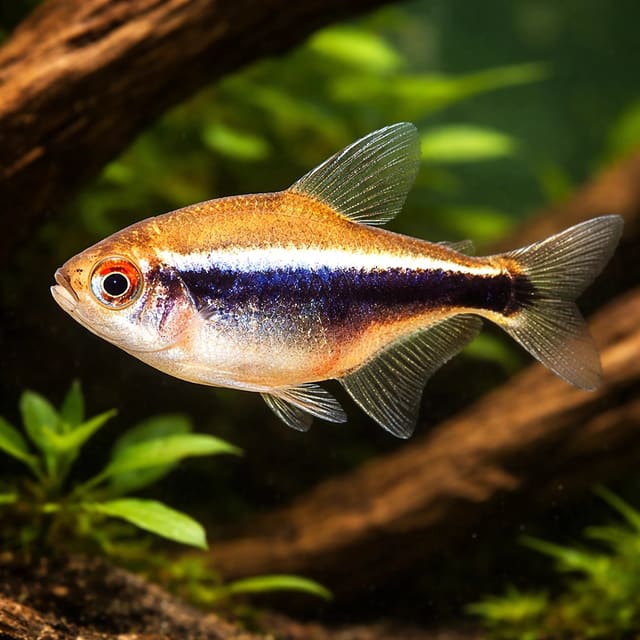
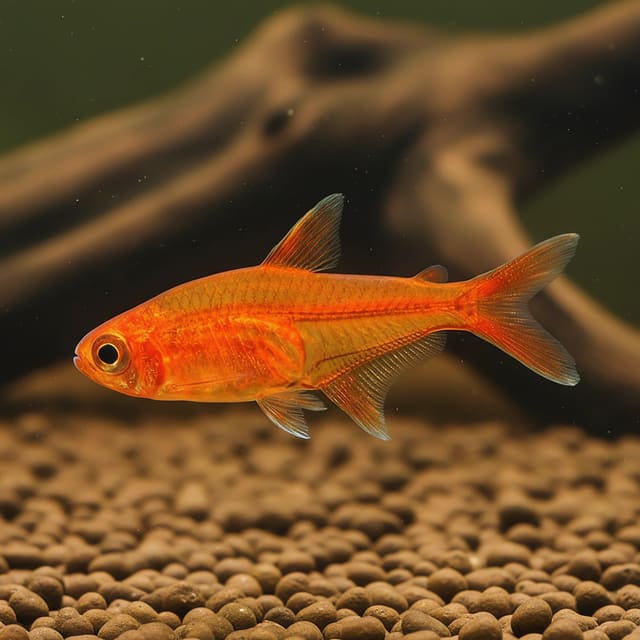
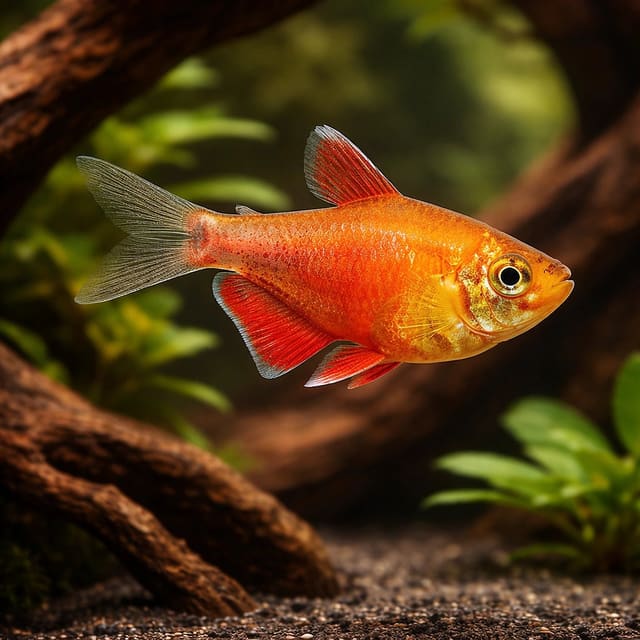
The Yellow Neon Tetra (Paracheirodon innesi) is a yellow aquarium colour line of the Neon Tetra, a small South American tetra that reaches about 3 cm standard length. It suits a mature community aquarium at least 60 cm long, kept as a group of at least 8–10 at 21–25°C and pH 5.0–7.0, where the FishBase and Seriously Fish species ranges agree. Sold individually in three sizes from 1.5–2 cm to 2.5–3 cm.
Adult size is the maximum length this species reaches at full maturity (scientific sources). The livestock you receive will be younger and smaller — pick a size above for the actual shipping size. Product-photo provenance and any image-specific limitations are stated on the listing.
Paracheirodon innesi
Shoaling fish: kept in a group they feel safer, stay calmer and show their best colour.
Minimum of 2 per order.
The Yellow Neon Tetra (Paracheirodon innesi) is a yellow aquarium colour line of the Neon Tetra, a small South American tetra that reaches about 3 cm standard length. It suits a mature community aquarium at least 60 cm long, kept as a group of at least 8–10 at 21–25°C and pH 5.0–7.0, where the FishBase and Seriously Fish species ranges agree. Sold individually in three sizes from 1.5–2 cm to 2.5–3 cm.
Adult size is the maximum length this species reaches at full maturity (scientific sources). The livestock you receive will be younger and smaller — pick a size above for the actual shipping size. Product-photo provenance and any image-specific limitations are stated on the listing.
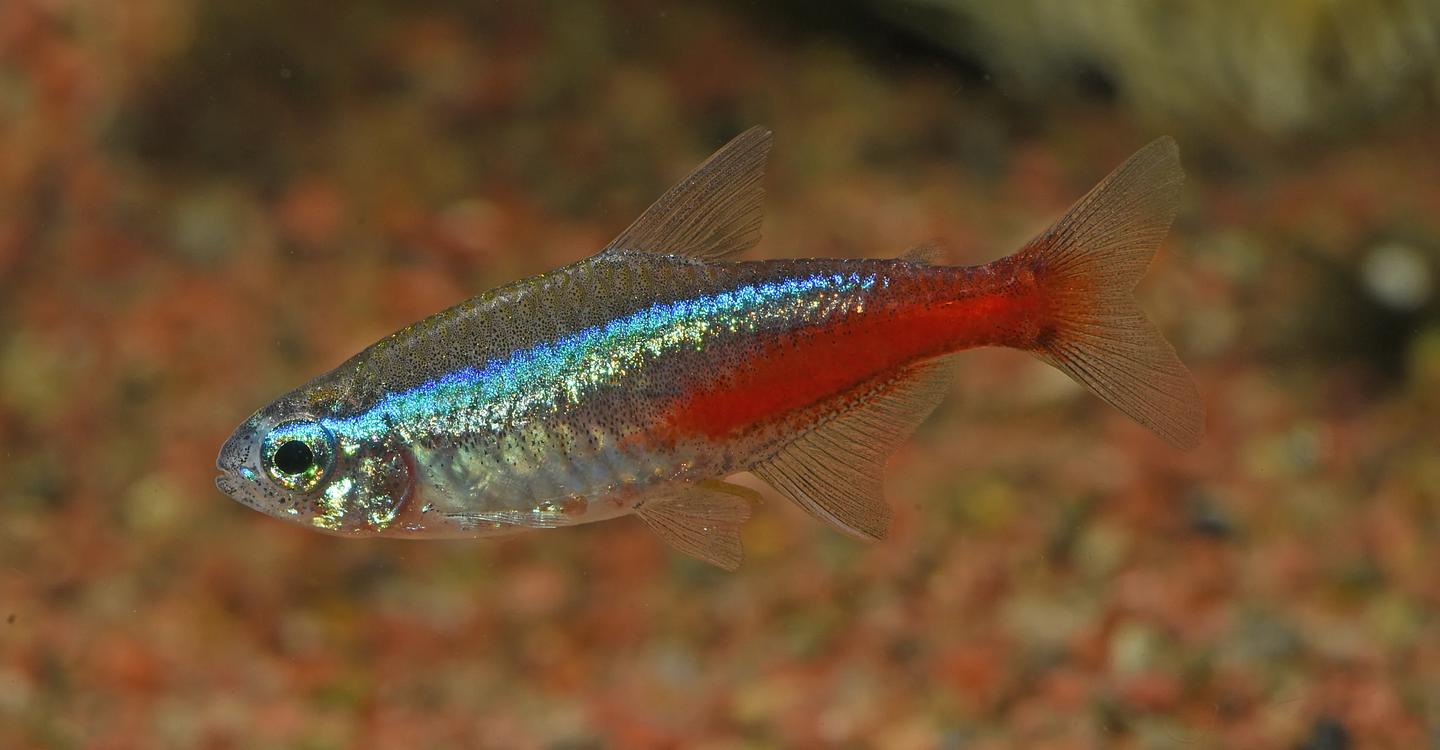
Start here: use a mature, filtered aquarium at least 60 cm long. FishBase and OATA compile groups of five or more; our conservative planning screen starts at eight, then checks usable volume, water, filtration and every adult tank mate.
Maintain these water conditions for optimal health and vibrant colors
The Yellow Neon Tetra is a yellow aquarium colour line of the Neon Tetra, Paracheirodon innesi, a small shoaling tetra from blackwater and clearwater tributaries of the Solimões River in South America. “Yellow” names the colour line rather than a separate species or subspecies, so every care decision here follows the biology of P. innesi. Adults stay tiny: Seriously Fish gives an adult length of 30 mm standard length, about 3 cm measured without the tail fin.
It suits a keeper with a mature, stable community aquarium at least 60 cm long who is happy to buy a proper group rather than one or two fish. Seriously Fish describes the species as generally peaceful, and a settled shoal moving between plants and open water is the reason to keep it. It is the wrong choice for a brand-new tank, for water that swings in temperature or chemistry, or for a community that includes any fish big enough to swallow it.
| Suits | Not suited to |
|---|---|
| A biologically mature aquarium at least 60 cm long | A new tank whose filter has not yet matured |
| A group of at least 8–10 of the same species | One or two fish kept on their own |
| Soft to moderately soft water held steadily at 21–25°C | Water that swings in temperature, pH or hardness |
| Small, peaceful companions of a similar size | Any tank mate large enough to eat them |
FishBase places the Neon Tetra in the family Acestrorhamphidae, the American tetras, and lists it as Least Concern on the IUCN Red List. Eschmeyer’s Catalog of Fishes puts it in the subfamily Megalamphodinae and records it from the Solimões River drainage of Brazil, Colombia and Peru. Older aquarium books and websites may still place it in Characidae; the fish is the same, only its family placement has moved.
Seriously Fish notes that the species has been selectively bred into several ornamental strains, including albino, golden, long-finned and diamond forms. A colour line such as this one shares the care needs of the species; what changes is the look.
Expect a small, active fish that spends its time in open midwater and looks its best as a group among plants and wood. Seriously Fish recommends adding other schooling species for extra security, which turns a single shoal into a calmer, more natural display.
Each purchase supplies one live Yellow Neon Tetra in the size you pick: 1.5–2 cm, 2–2.5 cm or 2.5–3 cm. Build the shoal by raising the quantity to match your plan, so a group of ten means a quantity of ten. The live size selector shows which sizes can be ordered when you check out.
The size you select is the size supplied, not the adult size. Plan space and companions around the 3 cm adult described above, and choose the dispatch size with your existing community in mind: a smaller fish is an easier mouthful for a larger companion. For a new tank set up around a fresh group, any of the three sizes follows the same care plan.
Sex is guaranteed only when the selected option explicitly states male or female. This Yellow Neon Tetra listing has no sex-guaranteed option. Fish are chosen by the size you select, not by sex.
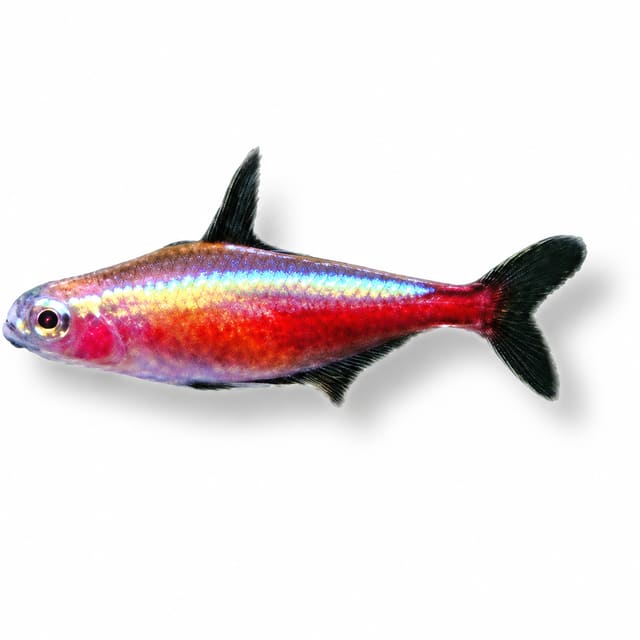
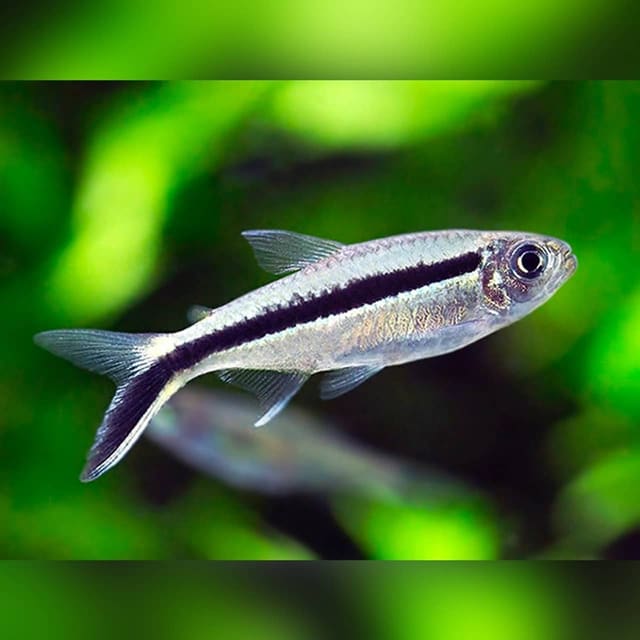
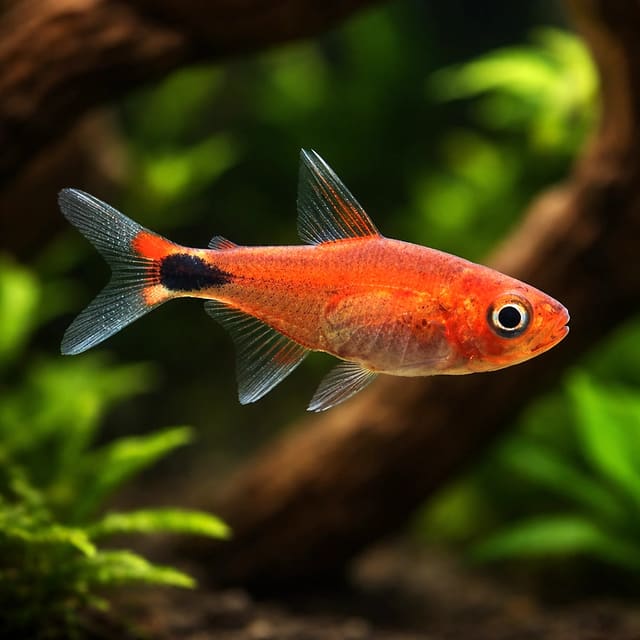
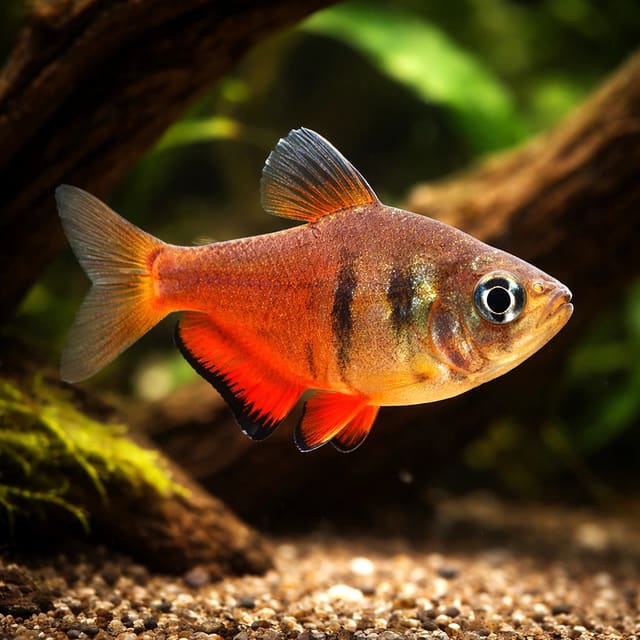
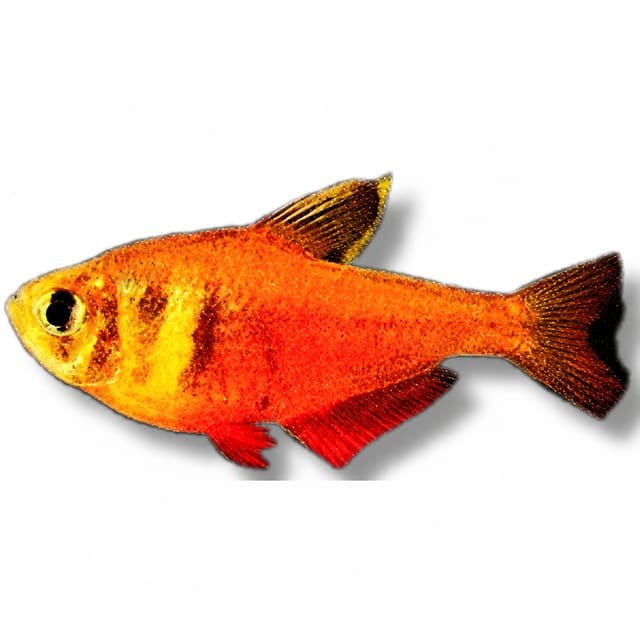
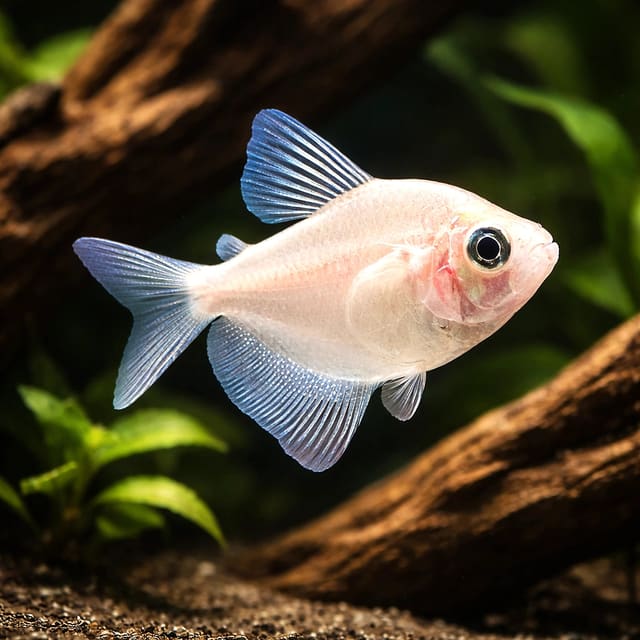
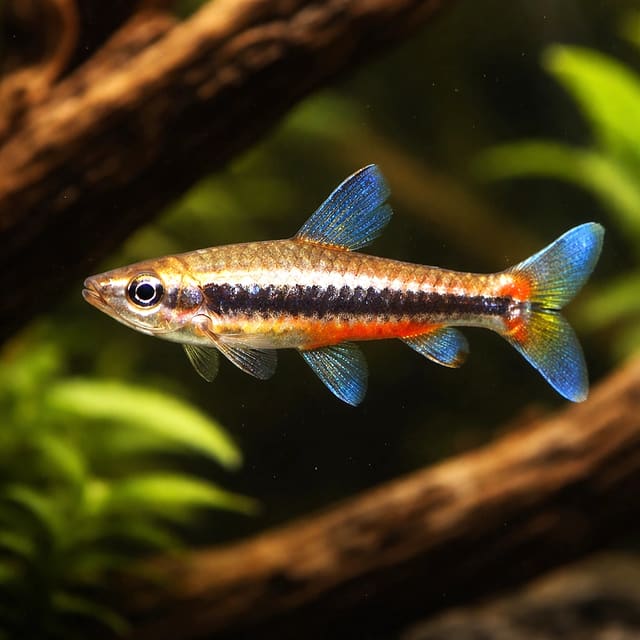
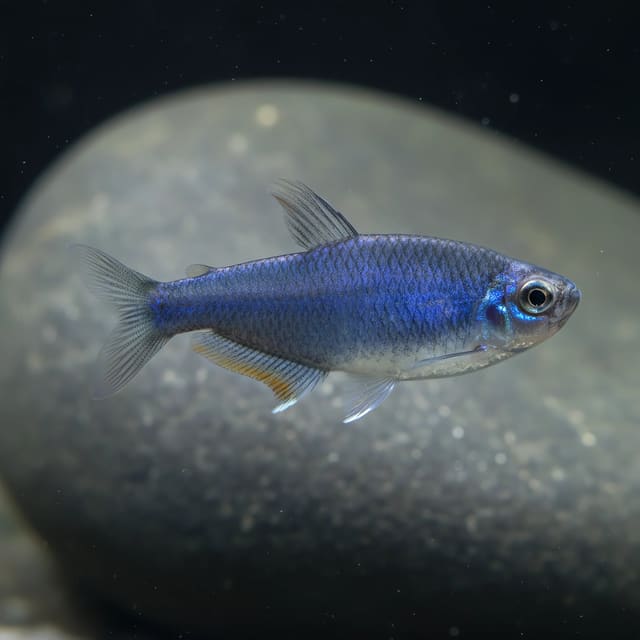
Gallery images have been digitally enhanced to improve image quality. Natural colour, pattern, size and maturity can vary between live animals. Apparent colour also shifts with lighting, viewing angle and the fish’s surroundings, so individuals in one order may not match each other exactly, and a vivid photograph says nothing about health on its own.
A keeper with a mature 60 × 30 cm aquarium and no other fish might order ten fish in one size, so the whole group arrives together and settles on the same routine. A keeper adding tetras to an established community would first confirm that no resident could swallow even the smallest 1.5–2 cm fish, then order enough to make a proper group rather than topping up with two or three.
If you are still choosing between species, our tetras collection brings the other small shoaling tetras together in one place for comparison.
Plan the aquarium around a 3 cm adult. Seriously Fish records 30 mm standard length for the species, while FishBase records a maximum of 2.5 cm standard length for males and unsexed fish. Standard length runs from the snout to the base of the tail and leaves out the tail fin. Working from the larger figure keeps tank, filter and companion decisions on the safe side.
FishBase describes the Neon Tetra as a pelagic freshwater fish of blackwater or clearwater stream tributaries of the Solimões River. Pelagic fish live in open water rather than on the bottom, which is why a group uses the middle of the aquarium and needs uninterrupted swimming space there. Wild adults feed on worms, small insects, crustaceans and plant matter, a mixed diet that shapes the feeding plan below.
Seriously Fish’s aquarium suggestions of driftwood, dried leaf litter, alder cones and fairly dim lighting echo that stream habitat. They are layout choices rather than requirements: the Tropical Fish Co care guide treats dark substrate, tannin-stained water and any one aquascape style as design decisions, not welfare thresholds.
OATA’s care sheet for tetras and pencilfish notes that, although small, these fish can live several years in a well-matured set-up with good water quality. Treat a group as a commitment of several years. Age and condition at purchase, water stability, diet and exposure to disease all influence how long individual fish live, so steady husbandry is the most useful thing you can control.
Start with length. FishBase compiles a minimum aquarium size of 60 cm for Paracheirodon innesi, and Seriously Fish recommends a base of at least 60 × 30 cm, which it puts at about 54 litres. A long, lightly stocked tank gives a small midwater shoal room to move as a group; a short, crowded tank with the same nominal litres does not.
Litres on a box are a poor guide by themselves. Two tanks sold as 40 litres can differ in length and footprint, and substrate, rocks and wood reduce the water actually available to the fish. OATA’s general tetra guidance suggests at least 45 litres for a small shoal of a smaller species and notes that larger aquariums keep temperature and water quality more stable, which is another reason to size up where you can.
Seriously Fish’s worked example for a tank of about 54 litres suggests a filter turning the water over four to five times an hour, which means a unit rated at roughly 215–270 litres per hour, and a heater of around 50 W to hold 21–25°C in a room of about 20°C. OATA adds that smaller tetras want a gentle current, so position the outlet to leave calm water somewhere in the tank.
A thermostatic heater with a separate thermometer is the dependable choice in many UK homes, where seasonal and overnight drops in room temperature would otherwise reach the aquarium. Measure the water itself rather than the room, and size the heater from the maker’s instructions for your tank volume and room.
If the aquarium is still new, our guide to setting up a first tropical tank walks through maturing the filter before any fish arrive. The RSPCA recommends fishless cycling for new set-ups, and OATA warns that stocking too quickly leads to “new tank syndrome”, when there are not enough nitrifying bacteria to cope with the extra waste and ammonia and nitrite rise to harmful levels.
Keep Yellow Neon Tetras at 21–25°C and pH 5.0–7.0 in soft to moderately soft water of 1–12 dGH, and keep those values steady. The temperature and pH targets sit inside both species profiles below; the hardness figure is Seriously Fish’s aquarium range.
| Source | Values |
|---|---|
| FishBase species profile | 20–26°C, pH 5.0–7.0, 1–2 dH |
| Seriously Fish species profile | 21–25°C, pH 4.0–7.5, 1–12 dGH |
| OATA tetra and pencilfish sheet | 22–27°C, pH 6.5–8.0, 4–12 dGH |
| Routine target for this fish | 21–25°C, pH 5.0–7.0, 1–12 dGH |
The two species profiles agree on 21–25°C and pH 5.0–7.0, so that is the band to aim for. Seriously Fish’s range reaches down to pH 4.0, a very acidic figure better left to deliberate blackwater set-ups than used as an everyday target, and up to pH 7.5, so steady water a little above neutral still falls within its species range. OATA’s figures are general guidance for captive-bred tetras as a group and are not species-specific; their warmer and more alkaline end goes beyond both species profiles, so use them only where they agree with the band above.
Whatever the chemistry, OATA’s sheet sets ammonia and nitrite at zero and nitrate at no more than 20 mg per litre above your normal tap water level. A fish kept in perfect pH but rising ammonia is in more danger than one kept at a slightly different pH in clean, stable water.
UK hardness varies with local geology and supply, and your water company can tell you its local figures. Those figures are a starting point rather than the result in your aquarium, so test the tank itself. A domestic ion-exchange softener does not automatically make water suitable for soft-water fish. Our guide to aquarium water chemistry explains which values to test and why, and the water parameter matcher compares your measured results with the range above.
Before ordering, ask us about the water the fish are held in, then avoid forcing them quickly from one set of values to another. A gradual adjustment inside the target band protects a small fish far better than a rapid change towards an ideal number.
Give the group a clear midwater lane with cover around it. Seriously Fish suggests a sandy substrate with driftwood roots and branches, plus dried leaf litter to emphasise the natural feel. As the leaves break down they support microbe colonies that fry can feed on, and alder cones are useful in the same way. There is no need for natural peat, which Seriously Fish describes as unsustainable and environmentally destructive to collect.
The species seems to do best under fairly dim lighting, according to Seriously Fish, which suggests plants that cope with those conditions, such as Microsorum, Taxiphyllum and Cryptocoryne. OATA’s general sheet asks for gravel or sand, live plants for cover (or plastic plants and aquarium ornaments where live plants are not used), space to swim and a gentle current for smaller species.
Dark substrate, tea-coloured water and one particular aquascape style are design choices rather than welfare requirements. Choose what you enjoy looking at, as long as the fish still have open water, cover and stable conditions. An open lane also makes feeding and daily observation easier, which pays off when you are checking that every fish is eating.
Feed once a day, offering only what the group eats within a few minutes, as OATA’s tetra and pencilfish sheet recommends. Use a good-quality flake, granule or micro-pellet as the staple, crushed small enough for the smallest fish in the group to swallow.
In the wild, FishBase records adults eating worms, small insects, crustaceans and plant matter. Seriously Fish describes the species as likely omnivorous and says that, although it may survive on dried foods, it does best with a varied menu that includes live and frozen bloodworm, mosquito larvae, Daphnia and Moina.
One treat food never replaces the complete staple. Watch each feed to see that the shyest fish actually reach the food, and remove any regular excess rather than leaving it for snails or bottom-dwelling fish to clear. OATA warns that uneaten food breaks down and releases toxic waste into the water, which quickly undoes good water quality in a small tank.
Fish from the 1.5–2 cm grade have small mouths, so crush flake finely or choose the smallest micro-pellet, and pick frozen foods such as Daphnia or Moina over larger bloodworm until the fish grow. Particle size should fit the fish rather than follow a fixed rule.
When faster or larger species share the tank, check at every meal that the tetras get their share. Feeding speed is one of the traits to compare when you choose companions, and a change in body condition is one of the early signs OATA lists as worth watching. If a tetra keeps missing out, rethink the stocking rather than simply adding more food, which only loads the filter.
The RSPCA explains why the filter matters so much: fish release ammonia, which is toxic, and a working biological filter lets beneficial bacteria convert it to nitrite, also toxic, and then to the safer nitrate. OATA stresses that good husbandry is essential because tetras can be stressed by even the smallest amounts of ammonia, so a steady routine matters more than any single deep clean.
Seriously Fish warns that years of commercial breeding have affected the genetic vigour of the ornamental Neon Tetra, so deformities and ill health are widespread and stock needs careful selection. It also notes that the species is susceptible to the ailment known as “neon tetra disease”, named because it was first diagnosed in Neons, although it can affect many other species. For an online order, the equivalent of watching fish in a shop is close observation during the first weeks at home.
OATA lists the changes worth noticing early:
None of these signs identifies a disease on its own. Test temperature, ammonia and nitrite first, compare the affected fish with the rest of the group, and separate an unwell fish when that is practical. The RSPCA’s pet fish health advice and the MSD Veterinary Manual both put water quality at the centre of any investigation, and OATA’s find a fish vet directory helps UK keepers reach a vet who treats fish. Avoid blanket salt, heat or medicine treatments chosen from a symptom list, and contact us if changes persist once the water tests clean.
Have the aquarium ready before you order: filter mature, ammonia and nitrite at zero, heater and thermometer running steadily. Every order is hand-bagged in pure oxygen and packed in an insulated poly box, with a heat pack when the weather calls for it, then carried by a tracked, licensed live-animal courier. The tracking number and your confirmed delivery date arrive by email so that you know when to be in.
The delivery and Live Arrival Guarantee page sets out the full terms, including the need for a continuous unboxing video with any claim.
Keep disturbance low after release and watch how the group settles. A shoal may spread out once it relaxes and draw closer together after a disturbance, which is normal behaviour rather than a problem. Test ammonia and nitrite over the following days rather than assuming clear water is safe, especially when a group of ten or more has just joined an existing community.
If the new fish are joining established stock, the MSD Veterinary Manual’s emphasis on biosecure separation of incoming fish is a good reason to hold them first in a separate, mature quarantine tank. That tank needs the same care as the display: a matured filter, a heater and the same 21–25°C band.
Neon Tetras scatter their eggs, and FishBase notes that in aquaria the female lays a relatively small number, which hatch in about 24 hours. Seriously Fish advises setting up a dedicated tank if you want to raise decent numbers of fry.
That 26.5–29°C breeding temperature is warmer than the 21–25°C routine range and belongs only in the spawning tank, never in the display aquarium. The breeding pH and hardness sit at the soft, acidic end of the routine range.
Seriously Fish notes that sexually mature females are normally noticeably rounder-bodied and a little larger than males, which helps when choosing breeding fish from an established adult group. OATA adds that most fish are difficult to sex unless they are breeding, so young fish at dispatch size are hard to separate by eye.
Choose companions that cannot swallow a 3 cm fish, share the 21–25°C soft-water band and move at a similar pace. OATA advises that small tetras such as Neons should not be kept with any fish large enough to eat them, and that tetras mix best with species of a similar size and temperament.
Seriously Fish suggests the species is best kept alongside similarly sized characids, hatchetfish (gasteropelecids), pencilfish (lebiasinids), smaller callichthyid or loricariid catfish and non-predatory, small-to-medium-sized cichlids. It also recommends including other schooling fish, which gives the tetras extra security and a more natural-looking display.
Similar size is only the first screen. Peaceful Corydoradinae, Harlequin Rasboras or Ember Tetras can be candidates once they pass those checks, and each needs its own group and space counted into the stocking plan.
Take a small, non-predatory cichlid as a worked example. Check that its adult mouth could not take a 3 cm fish, that its own water range reaches into 21–25°C and pH 5.0–7.0, and that the tank still has room for any territory it defends once the tetra group has its open water. If any answer is no, leave it out.
FishBase records small crustaceans in the wild adult diet, so treat very small shrimp, shrimplets, fry and other bite-sized animals as possible prey. That is a precaution rather than a prediction that every fish will hunt every shrimp. A Betta is not a reliable match either: individual behaviour, space and escape routes decide the outcome, so try one only with a backup plan to separate them if chasing starts.
A Yellow Neon Tetra is the same species as the standard Neon Tetra, so its water, space and diet needs are identical; only the colour line differs. If you plan to keep both, count every fish in the stocking plan and give the aquarium the length and filtration that the whole group needs.
The Cardinal Tetra, Paracheirodon axelrodi, is a different species in the same genus. FishBase compiles 23–29°C for it and a maximum of 3 cm standard length. Where the two share a tank, the practical temperature band narrows to 23–25°C, the part of the Cardinal’s range that also sits inside the 21–25°C routine range for Neons. Keep each species as its own proper group rather than treating a few of each as one shoal.
| Comparison point | Figure |
|---|---|
| Neon Tetra temperature (FishBase) | 20–26°C |
| Cardinal Tetra temperature (FishBase) | 23–29°C |
| Shared band with the 21–25°C routine range | 23–25°C |
| Neon Tetra maximum length (FishBase) | 2.5 cm standard length |
| Cardinal Tetra maximum length (FishBase) | 3 cm standard length |
Fish sold with “neon” in the name are not all Paracheirodon innesi, and colour alone can mislead, so confirm the scientific name before assuming the same care. For the species in more depth, including how Neons and Cardinals compare, read our complete Neon Tetra care guide.
Plan for an adult of about 3 cm. Seriously Fish records the species at 30 mm standard length, measured without the tail fin, and FishBase records a maximum of 2.5 cm standard length. Any companion big enough to swallow a fish of that length is unsuitable, so plan tank mates around the adult, not the fish on arrival.
Use an aquarium at least 60 cm long, the minimum aquarium size FishBase compiles for the species. Seriously Fish suggests a base of at least 60 × 30 cm, about 54 litres. Judge a tank by its length, usable water and mature filtration rather than the litre label alone, and leave room for every adult tank mate.
Keep a group of at least 8–10, as Seriously Fish advises. FishBase and OATA give five as the minimum, and OATA notes that tetras kept singly or in too small groups will often become stressed. A bigger group needs a correspondingly longer aquarium and a filter matured for the extra load.
They can suit a careful beginner with a fully matured aquarium, and the Tropical Fish Co Neon Tetra care guide rates the species intermediate. The filter must be biologically mature, ammonia and nitrite must test at zero and the water must stay stable before the group arrives, so a newly set-up tank is the wrong place to start.
Feed a small complete flake, granule or micro-pellet as the staple, once a day and only what the group eats within a few minutes, as OATA's tetra care sheet advises. Add variety with small live or frozen foods such as Daphnia, Moina and bloodworm; Seriously Fish notes the species does best on a varied menu rather than dried food alone.
Keep it at 21–25°C and pH 5.0–7.0, where the FishBase and Seriously Fish species ranges agree, in soft to moderately soft water of 1–12 dGH. Stability matters more than any single number, so match the water the fish have been held in gradually and avoid sudden changes.
Seriously Fish describes the Neon Tetra as generally peaceful, which makes it a good resident for a well-planned community aquarium. The bigger risk runs the other way: OATA advises that small tetras such as Neons should not be kept with any fish large enough to eat them.
Seriously Fish suggests similarly sized characids, hatchetfish, pencilfish, smaller callichthyid or loricariid catfish and non-predatory, small-to-medium-sized cichlids. Screen each candidate for adult size, water range, activity and feeding speed, and treat very small shrimp, shrimplets and fry as possible prey.
Film a short, continuous unboxing video from the sealed parcel onward, because the Live Arrival Guarantee needs one for any claim. The fish travel hand-bagged in pure oxygen inside an insulated poly box, with a heat pack when the weather calls for it, carried by a tracked, licensed live-animal courier. Someone must be at the address to receive the parcel; open and inspect it the same day, float the bag for 20–30 minutes before releasing the fish, and never pour the bag water into the tank.
These public sources support the identity, care and health guidance on this page.
No reviews for this item yet. Bought one? Honest reviews only, good or bad.
What customers say about ordering from us
I have a small group of long finned mountain minnows. So was delighted to be able to order ten of this variety to increase the genetics in my tank . The ones I recieved are healthy but it’s to early to give a verdict on wether they are of a long finned type since they are small currently.
Gordon Walker · 23 Sept 2026
100% success travel and "installation". Pleased with quality of purchase. The Siamese fighter a bit "shy" so have not yet seen him at his best yet but looking good. Happy customer. GG
George E Garratt · 21 Sept 2026
Reviews of our shop, collected by Judge.me, an independent third-party review collector. Newest first.