Moderate
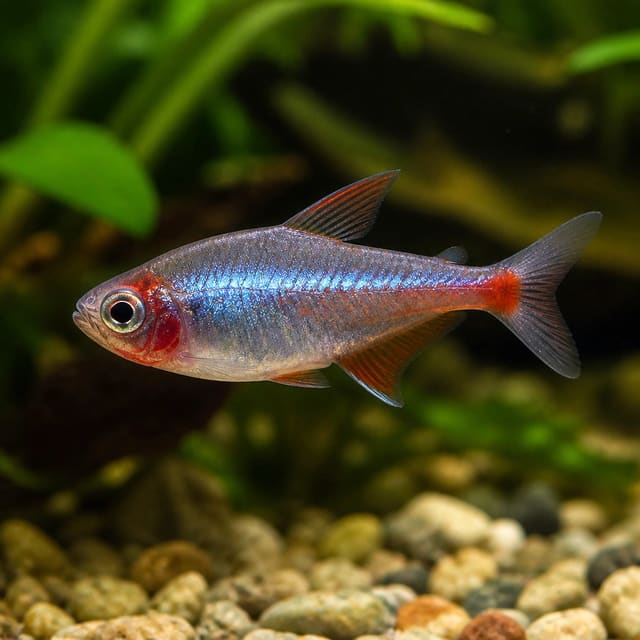
Neon Tetra (Paracheirodon innesi)
21–25°C · pH 5–7
£1.89
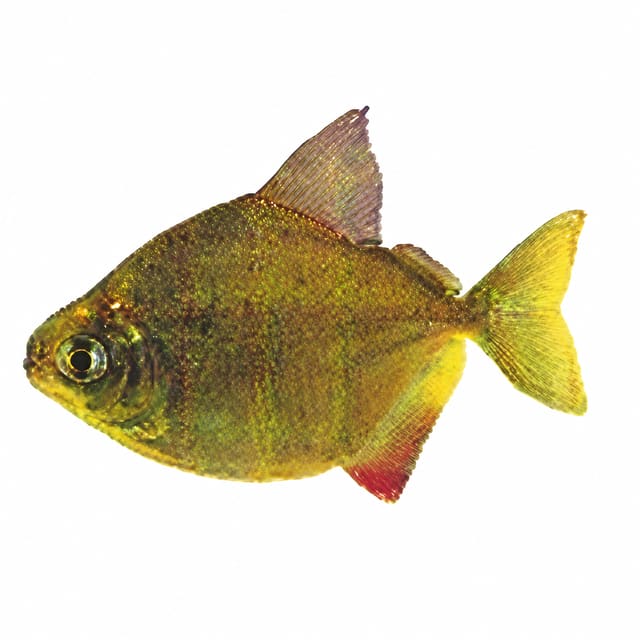
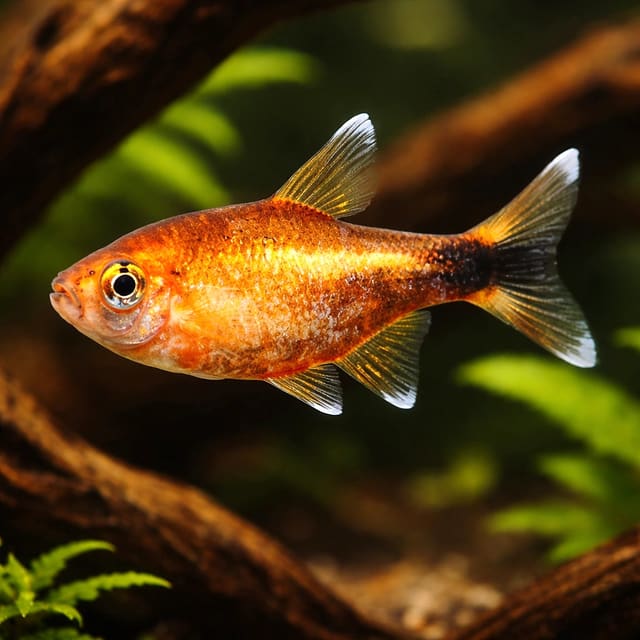
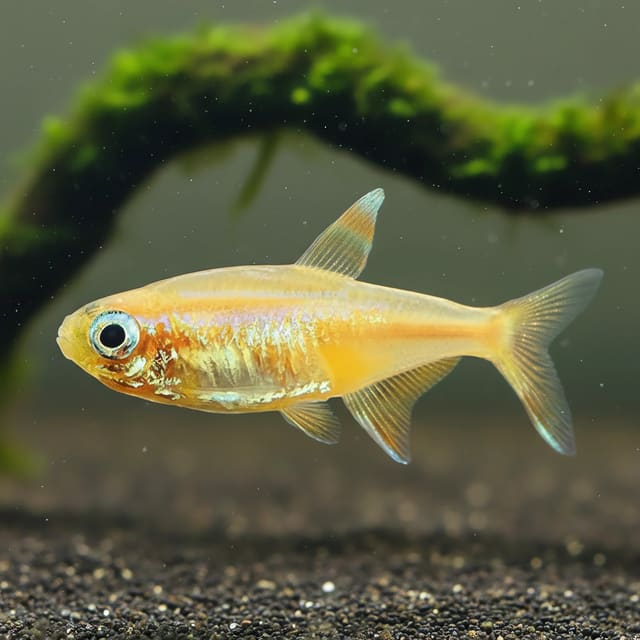
Inpaichthtys kerri gold, the Golden Emperor Tetra (Inpaichthys kerri), is a South American tetra in the Characidae family that reaches about 4.5 cm. It suits keepers who can maintain a mature, filtered aquarium for six or more fish at 23–27°C and pH 6.5–7.2 in soft to moderately soft water, within the broad 4–12°dH range OATA gives for tetras. Sold individually.
Adult size is the maximum length this species reaches at full maturity (scientific sources). The livestock you receive will be younger and smaller. Product-photo provenance and any image-specific limitations are stated on the listing.
Inpaichthys kerri
Shoaling fish: kept in a group they feel safer, stay calmer and show their best colour.
Minimum of 2 per order.
Inpaichthtys kerri gold, the Golden Emperor Tetra (Inpaichthys kerri), is a South American tetra in the Characidae family that reaches about 4.5 cm. It suits keepers who can maintain a mature, filtered aquarium for six or more fish at 23–27°C and pH 6.5–7.2 in soft to moderately soft water, within the broad 4–12°dH range OATA gives for tetras. Sold individually.
Adult size is the maximum length this species reaches at full maturity (scientific sources). The livestock you receive will be younger and smaller. Product-photo provenance and any image-specific limitations are stated on the listing.
Maintain these water conditions for optimal health and vibrant colors
The Golden Emperor Tetra (Inpaichthys kerri) is a small South American tetra in the Characidae family that reaches about 4.5 cm. This gold form suits an intermediate keeper who can provide a mature, filtered aquarium, a group of six or more and peaceful companions of a similar size and temperament. Plan around at least 60 litres for its shoal, with plants or other cover around open swimming space.
Keep the aquarium at 23–27°C and pH 6.5–7.2, in soft to moderately soft water. Keep ammonia and nitrite at zero with regular maintenance, and hold hardness steady within the broad 4–12°dH range OATA gives for tetras and pencilfish.
This is a peaceful shoaling fish rather than a solitary centrepiece. Six fish form the starting group, and eight or more is better once swimming room, filtration and the other inhabitants allow it. Tetras kept singly or in too small a group will often become stressed, so a mixed collection of different small fish does not replace a group of their own kind.
| Suits | Not suited to |
|---|---|
| A mature, filtered tropical aquarium | An unfiltered or newly filled aquarium |
| A plan for six or more of their own kind | Keeping one fish by itself |
| Peaceful fish of similar size and temperament | Fish large enough to eat a 4.5 cm tetra |
| Plants or shelter with open swimming room | A crowded layout without clear swimming space |
| Weekly testing and water changes | Aquariums without a regular maintenance routine |
Use the adult length, shoal size and water limits together when planning. A companion may be peaceful but still unsuitable if it grows large enough to eat the tetra or needs substantially different water. You can also browse the tetra collection when comparing other shoaling fish, but assess each species separately rather than assuming all tetras behave alike.
One purchase supplies one live fish at a dispatch measurement of approximately 2.5–3 cm. That measurement describes the fish sent, not its eventual length. Plan the aquarium and screen tank mates around the adult figure of about 4.5 cm rather than treating the dispatch measurement as a permanent size.
Sex is guaranteed only when the selected option explicitly states male or female. This Inpaichthtys kerri gold listing has no sex-guaranteed option.
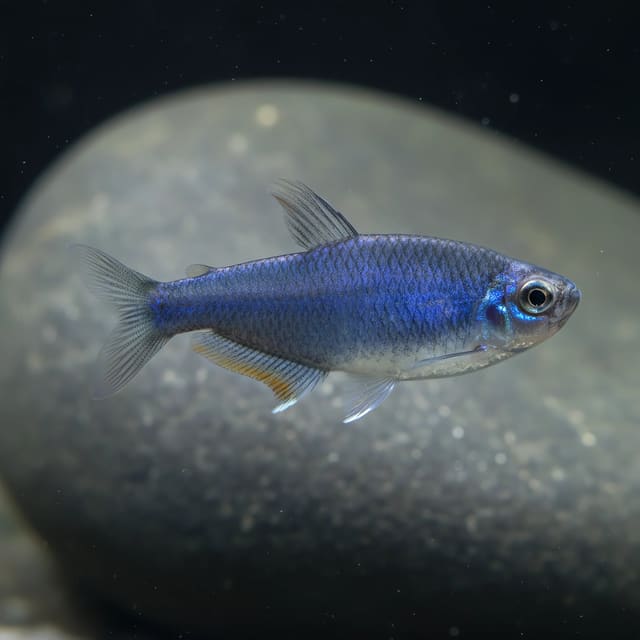
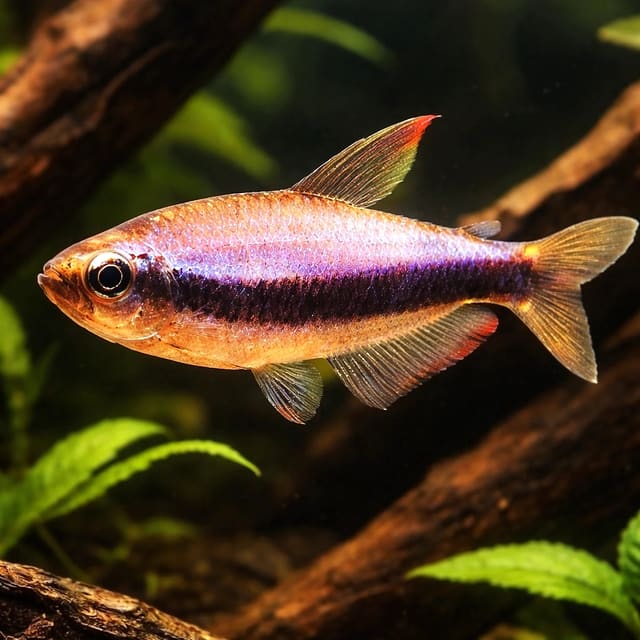
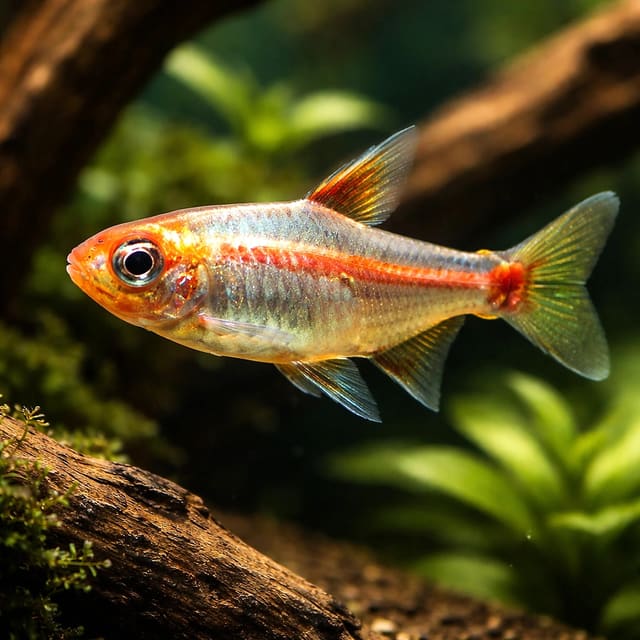
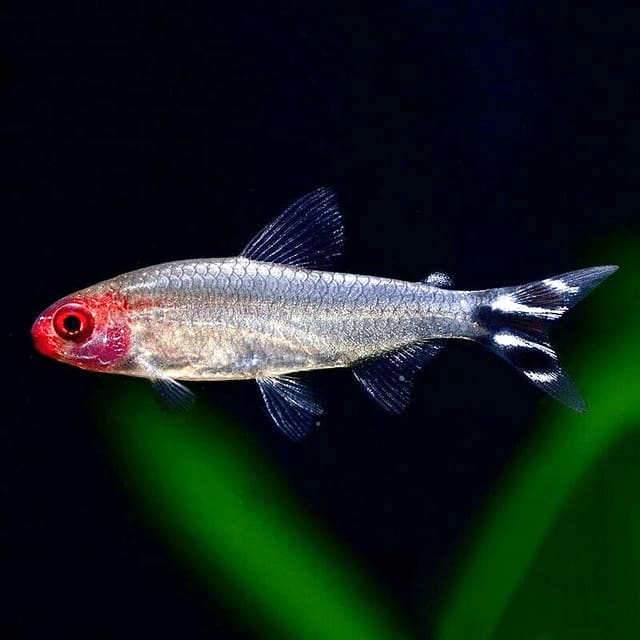
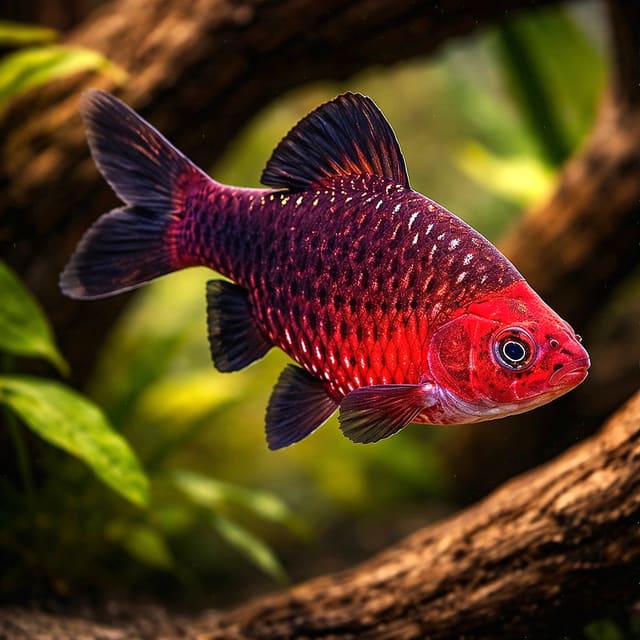
The gallery images are representative of this type of animal rather than photographs of the exact animal supplied, so colours can look slightly different from the live animal.
The golden body makes this form visually distinct, but colour is not a reliable way to choose a sex. Judge suitability from the aquarium’s water, space, filtration and existing inhabitants. A planted layout can give the group cover while leaving an open route for swimming, and a gentle current is appropriate for smaller tetras.
This combination of group care, stable water and measured stocking is more important than adding decorative features alone. If the aquarium cannot accommodate six fish without crowding its present inhabitants, increase the available space or revise the stocking plan before introducing the group.
Keep the temperature at 23–27°C and pH at 6.5–7.2, in soft to moderately soft water. OATA’s broad guidance for tetras and pencilfish puts general hardness at 4–12°dH and carbonate hardness at 3–10°dKH, so make any hardness change gradually and test regularly rather than chasing an exact number.
Ammonia and nitrite must read zero mg/l. Keep nitrate no more than 20 mg/l above the normal level in your tap water. That nitrate limit is relative to the incoming water: if conditioned tap water measures 10 mg/l, the aquarium should remain at or below 30 mg/l. If the tap-water reading changes, calculate the aquarium limit again rather than relying on the old total.
Use a reliable test routine to separate three different questions: whether the chosen water fits the fish, whether biological filtration is processing waste, and whether maintenance is controlling nitrate. Our aquarium water chemistry guide explains the purpose of the main tests, while the water-matching tool helps compare measured values with the stated range.
Record test results with the date and any maintenance carried out. A sequence of readings shows whether a result is stable, rising or falling. Test at least weekly as part of the normal routine, and test before adding the fish so the first reading is not taken only after a problem appears.
Water that looks clear can still contain ammonia, nitrite or excess nitrate. Make decisions from measured results and fish behaviour together, not appearance alone.
Use an aquarium of at least 60 litres for a small group of Golden Emperor Tetras. OATA’s wider guidance starts at 45 litres for a small shoal of a smaller tetra species and recommends at least 80 litres for species reaching 5 cm or more. Sixty litres gives a group of these 4.5 cm fish more room than that 45-litre minimum.
A litre figure is only the first screen. The aquarium must also hold six or more of their own kind, contain an effective filter and retain open swimming space after substrate, plants and ornaments are installed. A tall or heavily decorated aquarium can have the stated volume but less usable swimming room than a more open layout.
A larger aquarium generally changes temperature and water chemistry more slowly than a small one. It also gives more flexibility when arranging cover and swimming space. Extra volume does not, however, authorise unlimited stocking: every added fish increases waste and the filter’s workload.
Work through a 60-litre example in the correct order. Reserve room for six Golden Emperor Tetras first. Add the substrate, plants and shelter, then look at the remaining open water. Check the mature sizes, temperament and water needs of all proposed companions. Finally, consider whether the established filter and weekly maintenance can support the combined population. If any step fails, change the layout, reduce the wider stocking plan or choose a larger aquarium.
Do not use the 2.5–3 cm dispatch measurement to justify a smaller temporary arrangement. Set up the aquarium for the adult length of about 4.5 cm from the start, so the group never needs moving because it has grown.
Run a properly established biological filter before adding the fish. The RSPCA’s aquarium welfare guidance explains that fish release toxic ammonia, which beneficial filter bacteria convert first to nitrite and then to the safer nitrate. Both ammonia and nitrite must be zero before Golden Emperor Tetras are introduced.
A newly running filter is not mature simply because water is moving through it. Beneficial bacteria need time and a suitable process to establish. Prepare the aquarium and confirm its water quality before livestock arrives; our first tropical aquarium guide sets out the preparation and maturation decisions in order.
Every fish and every increase in feeding adds waste. Add livestock slowly so the filter’s bacterial population can grow with that load. Stocking too quickly can cause new tank syndrome, where ammonia or nitrite rises because too few nitrifying bacteria are present to process the waste.
Use the six-fish shoal requirement when planning, but do not ignore animals already living in the aquarium. A filter supporting an existing population may still be unable to absorb a sharp increase without a rise in waste. Test before the addition, continue the normal weekly tests and pay close attention to readings after the population changes.
Tap-water chlorine or chloramine may kill beneficial bacteria in the filter media. Rinsing in removed aquarium water reduces bacterial loss while clearing accumulated debris. Treat replacement tap water with an appropriate conditioner before it enters the aquarium.
Filtration does not replace water changes, and water changes do not replace filtration. The filter processes waste continuously, while the weekly maintenance routine removes dissolved and solid material from the system. Both are required to keep this shoaling tetra in stable conditions.
Feed a good-quality flake or small granule once a day, giving only what the group can finish within a few minutes. This tetra is an omnivore, so vary its food but keep to one controlled meal a day. The food must be small enough for the fish to take readily.
Add variety with small live or frozen foods such as daphnia, small bloodworm or tubifex. These are supplementary choices within a varied routine, not a reason to offer a second full ration. Rotate suitable foods while keeping the total daily quantity within the few-minutes rule.
Uneaten food breaks down and adds toxic waste to the water. Overfeeding can therefore undermine the zero-ammonia and zero-nitrite targets even when the filter is normally reliable. A controlled portion protects water quality and also makes a change in appetite easier to notice.
Use feeding time as a daily observation point. Look for every fish joining the group, swimming normally and taking food. Reduced intake, complete loss of interest or a change in body condition may be an early sign that water quality or health needs attention.
A practical meal should finish cleanly. If flakes settle across the substrate or frozen food remains trapped in décor, the ration was too large or poorly placed. Correct the next feed rather than compensating with an extra water-quality product. The regular test and maintenance routine remains the way to measure the aquarium’s response.
Keep food variety appropriate to the fish’s small mouth. Large pieces that cannot be swallowed do not count as an accessible meal, even if the nominal food type is suitable.
Change 25% of the aquarium water at least once every week. Use a siphon to remove solid waste from the gravel where it accumulates.
Treat replacement tap water with a conditioner that removes harmful chlorine or chloramine before adding it to the aquarium. Match the replacement water carefully enough to avoid a sudden change in temperature or chemistry, then refill without disturbing the fish or substrate unnecessarily.
Do not rinse filter media under the tap. Chlorine or chloramine in tap water may kill the bacterial population that processes ammonia and nitrite. Rinse used media lightly rather than replacing it, so the bacteria it holds are not lost.
Use weekly nitrate results to assess whether the routine is keeping pace with feeding and stocking. The aquarium reading should remain no more than 20 mg/l above the normal tap-water level. A rising sequence indicates that waste input and removal are out of balance, even if the latest result has not yet crossed that relative limit.
Maintenance is also the right time to check the physical layout. Remove trapped waste without eliminating all shelter, keep the swimming route open and make sure plants or ornaments have not shifted against the filter intake. Any equipment fault should be addressed before adding more livestock.
A missed test removes an early warning, while a missed water change allows waste to remain in the system. Keep both tasks in the weekly routine rather than waiting for cloudy water or visible distress.
Prepare the mature aquarium before the parcel arrives. Confirm 23–27°C, zero ammonia and zero nitrite, and make sure someone is present to receive the live fish. The Tropical Fish Co delivery and Live Arrival Guarantee policy explains the packing, receipt and claim procedure.
Fish are hand-bagged in pure oxygen and placed in an insulated poly box, with a heat pack when the weather calls for one. A licensed live-animal courier carries the parcel, and tracking and the confirmed delivery date are sent by email so someone can be ready to receive it.
Keep ammonia and nitrite at zero and add any further fish slowly. Feed one small meal a day and observe the group during that feed. Continue checking that every fish swims normally, joins the group and shows interest in food.
Do not respond to normal settling by adding excess food. Uneaten food raises the waste load just when the biological filter is adjusting to the new population. If ammonia or nitrite rises above zero, stop further additions, inspect filtration, make a partial water change with conditioned water and contact us for guidance.
At the first weekly checkpoint, complete the 25% water change, record the test results and compare the group’s behaviour with the first day. That creates a useful baseline for appetite, swimming, colour and body condition.
Plan for an adult length of about 4.5 cm. Use that 4.5 cm length when judging aquarium space and the size of potential companions.
Growth should be assessed alongside body condition rather than from length alone. At feeding time, check that each fish is able to take food and that no individual is becoming noticeably thinner or heavier. Keep the ration controlled instead of trying to change body condition by feeding the entire aquarium more heavily.
If a health change appears, test water quality first and contact us for guidance. Record temperature, ammonia, nitrite, nitrate, pH and the visible change so the situation can be assessed from specific observations. Do not add a disease treatment merely because one sign appears; different problems can produce similar behaviour.
During the first week, confirm that the fish joins the group, swims normally and eats during the controlled daily feed. At each weekly maintenance point, compare colour, breathing, fins, scales and body condition with the previous check. By the end of the first month, the notes should show whether water results and behaviour are stable rather than relying on a single memory.
Continue planning around the adult size even if the fish has not yet reached it. Its present measurement does not reduce the need for six or more fish, adequate swimming room or companions that remain safe at maturity.
Choose companions of a similar size and temperament, then confirm that their water and space requirements overlap. Golden Emperor Tetras are peaceful shoaling fish, but tetra behaviour varies across the wider group. Check each companion against the four points below instead of relying on a “community fish” tag.
Avoid any fish large enough to eat a 4.5 cm tetra. This is the decisive predator screen: a calm-looking larger fish is still unsuitable if the smaller fish can be swallowed. Mix it only with species of a similar size and temperament.
| Check | Decision |
|---|---|
| Adult size | Reject fish large enough to eat the tetra. |
| Temperament | Prefer peaceful species of similar activity and character. |
| Water | Confirm a workable overlap with 23–27°C, pH 6.5–7.2 and soft to moderately soft water. |
| Space | Allow for six or more tetras, the companion’s adult size and open swimming room. |
Do not approve a companion from its current shop size. Compare adult dimensions and adult behaviour. Likewise, do not assume a very small fish is suitable if its water needs fall outside the aquarium’s stable operating range.
Do not keep timid or long-finned fish with larger or boisterous species that may nip their fins. This tetra is peaceful, but watch every inhabitant for nipping after any addition.
For invertebrates, compare adult size, behaviour, water requirements and predation risk before combining them with this tetra. Contact us with the aquarium dimensions, measured water values, full stocking list and adult sizes when you need a compatibility assessment.
Keep six or more Golden Emperor Tetras together. Six is above the minimum of five OATA gives for tetras, and eight or more is better when the aquarium has room.
A mixed selection of unrelated small fish does not replace a group of one species. Tetras kept alone or in groups that are too small will often become stressed. Reserve aquarium capacity for the complete group before considering decorative variety or additional companions.
A larger group is better when the aquarium has enough volume, filtration and swimming room to hold it. Start with the full six-fish requirement and assess any increase against the whole population. The filter must process the extra waste, and weekly maintenance must keep ammonia and nitrite at zero.
Group behaviour should be observed during normal swimming and feeding. If one fish remains apart, check whether it can access food, whether another inhabitant is pressuring it and whether its breathing, colour or condition has changed. Test the water before assuming that the behaviour is purely social.
Reassess the community whenever fish are added or the layout changes. New livestock increases biological load, while moved décor can remove shelter or narrow the swimming route. Make additions slowly so the filter and the group are not challenged by several changes at the same time.
The strongest community plan combines the correct group size with compatible water and adult dimensions. It does not depend on a universal list of named tank mates, because aquarium volume, established inhabitants and individual behaviour all affect the result.
It reaches about 4.5 cm. Plan aquarium space and tank-mate screening around that adult length rather than the smaller dispatch measurement.
Use at least 60 litres for a small shoal; a larger aquarium is better and keeps temperature and water quality more stable.
Keep six or more together, and eight or more is better when the aquarium has room; a mix of other small fish does not replace a group of their own kind.
Treat it as an intermediate choice. It needs a mature, filtered aquarium, a group of six or more, a steady 23–27°C and a 25% water change at least once every week.
Feed good-quality flake or small granules once a day, limited to what it can finish within a few minutes. Add small live or frozen foods such as daphnia, small bloodworm or tubifex for variety.
Keep this fish at 23–27°C and pH 6.5–7.2. Keep the water soft to moderately soft, with ammonia and nitrite at zero, and avoid abrupt changes.
It is peaceful. Keep it with companions of similar size and temperament, and watch the whole group for any change in aggression or nipping.
Choose peaceful species of a similar size and temperament that live at 23–27°C and pH 6.5–7.2 in soft to moderately soft water, and avoid any fish large enough to eat a 4.5 cm tetra.
Tropical Fish Co’s policy says live fish are hand-bagged in pure oxygen, packed in an insulated poly box with a heat pack when weather calls for it, and carried by a licensed live-animal courier. Someone must be present to receive the parcel.
No reviews for this item yet. Bought one? Honest reviews only, good or bad.
What customers say about ordering from us
Easy website plenty of info on fish your buying great to pick a time slot
TRACEY DURRANT · 7 Oct 2026
Got some lovely fish thank you
Kevin Mackie · 7 Oct 2026
Reviews of our shop, collected by Judge.me, an independent third-party review collector. Newest first.