Moderate
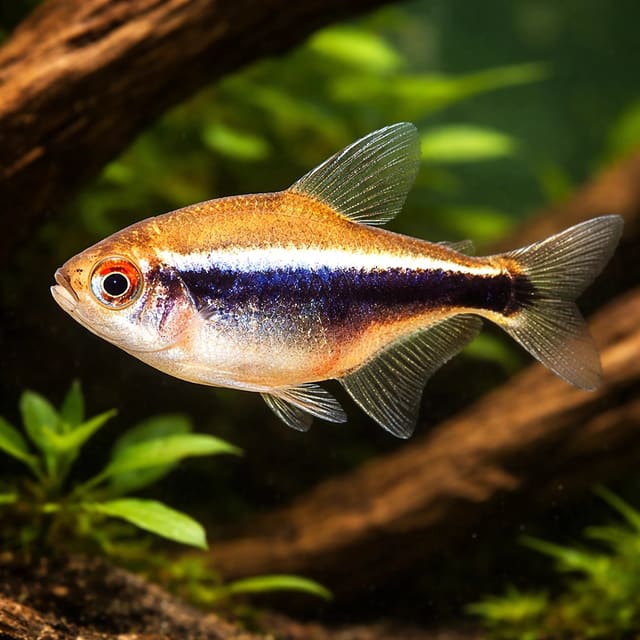
Neon Tetra (Paracheirodon innesi)
21–25°C · pH 5–7
£2.99

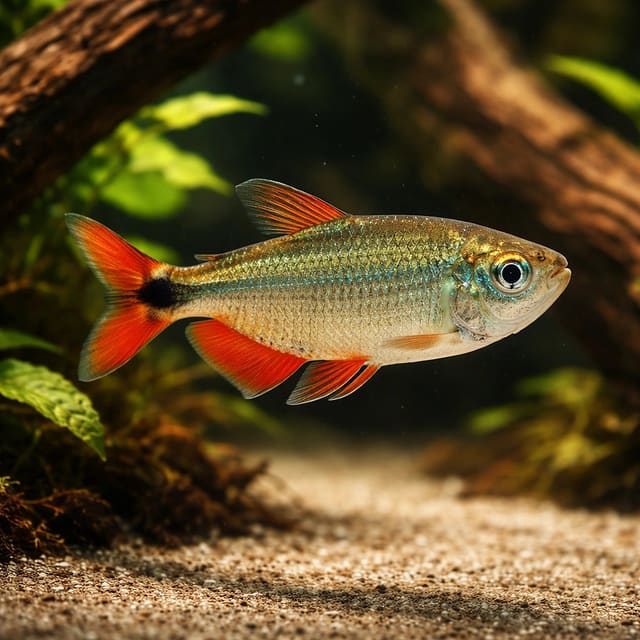
The Buenos Aires Tetra Gold (Hemigrammus caudovittatus gold) is a South American freshwater tetra from the Paraná and Uruguay River basins that reaches 13.2 cm. It suits keepers with an aquarium at least 80 cm long and a group of at least five; OATA’s tetra guidance gives 22–27°C, pH 6.5–8.0 and 4–12°dH. Sold individually in 3,5 - 4 cm and 4,5 - 5 cm dispatch sizes.
Adult size is the maximum length this species reaches at full maturity (scientific sources). The livestock you receive will be younger and smaller — pick a size above for the actual shipping size. Product-photo provenance and any image-specific limitations are stated on the listing.
Hemigrammus caudovittatus
Shoaling fish: kept in a group they feel safer, stay calmer and show their best colour.
Minimum of 2 per order.
The Buenos Aires Tetra Gold (Hemigrammus caudovittatus gold) is a South American freshwater tetra from the Paraná and Uruguay River basins that reaches 13.2 cm. It suits keepers with an aquarium at least 80 cm long and a group of at least five; OATA’s tetra guidance gives 22–27°C, pH 6.5–8.0 and 4–12°dH. Sold individually in 3,5 - 4 cm and 4,5 - 5 cm dispatch sizes.
Adult size is the maximum length this species reaches at full maturity (scientific sources). The livestock you receive will be younger and smaller — pick a size above for the actual shipping size. Product-photo provenance and any image-specific limitations are stated on the listing.
Maintain these water conditions for optimal health and vibrant colors
The Buenos Aires Tetra Gold (Hemigrammus caudovittatus gold) is a gold form of a South American freshwater ray-finned tetra in the family Acestrorhamphidae. It comes from the Paraná and Uruguay River basins and reaches a recorded maximum of 13.2 cm total length. FishBase now lists it as Psalidodon anisitsi. This hardy, active shoaling fish suits a keeper prepared to provide an aquarium at least 80 cm long, a group of at least five and carefully screened companions.
Wikipedia identifies the Buenos Aires tetra as a South American freshwater fish and American characin. FishBase records pond habitat and a wild diet of worms, crustaceans, insects and plants. Those feeding habits support a varied aquarium diet and mean live plants may be eaten.
The familiar tetra group word remains useful when comparing this fish with others in our tetras collection. Adult size matters: this is substantially larger than either dispatch size, so plan the permanent aquarium before choosing it.
| Suits | Not suited to |
|---|---|
| Keepers providing at least five fish | Solitary or undersized groups |
| Aquariums at least 80 cm long | Aquariums shorter than 80 cm |
| Companions of similar size and temperament | Timid or long-finned companions |
| Layouts with open swimming space | Displays where live plants must remain untouched |
FishBase records a maximum length of 13.2 cm total length for a male or unsexed Buenos Aires tetra. This is a maximum recorded figure, not a promise that every individual will reach exactly 13.2 cm. Use it as the planning reference for swimming space, décor and long-term stocking.
FishBase also gives a minimum aquarium length of 80 cm and says the species should be kept in groups of five or more. Apply both requirements together: the aquarium must provide the stated swimming length and enough biological capacity for the complete shoal and every companion.
| Planning point | Decision |
|---|---|
| Recorded maximum | Plan around up to 13.2 cm total length. |
| Aquarium length | Use an aquarium at least 80 cm long. |
| Shoal | Keep at least five. |
| Filtration | Provide a mature biological filter for the full community. |
| Companions | Choose similar size and temperament; avoid timid or long-finned fish. |
When calculating the group, count resident Buenos Aires tetras as well as new additions. A keeper with three needs at least two more to reach five, provided the aquarium and filter can support them. Preserve an uninterrupted swimming route rather than filling the full aquarium length with dense ornaments.
The live selector shows 3,5 - 4 cm and 4,5 - 5 cm. The size you select is the size supplied, not the adult size. Plan the permanent aquarium around the recorded maximum of 13.2 cm total length whichever dispatch size you choose.
One purchase supplies one animal of the selected size. When building a new group from this offer, choose a quantity of at least five after checking that the mature aquarium is at least 80 cm long and can support the full stocking level. When adding to an established shoal, count the resident fish first.
Sex is guaranteed only when the selected option explicitly states male or female. This Buenos Aires Tetra Gold listing has no sex-guaranteed option.
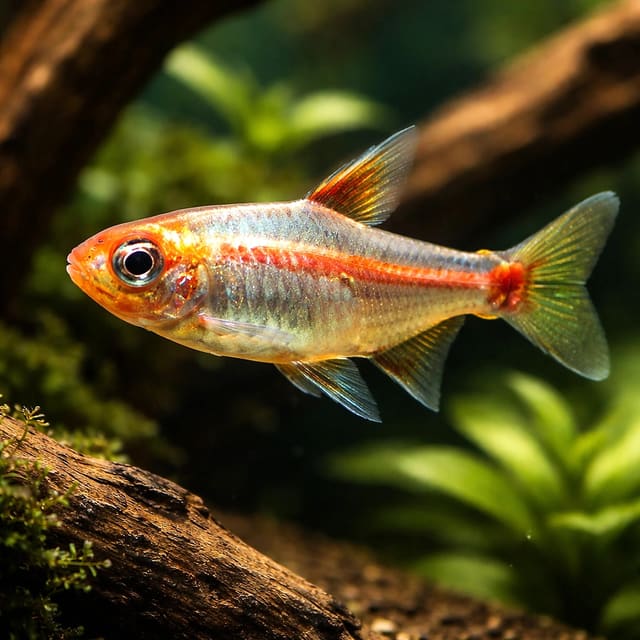
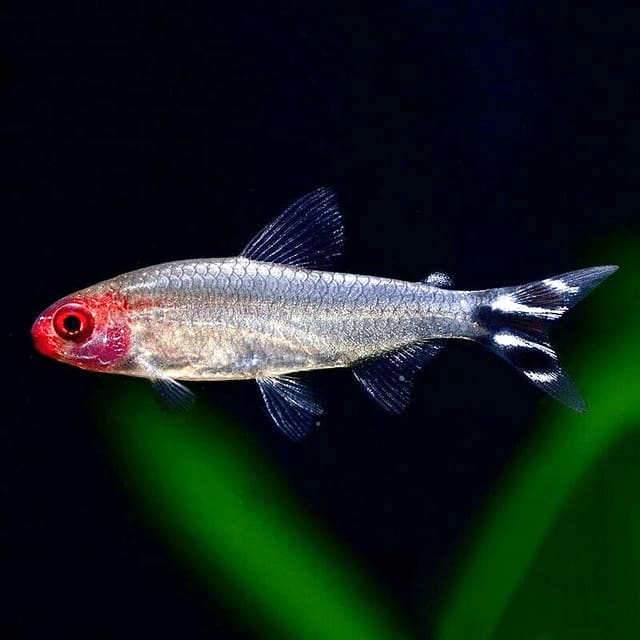
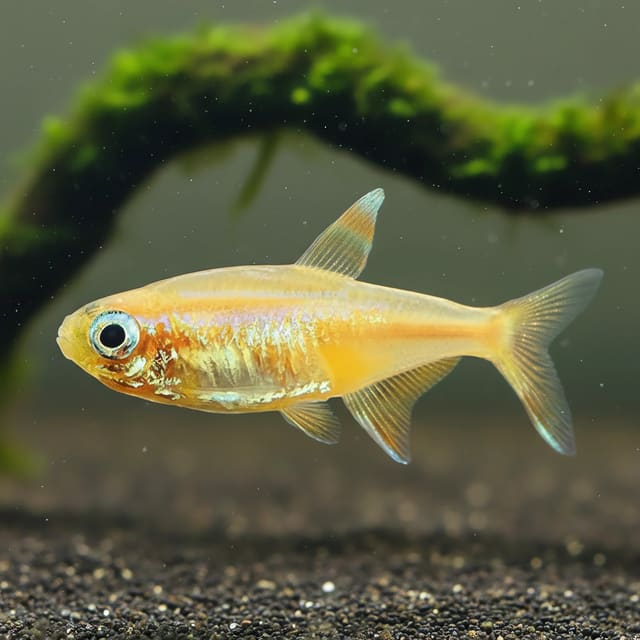
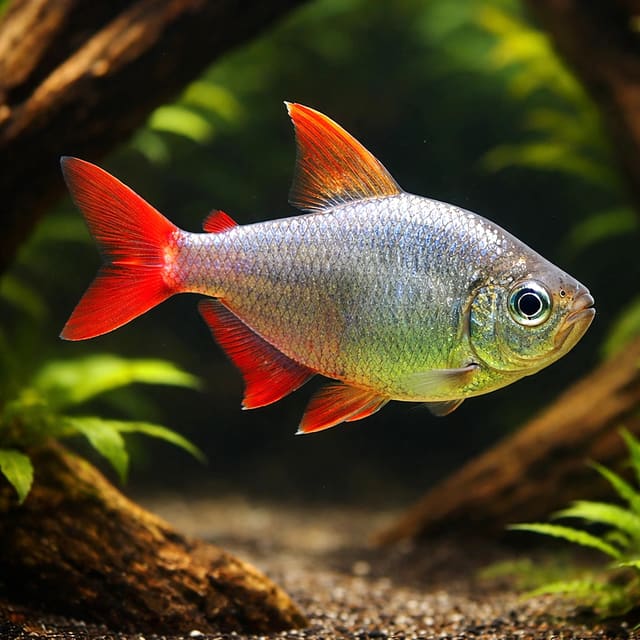
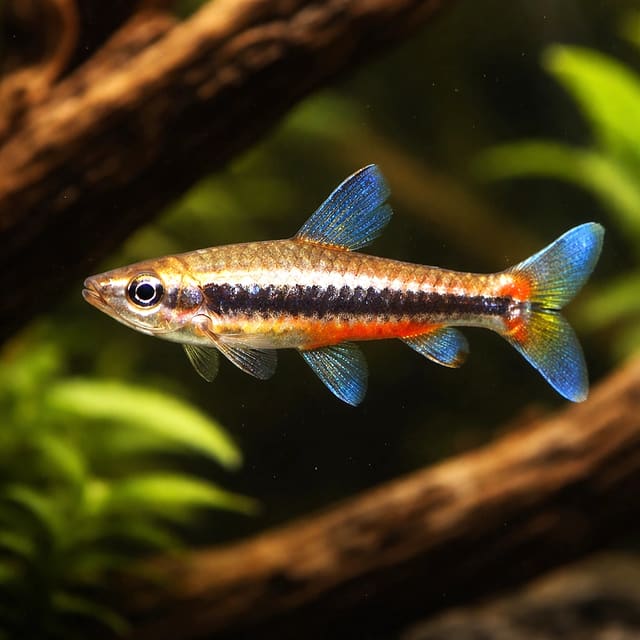
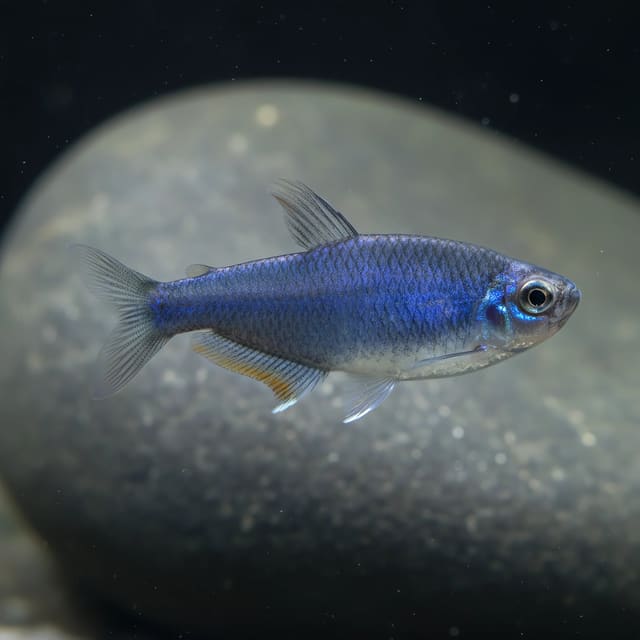
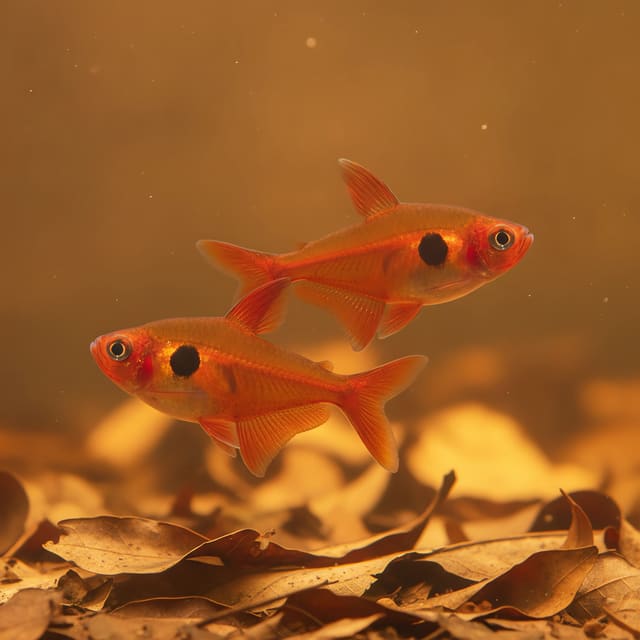
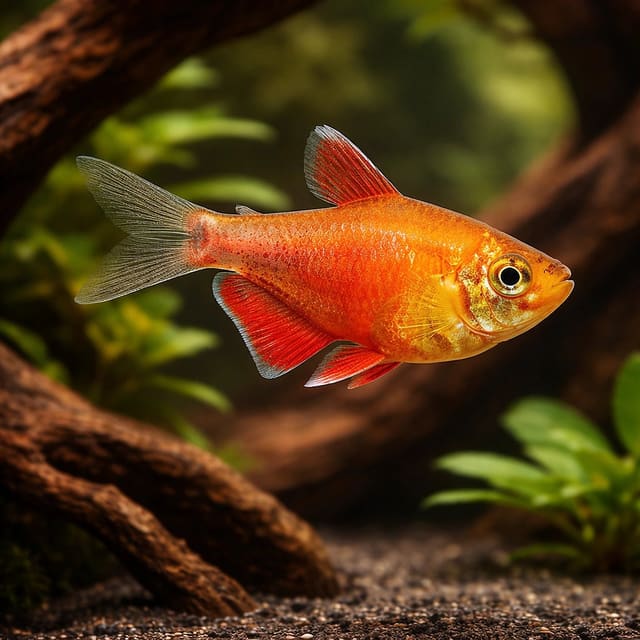
The gallery images are representative, based on reference photographs of this species, so colours can look slightly different from the live animal.
Keep the aquarium at 22–27°C, pH 6.5–8.0 and 4–12°dH. OATA’s tetra and pencilfish sheet gives these as group guidance. It also gives carbonate hardness of 3–10°dKH, ammonia and nitrite at zero milligrams per litre, and nitrate no more than 20 milligrams per litre above the normal tap-water level.
Choose a stable point inside these ranges rather than deliberately moving between the minimum and maximum. For example, an aquarium operating steadily at 24°C and pH 7.2 sits within the guidance. A sudden move from one end of a range to the other is not a useful test of hardiness.
| Value | Routine target |
|---|---|
| Temperature | 22–27°C |
| pH | 6.5–8.0 |
| General hardness | 4–12°dH |
| Carbonate hardness | 3–10°dKH |
| Ammonia | Zero mg/l |
| Nitrite | Zero mg/l |
| Nitrate | No more than 20 mg/l above normal tap water |
Test the aquarium rather than judging water quality by clarity. Clear water can still contain toxic ammonia or nitrite. Record results before adding the fish, after increasing the population and during weekly maintenance. Our water chemistry guide explains each value, while the water matcher helps compare measured water with these ranges.
If ammonia or nitrite is above zero, pause further stocking and correct the water quality before adding fish. If temperature, pH or hardness is outside the stated range, adjust it gradually and test again. Change one variable at a time so the result remains clear.
A well-established biological filter is essential. The RSPCA explains that fish release toxic ammonia; filter bacteria convert it to nitrite, which is also toxic, and then to the safer nitrate. This biological process is why a newly filled aquarium is not automatically ready for a group of fish.
Prepare and mature the aquarium before the shoal arrives. The filter must run continuously and provide enough biological capacity for the whole community, not only the new tetra. Use the steps in our first tropical aquarium guide to organise maturation, testing and the first stocking decisions.
OATA warns that stocking too quickly can cause new tank syndrome because the beneficial bacteria may not yet be numerous enough to process increased waste and feeding. Build the population gradually, test at least weekly and test again whenever behaviour suggests water quality may have changed.
Do not clean biological media under the tap. Chlorine or chloramine may kill the bacteria established in the filter. During a partial water change, rinse blocked media lightly in the removed aquarium water. Clear enough debris to restore flow without stripping away the working bacterial population.
A mature filter does not remove the need for maintenance. It processes waste into other compounds, while partial water changes remove accumulated nitrate and dissolved waste. Treat filtration, testing and water changes as connected tasks rather than substitutes for one another.
Start with an aquarium at least 80 cm long and arrange it around the movement of an active group. Preserve a clear swimming route through the central or front area, then place shelter and visual structure around the edges. The fish should be able to travel as a shoal, turn comfortably and move away from companions without repeatedly entering a narrow dead end.
OATA recommends gravel or sand, together with live plants where practical. Plastic plants and suitable ornaments can provide cover when live planting is not used. Choose aquarium-safe objects without tight openings that could obstruct a fish approaching the recorded maximum size. Keep every heater, intake and outlet positioned so routine inspection and maintenance remain possible.
| Area | Purpose |
|---|---|
| Open swimming route | Allows the shoal to move and turn without crowding. |
| Planted or decorated edges | Provide cover and break up sight lines. |
| Accessible substrate | Allows waste to be removed during weekly siphoning. |
| Clear equipment access | Makes blockage checks and maintenance easier. |
FishBase records that Buenos Aires tetras eat plants. Treat delicate planting as a compatibility decision rather than assuming every plant will remain untouched. A heavily planted display may change as the fish graze, so monitor new growth and leaf damage. Artificial plants are a practical way to retain cover where preserving live foliage is the priority.
Do not compensate for limited swimming length by removing every shelter. An entirely bare aquarium gives fewer places for fish to move away from activity. Equally, dense décor throughout the full tank can turn an 80 cm aquarium into a series of short compartments. Combine a long open route with cover at the boundaries.
Reassess the layout as the fish grow. A gap that easily accommodates a 3,5 - 4 cm dispatch fish may become restrictive for an animal approaching the larger recorded length. Remove or reposition décor before it blocks turning space, filter flow or access to the substrate.
Buenos Aires tetras are omnivorous. Their recorded wild diet includes worms, crustaceans, insects and plants, while OATA recommends good-quality flake or granules for aquarium tetras, supplemented with small live or frozen foods such as daphnia, small bloodworm or tubifex.
Feed once a day and offer only the amount the group can finish within a few minutes. Begin with a modest amount, watch the whole shoal eat and stop adding food when interest slows or pieces begin settling uneaten. Remove obvious leftovers rather than allowing them to break down.
Match particle size to the fish being fed. Dispatch-size animals need pieces they can take readily, while the food can be adjusted as they grow. If large flakes or frozen items are ignored because they are too big, divide them into smaller portions before feeding rather than adding more.
Overfeeding is a water-quality problem as well as a dietary one. Uneaten food decomposes and increases the load on the biological filter. When leftovers remain after a few minutes, reduce the next portion and check ammonia, nitrite and nitrate. Enthusiastic feeding does not show that the filter is coping.
Observe body condition across the group. A fish that repeatedly misses food may be intimidated, unwell or unable to take the particle size. Watch from more than one position so décor does not hide a struggling individual. If the entire group loses interest in a familiar meal, test the water promptly and compare breathing, colour and swimming with its normal behaviour.
Change 25% of the aquarium water at least once every week. Use a siphon to remove solid waste from accessible areas of gravel or sand, especially where flow carries debris behind décor. Treat replacement tap water with a conditioner that removes chlorine or chloramine before it enters the aquarium.
Test ammonia and nitrite at least weekly and keep both at zero milligrams per litre. Track nitrate against the normal tap-water result and keep the aquarium increase within 20 milligrams per litre. Testing the tap water separately matters because the nitrate comparison starts from that baseline rather than from zero.
A weekly water change is a minimum rhythm, not permission to ignore a poor test result until the next scheduled day. If ammonia or nitrite rises above zero, or the fish show unusual breathing or swimming, act on the water quality immediately. Pause new additions and feeding increases while the biological filter is assessed.
Avoid replacing all filter media at once as part of routine cleaning. Much of the useful bacterial population lives on that media, and removing it can reduce the filter’s ability to process waste. Clear blockages gently and preserve established media wherever it remains serviceable.
Keep a short maintenance record with the date, test values, water-change percentage and any unusual observation. Patterns are easier to recognise when values are written down. A slow nitrate increase, declining flow or repeated leftover food can then be addressed before it becomes a larger welfare problem.
Arrange for someone to receive the parcel so live fish are not left unattended. Read the current delivery and Live Arrival Guarantee policy before the delivery date, including its claim requirements and the instructions that apply when the box is opened.
Prepare the aquarium in advance. Confirm that it is at least 80 cm long, the filter is mature, temperature is within 22–27°C, and ammonia and nitrite are both zero. Complete décor changes and filter maintenance before the fish arrives.
After release, follow OATA’s observation guidance: check swimming, breathing, colour, appetite and the response of resident fish. Surface hanging, bottom sitting, erratic swimming or a marked breathing change calls for an immediate water test.
During the first week, keep the normal once-daily feeding and weekly testing routine. Watch whether every fish reaches food, whether fins remain intact and whether the group uses the planned swimming route. Do not add another group merely because the water remains visually clear; use measured ammonia and nitrite results to judge whether the filter is coping.
Learn the group’s normal swimming, colour, breathing, appetite and use of shelter. Individual fish vary slightly, so the most useful warning is a change from the usual pattern. Check the whole shoal daily during feeding, when differences in appetite and movement are easiest to compare.
| Change you see | First response |
|---|---|
| Surface hanging or bottom sitting | Test ammonia, nitrite, nitrate and temperature promptly. |
| Erratic swimming | Check water quality and observe whether another fish is pursuing it. |
| Faster or slower gill movement | Test the water and confirm normal filter flow. |
| Darker or paler colour | Compare behaviour, feeding and water results with the usual pattern. |
| Hiding more than normal | Check compatibility, group size and access to shelter. |
| White spots, fluffy growths or damaged scales | Test the water and record the visible signs before choosing any response. |
| Reduced food intake | Check particle size, competition and water quality. |
Water quality is the first practical check because ammonia and nitrite are toxic and should remain at zero. Also inspect filter flow, recent maintenance, missed conditioner, excess food and rapid stocking changes. Correct an identifiable husbandry problem without making several abrupt changes simultaneously.
Fin damage may reflect unsuitable companions as well as physical décor. Observe which fish interact before rearranging the entire aquarium. Timid or long-finned companions should not share the aquarium with this tetra, and persistent pursuit means the stocking plan needs reassessment.
If a health change continues after immediate water and equipment checks, contact us for further guidance. Record the test values, temperature, recent additions, feeding response and visible signs so the situation can be assessed clearly. Do not begin an unspecified treatment solely from one general symptom.
Buenos Aires Tetra Gold should be assessed as a larger, more boisterous tetra. OATA advises that Buenos Aires tetras should not be kept with timid or long-finned fish because they may nip fins. It recommends mixing tetras with fish of a similar size and temperament.
That rule is more reliable than a universal list of named tank mates. Behaviour, adult size, water requirements and the aquarium’s layout all matter. A fish described as peaceful may still be a poor match if it is timid or carries long fins that may be nipped.
| Question | Decision |
|---|---|
| Is the proposed companion timid? | Avoid the combination. |
| Does it have long fins? | Avoid the combination. |
| Is it similar in size and temperament? | Continue checking water needs and aquarium capacity. |
| Will both groups fit at adult size? | Calculate the full community before adding either group. |
| Can every fish reach food? | Observe feeding closely after introduction. |
Use adult size for both species, not their measurements at dispatch. The Buenos Aires tetra has a recorded maximum of 13.2 cm total length, so a companion chosen while both are small may become unsuitable as they grow. Aquarium capacity must include the full shoal of at least five and every resident fish.
Water compatibility is part of the same decision. A prospective companion should fit 22–27°C, pH 6.5–8.0 and 4–12°dH without forcing either fish outside its appropriate range. Similar appearance or activity cannot compensate for conflicting water requirements.
Compatibility between individuals always carries some uncertainty. Observe new introductions for pursuit, hiding, fin damage, missed meals and altered breathing. For a stocking and compatibility assessment, contact us with the aquarium dimensions, test results, resident species and numbers, and the intended group size.
Keep at least five Buenos Aires tetras together. Tetras maintained singly or in groups that are too small will often become stressed, while FishBase gives five or more specifically for this species. Treat five as the minimum group decision rather than as a guarantee that every social or compatibility issue disappears.
Count the complete group whenever fish are moved, lost or added. If the number falls below five, first confirm that the aquarium can support an increase and that ammonia and nitrite are zero. Restore the group gradually where needed rather than responding with an unplanned stocking jump that overwhelms the filter.
Plant damage should not automatically be interpreted as inadequate feeding. The species includes plants in its recorded diet, and OATA instructs keepers to feed only what the fish finish within a few minutes once daily. Adding excess food in an attempt to protect leaves can increase waste without stopping grazing.
If preserving delicate live plants is central to the aquarium design, this tetra may conflict with that goal. Tougher planting cannot be promised to remain untouched, so inspect new leaves and growing tips regularly. Artificial plants and suitable ornaments can provide cover without depending on live foliage.
After introducing a companion, check the aquarium at feeding time and during ordinary swimming. Look for one fish being repeatedly displaced, long fins developing tears, persistent hiding, surface hanging or reduced appetite. Test water whenever behaviour changes; poor water quality can affect the whole community and may resemble a social problem.
Make one change at a time where welfare allows. If the group is too small, the aquarium is overcrowded and a long-finned companion is being nipped, adding more tetras without first calculating capacity may create another problem. Prioritise immediate safety, restore water quality where necessary and then redesign the stocking plan around adult size.
FishBase records a maximum of 13.2 cm total length, so plan its permanent aquarium around that adult figure rather than the dispatch size.
Use a mature, filtered aquarium at least 80 cm long, with cover around the edges and a clear route for active swimming.
Keep at least five; FishBase gives a group of five or more, and OATA warns that tetras kept singly or in undersized groups will often become stressed.
It can suit beginners who can provide a mature filter, an aquarium at least 80 cm long, a group of at least five and compatible companions; FishBase describes it as one of the hardiest tropical aquarium fishes.
Feed good-quality flake or granules once daily, offering only what it finishes within a few minutes, and add small live or frozen daphnia, small bloodworm or tubifex for variety.
OATA’s tetra-group guidance gives 22–27°C, pH 6.5–8.0 and general hardness of 4–12°dH; keep ammonia and nitrite at zero milligrams per litre.
It is a larger, boisterous tetra that may nip fins, so avoid timid or long-finned fish and keep a group of at least five.
Screen companions for similar size and temperament, compatible water needs and enough aquarium capacity; avoid timid or long-finned fish.
Someone must be present to receive it. Film every delivery continuously from the sealed parcel as it is opened, with the fish still in the sealed bag; float the bag for 20–30 minutes, then release the fish without pouring the bag water into the aquarium.
No reviews for this item yet. Bought one? Honest reviews only, good or bad.
What customers say about ordering from us
I have a small group of long finned mountain minnows. So was delighted to be able to order ten of this variety to increase the genetics in my tank . The ones I recieved are healthy but it’s to early to give a verdict on wether they are of a long finned type since they are small currently.
Gordon Walker · 23 Sept 2026
100% success travel and "installation". Pleased with quality of purchase. The Siamese fighter a bit "shy" so have not yet seen him at his best yet but looking good. Happy customer. GG
George E Garratt · 21 Sept 2026
Reviews of our shop, collected by Judge.me, an independent third-party review collector. Newest first.