Moderate
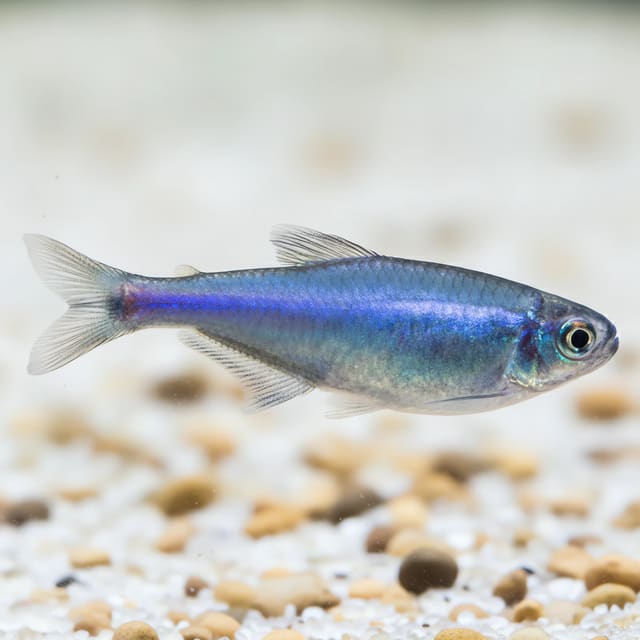
Neon Tetra (Paracheirodon innesi)
21–25°C · pH 5–7
£2.99

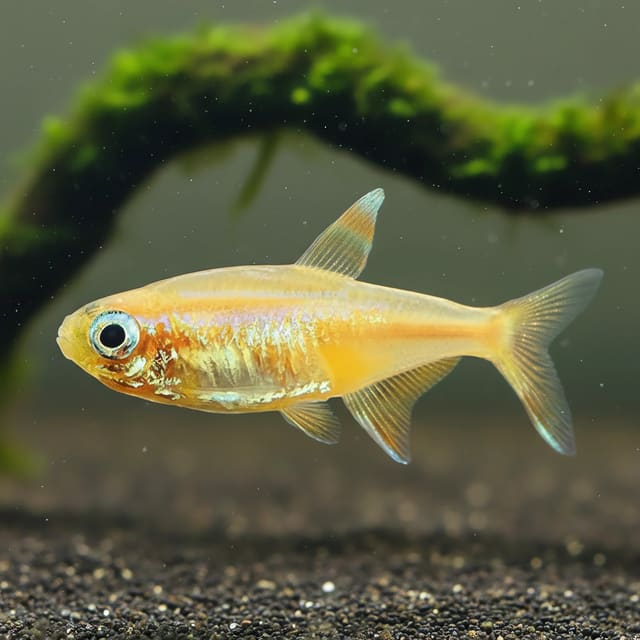
The Glass Bloodfin Tetra (Prionobrama filigera) is a generally peaceful Characidae tetra from the Amazon River basin in South America that reaches 6 cm. It suits beginners in a mature aquarium: keep at least 6–8; FishBase, Seriously Fish and OATA overlap at 23–27°C and pH 6.5–7.5. Sold individually in the labelled dispatch sizes 2-3 cm, > 4.5 and 3.5 cm.
Adult size is the maximum length this species reaches at full maturity (scientific sources). The livestock you receive will be younger and smaller — pick a size above for the actual shipping size. Product-photo provenance and any image-specific limitations are stated on the listing.
Prionobrama filigera
Shoaling fish: kept in a group they feel safer, stay calmer and show their best colour.
Minimum of 2 per order.
The Glass Bloodfin Tetra (Prionobrama filigera) is a generally peaceful Characidae tetra from the Amazon River basin in South America that reaches 6 cm. It suits beginners in a mature aquarium: keep at least 6–8; FishBase, Seriously Fish and OATA overlap at 23–27°C and pH 6.5–7.5. Sold individually in the labelled dispatch sizes 2-3 cm, > 4.5 and 3.5 cm.
Adult size is the maximum length this species reaches at full maturity (scientific sources). The livestock you receive will be younger and smaller — pick a size above for the actual shipping size. Product-photo provenance and any image-specific limitations are stated on the listing.
Maintain these water conditions for optimal health and vibrant colors
The Glass Bloodfin Tetra (Prionobrama filigera) is a freshwater characin from the Amazon River basin in South America. FishBase places it in the tetra family Characidae and records a maximum length of 6 cm. It is a generally peaceful, active, open-water fish for keepers who can provide a mature filtered aquarium, a proper group and uninterrupted swimming room.
Seriously Fish describes it as an excellent choice for beginners because it is relatively unfussy about water chemistry, food and companions. That suitability still depends on meeting its group, space and water-quality needs from the start. It is not a fish for a bowl, an unfiltered aquarium or a plan based on keeping a single specimen.
| Suits | Not suited to |
|---|---|
| A mature, filtered freshwater aquarium | An unfiltered or newly established system |
| A group of at least 6–8 | Keeping one fish alone |
| Open upper-water swimming space with plants around it | A crowded layout without a clear swimming lane |
| Peaceful companions enjoying similar conditions | Bigger, fast-swimming fish using the same water area |
Although 6 cm is modest, this species is active and pelagic. It usually uses the upper water layers, so horizontal room and an unobstructed route matter more than decorative height. A group also needs enough surface access for feeding without being crowded by faster fish.
Choose it when you want a social tetra whose behaviour is central to the display. The practical commitment is a complete group, stable tropical conditions and space arranged around regular movement rather than a single feature fish.
One purchase supplies one Glass Bloodfin Tetra in the size selected. Use the live size selector to choose from the labels 2-3 cm, > 4.5 and 3.5 cm. The size you select is the size supplied, not the adult size. Every fish therefore needs the same adult aquarium plan regardless of its dispatch label.
A smaller dispatch fish is not a reason to begin with a smaller aquarium. Prepare the full footprint, filtration, group capacity and compatible community before arrival. Planning this way avoids moving the fish simply because it grows towards the recorded 6 cm adult length.
Sex is guaranteed only when the selected option explicitly states male or female. This Glass Bloodfin Tetra listing has no sex-guaranteed option.
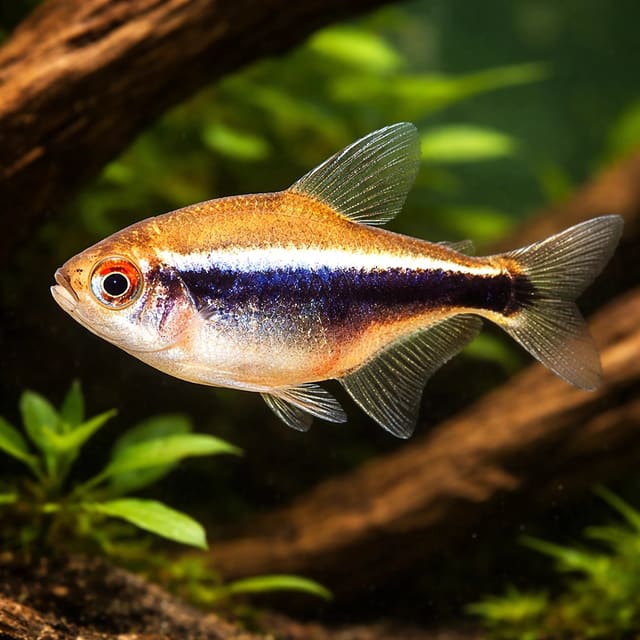
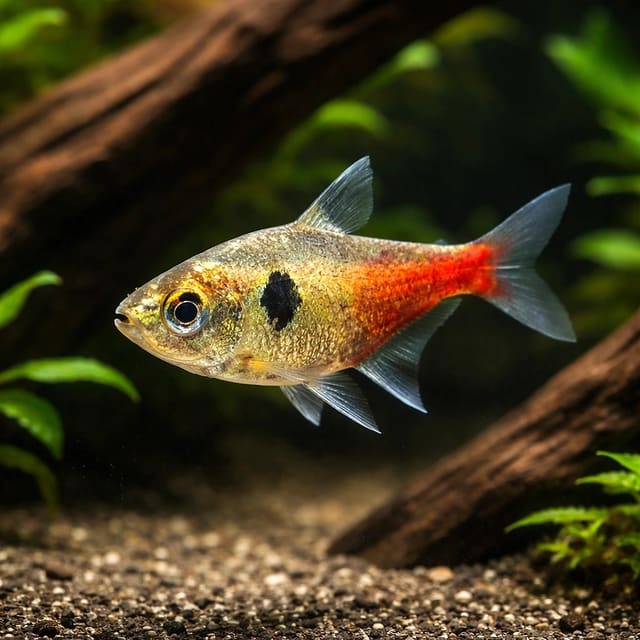
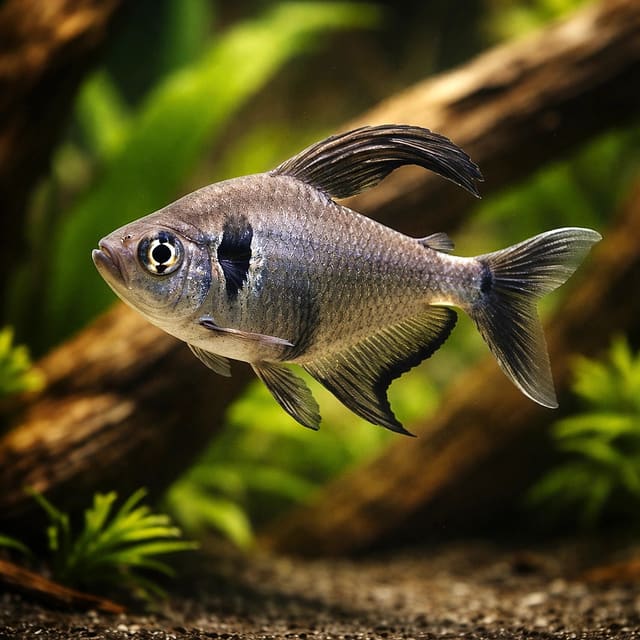
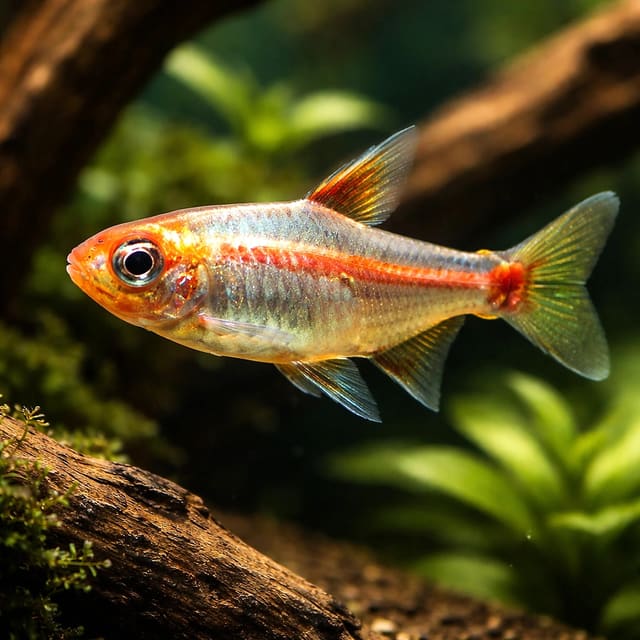
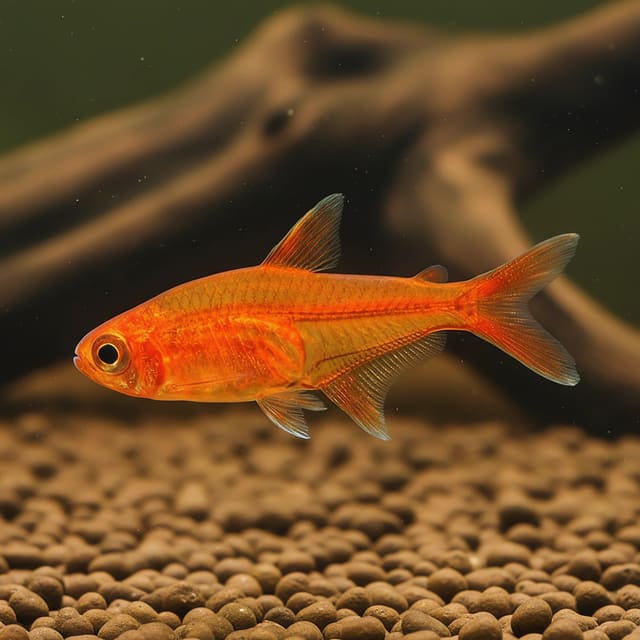
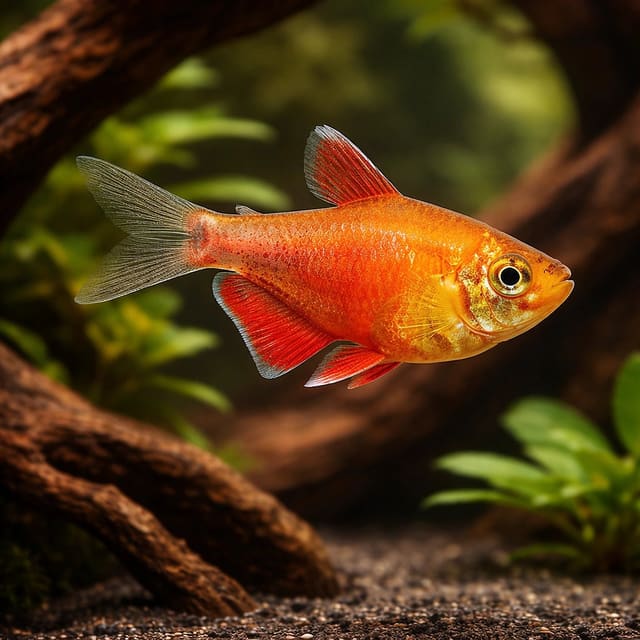
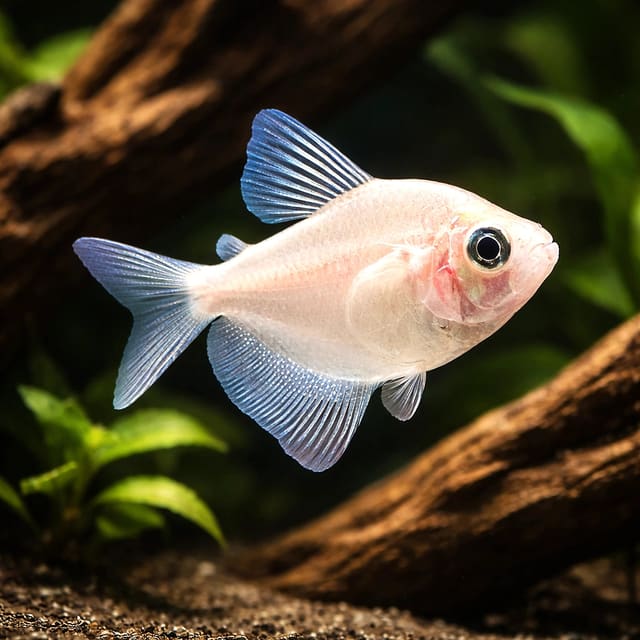
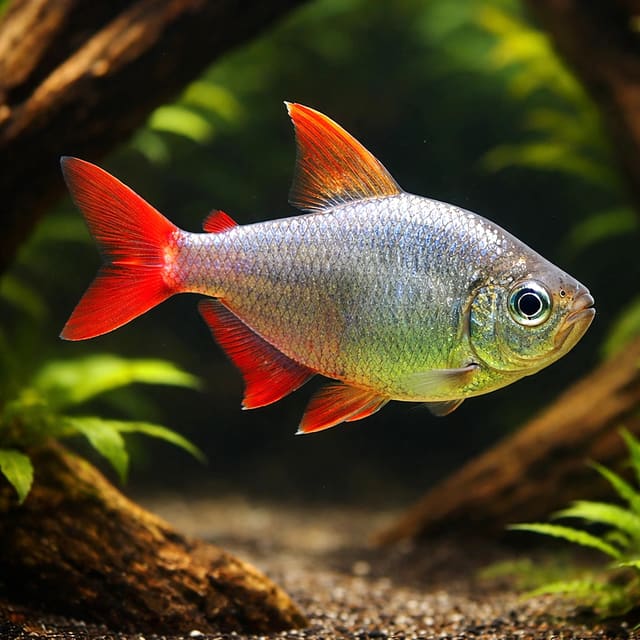
The gallery images are representative, based on reference photographs of this species, so colours can look slightly different from the live animal.
The fish are sold individually, while the species should be kept in groups of at least 6–8. A group of eight meets that recommendation and gives a clear starting number when calculating aquarium capacity. More can be considered only when the aquarium has suitable space, filtration and total stocking capacity.
Use the selector for the supplied size and quantity, then judge the aquarium by the adult group. If you are comparing related fish before making that decision, browse our tetras collection and compare adult size, group needs, swimming zone and water requirements rather than colour alone.
Keep the aquarium at 23–27°C, pH 6.5–7.5 and 4–12 dGH for a practical routine target. The temperature and pH are the overlap of FishBase, Seriously Fish and OATA’s tetra guidance; the hardness target is the overlap of Seriously Fish and OATA. OATA’s figures are group guidance, not a species-specific optimum.
Seriously Fish says a 60 × 38 cm base with a volume of about 68 litres is just about acceptable for a small group. Because this species reaches more than 5 cm, OATA’s broader tetra guidance recommends at least 80 litres for the larger size category. Plan around 80 litres or more where possible while treating the 60 × 38 cm base as a firm footprint reference.
| Decision | Planning figure |
|---|---|
| Adult size | 6 cm |
| Social group | At least 6–8 |
| Routine temperature | 23–27°C |
| Routine pH | 6.5–7.5 |
| Routine hardness | 4–12 dGH |
| Base reference | 60 × 38 cm |
| Practical volume plan | 80 litres or more |
Numbers describe the operating range, but stability decides whether the plan works. Confirm the aquarium can maintain the chosen temperature and chemistry before adding the group. Match companions to the same range, leave capacity for their combined waste and avoid repeated changes made simply to chase a particular point within the range.
Arrange the aquarium around a long, open route through the upper water layers. Seriously Fish describes this active species as pelagic and usually found in the upper water layers in nature, and says the aquarium should contain plenty of open space for swimming. Plants and wood should frame that route rather than divide it into narrow gaps.
Use a base of at least 60 × 38 cm. About 68 litres is just about acceptable for a small group, while 80 litres or more gives a more practical margin for a group of at least 6–8 fish that each reach 6 cm. Additional volume is useful only when the shape still provides horizontal swimming room.
A tall, narrow aquarium can hold a similar volume while giving less useful movement space. Check the base dimensions as well as the litre figure, and keep the upper-front or upper-centre area clear from end to end. Place tall plants where they offer cover without blocking that route.
A well-planted aquarium with patches of floating plants suits this species. Surface vegetation will help calm fish that become skittish, especially when they are first introduced, but it should not cover the entire surface. Leave clear areas where the group can reach food and where water can move freely.
Driftwood twigs and leaf litter can be used to create a natural-looking lower area. Keep wood stable, use aquarium-safe materials and make sure decorative branches do not project into the main swimming lane. Plants around the sides and rear preserve cover while allowing the group to move together.
Review the route after plants grow. A layout that begins open can become crowded, so trim vegetation before it removes the swimming space on which the original aquarium plan was based.
Use a mature biological filter before adding Glass Bloodfin Tetras. The RSPCA explains that aquarium filters provide a home for beneficial bacteria that process toxic ammonia into nitrite and then into the safer nitrate. A running filter is not enough by itself; the bacterial population must be established and capable of handling the aquarium’s livestock and feeding load.
If this is your first aquarium, follow our first tropical tank preparation guide before arranging an arrival. Confirm that the heater, filter and test routine work consistently in the completed aquarium rather than testing equipment for the first time with fish present.
This species needs at least 6–8 together, so account for the waste produced by the planned group. OATA advises increasing aquarium populations slowly because beneficial bacteria need to respond as fish numbers and feeding increase. If other livestock already live in the aquarium, assess the combined load before adding another complete group.
Do not solve limited biological capacity by planning to keep one Glass Bloodfin Tetra alone. Instead, improve the aquarium plan before purchase: provide sufficient mature filtration, reduce other stocking where appropriate or choose a larger established aquarium that can receive the required group.
A clear aquarium is not automatically a biologically safe aquarium. Ammonia and nitrite are invisible, so use suitable tests rather than appearance as the test of readiness. Delay adding fish when either reading is above zero.
Keep enough access around the filter to inspect it without dismantling the aquascape. Early recognition of reduced flow or a blocked intake is easier and safer than waiting for water quality to deteriorate.
Maintain 23–27°C, pH 6.5–7.5 and 4–12 dGH as the routine target. These are practical overlap values: FishBase, Seriously Fish and OATA overlap on the temperature and pH target, while Seriously Fish and OATA overlap at 4–12 dGH. Choose a stable point within those ranges rather than allowing values to move repeatedly between their limits.
Use our water chemistry guide to understand what each test measures, then compare your readings with the target through the aquarium water matcher. Test the actual aquarium and the replacement water used during maintenance; assumptions based only on local tap-water reputation can miss changes within a home or supply area.
At least once every week, make a partial water change of 25%. Follow this schedule consistently to remove accumulated waste and support stable water quality. Use a siphon to remove solid waste from accessible gravel or sand while preserving the planted cover and open swimming layout.
Treat replacement tap water with a conditioner that removes chlorine or chloramine before adding it to the aquarium. Bring the replacement water into a suitable condition for the aquarium and avoid a sudden temperature or chemistry shift during the change.
| Reading or observation | Action |
|---|---|
| Ammonia above zero | Stop adding livestock, check the filter and feeding, and act before the reading rises further. |
| Nitrite above zero | Treat it as an immediate water-quality problem and inspect biological filtration. |
| Nitrate rising | Review stocking, feeding and the weekly water-change routine. |
| Temperature moving outside 23–27°C | Check the heater, room conditions and thermometer. |
| pH drifting | Compare aquarium and replacement water before making adjustments. |
OATA advises keeping nitrate no more than 20 mg per litre above the normal tap-water level. Record both figures so the aquarium reading is interpreted against its actual starting point rather than against an isolated number.
Check the filter for blockages. When the media needs cleaning, do not run it under the tap. Rinse it lightly in aquarium water removed during a partial water change, which reduces the loss of its beneficial bacterial population.
Choose equipment from the completed aquarium’s real volume, shape and room conditions. For the Seriously Fish reference aquarium of about 68 litres, a turnover of four to five times the aquarium volume per hour corresponds to a filter rating of about 270–340 litres per hour. Treat that as a starting equipment calculation, then check how the filter performs after media, plants and décor are in place.
Position the outlet so water moves throughout the aquarium without forcing the group into one sheltered corner. The upper-water route should remain usable in both directions. If the fish continually struggle against one concentrated jet, redirect or diffuse that jet while maintaining circulation through the rest of the system.
Do not judge filtration only from the printed flow rating. Media, pipework and blockages can reduce output, while an outlet aimed through a narrow gap may create a locally forceful current. Check movement across the whole aquarium and inspect the filter whenever its normal sound, output or surface movement changes.
Seriously Fish estimates roughly 75–100 W to hold 23–27°C in an aquarium of about 68 litres when the room is around 20°C. That example is a planning calculation, not a reason to ignore the manufacturer’s aquarium-volume guidance or the temperature of the room in which the aquarium stands.
Use a separate aquarium thermometer to confirm the result. Place it where it represents the main water body rather than directly beside the heater. Check the reading at different points in the normal household routine until you know that the aquarium remains within 23–27°C.
Stable equipment supports stable water. Keep spare test supplies and water conditioner ready for routine maintenance, and arrange cables and access so the filter and heater can be inspected without disturbing the group or dismantling the aquarium.
Feed a varied diet that reflects this species' natural feeding on small invertebrates. Seriously Fish links the upturned mouth and slightly keeled body to feeding primarily on small invertebrates taken from the water surface in the wild. In the aquarium, it particularly favours live and frozen Daphnia, bloodworm and Cyclops, while most specimens also accept suitable dried foods.
Use a quality dried food of an appropriate particle size as the regular prepared component, then rotate Daphnia, small bloodworm or Cyclops for variety. OATA’s tetra guidance also supports quality flake or granules with small live or frozen foods. Every item must be small enough for the fish to take promptly.
Feed once a day and offer only what the group can eat within a few minutes. This schedule follows OATA’s portion guidance and gives a clear limit for adjusting quantity. Activity at the surface is not a reason to continue adding food after the planned portion has been eaten.
Place food where the fish naturally feed, then watch whether the whole group reaches it. Avoid releasing one large clump in a single point. Several small placements across the open feeding area can reduce crowding while still keeping the total portion within the few-minute limit.
| What you see | What to change |
|---|---|
| Food remains after a few minutes | Reduce the next portion and remove accessible leftovers. |
| Food reaches the bottom uneaten | Use a smaller particle or place less at the surface. |
| Only the fastest fish feed | Distribute the same total portion across more than one surface point. |
| Interest in food falls | Test water quality and check for other changes in behaviour or appearance. |
| Condition changes over time | Review portion size, food variety and access across the group. |
Overfeeding allows uneaten food to break down and release waste into the water. It also increases the load on the biological filter. Adjust the next feed rather than adding compensating products to an aquarium receiving too much food.
Variety means rotating suitable foods, not increasing the total amount. Keep the once-daily schedule and use observation to refine the portion for the actual number of fish in the aquarium.
Observe the whole group at the same time each day, especially after introduction. Surface vegetation will help calm Glass Bloodfin Tetras, which can occasionally be a little skittish when first added. Give them planted cover and an open route rather than reacting to initial caution by making repeated changes to the aquarium.
OATA advises watching swimming behaviour, colour, temperament, breathing, appearance, body condition and feeding. Changes become more useful when compared with the fish’s normal pattern, so keep brief notes during the first week rather than relying on memory after a problem develops.
Watch whether the group has enough room to move without continual competition from other upper-water fish. Check that all companions share the routine temperature and pH range and that feeding remains accessible. Review the aquarium after plants settle and trim growth that begins to block the planned route.
Continue weekly testing even when the aquarium looks clear. Beneficial bacteria must respond to the additional waste and feeding associated with the new group. A stable first few days do not replace the weekly ammonia, nitrite and nitrate routine.
| Change | First action |
|---|---|
| Hanging at the surface or sitting on the bottom | Test water and check temperature and filter operation. |
| Erratic swimming | Check water values and look for competition or obstruction. |
| Faster or slower gill movement | Test water promptly and inspect circulation. |
| Hiding more or becoming unusually aggressive | Review group size, space and companions. |
| Reduced feeding | Check water quality and compare other health signs. |
| White spots, fluffy growths or damaged scales | Test water and contact us for further guidance. |
Do not treat every brief movement as a problem. Look for a change from the group’s normal pattern, then use test results and direct observation to decide the next step.
Prepare the mature aquarium, confirm its water values and make sure someone is in to receive the parcel, because live fish must not be left unattended. Fish are packed in pure oxygen inside an insulated box, with a heat pack used when the weather calls for it. Read our delivery and Live Arrival Guarantee policy before the arrival day.
For a Live Arrival Guarantee claim, contact us on the same day with the order number and continuous unboxing video showing the sealed parcel, the opening and the fish inside the sealed bag.
Give the group access to the open upper-water route and planted cover already arranged for it. Surface vegetation will help calm newly introduced fish. Avoid rearranging the whole aquarium in response to temporary caution; first confirm temperature, ammonia, nitrite and the behaviour of existing companions.
Watch feeding access and swimming during the settling period. If a fish behaves differently from the rest of the group, test the water before making assumptions. Keep ammonia and nitrite at zero mg per litre and verify that the temperature remains within 23–27°C.
The arrival process works best when every aquarium decision has already been made: the filter is mature, the full social group has been planned, companions have been screened and the final adult footprint is in place.
Choose peaceful fish that enjoy 23–27°C, pH 6.5–7.5 and a compatible hardness, then compare adult size, swimming zone, activity and feeding speed. Glass Bloodfin Tetras are generally peaceable, but compatibility depends on the aquarium giving every species enough room and reliable access to food.
Seriously Fish names similarly sized characins, Corydoras, smaller Loricariid catfish, Apistogramma and Mikrogeophagus as suitable companions. In a suitably sized aquarium, Seriously Fish also names slightly larger cichlids such as angelfish or discus as good companions. Each name is a candidate for screening, not a reason to ignore the companion’s own group, footprint or water needs.
| Candidate | Check before mixing |
|---|---|
| Similarly sized characins | Shared water values, group capacity and upper-water space |
| Corydoras | Suitable temperature, substrate and total stocking load |
| Smaller Loricariid catfish | Adult size, space, water range and feeding access |
| Apistogramma or Mikrogeophagus | Water values, territory and aquarium footprint |
| Angelfish or discus | A suitably sized aquarium and matching conditions |
Avoid bigger, fast-swimming species that inhabit the same area of the aquarium. Seriously Fish warns that Glass Bloodfin Tetras do not do well when competition for space and food is fierce. A bigger, fast-swimming fish sharing the upper water still competes for space and food, so choose a different companion.
OATA’s broader tetra advice favours species of a similar size and temperament. Use that as the first screening filter, then leave out any bigger, fast-swimming fish that use the same area.
If any one of these checks fails, change the companion or the aquarium plan before mixing the fish.
Keep at least 6–8 Glass Bloodfin Tetras together. Seriously Fish says the species should always be maintained in a group of at least 6–8, while OATA warns that tetras kept singly or in groups that are too small often become stressed. More can be considered when the aquarium has the footprint, filtration and total capacity to support them.
Rival males may sometimes squabble among themselves. When squabbles happen, judge whether all fish continue to swim, feed and use cover normally.
Persistent hiding, reduced food intake, damaged fins, altered colour, abnormal breathing or a fish repeatedly separated from the group should prompt a water test and a review of space and companions. Those signs require action even when the community was peaceful previously.
| Situation | Decision |
|---|---|
| One fish kept alone | Add enough fish to reach a group of at least 6–8. |
| A group of eight in the correct footprint | The species’ minimum group recommendation is met; still check total stocking. |
| More fish in the same aquarium | Increase only when swimming room, filtration and water quality remain suitable. |
| Another fast upper-water group | Avoid bigger, fast-swimming species using the same area. |
| Brief male rivalry | Observe access to food, space and the condition of every fish. |
| Persistent exclusion or damage | Test water and reassess the group, layout and companions. |
The upturned mouth and surface-feeding biology make the upper feeding area important. A companion can share the same water values yet still be unsuitable if it reaches every portion first. Watch a complete feed rather than assuming that food added to the aquarium is food eaten by every fish.
Use more than one surface placement for the same controlled portion. If faster companions continue to dominate, change the community plan rather than increasing food until uneaten material pollutes the aquarium.
Compatibility is an ongoing condition. Recheck adult size, swimming space and feeding competition as fish grow and plants fill the layout. Preserve the open route and stable water values that made the original combination workable.
It reaches 6 cm. FishBase records 6 cm total length, so plan the aquarium and community around that adult figure rather than the selected dispatch size.
Plan 80 litres or more. Seriously Fish says a 60 × 38 cm base and about 68 litres is just about acceptable for a small group, while OATA recommends at least 80 litres for tetra species over 5 cm.
Keep at least 6–8 together. Seriously Fish gives that minimum for this species, and OATA warns that tetras kept singly or in groups that are too small often become stressed.
Yes. Seriously Fish describes it as an excellent beginner choice because it is relatively unfussy about water chemistry, food and companions. Have its mature filtered aquarium, full group and swimming space ready before it arrives.
Feed it suitable quality dried food with small live or frozen Daphnia, bloodworm and Cyclops. Seriously Fish links its upturned mouth to taking small invertebrates from the surface; OATA advises one portion daily, eaten within a few minutes.
Keep 23–27°C and pH 6.5–7.5, the overlap of FishBase, Seriously Fish and OATA; keep hardness at 4–12 dGH, the overlap of Seriously Fish and OATA. Hold these values stable.
It is generally peaceable, although rival males may sometimes squabble. Persistent fin damage, hiding, feeding loss or unusual aggression is a reason to test the water and reassess group size, space and companions.
It makes an excellent companion for similarly sized characins, Corydoras, smaller Loricariid catfish, Apistogramma and Mikrogeophagus. Angelfish or discus require a suitably sized aquarium. Avoid bigger, fast-swimming species using the same area.
Start filming the sealed parcel before opening it, continue through the opening and show the fish inside the sealed bag. Fish are hand-bagged in pure oxygen and packed in an insulated poly box, with a heat pack when the weather calls for it. Someone must be in to receive the parcel, because live fish must not be left unattended; inspect the fish the same day and float the bag for 20–30 minutes before releasing them.
No reviews for this item yet. Bought one? Honest reviews only, good or bad.
What customers say about ordering from us
I have a small group of long finned mountain minnows. So was delighted to be able to order ten of this variety to increase the genetics in my tank . The ones I recieved are healthy but it’s to early to give a verdict on wether they are of a long finned type since they are small currently.
Gordon Walker · 23 Sept 2026
100% success travel and "installation". Pleased with quality of purchase. The Siamese fighter a bit "shy" so have not yet seen him at his best yet but looking good. Happy customer. GG
George E Garratt · 21 Sept 2026
Reviews of our shop, collected by Judge.me, an independent third-party review collector. Newest first.