Easy
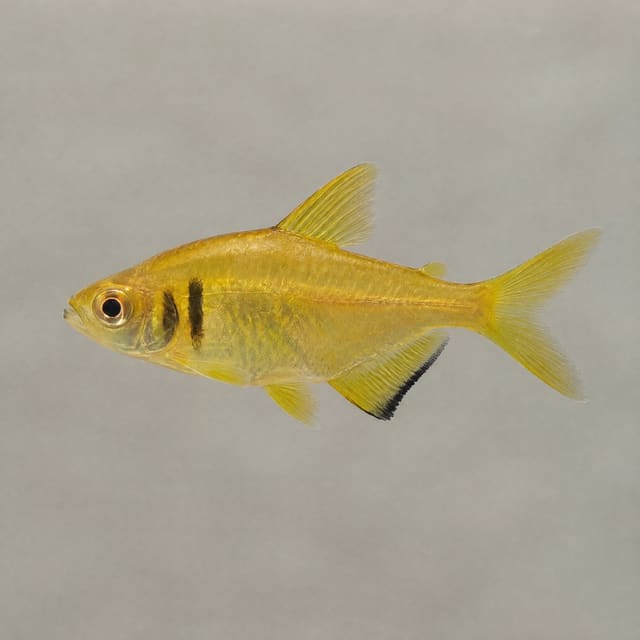
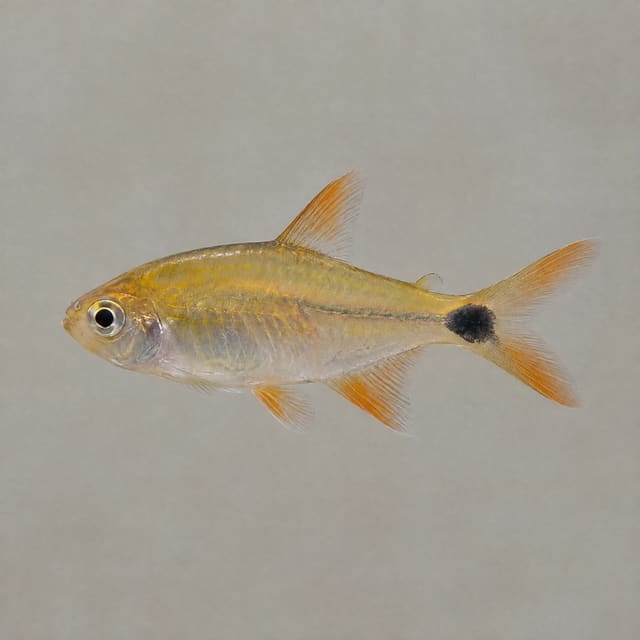
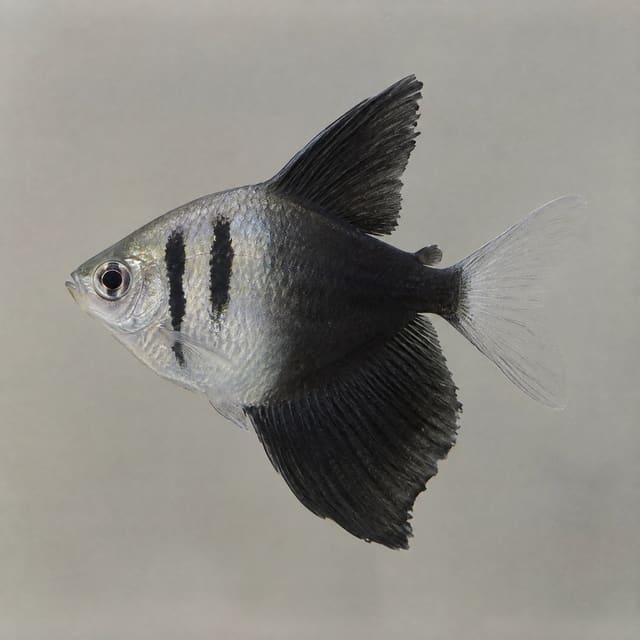
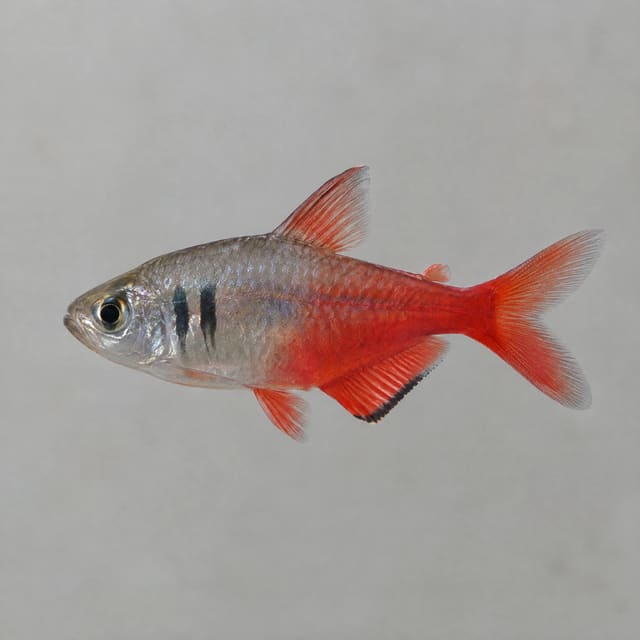
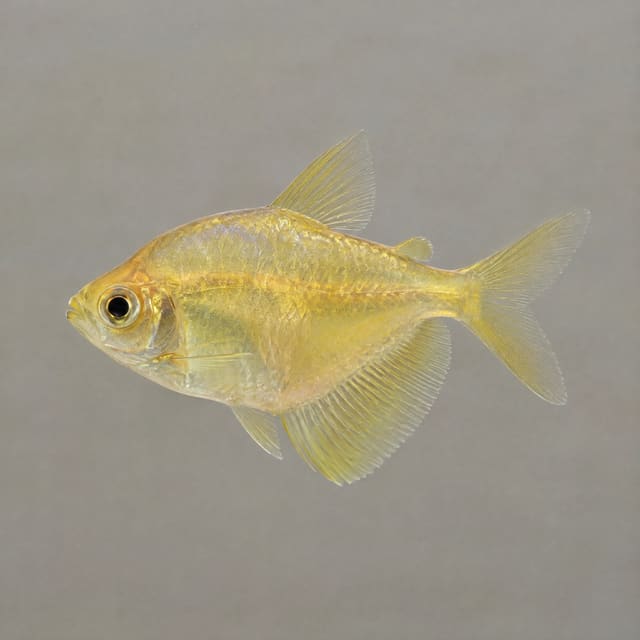
Gold Widow Tetra (Gymnocorymbus ternetzi)
22–26°C · pH 6.5–7 · 68L
£2.99
The Silver Hatchetfish (Thoracocharax securis) is a large, peaceful Amazonian hatchetfish with a deep silver chest and wing-like pectoral fins that lives just below the surface. Keep six or more in a long, lidded tank with floating plants at 23–27°C and feed insect foods. Sold individually as one live fish.
Thoracocharax securis
Quantity discounts are pricing offers, not a group-size recommendation. Check the full care guidance and your existing animals before choosing a quantity.
The Silver Hatchetfish (Thoracocharax securis) is a large, peaceful Amazonian hatchetfish with a deep silver chest and wing-like pectoral fins that lives just below the surface. Keep six or more in a long, lidded tank with floating plants at 23–27°C and feed insect foods. Sold individually as one live fish.
Read the full care guidance when planning conditions for your aquarium.
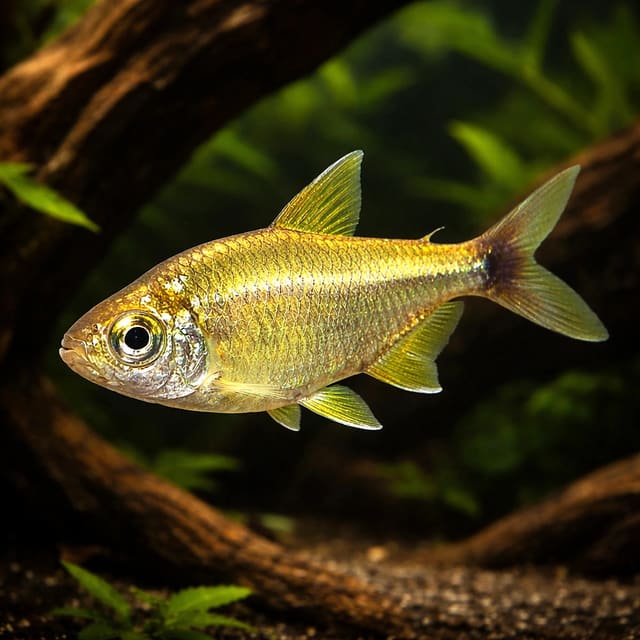
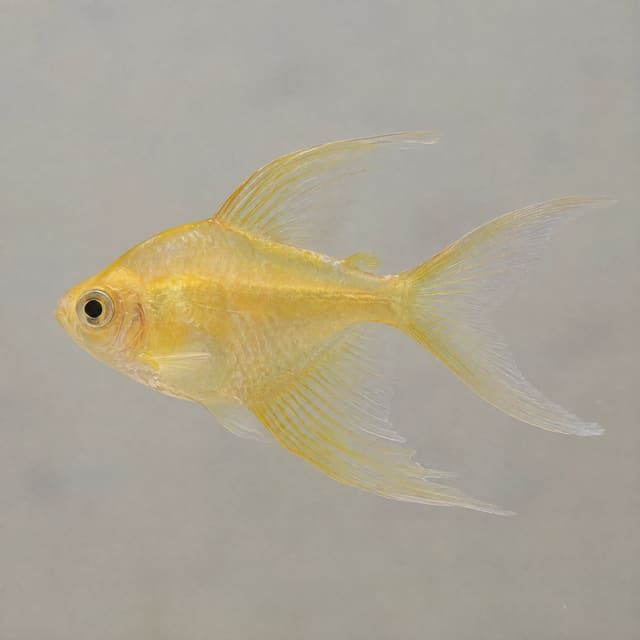
The Silver Hatchetfish, Thoracocharax securis, is a large Amazonian hatchetfish with a deep, keeled chest that gives it the shape of a hatchet blade. Its body is bright silver with a scatter of fine dark speckles and a soft gold sheen along the back, the eye is large and dark, and the long, wing-like pectoral fins sit high on the chest. It spends its life in the upper water, so it fills a part of the aquarium most fish ignore.
FishBase calls this species the giant hatchetfish and gives it 6.8 cm standard length in the wild and up to 9 cm in aquariums, which is large for a hatchetfish. Wikipedia notes that it is rarely seen in the hobby. It is peaceful and nervous, feeds mainly at the surface and needs a group of its own kind, a long tank with plenty of surface area and, above all, a tight lid.
A settled group hangs together just below the surface or in the top third of the water, holding position with small movements of the fins, then dashes up the moment food lands. It makes a calm, unusual addition to a peaceful South American community.
| Suits | Not suited to |
|---|---|
| A long tank, 100–120 cm or more, with a large surface | Tall, narrow tanks with little surface area |
| A tight-fitting lid with every gap sealed | Open-top tanks or lids with gaps around cables |
| A group of six or more | One or two fish on their own |
| Calm tank mates that use the middle and bottom | Boisterous surface feeders and fin-nippers |
| Keepers willing to feed live or frozen insect foods | A flake-only routine |
The Silver Hatchetfish sits with our tetras and characins, and you can browse related species in our South American tetra category.
One purchase quantity supplies one live Silver Hatchetfish. The only option is “Small”, the size grade the fish are sent at, so they are likely to arrive well short of adult size and grow on in your aquarium. The photographs show the species, not the individual fish you will receive. Sex is not specified.
Seriously Fish describes Thoracocharax as nervous, so a calm arrival matters. Have the aquarium mature, heated, tested and fitted with a lid before the fish arrive, and read our delivery and live arrival terms before ordering.
Hatchetfish belong to the family Gasteropelecidae, the freshwater hatchetfishes. Seriously Fish lists three genera: Carnegiella with four species, Gasteropelecus with three and Thoracocharax with two. This fish was described in 1853 by De Filippi as Gasteropelecus securis, and Wikipedia also lists Gasteropelecus pectorosus as a synonym. The genus Thoracocharax was raised to full genus rank in 1960. FishBase gives its range as the Amazon basin and assesses it as Least Concern on the IUCN Red List.
“Silver hatchetfish” is a trade name used for more than one species. We also sell the Silver Hatchetfish Gasteropelecus sternicla, a smaller fish from a different genus, so always check the scientific name when you compare.
The only other Thoracocharax is the Spotfin Hatchetfish, Thoracocharax stellatus. Seriously Fish notes that the two look alike, but the Spotfin Hatchetfish has a prominent dark spot in the dorsal fin, which Thoracocharax securis lacks. Our photographs show the clear dorsal fin without that spot.
| Feature | Thoracocharax securis | Thoracocharax stellatus |
|---|---|---|
| Dorsal fin | No dark spot | Prominent dark spot |
| Adult size | 6.8 cm SL wild; 9 cm TL in aquariums (FishBase) | 70 mm SL (Seriously Fish) |
| Range | Amazon basin (FishBase) | Orinoco, Amazon and Paraná systems (Seriously Fish) |
FishBase gives a minimum aquarium length of 100 cm for this species. Seriously Fish has no separate profile for T. securis, but for its close relative it recommends a surface of at least 120 × 45 cm as the smallest worth considering. Hatchetfish live at the top of the water, so a long, wide tank with a big surface suits them far better than a tall one. OATA’s UK care sheet for tetras sets 80 litres as the minimum for species of 5 cm or more.
The lid is the single most important piece of equipment. FishBase warns that the species may jump out of the aquarium, and Seriously Fish says Thoracocharax can clear several metres in a single leap and that a lid left open overnight often means a fish on the floor by morning. Wikipedia cites glides of up to 2.74 metres, although Seriously Fish points to research showing that hatchetfish use their pectoral fins to leave the water in a powerful jump rather than to fly.
Seriously Fish recommends covering a good part of the surface with floating plants for Thoracocharax, which makes these flighty fish less nervous. It adds that they like some current to swim against now and then but also need quiet areas, and that Thoracocharax tends to sit in the upper third of the water rather than right at the surface like Carnegiella. Decor below is not critical; a planted tank or an Amazon-style layout with wood, sand and leaf litter works well.
Our aquarium plants range includes floating and background plants for this kind of set-up.
| Zone | What it gives the group |
|---|---|
| Floating plants over part of the surface | Shade and security, which reduce panicked jumping |
| An open strip of surface along the front | Somewhere to feed and to see the group |
| A gentle current at one end, calm water at the other | A choice of flow, as Seriously Fish recommends |
| Wood, sand and leaf litter below | An Amazon-style base for bottom-dwelling tank mates |
FishBase gives 23–30°C, pH 6.0–7.5 and hardness up to 15 dH for Thoracocharax securis. Seriously Fish gives 20–28°C, pH 5.0–7.5 and 1–12 dGH for its close relative, and OATA’s general guidance for tetras is 22–27°C, pH 6.5–8.0 and 4–12°dH. The values that satisfy all three are 23–27°C, pH 6.5–7.5 and 4–12 dGH, so that is what we recommend.
UK tap water ranges from soft to very hard. Test your own supply and use our water matcher to see how it compares; softer water suits this species best. Always use a tap water conditioner to remove chlorine or chloramine.
| Reading | Aim for | Where it comes from |
|---|---|---|
| Temperature | 23–27°C | FishBase 23–30°C; Seriously Fish (T. stellatus) 20–28°C; OATA 22–27°C |
| pH | 6.5–7.5 | FishBase 6.0–7.5; Seriously Fish 5.0–7.5; OATA 6.5–8.0 |
| General hardness | 4–12 dGH | FishBase up to 15; Seriously Fish 1–12; OATA 4–12 |
| Ammonia and nitrite | Zero mg/l | OATA |
| Nitrate | No more than 20 mg/l above your tap water | OATA |
Our water chemistry guide explains each reading and how to test it.
OATA recommends testing at least weekly, changing about 25% of the water every week with conditioned replacement water, and rinsing filter media only in removed tank water. Seriously Fish suggests filtration that turns the tank over four to five times an hour for Thoracocharax. Direct the outlet so it ripples part of the surface without turning the whole top of the tank into a current.
Seriously Fish reports a study by Netto-Ferreira and colleagues (2007) in which 99.6% of the diet of Thoracocharax was insects, 87.6% of them land insects that had fallen onto the water. It feeds near the bank from the surface but will dip down for sinking food, and may refuse dried food at first before learning to accept it. Seriously Fish recommends a large share of live and frozen foods such as bloodworm and daphnia, and calls gut-loaded fruit flies excellent when available. OATA advises feeding once a day, only what the fish eat within a few minutes.
A fruit fly culture gives the closest thing to wild food. For everyday meals use insect granules with frozen daphnia and live bloodworms in rotation.
Follow OATA’s floating-bag method, with the lid in place as much as possible:
Our article on how to acclimate new fish covers the same routine.
| When | What to do |
|---|---|
| Before arrival | Test the water; check the lid and seal every gap |
| Day one | Lights off; no food; keep the room quiet |
| Days two to four | Tiny meals of live or frozen insect foods at the surface |
| Days five to seven | Mix in granules; count the fish each day |
| End of the week | Retest and make the first routine water change |
Healthy hatchetfish hold a steady position in the upper water, keep their fins spread and rise quickly to food. OATA lists the warning signs: colour much paler or darker than usual, more hiding, faster breathing, white spots or fluffy growths, damaged fins and loss of appetite. Because hatchetfish compete poorly for food, check every fish at feeding time and watch for a pinched, hollow belly.
| If you see | Do this |
|---|---|
| Hollow belly, chest looks pinched | Feed more live or frozen insect food and check faster fish are not taking it all |
| Fish crashing against the lid | Add floating cover, reduce disturbance and keep the room light steady |
| Fish missing | Check behind and around the tank at once, then seal the gap it used |
| White spots or fluffy patches | Identify the problem before treating and follow the instructions exactly |
| Rapid breathing | Test ammonia and nitrite and change water |
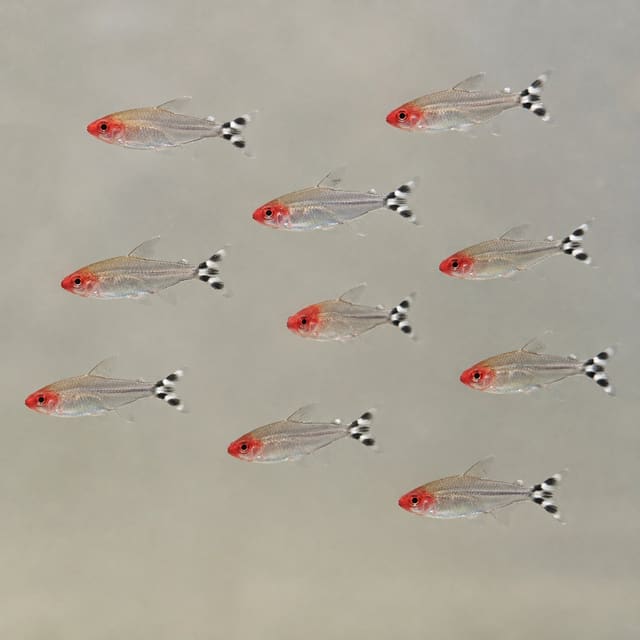
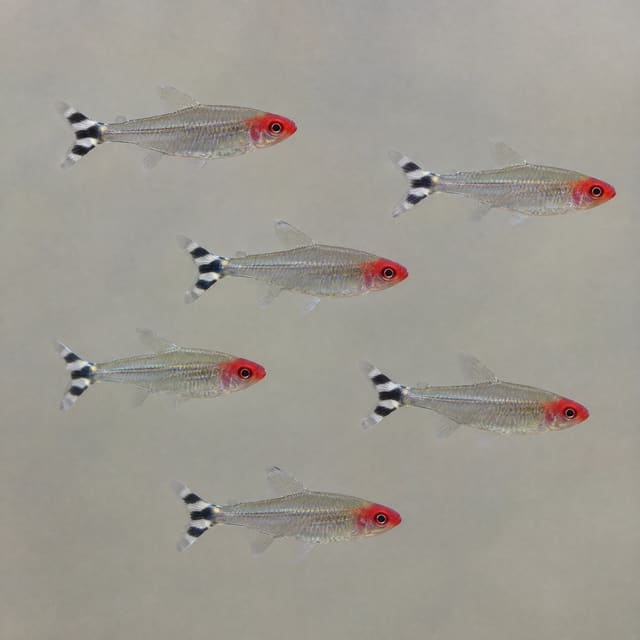
Seriously Fish describes Thoracocharax as very peaceful but nervous, and notes that it does not compete well for food with boisterous species. It recommends tank mates that use different levels of the aquarium: tetras in the middle, bottom-dwelling cichlids such as Geophagus and Satanoperca, and catfish such as Corydoras and plecos. Good choices include Rummy Nose Tetras, Three-Lined Pencilfish, Sterbai Corydoras and, in a large tank, the Demon Eartheater. The smaller Marbled Hatchetfish shares the surface peacefully in a big enough tank. Run any other choice through our tank mates checker.
| Suits | Avoid |
|---|---|
| Peaceful tetras and pencilfish in the middle water | Boisterous fish that rush the surface at feeding time |
| Corydoras and peaceful plecos on the bottom | Fin-nippers such as Buenos Aires tetras |
| Gentle eartheaters in large tanks | Large predatory fish that can swallow it |
| Other hatchetfish in a big enough tank | Fast, greedy fish that take all the floating food |
For more ideas, browse our schooling fish.
Breeding has not been recorded for Thoracocharax in aquariums, according to Seriously Fish. The only visible sex difference it reports is that females are noticeably rounder-bodied when full of eggs. OATA notes that tetras and their relatives are egg scatterers and that home breeding needs a dedicated set-up and specialist fry food, so treat any spawning as a bonus rather than a goal.
OATA reminds keepers never to release aquarium fish or plants into the wild: it is illegal, usually fatal to the fish and can harm native wildlife. Dispose of water, substrate and plant trimmings through the drain or household waste.
This is Thoracocharax securis, a large Amazonian hatchetfish that FishBase calls the giant hatchetfish. “Silver hatchetfish” is a trade name used for more than one species, including Gasteropelecus sternicla, so check the scientific name when you compare listings.
The two are the only species in the genus Thoracocharax and look alike. Seriously Fish notes that the Spotfin Hatchetfish, Thoracocharax stellatus, has a prominent dark spot in the dorsal fin, which Thoracocharax securis lacks.
FishBase gives 6.8 cm standard length in the wild and up to 9 cm total length for aquarium fish. That makes it one of the larger hatchetfish in the hobby.
Yes. FishBase warns that this species may jump out of the aquarium, and Seriously Fish says Thoracocharax can leap several metres. A tight-fitting lid with no gaps is essential.
At least six, and more is better. FishBase gives groups of five or more, and Seriously Fish says Thoracocharax will not settle without its own kind. One purchase supplies one fish.
In the wild Thoracocharax feeds almost entirely on insects, most of them land insects that fall on the water. Offer floating insect-based foods, frozen bloodworm and daphnia, and live fruit flies when you can. Some fish refuse dried food at first.
FishBase gives a minimum aquarium length of 100 cm, and Seriously Fish suggests 120 × 45 cm for its close relative. Choose a long tank with a large surface area and a secure lid.
Calm fish that use other levels of the tank: small and medium peaceful tetras, pencilfish, Corydoras, peaceful plecos and gentle eartheaters. Avoid boisterous surface feeders, fin-nippers and large predators.
No reviews for this item yet. Bought one? Honest reviews only, good or bad.
What customers say about ordering from us
Easy website plenty of info on fish your buying great to pick a time slot
TRACEY DURRANT · 7 Oct 2026
Got some lovely fish thank you
Kevin Mackie · 7 Oct 2026
Reviews of our shop, collected by Judge.me, an independent third-party review collector. Newest first.
Moved by UK carriers licensed to handle live animals
Hand-packed with oxygen bags, poly box, heat pack
Email photos the same day; an optional unboxing video helps us review problems faster — claim terms apply
Klarna & PayPal Pay in 3 at checkout