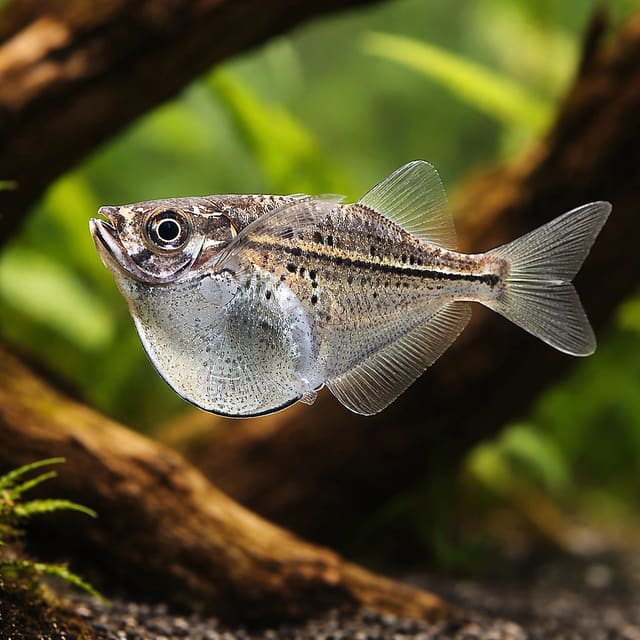
Blackwing hatchetfish (Carnegiella marthae)
23–27°C · pH 5.5–6.5 · 54L
£5.99

Silver Hatchetfish are peaceful, surface-dwelling South American fish with a distinctive wing-like body shape. Best kept in a group in a covered, mature aquarium with calm tank mates, floating foods and steady warm water.
Adult size is the maximum length this species reaches at full maturity (scientific sources). The livestock you receive will be younger and smaller — pick a size variant above for the actual shipping size. Product-photo provenance and any image-specific limitations are stated on the listing.
Gasteropelecus sternicla
Silver Hatchetfish are a shoaling species — they need 6+ to feel safe and show their full colour.
Confirm your email, then we’ll send an availability message for this exact item if it returns within 180 days.
This request is only for this product—no newsletter or other promotions. A mail-provider retry may very rarely duplicate the same availability message. Unconfirmed addresses are removed after 48 hours. See our privacy policy.
Silver Hatchetfish are peaceful, surface-dwelling South American fish with a distinctive wing-like body shape. Best kept in a group in a covered, mature aquarium with calm tank mates, floating foods and steady warm water.
Adult size is the maximum length this species reaches at full maturity (scientific sources). The livestock you receive will be younger and smaller — pick a size variant above for the actual shipping size. Product-photo provenance and any image-specific limitations are stated on the listing.
23–27°C · pH 5.5–6.5 · 54L
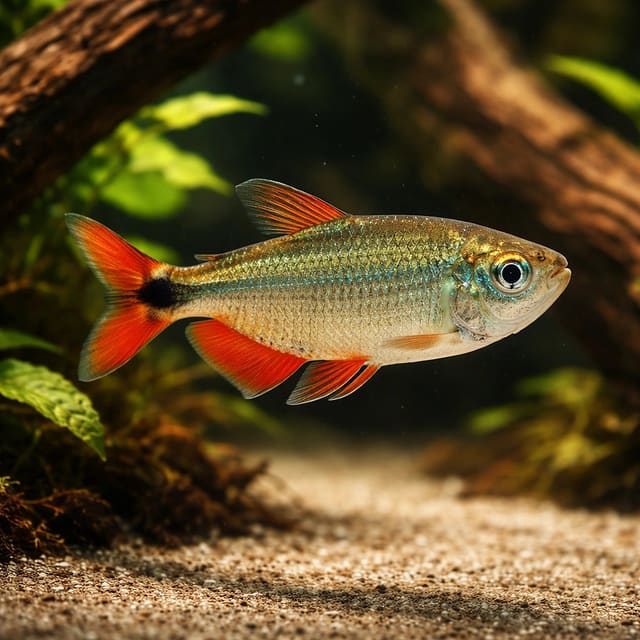
22–27°C · pH 6.5–8
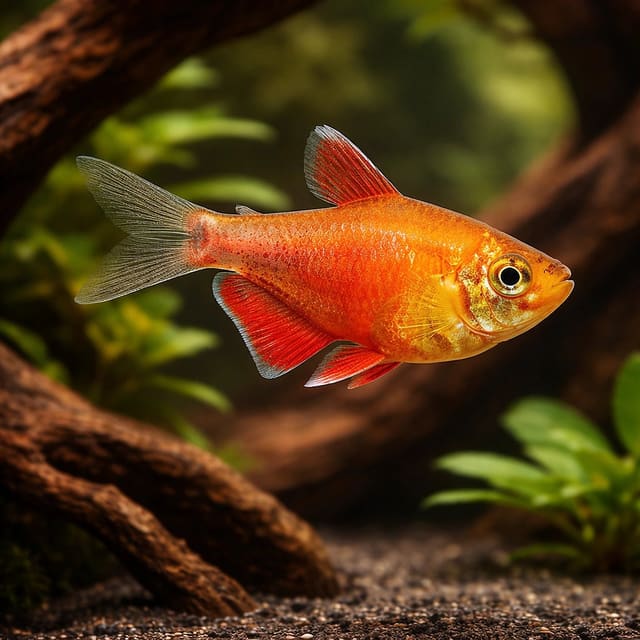
22–26°C · pH 6.5–7.5 · 60L
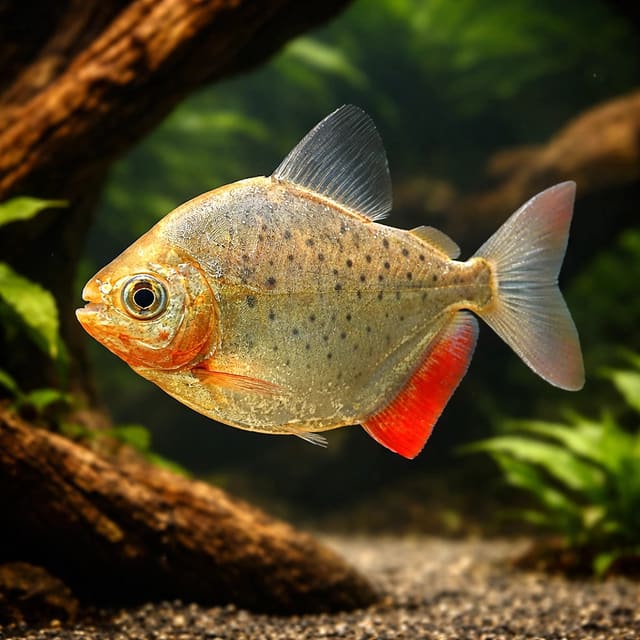
24–28°C · pH 6–7.2
Maintain these water conditions for optimal health and vibrant colors
Silver Hatchetfish (Gasteropelecus sternicla) are peaceful, top-dwelling South American fish with the deep chest and long pectoral fins that give freshwater hatchetfish their unmistakable outline. They are best for aquarists who enjoy natural behaviour: a calm group holding just under the surface, waiting for small floating foods and using open water above plants and wood.
This listing covers the 2 - 3 cm size, with the XL K359 size held as a variant when available. Both sizes need the same core setup: a secure lid, gentle surface movement, stable warm water and peaceful tank mates that will not crowd the surface. The species is not difficult once settled, but it is less forgiving than hardy beginner tetras because jumping risk, feeding position and transport stress all matter.
| Scientific name | Gasteropelecus sternicla |
|---|---|
| Common names | Silver Hatchetfish, Common Hatchetfish, River Hatchetfish |
| Adult size | Around 6 cm in aquariums |
| Care level | Moderate |
| Temperament | Peaceful; keep as a group |
| Tank region | Surface and upper water |
Hatchetfish are built for life at the surface. In nature, Gasteropelecus sternicla lives in groups near the top of slow-flowing creeks, swamps and floodplain waters, where insects and small invertebrates fall onto the surface. In the aquarium this translates into one non-negotiable rule: keep the tank tightly covered.
A proper lid is more than a glass panel over the main opening. Check cable cut-outs, feeding flaps, filter gaps and corners around pipework. A startled hatchetfish can launch through surprisingly small spaces, especially during maintenance or after lights suddenly switch on. Floating plants, subdued lighting and steady routines all help them feel safer.
Silver Hatchetfish do best in mature freshwater aquariums with stable, clean water rather than freshly set-up tanks. They suit soft to moderately soft water and prefer warm tropical temperatures. Avoid sudden pH swings and avoid strong turbulent flow at the surface, because they feed and rest in that upper layer.
| Temperature | 24-28C |
|---|---|
| pH | 5.5-7.5 |
| Hardness | 1-12 dGH |
| Minimum volume | 75 litres, with good surface area |
| Flow | Gentle to moderate; avoid blasting the surface |
Use a reliable heater, keep nitrate under control with regular water changes, and acclimate new fish slowly. If your aquarium is very bright, adding floating plants or tall stems will make the group more confident without taking away the open surface space they need.
This is a social fish, not a single showpiece. A group of six or more is strongly preferred, and larger groups look more natural when the aquarium has the surface area. In small numbers they can become nervous, hide in corners, or react sharply to movement outside the tank.
Most of their activity is subtle. They hover under the surface, adjust position with quick flicks, and rush to floating food. They are not aggressive community fish, but they can be outcompeted if boisterous species dominate the top of the tank. Keep them with calm mid-water and bottom-dwelling companions so every level of the aquarium has room.
The most common feeding mistake is offering food that sinks too quickly. Silver Hatchetfish naturally take insects, worms, small crustaceans and other tiny prey near the surface, so they should receive foods that float or remain suspended long enough for them to feed confidently.
| Staple foods | Quality flakes, fine floating granules and small floating pellets |
|---|---|
| Conditioning foods | Frozen or live daphnia, mosquito larvae, bloodworm and small insect foods where appropriate |
| Frequency | Small feeds once or twice daily; remove uneaten food |
| Watch for | Food being stolen by faster fish before the hatchetfish feed |
Feed with the filter flow in mind. A small feeding ring or a calm corner near floating plants can help food stay available at the surface for longer. A varied diet also keeps the group in better condition and supports colour, body shape and resilience after transport.
Choose peaceful fish that occupy different parts of the aquarium. Good matches include small calm tetras, pencilfish, rasboras, Corydoras, smaller peaceful plecos and gentle dwarf cichlids in suitable water. Avoid large predators, aggressive cichlids, fin nippers, very fast surface feeders and fish that cause sudden panic at feeding time.
If you want a same-region display, look at other South American community species and keep the layout quiet and planted. Useful internal comparisons include Blackwing Hatchetfish, Buenos Aires Tetra, Flame Tetra and Corydoras catfish.
A good layout gives them open surface lanes with cover nearby. Use tall background plants, floating plants with open gaps, branch wood and darker resting areas. They do not need a powerful current; they need oxygenated, clean water with a calm top layer. A black or natural background can also make them feel less exposed.
During maintenance, move slowly around the lid and avoid leaving it open while you fetch tools. If the fish are newly introduced, dim the lights for the first few hours and delay feeding until they are settled.
When this species is in stock, orders are packed for live-fish transport and covered by our Live Arrival Guarantee. First-time customers can use WELCOME10 where eligible. Because hatchetfish are sensitive surface fish, please prepare the aquarium before ordering: covered tank, stable temperature, mature filtration and peaceful tank mates already planned.
On arrival, float the sealed bag to equalise temperature, then gradually mix small amounts of aquarium water over 30-45 minutes. Net the fish gently into the aquarium and discard transport water. Keep lights low, leave the lid closed and avoid sudden movement around the tank for the first evening.
Choose this fish if you can provide a covered, calm community aquarium and you want natural surface behaviour. Do not choose it for open-top aquascapes, uncovered rimless tanks, aggressive communities or tanks where food disappears below the surface within seconds. With the right setup, a group of Silver Hatchetfish adds a unique upper-level movement that most community aquariums simply do not have.
Max adult size is the length this species reaches at full maturity (from scientific sources). The livestock you receive will be younger and smaller — pick a size variant on the buy box for the actual shipping size. Product-photo provenance and any image-specific limitations are stated on the listing.
Peaceful surface fish. Best kept in a group with calm mid-water and bottom-dwelling companions.
Always research specific species before adding them to your tank. Consider:
No reviews for this item yet. Bought one? Honest reviews only, good or bad.
What customers say about ordering from us
I have a small group of long finned mountain minnows. So was delighted to be able to order ten of this variety to increase the genetics in my tank . The ones I recieved are healthy but it’s to early to give a verdict on wether they are of a long finned type since they are small currently.
Gordon Walker · 23 Sept 2026
100% success travel and "installation". Pleased with quality of purchase. The Siamese fighter a bit "shy" so have not yet seen him at his best yet but looking good. Happy customer. GG
George E Garratt · 21 Sept 2026
Reviews of our shop, collected by Judge.me, an independent third-party review collector. Newest first.
