Moderate
Neon Tetra (Paracheirodon innesi)
21–25°C · pH 5–7
£2.99

The Blackwing hatchetfish (Carnegiella marthae) is a freshwater hatchetfish from the Negro and upper Orinoco River basins that reaches 2.9 cm. It suits a keeper prepared for ideally 10 or more, a secure cover and the FishBase and Seriously Fish overlap of 23–27°C, pH 5.5–6.5 and 1–4 dGH. Sold individually.
Adult size is the maximum length this species reaches at full maturity (scientific sources). The livestock you receive will be younger and smaller. Product-photo provenance and any image-specific limitations are stated on the listing.
Carnegiella marthae
Shoaling fish: kept in a group they feel safer, stay calmer and show their best colour.
The Blackwing hatchetfish (Carnegiella marthae) is a freshwater hatchetfish from the Negro and upper Orinoco River basins that reaches 2.9 cm. It suits a keeper prepared for ideally 10 or more, a secure cover and the FishBase and Seriously Fish overlap of 23–27°C, pH 5.5–6.5 and 1–4 dGH. Sold individually.
Adult size is the maximum length this species reaches at full maturity (scientific sources). The livestock you receive will be younger and smaller. Product-photo provenance and any image-specific limitations are stated on the listing.
Maintain these water conditions for optimal health and vibrant colors
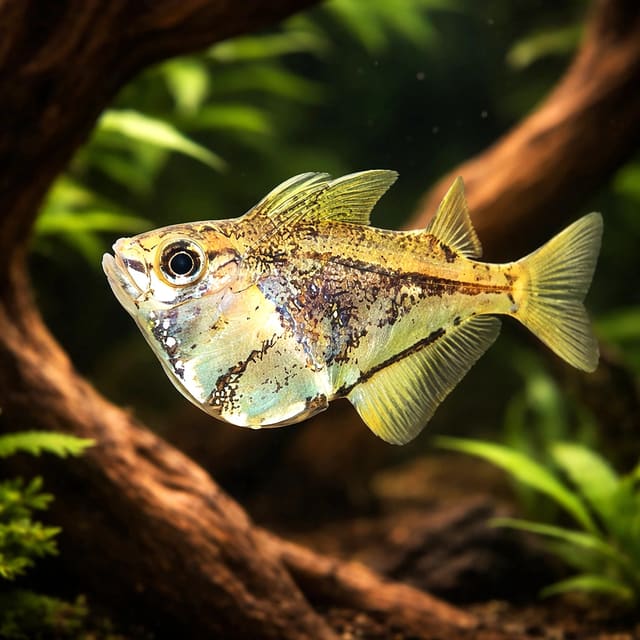
The Blackwing hatchetfish, Carnegiella marthae, is a very peaceful but timid freshwater fish from the Negro and upper Orinoco River basins in South America. It belongs to Gasteropelecidae, the freshwater hatchetfish family, and spends almost all its aquarium time at or towards the surface. FishBase records a maximum of 2.9 cm standard length for male or unsexed specimens. It suits a keeper prepared to maintain a proper group, protect the open surface with a secure cover and prevent larger or boisterous companions from restricting access to food.
FishBase records the species as freshwater and pelagic. It also notes aquarium specimens reaching 3.5 cm total length. Plan the aquarium around the 2.9 cm recorded maximum used throughout this care plan, while allowing for normal variation between individuals.
This is a fish for a carefully organised upper layer. Its small size and timid nature mean that the group, cover, feeding access and choice of companions all matter. Provide a tightly fitting aquarium cover, patches of floating vegetation, gentle to moderate water movement and small foods that remain accessible at the surface.
The species is gregarious and becomes bolder in larger groups. Plan for ideally 10 or more rather than treating one fish as a solitary feature. In a larger group, aggression between individuals is spread and the fish are more likely to display natural behaviour. Aquarium dimensions must accommodate the group as well as the modest body length.
| Suits | Not suited to |
|---|---|
| A covered aquarium with at least a 60 × 30 cm base | An aquarium with openings through which a startled fish may jump |
| A group of ideally 10 or more | Keeping one fish as a solitary feature |
| Similarly sized, peaceful companions | Fish large enough to eat it |
| Gentle to moderate flow with accessible surface food | Boisterous companions that prevent this timid fish from feeding |
One purchase supplies one animal. Plan the aquarium around the recorded maximum of 2.9 cm standard length, the social group and the required surface area.
Sex is guaranteed only when the selected option explicitly states male or female. This Blackwing hatchetfish listing has no sex-guaranteed option.
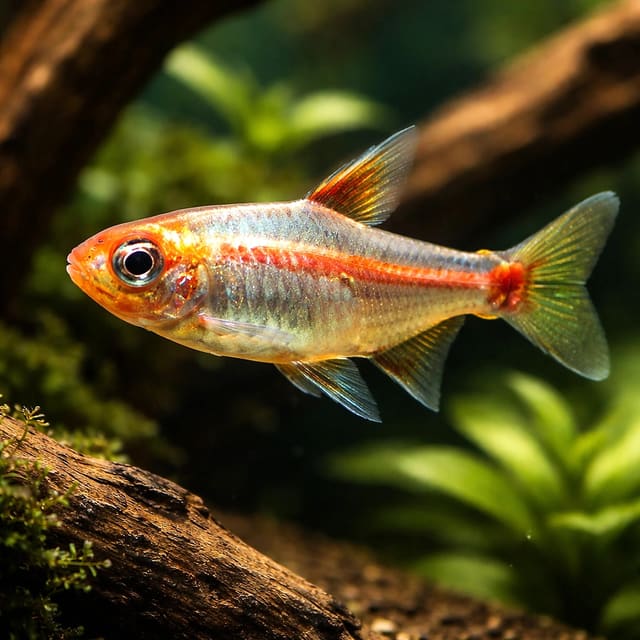
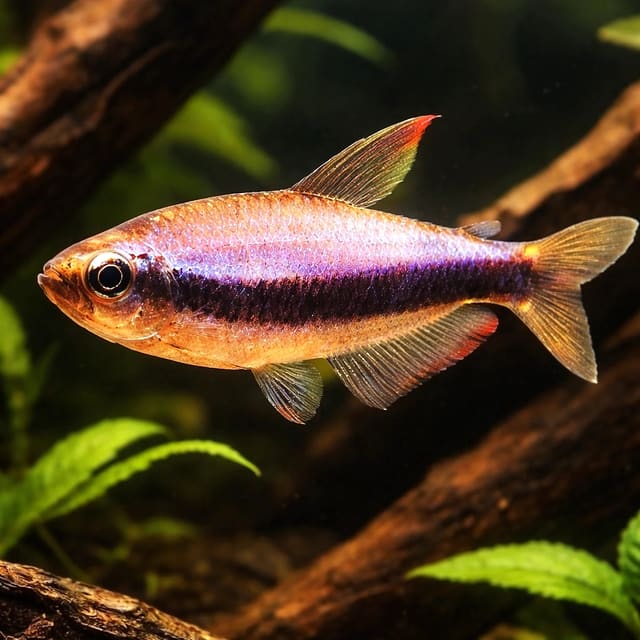
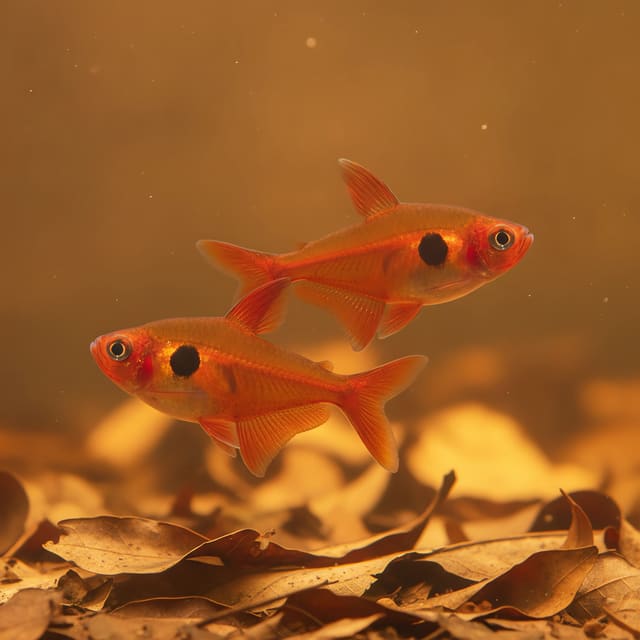
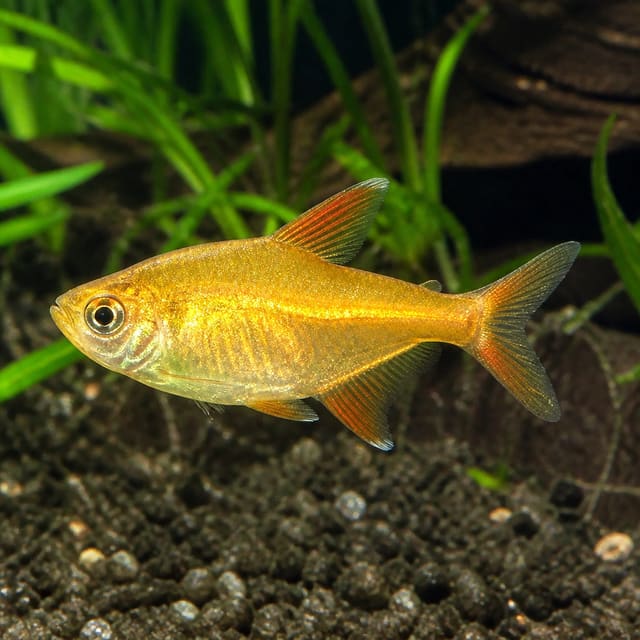
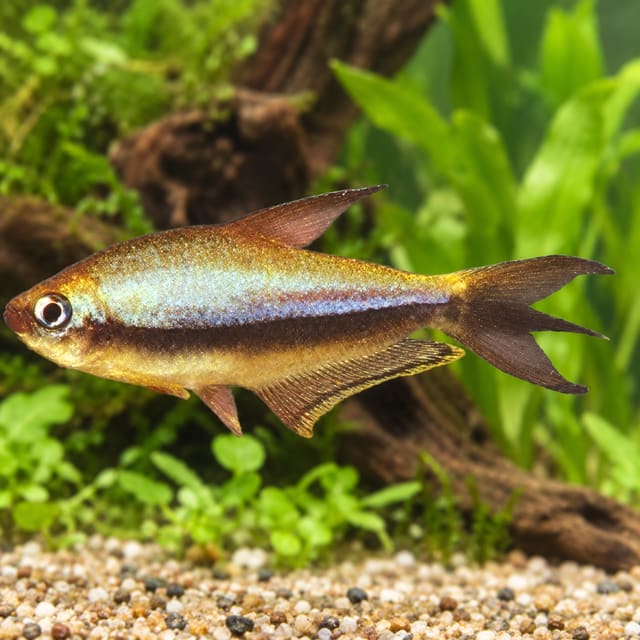
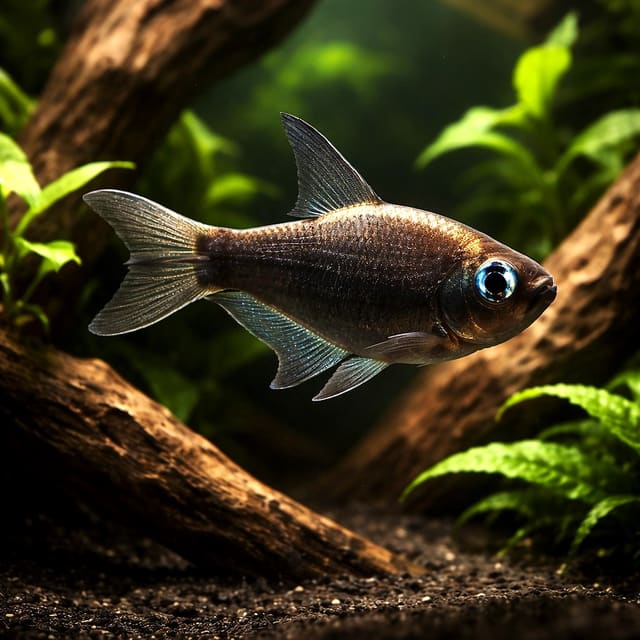
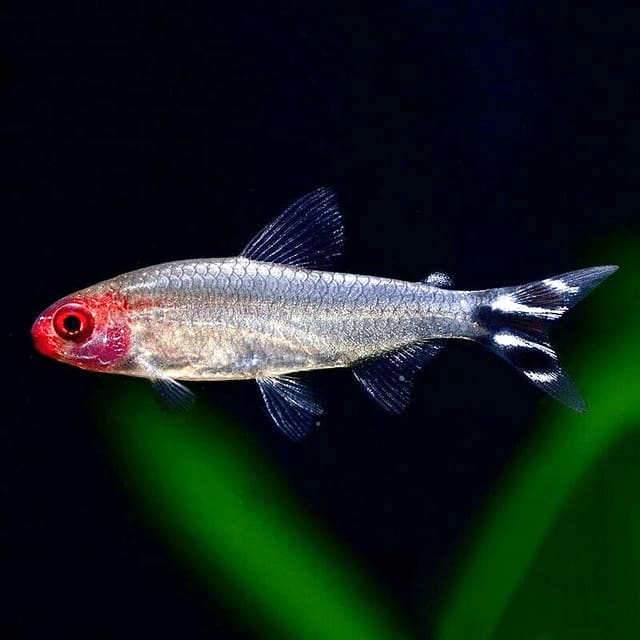
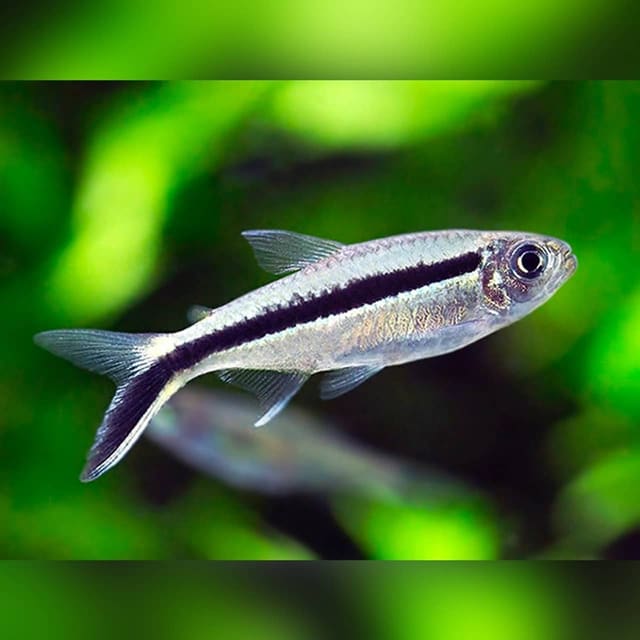
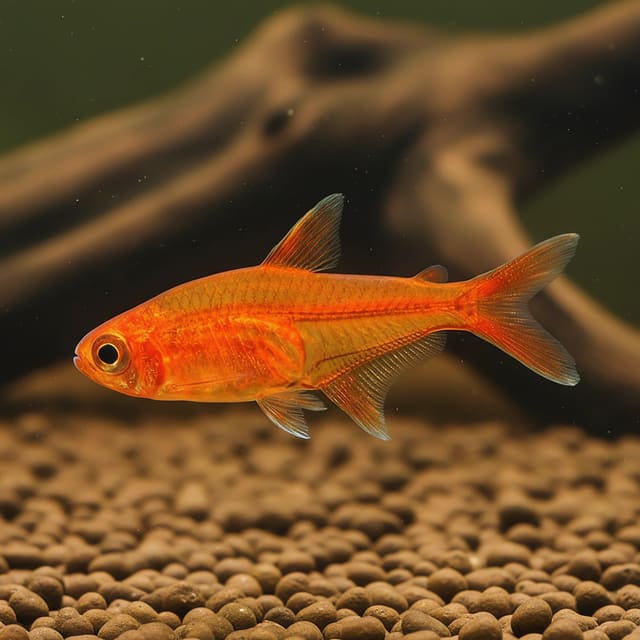
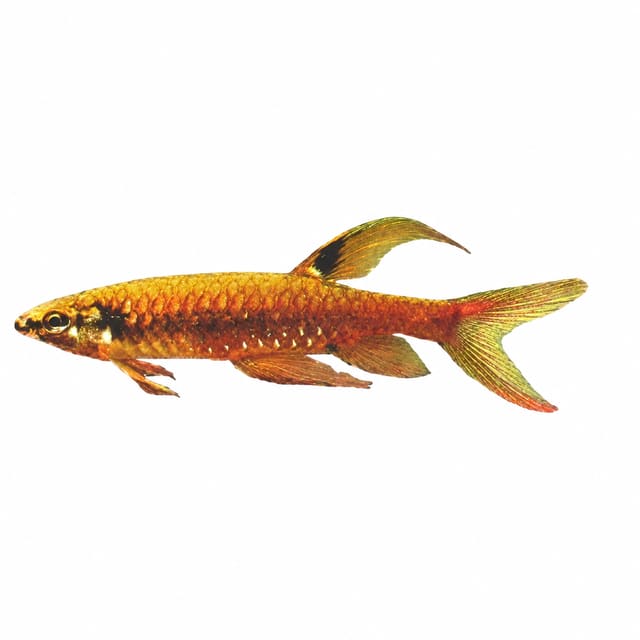
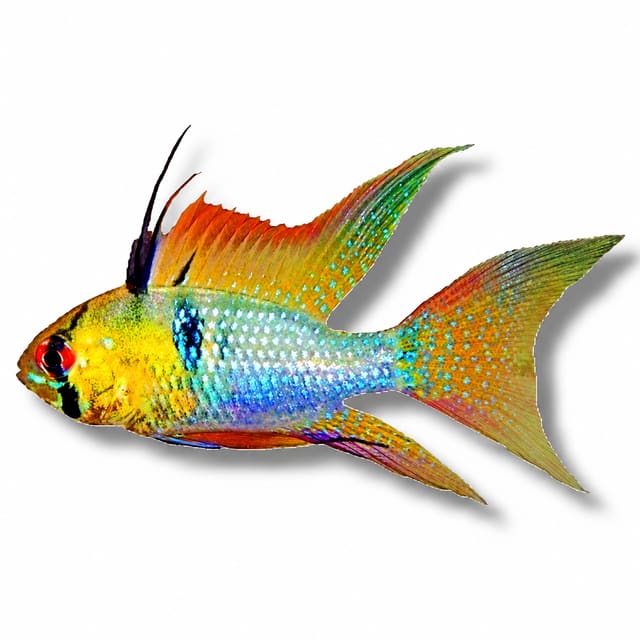
The gallery images are representative, based on reference photographs of this species, so colours can look slightly different from the live animal.
| Decision | Planning figure |
|---|---|
| Purchase unit | One animal |
| Recorded maximum | 2.9 cm standard length |
| Social plan | Ideally 10 or more |
| Aquarium base | At least 60 × 30 cm |
| Approximate volume | About 54 litres |
| Routine temperature | 23–27°C |
| Routine pH | 5.5–6.5 |
| General hardness | 1–4 dGH |
Seriously Fish recommends surface dimensions of at least 60 × 30 cm, approximately 54 litres, because the species should be maintained in numbers. Keep the aquarium at 23–27°C, pH 5.5–6.5 and 1–4 dGH; these routine values are the overlap of FishBase’s recorded environment and the Seriously Fish species aquarium range. These figures form one plan: sufficient surface area does not replace the need for a group, suitable water or a secure cover.
Before committing to the group, check that the aquarium can hold these values and support the full stocking plan through its established biological filter. If this will be your first aquarium, prepare it before the animals arrive rather than trying to mature the filter around them. The sections below turn each figure into a practical setup and maintenance decision.
For dispatch arrangements, claim steps and guarantee terms, read our delivery and Live Arrival Guarantee policy.
Start with an aquarium measuring at least 60 × 30 cm across its base and holding approximately 54 litres. The dimensions matter because Blackwing hatchetfish spend almost all their time at or towards the surface and should be maintained in numbers. A taller aquarium with a cramped footprint does not create the same horizontal area for the group.
Fit a tightly fitting cover before introducing the fish. This species may jump when startled, so inspect the full perimeter rather than checking only the main lid panel. Keep openings for routine access closed whenever you are not actively using them. Repeat the inspection after moving equipment or completing maintenance, when a displaced cover could leave an unnoticed route out.
A heavily planted arrangement is ideal. Use a dark substrate and provide patches of floating vegetation around which the fish can congregate. The word “patches” is useful here: combine sheltered areas with accessible surface lanes so the group can hold position and reach food. Plants should give security without turning the whole upper layer into a solid barrier.
Driftwood branches and dried leaf litter can be added. As leaves decompose, they support microbial colonies that may become a valuable secondary food source for fry. Tannins and other chemicals released by the leaves are also thought beneficial. Replace or manage natural materials as part of the normal maintenance routine rather than allowing them to obstruct equipment or the cover.
Keep water movement gentle to moderate. The filter remains essential, but the group should not be forced continually through a harsh surface current. Observe where the fish choose to gather: regular use of planted surface areas and open feeding lanes is a more useful arrangement than designing the aquarium solely around visual symmetry.
Maintain Blackwing hatchetfish at 23–27°C, pH 5.5–6.5 and 1–4 dGH. These values are the overlap of FishBase’s recorded environment and the Seriously Fish species aquarium range. Measure the aquarium rather than relying on the heater dial, tap-water reputation or an old test result. Our water chemistry guide explains which values to test and why, while the water matcher helps compare measured values with this range.
Choose an operating point inside all three ranges that your aquarium can maintain consistently. Check the temperature, pH and hardness before introducing the group, then continue testing through the settling period and normal maintenance. A reading inside one range does not compensate for another value falling outside its range.
| Value | Aquarium guidance |
|---|---|
| Temperature | 23–27°C |
| pH | 5.5–6.5 |
| General hardness | 1–4 dGH |
| Water movement | Gentle to moderate |
For an aquarium of about 54 litres, the husbandry recommendation is a turnover of four to five times the aquarium volume per hour. That corresponds to a filter rated at approximately 215–270 litres per hour. Treat the rating and the resulting movement as linked decisions: filtration must process the aquarium, while the actual current experienced by these surface fish should remain gentle to moderate.
A 54-litre aquarium generally requires a heater of roughly 50–75 W when the surrounding room is about 20°C. This example depends on both aquarium volume and room temperature. Select equipment for the actual aquarium and room rather than transferring the wattage to a substantially different setup.
A practical pre-introduction check confirms that the heater holds the chosen temperature, the filter operates without blockage, the flow remains suitable at the surface and the cover still closes around the equipment. Record the measured pH and hardness at the same time. This gives a clear baseline against which later changes can be recognised.
A working biological filter is essential. The RSPCA explains that fish release toxic ammonia; filter bacteria convert it first to nitrite, which is also toxic, and then to the safer nitrate. The aquarium therefore needs a well-established and maintained filter rather than clean-looking water alone.
Prepare and mature the aquarium before livestock is introduced. Our first tropical aquarium guide sets out the preparation sequence. Confirm with tests that ammonia and nitrite are both zero before adding the fish, and do not use elapsed time by itself as the test of filter readiness.
For routine waste management, OATA’s broad tetra and pencilfish guidance sets ammonia at zero mg per litre, nitrite at zero mg per litre and nitrate at no more than 20 mg per litre above the normal tap-water level. This group guidance supplies the maintenance benchmarks; the Blackwing hatchetfish aquarium ranges in the previous section remain the values to use for temperature, pH and hardness.
| Test | Action point |
|---|---|
| Ammonia | Keep at zero mg per litre |
| Nitrite | Keep at zero mg per litre |
| Nitrate | Do not exceed 20 mg per litre above tap water |
Beneficial bacteria must increase as fish numbers and feeding increase. Additions made too quickly can produce new tank syndrome because the bacterial population cannot yet process the extra waste. Establish the planned Blackwing hatchetfish group in a system prepared for its biological load, and avoid combining that introduction with several unrelated stocking changes.
Continue testing after animals enter the aquarium. Clear water can still contain ammonia or nitrite, so appearance is not a substitute for measurements. If either toxic waste reading rises above zero, treat it as a water-quality problem requiring immediate husbandry attention rather than waiting for visible symptoms.
Blackwing hatchetfish are primarily predators in nature, taking terrestrial and aquatic invertebrates and other zooplankton at or near the surface. Build the aquarium diet around that feeding position. Suitable dried food can be accepted, but regular meals of appropriately small live or frozen fare should remain part of the routine.
Present food where the group can reach it at or near the surface. Watch the whole group rather than only the quickest fish. Timid individuals may lose access when companions are faster or when food leaves the upper layer before they respond.
Feed once a day and offer only what the fish consume within a few minutes. This gives a practical portion limit without relying on a fixed pinch that may be too large for one group and too small for another. Stop adding food when interest declines or particles begin to remain uneaten.
| Feeding decision | What to do |
|---|---|
| Daily staple | Suitable small dried food |
| Regular variety | Small live or frozen invertebrate foods |
| Position | At or near the surface |
| Frequency | Once a day |
| Portion limit | Only what is eaten within a few minutes |
If one part of the group repeatedly hangs back, first check whether surface current, exposed surroundings or faster companions are limiting access. Adjust the presentation within the established feeding routine rather than increasing the total amount indiscriminately. Overfeeding allows uneaten food to break down and release toxic waste, adding pressure to the biological filter.
Complete the aquarium plan before bringing the group into it. The filter should be mature, ammonia and nitrite should both test at zero, and temperature, pH and hardness should sit within 23–27°C, pH 5.5–6.5 and 1–4 dGH. Fit the cover, establish the planted surface areas and confirm gentle to moderate flow while the aquarium is still empty of these fish.
Population changes increase both waste and feeding. The biological filter needs enough capacity for that change, so do not combine the introduction with a rapid series of extra fish additions. A prepared group plan is safer than repeatedly improvising around an aquarium whose capacity has not been assessed.
Observe swimming position, group cohesion, breathing, colour, hiding and interest in food. A settled individual should be able to hold position at or near the surface and reach food without being continually displaced. The purpose of these checks is to learn the group’s normal pattern and identify changes early.
Keep routine activity around the aquarium calm and leave the cover secured. If startled fish repeatedly dash or strike towards an opening, recheck the cover and identify whether exposed surroundings, strong flow or another animal is disturbing the group. Do not remove the cover as a response to nervous behaviour.
Measure ammonia and nitrite regularly through the introduction period. If either appears, respond as a water-quality issue even when the fish still look outwardly normal. Continue monitoring feeding closely because a reduction in intake is one of the changes that can signal a developing health or husbandry problem.
Carry out a 25% partial water change at least once every week. Treat replacement tap water with a suitable conditioner to remove chlorine or chloramine before it enters the aquarium. Continue checking that the replacement process leaves temperature and water chemistry within the established aquarium range.
Test the water at least once a week. Ammonia and nitrite should remain at zero mg per litre, while nitrate should not rise more than 20 mg per litre above the normal tap-water level. Record results consistently enough to recognise movement away from the aquarium’s usual baseline.
| Weekly task | Required action |
|---|---|
| Water change | Change 25% at least once every week |
| Replacement water | Treat for chlorine or chloramine |
| Water tests | Check at least weekly |
| Filter inspection | Check for blockages |
| Cover inspection | Close all openings after work |
Check the filter for blockages. When filter media needs cleaning, do not rinse it beneath the tap because chlorine or chloramine may kill beneficial bacteria. Rinse it lightly in aquarium water removed during the partial water change. This reduces bacterial loss while allowing accumulated debris to be cleared.
Cleaning should preserve biological function rather than make every component look unused. Coordinate filter work with water testing so that any change in ammonia or nitrite is recognised quickly. Keep the filter operating as the essential waste-processing part of the aquarium.
Maintenance is a high-risk moment for leaving an access flap open or moving equipment away from its normal position. Before walking away, check the full cover, return floating plants to useful patches and confirm that the filter flow is still gentle to moderate. Then observe the group long enough to see that normal surface positioning resumes.
A repeatable routine makes changes easier to recognise. The important measures are the test results, the condition of the filter, the integrity of the cover and the behaviour of the animals, not simply whether the aquarium appears visually clean.
Learn the normal pattern of the group when it is feeding and holding position around the surface cover. Individual behaviour can vary, but a change from that established pattern is useful. Watch swimming, colour, temperament, breathing, appearance, body condition and feeding response rather than waiting for several signs to appear together.
| Change | What to check |
|---|---|
| Swimming | Bottom sitting, erratic movement or unusual surface behaviour |
| Colour | Darker or paler appearance than normal |
| Temperament | More hiding or a change in aggression |
| Breathing | Gill covers moving faster or slower |
| Appearance | White spots, fluffy growths, damaged fins or lost scales |
| Condition | Increase or decrease in body weight |
| Feeding | Reduced intake or loss of interest |
Clear, bright eyes, undamaged fins, intact scales and an absence of ulcerations or bumps are useful visual checkpoints. Compare each fish with the group and with its own recent condition. A timid fish that begins hiding more than normal deserves attention even if bolder individuals continue feeding.
When behaviour, breathing or appetite changes, immediately test ammonia, nitrite, nitrate, temperature and the relevant water chemistry. Check the filter for blockage, confirm that water movement remains gentle to moderate and inspect the aquarium for an open cover or a new source of disturbance.
Keep ammonia and nitrite at zero. Correct husbandry problems without making a series of uncontrolled changes that obscures the cause. If you are concerned about the health of the livestock after checking water quality, contact us for further guidance.
A nervous or startled Blackwing hatchetfish may jump. Health checks, feeding and maintenance are not reasons to leave the aquarium open longer than necessary. Secure the cover before stepping away, particularly when unusual behaviour has already made the group more likely to startle.
Blackwing hatchetfish are very peaceful, small and rather timid. They are not a good choice for an indiscriminate community in which every species is assumed to mix because it is sold as peaceful. Screen companions for adult size, temperament, feeding behaviour, water requirements and use of the surface before combining them.
Suitable candidates include similarly sized, peaceful characids and smaller callichthyid or loricariid catfishes. The species can also act as a dither fish for Apistogramma and other dwarf cichlids because it occupies the middle-to-upper region and does not actively predate fry. That observation is not a universal promise for every aquarium: the full combination still needs compatible water, enough space and appropriate feeding access.
Avoid fish large enough to eat these small hatchetfish. Boisterous companions also require caution because this species is timid and relies on access to food at or near the surface. A fish that is not a predator can still be a poor match if it continually displaces the group, triggers repeated startled movement or takes the surface food before the hatchetfish can feed.
| Screen | Decision |
|---|---|
| Adult size | Avoid fish large enough to eat them |
| Temperament | Prefer peaceful companions of similar size |
| Feeding | Ensure the group can reach surface food |
| Water | Require overlap with 23–27°C, pH 5.5–6.5 and 1–4 dGH |
| Space | Preserve the required surface area and group room |
Compatibility beyond the named companion types depends on the exact species, aquarium dimensions, group sizes and feeding pattern. Watch for persistent hiding, loss of feeding access, repeated dashing, damaged fins or changes in breathing. Ask us for a stocking and compatibility assessment when a proposed mix falls outside the supported types or places another active species in the same surface zone.
Plan Blackwing hatchetfish as a group of ideally 10 or more. Larger groups spread aggression between individuals, make the fish bolder and encourage more natural behaviour. The group is therefore the first stocking commitment, not whatever space remains after several unrelated fish have been chosen.
Although each fish is small, the group spends almost all its time at or towards the surface. Reserve open feeding lanes, floating cover and enough horizontal room for the whole group. Bottom-dwelling companions do not occupy the same position, but they still add to the total biological load and must be included in the aquarium’s capacity.
| Planning stage | Decision |
|---|---|
| Group | Plan ideally 10 or more first |
| Footprint | Use at least a 60 × 30 cm base |
| Volume | Use approximately 54 litres or more |
| Upper layer | Keep cover and feeding lanes accessible |
| Other fish | Add only after screening the full mix |
The recommendation of approximately 54 litres is tied to a base of at least 60 × 30 cm and the need to maintain the species in numbers. It is not a blanket capacity for any collection of fish. A community plan must account for every animal, its adult planning size, its social requirement and the filter’s ability to process the resulting waste.
For a species-focused aquarium, use the space to create planted surface cover, gentle to moderate movement and clear feeding access for the group. For a community, retain those features and select similarly sized, peaceful companions that use the remaining space without intimidating the hatchetfish.
If you are still choosing the main shoaling fish rather than building a mixed aquarium, you can browse the tetras collection for comparison. Treat those fish as alternative stocking directions unless each proposed combination passes the size, temperament, water, space and feeding screens above.
After introduction, observe whether all Blackwing hatchetfish reach food and hold normal positions near the surface. Persistent crowding, hiding or missed meals means the practical mix needs reassessment even when the water measurements remain within range.
FishBase records an adult maximum of 2.9 cm standard length for male or unsexed Blackwing hatchetfish; use 2.9 cm as the aquarium planning figure.
Use an aquarium with a base of at least 60 × 30 cm and a volume of approximately 54 litres or more, with a tightly fitting cover, floating vegetation and gentle to moderate flow.
Keep Blackwing hatchetfish in numbers, ideally 10 or more, because larger groups spread aggression between individuals, make the fish bolder and encourage more natural behaviour.
A Blackwing hatchetfish suits a keeper who can provide ideally 10 or more, a mature filtered aquarium, stable water, accessible surface food and a tightly fitting cover.
Offer suitable small dried food plus regular small live or frozen foods such as Artemia nauplii, Daphnia, Moina or grindal worm once daily, limiting the amount to what is eaten within a few minutes.
Keep Carnegiella marthae at 23–27°C, pH 5.5–6.5 and 1–4 dGH; these routine values are the overlap of FishBase’s recorded environment and the Seriously Fish species aquarium range.
Blackwing hatchetfish are very peaceful and timid. Larger groups spread aggression between individuals, but companions must still be screened for boisterous behaviour, feeding competition and any risk of predation.
Consider similarly sized peaceful characids, smaller callichthyid or loricariid catfishes, and suitably planned communities with Apistogramma or other dwarf cichlids; avoid fish large enough to eat it.
Start filming the sealed parcel before it is opened and continue in one take as it is opened, showing the fish still inside the sealed bag. Have someone present to receive the parcel, float the bag for 20–30 minutes before releasing the fish, and never pour the bag water into the aquarium.
No reviews for this item yet. Bought one? Honest reviews only, good or bad.
What customers say about ordering from us
I have a small group of long finned mountain minnows. So was delighted to be able to order ten of this variety to increase the genetics in my tank . The ones I recieved are healthy but it’s to early to give a verdict on wether they are of a long finned type since they are small currently.
Gordon Walker · 23 Sept 2026
100% success travel and "installation". Pleased with quality of purchase. The Siamese fighter a bit "shy" so have not yet seen him at his best yet but looking good. Happy customer. GG
George E Garratt · 21 Sept 2026
Reviews of our shop, collected by Judge.me, an independent third-party review collector. Newest first.