−10%
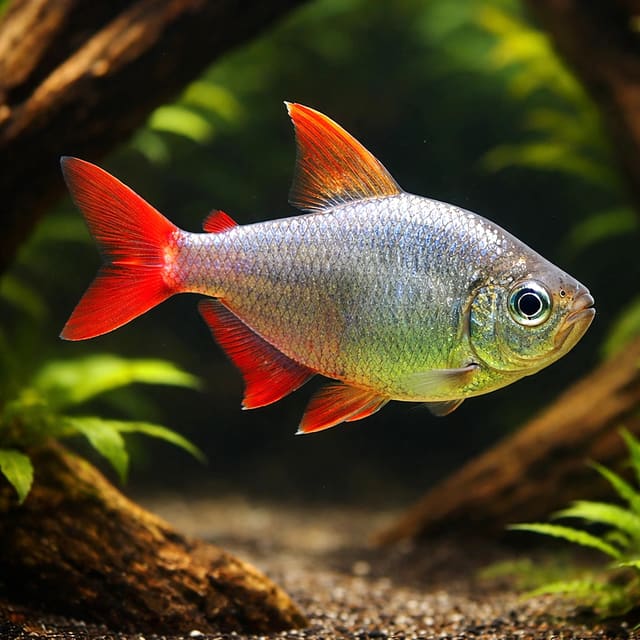
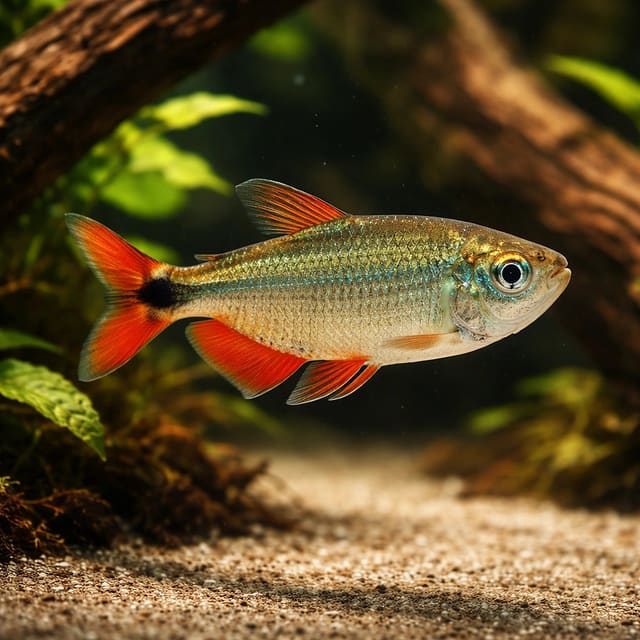
Buenos Aires Tetra (Psalidodon anisitsi) – 3.5–5.5cm Sizes
22–27°C · pH 6.5–8
£2.69£2.99

One Glowlight Tetra in the selected size grade per quantity. This peaceful shoaling fish suits a mature planted aquarium; plan a group of at least six.
Adult size is the maximum length this species reaches at full maturity (scientific sources). The livestock you receive will be younger and smaller — pick a size above for the actual shipping size. Product-photo provenance and any image-specific limitations are stated on the listing.
Hemigrammus erythrozonus
Save when buying multiple fish. Each quantity is one fish; sex and pair formation are not guaranteed unless the selected variant explicitly states them.
Minimum of 2 per order.
One Glowlight Tetra in the selected size grade per quantity. This peaceful shoaling fish suits a mature planted aquarium; plan a group of at least six.
Adult size is the maximum length this species reaches at full maturity (scientific sources). The livestock you receive will be younger and smaller — pick a size above for the actual shipping size. Product-photo provenance and any image-specific limitations are stated on the listing.
Start here: use a mature, filtered aquarium at least 60 cm long. FishBase and OATA compile groups of five or more; our conservative planning screen starts at eight, then checks usable volume, water, filtration and every adult tank mate.
Maintain these water conditions for optimal health and vibrant colors
The Glowlight Tetra, Hemigrammus erythrozonus, is a peaceful South American shoaling fish with a bright orange-red stripe. One quantity supplies one fish in the selected size grade; plan a group of at least six in a mature aquarium of 60 litres or more. Adults reach about 4 cm. Gentle filtration, plant cover, open midwater space and stable 24–28°C water make this fish a good fit for a carefully stocked community aquarium.
Its small size and midwater shoaling behaviour suit planted community aquariums. Other tetras may look attractive alongside it, but compare their adult size, water needs, group size and temperament before mixing species.
Glowlight Tetras occur in the Essequibo River basin in Guyana. In an aquarium, shaded plant cover, a dark substrate and gentle flow give the shoal places to retreat while leaving open midwater space for swimming.
Fine prepared foods and occasional appropriately sized frozen or live foods suit this small omnivore. Feed modest portions that the whole shoal can reach, and use shaded cover rather than a bright, bare layout.
For a settled shoal, prioritise plant cover, low stress and stable water over decorative brightness. If keeping shrimp, provide dense moss or other shelter for small shrimplets and observe feeding and behaviour.
Mimicking the natural habitat improves colour, reduces stress, and encourages schooling. Use dim lighting, driftwood, Indian almond leaf, and dense planting to recreate the shaded river margins these fish recognise instinctively.
Plan at least 60 litres for a shoal, with more room when adding tank mates. Keep at least six Glowlight Tetras together; eight or more can give them more secure group behaviour when the aquarium has room. Each quantity ordered is one fish, so choose the total group size deliberately.
In a 60-litre aquarium, keep additional stocking light and choose peaceful companions that share the same water requirements. Larger community tanks give the shoal more open midwater room and make it easier to separate feeding and shelter zones.
Use stable 24–28°C water, pH 5.5–7.5 and about 3–15 dGH as the existing care range for this listing. Test the aquarium before making gradual adjustments, and check every proposed tank mate against the same conditions.
Avoid sudden temperature or chemistry swings. Keep ammonia and nitrite at zero and control nitrate through measured feeding, filtration and water changes. A mature aquarium helps the shoal settle safely.
Choose gentle filtration with a sponge filter, internal filter, or a hang-on-back unit with the flow turned down. Glowlight tetras are peaceful community fish, not strong-current swimmers, so a soft outflow is best. Too much flow can scatter the school and make feeding difficult. A mature filter also supports oxygenation and biological stability, which is especially useful if you keep a Glowlight Tetra shoal in a planted tank with other small species. For a larger setup, pair the filter with a reliable aquarium heater such as a submersible aquarium heater and a quiet internal aquarium filter to keep the water steady.
A dark sand or fine gravel substrate helps the orange stripe stand out and reduces stress. Live plants can provide useful cover such as Java fern, Cryptocoryne, Vallisneria, water wisteria, hornwort, and mosses. Floating plants like Salvinia or Amazon frogbit can soften the light and create the dim conditions these fish prefer. Add driftwood, leaf litter, and open swimming lanes through the middle of the aquascape. A dark base and greenery also give the fish shaded routes through the tank. For plant nutrition and healthy growth, a quality aquarium plant fertiliser can help maintain dense cover.
These fish are especially attractive in a planted aquarium because the silver body flashes as they turn, while the glowing line remains visible from several angles. Plant cover helps the shoal feel secure without hiding its colour. If you want a more natural look, add botanicals and use low to moderate lighting. A dark aquarium substrate can further intensify the colour and make the school appear more cohesive.
Lighting needs are modest. They prefer subdued to moderate light rather than intense, bare lighting. A photoperiod of 7 to 9 hours is usually enough for fish health and plant growth. If the tank is heavily planted, floating plants can help diffuse bright spots and reduce skittish behaviour. Colour often appears strongest when fish feel secure against a dark background under gentle light. In many homes, the shoal is often calmest in tanks that look calm rather than overly bright.
Cycle the aquarium before adding fish and confirm that ammonia and nitrite remain at zero under the expected feeding load. A fixed number of weeks alone does not prove the filter is ready.
Glowlight Tetras are small omnivores. Use fine complete flakes or micro pellets as a staple, with appropriately sized frozen or live foods for variety. Offer portions the shoal can finish without leaving waste.
Choose food fine enough for the fish's small mouths and watch that every member of the shoal eats. Frozen daphnia or brine shrimp can add variety, but adjust the amount to appetite and water quality rather than following a fixed treat schedule.
Feed small portions consistently and remove leftovers promptly. Overfeeding can worsen water quality; adjust the routine for the fish's appetite, condition and the aquarium's test results.
| Time | Food | Amount |
|---|---|---|
| Morning | Fine tropical flakes or micro pellets | Small pinch for the whole school |
| Evening | Frozen daphnia, brine shrimp, or baby bloodworm | Enough to finish in under 90 seconds |
Avoid pellets too large for the fish's mouths and rich foods that displace a balanced staple. Use foods intended for small tropical fish and check that the shoal can take them in midwater.
Overfeeding causes ammonia spikes and water quality issues. Feed small amounts, remove uneaten food promptly, and remember that a healthy school should look eager at feeding time without leaving debris on the substrate.
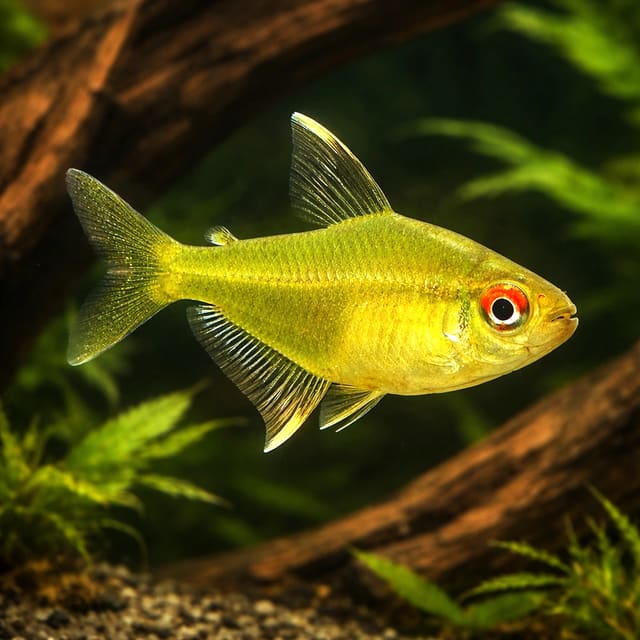
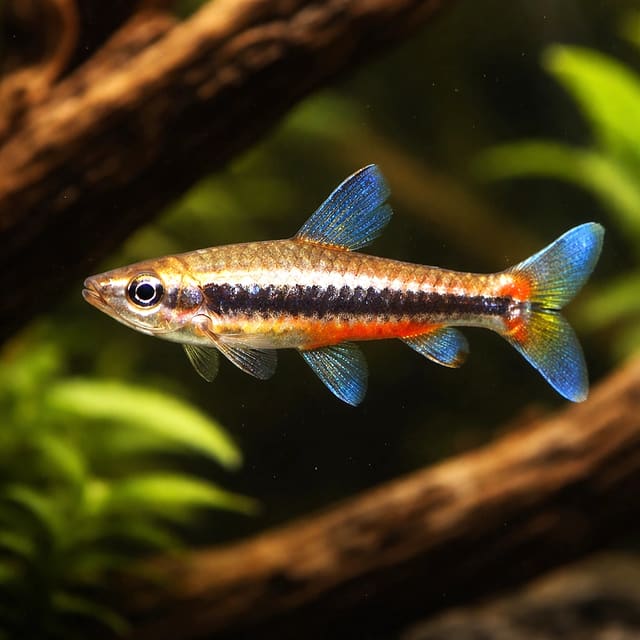
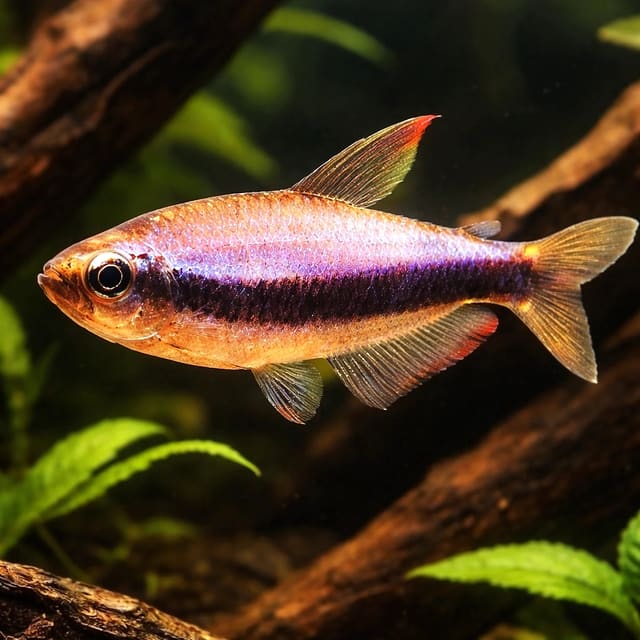
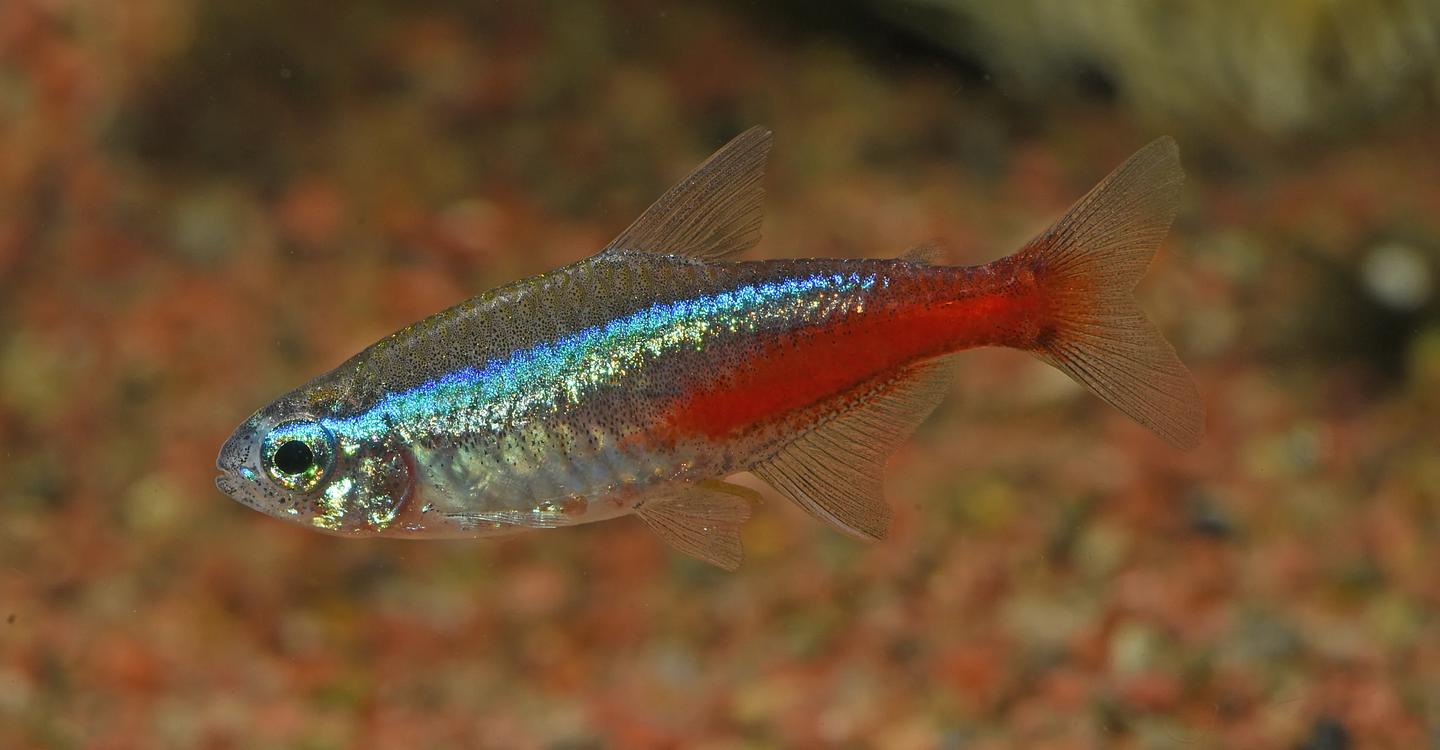
Glowlight Tetras have a slender silver body and an orange-red stripe running along the flank. Adults reach about 4 cm. Their colour is often easier to appreciate against plant cover and a darker background without harsh lighting.
Mature females may look fuller-bodied than males, but body shape and colour are not a sex guarantee for a fish selected by size. Stress, lighting and social conditions can change how bright the stripe appears.
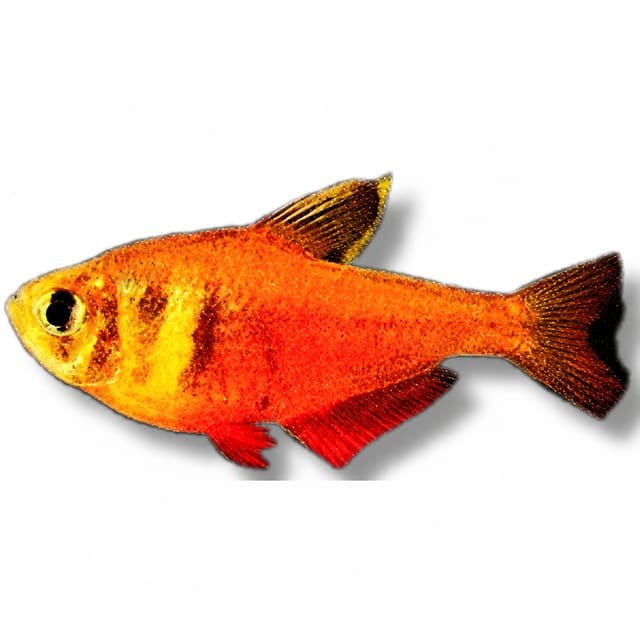
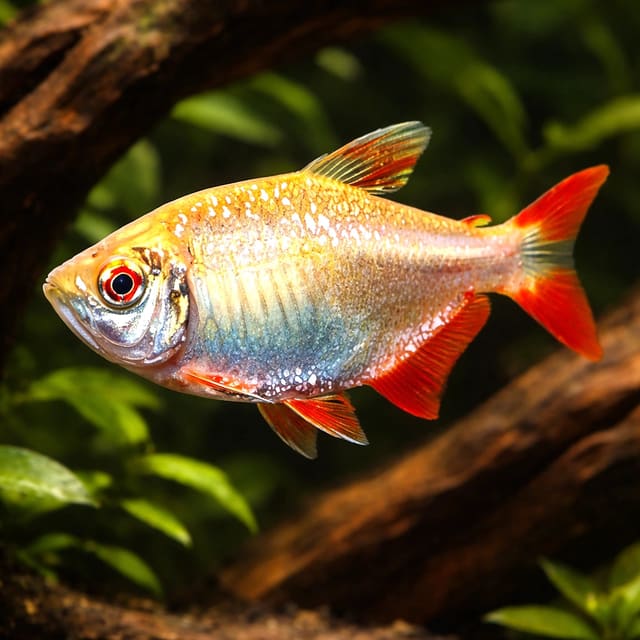
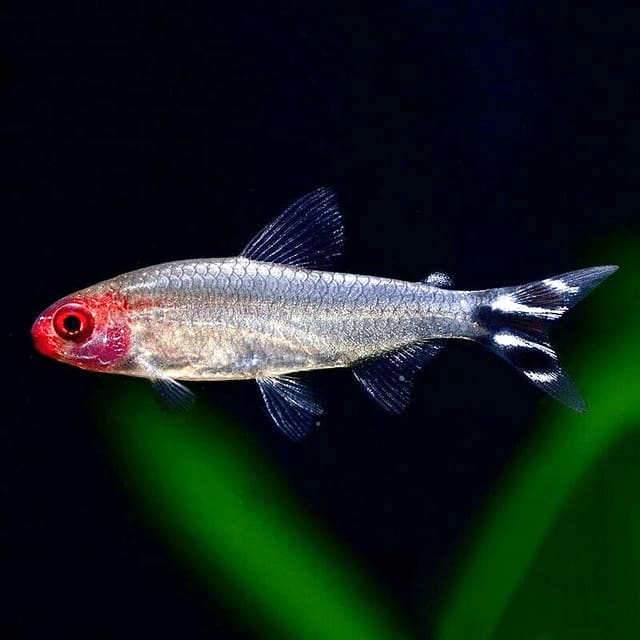
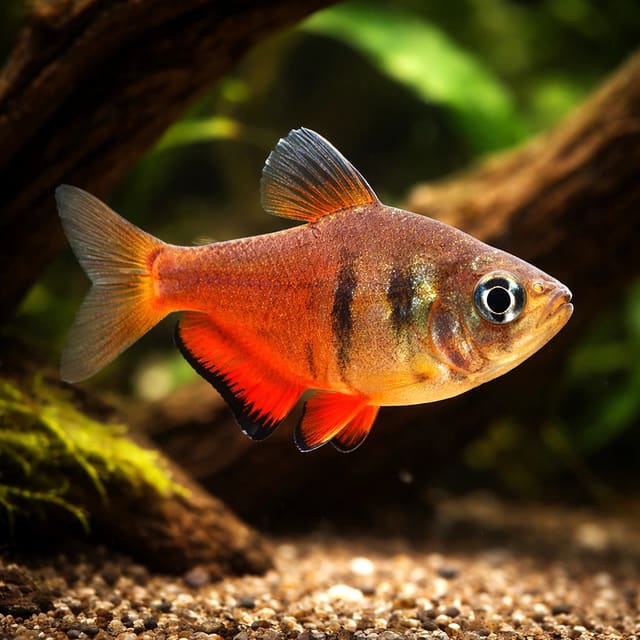
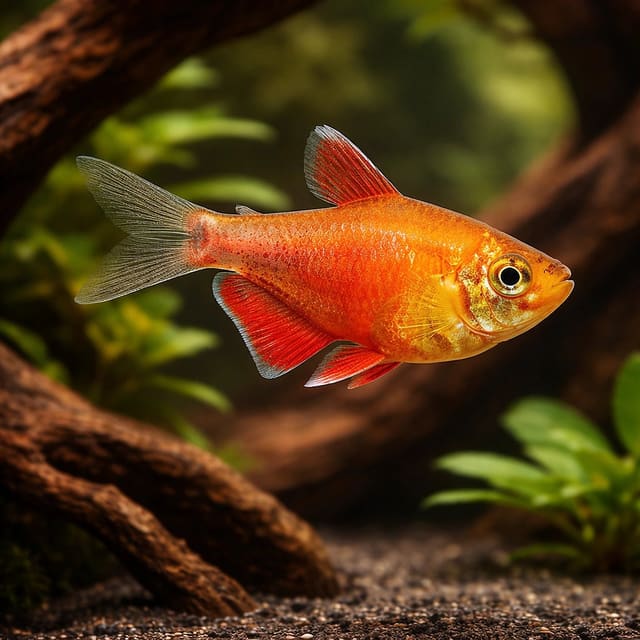
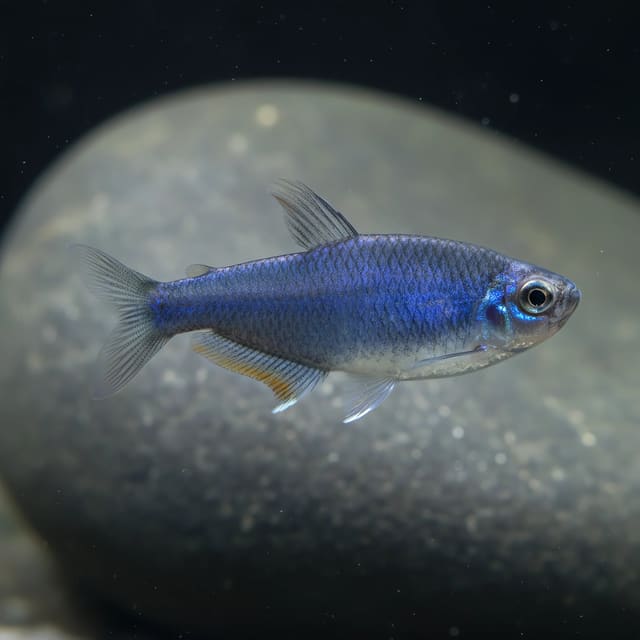
Gallery illustrations show possible appearance, not the exact individual dispatched. Expect natural variation in stripe brightness and body tone; dark substrate and gentle light can make the shoal's colour easier to see.
Choose peaceful tank mates of compatible adult size and water needs. Small characins, some rasboras and suitable bottom dwellers may work when each species has enough space, the correct group size and reliable feeding access.
Cardinal, Ember, Rummy-Nose, Lemon and Green Neon Tetras are possible comparisons, not guaranteed companions. Check each species' temperature, water chemistry, adult size and shoal requirements before combining them. Avoid nippy species when the Glowlight Tetras cannot retreat or feed comfortably.
Avoid goldfish, large predatory fish, aggressive barbs and any companion likely to eat or persistently chase a 4 cm tetra. A betta or angelfish requires individual assessment; temperament, space and predation risk matter more than a shared temperature range.
| Species | Compatible? | Notes |
|---|---|---|
| Cardinal Tetras | ✅ Yes | Similar water needs and peaceful nature make them an excellent match. |
| Ember Tetras | ✅ Yes | Small, calm, and ideal for planted community layouts. |
| Goldfish | ❌ Avoid | Wrong temperature, different water chemistry, and too much waste. |
Adult shrimp may coexist with a settled shoal in a planted tank, but small shrimplets can be eaten. Provide dense cover and monitor the actual fish and invertebrates rather than assuming every combination is safe.
Quarantine new fish in a suitable separate aquarium and observe their health before adding them to an established community. The appropriate observation period depends on their condition and any treatment needed.
Glowlight Tetras scatter eggs rather than care for a brood. A separate, mature breeding aquarium with soft water, dim light and fine-leaved cover can help protect eggs; check the adults' condition and seek species-specific breeding advice before changing temperature or chemistry.
Mature females may look fuller-bodied, but size and colour do not reliably sex a retail juvenile. Select healthy adults only for a planned breeding attempt, and avoid assuming that two fish bought separately will form a pair or spawn on a fixed schedule.
Adults may eat scattered eggs, so fine plants or a suitable spawning grate can provide cover. Keep water clean and lighting gentle, and identify eggs before applying species-specific fry feeding advice.
Keep breeding conditions stable and make any water-chemistry adjustment gradually after checking a reliable species-specific breeding reference.
Compare Glowlight Tetras with other small shoaling fish by adult size, water conditions and required group space. Cardinal and Ember Tetras offer different colour and size, but each needs its own suitable aquarium plan.
| Feature | Glowlight Tetras | Cardinal Tetras |
|---|---|---|
| Max Size | 4 cm | 5 cm |
| Care Level | Easy to moderate | Moderate |
| Temperature | 24-28°C | 24-28°C |
| Best For | Planted community tanks | Soft-water display tanks |
The orange stripe remains visible under gentle light, and the shoal's behaviour is easiest to assess in a mature, planted aquarium. Choose this species when its group size and water needs fit your setup.
Watch for clear eyes, intact fins, steady swimming and normal feeding. If a fish isolates itself, breathes rapidly, flashes or develops spots, test water quality promptly and seek a diagnosis before treating the tank.
Body thinning, colour loss, clamped fins or unusual swimming can have several causes. Check water, feeding and tank-mate pressure, then consult a fish-health professional when symptoms persist or worsen.
If you keep invertebrates, remember that copper-based medications can be lethal to shrimp and other delicate tank mates. Quarantine sick fish in a separate tank whenever possible and treat according to the diagnosis rather than guessing. Regular water changes, stable temperature, and a varied diet reduce the chance of most common problems. If you are asking why neon tetra is losing color or why is my cardinal tetra losing color, stress, poor nutrition, and unsuitable lighting are often the main causes rather than old age.
NEVER use copper-based medications with invertebrates - lethal to shrimp! Always check the label before treating a community tank, and move sensitive species to a hospital aquarium when needed.
Glowlight Tetras use the middle water column, turning together and exploring plant cover. They are usually peaceful. A group of at least six helps them behave as a shoal; watch for hiding or fading colour when a group is small or stressed.
They are most confident in calm, planted aquariums with open lanes for swimming and shaded edges for resting. You will often see them pause under floating plants, then dart together when food arrives. Plant cover and open swimming space let the group move naturally. A larger school also helps reduce stress and encourages brighter colour.
Cardinal, Ember and Rummy-Nose Tetras are useful comparisons, but check each species' water, group and space needs before mixing them. A reliable heater, gentle mature filter and plant cover are more important than matching gallery colours.
No reviews for this item yet. Bought one? Honest reviews only, good or bad.
What customers say about ordering from us
I have a small group of long finned mountain minnows. So was delighted to be able to order ten of this variety to increase the genetics in my tank . The ones I recieved are healthy but it’s to early to give a verdict on wether they are of a long finned type since they are small currently.
Gordon Walker · 23 Sept 2026
100% success travel and "installation". Pleased with quality of purchase. The Siamese fighter a bit "shy" so have not yet seen him at his best yet but looking good. Happy customer. GG
George E Garratt · 21 Sept 2026
Reviews of our shop, collected by Judge.me, an independent third-party review collector. Newest first.