Green Plankton Frozen Fish Food 6 x 100g
£19.99
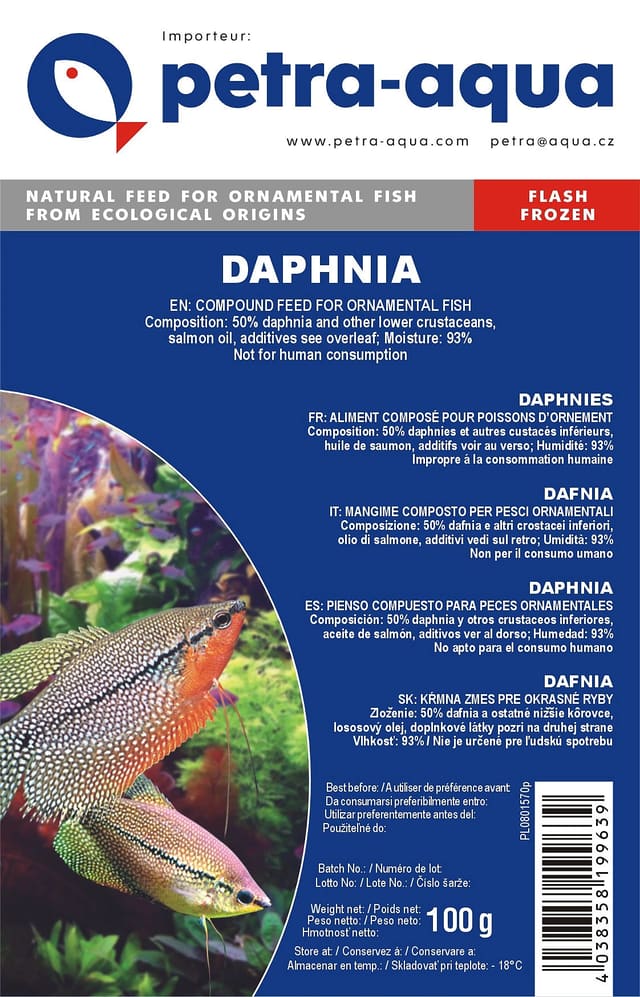
Six 100g frozen blister packs (600g total) of compound feed for ornamental fish. The label declares 50% daphnia and other lower crustaceans, salmon oil and additives, with 93% moisture. Store at -18°C; not for human consumption.
Six 100g frozen blister packs (600g total) of compound feed for ornamental fish. The label declares 50% daphnia and other lower crustaceans, salmon oil and additives, with 93% moisture. Store at -18°C; not for human consumption.
Frozen Daphnia Fish Food is a frozen compound feed for ornamental fish, supplied here as six separate 100g blister packs. The total net weight is 600g. The photographed Petra-Aqua label declares a composition of 50% daphnia and other lower crustaceans, salmon oil and additives listed on the overleaf, with 93% moisture. This is therefore not a pure-daphnia product, and the listing does not treat it as one.
The label says to store the food at -18°C and identifies it as not for human consumption. It also describes the product as flash frozen and as natural feed for ornamental fish from ecological origins. Those statements are presented as pack-label claims; the front label does not provide a certification scheme, analytical nutrient panel, feeding frequency, thawing time or species-by-species suitability list.
This guide is designed to make the purchase and feeding decision clearer without inventing benefits. It explains exactly what six by 100g means, how to read the ingredient statement, how to portion frozen food according to the fish and aquarium in front of you, and when another food format may be a better fit. Current price, stock, dispatch choices and discount eligibility remain dynamic on the product page and at checkout.
You are ordering six 100g frozen blister packs, 600g total. The front label identifies the product as compound feed for ornamental fish and declares 50% daphnia and other lower crustaceans, salmon oil, additives on the overleaf and 93% moisture. Keep it at -18°C and read the physical pack before feeding.
| Product point | What the evidence supports | What is not claimed |
|---|---|---|
| Sale unit | Six separate 100g frozen blister packs | One 600g slab or one 100g pack |
| Formula | 50% daphnia and other lower crustaceans, salmon oil and additives listed overleaf | 100% daphnia or a single identified Daphnia species |
| Moisture | 93% as printed on the front label | A complete analytical nutrient profile |
| Use | Compound feed for ornamental fish | A universal complete diet for every fish and life stage |
| Storage | Keep at -18°C | A shelf life beyond the date and instructions on the physical pack |
| Processing | The label states flash frozen | No irradiation, sterilisation or microorganism-elimination certification is shown |
The supplier catalogue identifies this item as Daphnia frozen blister, 6 x 100g. The photographed label is for one 100g pack, so one product quantity contains six of those 100g packs. The combined net weight is 600g. This distinction matters when comparing the price with a single 95g or 100g retail blister shown elsewhere in search results.
Six packs can be practical for a fish room, several aquariums or a feeding routine that uses frozen food regularly. It may be more food than a lightly stocked nano aquarium can use conveniently, however. Before buying, check freezer space, the best-before information shown on the packs and how quickly your own fish consume a measured portion. A lower unit price is not useful if food is stored incorrectly or kept beyond its labelled date.
One basket quantity = six 100g packs. It does not mean six cubes, one 100g blister or a 600g block. The product selector controls the number of six-pack bundles added to the basket.
The blister format separates the frozen food into smaller feeding portions within each pack. The number and size of those cells can vary with the physical pack, so this page does not promise a cube count. Use weight, the fish's mouth size, stocking and observed consumption rather than assuming one cell is automatically one aquarium meal.
The front label gives a concise composition: 50% daphnia and other lower crustaceans, salmon oil, and additives shown on the overleaf. It also states 93% moisture.
The phrase "50% daphnia and other lower crustaceans" is a combined declaration. It does not tell us what proportion of that 50% is daphnia, which other crustaceans are present or which Daphnia species were used. For that reason, the title uses the product name Frozen Daphnia but does not append a species epithet as though the pack certified a taxonomic identity.
Salmon oil is separately declared. The front photograph says that additives are listed on the overleaf, but the overleaf is not present in the source image reviewed for this listing. Read the label on the delivered pack if a particular additive, ingredient sensitivity or feeding restriction matters to your aquarium. Customer support can clarify available pack information before use, but the missing panel should not be guessed from another brand's daphnia food.
This formula contains daphnia and other lower crustaceans, salmon oil and declared additives. Do not treat the product name as a one-ingredient guarantee, and do not use nutrient figures copied from a different frozen daphnia brand.
Daphnia is a genus of small planktonic freshwater crustaceans commonly called water fleas. The name refers to their movement in the water rather than to insects. Daphnia and the related genus Moina have a long history as fish food. The Food and Agriculture Organization's aquaculture manual notes their use in freshwater larviculture and in the ornamental fish industry, including for guppies, swordtails, mollies and platies.
That biological background explains why fishkeepers search for daphnia fish food, but it does not establish the nutritional composition or ideal ration of this commercial pack. Live Daphnia can vary with species, size, culture conditions and diet. Processing and a compound formula change the final product further. The photographed label, not a general article about live Daphnia, is therefore the primary evidence for what this frozen food contains.
Frozen food also behaves differently from live prey. It does not swim, reproduce or remain alive in the aquarium. Fish may still respond to particles moving in the current, but response varies by species and individual. A fish accepting live daphnia is not proof that it will immediately accept this frozen compound feed, and a fish refusing its first portion is not proof that the pack is defective.
The product label says compound feed for ornamental fish. It does not print a list of suitable species on the reviewed front panel. Suitability should therefore be assessed from the fish outward: natural feeding ecology, mouth size, life stage, health, current staple diet and whether the particles can be eaten before they settle or enter the filter.
| Question | Useful sign | Reason to choose another option |
|---|---|---|
| Can the fish take the particle size? | Thawed pieces can be divided to a manageable size and are swallowed normally | Particles remain too large even after careful separation |
| Does it fit the species' diet? | An animal-derived frozen feed is appropriate within the species' wider feeding plan | The species needs a specialist plant-led, filter-feeding or medically directed diet |
| Can every fish reach it? | Food can be distributed so shy and lower-ranking fish receive some | One fish monopolises the portion or the food bypasses the intended feeder |
| Is the life stage appropriate? | The fish is large enough to handle the separated particles | Very small fry needs a finer first food or a species-specific rearing diet |
| Is the aquarium stable? | Filtration is mature and the keeper can observe and remove leftovers | The tank is cycling, water quality is unstable or feeding cannot be monitored |
For fish with specialised nutritional needs, use a complete species-appropriate staple selected for that animal and treat any frozen food according to the complete feeding plan. The pack front does not say that this formula is complete for daily exclusive use. It is safer to avoid turning the popularity of daphnia into a universal claim for bettas, fry, marine fish, goldfish or every tropical community species.
If this formula is not the right fit, compare the wider fish food range or browse the complete frozen blister collection. The goal is not to collect every frozen food; it is to choose formats and ingredients that match the animals actually kept.
The reviewed front label does not provide a feeding frequency, number of cubes or thawing time. This page therefore does not impose a generic "two to four times per week" schedule. Start from the directions on the physical pack and the established diet for the species. Remove only a small amount, separate it in a clean container if that helps control the portion, and offer the food in stages while watching every fish.
A suitable amount is the amount the intended fish can take without repeated leftovers, swollen body shape or a visible decline in water quality. That amount will differ between a small aquarium with a few fish and a large fish room. It will also change as fish grow, stocking changes or another food is used in the same day. A cell in a blister is a convenient physical division, not a biological ration.
Distribute the food where the intended fish naturally feed. Some fish take particles in open water, some wait lower in the aquarium and some lose out when a fast dominant fish reaches every addition first. Add a little, observe, then decide whether more is needed. Do not pour the full portion into one spot merely because several fish approached the glass.
Begin below the amount you think the aquarium will take. Watch who eats, where particles travel and whether any reaches the substrate or filter untouched. Increase only when the previous addition has been taken cleanly.
When feeding several aquariums, divide the removed amount with dedicated clean equipment before moving from tank to tank. This makes portions more deliberate and reduces the temptation to drop one full blister cell into every aquarium. It also helps prevent wet aquarium tools from touching the remaining frozen pack.
Use separate equipment for quarantine or treatment systems. Sharing a pipette, cup, net or wet utensil between aquariums can move water and biological material even when the food itself began frozen. The same basic separation practice used for nets and siphons is sensible during feeding.
Record what is actually used if this is a new food. A brief note such as "half the previous portion, all taken" is more informative than a universal feeding chart. After several feeds, the keeper can see whether the six-pack format suits the real rate of use and whether fish accept the formula consistently.
| Situation | Practical approach | Avoid |
|---|---|---|
| Lightly stocked aquarium | Separate a small fraction and add it gradually | Using a whole cell because it is pre-shaped |
| Busy community | Spread small additions across more than one feeding zone | Allowing the quickest fish to take the entire serving |
| Several aquariums | Divide portions with clean dedicated tools before feeding | Dipping one wet utensil into the pack between tanks |
| Quarantine tank | Use equipment reserved for that system | Returning unused thawed food or wet tools to shared storage |
No frozen food is automatically clean or dirty in use. The impact depends on portion, particle size, fish uptake, filtration and how long uneaten material remains in the aquarium. A formula with 93% moisture still introduces organic material. If particles collect under decor, enter an inaccessible filter chamber or remain after the fish stop feeding, the serving was not controlled well enough for that setup.
Observe the aquarium after feeding, not only during the first rush. Check the substrate, low-flow corners and intake area. Remove visible leftovers where practical. If water becomes cloudy, fish breathe unusually, the filter loses flow or ammonia or nitrite is detected, stop adding food and investigate water quality immediately. Do not assume another food or a bottled additive will correct overfeeding.
In a mature aquarium, feeding records and routine testing can show whether a frozen-food rotation is manageable. In a new or unstable system, the priority is establishing safe water and filtration rather than using richer or more varied feeds to stimulate appetite. The food should fit the aquarium's biological capacity as well as the fish's mouth.
If particles remain after the fish have stopped actively taking them, reduce the next portion and review distribution. Repeated leftovers are not evidence that the aquarium needs a different flavour; they are evidence that the feeding method needs correction.
The front label gives one clear storage requirement: -18°C. Make freezer space before ordering and transfer the packs promptly according to the current delivery guidance. Keep the label and best-before information readable, and use the dated physical pack as the authority for shelf life. This page does not create a substitute expiry period.
Keep the remaining packs frozen while taking out the amount required. Avoid leaving the multipack on a worktop while several aquariums are fed. A small insulated container can reduce unnecessary warming during a long fish-room round, but it does not replace freezer storage. Return unopened frozen packs promptly and keep aquarium water away from the packaging.
The source photograph shows only the front panel. Because it does not display full thawing, reuse or refreezing instructions, this listing does not invent them. If a pack has softened, leaked, lost its label or arrived in a condition that causes concern, photograph it and contact support before feeding or making assumptions about whether it can be stored again.
The physical pack's date and complete directions come first. The verified front-panel requirement is -18°C. Where the delivered pack contains additional instructions, follow those rather than generic advice copied from another manufacturer.
Check the current delivery information before ordering because available services, destinations, packaging and dispatch timing can change. Make sure someone can receive the parcel and that freezer space is ready. Checkout is the source for the delivery method and charge offered to the address.
On arrival, verify that the correct product and quantity are present: six 100g Daphnia packs for each product quantity ordered. Check that the packs are intact, the label is legible and the best-before information can be read. Move them to appropriate frozen storage promptly when everything is in order.
If the parcel, temperature condition, seal, label or quantity causes concern, take clear photographs before discarding packaging or opening more packs. Use the current returns and problem-reporting information and contact support promptly. The Live Arrival Guarantee is for eligible living animals and should not be presented as a frozen-food promise; this non-living product follows the applicable order and delivery terms.
Search results often mix frozen daphnia, live cultures and dried daphnia. They share a familiar ingredient name but differ in storage, behaviour, moisture, portioning and risk. A frozen compound feed should be compared with the product type the keeper actually intends to use, not treated as interchangeable with a live culture or a shelf-stable tub.
| Format | Storage and use | Key decision |
|---|---|---|
| This frozen compound feed | Store at -18°C; remove measured portions; formula includes other crustaceans, salmon oil and additives | Freezer capacity, label directions and portion control |
| Live Daphnia | Requires a living culture or fresh supply and behaves as moving prey | Culture quality, species, water source and continuity of supply |
| Dried or freeze-dried daphnia | Shelf-stable according to its own pack and low in moisture | Rehydration or feeding directions, particle size and the exact ingredient panel |
None is automatically best in every aquarium. Frozen food offers convenient storage and measured physical portions when freezer handling suits the household. Live food provides movement but requires a reliable source and culture management. Dried food is easy to store but is a different texture and formulation. Compare complete labels rather than assuming one format retains more nutrition or is always safer.
Frozen daphnia is one option within a much broader frozen-food range. Different products use different organisms, particle sizes, oils, plant ingredients and compound formulas. Variety can be useful only when each item has a defined role. Adding several names to a freezer does not by itself create a balanced diet.
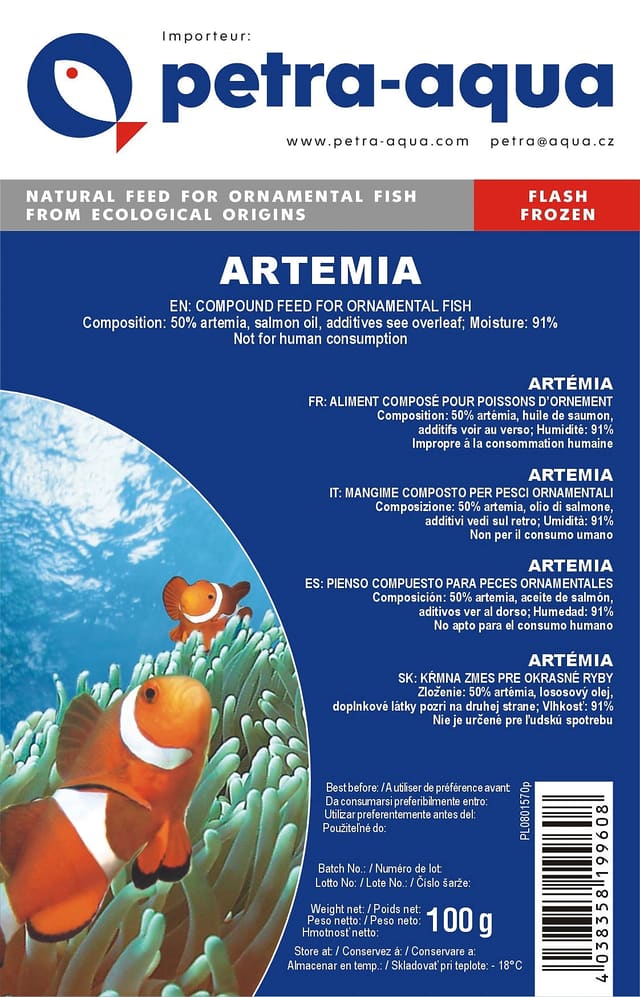
For another small crustacean-based option, compare the Frozen Cyclops blister. The Frozen Artemia blister provides a distinct Artemia-based product, while Red Mosquito Larvae is a different invertebrate feed. Read each ingredient panel independently rather than transferring claims between them.
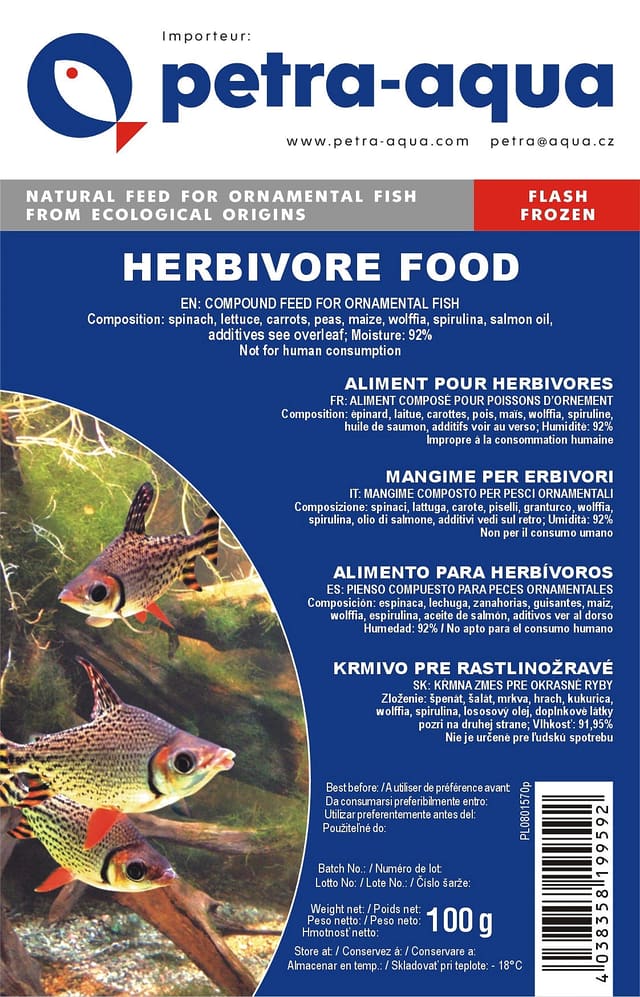
The Daphnia and Spirulina frozen food is the closer named alternative when the keeper specifically wants a spirulina-labelled formula. The Frozen Herbivore Fish Food is a more clearly plant-led option for an appropriate species plan. These links are comparisons, not automatic recommendations for the same fish.
Start with the species-appropriate complete staple, then identify what a frozen food adds in particle size, ingredients or feeding behaviour. Remove products that duplicate a role or do not match the fish, even if their search descriptions sound impressive.
No crude protein, fat, fibre, ash, vitamin, omega-3 or fatty-acid value is claimed because the reviewed label image does not show an analytical panel. Salmon oil is an ingredient, but its presence alone does not justify an omega-3 quantity or health outcome. Likewise, the phrase natural feed on the pack does not turn a compound formula with declared additives into a 100% single-ingredient product.
No irradiation, sterilisation or microorganism-elimination certification is shown on the reviewed front label. Similar claims appear on some competing frozen-food pages, but they cannot be transferred to this product. It is also not presented as a treatment for constipation, bloating or disease. If a fish has swelling, appetite loss, abnormal faeces or repeated buoyancy problems, test the water and obtain species-appropriate health advice instead of using a food as a diagnosis.
Finally, no universal feeding schedule is promised. Fish species, life stage, temperature, aquarium stocking and the rest of the diet all affect intake. The body condition and water response in the keeper's aquarium are more reliable than a keyword-led timetable.
The label states that the product is not for human consumption. Keep it separate from human food preparation, use clean dedicated utensils and wash hands after handling animal feed. The formula contains crustacean material and salmon oil; people who need to avoid contact with fish or crustacean ingredients should take appropriate precautions.
Do not allow children or pets to treat the packs as human frozen food. Retain the original label so the product, batch and date can be identified if a question arises. Do not decant all six packs into an unlabelled container merely to save freezer space.
Inspect each pack before use. A broken seal, unreadable label, unusual odour after opening or unexplained storage history is a reason to stop and ask, not to test the product on fish. Where a veterinary professional has prescribed a feeding or treatment plan, follow that advice over general retail guidance.
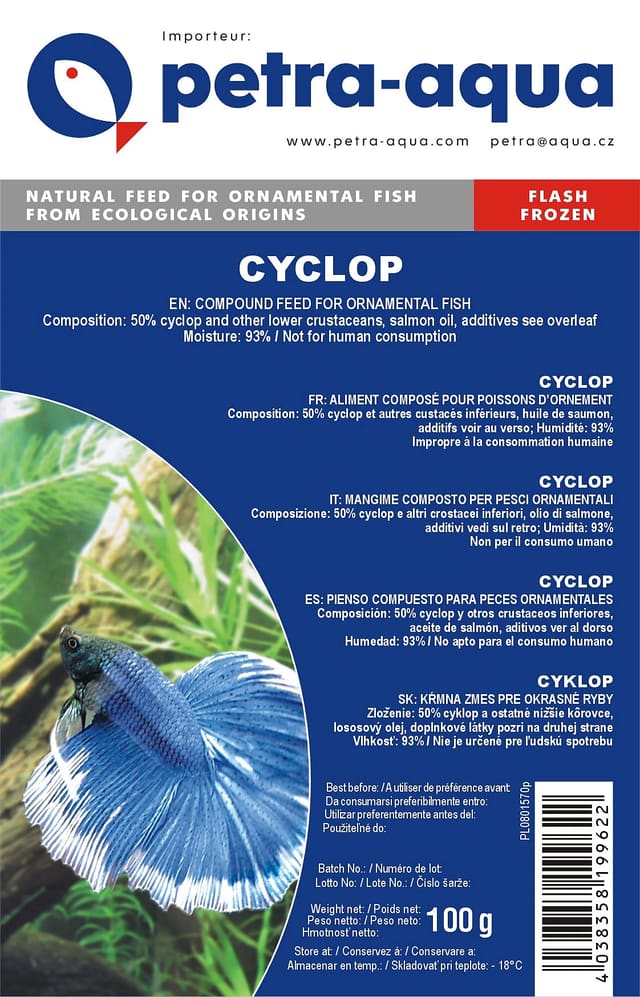
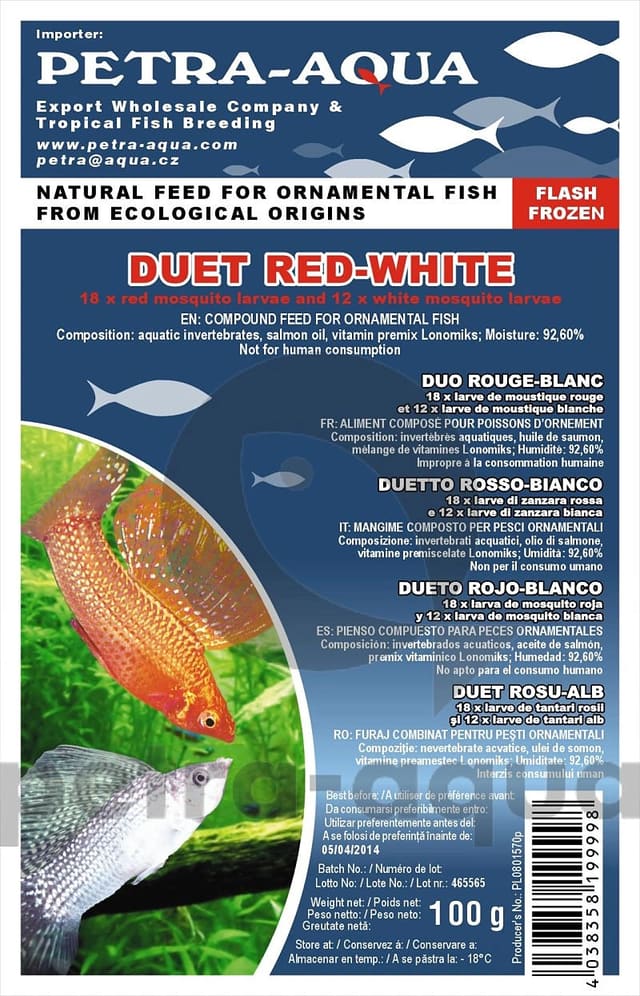
The protected gallery image is the Petra-Aqua front label for the 100g Daphnia pack. It shows the product name, compound-feed description, declared composition, moisture, net weight, -18°C storage instruction, barcode and importer details. It is useful product evidence and remains unchanged in the gallery.
The fish photographs printed on the label are packaging artwork. They do not mean those species are included or prove that the formula is appropriate as an exclusive diet for every pictured fish. The listing image also does not show the reverse panel where the label says additives are declared. Consult the physical pack for that information.
The current product price and availability are shown beside the basket controls and can change with supplier and inventory updates. The description does not hard-code a price, stock count or next-day promise. Search engines and customers should receive those facts from the live offer data and checkout rather than stale prose.
Eligible customers can use WELCOME10 for 10% off a first order under the current promotion terms. Check the special offers page and checkout for current eligibility and combinations. This frozen-food listing does not use the Live Arrival Guarantee as a sales claim because that protection is intended for eligible living-animal deliveries.
For delivery, order or product-label questions, use the help and FAQ page before purchase. A precise answer about current stock, dispatch or the physical reverse label is more useful than adding a broad promise to a search snippet.
| Check | Ready to order means |
|---|---|
| Quantity understood | You need six 100g packs, 600g total, rather than one retail blister. |
| Freezer prepared | Space is available to store the packs at the labelled -18°C. |
| Diet reviewed | The compound formula fits the fish's wider species-appropriate feeding plan. |
| Ingredients checked | 50% daphnia and other lower crustaceans, salmon oil and additives are acceptable; the physical overleaf will be read. |
| Portion method planned | You can divide a small amount, feed in stages and observe every intended fish. |
| Water stable | The aquarium is mature, filtration is working and leftovers can be monitored. |
| Delivery arranged | Someone can receive the parcel and move the packs to suitable storage promptly. |
If the quantity is too large, the ingredients do not suit the feeding plan or reliable frozen storage is unavailable, choose another format. If the only uncertainty is a pack-label detail not visible here, ask before feeding rather than relying on a general daphnia article or another retailer's formula.
This listing separates product evidence from general biological context. The photographed label and Petra supplier catalogue support the sale unit, formula, moisture, storage, processing wording and ornamental-fish use. The FAO source supports the general explanation of Daphnia and Moina as freshwater fish-food organisms; it is not used to manufacture nutrient values or outcomes for this commercial formula.
Reviewed 21 July 2026. The physical delivered label remains the authority for batch, date, overleaf additives and any directions not visible on the front panel. Current product price, inventory, dispatch choices and promotion eligibility remain dynamic and are supplied by the product page and checkout.
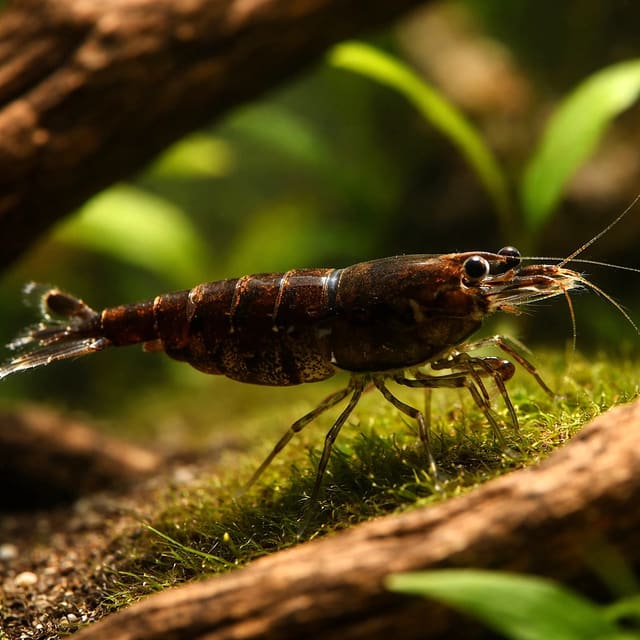
18–26°C · pH 6.5–8 · 30L
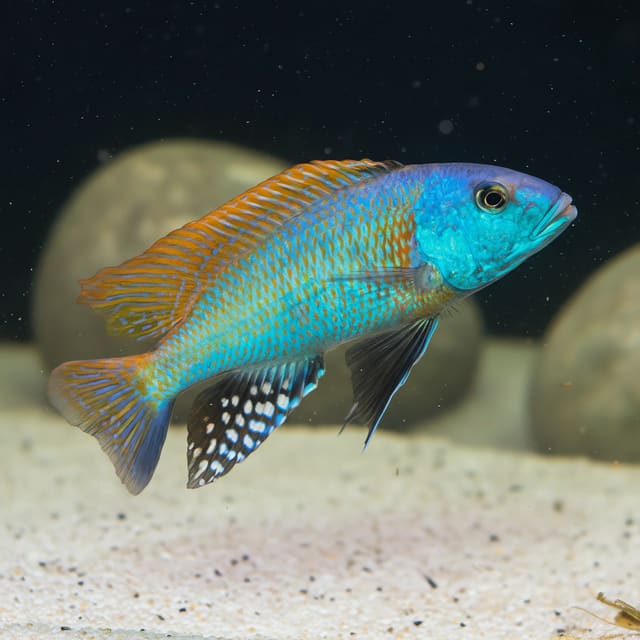
23–27°C · pH 7.4–8.4 · 1000L
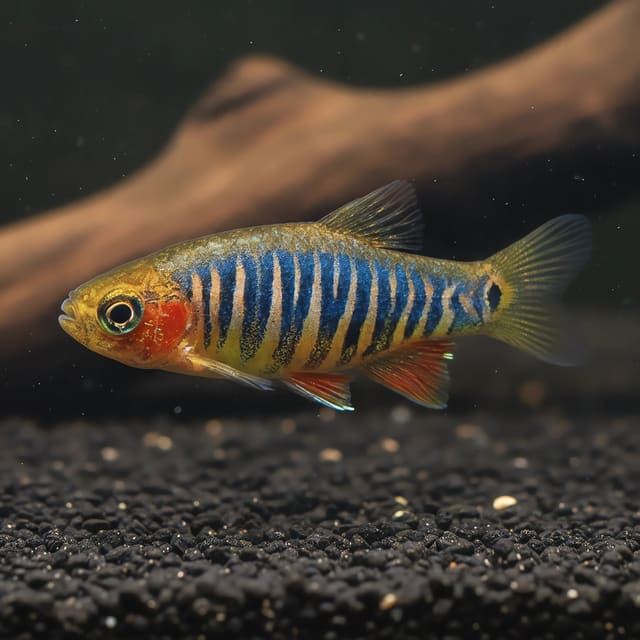
20–24°C · pH 7–8 · 45L
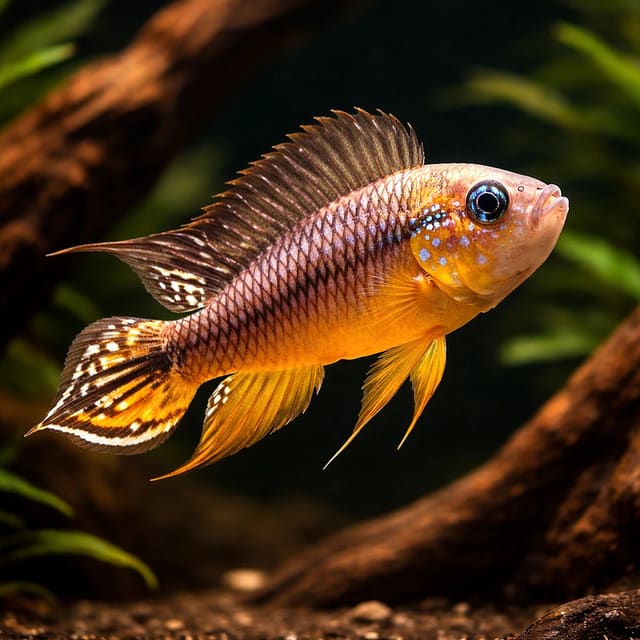
24–28°C · pH 5.5–7 · 60L
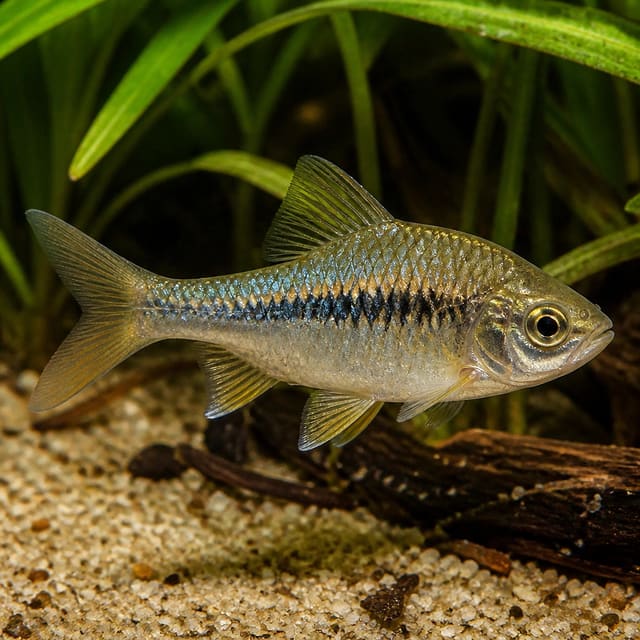
18–25°C · pH 6–8 · 100L
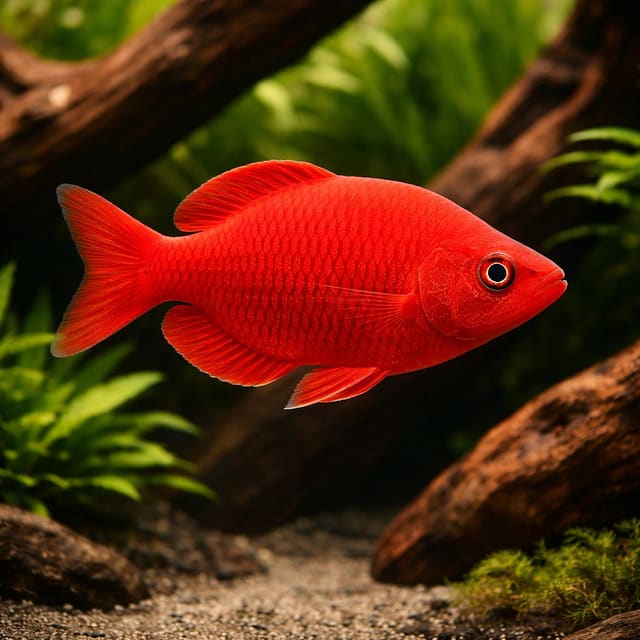
24–28°C · pH 7–8 · 120L
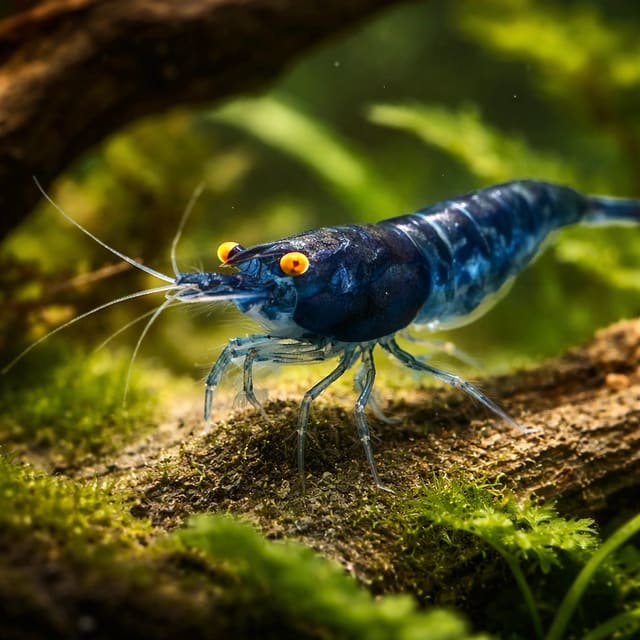
18–28°C · pH 6.5–8 · 20L
22–26°C · pH 6–7.5 · 60L