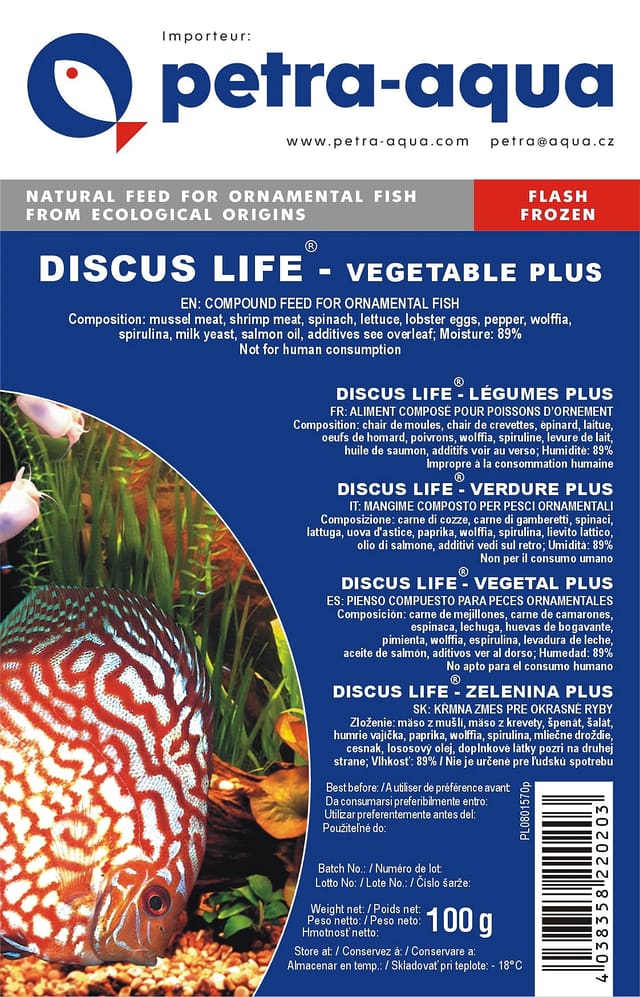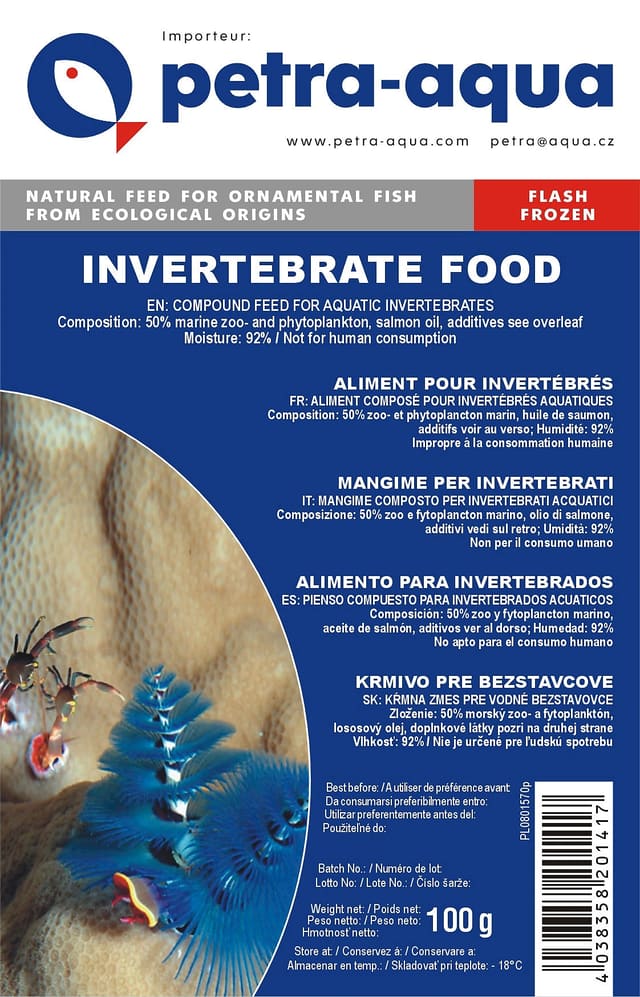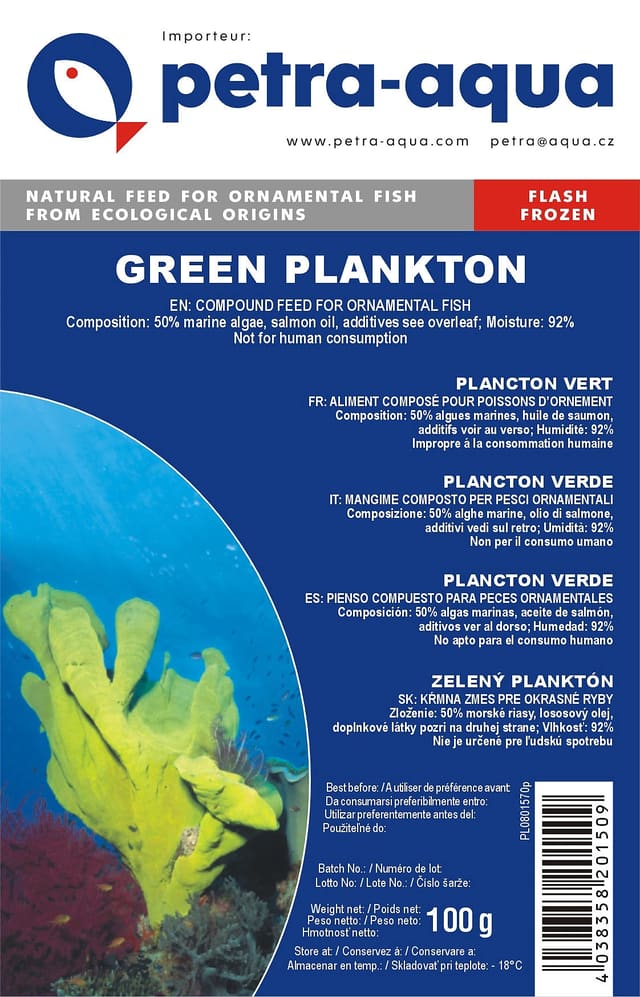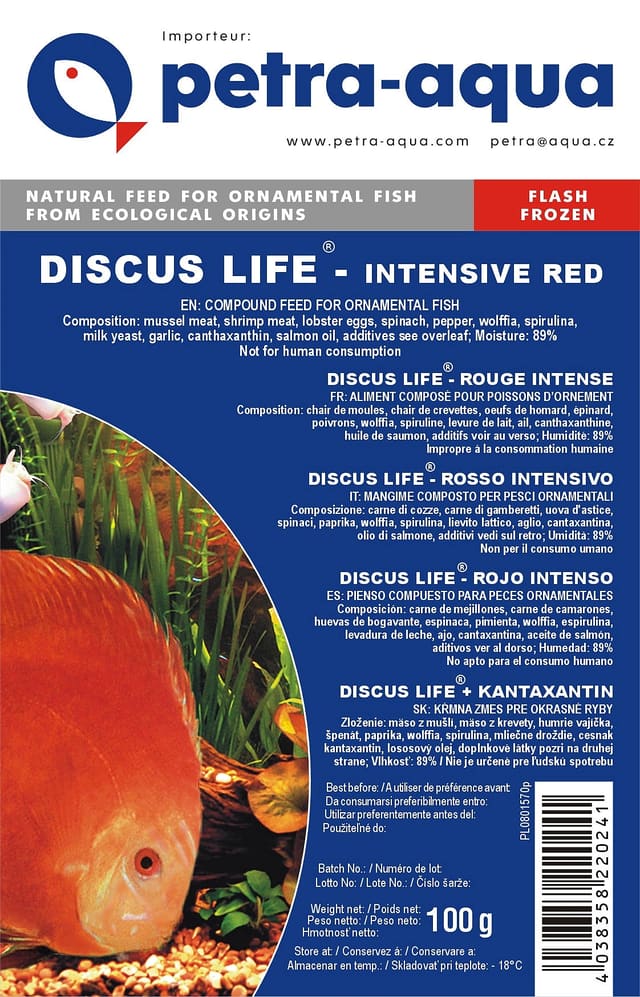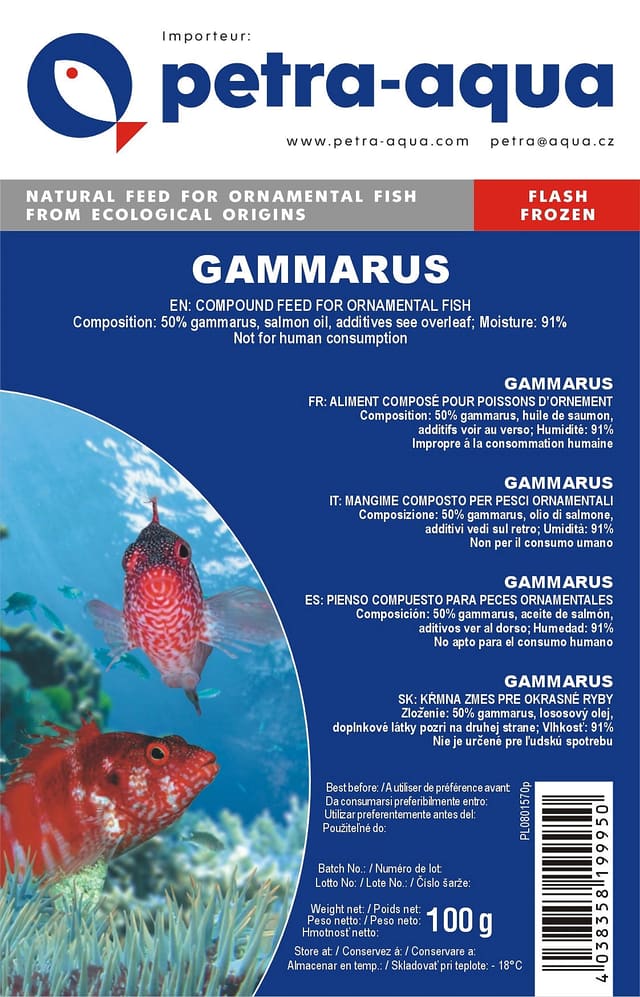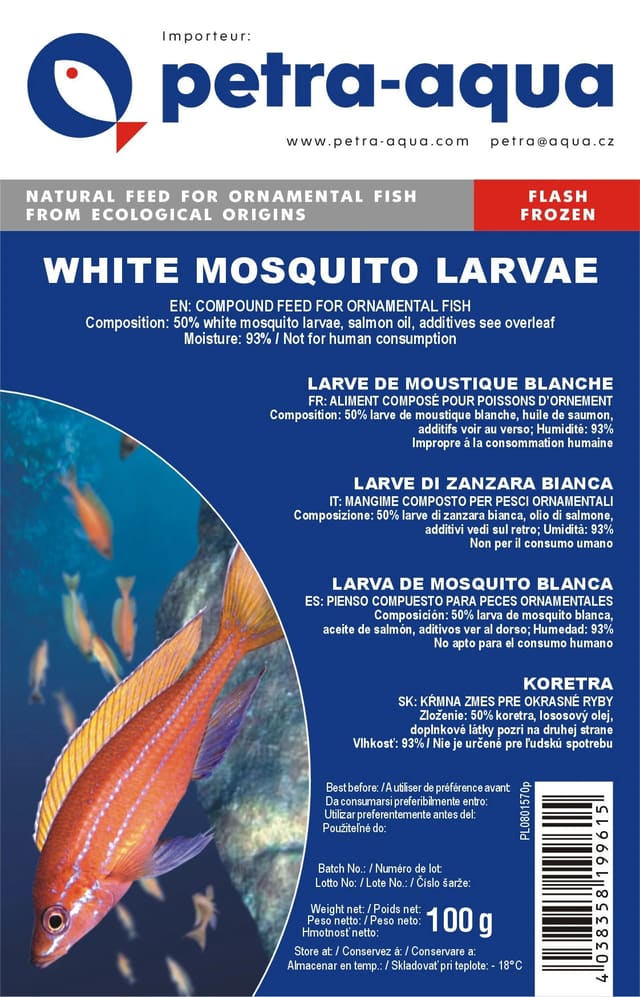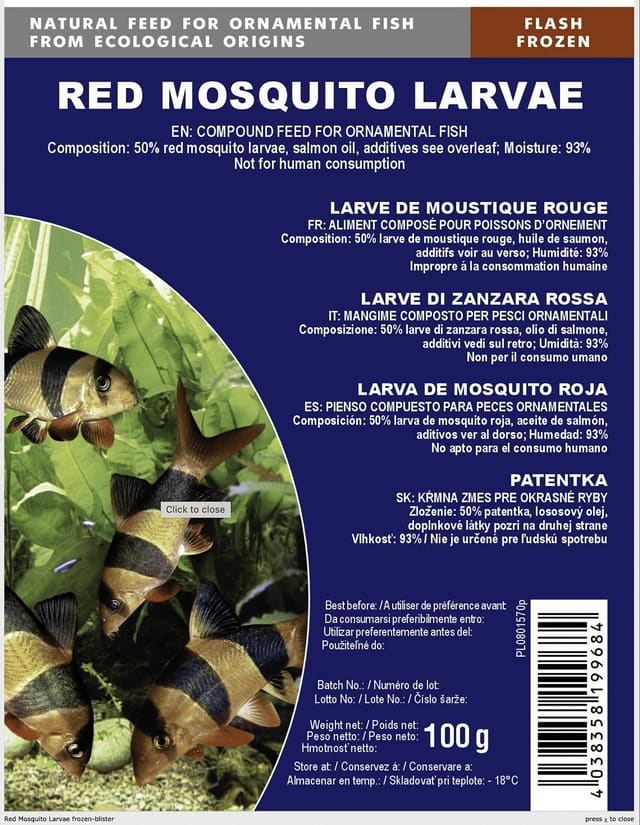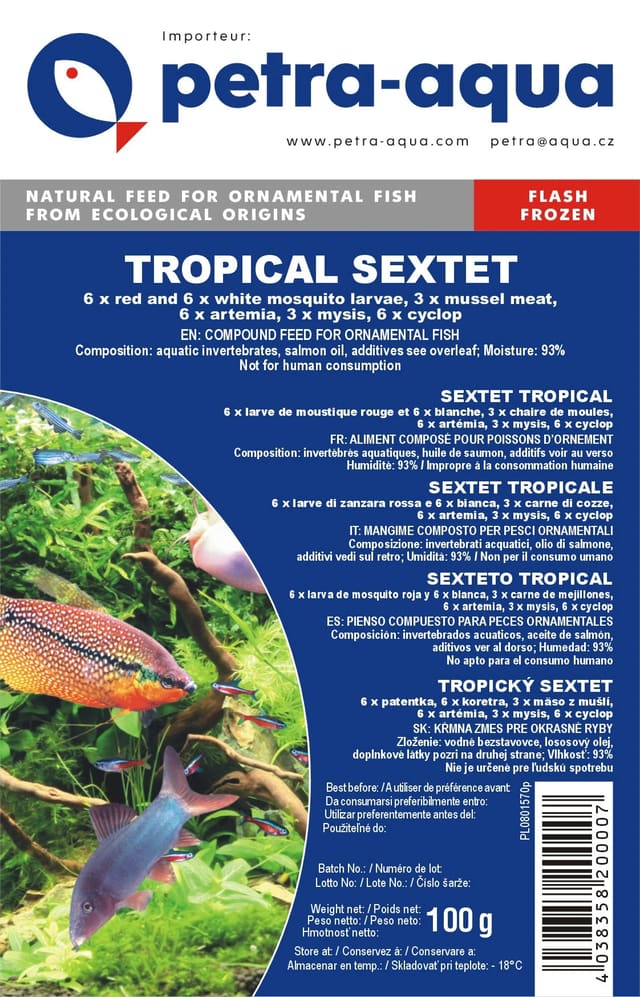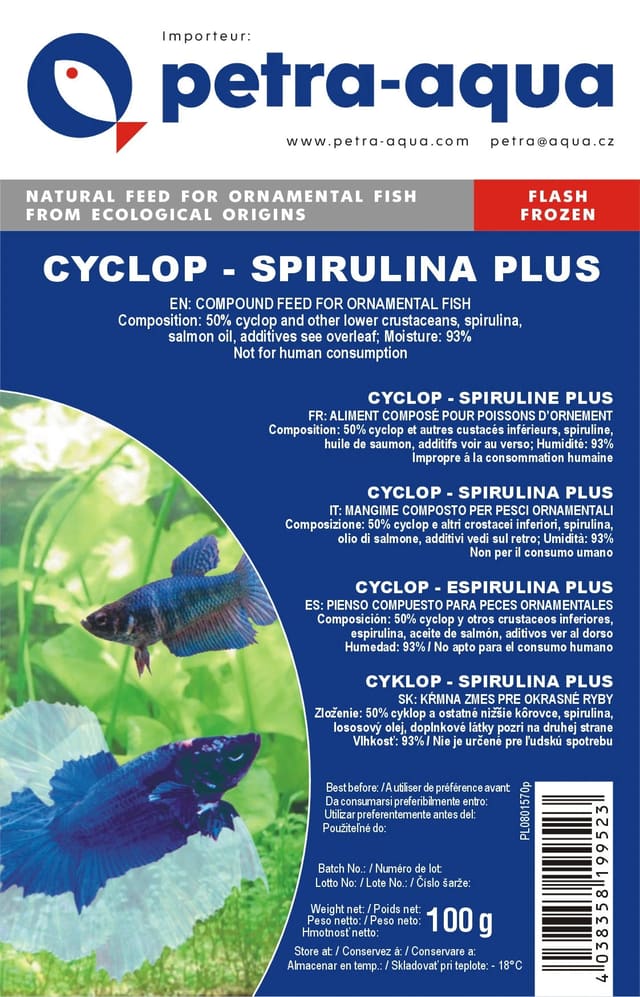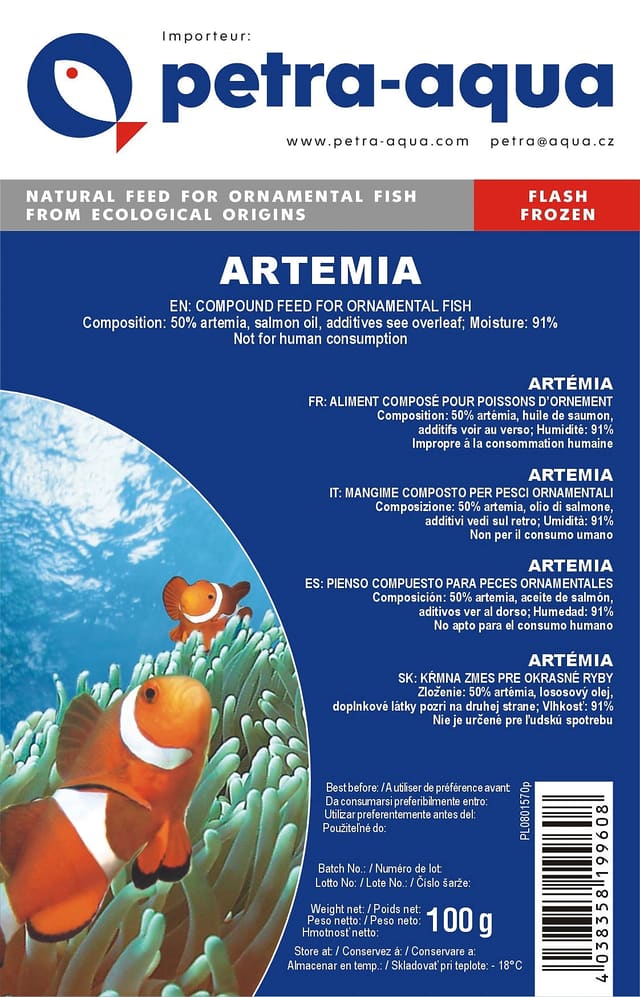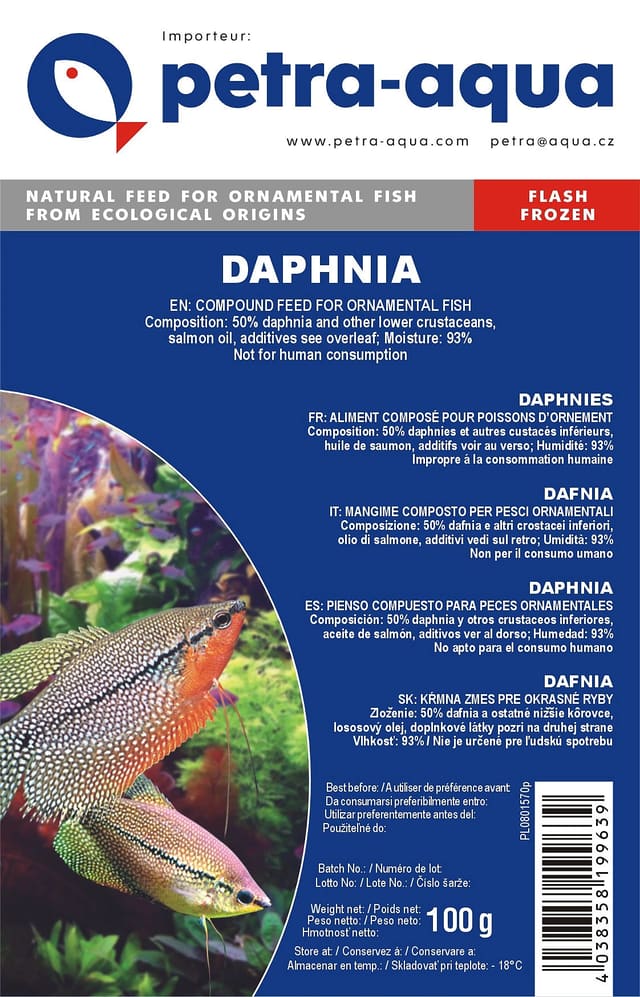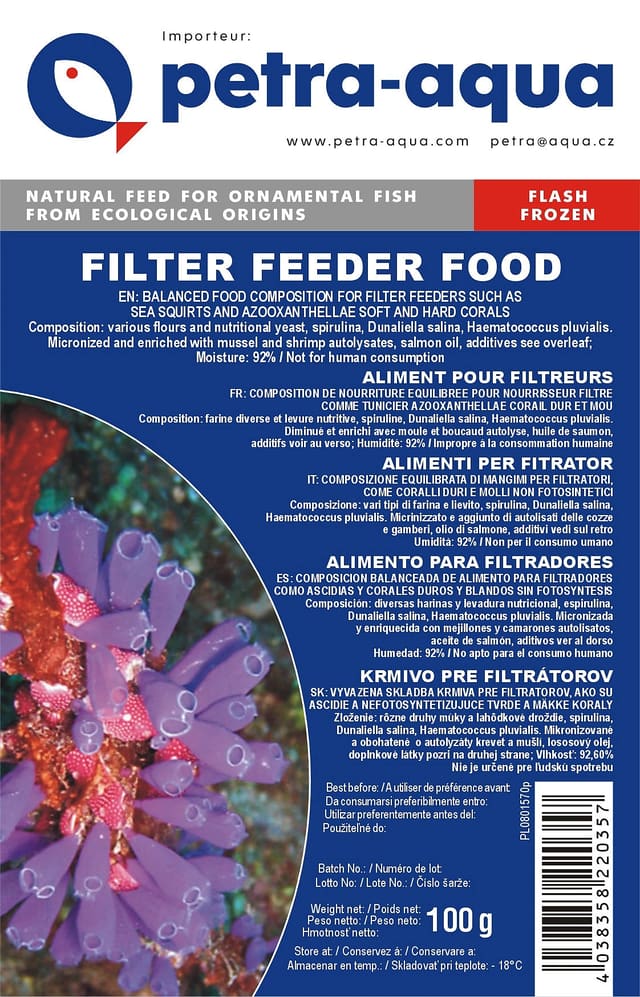
Frozen Filter Feeder Food 6 x 100g
£31.99

Plant-rich frozen herbivore fish food in 6 x 100g blister packs, with spinach, lettuce, algae/spirulina and vegetable ingredients for plecos, mbuna, livebearers and community grazers.
Plant-rich frozen herbivore fish food in 6 x 100g blister packs, with spinach, lettuce, algae/spirulina and vegetable ingredients for plecos, mbuna, livebearers and community grazers.
This frozen herbivore fish food is a plant-rich blister pack for aquarium fish that need more vegetable matter than a standard flake or pellet diet can provide. The pack format is 6 x 100g, with easy-portion frozen cubes for regular feeding or rotation alongside wafers, pellets and fresh greens.
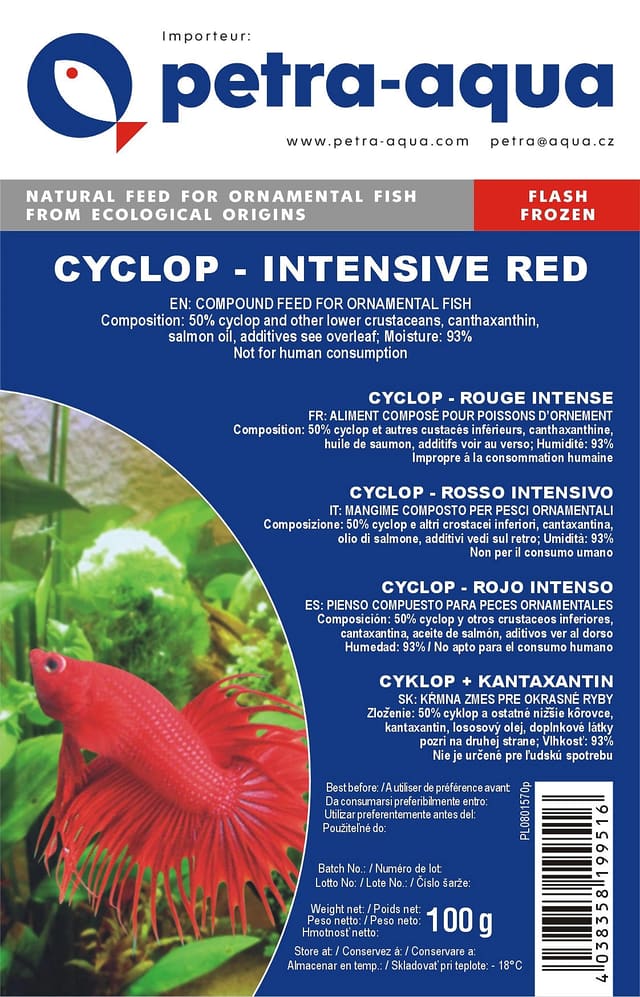
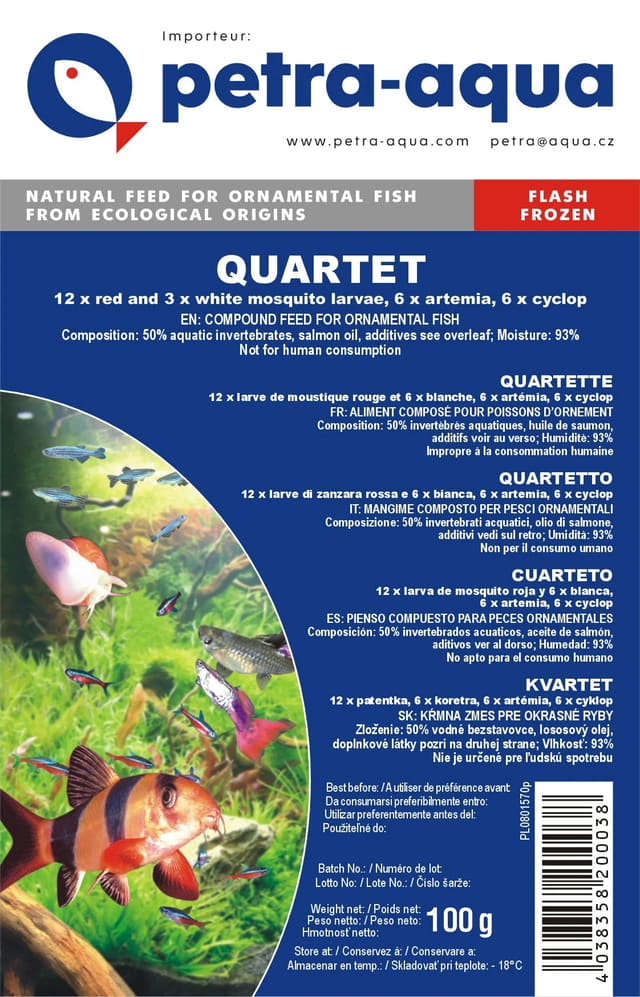
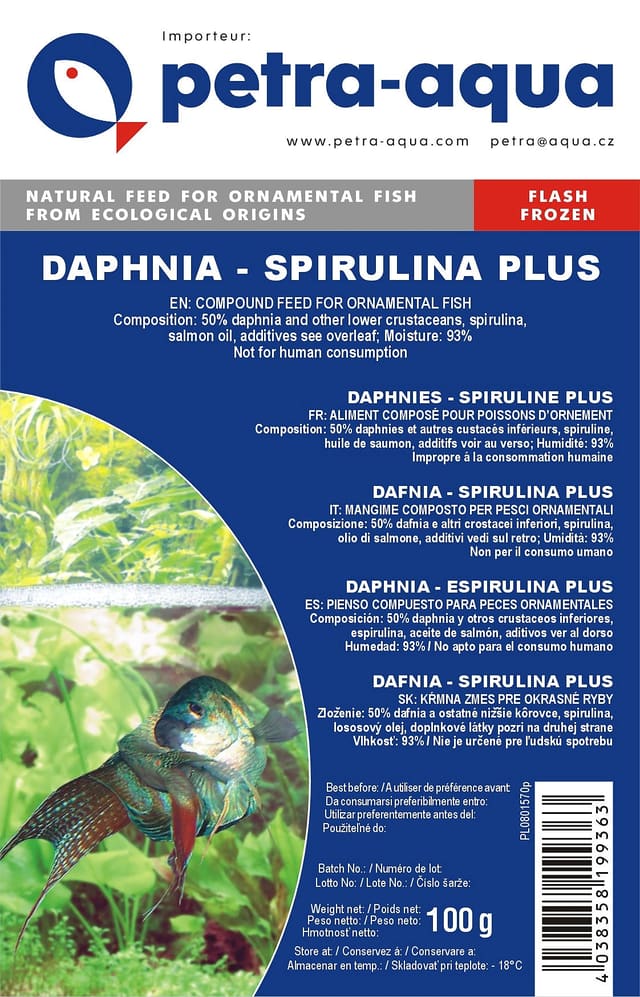
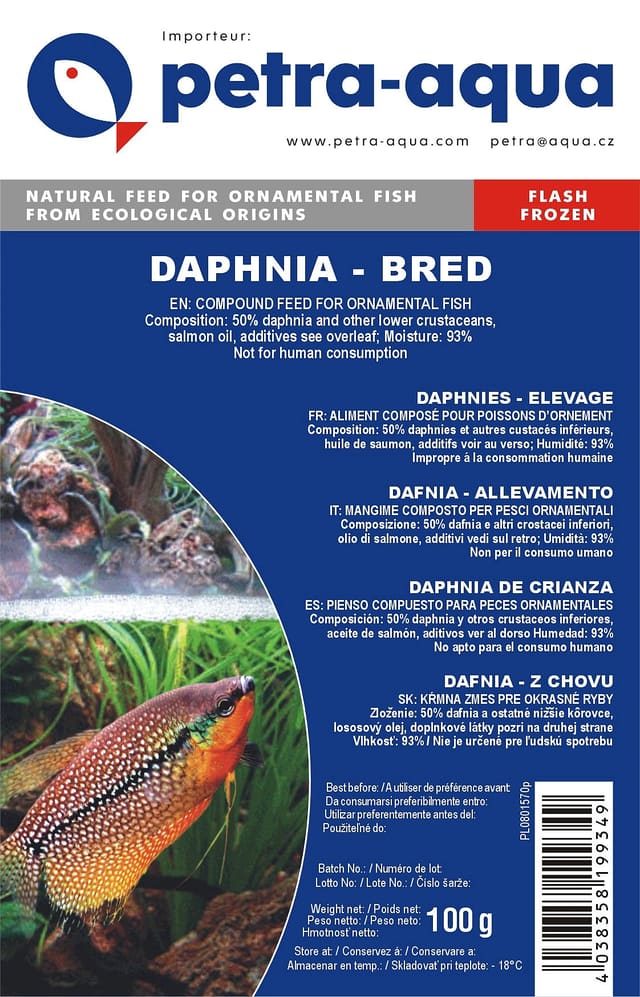
The packaging identifies this as Herbivore Food for ornamental fish, flash frozen and made with spinach, lettuce, carrots, peas, maize, wolffia, spirulina and salmon oil. It is not a medicine or a complete fix for poor feeding routines, but it is a useful freezer staple for keepers who want a cleaner, more consistent way to feed plant-grazing and omnivorous aquarium fish.
Use it for fish that naturally graze on algae, biofilm, soft plant material or vegetable-rich prepared foods. Good candidates include many plecos, bristlenose catfish, mbuna and other herbivorous African cichlids, livebearers, silver dollars, larger barbs, rainbowfish and mixed community fish that benefit from vegetable content.
It can also be useful in marine and brackish systems for herbivore-leaning fish when the rest of the diet is planned properly. For strict specialist species, use it as part of a varied diet rather than the only food. Predatory fish may ignore it or only pick at it, so match the food to the fish rather than forcing one food across the whole tank.
The visible packaging composition lists spinach, lettuce, carrots, peas, maize, wolffia, spirulina and salmon oil, with moisture around 92%. That makes it a soft frozen vegetable blend rather than a dry algae wafer. The texture encourages grazing and picking, while the blister format keeps portions consistent.
Spirulina and green ingredients are especially useful for fish that show better colour and condition when vegetable matter is available regularly. Salmon oil adds a fatty component, so feed sensible portions and keep the diet balanced with species-appropriate staple foods.
Remove only the number of cubes you need, thaw in a small cup of aquarium water, then feed a modest amount. Rinsing is optional, but it can help if your aquarium is sensitive to fine particles. Do not drop large frozen chunks into a small tank and walk away; thawing first gives you more control and helps smaller fish feed safely.
Feed only what the fish will finish quickly. Bottom-feeding herbivores may need the food placed near their usual grazing area, while midwater fish can take small softened pieces as they break apart. Remove obvious leftovers before they spoil.
For herbivorous and omnivorous fish, use this food as part of a rotation. Many aquariums do well with a mix of high-quality staple pellets or flakes, algae wafers, fresh vegetable treats where appropriate, and frozen foods like this one. Heavy grazers may benefit from small regular portions; mixed communities may only need it a few times per week.
Watch body shape, colour, waste and water clarity. If fish are leaving food, feed less. If dominant fish take everything before bottom dwellers reach it, split the portion or feed in more than one spot.
Keep frozen at -18C as indicated on the packaging. Do not refreeze thawed food, and do not leave cubes at room temperature while you work around the aquarium. Once thawed, use promptly and discard leftovers.
Because this is frozen food, plan delivery and storage before ordering. Move it to the freezer as soon as possible after arrival. First-time customers can use WELCOME10 where eligible, but the important practical step is simple: keep the cold chain tight and feed controlled portions.
Frozen foods are nutritious, but they can pollute water if overfed. Start with a small amount and increase only if the fish clear it quickly. Good filtration, regular maintenance and sensible stocking matter more than any single food choice.
In planted tanks or tanks with grazing fish, this food can fit neatly into a varied routine. In bare or overstocked aquariums, any soft food can break down quickly, so be stricter with portion size.
Choose a herbivore blend when your fish pick at algae, rasp wood, graze rock surfaces or need vegetable matter to stay in good condition. Dry foods are useful, but many grazing fish respond well to a softer frozen food because it breaks apart naturally and lets them pick at smaller pieces. This is especially helpful for fish that ignore hard pellets at first, newly imported fish that need variety, or community tanks where you want to spread small vegetable-rich portions through the aquarium.
This food is not only for strictly herbivorous fish. Many aquarium fish are opportunistic omnivores, and a plant-rich frozen food can stop the weekly diet leaning too heavily on bloodworm, shrimp or other protein-rich foods. That balance is useful for mbuna, livebearers, silver dollars, some barbs, plecos and mixed tropical communities.
The packaging describes the food as compound feed for ornamental fish, and the vegetable/algae ingredient list makes it relevant to both freshwater and marine herbivore-leaning species. In freshwater aquariums it fits well with plecos, algae-grazing catfish, livebearers and herbivorous cichlids. In marine aquariums it can support fish that browse vegetable and algae-based foods, but it should sit alongside marine-specific staples where needed.
Always match portion size to the aquarium. A large herbivore cichlid group may clear a cube quickly, while a small community tank may need only part of a cube. The goal is steady feeding, not cloudy water.
Blister packs are convenient because the portions are already separated. You can remove one cube at a time without thawing a larger slab, which reduces waste and keeps the rest of the pack cleaner. They also make it easier to repeat a feeding routine: one small cube for a larger tank, half or less for a smaller aquarium, and extra only when the fish clear the food confidently.
For busy keepers, that consistency is the main advantage. You still need to feed thoughtfully, but you do not need to chop vegetables, guess loose frozen portions or handle messy slabs every day.
This is a frozen aquarium food, so cold-chain handling matters more than marketing promises. Order when someone can receive the parcel, move it to a freezer quickly, and avoid leaving it in a warm room. If a cube has fully thawed, use it promptly and do not refreeze it.
WELCOME10 may be available for eligible first orders, but this page avoids live-fish arrival language because the product is food, not livestock. For frozen foods, the practical promise is careful dispatch, clear storage guidance and a product page that tells you exactly what the pack is for.
No reviews for this item yet. Bought one? Honest reviews only, good or bad.
What customers say about ordering from us
I have a small group of long finned mountain minnows. So was delighted to be able to order ten of this variety to increase the genetics in my tank . The ones I recieved are healthy but it’s to early to give a verdict on wether they are of a long finned type since they are small currently.
Gordon Walker · 23 Sept 2026
100% success travel and "installation". Pleased with quality of purchase. The Siamese fighter a bit "shy" so have not yet seen him at his best yet but looking good. Happy customer. GG
George E Garratt · 21 Sept 2026
Reviews of our shop, collected by Judge.me, an independent third-party review collector. Newest first.