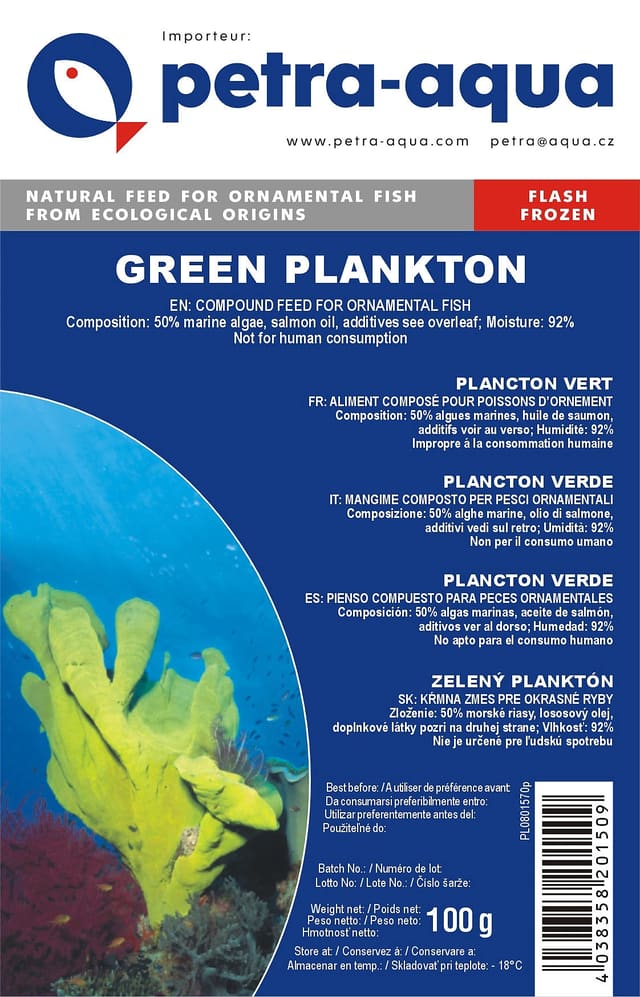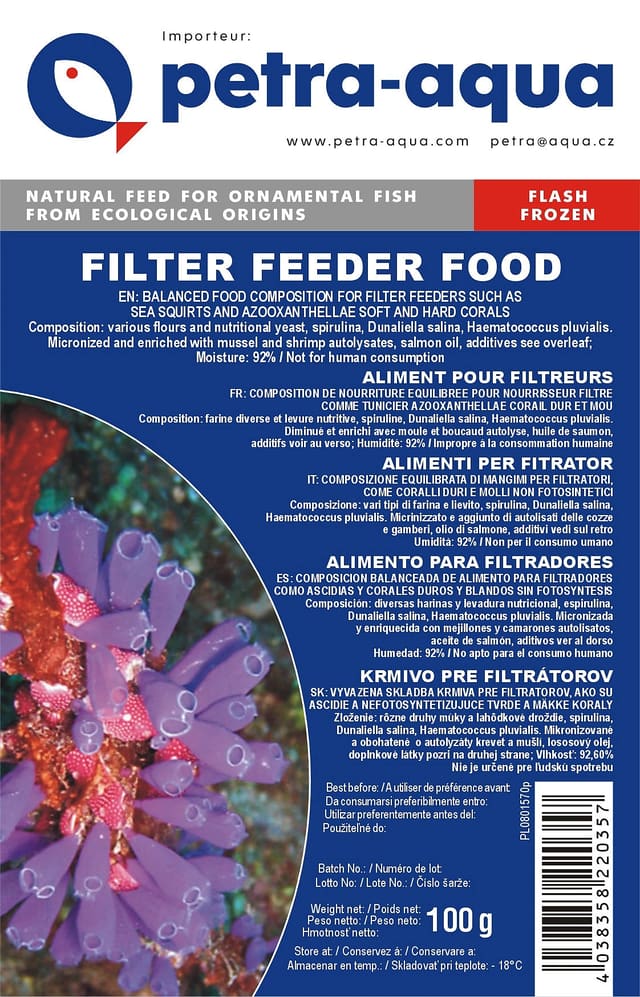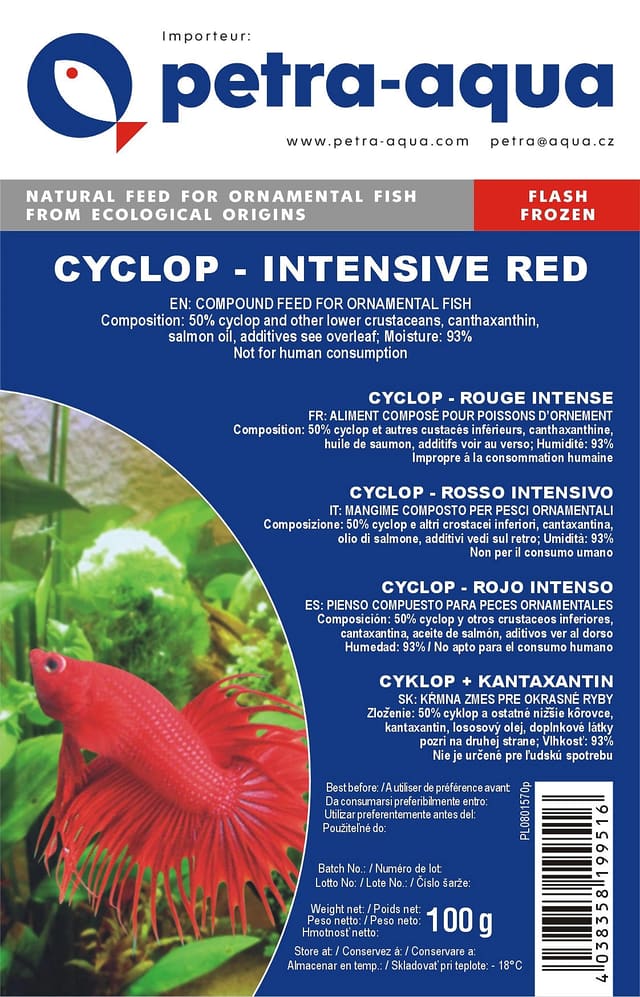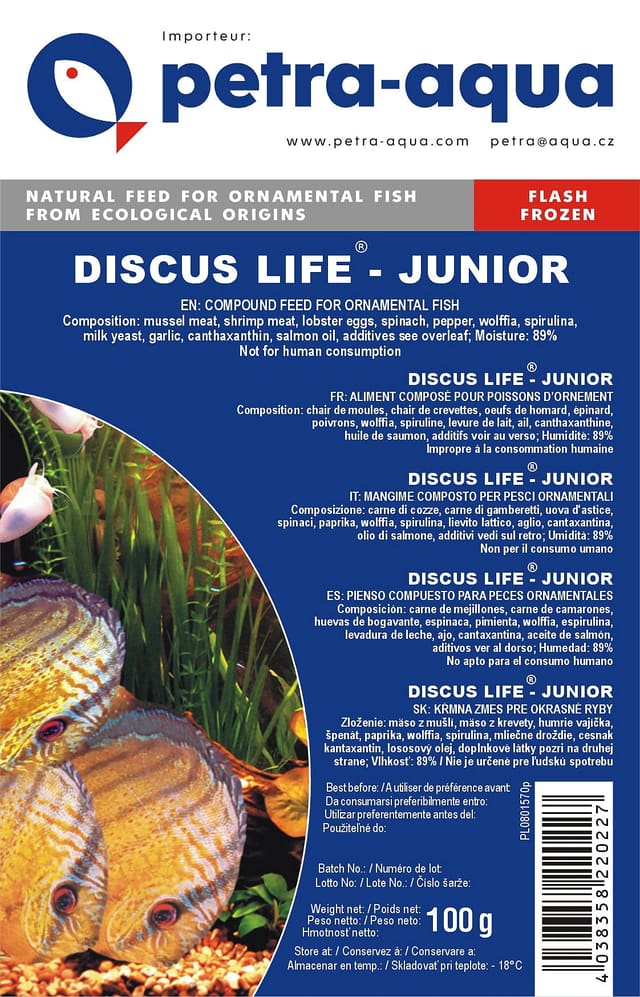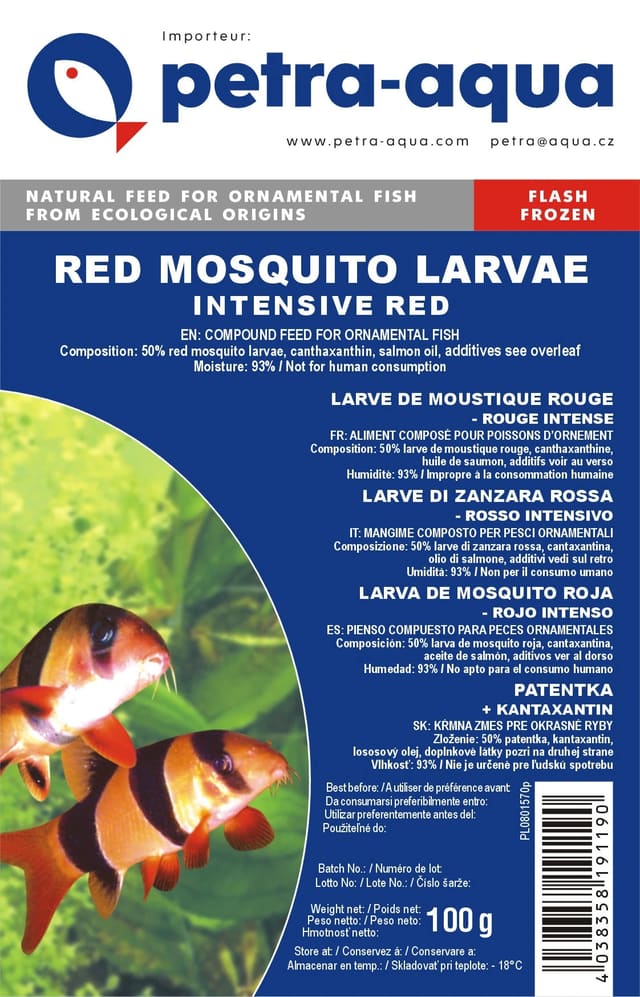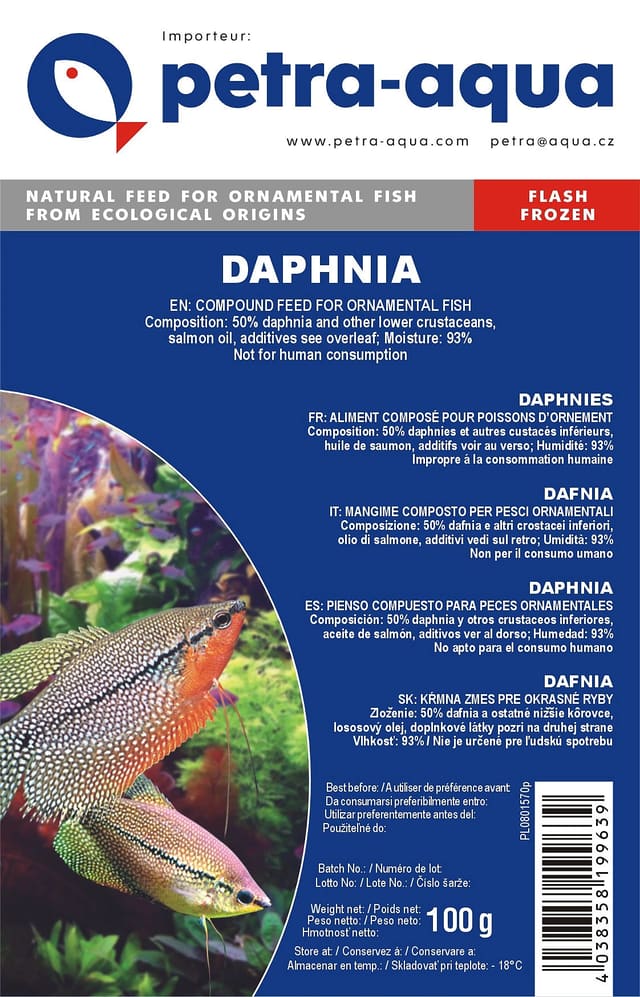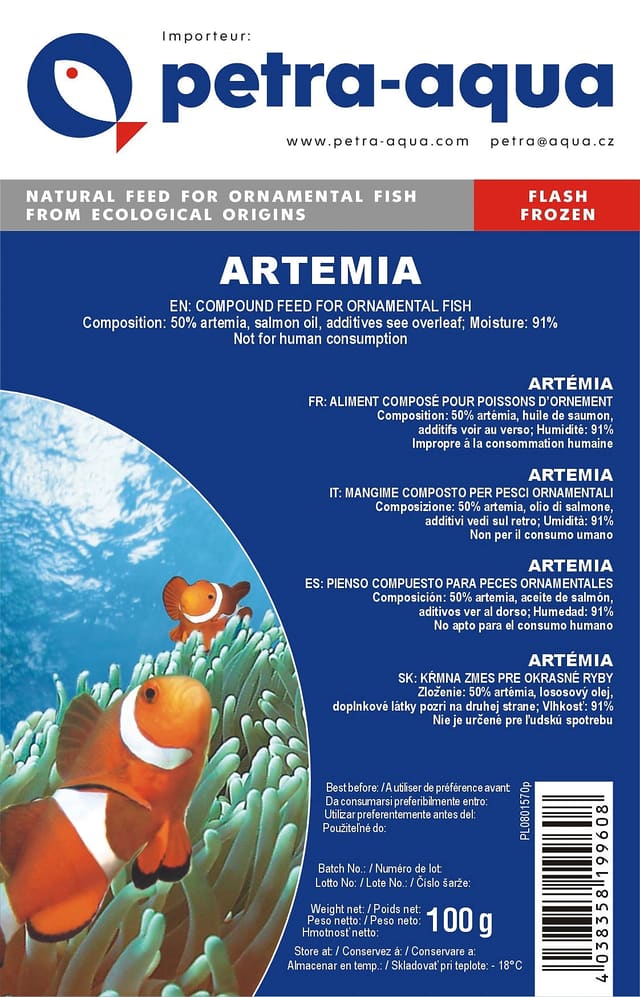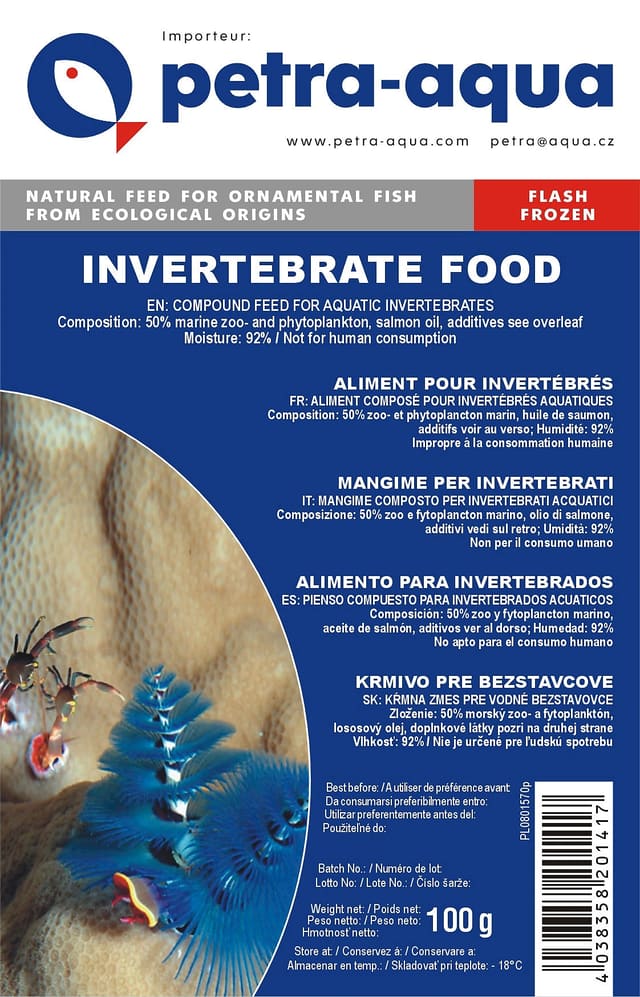
Frozen Invertebrate Food 6 x 100g Blister Pack
£26.99

Six 100g blisters of frozen compound feed for ornamental fish. The label declares 50% gammarus, salmon oil, additives shown on the reverse and 91% moisture. Store at -18 C and match portions to the fish species.
Six 100g blisters of frozen compound feed for ornamental fish. The label declares 50% gammarus, salmon oil, additives shown on the reverse and 91% moisture. Store at -18 C and match portions to the fish species.
Frozen Gammarus Fish Food (6 × 100g) is a six-blister multipack of compound feed for ornamental fish. The front label identifies the formula as 50% gammarus with salmon oil, with additives listed on the reverse of the delivered pack and a stated moisture content of 91%. Each blister has a net weight of 100g, so one sale unit contains 600g in total.
Gammarus are amphipod crustaceans rather than true shrimp. They can add a different texture and prey type to an appropriate ornamental-fish feeding plan, but this food should be matched to the fish rather than treated as a universal diet. The label says to store it at -18°C and clearly marks it as not for human consumption. Check the complete reverse label, batch and best-before information on the pack you receive before feeding.
This listing is for six separate 100g Gammarus frozen-food blisters. It is not one 100g pack and it is not a mixed-flavour selection. The supplier record names the item "Gammarus frozen-blister 6x100g", while the photographed front label shows the information for each 100g blister. Together, those two sources establish the sale unit without relying on an assumed cube count.
| Pack detail | What this listing supplies | Why it matters |
|---|---|---|
| Number of blisters | 6 | You receive a multipack, not one blister |
| Net weight per blister | 100g | Shown on the product label |
| Total net weight | 600g | Six packs multiplied by 100g |
| Food format | Frozen blister | Allows only the required portion to be removed |
| Target use | Ornamental fish feed | The label does not present this as human food |
The photographed front panel provides the core facts, but the delivered pack is the final reference for the batch in your hand. Before the first feed, turn the blister over and check the complete composition and additive declaration, batch number, best-before date and any feeding instructions. Packaging can be revised over time, so current label information should take priority if it differs from general web guidance.
Keep the sleeve or photograph both sides before discarding it. This is especially useful when several frozen foods share a freezer drawer and look similar once separated from their labels. It also gives you the information needed if you need to ask about a batch or ingredient.
| Label item | What to check | Why to retain it |
|---|---|---|
| Composition | 50% gammarus, salmon oil and the complete reverse declaration | Confirms what is in the formula |
| Additives | Names and amounts printed on the current reverse label | The front panel deliberately refers you to the reverse |
| Batch number | A legible production identifier | Supports a precise product query |
| Best-before date | The date on the supplied pack | Replaces generic shelf-life guesses |
| Storage | -18°C and any additional handling wording | Protects the temperature-sensitive feed |
| Feeding directions | Any manufacturer quantity or preparation instruction | Takes priority over general advice on this page |
Blister cells can be useful for portion control, but the number and shape of portions can vary with the packaging. For that reason, this page does not promise a fixed number of cubes per blister. Base the meal on the amount and size of food your fish can take, not on an invented "one cube per tank" rule.
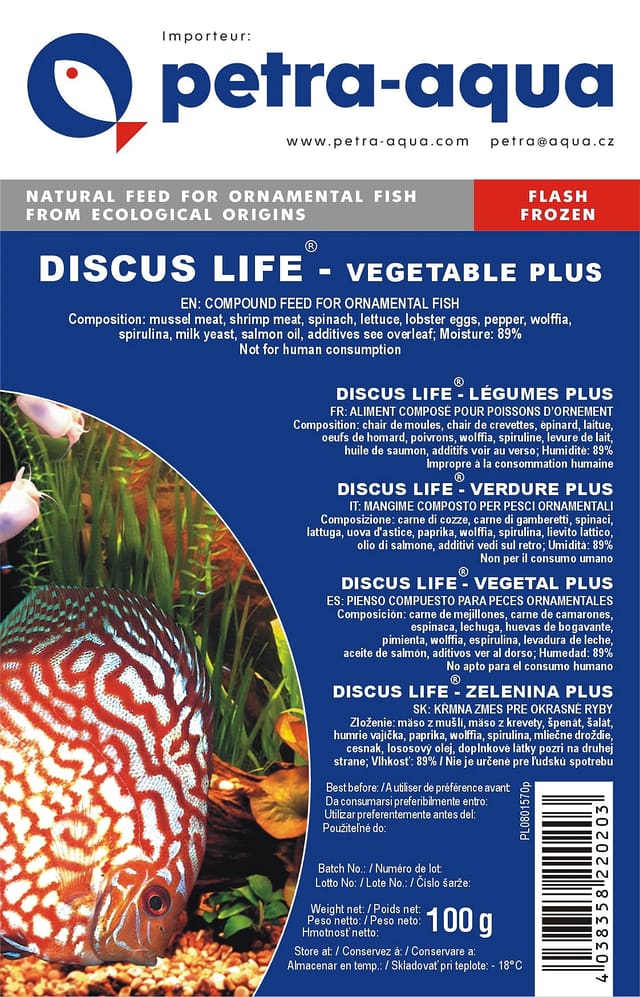
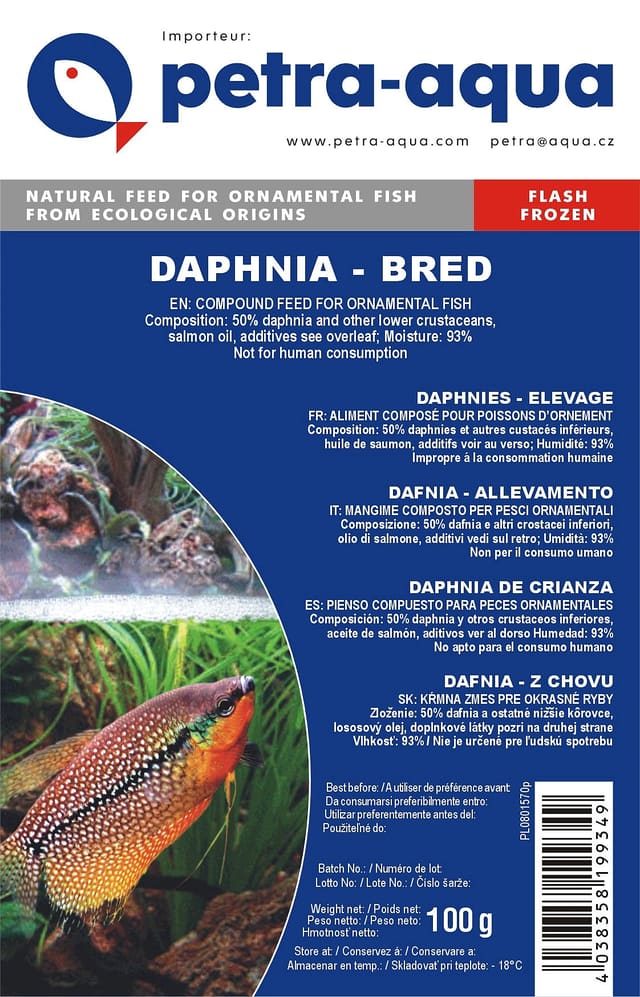
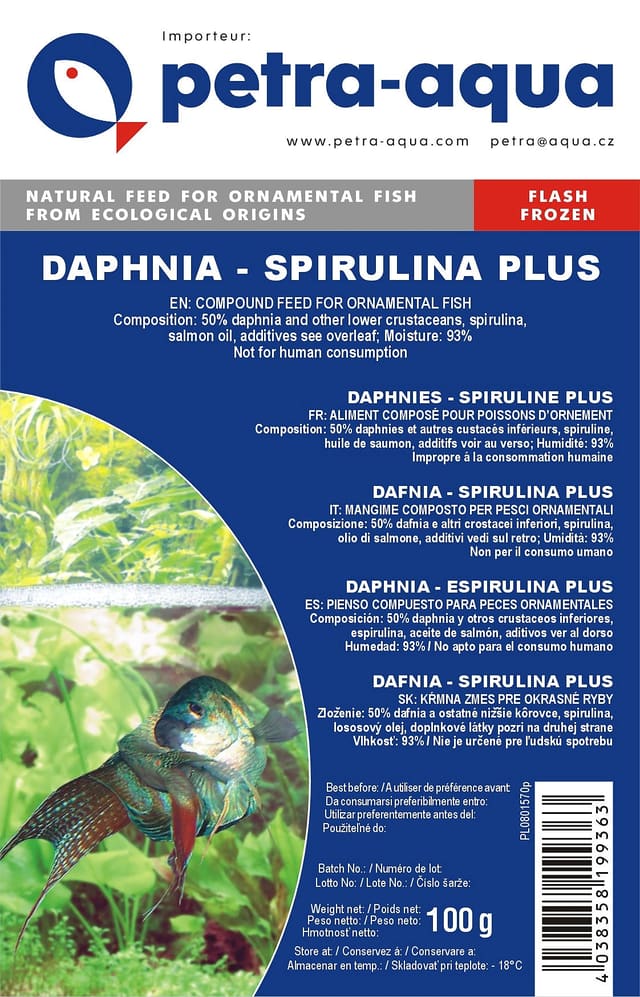
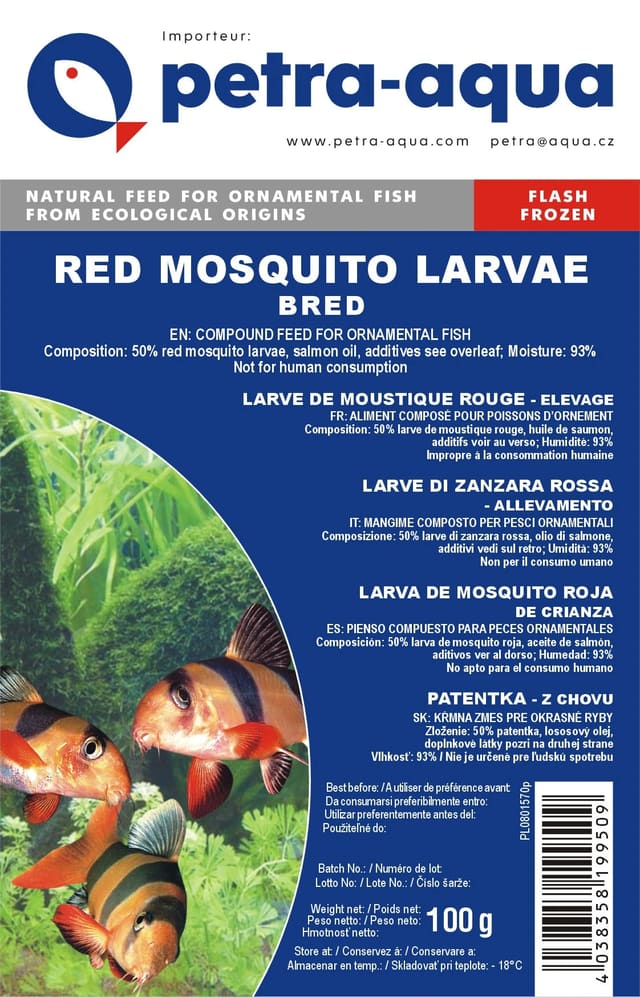
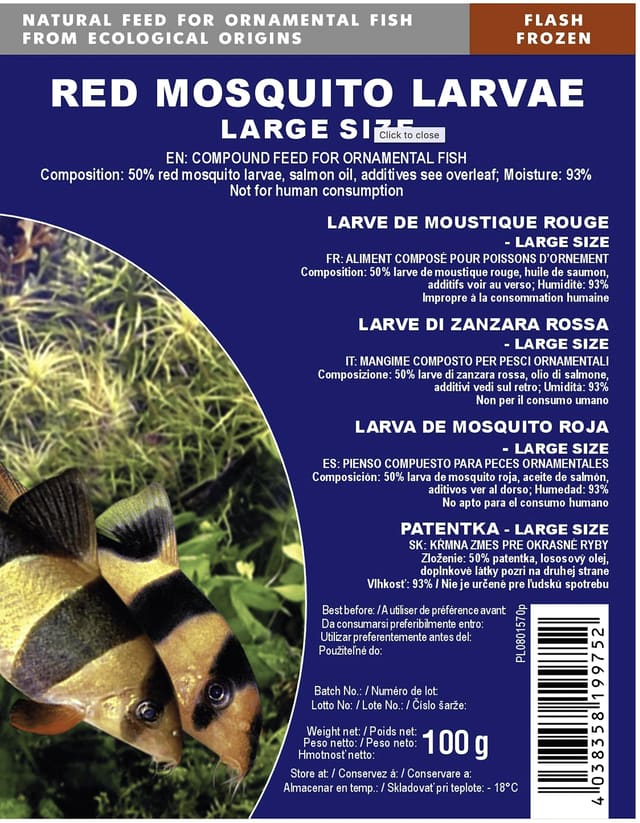
The existing gallery image is a readable product-label photograph. It confirms several details that matter more than generic sales wording: this is flash-frozen Gammarus compound feed, 50% of the composition is declared as gammarus, salmon oil is included, the moisture declaration is 91%, the net weight is 100g per blister and storage is stated as -18°C. It also says that additives are listed on the reverse.
The front label does not identify the Gammarus species, give the salmon-oil percentage, show the complete additive list or provide a full guaranteed analysis. We therefore do not describe this as a single-ingredient food, assign it to Gammarus pulex or another species, or invent exact protein, fat, vitamin or calorie values. Read the reverse of the delivered pack for the complete current declaration.
| Claim | Status | Source |
|---|---|---|
| 50% gammarus | Confirmed | Front label |
| Contains salmon oil | Confirmed | Front label |
| Contains additives | Confirmed; details are on reverse | Front label |
| 91% moisture | Confirmed | Front label |
| Exact Gammarus species | Not stated | Do not infer |
| Complete food for every fish | Not stated | Do not infer |
Gammarus is a genus name used for small amphipod crustaceans. In aquarium retail they are sometimes called freshwater shrimp or scuds, but amphipods are not true shrimp. Their laterally compressed bodies and jointed exoskeleton create a different food texture from soft foods such as bloodworm or finely dispersed foods such as daphnia.
Peer-reviewed aquaculture research supports amphipods as potentially useful feed organisms and feed ingredients. Studies report protein, lipid, amino-acid and mineral value in different amphipod species, and feeding trials have investigated amphipod meal as part of formulated fish diets. Those findings explain why gammarids are of nutritional interest, but they are not a laboratory analysis of this frozen retail formula. The product-specific declaration on the pack remains the source for this item.
Dried gammarus, live gammarus and this 91%-moisture frozen compound feed are not nutritionally interchangeable gram for gram. Search results often mix all three formats. Use the description, label and storage requirement to make sure you are comparing like with like.
The label's 91% moisture figure helps explain why comparisons with dried gammarus can be misleading. A 100g frozen blister includes a large amount of water, while a dried product has had most of that water removed. They therefore differ in concentration, texture, storage and sensible portion size even when both use the word gammarus.
Moisture also means that package weight cannot be translated directly into protein or calories without a full guaranteed analysis. This page does not calculate dry-matter nutrition from unrelated gammarus studies or claim that a 100g blister equals 100g of amphipod material. The declared formula is 50% gammarus plus salmon oil and additives, with 91% moisture in the complete compound feed.
For the aquarist, the practical lesson is simple: compare frozen products with other frozen products, read the formula rather than relying on the front name alone, and size the meal from the fish's response. A concentrated dry treat and a high-moisture frozen portion need different handling.
This food is most straightforward for ornamental fish whose normal diet includes animal material and that can manage the thawed particle size. Depending on the species and individual, that may include many omnivorous or carnivorous cichlids, larger barbs, rainbowfish, gouramis, some catfish and other medium-to-large aquarium fish. Appetite is not proof of nutritional completeness, so an eager response should not turn one food into the whole diet.
Suitability must be decided at species level. Some herbivorous or specialised fish are poorly served by frequent rich animal foods. Small-mouthed fish may need the thawed portion broken up, while fry can require a much finer food altogether. Marine fish are not one feeding group either; use this formula only where gammarus and its particle size fit the species' established diet.
| Fish or setup | Planning guidance | Reason |
|---|---|---|
| Medium or large omnivores | Potential rotation food | Often able to take amphipod pieces |
| Carnivorous ornamental fish | Use within a species-appropriate menu | Animal-based food can add variety |
| Small community fish | Break up a thawed portion and observe | Particle size may be too large |
| Fry and tiny juveniles | Choose a finer food unless species guidance says otherwise | Mouth size and digestion differ |
| Herbivorous specialists | Use only if their care plan supports it | Animal-rich foods may be unsuitable as a frequent feed |
| Marine fish | Check the exact species diet first | Marine nutritional requirements vary widely |
The front label specifies ornamental fish. This listing does not extend that declaration to turtles, reptiles, wild animals or human food. Use a product labelled for the animal you intend to feed.
The label calls the product a compound feed, but the visible front panel does not say that it is a complete feed. "Compound" means that it contains more than one feed material; it does not by itself establish that the formula meets every nutritional requirement of every fish. Until the complete pack declaration and your species' needs support otherwise, the cautious role is as part of a varied feeding plan.
A suitable staple pellet, granule or flake can provide a formulated base, while frozen foods add different textures and ingredients. Rotation does not require a rigid seven-day menu. It means avoiding dependence on one item and choosing foods that complement the species' natural feeding ecology, life stage and condition.
Remove only the amount needed for the meal while keeping the rest frozen. A fixed number of blister portions is not a reliable serving rule because fish size, species, number, growth stage, temperature and recent feeding all change demand. Start with a small amount, distribute it so more than one fish can feed, and stop when interest falls rather than adding food simply because a cell has been opened.
If the thawed gammarus pieces are too large, divide them in a clean container before they enter the aquarium. This is more controlled than allowing a hard mass to sit in one place or be taken whole by one dominant fish. Observe whether shy or bottom-feeding fish receive any food and adjust the distribution on the next meal.
| Observation | Adjustment |
|---|---|
| Food remains after feeding activity stops | Use a smaller portion next time and remove accessible leftovers |
| One fish takes most of the food | Break it up and feed in more than one area |
| Fish mouth and spit out large pieces | Offer smaller pieces or choose a finer frozen food |
| Fish ignore the food | Remove it; do not keep adding more |
| Water clouds after feeding | Reduce the portion and review filtration and maintenance |
Follow the instructions printed on the delivered pack. For portion control, many aquarists place the required amount in a separate clean cup and allow it to soften before breaking it up and feeding small amounts. Using a separate container makes it easier to inspect the food, divide larger pieces and avoid dropping a whole frozen mass into the tank.
Do not leave the full blister at room temperature while deciding how much to feed. Return the unused pack to -18°C storage promptly. Do not pour warm water over the whole pack, microwave it or expose unused portions to repeated thaw-and-freeze cycles.
There is no responsible universal frequency for "all tropical fish". A carnivore, an omnivore, an algae-grazing cichlid and a small community fish have different nutritional needs. Set frequency from a reliable care plan for the species, then count gammarus within the animal-based part of that plan.
Body condition, growth stage, breeding condition and the rest of the menu also matter. If this is a new food, introduce a small amount and watch feeding response, waste and faeces before increasing it. Do not compensate for an incomplete or poorly matched staple by simply feeding more frozen food.
Frozen food adds organic material to the system. Food that is not eaten can break down, consume oxygen and contribute to ammonia and later nitrate. The practical controls are modest portions, good distribution, suitable filtration and removal of accessible leftovers. A product can be high quality and still damage water quality when overfed.
Check water more closely after introducing a new feeding routine, particularly in small tanks, newly established aquariums, densely stocked systems or warm water where biological demand can be high. A feeding plan should fit the aquarium's biological capacity as well as the fish's appetite.
Pause the feed if fish repeatedly spit it out, struggle to swallow pieces, show unusual abdominal swelling, produce persistently abnormal waste or become less active after meals. These signs do not diagnose a disease or ingredient problem, but they do show that the food, portion, preparation or feeding frequency needs review. Remove leftovers and return to a previously tolerated diet while you check the species' care requirements.
Also reassess when water becomes cloudy, ammonia or nitrite is detectable, surface breathing increases, or uneaten food collects in inaccessible areas. Feeding more slowly or cutting the portion is often more useful than adding another product. If fish remain unwell, seek advice from an aquatic veterinarian or experienced fish-health professional rather than relying on a product page to diagnose them.
| Signal | Immediate response | Next check |
|---|---|---|
| Pieces are repeatedly rejected | Stop adding food and remove leftovers | Particle size and species suitability |
| One fish monopolises the meal | Divide future portions across the tank | Competition and body condition of quieter fish |
| Cloudy water after feeding | Test water and reduce the next portion | Filtration, maintenance and hidden waste |
| Unexpected reaction after a new food | Pause it and use a previously tolerated diet | Complete label, species care and professional advice |
The product label states storage at -18°C. Put the unopened blisters into an appropriate freezer promptly and keep them separated from human food because the label says they are not for human consumption. Keep the label available so the batch number, best-before date and complete reverse declaration can be checked.
Frozen food is temperature-sensitive. Review the current delivery information before ordering and make arrangements to receive the parcel rather than leaving it unattended. On arrival, inspect the packaging before feeding. If it is damaged, leaking, unexpectedly soft or appears to have thawed, photograph the parcel and product and contact us for advice rather than automatically refreezing or using it.
| On arrival | Action |
|---|---|
| Pack is intact and frozen as expected | Transfer promptly to -18°C storage |
| Outer packaging is damaged | Photograph it before disposal and contact us |
| Blister is leaking or split | Keep separate and ask for advice before feeding |
| Food is unexpectedly soft or thawed | Do not assume it is suitable to refreeze; document and contact us |
| Best-before or batch details are unclear | Retain the label and contact us |
Use clean utensils and wash hands after handling. The formula contains gammarus and salmon oil, so people with fish or crustacean sensitivities should avoid direct contact and cross-contamination. Do not use kitchen utensils for the aquarium unless they are kept specifically for fish-food preparation.
Keep the food away from children and pets that it is not labelled to feed. Dispose of spoiled or unwanted material responsibly and do not release food organisms or aquarium contents into natural waterways.
No single frozen food is automatically "best". Gammarus has a comparatively substantial amphipod body and this formula includes salmon oil. Artemia and daphnia generally provide smaller prey items, while cockle and shrimp meats offer different textures. The useful comparison is mouth size, species diet and the role the food needs to fill.
| Food | Typical planning role | Choose it when |
|---|---|---|
| Gammarus | Amphipod-based rotation food | The fish can take the particle size and animal-based food suits its diet |
| Artemia | Smaller crustacean food | A finer prey item is more appropriate |
| Daphnia | Small freshwater zooplankton option | You want a different size and texture in the rotation |
| Cockle meat | Mollusc-based food | Larger pieces of mollusc suit the target fish |
| Shrimp meat | Decapod-crustacean food | The species can manage a meatier shellfish item |
| Formulated dry staple | Consistent formulated base | The species needs a complete, repeatable everyday ration |
Browse the frozen food in blisters collection or the broader fish food range before deciding which foods suit your aquarium. Useful comparisons include:
A smaller crustacean option for fish that need a finer prey item than whole gammarus pieces.
A different freshwater invertebrate format for variety and smaller mouths.
A mollusc-based comparison for suitable larger fish.
A shrimp-meat alternative where the target species can handle the texture and size.
Related products are comparisons, not automatic recommendations for every tank. Check the complete label and species care requirements for each product before combining them.
The product title and basket price refer to one complete 6 × 100g multipack. The current price, stock state and delivery options are shown in the live buy box and at checkout; this description does not hard-code a price that could become stale. First-time customers can review the current WELCOME10 offer for 10% off an eligible first order.
This is frozen ornamental-fish food, so the Live Arrival Guarantee for livestock is not presented as a benefit here. Product and delivery questions should be checked against the current food listing, checkout and delivery information rather than livestock terms.
It is for six 100g blisters. The total net weight of one sale unit is 600g.
The front label declares 50% gammarus. It also lists salmon oil and says that additives are detailed on the reverse.
No. The label describes a compound feed containing 50% gammarus, salmon oil and additives shown on the reverse.
The visible product label and supplier record do not state a species, so this listing does not assign one.
No. Gammarus are amphipod crustaceans. Aquarium retailers sometimes use informal shrimp-like names, but they are not true shrimp.
The front label says compound feed, not complete feed. Use it within a species-appropriate varied diet unless the full delivered label and qualified care guidance establish another role.
No food suits every tropical fish. Check the species' diet and mouth size, and offer only a small test portion when introducing it.
Some may take finely divided thawed pieces, while very small fish or fry may need a finer food. Watch whether they can swallow it comfortably.
Only where the exact marine species' feeding plan supports this formula and particle size. "Marine fish" is too broad to be a universal recommendation.
No. The photographed label specifies compound feed for ornamental fish, so this page does not extend the intended use to turtles.
Follow the pack instructions. Softening the required portion in a separate clean container can make inspection, division and portion control easier.
There is no universal cube or tank-volume rule. Start with a small amount, observe the fish and stop before food is left uneaten.
Set frequency from the target species' nutritional needs and the rest of its diet. Treat appetite as feedback, not as proof that daily feeding is balanced.
The label states -18°C. Keep unused portions frozen and check the delivered pack for its full storage, batch and best-before information.
Avoid assuming thawed feed can be refrozen safely. If the pack unexpectedly softens or thaws, document its condition and contact us before use.
Use the best-before date and batch details on the pack you receive. This page does not replace them with a generic shelf-life promise.
It can if too much is fed or pieces remain uneaten. Reduce the portion, remove accessible leftovers and review filtration and maintenance.
First-time customers can check the current WELCOME10 terms for 10% off an eligible first order.
Product-specific facts come from the preserved Gammarus front-label image in the gallery and the supplier's normalized record for the 6 × 100g sale unit. Broader nutritional context is supported by the peer-reviewed review Adaptation and potential culture of wild amphipods and mysids as potential live feed in aquaculture, the study Crustacean amphipods from marsh ponds: a nutritious feed resource, and the feeding trial Valorization use of amphipod meal as a fishmeal substitute.
Those papers concern particular amphipods and aquaculture applications. They support careful explanation of why amphipods are feed organisms, but they do not justify importing species-specific nutrient values or growth promises into this retail product. The current delivered label remains controlling for composition, additives, storage, batch and best-before information.
No reviews for this item yet. Bought one? Honest reviews only, good or bad.
What customers say about ordering from us
I have a small group of long finned mountain minnows. So was delighted to be able to order ten of this variety to increase the genetics in my tank . The ones I recieved are healthy but it’s to early to give a verdict on wether they are of a long finned type since they are small currently.
Gordon Walker · 23 Sept 2026
100% success travel and "installation". Pleased with quality of purchase. The Siamese fighter a bit "shy" so have not yet seen him at his best yet but looking good. Happy customer. GG
George E Garratt · 21 Sept 2026
Reviews of our shop, collected by Judge.me, an independent third-party review collector. Newest first.