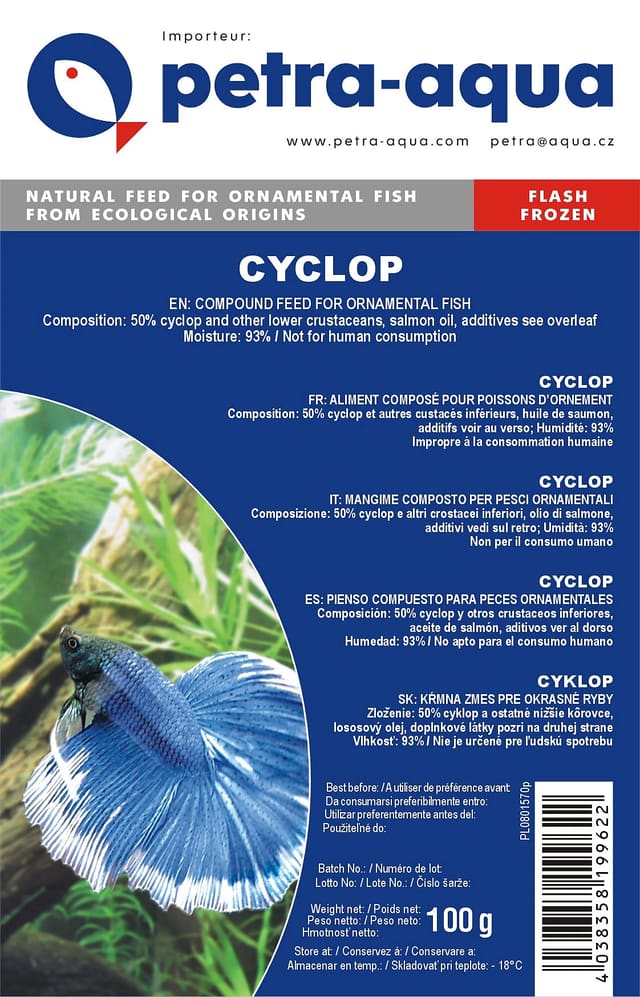
Cyclop Intensive Red - Aquarium supplies from Tropical Fish Co

6x100g Cyclop Intensive Red Blister - UK

£12.99In Stock

6x100g Cyclop Intensive Red blister frozen food helps boost colour and feeding response in tropical and marine fish. Buy online with fast UK delivery.

6x100gAquarium FoodBlister PackColour EnhancerFish FoodFrozen FoodMarine Fish FoodTropical Fish Food

Premium Quality

Healthy, vibrant fish from trusted suppliers

Expert Care

Detailed care guides and support

Live Arrival Guarantee

Your fish arrives healthy or we'll replace it

Acclimated

Properly quarantined and ready for your tank

Why Choose This Fish?

6x100g Cyclop Intensive Red blister frozen food helps boost colour and feeding response in tropical and marine fish. Buy online with fast UK delivery.

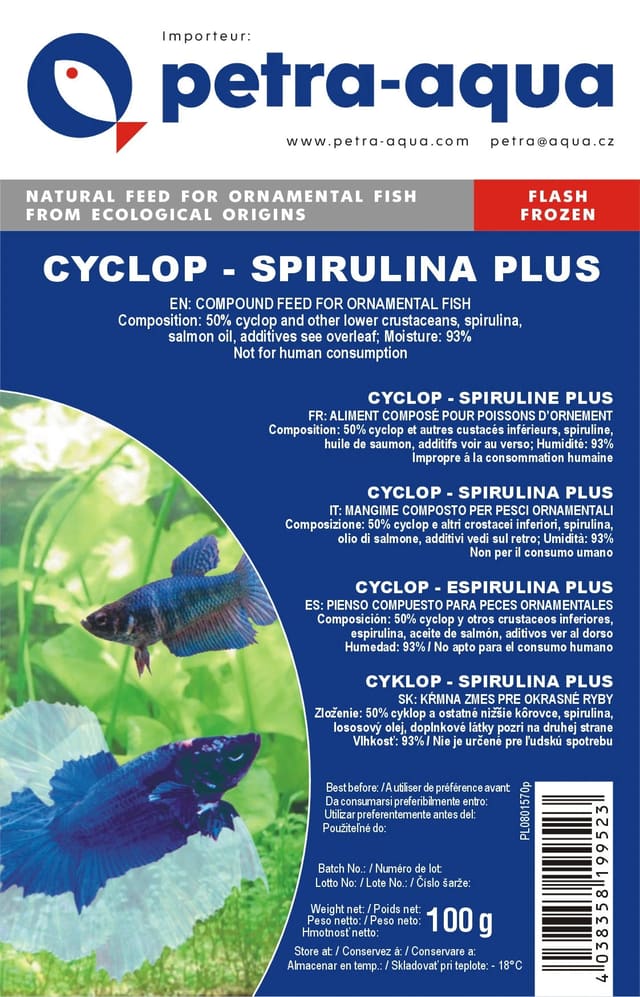
If you want a small frozen feed that fish actually chase, 6X100G Cyclop Intensive Red Blister is one of the most useful options in the frozen fish food UK range. Cyclops are tiny crustaceans, and this red-rich blend is designed for aquarists who want a practical colour boosting frozen food for aquarium fish without moving straight to oversized prey items. It suits many tropical community species, juvenile cichlids, nano fish, livebearers, rasboras, tetras, gouramis, and even picky feeders that ignore dry diets. In everyday use, Cyclop Intensive Red Fish Food works well as a high-interest supplement alongside flakes, granules, and pellets, helping add variety to a balanced feeding plan.

For many keepers shopping for fish food UK, the main questions are simple: is it easy to portion, is it clean to use, and will fish take it quickly? This 6x100g format answers all three. The blister format makes portioning easier than loose slabs, and it is especially handy if you are comparing frozen fish food blister packs with standard blocks or frozen fish food cubes. See our product image frozen-fish-food-uk.webp for a closer look at the pack style and portion format. If you are searching for frozen aquarium fish food UK, tropical fish food UK, or simply the best frozen fish food for adding colour and feeding response, this is a strong all-round choice.

🔹 Quick Facts

  • Product Type: Frozen aquarium food in blister format
  • Pack Size: 6 x 100g
  • Main Use: Colour support, feeding response, diet variety
  • Suitable For: Tropical freshwater fish, many community fish, selected marine species
  • Format: Easy-portion blister pack
  • Best For: Small to medium fish and mixed feeding routines
  • Storage: Keep frozen until use
  • Feeding Style: Small portions, thawed before feeding where possible

Product Profile

  • Category: Frozen fish food
  • Food Source: Cyclops-based red frozen feed
  • Position in Diet: Supplementary or rotational food

Cyclop Intensive Red for Aquarium feeding is popular with hobbyists who want a finer frozen food than shrimp-heavy mixes. It fits neatly between very small live foods and larger frozen items such as cockle, artemia, or shrimp meat, making it useful in both nano and mixed community tanks.

Why choose Cyclop Intensive Red over standard frozen food?

A big advantage of Cyclop Intensive Red is particle size. Many fish that struggle with larger chunks of frozen food will snap up cyclops immediately, which makes it a practical option for keepers comparing cyclop intensive red vs standard fish food. Because the food is fine and highly attractive, it can help shy fish feed more confidently, especially in busy community tanks.

It is also a smart choice if you want cyclop intensive red for colourful fish. Red-toned natural foods are often used in varied diets for species where owners want stronger reds, oranges, and warm body tones. That does not mean it replaces a complete staple, but it can be an excellent colour boosting frozen food for tropical fish UK when used sensibly with good water quality and a balanced menu.

Why aquarists choose this food

  • Fine particle size suits small mouths and cautious feeders
  • Useful as a Colour Boost Frozen Food in mixed tropical setups
  • Blister format makes portions easier to manage than large frozen slabs
  • Works well in rotation with dry foods and other frozen lines

What fish is Cyclop Intensive Red suitable for?

This food is ideal as frozen fish food for tropical fish, especially tetras, rasboras, barbs, danios, guppies, platies, mollies, dwarf gouramis, rainbowfish fry, and small cichlids. Many keepers also use cyclop intensive red for community tank feeding because the small food size spreads through the water column and gives more fish a chance to eat. If you keep discus juveniles, apistogramma, ram cichlids, or nano species, it can be a very handy part of a varied plan.

For larger fish, it is best used as a supplement rather than the only food. It can also be offered to selected marine fish, though hobbyists looking specifically for the best frozen marine fish food or frozen marine fish food uk often combine cyclops with mysis, artemia, krill, and chopped shellfish. If you are comparing options like gamma frozen fish food, aquadip frozen fish food, or superfish frozen fish food, the key difference here is the very small prey size and the colour-focused feeding role.

Fish Type Suitable? Notes
Small tropical community fish ✅ Yes Excellent particle size for daily rotation
Dwarf cichlids and juveniles ✅ Yes Very useful as frozen fish food for cichlids in smaller species
Large predatory fish ⚠️ Limited Best as a supplement, not a main feed

How do you feed Cyclop Intensive Red properly?

If you have searched frozen fish food how to feed, frozen fish food how to use, or how to feed cyclop intensive red, the best method is simple: remove only the portion you need, thaw it in a little aquarium water, then feed small amounts that are eaten within a few minutes. This reduces waste and gives you better control over distribution. A proper cyclop intensive red feeding guide always starts with small portions because frozen food is richer than many people expect.

The right cyclop intensive red portion size depends on fish size, stock level, and filtration. For a lightly stocked nano tank, a small section may be enough. For a busy community aquarium, you may need several small feeds spread across the tank. If you are wondering how often to feed fish frozen food, most tropical aquariums do well with frozen food two to five times per week, with quality dry foods on other days. In heavily conditioned breeding setups, cyclop intensive red feeding frequency may be higher, but only if water quality remains stable.

Feeding tip

For timid fish, switch off strong flow for a few minutes after feeding. This keeps the cyclops suspended longer and helps smaller species compete with faster tank mates.

Can Cyclop Intensive Red be used every day?

Yes, cyclop intensive red for daily feeding can work in some aquariums, but it should still be part of a varied menu rather than the only food offered long term. Think of it as a valuable component of a broader aquarium food UK routine. The best results come when it is rotated with flake, granules, and other frozen foods so fish receive a wider nutrient spread.

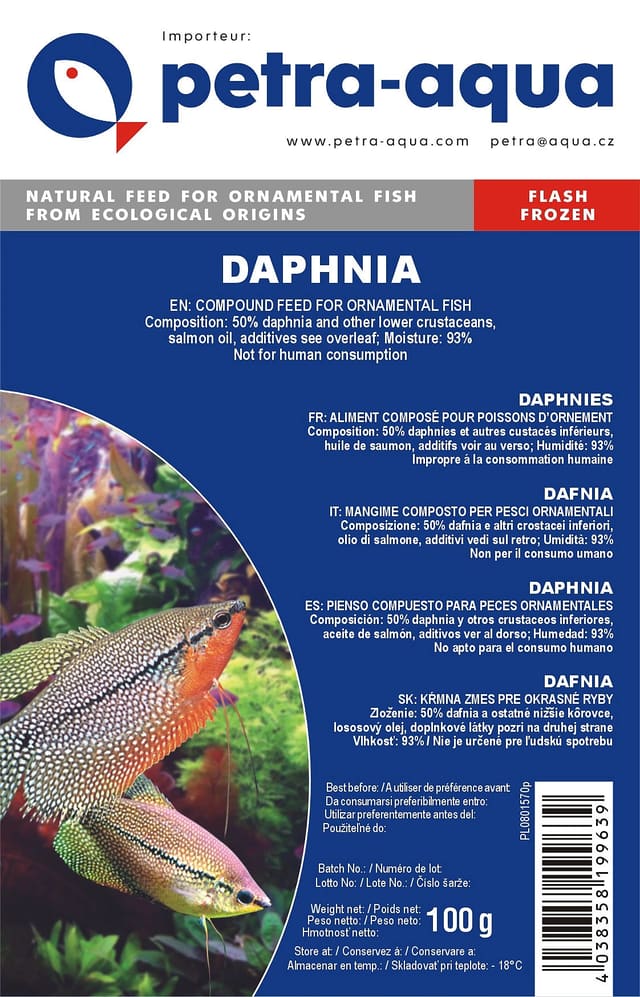
For most tanks, a mixed plan is better than relying on any single product. Pairing this food with Nanovit Granules or Betta Fish Food can help cover different feeding levels and mouth sizes. If you keep fish that also benefit from larger prey items, alternate with 6x100g Frozen Artemia Blister or 6X100G Daphnia Bred Blister.

What are the nutritional and colour-enhancing benefits?

The main appeal of cyclop intensive red benefits for fish is the combination of strong feeding response and support for natural colour intensity. As a best colour boosting frozen food for tropical fish option, cyclops are often chosen for species where owners want brighter reds and warmer body tones without feeding oversized foods. This makes it a strong candidate for best cyclop intensive red for freshwater fish use in community aquariums, livebearer tanks, and dwarf cichlid setups.

Shoppers often ask about cyclop intensive red ingredients and cyclop intensive red nutritional content. Exact analysis can vary by brand and batch, but the general value of cyclops-based frozen food lies in offering a natural prey profile that many fish recognise instantly. It is not the same as aquarium live food, but it gives some of the same hunting response with the convenience of frozen storage. For fish that ignore flakes, this can be the difference between hesitant feeding and immediate interest.

⚠️ Avoid overfeeding

Too much frozen food at once can raise waste levels quickly. Uneaten particles break down fast, so remove leftovers and keep up with regular maintenance to limit the cyclop intensive red water quality impact.

How does it compare with other frozen foods like krill, calanus, bloodworm, and mysis?

Each frozen food has its place. If you are comparing krill superba fish food, calanus fish food, bloodworm, and cyclops, the biggest difference is size. Cyclops are much finer, making them ideal for smaller fish and fry-sized mouths. Krill and larger marine foods are usually better for bigger fish, while bloodworm can be richer and should be fed with more caution in some tanks.

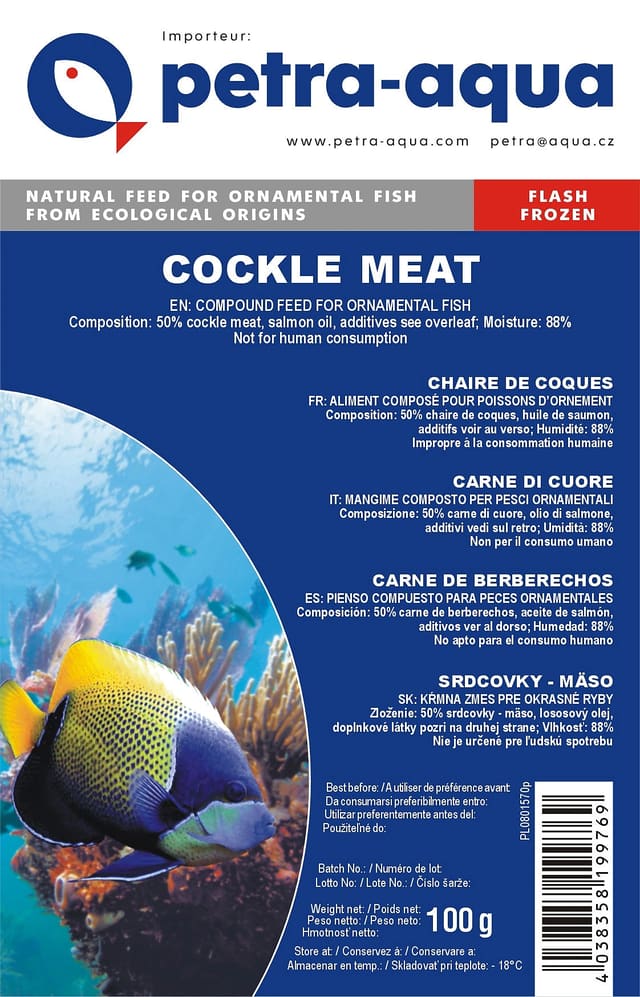
Many aquarists who search terms like mysis rs, tropical mix frozen fish food, or frozen bloodworm for sale are really trying to build a varied freezer selection. In that context, Premium Cyclop Intensive Red is best seen as the small-particle, colour-supporting option in your rotation. It complements larger foods such as 6X100G Cockle Meat Blister and X 100G Cocktail Shrimp Meat Blister, while dry staples like Super Color can support everyday feeding between frozen meals.

Food Type Best Use Typical Target Fish
Cyclop Intensive Red Fine, colour-focused supplement Small tropicals, juveniles, community fish
Artemia General frozen variety Most tropical fish
Krill / shellfish Larger, richer feed Medium to large fish

How should frozen fish food be stored, and how long does it last?

The correct cyclop intensive red storage temperature is standard freezer temperature: keep it fully frozen until needed. Do not allow repeated thawing and refreezing, as this damages texture and can reduce feed quality. If you are asking how long does frozen fish food last, the practical answer is that it should be used while still well within its frozen shelf period and before freezer burn appears.

Cyclop intensive red shelf life depends on consistent storage. Keep packs sealed, flat, and away from freezer door temperature swings where possible. Once thawed, feed immediately and discard leftovers rather than refreezing. For hobbyists buying frozen fish food online uk or fish food online UK, getting the food into the freezer promptly on arrival is one of the easiest ways to preserve quality.

Storage checklist

  • Keep frozen at a stable freezer temperature
  • Use only the amount needed for one feed
  • Thaw in aquarium water or a clean cup before feeding
  • Do not refreeze thawed food
  • Discard packs with heavy freezer burn or damaged seals

Is blister-pack frozen food better than cubes or slabs?

For many aquarists, yes. Frozen fish food blister packs are often cleaner and easier to portion than large slabs, especially in smaller aquariums. If you have ever struggled with oversized blocks or compared them with frozen fish food cubes pets at home style products, blister packs usually offer better control and less waste. That matters when feeding nano fish or tanks where overfeeding quickly affects water quality.

Blister portions are also practical for anyone testing several foods in rotation. You can keep cyclops for small fish, artemia for general use, and shellfish-based foods for larger species without thawing more than needed. This is one reason many hobbyists looking for the best frozen fish food uk prefer mixed blister selections over one large bulk slab.

How does Cyclop Intensive Red compare with Gamma, Hikari, Ocean Nutrition, and Aquadip?

Brand comparisons matter, but the most useful comparison is format and intended use. When hobbyists search gamma frozen fish food uk, aquadip frozen fish food, or ask about cyclop intensive red vs Hikari, they are usually deciding between similar frozen categories rather than entirely different foods. The real question is whether you need a fine cyclops-based feed for small fish and colour support, or a larger, more general frozen option.

Tropical cyclop intensive red vs Ocean Nutrition is another common comparison. In practice, choose this product when you want a small-particle frozen food for community tanks, fry grow-on, or fish that feed best on suspended micro-prey. Choose larger foods when your stock includes bigger mouths or more predatory species. In that sense, cyclop intensive red vs other frozen food is less about one being universally better and more about matching prey size to the fish you keep.

Feature Cyclop Intensive Red General Frozen Mix
Particle size Very fine Medium to coarse
Best for Small tropicals, juveniles Mixed medium fish
Use case Colour support and variety General feeding rotation

Can this food help with breeding and conditioning?

Yes, many breeders use cyclops-based foods during conditioning because small, highly palatable frozen foods can encourage stronger feeding before spawning. If you are planning to buy cyclop intensive red UK for conditioning pairs, use it as part of a varied schedule rather than the sole diet. This is especially useful for egg-layers, small cichlids, and livebearers where good body condition matters.

For those researching buy cyclop intensive red online UK, cyclop intensive red for sale UK, or cyclop intensive red for sale online UK, the practical advantage here is convenience: the 6x100g format is easy to store and portion during more intensive feeding periods. Tropical Cyclop Intensive Red can be especially helpful when fish are off dry food, when raising condition before breeding, or when feeding newly settled stock in a quiet community setup.

Conditioning tip

Before a planned spawn, offer small frozen feeds more often rather than one large meal. Better appetite, lower waste, and steadier water quality usually give better results than heavy feeding.

Where does Cyclop Intensive Red fit in a complete aquarium feeding plan?

This food works best as one part of a broader menu. A sensible weekly plan might include a dry staple such as aquarium pellet food or granules on most days, plus frozen foods several times a week for variety. In a mixed tropical setup, cyclops can cover the fine-food role, while artemia, daphnia, and shellfish-based options cover larger bites and different textures.

If you are building a freezer selection, combine this product with 6x100g Frozen Artemia Blister for general feeding, 6X100G Daphnia Bred Blister for variety, and 6X100G Discus Life Basic Blister if you keep discus or want a richer specialist option. That gives you a more complete answer than relying on broad searches like frozen fish food near me, frozen fish food amazon, or pets at home frozen fish food, because the best food depends on your stock list, not just availability.

What questions do buyers usually ask before ordering?

Is this better than aquarium live food? It is not the same as true live feed, but it is far more convenient to store and usually much easier to keep on hand. Is it suitable for marine tanks? It can be used for selected species, though dedicated marine keepers may also want mysis, krill, or other specialist foods. Can I use it with dry foods? Yes, and that is usually the best approach.

Is this like bcuk bloodworm? Not exactly. bcuk bloodworm style products are a different food type and generally larger and richer. What about fish food wholesalers, frozen fish food bulk uk, or bulk frozen fish food? Bulk buying can make sense for fish rooms, but many home aquarists prefer blister packs because they reduce waste and make portion control easier. What if I also feed feeding fish krill or larger foods? That is fine; cyclops simply fills the small-particle niche in the diet.

Why buy this frozen fish food from us?

When you order cyclop intensive red fish food buy UK stock from a specialist aquarium retailer, the real benefit is not hype; it is product relevance. This is a practical frozen option for keepers who want a quality cyclop intensive red for aquarium feeding plan, not a random freezer item aimed at a broad pet category. We focus on foods aquarists actually use in tropical systems, from nano communities to cichlid grow-out setups.

If you are ready to buy Tropical cyclop intensive red UK or Tropical cyclop intensive red buy online UK, this pack size is especially useful for regular frozen-food users who want sensible storage and repeatable portions. It also sits well alongside other specialist foods in the range, whether you are comparing gamma frozen fish food, looking for premium colour boosting frozen food UK, or building a mixed order with dry and frozen lines.

Why choose this 6x100g blister pack

  • Useful format for aquarists who want less mess and better portion control
  • Strong option for colour boosting frozen food UK feeding routines
  • Easy to rotate with artemia, daphnia, granules, and specialist discus foods
  • Suitable for community tanks, juvenile fish, and many small tropical species

You might also like

Build a more flexible feeding routine with Super Color for day-to-day colour support, 6x100g Frozen Artemia Blister for a classic all-round frozen option, and 6X100G Daphnia Bred Blister for extra variety in community tanks.

For larger or more specialised feeders, consider 6X100G Cockle Meat Blister or X 100G Cocktail Shrimp Meat Blister. If you want a dry staple to use between frozen feeds, Nanovit Granules and Betta Fish Food are easy additions to a balanced feeding plan.