−11%
Advanced
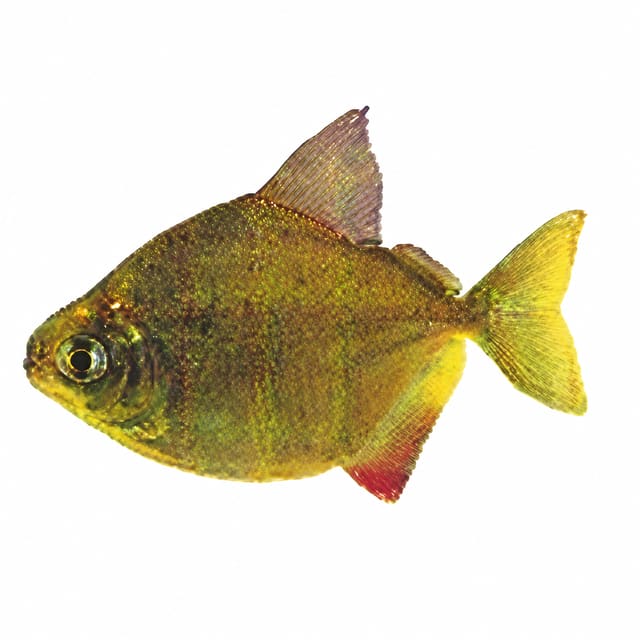
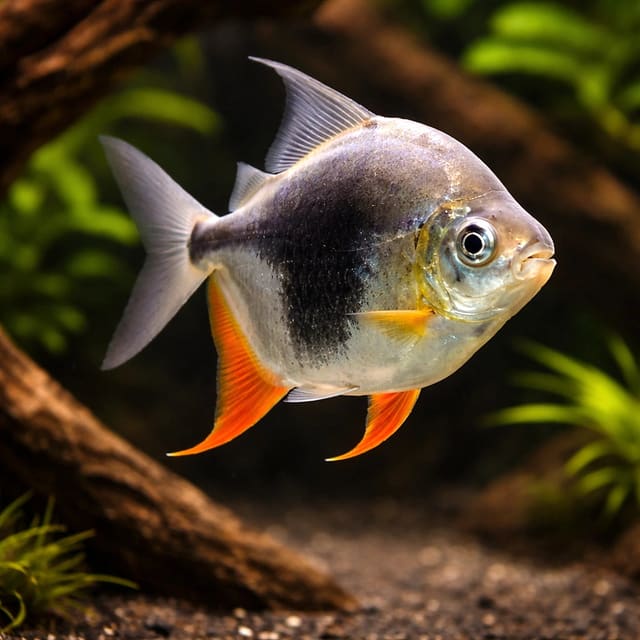
Blackberry Silver Dollar (Myleus sp. "Lamax III")
24–28°C · pH 6–7.5 · 500L
£140.61£157.99

Leporinus affinis is a headstander from the Amazon River basin that reaches 30 cm total length. It suits keepers with a large, long aquarium and robust companions of a similar size. Keep it at 23–27 °C and pH 6.5–7.8, where FishBase's recorded environment overlaps OATA's tetra guidance, and base its diet on plant matter. Sold individually in sizes from 3–4 cm to 8–10 cm.
Adult size is the maximum length this species reaches at full maturity (scientific sources). The livestock you receive will be younger and smaller — pick a size above for the actual shipping size. Product-photo provenance and any image-specific limitations are stated on the listing.
Leporinus affinis
Save when buying multiple fish. Each quantity is one fish; sex and pair formation are not guaranteed unless the selected variant explicitly states them.
Leporinus affinis is a headstander from the Amazon River basin that reaches 30 cm total length. It suits keepers with a large, long aquarium and robust companions of a similar size. Keep it at 23–27 °C and pH 6.5–7.8, where FishBase's recorded environment overlaps OATA's tetra guidance, and base its diet on plant matter. Sold individually in sizes from 3–4 cm to 8–10 cm.
Adult size is the maximum length this species reaches at full maturity (scientific sources). The livestock you receive will be younger and smaller — pick a size above for the actual shipping size. Product-photo provenance and any image-specific limitations are stated on the listing.
Maintain these water conditions for optimal health and vibrant colors
Leporinus affinis is a freshwater headstander from the Amazon River basin in South America. FishBase places it in the family Anostomidae and records a maximum length of 30 cm total length. It is a fish for a keeper with a large, long aquarium, sturdy companions and a plan for a diet built around plant matter.
It is easy to misjudge. It sits with the larger tetras in our own range, but Wikipedia groups it with the toothed headstanders rather than the tetras, and the adult is many times the length of a typical tetra. Buy it for the aquarium it will need at full size, not for the size it arrives at.
In the wild, FishBase notes that adults live in sand holes in fast-flowing creeks and feed on plants, fruits and leaves. It classes the species as benthopelagic, a fish of the lower and middle water rather than strictly the bottom, and lists it as Least Concern on the IUCN Red List.
For a keeper with a large South American set-up, that makes it a striking fish for the open water between the floor and the midwater, with the bold banding shown in the gallery. For anyone with a standard community tank, it is a fish to admire rather than buy.
| Suits | Not suited to |
|---|---|
| Keepers who can house a 30 cm adult | Community tanks sized for small tetras |
| Robust fish of a similar size and temperament | Small fish it could swallow |
| Aquariums with sand or gravel and long open swimming space | Timid or long-finned companions |
| Keepers happy to feed plant-based foods | Anyone who needs a guaranteed male or female |
| Fact | Detail |
|---|---|
| Family | Anostomidae, the headstanders |
| Native range | Amazon River basin |
| Wild habitat | Sand holes in fast-flowing creeks |
| Water layer | Lower and middle water |
| Adult size | 30 cm total length |
| Routine water | 23–27 °C, pH 6.5–7.8, 4–12 dGH |
| Diet | Plant matter as the staple |
| Companions | Robust fish of a similar size |
| Sold as | One live fish per purchase |
| Conservation | Least Concern (IUCN) |
Answer yes to all four before buying:
Each purchase supplies one live Leporinus affinis in the size you choose from the selector: 3–4 cm, 4–5 cm, 5–7 cm or 8–10 cm. The size you select is the size supplied, not the adult size. Even the largest choice is about a third of the 30 cm FishBase records, so every option needs the same long-term plan.
Pick the size that suits your filter as well as your tank. A smaller fish adds less waste at first, which gives a newly matured filter time to grow with it; an 8–10 cm fish brings more waste from the first day and belongs in an aquarium whose filter already supports other fish. None of the sizes changes the adult you are planning for.
For more than one fish, raise the quantity: each unit is a single fish of the chosen size. Read the group planning in the compatibility tab before you do, because every extra fish is another potential 30 cm adult.
No size comes with a chosen sex. Sex is guaranteed only when the selected option explicitly states male or female. This Leporinus affinis listing has no sex-guaranteed option.
The gallery shows fish with bold black vertical bands on a pale, cream-yellow body, alone and in a pair. Gallery images have been digitally enhanced to improve image quality. Natural colour, pattern, size and maturity can vary between live animals.
If your aquarium is sized for small shoaling fish, browse our tetra range for species that stay small instead; it holds many fish far better matched to a standard community tank. If you do have the space, the care tab sets out everything to prepare before this fish arrives.
Plan the aquarium for a 30 cm adult from the day you buy. That is the maximum total length FishBase records for the species, and it is far beyond the fish that most small community tanks are built for.
OATA's care sheet for tetras and pencilfish shows why the usual tetra rules do not stretch this far. It notes that most tetras stay between 2 and 5 cm, with some larger species nearer 10 cm, and recommends at least an 80 litre aquarium for the larger species of 5 cm and over. Those figures describe fish a fraction of the length of an adult Leporinus, so treat them as a floor for small fish, not a guide for this one.
| Size supplied | Share of the 30 cm adult |
|---|---|
| 3–4 cm | About an eighth |
| 4–5 cm | About a seventh |
| 5–7 cm | About a fifth |
| 8–10 cm | About a third |
Buying a juvenile for a smaller tank and planning to move it on sounds simple, but a new aquarium needs its own matured filter, and OATA warns that stocking a tank too quickly can cause new tank syndrome. Moving a large fish into an immature system repeats the risks of arrival day at a larger scale. Setting up the final aquarium first avoids that step entirely.
If you are unsure whether your aquarium is big enough, measure its length, depth and height and send us the figures before you order. It is far kinder to plan now than to rehome a grown fish later.
Hold the water at 23–27 °C, pH 6.5–7.8 and 4–12 dGH. FishBase records the species in a natural environment of 23–27 °C, pH 5.8–7.8 and up to 20 dH. OATA’s tetra and pencilfish sheet, written for those groups as a whole rather than this species, suggests 22–27 °C, pH 6.5–8.0 and 4–12 °dH. The routine targets below are where the two meet, so an aquarium set inside them sits within both.
| Water value | Routine target |
|---|---|
| Temperature | 23–27 °C |
| pH | 6.5–7.8 |
| General hardness | 4–12 dGH |
| Carbonate hardness | 3–10 dKH (OATA sheet) |
| Ammonia and nitrite | Zero |
| Nitrate | No more than 20 mg per litre above your tap water |
The wider FishBase figures, down to pH 5.8 and up to 20 dH, describe where the species has been recorded in nature. Keep them as background rather than settings to chase; a steady value inside the table does more for the fish than a number pushed towards either extreme.
Test your tap water first. If it reads 15 mg per litre, the aquarium should stay at or below 35 mg per litre under OATA’s rule; if it reads zero, keep the tank at 20 or less. A large, plant-eating fish produces plenty of waste, so this is the number most likely to creep up between water changes.
Use a heater with a thermostat sized for the full aquarium volume, and set it to one value inside 23–27 °C. Check it against a separate thermometer every day at feeding time, so a failed heater or a stuck thermostat is caught within hours rather than days.
If your conditioned tap water already sits inside pH 6.5–7.8 and 4–12 dGH, routine water changes will keep the aquarium there with no extra work. If it sits outside, find out before you buy rather than after: large weekly changes then pull the tank towards your tap values every time, which is the opposite of the stability this fish needs.
Our aquarium water parameters guide explains what each test tells you, and the water parameter matcher compares your readings with a target range so you can see at a glance whether your tap water suits before the fish arrives.
Change water weekly and test weekly. OATA’s maintenance advice for tetras and pencilfish is the routine to follow here, and its reasoning matters even more with a fish that grows this large.
The last step protects the beneficial bacteria in the filter, which chlorine or chloramine may kill. The RSPCA puts it plainly: no fish should be kept without a well set up and maintained filter. Fish release ammonia, which is toxic; the bacteria turn it into nitrite, also toxic, and then into nitrate, which is safer.
A quarter of a large aquarium is a lot of water. Have a hose or siphon long enough to reach a drain, enough conditioner for the whole replacement volume, and a way to bring the new water close to tank temperature. A routine that is easy to carry out is one you will keep up every week.
Size the filter for the full aquarium and for the fish at adult size, not for a 3–4 cm juvenile. Choose a model you can open and check without draining the tank, since OATA asks for regular checks for blockages, and remember that the media must be rinsed in tank water rather than under the tap.
Mature the filter first. Our guide to setting up a tropical tank covers cycling step by step, so ammonia and nitrite already read zero on arrival day. OATA stresses that these fish can be stressed by even the smallest amounts of ammonia, which is why a fully matured filter matters more than any piece of decor.
A 3–4 cm juvenile adds little waste; a fish several times that length adds much more. Keep the same weekly rhythm, watch the nitrate trend, and increase the frequency of partial changes if readings climb towards your ceiling.
Use sand or gravel on the floor and leave plenty of open water. FishBase records adults living in sand holes in fast-flowing creeks, and OATA’s sheet calls for aquarium gravel or sand plus space to swim.
OATA recommends live plants for cover, or plastic plants and ornaments such as plant pots and model caves where live plants are not used. Put the cover along the back and sides and keep the middle and front open, so a long fish can swim the full length of the tank.
FishBase notes that this species feeds on plants, fruits and leaves, so soft aquarium plants may be treated as food. If you want greenery that lasts, lean on sturdy or artificial plants and ornaments, and regard any soft plants as a bonus rather than the backbone of the layout.
Its wild home in fast-flowing creeks suggests it copes with lively water, so a well-sized filter with a steady outflow is a sensible choice. Keep a calmer corner behind decor for resting, and make sure the flow does not scour the sand bare.
In a long aquarium, bank sturdy or artificial plants and a piece of wood along the back third, set a cave or large plant pot at each end, and leave the centre and front as open sand. The fish gets shelter at both ends and a clear lane to swim between them, and you get an unobstructed view of it across the tank.
Make plant matter the base of the diet. FishBase records that this species feeds on plants, fruits and leaves in the wild, so plant-based foods should be its staple rather than an occasional extra.
OATA’s tetra sheet adds useful support for variety. It describes these groups as omnivorous fish that take most food types, recommends a good quality flake or granule, and suggests small live or frozen foods such as daphnia, small bloodworm or tubifex. Use those as supplements around the plant-based core.
Feed only what the fish can eat within a few minutes, once a day, as OATA advises. Uneaten food breaks down and releases toxic waste into the water, and a large fish can leave a lot behind if it is overfed.
| Food | Role in the diet |
|---|---|
| Plant-based foods | The staple, reflecting its recorded diet of plants, fruits and leaves |
| Flake or granules | Variety and a convenient everyday option |
| Daphnia, small bloodworm or tubifex | Small live or frozen extras |
A 3–4 cm juvenile needs small pieces it can take easily; an 8–10 cm fish handles noticeably larger food. Move up a food size as it grows rather than simply adding more small food, and watch body shape: a thin fish needs a little more, a noticeably round one less.
In a tank with other robust fish, make sure it gets its share. Scatter food across the open water so faster feeders cannot take it all in one place.
Prepare before you order: OATA advises confirming that ammonia and nitrite read zero before any new fish goes in, and building stock numbers up slowly.
Our team hand-packs each fish, bagged in pure oxygen inside an insulated box, adding a heat pack when the weather calls for it. A licensed live-animal courier carries the parcel, and we email tracking with your confirmed delivery date so you know when to be home. The full terms are on our delivery and Live Arrival Guarantee page.
For the Live Arrival Guarantee, someone must be at the address to receive the parcel, it must be opened and inspected on the day it arrives, and the continuous video must start from the sealed parcel.
Once the fish is released, the first month plan below takes over.
Use the first month to settle the fish and learn its normal. OATA explains that stocking too quickly can cause new tank syndrome, when there are too few nitrifying bacteria for the extra waste and ammonia and nitrite rise to unhealthy levels, so this is a period for watching rather than adding.
| When | What to do |
|---|---|
| Days 1–7 | Test every few days, feed lightly and note how it swims, rests and feeds |
| Week 2 | Keep the weekly 25% change and test; compare readings with the first week |
| Week 3 | Check fins, eyes and body shape against the healthy signs OATA lists |
| Week 4 | Review the nitrate trend and food size before adding any other fish |
Hold any new additions until the readings have stayed steady through the month. When you do add fish, add them one at a time and repeat the same watchful week after each one.
Feed lightly at first. Uneaten food breaks down into toxic waste, as OATA warns, and in a young system that shows up as ammonia quickly. Increase towards a full portion as the fish clears its food within a few minutes and the readings stay at zero.
Know what healthy looks like. OATA lists clear bright eyes, undamaged fins, intact scales, no ulcers or bumps and normal swimming as the signs of a healthy fish; check for them on arrival and at every feed.
| Sign | What to look for |
|---|---|
| Swimming | Hanging at the surface, sitting on the bottom or swimming erratically |
| Colour | Bands or body turning darker or paler than normal |
| Temperament | More aggression or more hiding than usual |
| Breathing | Gill covers moving faster or slower than normal |
| Appearance | White spots, fluffy growths, or loss of fins or scales |
| Condition and feeding | Weight change or reduced interest in food |
Every fish varies a little, so learn this one’s normal pattern during the first week: how it moves, where it rests and how eagerly it feeds. A change from that pattern is the signal, not a single odd moment.
Test the water first, as OATA advises whenever you are concerned about a fish’s health. Correct any ammonia, nitrite or nitrate problem with partial water changes using conditioned water. If the signs persist, contact us with your readings and a description of what you are seeing.
A line a day in the first weeks, covering feeding, behaviour and test results, makes changes easy to spot and gives useful detail if you ever need advice. OATA’s point that these fish can be stressed by even the smallest amounts of ammonia is a good reason to log every reading, not just the worrying ones.
Move a large fish calmly. Guide it into a net or container rather than chasing it around the tank, and keep the time out of water as short as possible.
Do not expect to tell males from females at purchase. OATA notes that most fish are difficult to sex unless they are breeding, and even the largest size offered is only about a third of adult length.
In the wild, FishBase records that distinct pairs breed in densely grown, weedy places. That is a description of natural behaviour rather than a home-breeding method, and spawning is not something to plan around when buying.
For most keepers the sex of the fish makes little practical difference. The aquarium, the diet and the choice of companions are the same whichever you receive, and the space needed is set by the 30 cm adult length.
Choose robust fish of a similar size and temperament. OATA’s sheet says tetras and pencilfish mix best with species of a similar size and temperament to themselves, and because Leporinus affinis outgrows the tetras that sheet describes, it is the sheet’s rules for larger fish that apply.
Juveniles change the picture over time. A 3–4 cm fish is small enough to look at home among small species, but it will not stay that size, so choose companions for the adult from the start rather than rearranging the community later.
A good companion also shares the 23–27 °C, pH 6.5–7.8 range and will not strip the tank of the plant foods this fish depends on. Feeding a mixed community is easier when every fish accepts the same flake or granules, with the plant-based staple added for the Leporinus.
Watch the whole community, not just the Leporinus. Split or ragged fins on a tank mate, a fish hiding more than normal, or rising aggression are the temperament and appearance changes OATA asks keepers to look for. Test the water first, then rethink the mix before the fish grow any further.
Stock gradually, whatever you choose. Adding fish slowly lets the filter bacteria keep pace, as OATA advises for every new addition.
Let the aquarium decide the number. OATA’s advice to keep tetras and pencilfish in groups of at least five is written for those small shoaling families, which mostly stay under 10 cm. Applied to a fish that reaches 30 cm, a group of five would need an exceptionally large aquarium.
Say your aquarium can comfortably hold two fish of around 30 cm alongside its other residents. Start with one Leporinus and your robust companions, let a month of steady readings pass, then add the second. If readings climb or temperament changes, stop there: the tank has shown you its limit.
If you are unsure how many your tank can take, send us its dimensions and a list of the fish already in it before ordering, and we can talk through a realistic plan with you.
FishBase records a maximum length of 30 cm total length for the species. Plan the aquarium for that adult size, whichever size you buy, because the size supplied is only a starting point.
Plan for a 30 cm adult in a long tank with open swimming space, sand or gravel and cover at the ends. OATA asks for at least 80 litres even for tetras over 5 cm, most of which stay under 10 cm, so this fish needs a far larger aquarium than that.
Let the aquarium decide. The groups of at least five OATA advises are for small tetras and pencilfish; with a fish that reaches 30 cm, keep only as many as the tank can hold at adult size and add them one at a time.
It suits a keeper who can already provide a large, mature aquarium more than a first tank. It reaches 30 cm and needs steady water quality, plant-based feeding and carefully chosen tank mates, so a keeper with experience of large fish will find it far easier.
Base the diet on plant matter, since FishBase records it feeding on plants, fruits and leaves. Add good quality flake or granules and small live or frozen foods such as daphnia, feeding what it clears within a few minutes, once a day.
Keep it at 23–27 °C and pH 6.5–7.8, where FishBase's recorded environment for the species overlaps OATA's tetra guidance, with general hardness of 4–12 dGH.
Treat it as a large, active fish. OATA advises that larger or more boisterous fish in this group should not share a tank with timid or long-finned fish, as they may nip their fins, so choose short-finned, confident companions.
Robust fish of a similar size and temperament that suit 23–27 °C water and have short fins. OATA says small species such as neon tetras should not be kept with any fish large enough to eat them, and this one grows to 30 cm.
Start filming a continuous unboxing video while the parcel is still sealed. The fish travels hand-packed in oxygen with a licensed live-animal courier. Float the bag for 20–30 minutes before releasing it, and send us the video with your order number the same day if anything has gone wrong.
No reviews for this item yet. Bought one? Honest reviews only, good or bad.
What customers say about ordering from us
I have a small group of long finned mountain minnows. So was delighted to be able to order ten of this variety to increase the genetics in my tank . The ones I recieved are healthy but it’s to early to give a verdict on wether they are of a long finned type since they are small currently.
Gordon Walker · 23 Sept 2026
100% success travel and "installation". Pleased with quality of purchase. The Siamese fighter a bit "shy" so have not yet seen him at his best yet but looking good. Happy customer. GG
George E Garratt · 21 Sept 2026
Reviews of our shop, collected by Judge.me, an independent third-party review collector. Newest first.