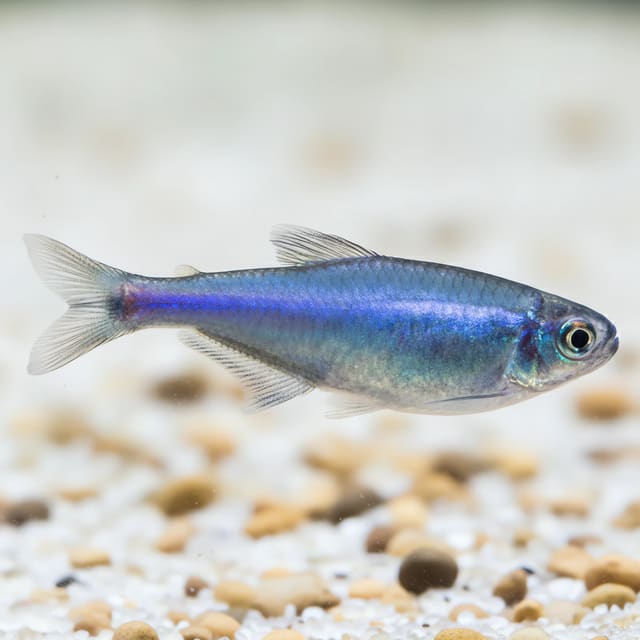
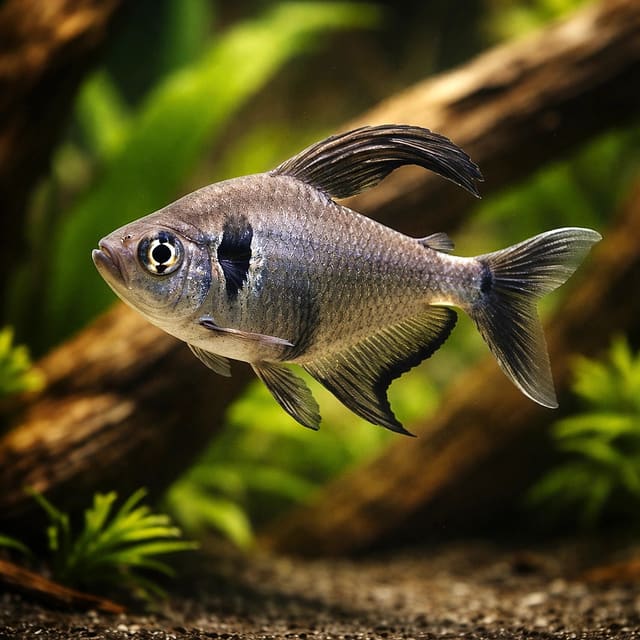
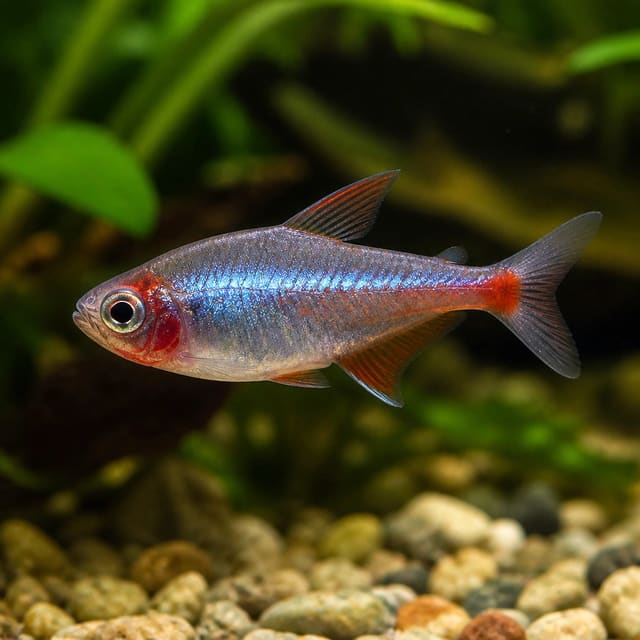
Penguin Tetra (Thayeria boehlkei)
22–27°C · pH 6.5–8 · 68L
£3.99

Splash Tetra (Copella arnoldi), a peaceful surface-dwelling South American tetra for mature planted aquariums with a secure lid.
Adult size is the maximum length this species reaches at full maturity (scientific sources). The livestock you receive will be younger and smaller — pick a size above for the actual shipping size. Product-photo provenance and any image-specific limitations are stated on the listing.
Copella arnoldi
Shoaling fish: kept in a group they feel safer, stay calmer and show their best colour.
Splash Tetra (Copella arnoldi), a peaceful surface-dwelling South American tetra for mature planted aquariums with a secure lid.
Adult size is the maximum length this species reaches at full maturity (scientific sources). The livestock you receive will be younger and smaller — pick a size above for the actual shipping size. Product-photo provenance and any image-specific limitations are stated on the listing.
Maintain these water conditions for optimal health and vibrant colors
Splash Tetra (Copella arnoldi) is a peaceful South American surface-dweller with one of the most memorable behaviours in the aquarium hobby. Also sold as Eigenmann's Copeina or the Spraying Characin, it is best kept by aquarists who enjoy natural behaviour as much as colour. A settled group will spend much of the day just below the surface, picking at small foods, displaying to one another, and using plant cover for confidence.
Choose from the listed size grades: 2–3 cm, 3.5–4 cm or XL. These are purchase-size options, not adult-size estimates; the XL grade does not specify a numerical length. Check the selected option for its current price and availability.
| Common names | Splash Tetra, Spraying Characin, Eigenmann's Copeina |
|---|---|
| Scientific name | Copella arnoldi |
| Family | Lebiasinidae |
| Adult size | Usually around 4-6 cm in aquariums |
| Temperament | Peaceful, social and best kept in groups |
| Tank level | Upper water and surface zone |
| Temperature | 24-28 C |
| pH | About 6.0-7.5; soft to moderately soft water preferred |
| Minimum aquarium | 60 litres for a small group; 75-90 litres is better |
| Key setup need | A secure lid, floating plants and calm surface space |
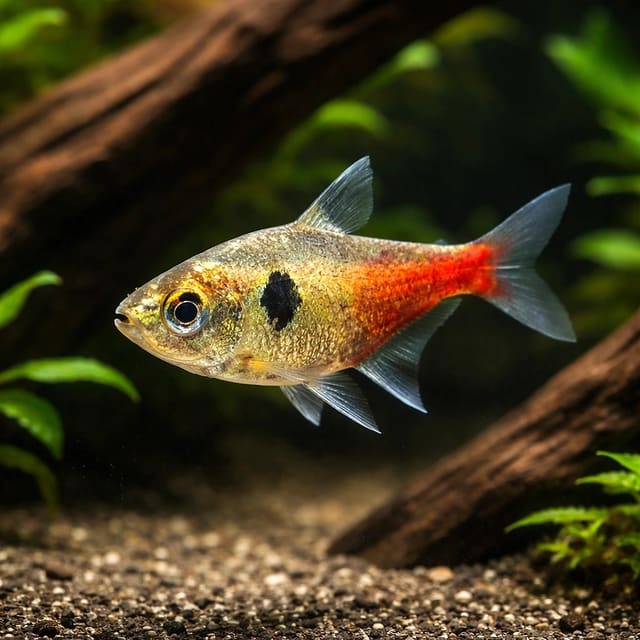
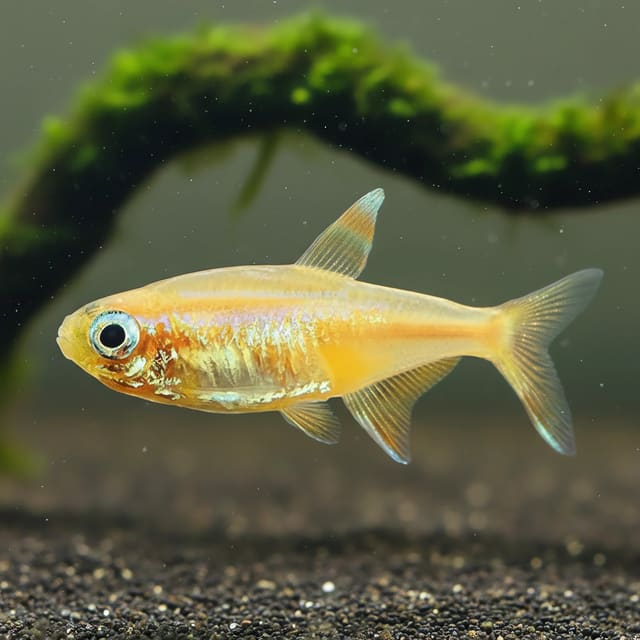
Copella arnoldi is not a loud, neon-coloured tetra. Its appeal is more refined: a slim bronze-silver body, elegant surface posture, and behaviour that rewards careful observation. In a planted aquarium with floating cover, males become especially animated and the whole group looks more confident. They are a lovely choice for a calm community tank where you want movement near the top without adding boisterous fish.
The species is famous for spawning above the water line. Pairs can leap together to place eggs on the underside of leaves or similar surfaces above the water, and the male then keeps the eggs damp by splashing them until hatching. You do not need to breed them to enjoy them, but this natural history explains their need for a secure lid, humid air space, and plant growth close to the surface.
Plan the aquarium around calm surface space. A tank from 60 litres can work for a small group, but 75-90 litres gives better swimming length and more stable water. Keep a tight-fitting lid because Splash Tetras can jump, especially when startled or displaying. If you want to encourage natural behaviour, leave a small air gap under the cover and use floating plants, broad leaves, or emergent planting near the surface.
A dark substrate, planted edges, driftwood, and shaded zones suit them well. Filtration should keep the water clean without blasting the surface. A gentle internal filter, sponge filter, or baffled external filter is usually better than strong flow. They look their best in mature aquariums with stable conditions rather than very new setups.
Splash Tetras come from warm South American waters and appreciate soft to moderately soft conditions. Aim for 24-28 C, with everyday care around 25-26 C. A pH near neutral or slightly acidic is ideal, although stable conditions are more important than chasing exact numbers. Use regular partial water changes, avoid sudden temperature swings, and only add them to a cycled aquarium with zero ammonia and nitrite.
They are peaceful but should not be kept singly. A group of at least six is the minimum, while eight or more gives better confidence and a more natural display. In small numbers they can become shy, and males may focus too much attention on one another. With enough companions and plant cover, their social behaviour becomes much more balanced.
In nature, Copella arnoldi feeds heavily at the surface on tiny invertebrates and drifting foods. In the aquarium, offer fine flake, micro pellets, and small floating foods as the base diet. Add frozen or live foods such as daphnia, cyclops, mosquito larvae, baby brine shrimp, or finely chopped bloodworm to improve condition and encourage display behaviour.
Because these fish feed near the top, make sure food does not sink too quickly past them. Feed small portions once or twice daily, only what the group can finish promptly. Their slender shape can hide early weight loss, so watch that all individuals are feeding confidently, especially after shipping or when kept with faster mid-water fish.
Splash Tetras are best with other peaceful fish that enjoy similar warm, planted conditions. Good companions include small tetras, pencilfish, peaceful dwarf cichlids, Corydoras, Otocinclus, and other calm community species. Avoid large, predatory, fin-nipping, or very boisterous fish that may outcompete them at feeding time or make them nervous near the surface.
They pair especially well with a planted South American-style aquarium, where lower and middle-level fish leave the top zone free. Do not keep them in outdoor ponds in the UK; they are tropical aquarium fish and need stable warmth all year.
Float the transport bag to match temperature, then acclimate gradually before release. Keep the aquarium lights dim for the first few hours and avoid unnecessary netting once the fish are in the tank. A covered aquarium is important from day one because newly introduced surface fish are more likely to jump.
During the first week, feed modest floating foods and check that every fish comes up to eat. If they hide under floating plants at first, that is usually a settling response rather than a problem. Strong colour and confident surface activity normally improve once the group feels secure.
Choose the size option that best suits your aquarium and existing tank mates. Smaller fish are useful when building a group that will grow on together; larger fish give more immediate visibility and display. For the best result, buy enough for a proper group rather than keeping one or two individuals.
For best results, acclimate slowly, keep the aquarium covered from day one, and add the group with the lights dimmed. Once settled, Copella arnoldi is a distinctive upper-level fish that brings natural behaviour, subtle beauty, and a genuine talking point to a peaceful planted aquarium.
Compare the separate care guide for Green Neon Tetra when planning your aquarium. Check each species’ requirements before deciding which fish suit your setup.
No reviews for this item yet. Bought one? Honest reviews only, good or bad.
What customers say about ordering from us
I have a small group of long finned mountain minnows. So was delighted to be able to order ten of this variety to increase the genetics in my tank . The ones I recieved are healthy but it’s to early to give a verdict on wether they are of a long finned type since they are small currently.
Gordon Walker · 23 Sept 2026
100% success travel and "installation". Pleased with quality of purchase. The Siamese fighter a bit "shy" so have not yet seen him at his best yet but looking good. Happy customer. GG
George E Garratt · 21 Sept 2026
Reviews of our shop, collected by Judge.me, an independent third-party review collector. Newest first.